The Secret in the Sampler

Nora Bell is visiting Ascroft, eh? to tell us about The Secret in the Sampler, the first novel in the Plain Truth mystery series.

Welcome, Nora. Let’s get started, shall we?

Tell us about the novel that you live inside. Is it part of a series? If so, please tell us about the series too.

I live inside The Secret in the Sampler, the first book in The Plain Truth Mysteries. I admit that “live inside” sounds rather more comfortable than the experience actually is.

At the beginning of the book, I return to Briar Creek, Ohio, after inheriting The Bell & Quill, my late Aunt Lenora’s letterpress and stationery shop. I expect to spend a few weeks sorting invoices, clearing out boxes, and deciding whether the building is worth saving. I also expect a reasonable amount of privacy, which proves that grief has not entirely cured me of optimism.

Instead, I find an old hand-stitched sampler hidden in a cedar trunk, a warning written in my aunt’s handwriting, and evidence that someone has been altering records connected to a respected local family. Before long, an appraiser is dead, an auction record is missing, and several people become remarkably interested in convincing me that certain questions are impolite.

The series continues in Briar Creek, with The Bell & Quill serving as an unofficial receiving desk for troublesome pieces of paper. Wedding invitations, auction ledgers, quilt labels, hymnbooks, cemetery maps, recipe cards, wills, and postcards have an unfortunate habit of arriving with histories their owners would prefer not to discuss.

The mysteries are connected by the belief that ordinary objects remember what people try to forget. Paper can be altered, hidden, misdated, or misrepresented, but it often leaves behind some physical trace of the truth.

There is also Eli Yoder, an Amish widower and auction clerk who understands local families, land boundaries, estate sales, and the significance of silences I initially mistake for evasiveness. Sometimes they are evasiveness. It is important not to become overly generous.

Does the writer control what happens in the story, or do you get a say too?

Abigail B. Hartwell, I call her Abby, would probably insist that she controls the story. Writers like to believe this. It helps them maintain morale.

She decides where the body is found, which document disappears, and how frequently I am required to enter rooms where everyone stops talking the moment they see me. I decide whether I cooperate gracefully.

There are moments when I suspect Abby intends me to remain quiet, sensible, or safely removed from an investigation. Then someone lies badly, uses the wrong paper stock, or treats another person’s suffering as a convenient family secret. At that point, I generally take over.

I do not consider myself reckless. I simply believe that once you notice something is wrong, pretending otherwise becomes a choice. Abigail provides the circumstances. I provide the resistance.

She also keeps placing Eli nearby during emotionally inconvenient moments. I have expressed concerns about this. They have not been addressed.

How did you evolve as the main character?

When I first return to Briar Creek, I tell myself the arrangement is temporary. My husband, Daniel, died suddenly two years earlier, and I have spent much of that time being functional rather than alive. There is a difference, though people are often too polite to mention it.

I come to settle Aunt Lenora’s estate because paperwork is easier than grief. Paper has edges. Ink dries. Boxes can be labeled. Loss is much less cooperative.

At first, The Bell & Quill is merely another obligation left behind by someone I loved. Gradually, it becomes a place where I am useful again. My experience as a graphic designer and art teacher allows me to notice visual inconsistencies other people overlook: uneven lettering, altered dates, lifted labels, mismatched ink, and patterns that have been deliberately turned backward.

More importantly, I begin learning that attention carries responsibility. Finding the truth does not mean I own it. Some secrets must be exposed because they are protecting wrongdoing. Others must be handled carefully because innocent people are still living beneath them.

Over the course of the series, I become more willing to belong somewhere, to trust my own judgment, and to admit that wanting a future is not a betrayal of the life I had with Daniel. I am still cautious. I simply no longer mistake caution for wisdom every time.

Do you have any other characters you like sharing the story with? If so, why are you partial to them?

Eli Yoder is my principal investigative partner, though he would probably object to the word “investigative.” He prefers to describe our activities as asking necessary questions, reviewing records, or happening to be present when other people reveal themselves.

Eli is steady, observant, and sparing with words. This can be comforting or maddening, depending on whether he is withholding the answer I need. He understands Briar Creek in ways I do not. He remembers which families once owned certain farms, which objects appeared at old estate sales, and which grudges have been politely maintained for several generations.

We are both widowed, although our losses shaped us differently. Neither of us tries to force the other to speak about grief before we are ready. Sometimes that restraint creates more intimacy than a conversation would, which is extremely inconvenient.

I am also partial to Maeve Hartley, who owns Hartley House Bed-and-Breakfast. Maeve is aggressively hospitable and has turned the distribution of baked goods into a regional intelligence network. She knows nearly everything happening on the Englisch side of Briar Creek and considers privacy a condition that should be periodically checked for structural weakness.

Deputy Caleb Stover is sensible enough to recognize evidence when it is placed in front of him and patient enough to tolerate my involvement, though not always enthusiastically. Eli’s daughters, Miriam and Katie, also become increasingly important to me. They notice far more than the adults around them assume, which is generally the way of intelligent young women.

Even the late Aunt Lenora remains a character in the series. Her records, private jobs, and quiet interventions continue to shape my life. The more I learn about her, the more I realize that the aunt I thought I knew was only the public version.

What’s the place like where you find yourself in this story?

Briar Creek is a small town in east-central Ohio, close enough to Amish-country tourism that visitors arrive expecting quilts, pies, buggies, and a simplified explanation of everyone they meet.

The actual town is more complicated.

There are working Amish farms and school districts, the Englisch businesses along Main Street, and a tourist corridor where “authentic simplicity” is carefully packaged, priced, and sold under flattering lights. The countryside is beautiful, but it is not decorative. The farms are workplaces. The auctions settle estates, debts, and family histories. The quiet roads carry people whose lives are not exhibits.

The Bell & Quill sits in an old brick storefront in the center of town. It contains a Chandler & Price letterpress, rows of metal type, sample invitations, customer ledgers, old memorial cards, and a back room full of boxes Aunt Lenora apparently intended me to sort until the end of time.

The shop smells of paper dust, old ink, machine oil, cold brick, and occasionally tea I have made and forgotten to drink. People come through the door needing wedding invitations, auction notices, funeral cards, labels, or help identifying an old document.

Is there anything else you’d like to tell readers about you and the book?

I am not a detective. I do not carry a magnifying glass, conduct theatrical interrogations, or gather suspects in the drawing room while everyone pretends not to know why they were invited.

I own a letterpress shop.

I notice when paper does not belong to the year written on it. I notice when a person answers a different question from the one I asked. I notice when people use kindness to disguise control and silence to protect reputations rather than human beings.

The Secret in the Sampler is a mystery about inheritance, hidden family history, altered records, and the danger of allowing a respectable lie to harden into accepted truth. It is also about grief, second chances, and the slow discovery that a new life does not erase the old one.

Readers should not expect graphic violence or hurried romance. The mystery unfolds through objects, conversations, community tensions, and the physical evidence left behind by people who believed no one would look closely.

Unfortunately for them, looking closely is one of the few things I have always done well.

Thank you for answering my questions, Nora, and good luck to you and your author, Abigail B Hartwell, with The Secret in the Sampler, the first book in the Plain Truth mystery series.

Readers can learn more about Nora and her author, Abigail B Hartwell by visiting the author’s website and her Facebook, Instagram and Amazon Author pages.

The novel is available at the following online retailers:

 Amazon Book  Amazon Series

About Abigail B Hartwell: Abigail writes gentle Amish-adjacent cozy mysteries rooted in the small towns and wooded backroads of east-central Ohio. Though she is not Amish, she lives near Amish communities and draws inspiration from the region’s quiet rhythms, close-knit families, old stories, and rural traditions. She shares a modest home on five wooded acres with her long-haul truck driver husband. They have two grown daughters and three grandchildren. When she is not writing, Abigail enjoys church activities, family time, and the peaceful beauty of the Ohio countryside.
Posted in Archives, August 2026 | Tagged , , , , , , | 2 Comments

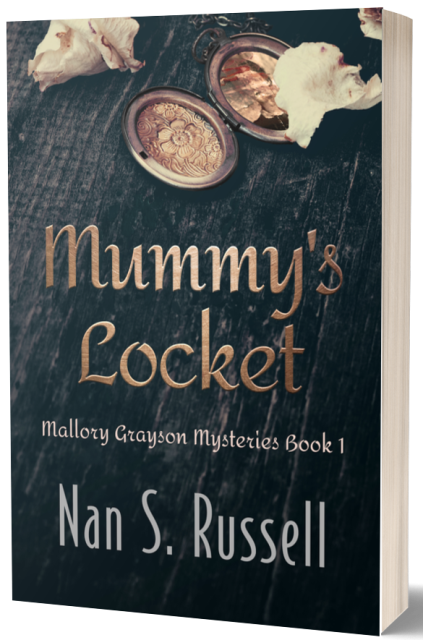
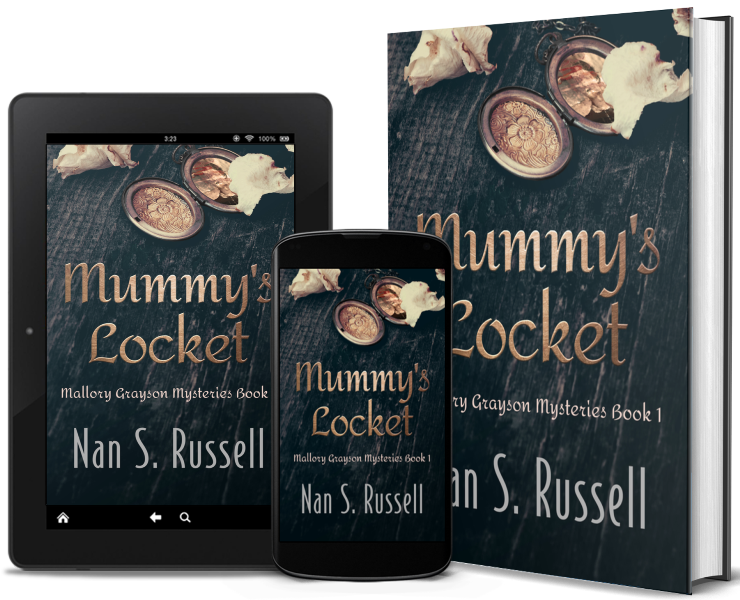
Mummy’s Locket

Mallory Grayson is visiting Ascroft, eh? to tell us about Mummy’s Locket, the first novel in the Mallory Grayson mystery series.

Welcome, Mallory. Let’s get started, shall we?

Tell us about the novel that you live inside. Is it part of a series? If so, please tell us about the series too.
My name is Mallory Grayson. I’m an introvert, and the year is 2016. I’m living in an unfamiliar small town attempting to rebuild my life. I opened a vintage shop to sell what’s left of my family’s heirlooms. My housemate is two decades older and claims to be a sometimes psychic. The murdered body of my great-grandmother, missing since the 1930s, was recently discovered. Reluctantly, I’ve become entrenched in trying to find out why with help from unusual places. If I were to sum up what’s being thrust upon me in this story, it could be summed up this way: Cursed love. Family Secrets. Uncommon courage.

Not all my new friends will be part of the Mallory Grayson Mysteries Series, but with my background in historical archeology and recent success in solving this eighty-year-old murder of my great-grandmother, I’m already being pulled into the next mystery: One Deadly Postcard, where the past and present collide even more than they do in Mummy’s Locket.

Does the writer control what happens in the story or do you get a say too?

Early on my writer seemed to think the telling of this story was all hers. But in time, she was able to hear my voice, my thoughts, and my ideas. Sometimes, I let her drive alone and sometimes we brainstorm and drive together. But mostly, we’ve come to understand it’s important for her to be in my head and for me to be in hers. I do that in a variety of ways including at night when she wakes up in the middle of the night with a spark of an idea, reaches for the notepad next to her bed, and thinks it came from her.  But just between us, it came from me.

How did you evolve as the main character?

My writer is an introvert and thought it strange that most mysteries don’t have introverted protagonists despite 30% to 50% of the population claiming they are introverts. Given the challenges of amateur sleuths, she thought it would be interesting to add this trait to the protagonist. After several attempts, I showed up and she decided I should be the main character, telling the story from my point of view and in first person.

Do you have any other characters you like sharing the story with? If so, why are you partial to them?

Eventually I realized I couldn’t solve the mystery alone. Since asking for help isn’t an introvert’s strength, those who rallied to support me became important to me. I’m indebted to those characters including: the grandmother who raised me, the sometimes psychic, the town history teacher, a group of middle schoolers, an ex-fiancé, and my out-of-town best friend.

What’s the place like where you find yourself in this story?

I’m in two fictional places: The town I grew up in and where I live now. The small town of Jasper Falls, NY in the Finger Lakes region is where I now reside, and the town where I grew up, Ridge Junction, is where the murder happened. It’s a prosperous town in upstate NY, not far from Saratoga Springs.

Is there anything else you’d like to tell readers about you and the book?

The story of Mummy’s Locket, where a family locket holds a clue, is a traditional mystery with cozy elements and a lot of heart. I hope you’ll find solving this eighty-year-old old murder as interesting as I did. 

Who are you when you’re not who you thought you were? What really matters in your life? Thrust into a story steeped in secrets and history, I struggled to answer those questions. But I did. And I hope you’ll find this journey with me worth taking.

My writer has a three-book contract. You’ll see me again in book two which will out in 2027. In the meantime, you can learn more at my author’s website: www.nanrussell.com.

Thank you for answering my questions, Mallory, and good luck to you and your author, Nan S. Russell, with Mummy’s Locket, the first book in the Mallory Grayson mystery series.

Readers can learn more about Mallory and her author, Nan S Russell by visiting the author’s website and her Facebook, Goodreads, Instagram, LinkedIn and Pinterest pages. You can also follow her on Twitter/X, Threads, and BlueSky.

The novel is available at the following online retailers:

 Mummy’s Locket | Universal Book Links Help You Find Books at Your Favorite Store!
Amazon     Barnes & Noble    Apple Books

About Nan S. Russell: With both a bachelor’s and master’s in psychology, Nan S. Russell was fired from her first professional job. Taking a minimum wage position to pay the rent, sixteen promotions later, she decided to end a successful corporate career as a Vice President of a multibillion-dollar East Coast company, to pursue a life dream to live and write from the Rocky Mountains, first in northwestern Montana and now along the Front Range of Colorado. With a desire to help others live their dreams, too, she turned her real-world experience into writing award winning non-fiction career and business  books and articles, and became a speaker and consultant on leadership, trust, and culture development. But she always knew she wanted to write fiction, too. That point arrived during the pandemic pause which provided the catalyst for rethinking her writing and its purpose, sparking the decision to move towards fiction with more time to study the craft, take online classes, hone skills and work on her first novel. Now, she is living her second dream: Writing mysteries. Mummy’s Locket is her debut novel and the first in her Mallory Grayson series. 

Posted in Archives, August 2026 | Tagged , , , , | 2 Comments

Fire at the Track

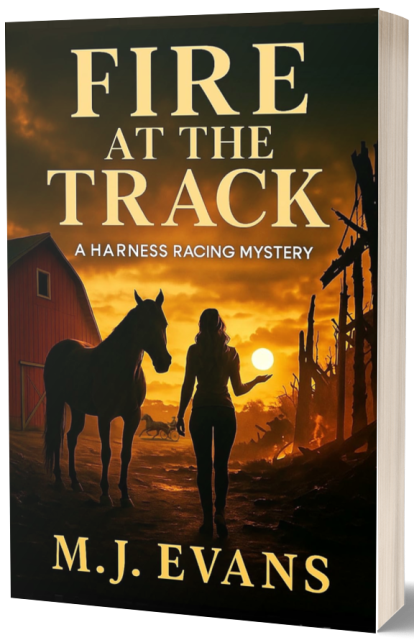
M. J. Evans, author of Fire at the Track, a Harness Racing mystery, is visiting Ascroft, eh? today.

Welcome, M. J.

Tell us about your novel. Is it part of a series? If so, please tell us about the series too.

Fire at the Track is the first book in my Harness Racing Mystery series, set at the fictional Liberty Racetrack in Ashville, Pennsylvania. My protagonist, Callie Oaks, is a former insurance investigator who goes undercover as an exercise driver named Haylie Norr to find out who set a fire that killed twenty-eight horses — and quickly realizes the person responsible is still on the grounds. Along the way, she has to earn the trust of a backstretch community that doesn’t open up easily to outsiders, all while a local reporter named Paul Coffman keeps turning up in her barn aisle asking questions and becoming more than a friend.

The series continues with Murder in the Winner’s Circle, which finds Callie investigating a poisoning at an owner’s birthday celebration that turns out to be tangled up in a gold mine embezzlement scheme, and a third book is already taking shape. Each book stands on its own, but readers who stick with Callie will watch her relationships — with the horses, with Paul, and with the track itself — deepen from one book to the next.

Where did the idea for the mystery that is central to the story come from?

From a stranger on an airplane, of all things. I’m the sort of person who talks to whoever ends up in the seat next to me, and on one flight, I got seated next to a woman who was even more talkative than I am. When she found out I wrote novels about horses, she sat straight up and said she knew exactly what I needed to write about next. She told me about a real barn fire at a harness racing track in Pennsylvania in 2001 — the cause was never officially determined, though the backstretch gossip at the time centered on a horse that had gone lame and could no longer race. The moment I got home, I looked it up, and every fact she’d given me checked out. That was all it took. The story started writing itself before my plane had even reached the gate.

Is there a theme or subject that underlies the story? If so, what prompted you to write about it?

Trust, and how slowly and specifically it’s earned. Callie isn’t a horsewoman playing investigator — she’s an investigator who has to prove herself in a world that runs on very small, very deliberate acts of trust: showing up before dawn, handling a lead rope correctly, letting a nervous horse decide whether to lean into your shoulder or away from it. I wanted to explore how an entire community can close ranks around its own, for better and worse, and what it costs an outsider to be let in. That idea felt especially true to life, having spent so many years around barns myself — the horse world really does run on trust earned in small increments, not grand gestures.

How do you create your characters? Do you have favourite ones? If so, why are you partial to them?

I usually start with a role a character needs to serve in the plot, and then I spend time figuring out what would make that person believable in this particular world — what they’d have had to give up, or fight for, to belong there. Stanley Smithfield, the veteran trainer and driver who takes Callie under his wing without fully realizing who she is, became one of my favorites almost by accident. He started as a supporting character and grew into someone I looked forward to writing every time he walked into a scene. I also have a soft spot for Sunny, the filly Callie is assigned to train. Sunny doesn’t trust Callie right away, and watching that relationship build, one grooming session at a time, ended up mirroring the larger mystery in ways I didn’t fully plan when I started.

How do you bring to life the place you are writing about?

Research and repetition, mostly. I wanted Liberty Racetrack to feel lived-in rather than decorative, so I paid close attention to sensory detail — the fog over the track at dawn, the particular hush of a barn settling in for the night, the look of a horse’s lateral gait, which doesn’t look quite natural to anyone who hasn’t watched it a hundred times. I also leaned on my own decades of hands-on horse experience for anything related to horsemanship and barn life, since that’s the part of the world I know in my bones. For everything specific to harness racing, I had to build that same familiarity from scratch through research and conversations with people who’d spent their working lives at the track.

What research do you do to provide background information to help you write the novel?

A great deal, since harness racing was new territory for me even after a lifetime around horses. I bought and annotated several books on the sport, including Born to Trot by Marguerite Henry, a biography of the standardbred Somebeachsomewhere by Marjorie Simmins, and a biography of the great standardbred Greyhound by Cheryl Eriksen. But books can only take you so far, so I also turned to people who’d actually lived that world. Richard Stone, who spent his entire working life on harness racing breeding and training farms, was generous enough to read every page of my manuscript and correct the places where I’d gotten the details wrong. Between the reading and Richard’s patient corrections, I hope I’ve done the sport justice — for the newcomers and the lifelong harness racing fans alike.

Is there anything else you’d like to tell readers about the book?

Just that I hope readers come for the mystery and stay for the horses. I wanted Fire at the Track to work for anyone who loves a good whodunit, but I also wanted it to be a genuine window into a world that doesn’t get much attention in fiction — one I’ve come to love a great deal myself over the course of writing this series. If you finish the book wanting to learn more about harness racing, or find yourself looking up your nearest track, I’ll consider that mission accomplished.

Thank you for answering my questions, M. J., and good luck with Fire at the Track, a Harness Racing mystery.

Readers can learn more about M. J. Evans by visiting the author’s website and her Facebook, Instagram, Goodreads, and BookBub pages.

The novel is available at the following online retailers:

Amazon   Barnes and Noble

About M. J. Evans: M.J. Evans is the award-winning author of twenty six published works spanning middle-grade, young adult, and adult fiction, as well as a selection of picture  books. Her writing often explores themes centered around horses and equine fantasy, reflecting a lifelong passion for these remarkable animals. A graduate of Oregon State University and a former educator with experience teaching both middle and high school students, Ms. Evans brings both educational insight and storytelling flair to her work. She resides in beautiful Colorado with her husband, Tom, where they enjoy the company of their horses and Standard Poodle. She is the proud mother of five and grandmother of thirteen.

M.J. Evans was the recipient of the 2024 Colorado Authors League Lifetime Achievement Award.

Literary awards include: Chanticleer International  Book Awards Readers’ Favorite International Awards Eric Hoffer Awards Nautilus Awards Literary Classics awards Literary Global Book Awards Feathered Quill Book Awards Purple Dragonfly Awards Royal Dragonfly Awards Page Turner Award Next Generation Award Global Book Awards CIPA Evvy Book Awards Pinnacle Book Achievement Awards Incipere Book Awards International Impact Book Awards Maincrest Media Book Awards Book Excellence Awards Mom’s Choice Awards.

Posted in Archives, August 2026 | Tagged , , , | 1 Comment

Trouble Water

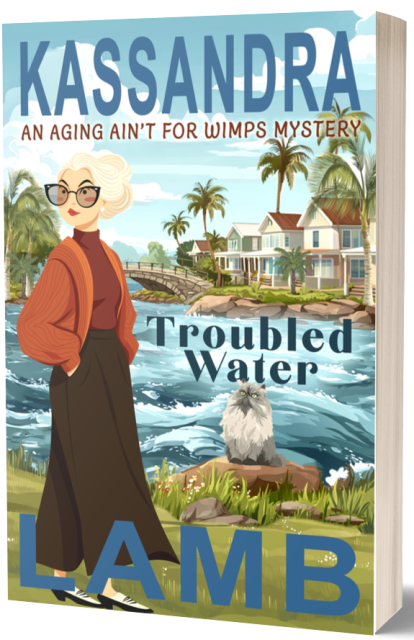
Kassandra Lamb, author of Troubled Water, the first novel in the Aging Ain’t For Wimps mysteries series, is visiting Ascroft, eh? today.

Welcome, Kassandra.

Tell us about your novel. Is it part of a series? If so, please tell us about the series too.

My newest release, Troubled Water, is Book 1 in a new series, The Aging Ain’t for Wimps Mysteries. These cozies are about a recently widowed woman, Amy Parker, who is finding herself at the age of seventy-one. As she’s picking up the pieces after her husband’s passing—and sidestepping her domineering sister’s attempts to take over her life—she begins to realize that her husband was subtly controlling.

Oh, and she gets involved in some murders, along the way.

Where did the idea for the mystery that is central to the story come from?

While creating my protagonist’s back story, I was looking for a way to explain how an otherwise strong and competent woman (she’s a retired ER nurse) would marry a controlling man, and stay married to him for decades. First, I made her a single mom at age nineteen, after losing her first husband in the Vietnam War. This made Amy susceptible to a man who was good with her son. And then I got the idea to give her a domineering older sister and a late mother who taught her to “go along to get along.” This would have primed her to give in to her second husband’s subtle ways of controlling her.

Then I killed the sister off, thus thrusting Amy into the role of amateur sleuth.

Is there a theme or subject that underlies the story? If so, what prompted you to write about it?

There is a theme that underlies the entire series. My generation of women in the U.S. (I’m 73) experienced a rather unique phenomenon. For the first decade of our upbringing we were taught traditional gender roles, and then the women’s liberation movement got rolling. And the messages we were receiving changed from “be nice” and “go along to get along” to “be strong” and “you can do anything.” This was more than a little confusing, and still is sometimes for us. Those two sets of messages do battle inside our heads. I wanted to raise awareness of this struggle while writing an entertaining series.

How do you create your characters? Do you have favourite ones? If so, why are you partial to them?

Characters tend to have minds of their own. I may create them initially and have certain ideas about how they should think and act, but then they take over. Sometimes they mostly stick to my game plan, but other times they strike out on their own and develop personality traits I never knew they had.

I do sometimes have favorites. I tend to particularly like the kind men and the feisty women. But I’ve got to admit that the grumpy cat in this series is turning out to be my number one favorite.

How do you bring to life the place you are writing about?

Setting is important in any fiction story, but especially so in cozies. They’re usually set in small, tight-knit communities. A cozy author can pick a real town as their setting, but I prefer to invent a fictitious one. After all, these are murder mysteries so there are going to be some bad people in this town; I don’t want the residents of a real town to be offended. But I do choose a real town to model mine after. Then I try to add some details, like the local flora, to make the setting seem more realistic.

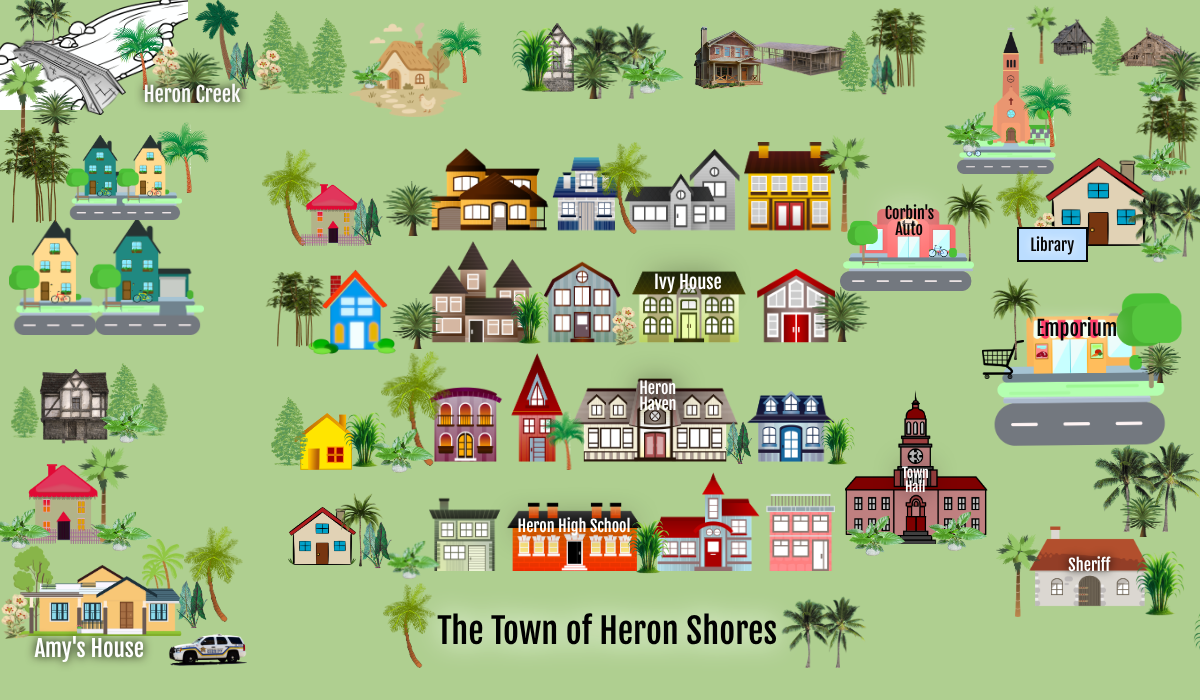
And I also locate the town between other real places. For example, my fictitious town of Heron Shores is about halfway between Jacksonville, Florida and a small city in northern Florida called Lake City. I make references to people being picked up or taken to the airport in Jacksonville, and also to the real hospital—where Amy worked for thirty some years before retiring—located in Lake City.

What research do you do to provide background information to help you write the novel?

I had to do a fair amount of research to remind myself of events and dates from the Vietnam War and the women’s liberation movement. That set the stage, but one needs to research a lot of little things along the way as well. I had to check on things like how doctors can tell if someone has had a heart attack and what kind of herbal tea would taste strong enough to disguise the presence of poison. I usually enjoy research, especially since it is relatively easy now with the internet, but if law enforcement ever checks my search history, I’m in big trouble.

Is there anything else you’d like to tell readers about the book?

Just that I had a lot of fun writing this story and Book 2, which I’ve already started. I hope readers have as much fun reading them.

Thank you for answering my questions, Kassandra, and good luck with Troubled Water, the first book in the Aging Ain’t For Wimps mystery series.

Readers can learn more about Kassandra Lamb by visiting the author’s website and her Facebook, Goodreads, Instagram and BookBub pages. You can also follow her on BlueSky.

The novel is available at the following online retailers:

AMAZON    BARNES & NOBLE    KOBO    APPLE   GOOGLE PLAY

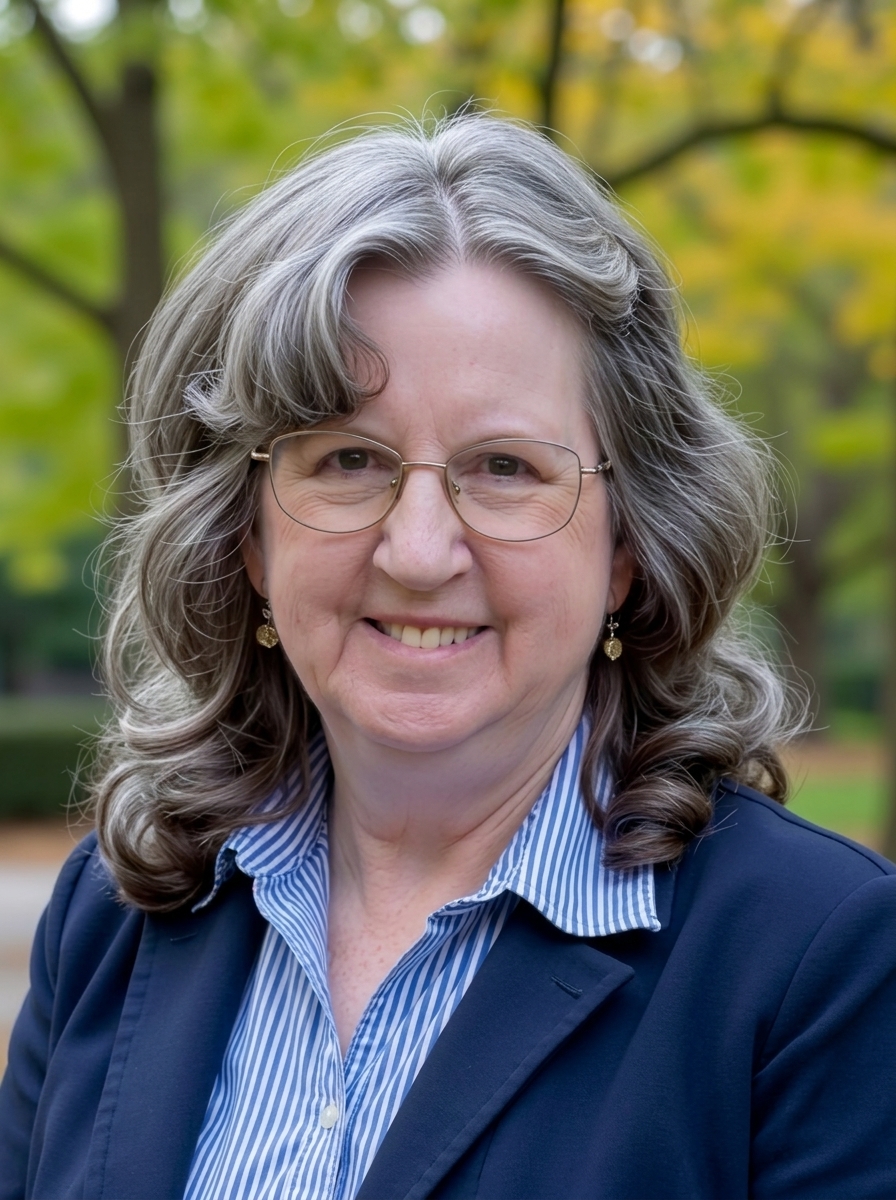
About Kassandra Lamb: Kass has two loves: writing and psychology. In her youth, she discovered that writers need day jobs in order to eat. Partial to food, she studied psychology. Now retired from a career as a psychotherapist and college professor, she spends most of her time in an alternate universe with her characters. The magic portal to this universe (i.e., her computer) is in Florida, where her husband and dog catch occasional glimpses of her. Kass has authored over 40  books, including four mystery series and a romantic suspense trilogy.

Posted in Archives, August 2026 | Tagged , , , , , | 2 Comments

Sinister Remnants

Stella Markam, a sharp-eyed reporter from Sinister Remnants, a Tori Winters mystery, is visiting Ascroft, eh? to interview her fellow characters, Tori Winters and her irrepressible sidekick, Mia O’Brien.

Welcome, Stella. Let’s get started, shall we?

“Hello, everyone. This is Stella Markham, and welcome to my latest podcast, Around Town with Stella. Today, I am over-the-top thrilled to welcome Tori Winters and Mia O’Brien to the news studio. Tori owns the historic Leichter mansion located in Granbury. After extensive renovations, she’s turning this imposing mansion into a B&B, the Red Door Inn. Mia O’Brien is the inn’s General Manager. I recently toured the new inn and can honestly say, it’s amazing. So delighted to have the two of you here today.”

“Wow, thank you so much for the invitation. We’ve been looking forward to this,” Tori admitted, her face glowing with pleasure.

Mia nodded her head. “Absolutely. It’s a wonderful opportunity to showcase everything Tori’s done with the mansion.”

With a roll of her eyes, Tori said, “I should warn you that Mia doesn’t like to talk about her contributions to making the Red Door Inn a reality.”

Mia shrugged. “I just keep things moving.” She shot Tori a mischievous look before adding, “And try to keep her out of trouble, which isn’t always easy to do.”

Tori chuckled. “See what I have to put up with.”

Stella’s laughter joined in. “Sounds like quite the partnership. But before we get into this intriguing topic, let’s start with you, Tori, and your connection to the mansion. From what little I’ve heard, it sounds like a rags-to-riches mystery.”

“Very much so, Stella. I was a nurse, living in Missouri, when a local Granbury attorney contacted me about an inheritance. It wasn’t until I walked into his office that I learned Elly Leichter was my grandmother.”  She laughed. “But that’s a story for another day.”

“I imagine it must have been quite a shock to inherit a historic mansion and an estate worth millions,” Stella said.

“Shock is a mild description,” Tori admitted. “If I hadn’t been sitting down, I’d have been on the floor.”

“So, how did the two of you join forces? Another mystery?”

Mia laughed. “Not really. The first time I saw Tori, she was pushing two overflowing grocery carts at the store where I was the manager. She wrote a temporary check, but her driver’s license had a Missouri address. The cashier paged me. When Tori mentioned the address where she was living, the light bulb went off. I’d heard rumors of a new owner of the Leichter mansion.”

“That’s quite an introduction. But it doesn’t explain this remarkable friendship.”

“Fate. It was nothing short of fate,” Tori said. “The mansion needed to be cleaned, and I went hunting for a cleaning service. I found one with the name of the woman who had helped me at the grocery store.”

“Ah, one of those what goes around, comes around kind of moments,” Stella said.

Tori and Mia exchanged a glance, both chuckling.

“Absolutely. I couldn’t believe it when I got a call from Tori. And in this case, the rest really is history.”

Tori added, “And there have been plenty of adventures since that first day Mia showed up to give me a quote.”

Mia let out a groan. “Stella, you don’t know the half of it. We’ve had more Sherlock-and-Watson moments than I can count.”

Tori smirked. “She’s exaggerating. Mostly.”

Stella laughed. “I’m starting to think I need a whole separate episode just for your escapades. But for now, let’s talk about the mansion. Tori, where did the name Red Door Inn come from? And your logo has poker chips. What’s up with that?”

“Ancient history that goes back to the early to mid-1900s. My great-grandfather, Frankie Leichter, ran the illegal gambling syndicate in Dallas. One of his casinos was named the Red Door Casino.”

“Wow! How interesting. So, I’m guessing the poker chips in your logo have something to do with his casino.”

“My grandmother left me several poker chips that were used in Frankie’s casino.”

“Your great-grandfather was quite an infamous person in his day.”

“He was—guns, gambling, prohibition. He also built the mansion and its secret tunnel. The tunnel was an escape route in case the Feds raided the place, and it has rooms where his illegal goods were stored.”

“I was fascinated by the tour of the tunnel. Though I have to confess, it gave me a shiver, especially knowing a skeleton had been discovered inside it. The tunnel practically breathes history and secrets.”

“That it does,” Tori said. “And it’s not just the tunnel but also the mansion.”

“How titillating. Sounds like there’s another backstory. But to fast forward here. I’m sure my viewers would like to know more about the two of you. What tidbit of inside gossip can you share?”

Mia groaned. “Coffee.”

“Coffee? That’s your inside scoop?” Stella laughed. “No pun intended.”

“It’s worse than you can imagine.” Mia glanced at Tori. “Don’t give me one of those yeah, right faces.” She turned back to Stella. “Tori is addicted to the stuff. It runs in her veins. I swear, half of our Sherlock-and-Watson capers start because she’s over-caffeinated and has an idea that spells trouble.”

Tori sniffed. “Maybe so, but it’s better than that syrupy stuff you drink.”

“Uh … syrupy?” Stella asked.

“Sweet tea,” Mia told her.

“Ah … yes. A Texas tradition,” Stella said.

Tori grumped. “Maybe so, but I never heard of it until I got to Texas.”

Mia said, “She’s still adjusting. She’ll come around one of these days.”

Stella’s eyes crinkled with laughter. “You two clearly have a great rapport. Do you have a favorite moment of mishap from working together?”

Tori shot Mia a mischievous smirk. “There was one involving a dumpster at a taco bar.”

Mia groaned. “Tori, seriously? Not a good idea. Besides, you’re the one who said we couldn’t risk missing them if they slipped out the back door.”

Stella leaned forward, her voice tinged with interest. “I’ve got to hear this, and I bet my listeners will too.”

“It just proves that not all the ideas are mine. Mia suggested rock, paper, scissors to decide who had to wait by the dumpster outside the back door of the restaurant.”

Stella burst out laughing. “That’s hilarious. Who lost?”

“It was one of those moments where we were saved by the bell,” Mia admitted. “The two men walked out the front door.”

“As much as I want to hear the rest of this story, we’re out of time. I have a feeling there are plenty more tales where that one came from. Maybe even a few that don’t involve dumpsters. Thanks again to my guests, Tori Winters and Mia O’Brien. Be sure to join me on my next edition of Around Town with Stella.”

Thank you for conducting this interview, Stella, and good luck to you and your author, Anita Dickason, with Sinister Remnants, the latest book in the Tori Winters mystery series.

Readers can learn more about Stella and her author, Anita Dickason by visiting the author’s website and her Facebook, Goodreads, LinkedIn, Pinterest and YouTube pages.

The novel is available at the following online retailers:

Amazon – B&N

About Anita Dickason: Anita is a twenty-two-year veteran of the Dallas Police Department. Anita served as a patrol officer, undercover narcotics detective, advanced accident investigator, and Dallas SWAT tactical officer and first female sniper. Her law enforcement experience and knowledge provide an endless source of inspiration for her characters and plots.

Posted in Archives, August 2026 | Tagged , , , , | 1 Comment

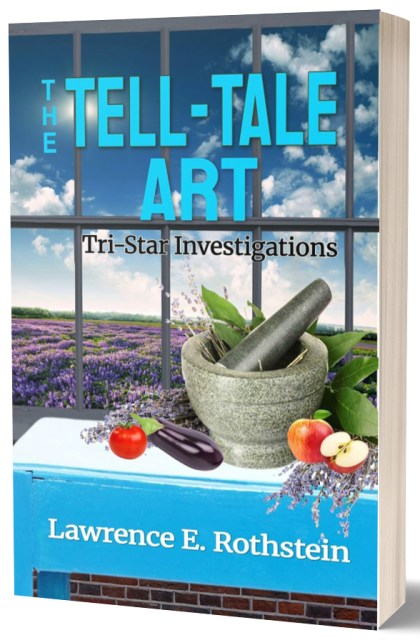
The Tell-Tale Art

Desmond St. Clair is visiting Ascroft, eh? to tell us about The Tell-Tale Art, the latest novel in the Tri-Star Investigations mystery series.

Welcome, Desmond. Let’s get started, shall we?

Tell us about the novel that you live inside. Is it part of a series? If so, please tell us about the series too. I have been a major character in Rothstein’s last two novels, Ripped Genes and The Tell-Tale Art. The Tell-Tale Art moves from the Chicago to the south of France and back. A suicide is revealed as a murder involves art stolen by the Nazis. My technical expertise allows me to provide large amounts of background information and investigative data to Korb and Su. When my colleague, Kelan Su, is sent to France to search for the cache of art, she is kidnapped, bringing a gang of thugs into the open. Because of my military special ops experience, I was sent to keep an eye on her and rescue her from the thugs as well as take the criminals into custody.

I have been told that in the novel Rothstein is currently working on, my role will continue to evolve. He intends to continue the series and, as my boss, Marko Korb says, our agency and the series is called Tri-Star Investigations because there are three star investigators. I’m one of them.

 Does the writer control what happens in the story or do you get a say too? I am glad to say that Rothstein listens to his characters. As Korb and Su often said to the author, “We are the professional investigators, not you. Please heed our advice.” In fact, I owe my existence to Korb’s and Kelan Su’s complaints that the author was not fully aware of the security and back-up needs of investigators in dangerous situations. In some earlier drafts of his manuscripts, he put Kelan in some precarious situations without adequate back-up. As you will see, since my arrival, I generally have Kelan’s back.

How did you evolve as the main character? I first met Korb in 1997 in Bosnia at an Operation Tango briefing session concerning the arrest of Serbian war criminals. I served as a British SAS commando in that war. After leaving the army, I opened an Afro-Caribbean restaurant back home on Tortola. Although the restaurant was moderately successful, it was devastated by Hurricane Irma in 2006. Rather than rebuild, I took a job with a security firm in Chicago. I missed the excitement of special ops. Corporate security didn’t fill the bill so I reconnected with Korb whose investigative career was renowned and whose cases seemed much more edgy. Working for Korb has allowed me to indulge all my specialties: cooking, informational technology, investigation, and security.

Do you have any other characters you like sharing the story with? If so, why are you partial to them? I feel as if I have not just joined a team, but also a family. My colleague, Kelan Su, is not only a smart and intrepid investigator, but also like my kid sister. Korb is in some ways the father figure I missed out on in childhood. The family feeling is accentuated by the facts that we all live and work under the same roof and I am the meal preparer.

What’s the place like where you find yourself in this story? I do at times miss the laid-back Caribbean culture of my homeland Tortola. I have tried to recreate some of that with my cooking, with special holiday traditions, banter with Kelan, and having my long-time boyfriend, Reggie, here in Chicago. Korb is tolerant of and even sometimes appreciative of these efforts, particularly when they encompass food. Of course, I would prefer Tortolan weather and its casual light clothing to Chicago’s climate and wardrobe, especially in winter.

An excellent aspect of the living/working situation here at Korb’s spacious Chicago townhouse is the fully equipped workout room in the basement. Both Kelan and I are conscientious about staying in shape and honing our fighting skills. Of course, you won’t find Korb there. While I am proud of my physique, I am sometimes embarrassed when the author dwells on a description of it. However, I suppose that some of this is necessary to give me full existence as a character.

Is there anything else you’d like to tell readers about you and the book? To know me better, here are some of my favorite things about working for Korb: Observing Korb’s brilliant mental processes; being the unseen phantom backing up Kelan’s investigative forays; using high-power forensic databases to research suspects, money trails, and ownership links; educating Korb, the gourmet, and Kelan about Caribbean delicacies (of course, with my special creative touches); Korb’s provisioner connections which make it possible for me to import my favorite drink, Tola Chocolate Stout.

Thank you for answering my questions, Desmond, and good luck to you and your author, Lawrence E. Rothstein, with The Tell-Tale Art, the latest book in the Tri-Star Investigations mystery series.

Readers can learn more about Desmond and his author, Lawrence E. Rothstein by visiting the author’s website and his Facebook and Instagram pages. You can also follow him on BlueSky

The novel is available at the following online retailers:

 Amazon   Barnes & Noble 

About Lawrence E. Rothstein: Writing mysteries is his third career. In all of his careers as a lawyer, a university professor, and now as an author of novels, finding the right words to present an idea was always important and enjoyable. As an academic, he wrote many published scholarly pieces, including a  book and book chapters. He started writing mystery/legal scenarios as hypothetical cases for law courses he taught. He gets his ideas from the news, particularly legal news, his previous legal work, areas of academic research, and other detective stories. With regard to The Tell-Tale Art, he used his experiences living and working in Aix-en-Provence. His detectives are based in Chicago, where he was born and raised.

Posted in Archives, August 2026 | Tagged , , , , , | 1 Comment

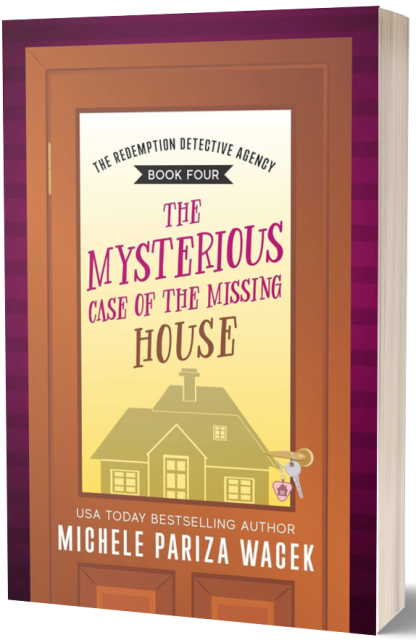
The Mysterious Case of the Missing House

Michele Pariza Wacek, author of The Mysterious Case of the Missing House, the latest novel in the Redemption Detective Agency mysteries series, is visiting Ascroft, eh? today.

Welcome, Michele.

Tell us about your novel. Is it part of a series? If so, please tell us about the series too. The Mysterious Case of the Missing House is book 4 of The Redemption Detective Agency, which is a light, funny cozy mystery series with silver sleuths, pet detectives and a touch of romance that takes place in the 1990s in small town Wisconsin (Redemption, Wisconsin). While the mysteries themselves are standalone, the character and relationship build off each book, so for that reason I would recommend starting at the beginning of the series. In this book, Emily has a difficult to decision she has to make along with trying to locate a house that has gone missing.

Where did the idea for the mystery that is central to the story come from? From Grosse Pointe Blank, which is an old John Cusak movie. Cusak plays a professional assassin who has to do a job in Grosse Pointe, Michigan, which is also his hometown. While he’s there, he decides to attend his 10 year high school reunion along with visiting his mother and his childhood home.

He pulls up to the curb, only to discover his house is gone and there’s convenience store in its place.

He runs inside and accosts the poor clerk, demanding to know what happened to his house. Of course, the clerk knows nothing about it, but the whole scene is very funny. I thought it would be fun to do my own version of that scene.

Is there a theme or subject that underlies the story? If so, what prompted you to write about it?

In dream symbolism, houses represent the self. So if you lose your house or are missing a house, you’ve really lost your self. In The Mysterious Case of the Missing House, it’s not so much that the characters have lost themselves but that they didn’t really ever know themselves. Meli, whose house is the one that’s missing, ends up learning some difficult truths about herself. Her journey mirrors Emily, our main character, who also has to make some tough choices based on what she thinks she wants.

How do you create your characters? Do you have favourite ones? If so, why are you partial to them? My characters tend to simply show up. While I do like Emily a lot, Charlie Kingsley is probably my favorite as she was my most persistent. She absolutely had stories she wanted me to tell, and she didn’t stop talking to me until I told them.

How do you bring to life the place you are writing about? I grew up in Wisconsin, and Redemption, Wisconsin, is also inspired by the town where my parents had a cabin on the lake that we used to visit in summers.

What research do you do to provide background information to help you write the novel? I don’t do a lot of research, but I do try and get facts right, so I’ll look up laws or what was available in the 1990s (as my cozy books all take place in the 1990s).

Is there anything else you’d like to tell readers about the book? The Redemption Detective Agency is for you if you love fun and funny cozy mysteries with senior sleuths, pet detectives, quirky characters and romance. The mysteries begin as ridiculous but end with a twist.

Thank you for answering my questions, Michele, and good luck with The Mysterious Case of the Missing House, the latest book in the Redemption Detective Agency mystery series.

Readers can learn more about Michele Pariza Wacek by visiting the author’s website and her Facebook and Instagram pages.

The novel is available at  Amazon 

About Michele Pariza Wacek: A USA Today Bestselling, award-winning author, Michele taught herself to read at 3 years old because she wanted to write stories so badly. It took some time (and some detours) but she does spend much of her time writing stories now. Mystery stories, to be exact. They’re clean and twisty, and range from psychological thrillers to cozies, with a dash of romance and supernatural thrown into the mix. If that wasn’t enough, she posts lots of fun things on her blog, including short stories, puzzles, recipes, and more, at MPWNovels.com.

Michele grew up in Wisconsin (hence why all her books take place there), and still visits regularly, but she herself escaped the cold and now lives in the mountains of Prescott, Arizona, with her husband and southern squirrel hunter Cassie.

When she’s not writing, she’s usually reading, hanging out with her dog, or watching the Food Network and imagining she’s an awesome cook. (Spoiler alert, she’s not. Luckily for the whole family, Mr. PW is in charge of the cooking.)

Posted in Archives, August 2026 | Tagged , , , , | Leave a comment

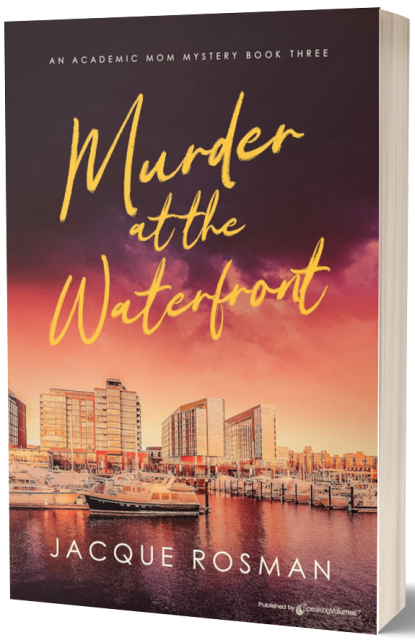
Murder at the Waterfront

Cara Knight is visiting Ascroft, eh? to tell us about Murder at the Waterfront, the latest novel in the Academic Mom mystery series.

Welcome, Cara. Let’s get started, shall we?

Tell us about the novel that you live inside. Is it part of a series? If so, please tell us about the series too.

I live inside Murder at the Waterfront, book three of the Academic Mom Mystery series after Murder in Georgetown and Murder off U Street, and before whatever mess I get pulled into next. This one starts at, of all places, a fatality review meeting, which is exactly as fun as it sounds. The Chief Medical Examiner led the meeting, and I found him a nasty fellow, unsympathetic to the fentanyl crisis unfolding in D.C. communities. But then he turns up dead the next day, and my own student gets arrested for it. I spend the rest of the summer proving he didn’t do it while also getting my kids to camp on time.
Does the writer control what happens in the story or do you get a say too?

Officially, Jacque’s in charge. Unofficially, she’ll admit she’s “more of a pantser than should be recommended for a mystery author,” which means she shows up most days with a couple of tentpoles and a suspicious amount of optimism, and I fill in the rest.
How did you evolve as the main character?

In my first appearance in this book, I started the way I start most days: late, sweaty, and apologizing for something. By the end, I’d stopped apologizing for asking questions. Everyone from the fatality board to Metro Police kept telling me to leave it to the professionals, and there were moments when I doubted my choices—when a preschool Queen Bee mom turned down a playdate because she suspected it was reconnaissance, and when both Lt. Reynolds and Sgt. Bronson stopped answering my calls. But I persisted, and next time, I’ll even be more confident in my crime-solving instincts.

Do you have any other characters you like sharing the story with? If so, why are you partial to them?

My husband Seth, without question. He stabilizes me; otherwise, I might run off and put myself in true danger. My kids, Alyssa and Noah, mostly because they remind me that “amateur sleuth” is not actually my job title; “mom” is, and it comes first, camp drop-offs and all.

And then, much against my better judgment, Sgt. Bronson. He is sweaty, cynical, and has never met a camera — or a captive listener — he didn’t like. But he’s also the only cop who’ll actually talk to me, even if half of it is complaining about his ex-wife. I’ve learned to take the tidbits where I can get them.

What’s the place like where you find yourself in this story?

Washington, D.C., and the Northern Virginia suburbs, in the middle of a swampy July. I split my time between the School of Social Work at Virginia University, the Medical Examiner’s Office, and whatever patch of humidity my kids happen to be sweating through that day — camp, playdates with preschool friends, and any pools we can gain access to.

Is there anything else you’d like to tell readers about you and the book?

Just that I didn’t ask for any of this. I signed up for a fatality review board to find a research site, not a case. But if there’s one thing three books in this series have taught me, it’s that showing up late to a meeting is apparently how I keep ending up in the middle of a homicide investigation. If you enjoy your mysteries with a side of carpool logistics, I think you’ll feel right at home in Murder at the Waterfront.

Thank you for answering my questions, Cara, and good luck to you and your author, Jacque Rosman, with Murder at the Waterfront, the latest book in the Academic Mom mystery series.

Readers can learn more about Cara and her author, Jacque Rosman by visiting the author’s website and her Facebook, Goodreads and LinkedIn pages.

The novel is available at the following online retailers:

 Amazon – B&N – Bookshop.org – Kobo

About Jacque Rosman: Jacque writes the Academic Mom Mystery series, featuring Cara Knight, a social work professor whose research instincts keep pulling her into investigations that are decidedly off-syllabus. With wry humor, Jacque mines the absurdity of academia and motherhood for a series that’s equal parts twisty and true-to-life, set in the nation’s capital. When she’s not plotting murders, Jacque can be found juggling her own version of the academic mom life. Join the newsletter for updates on Cara’s next case and the meals that she can get all her family to eat.

Posted in Archives, July 2026 | Tagged , , , , | Leave a comment

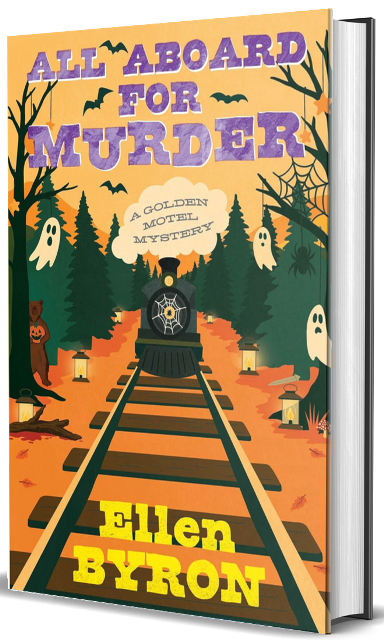
All Aboard for Murder

Ellen Byron, author of All Aboard for Murder, the latest book in the Golden Motel mystery series, is visiting Ascroft, eh? today to share with us how she mined the past for ideas for her latest mystery.

Welcome, Ellen. I’ll turn the floor over to you –

When I was a teenager, my father insisted Ivisit California. He’d fallen in love with the state on business trips and wanted to share his enthusiasm, so he arranged a trip for me. The first stop would be a visit with his Uncle Howard and Aunt Molly, my great-uncle and aunt, who’d moved to Modesto, California from Brooklyn in the late 1940s when Howard got a job managing a tomato packing plant.

Molly took me on some wonderful jaunts during my stay. My favorite was a visit to Columbia State Historic Park in the southern end of Gold Rush Country. The park is a historic miner’s village comprised of at least thirty extant buildings dating back to the town’s founding in the 1850s. It’s both picturesque and entertaining, offering a combination of history, shops, and eateries served up by docents and employees dressed in period garb. You can even ride a stagecoach and pan for gold.

The visit to the restored village made an impression on me. But I didn’t realize how deep an impression until I was coming up with ideas for future mystery series and the visit to Columbia came back to me, inspiring my Golden Motel Mystery series, contemporary humorous mysteries set in California’s Gold Rush Country.

Since I hadn’t been to the historic park and its environs in decades, I felt a refresher was in order, so I mapped out a road trip for my husband and me. The historic site proved to be as wonderful as I remembered it, brimming with hands-on history. I took a humorous approach to recreating it in my series as the historic location of Goldsgone. Like the real site, those who work there dress as if it was the 1850s, down to the “robber” who “holds up” the stagecoach ride. But some of the residents of Goldsgone are much less likeable than the kind and helpful citizens of Columbia!

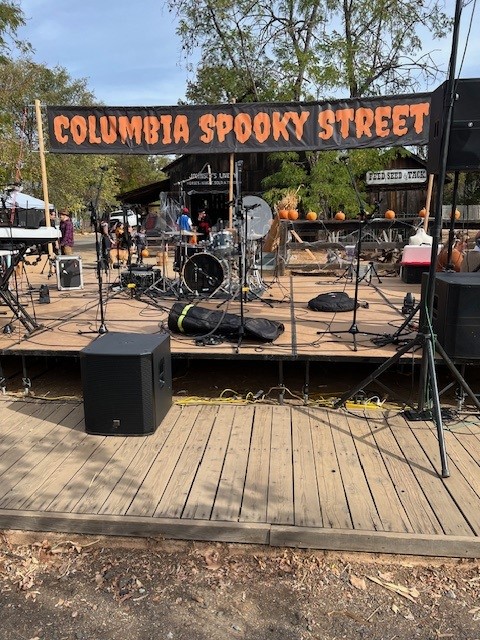
To research the park’s Halloween-themed events for All Aboard for Murder, we took another trip to the historic park in late October of 2024. We enjoyed “Boo on the Boulevard” – Columbia’s Halloween street festival – and I did a late-night paranormal tour where we were allowed into buildings that are generally closed to the public. I didn’t run into any ghosts, although our tour guides insisted they picked up evidence of apparitions.

By tapping into memories of my first trip to Columbia State Historic Park, I mined my own past for inspiration from the past of the miners who founded the village. You’ll find much of my experience channeled into my third Golden Motel Mystery, All Aboard for Murder.

Thank you for sharing this with us, Ellen, and good luck with All Aboard for Murder, the latest book in the Golden Motel mystery series. Readers can learn more about Ellen Byron by visiting the author’s website and their Facebook, Goodreads, BookBub and Instagram pages.

The book is available online at the following retailers:

 Amazon – Kensington – Bookshop.org – B&N – Hudson Books – Target – Walmart 

About Ellen Byron: Ellen is a bestselling author, Anthony nominee, and recipient of multiple Agatha and Lefty awards for her Cajun Country Mysteries, Vintage Cookbook Mysteries,  Catering Hall Mysteries (as Maria DiRico), and Golden Motel Mysteries. She is also an award-winning playwright and non-award-winning writer of TV hits like WingsJust Shoot Me, and Fairly OddParents, but considers her most impressive achievement working as a cater-waiter for Martha Stewart.

A native New Yorker, Ellen is a graduate of Tulane University and lives in the Los Angeles area with her husband, daughter, and a rotating crew of rescue pups.

Posted in Archives, July 2026 | Tagged , , , , | 2 Comments

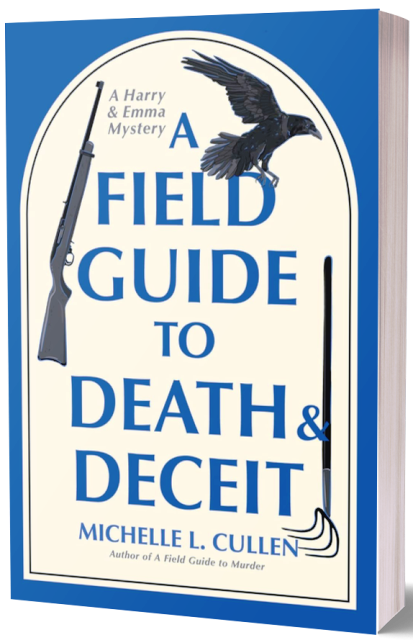
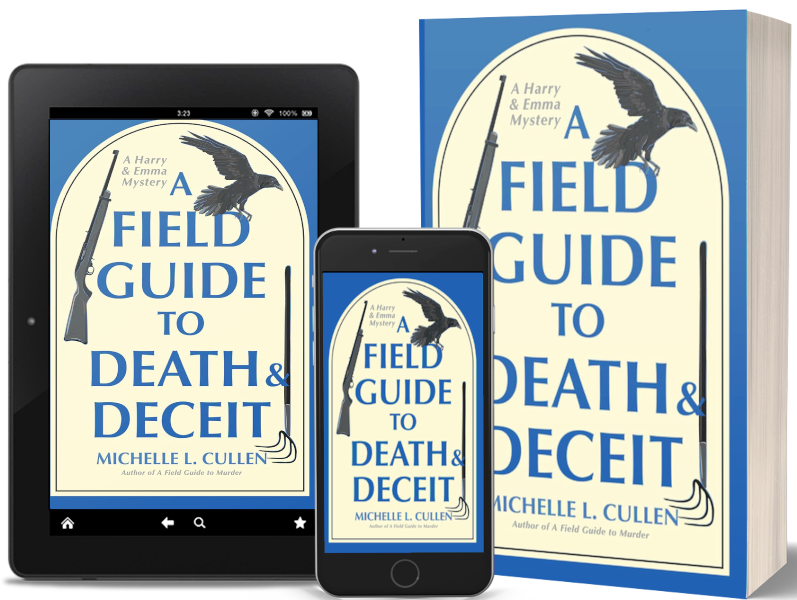
A Field Guide to Death & Deception

Emma Stockton, from A Field Guide to Death & Deceit, a Harry & Emma mystery, is visiting Ascroft, eh? today to share with us what nursing has taught her about crime-solving

Welcome, Emma. I’ll turn the floor over to you –

Some of you might be wondering how a former ICU nurse, caregiver, and international healthcare consultant ends up helping solve two murders in less than a year. Honestly? I’ve been wondering about that too. My friend and colleague Harry Lancaster deserves a lot of the credit for catching two killers — he’s brilliant, with this uncanny ability to observe and understand people that still impresses me every time. But working these cases with him has made me realize something else: I’m not just along for the ride. I’m actually good at solving crime.  

Good enough that I’ve signed up for criminology classes this fall, which might sound like a leap until you consider how the skills I learned in nursing make me a better investigator. Because everything that’s made me halfway decent at solving crimes, I learned in scrubs.

Reading People Is Reading People, Whether It’s a Patient or a Suspect

In the ICU, you learn fast that patients can’t always tell you what’s wrong. Sometimes they’re unconscious. Sometimes they’re scared and downplaying symptoms. Sometimes they’re telling you they feel fine while their body is doing something completely different. So you watch. You learn to read micro-expressions, body language, the way someone’s breathing changes when they’re in more pain than they’re letting on. You develop what I can only describe as a finely tuned radar for when something is off.

This skill translates directly to talking to suspects and witnesses. People who are hiding something have tells — a slight shift in posture, a pause before answering that lasts just a half-second too long, eyes that go somewhere else when they’re getting ready to lie.

Detail and Precision Aren’t Optional in Either Job

Nursing documentation is no joke. Medication dosages, vital sign trends, the exact time a patient’s condition changed — every detail matters because someone’s life can depend on it. You don’t round up. You don’t guess. You don’t skip the thing that seems minor because in a hospital, “minor” has a way of becoming critical very quickly.

Crime scenes work the same way. The detail that seems irrelevant? It probably isn’t. The thing everyone else walked past? That’s worth a second look. I’ve found that my nursing brain refuses to let me gloss over things, which has come in handy more than once when I’ve noticed something that helped identify a killer. Harry — who has way more life experience than me and is an expert when it comes paying attention to detail— told me that this is one of my strongest assets. I’m going to go with him on this one.

Staying Calm When Everything Falls Apart

There is no better training ground for high-pressure situations than an ICU on a bad night. When everything is going wrong at once, you don’t have the luxury to panic. You triage, you prioritize, you act. You learn to slow your breathing down while everything around you speeds up.

I’ll be honest, this has been useful in ways I didn’t plan for. When investigating a murder, the ability to stay functional under pressure isn’t just a professional skill, you need it for survival. My ICU training has kept me level-headed when things have gotten crazy during our investigations. [Long pause.] Well…there was that one time when I fainted after someone pulled a gun on me and Harry, but the next time someone pulled a gun on me, I kept a cool head. Mostly.

Empathy Gets You Further Than You’d Think

People assume that investigation is all logic and instinct, and sure, those things matter. But what people really underestimate is how much empathy helps. When I was a nurse, empathy wasn’t just a nice-to-have characteristic, it was essential. When patients felt heard, they told me more. They trusted me with the symptoms they were embarrassed about, the things they hadn’t told their families. That trust was information; information that saved lives.

The same thing happens when you’re talking to witnesses and suspects. People open up when someone makes them feel safe and understood. They share things they hadn’t planned to share. I don’t think I’d be any good at investigating if I hadn’t spent years at bedsides learning how to make people feel like they mattered — because they do, and because it turns out that genuine care is a surprisingly effective tool to solving crime.

From Nursing to Solving Crime?

I’m not sure where these criminology classes that I’ve signed up to take this fall will lead me. But I do know that I already have several skills important to solving crimes — reading people, paying attention to detail, level-headedness (for the most part), and empathy. So if Harry and I stumble upon another murder in the future, I know I’m ready to help solve it.

Thank you for sharing this with us, Emma, and good luck to you and your author, Michelle L Cullen, with A Field Guide to Death & Deceit, the latest book in the Harry & Emma mystery series.

Readers can learn more about Emma and her author, Michelle L Cullen by visiting the author’s website and her Facebook, Instagram and Goodreads pages.

The book is available online at the following retailers: 

 Amazon – PenguinRandomHouse – Barnes & Noble  – Books A Million – Bookshop.org – Hudson Booksellers – Target – Walmart

About Michelle L. Cullen: Michelle has lived and traveled all over the world, from working as a bilingual secretary in Paris to backpacking around Europe, Central America, and Southern Africa to helping rebuild communities after war throughout Africa, East Asia, South Asia, and the Pacific — where she saw the best and worst of human behavior. Her lifelong fascination with people and why they do what they do, was further fueled by her academic training. She obtained her PhD from the London School of Economics’ Sociology Department and her master’s degree in anthropology from Melbourne University in Australia.

A fan of adventure, she has a black belt in Taekwondo, has summited 900 feet rock climbing, snorkeled the Great Barrier Reef, and hiked up an active volcano. She currently lives in Annapolis, Maryland, where she’s either doing yoga, playing outside, or plotting murder. She’s a proud member of International Thriller Writers, Sisters in Crime, Mystery Writers of America, and The Authors Guide, and has been gleefully reading and watching murder mysteries since the age of ten.

Posted in Archives, July 2026 | Tagged , , , , | 1 Comment