
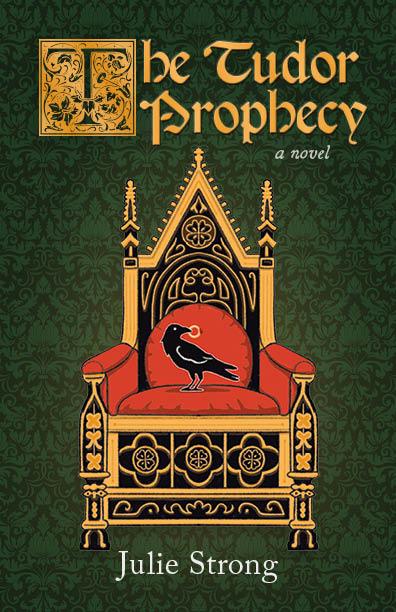
Julie Strong, author of The Tudor Prophecy is visiting Ascroft, eh? today.
Welcome, Julie.
Tell us about your novel.
The Tudor Prophecy takes place in England in 1541. An ailing Henry VIII reigns from a contested throne. In parallel story lines, The Tudor Prophecy follows two young women, Lady Alice Grantmire and Hester Vaughan, cousins who each suffer greatly from the King’s unjust decrees. Lady Alice and her mother are evicted from their estate and take residence in a cottage where they earn a subsistence selling herbal remedies–until they are accused of witchcraft. After being molested by the King, Hester is summoned to her estranged father’s home in Wales. There she becomes betrothed to a Welsh bard whose mentor has visions foretelling the ascendancy of Henry’s second daughter, Elizabeth. When Hester encounters the eight-year-old Lady Elizabeth, the two forge a relationship whereby Hester can persuade the future queen to temper her own rule with mercy. This epic, literary tale–a Game of Thrones meets Little Women–is also for readers who loved the Wolf Hall trilogy by Booker-Prize winner Hilary Mantel.
What prompted you to write about this historical event?
I started writing The Tudor Prophecy, over 25 years ago, so it is hard for me to remember what prompted me to write in this particular historical era.
I knew I wanted to write about a young woman who had difficulty engaging in life because of early childhood traumatic experiences; particularly guilt over the death of her mother in childbirth when she was four. I decided to place the story in the sixteenth century because I have always thought the dresses of Tudor noblewomen most beautiful and feminine. Portraits of Anne Boleyn and Mary Tudor, Henry’s younger sister, show them in gorgeous gowns which reveal part of their shoulders and are cut low enough in front to look enticing yet the overall image is one of regality.
I loved the idea of the velvets, satins and furs that went into creating these dresses. Then I thought about what was happening in England at that time. In November 1534, Henry broke from Rome and declared himself head of the Church in England. He executed his opponents and threw the country into religious turmoil. That was the setting I needed.
I wanted an initially naïve and troubled heroine who would suffer from Henry’s paranoid behaviour, but who would, by increments, grow in love and wisdom to become an ally to the future Queen Elizabeth.
I think Henry VIII is an interesting figure. Rather like Donald Trump. Beloved by people who saw him as one of their own; yes, taller, richer, irresistible to women; but just like they would have been had they only been born luckier. Yet Henry’s daughter, Elizabeth, became a great monarch who demonstrated at least some mercy to her detractors.
I became intrigued by the fate of women during the Reformation. A Catholic nobleman would be executed, but what of his destitute wife and family? His wife would possess no employable skill, but she would have knowledge of herbs. However trying to support herself this way would lay her open to charge of witchcraft.
How closely did you stick to the historical facts? If you used them loosely, how did you decide whether to deviate from them?
I was able to stick closely to historical facts except for in the opening chapter. Sir Hugh would have been required to swear the Oath of Supremacy in 1534. Sir Thomas More was executed in 1535 for refusing. I try to get around this by depicting Sir Hugh as practically unknown, until he is summoned to initiate the legal proceedings for what will become the June 1542 Act of Parliament concerning wise women and cunning men. This act protects wise women and their male counterparts who heal the common folk of simple ailments, from accusation of witchcraft.
What research did you do for this book?
Research for The Tudor Prophecy:
The clothes of the nobility and regular people; what they ate and drank; their beliefs and manners.
Hampton Court Palace, its structure and operation.
Henry VIII – The wives, particularly Catherine Howard, and her fall.
The young Elizabeth and her household.
The Reformation’s abolition of the worship of saints and the Blessed Virgin Mary, and its effects on the populace.
The Latin Mass of the early sixteenth century.
Vestiges of the pagan goddesses in Wales.
The Celtic bardic tradition.
The injustices suffered by the Welsh people under Henry’s reign.
The survival of the shrine of St Winifred at Holywell in Flint, North Wales.
Herbal remedies of sixteenth century.
Penalties for heresy versus witchcraft.
Commonly held superstitions.
The importance of belief in Purgatory and hope of Heaven. Especially with an average life expectancy of thirty, due to high infant mortality rate.
Do you use a mixture of historic figures and invented characters in the novel? If so, which is more difficult to write? Which to you prefer to write and why?
The historical figures in order of appearance: Henry VIII, his fool Will Somers, Bishop Gardiner, Lady Elizabeth, and Lady Troy, Elizabeth’s mistress of household.
I found it easier to write about the historical characters because I knew from books what their actions were likely to be in a given situation.
I felt I could get a sense of Henry’s narcissistic paranoid insecurity, as being the result of his simultaneously over indulged and neglected childhood.
I intuited Elizabeth as an intelligent, precocious child who idolizes a father responsible for the execution of her mother.
The limitations were that I could not write anything of either father or daughter’s behaviour that had not already been determined by the history books. For instance I cannot write in a happy marriage and children for Elizabeth.
I had more freedom, then, to write my invented characters; at the same time it was harder because I had to create them out of thin air. But once they had come to life I enjoyed a closer tie to than with the historical figures. They talked to me in a way Henry and Elizabeth didn’t. Hester, right off, told me she wanted power for herself and to save her family. However, underlying this desire existed a longing to be loved. Then it became my job to deliver what needed to take place so she could learn to both give and receive love.
Alice said she wanted a husband, and family. There was no hidden, underlying desire, and so a husband is what, after enduring several terrifying experiences, she receives. Family has to wait til volume 2.
To answer the question then, I do have preference for invented characters as I am a believer in happy endings, at least for most of the major players, and I can only achieve this for the ones I create.
In an historical novel you must vividly re-create a place and people in a bygone era. How did you bring the place and people you are writing about to life?
I recreated several places as settings for events in The Tudor Prophecy.
I visited Hampton Court Palace ten years ago, and also gathered information about its appearance in the 16th century from the website.
I imagined how the interior of Sir Hugh’s manor would be based on descriptions of Tudor houses of the time. Then I added furniture and sensory detail from that time: scents and a dog.
Learning about the foods of the era helped me set scenes around meals; also where the food came from. Plants that grew in a cottage or herbal garden.
The Welsh village was more difficult as none ever existed in that particular part of North Wales. But it appeared to me as a hamlet within a palisade and seeing as how the inhabitants were going to war I could describe the weapons being made.
The shrine at Holywell still exists, and as the sick visit healing wells it seemed reasonable to attach an infirmary to the site.
I spent much time researching dress of that period.
My characters appear to my mind’s eye in physical form. Once I had a main protagonist wearing the right dress I could flesh out her appearance, her feelings and thoughts. With Hester, the dress she wears in the opening scene is of inferior quality to her cousin Alice’s. This disparity reflects her jealousy and dissatisfaction with life. Dress was quite prescriptive in 16th century England. The nobles, clergy, lawyers and military all wore distinct garb. I found this a great help in developing characters.
I read letters of the time, to understand how learned people addressed each other in writing and extrapolated that to speech. For the lower classes I tried to emulate the dialogue of servants that features in 19th century novels, such as by the Brontes.
I have always been interested in the history of medicine and imbued the older female characters as well as Hester, with this learning.
I have always loved the Classics, and so brought this into the characters of The Tudor Prophecy. Boys of the nobility had always received a classical education, but now, for the first time, some girls were also learning Greek and Latin.
There sometimes seems to be more scope in historical novels for male characters rather than female characters. Do you prefer to write one sex or the other. And, if so, why?
Most of the historical fiction novels I have enjoyed have featured female characters, like in The Serpent Garden, by Judith Merkle- Riley, and In the Company of the Courtesan, by Sarah Dunant.
Of course there are Hilary Mantel’s magnificent Wolf Hall, Bring up the Bodies, and The Mirror and the Light, about the rise and fall of Thomas Cromwell. But to my mind you cannot make a silk purse from a sow’s ear, as the old adage has it. Thomas Cromwell may not have been as greedy as his contemporaries, but he caused too much misery to too many people for me, at least, to find him an engaging character.
I enjoyed writing my male characters, but my chief joy was in creating the female characters. I felt that I, as a woman, could live their lives vicariously, experience what they went through, their joys, terrors and eventually their loves, which I could not, were I writing a male focused novel.
Thank you, Dianne, for these questions. I have learned a great deal about my process of which I was previously unaware.
You’re welcome, Julie, and good luck with your debut novel, The Tudor Prophecy.
Readers can learn more about Julie Strong by visiting her author page.
The Tudor Prophecy will release on January 25, 2025. The GCA (certified accessible) ebook is available now for pre-order at Bookmark Halifax, Chapters/Indigo, Amazon Canada, and Amazon US. Both print and ebook versions are available for pre-order at Amazon UK, and Barnes & Noble.
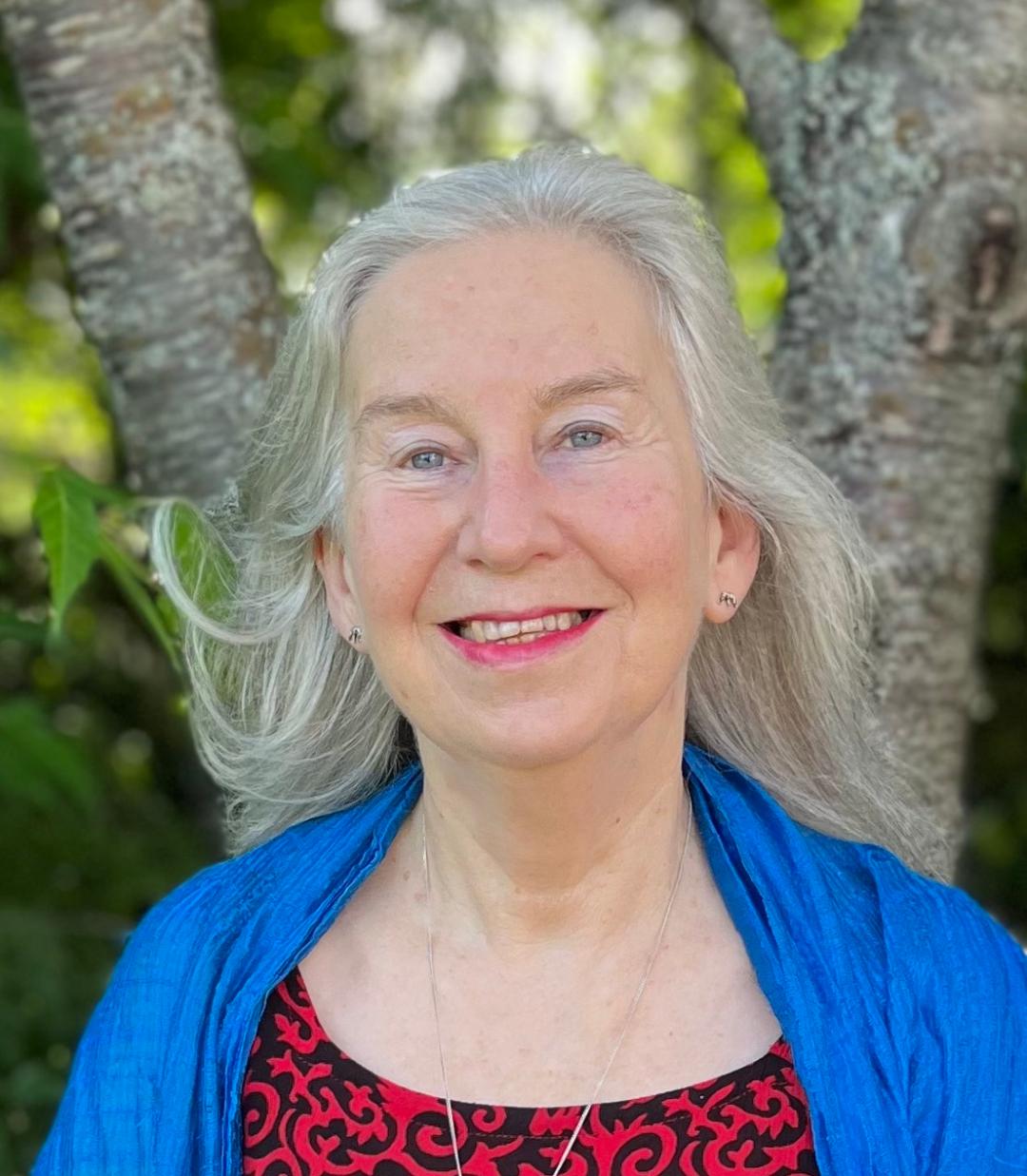
About Julie Strong: Julie, a soon-to-be-retired family physician, is also an award-winning short story author and playwright born in Manchester, England, who grew up in Wales, Australia, and Ireland, and emigrated to Canada in 1980. Her medical degree is from Trinity College, Dublin University, Ireland, and she holds a BA in Classics from Dalhousie University, Halifax. This is her debut novel.






 dianneascroft.com
Thanks for joining the virtual book tour for Julie’s book, Diann! It’s been a whirlwind and we celebrated the release yesterday so perfect timing for your Q&A.