Discussing Oliver & Jack

Today Christina E. Pilz is here with me to discuss her latest novel, Oliver & Jack: In Axminster Workhouse (Fagin’s Boy, Book Three).

Welcome, Christina. Let’s get started, shall we?

Tell us about your novel.

CP: It’s a story about two young men who have been arrested and are being held in a parish workhouse for the quarterly legal sessions, so that they can be tried and convicted for theft.
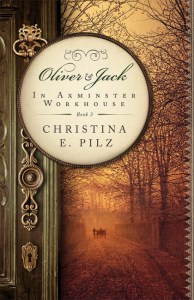
02_Oliver & Jack In Axminster WorkhouseThat’s the single sentence description, but more, the book is about Oliver and Jack going into the crucible of the workhouse, where every action is dictated, every bite of food is monitored, and punishment is meted out in such unpredictable ways that they cannot shield themselves or keep themselves safe.

It’s also about what one person is willing to do for someone they love. In this case, Jack steps up and trades his own safety for Oliver’s.

If writing Fagin’s Boy was a constant daydream for many years, then writing a book like Oliver & Jack: In Axminster Workhouse was a super-secret daydream that hid deep within my psyche. It went so deep that even while writing it I could not articulate why I would put my characters through such hell, nor even explain why I knew so much about 19th century workhouses.

Finally writing this particular book and finishing it, seeing it in solid form, was like watching part of me come alive that wasn’t alive before. Each book brings its own pleasure and its own pain, but I think I will be hard-pressed to experience something like this again.

P.S. Oliver and Jack suffer in this book. You have been warned.

What prompted you to write about this historical event?

CP: I’ve always been interested in workhouses, and the Poor Laws of 1834 that dictated that being poor is the fault of the pauper, and that people who are down on their luck should be made to feel horrible about themselves and their circumstances. That’s what they did back in the old days; if you were poor, you probably were lazy or foolish or simply not worthy to enjoy life’s bounty. And that’s the way you got treated, even if all the cards were stacked against you and it wasn’t your fault how poor you were, you were still to blame.

The Poor Laws came along to homogenize the workhouse experience and punish people for needing assistance; the buildings were designed by committee and were meant to terrify. The diet was meant to starve. The daily work was meant to grind you down; one report states that paupers inside the workhouse had to pick 5 and ½ pounds of oakum per day, which was twice as much as had to be picked by convicts in the prisons.

But really, the bottom line is that I like writing about the underdog. I like putting my characters through hell and watching how they struggle out of it. Because they always do come out of it, for even if I am cruel to my characters, I do like a Happily Ever After, or at least a Happily Ever After For Now.

How closely did you stick to the historical facts? If you used them loosely, how did you decide whether to deviate from them?

CP: I followed the facts about workhouses almost to the letter; all of what happens in In Axminster Workhouse can be traced back to an actual occurrence at a real workhouse.

I studied how paupers were treated and incorporated the ideas behind personal stories from the 1800’s. As well, I read entries from the day books that the masters of the workhouses kept; the day books contained a chronology of who was admitted and why, what food they were fed, what clothes they wore, what work they did, and what punishments were handed out.

I also read up on the reviews done by the overseeing committees when they went to examine the state of a particular workhouse. The reports always seemed to say that people slept in filthy beds with too many to a bed, with only a bucket in the corner for a lavatory, and with rain coming in the window.

I keep waiting for someone to write to me and say “Oh, this is too harsh, this really didn’t happen.” And then I’ll proudly pull out my notes and links and show them that yes, it did.

What research did you do for this book?

CP: I’m not even a little bit ashamed to say that I did tons of research for this book. But then, any historical writer will tell you what I’m telling you now: research is the most fun you will ever have while writing a book.

I read everything that I could on that era, visited every website, and mulled it over in my head.

I had several go-to websites. One was The Victorian Web, which lists and details just about anything you might want to know about the Victorian era. Another is David Perdue’s Charles Dickens Page, which examines all aspects of Dickens’s life and work, and includes interactive maps of locations mentioned in his books.

The finest website of all was Peter Higginbotham’s Workhouse site. I must have spent hours going over various maps and images, examined the Workhouse Rules section, and the Glossary, and well, frankly, I pretty much read all of it. Mr. Higginbotham is such a champion collector of the most fascinating information about workhouses, so there was a lot to read. But I read it. All of it.

As for books, I have several favorite authors whose books I have not only read, but also studied. One is Liza Picard. She writes about the era that I’m interested in, Victorian England circa 1846, and no detail is too small for her to write about, which thusly turns into my pleasure to read about. It is from her that I learned that sugar was molded into cones, and that these cones were wrapped in blue paper, because it was thought that blue paper kept the flies away.

Another favorite of mine is Judith Flanders. I bought her book The Victorian City, because I sometimes get into a mood where I want to immerse myself in the culture that I’m writing about, and this rather than writing about it!

If there’s one book I’m glad I read, it’s The Victorian City, because of the amount of details about the small things, the everyday experiences of the common man, is astounding and quite useful. For example, did you know that they used to run boat excursions from London to Greenwich, where you could attend a fish fry? To me that sounds like the most fun, so I’m desperately trying to figure out a way for it to at least get a mention, if not actually having Oliver and Jack buy tickets and go themselves.

Last but not least is the book At Home: A Short History of Private Life by Bill Bryson. I have it on audio read by Mr. Bryson himself, and I’ve listened to it more often than I care to admit, almost to the point of memorizing it. Mr. Bryson is no slouch when it comes to the small details either, and it’s those small details that make a good story.

Do you use a mixture of historic figures and invented characters in the novel. Which is more difficult to write? Which to you prefer to write and why?

CP: I once stated that I wouldn’t want to use a real historical character, on account of so much is known about them, I wouldn’t want to get it wrong. So I prefer invented characters, as you can do more with them.

There are historical figures mentioned in my books, for example the owner of Rhode Hill House in my book Oliver & Jack: At Lodgings In Lyme. His name was Sir John Talbot, and he seemed like a nice, decent fellow so I didn’t want to make him the bad guy. But I needed a bad guy, so I determined that someone had painted Sir John’s bedroom with Scheele’s Green (which is very toxic), and that he had to go to Brighton to get his health back. The housekeeper, Mrs. Heyland, was happy to step in as the bad guy in his absence.

In In Axminster Workhouse I did not use any real historical figures, which was due to the limited scope of the book. If you’re inside of a workhouse, you have the master, the workmaster, and other staff members, as well as other paupers, and that’s pretty much it.

In an historical novel you must vividly re-create a place and people in a bygone era. How did you bring the place and people you are writing about to life?

CP: One thing I do is make sure that I use all the five senses when writing, which is pretty standard writing advice. Only I’ve found that if you use all of them in the same scene, it can be overwhelming. So I make sure that I use the senses that are most appropriate for that scene.

Also, I put in small details that a character in that scene might notice, even if it won’t move the plot forward. For example, in Axminster, Oliver and Jack stop to beg a bowl of milk from a farmer who is milking his cow. The bowl is white with blue decorations on it, and has a chip along the rim that the boys must avoid when drinking out of it.

Then I go on to describe how the milk feels and tastes having come straight out of a cow. For that, I pulled on the one time I helped a friend milk some goats, which of course led to me asking if I could drink raw goat milk straight from the goat, just like Heidi, you know? You never know what experience might be useful in a book.

In part, the answer to your question is that I pull on real-life experiences that I just happen to have, most of which relate to the Victorian era, and which I seek out on purpose. The other part is that I go inside of the character’s head, and see through their eyes.

There often seems to be more scope in historical novels for male characters rather than female characters. Do you prefer to write one sex or the other. And, if so, why?

CP: I have to admit that I’ve not noticed that there is more scope for male characters than female characters. But if it is true, then it might be because history was written about men, by men, for men, and so, perhaps, historical novels reflect that. Or maybe it’s because the Male Eye is the one that dictates what gets published or put on TV or shown in theaters, and the Male Eye sees only the Self, and women are given short shrift.

Personally, I prefer characters that feel real, whether male or female. There’s nothing more boring than a two-dimensional character, no matter what the gender, or era, for that matter. I like it when real characters live real lives, so I tend not to read about anybody who lives in an ivory tower. That is, I don’t like to read about the rich and the powerful.

One example is that I preferred the episodes of Downton Abbey that focused on the below-stairs characters, like my character Thomas Barrow, the Bad Boy With a Heart of Gold. That is to say, I like my historical novels to be a bit more gritty and dirty than is allowed by watching Lady Mary trying to figure out which beau she’ll say Yes to. But then, I’ve always preferred the Pauper to the Prince.

Thanks for answering my questions, Christina.

Readers can learn more about Christina by visiting her website and can connect with her on Facebook, Goodreads and Twitter.

About Christina E. Pilz: She was born in Waco, Texas in 1962. Axminster Christina E. PilzAfter living on a variety of air force bases, in 1972 her Dad retired and the family moved to Boulder, Colorado. There amidst the clear, dry air of the high plains, as the moss started to grow beneath her feet, her love for historical fiction began with a classroom reading of Little House on the Prairie by Laura Ingalls Wilder.

She attended a variety of community colleges (Tacoma Community College) and state universities (UNC-Greeley, CU-Boulder, CU-Denver), and finally found her career in technical writing, which, between layoffs, she has been doing for 18 years. During that time, her love for historical fiction and old-fashioned objects, ideas, and eras has never waned.

In addition to writing, her interests include road trips around the U.S. and frequent flights to England, where she eats fish and chips, drinks hard cider, and listens to the voices in the pub around her. She also loves coffee shops, mountain sunsets, prairie storms, and the smell of lavender. She is a staunch supporter of the Oxford comma.
Posted in March 2016 | Tagged , , , | 1 Comment

Thoughts On Letters From A Patchwork Quilt

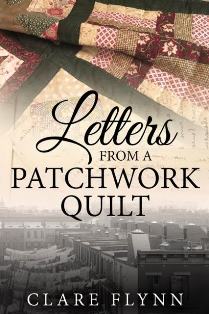
A couple months ago I read Letters from a Patchwork Quilt by Clare Flynn and I’ve been turning the story over in my mind ever since.

Here’s what the publisher, Cranbrook Press, says about Letters Patchwork Quilt coverthe book: “In 1875 England, a young man, Jack Brennan, from a large and impoverished Catholic family refuses to be pushed into the priesthood and runs away to fulfil his dream of becoming a teacher. Jack falls in love with Eliza Hewlett, but his dreams and plans are thwarted when his landlord’s daughter, Mary Ellen MacBride, falsely accuses him of fathering the child she is expecting. Rather than be forced to marry his accuser, Jack decides to run away to America with Eliza. Just as they are about to sail, Jack is arrested and dragged from the ship, leaving Eliza alone en route to New York with just a few shillings in her pocket.”
I must say that the novel surprised me as it doesn’t follow the usual story arc. It made me question how I think a story should be told.

I found the opening chapters, during Jack’s childhood and early years teaching, rather slow moving and the plot didn’t initially hold my attention but as the story progressed I was drawn in. Toward the end of the novel years often flew past and I was sometimes disconcerted by these jumps in time.

As I’ve said, the novel didn’t unfold in the way that I expected. I found it strange to follow two separate story threads that didn’t actually overlap as I had expected them to. Each of the strands, Jack’s and Eliza’s stories, was engrossing in itself, but I was disappointed that they weren’t more firmly bound together. I felt that the two characters’ paths should eventually meet or that there should at least be a ‘near miss’. Although the plot is true to life, I can’t decide whether I found it satisfying or not. In the end, Eliza’s descendant provides the closure to the story but I wondered whether it was enough.

The characters were well drawn and I found it easy to care about Jack and Eliza, and some of the minor characters. I felt empathy for Eliza as she struggled through harrowing experiences and annoyance with Jack for his repeated weakness. The author understood and skilfully portrayed each character’s motivations and actions.

The vividly evoked settings in England and America were another of the book’s strongest points: from the tranquil town of Bristol to the rough streets of New York to middle class St Louis. Each place is portrayed in convincing detail.

Overall I enjoyed this novel, even though I struggled with the fact that it didn’t follow the form and course I expected. For readers who enjoy historical fiction it is an insightful glimpse into British and American life more than a century ago. It is also a moving tale of love, loss, suffering and survival.

Readers can learn more about the book by visiting its Amazon page. They can connect with Clare Flynn on her website, as well as her Facebook and Goodreads pages and Twitter.

About Clare Flynn: She is also the author of A Greater World, set in Australia in 1920 and Kurinji Flowers, set in India in the 1930s and 40s. She is a graduate of Manchester University where she read English Language and Literature. After a career in international marketing, working on brands from nappies to tinned tuna and living in Paris, Milan, Brussels and Sydney, she ran her own consulting business for 15 years and now lives in West London. Co-founder of the popular website, Make it and Mend it, and co-author of the 2012 book of the same name, Letters From a Patchwork Quilt is her third novel. When not writing and reading, Clare loves to splash about with watercolours and grabs any available opportunity to travel – sometimes under the guise of research.

Posted in February 2016 | Tagged , , , , | Leave a comment

Chatting About Taming The Twisted

I’ve invited Jodie Toohey here today to tell us a little about Taming the Twisted.

Welcome, Jodie.

Tell us about your novel.

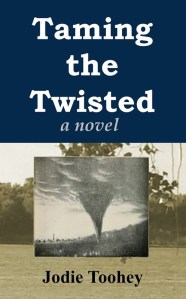
JT: Taming the Twisted is written in a similar style to Laura 02_Taming the TwistedIngalls Wilders’ Little House books though updated for modern times. It might read as if she’d left in all of the juicy tidbits about things people didn’t talk about during the time when she was writing. Taming the Twisted is a story of destruction, romance, mystery, and deceit set against a back drop of an actual historical event.

In early June, 1860, Abigail enjoyed a peaceful home life with her parents, younger sister, and twin toddler brothers. Their home in Camanche, Iowa, where they’d emigrated from Pennsylvania, was almost complete and her beau, Joseph Sund, had recently proposed marriage.

That changes the evening of June 3rd when a tornado rips through town, killing her parents. At the mass funeral for the over two dozen people who perished in the storm, she learns Marty Cranson, with whom Abigail witnessed Joseph having a heated argument, died, but at the hands of a person rather than the tornado.

In addition to being faced with raising her young siblings, Joseph has disappeared without a trace and a stranger, Marshall Stevenson, appears, offering to help Abigail repair the families’ home and cultivate the newly planted farm crops.

Abigail, while developing romantic feelings for Marshall, tolerating the scorn of town woman Pamela Mackenrow, and working as a seamstress and storekeeper to support her siblings, becomes obsessed with finding out who killed Marty, hoping that, and not that he no longer loved her, was the reason Joseph left without saying goodbye.

What prompted you to write about this historical event?

JT: I grew up in Camanche, Iowa, and heard many times growing up how if it hadn’t been for the tornado, Camanche would’ve been bigger than Clinton, a town of about seven times higher population just north on the Mississippi River. I also always loved hearing the stories my grandmother, Betty (Sinkey) Shaw, told about growing up in Camanche, where she was born in an old train depot my high school friend actually lived in.

How closely did you stick to the historical facts? If you used them loosely, how did you decide whether to deviate from them?

JT: I stuck to historical facts as much as I possibly could. The tornado was real, the stories of destruction were real, and the setting as far as town layout and street names were real; my character’s family and the murder were invented to create an interesting story. I basically used the real tornado as a backdrop and catalyst to create my fictional story.

What research did you do for this book?

JT: I spent a lot of time researching, including in several books, which are included in the book’s bibliography, and microfilm at the library. I researched the tornado as well as the look and feel of life in 1860, in Camanche in particular and in Iowa and the Midwest in general. I tried to verify every historical fact I could, down to the weather where I could get the information.

Do you use a mixture of historic figures and invented characters in the novel? Which is more difficult to write? Which to you prefer to write and why?

JT: I used mostly invented characters in the novel. Some of the characters, such as the owner of the store Abigail frequents, were real people living in Camanche at the time. I haven’t tried to write a story from a real historical figure’s point of view, but I imagine it would be much more difficult. I would be afraid that I would get something wrong and offend someone. So far, for that reason, I prefer to write the most intimately about fictional characters.

In an historical novel you must vividly re-create a place and people in a bygone era. How did you bring the place and people you are writing about to life?

JT: I accomplished this (I hope) mostly through research and just the familiarity of growing up in Camanche. I spent a day walking the ground where my characters would’ve walked in Camanche, taking photos and notes, and then I used that to mentally put myself in those places back in 1860 as I was writing. The other part of it was including all of those details from my research and “walking the ground” into to the story to give it authenticity and make it feel alive.

There often seems to be more scope in historical novels for male characters rather than female characters. Do you prefer to write one sex or the other. And, if so, why?

JT: I prefer to write from the female’s point of view, simply because, since I’m female, I feel like I understand more how they would think, feel, and behave. I’m always impressed when I read something from one gender’s point of view and find out the author was the opposite gender; that is evidence of a very skilled author. I’m not quite there. I wouldn’t say I’d never attempt writing something from a male perspective, but at this time, I have plenty of ideas for female-centered stories.

Thanks for taking the time to answer my questions, Jodie, and good luck with your novel.

Readers can learn more about Jodie and Taming the Twisted by visiting her website, her Facebook and Twitter pages.

About Jodie Toohey: She is the author of four additional books, Twisted Tooheytwo poetry collections – Crush and Other Love Poems for Girls (2008) and Other Side of Crazy (918studio, 2013) – as well as two novels, Missing Emily: Croatian Life Letters (2012) and Melody Madson – May It Please the Court? (2014).
When Jodie is not writing poetry or fiction, she is helping authors, soon-to-be-authors, and want-to-be authors from pre-idea to reader through her company, Wordsy Woman Author Services.

Posted in February 2016 | Tagged , , , | Leave a comment

Discussing Daughter Of Destiny

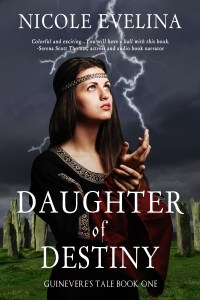
Today I’ve invited Nicole Evalina to tell us about her historical fantasy, Daughter of Destiny.

Welcome, Nicole.

Tell us about your novel.

NE: Daughter of Destiny is the first book in a historical fantasy trilogy that tells Arthurian legend from Guinevere’s point of view. This book focuses on her early life before King Arthur, when she was a priestess of Avalon, a warrior and in love with someone quite different from the king.  Here’s the back cover copy:

“Before queenship and Camelot, Guinevere was a priestess of Avalon. She loved another before Arthur, a warrior who would one day betray her.

02_Daughter of DestinyIn the war-torn world of late fifth century Britain, young Guinevere faces a choice: stay with her family to defend her home at Northgallis from the Irish, or go to Avalon to seek help for the horrific visions that haunt her. The Sight calls her to Avalon, where she meets Morgan, a woman of questionable parentage who is destined to become her rival. As Guinevere matures to womanhood, she gains the powers of a priestess, and falls in love with a man who will be both her deepest love and her greatest mistake.

Just when Guinevere is able to envision a future in Avalon, tragedy forces her back home, into a world she barely recognizes, one in which her pagan faith, outspokenness, and proficiency in the magical and military arts are liabilities. When a chance reunion with her lover leads to disaster, she is cast out of Northgallis and into an uncertain future. As a new High King comes to power, Guinevere must navigate a world of political intrigue where unmarried women are valuable commodities and seemingly innocent actions can have life-altering consequences.

You may think you know the story of Guinevere, but you’ve never heard it like this: in her own words. Listen and you will hear the true story of Camelot and its queen.

Fans of Arthurian legend and The Mists of Avalon will love Daughter of Destiny, the first book in a historical fantasy trilogy that gives Guinevere back her voice and traces her life from an uncertain eleven year old girl to a wise queen in her fifth decade of life.”

What prompted you to write about this historical event?

NE: When I was in college, a friend of mine gave me a copy of The Mists of Avalon for Christmas. I LOVED it, but I hated the author’s portrayal of Guinevere as meek and well, boring. That made me seek out other books about Guinevere and I read Parke Godwin’s Beloved Exile, which tells the story of what happened to Guinevere after the fall of Camelot. That made me wonder what happened to her before and after Arthur, which is something you don’t hear much about. Then Guinevere came into my head, telling me she wanted me to write her story (which I thought at the time would be all one book). The rest, as they say, is history.

How closely did you stick to the historical facts? If you used them loosely, how did you decide whether to deviate from them?

NE: It’s hard to call anything about Arthurian legend “historical fact” because we know so little about what was real and what comes from mythology and legend. If we accept that someone like King Arthur probably existed, all we know is that someone beat the Saxons badly at a battle now known as the Battle of Mount Badon that took place sometime between 490- 503 AD and ushered in an era of peace. Some people also credit Arthur with the ancient title Dux Bellorum, which is like calling him “duke of battles” and means he was a great military leader, maybe not even a king. But beyond that, everything else is left up to the imagination.

I did choose to follow some of the traditional legendary sources. For example, in my world, King Lot is married to Arthur’s half-sister, Ana, a character usually dumped in favor of Morgan le Fay or Morgause, but who actually dates back to Geoffrey of Monmouth. I also use Monmouth’s story of the “Kingmaker,” a comet that prophesies the birth of a great king. Most of the older sources tell us little, if anything, about Guinevere before her marriage to Arthur, so I was on my own there.

What research did you do for this book?

NE: I spent 15 years researching Arthurian legend, Celtic Britain and the various peoples, cultures and religious practices that shaped the country after the withdrawal of Rome. (A full list of my resources is available here.

I was fortunate to travel to England twice to research the Guinevere’s Tale trilogy, where I consulted with internationally acclaimed author and historian Geoffrey Ashe, as well as Arthurian/Glastonbury expert Jaime George, the man who helped Marion Zimmer Bradley research The Mists of Avalon. He led a two-week Arthurian legend tour that changed my life in so many different ways.

Do you use a mixture of historic figures and invented characters in the novel? Which is more difficult to write? Which to you prefer to write and why?

NE: I’m going to substitute the word “traditional” for “historic” in my answer. Yes, I used a mixture of the names you know and love, like Morgan, Kay, Lancelot, Isolde, Arthur, etc. but I also created some of my own characters, like Galen, Rowena, Mona, Lyonesse, Grainne and Octavia. Both groups have their positives and negatives. Traditional characters give you a starting point, but you have to be able make them fit into an established framework and try not to deviate too far from tradition, lest you irritate purists. Invented characters are kind of the opposite because you have free reign with them, but you also have to make sure they fit in with the traditional ones and are appropriate for the story. It’s hard for me to pick one over the other because my favorite characters from this book come from both groups, Isolde (traditional) and Galen (invented).

In an historical novel you must vividly re-create a place and people in a bygone era. How did you bring the place and people you are writing about to life?

NE: A lot of research, visiting the locations as they are today, a lot of meditation and imagination. The research gave me a framework for what the people and places were probably like and visiting in person gives you a sense of the vibe of a place, which while it changes over time, can still be a powerful force of inspiration. And yes, I did meditate on these places, especially Avalon. It’s my spiritual happy place, so I described it in the book as I see it in my mind. The characters were somewhat based in their traditional personalities (i.e. Elaine is unstable, Gawain is a ladies’ man, Kay is a jokester, Morgan has an evil streak), but they also took on a life of their own as I wrote and they evolved.

There often seems to be more scope in historical novels for male characters rather than female characters. Do you prefer to write one sex or the other. And, if so, why?

NE: I definitely prefer writing the female characters. In fact, my mission statement as a historical fiction writer is “To rescue little-known women from being lost in the pages of history. While other writers may choose to write about the famous, I tell the stories of those who are in danger of being forgotten so that their memories may live on for at least another generation. I also tell the female point of view when it is the male who has gotten more attention in history (i.e. Guinevere to King Arthur). I feel like men have had their time; now it’s time to tell the often-neglected female story. And beyond that, being a woman, I simply relate to those characters better than to the men.

Thanks for your very thorough and interesting answers, Nicole.

Readers can learn more by visiting Nicole’s website/blog  as well as Pinterest, Facebook, Goodreads, Instagram and Tumblr. She can also be found on Twitter

Daughter - Nicole EvelinaAbout Nicole Evelina: She is a St. Louis-born historical fiction and romantic comedy writer. Her first four books are coming out in 2016:

  1. Daughter of Destiny (January 1 – This is the first book of an Arthurian legend trilogy that tells Guinevere’s life story from her point of view)
    2. Camelot’s Queen (March 23 – The second book in the trilogy)
    3. Been Searching for You (May 23 – a contemporary romantic comedy that won in the single title romance category of the 2015 Great Expectations Contest (sponsored by North Texas RWA) and the 2015 Gold Rose Contest (sponsored by Portland RWA) and is a finalist in five others.
    4. Madame Presidentess (July 25 – Historical fiction about 19th century American Presidential candidate Victoria Woodhull, the first American woman to run for President)

She hopes to have the final book in Guinevere’s Tale available in late 2016 or early 2017.

Nicole is a member of and book reviewer for the Historical Novel Society, and Sirens, a group supporting female fantasy authors, as well as a member of the Romance Writers of America, Women Fiction Writers Association, the St. Louis Writer’s Guild, Women Writing the West and the Alliance of Independent Authors.

She is one of only six authors who completed the first week-long writing intensive taught by #1 New York Times bestselling author Deborah Harkness in 2014. Nicole has traveled to England twice to research the Guinevere trilogy, where she consulted with internationally acclaimed author and historian Geoffrey Ashe, as well as Arthurian/Glastonbury expert Jaime George, the man who helped Marion Zimmer Bradley research The Mists of Avalon.

Posted in February 2016 | Tagged , , , , | 1 Comment

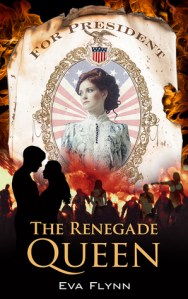
The Renegade Queen

Eva Flynn is here today to tell us about her new historical novel, The Renegade Queen.

Welcome, Eva. Let’s get started.

Tell us about your novel.

Presidential Election of 1844. James Polk 1795-1849 and George Dallas 1792-1864 ran as the Democratic candidates. .; Shutterstock ID 245959642

Presidential Election of 1844. James Polk 1795-1849 and George Dallas 1792-1864 ran as the Democratic candidates. .; Shutterstock ID 245959642

EF: The Renegade Queen explores the life of Victoria Woodhull; the first woman presidential candidate; the first woman to testify to Congress; the first female stockbroker; and the first American to publish The Communist Manifesto. Victoria sacrificed everything for female equality but her rivalry with moderate Susan B. Anthony and her fights with religious leader Henry Ward Beecher nearly destroyed her.

An unconventional love story between Victoria and her second husband, Civil War hero James Blood is also woven throughout the story.

What prompted you to write about this historical event?

EF:I was initially intrigued because I could not find Victoria Woodhull in the history books despite all that she accomplished; first woman presidential candidate; first woman to testify to Congress; first female stockbroker; and first American to publish The Communist Manifesto.

I am an only child and I was always pestering my parents to entertain me. One day they bought me a set of World Book Encyclopedias. You may not remember hardbound encyclopedias, but these were divided up alphabetically, so the “M” for example would have two big books. The subjects that begin with WXYZ were all in one slim volume. My parents told me to entertain myself by perusing these books. I picked up the “WXYZ” volume and I turned to the two paragraphs about Victoria Woodhull. I was amazed as I had never heard of her, and this is as a child of a political science professor (father) and a staunch feminist (mother). I took these paragraphs to both of my parents and they had never heard of her either. From that point on I have been fascinated not only with Victoria Woodhull but about those who the history books leave out.

And then I majored in political science myself and became fascinated by the political process and those who are live on the fringes of the political process. I admire anyone who has the courage to stand up for their beliefs (whether I agree with them or not), and my admiration for Victoria only grew as I realized how difficult life for women was during Reconstruction.

And in the intervening years between hardbound encyclopedias and now, a wealth of resources from the 1870s have been placed on the Internet which makes research so much easier and less time consuming then it used to be. For example, one can find several issues of her newspaper online. Additionally, the Library of Congress has digitized thousands of newspapers from the era. Not everything I’d want is online, but enough of it that I don’t feel the need to travel to remote archives.

How closely did you stick to the historical facts? If you used them loosely, how did you decide whether to deviate from them?

EF: Not all of Victoria’s biographers agree on what the facts are because there are periods of her life where we have little more than her reminisces and she sometimes contradicted herself in the various retellings of her story. But I did devote a lot of time to research and nearly everything in the book is either accurate or represents one particular memory of Victoria that she may have contradicted later. I deviated in how Victoria met James for dramatic effect and how long they lived together. To go through years of cohabitation before the events would have slowed the dramatic pace too much. There are differing opinions on the true nature of Victoria’s relationship with Commodore Vanderbilt. I used research from the testimony in the fight over his will as the basis for the story, but some scholars believe that his children lied in court.

And then there are people that I left out because I believe that a novel can have too many characters. Victoria’s siblings, for example, caused her problems throughout her life but I did not discuss them. And Victoria had a newspaper editor (Stephen Pearl Andrews) that she was close to and I did not put him in the novel.

Also, there were a few men who claimed they had affairs with Victoria but Victoria and those close to her denied these claims. These men were also paid for their story. I did not add these men to her life, I think it would have even complicated the story more and I’m not sure the men were in her life.

What research did you do for this book?

EF: In addition to the excellent biographies of Victoria Woodhull, Commodore Vanderbilt, Karl Marx, Susan B. Anthony, Benjamin Butler, and Henry Ward Beecher that I read, I also read primary sources; newspapers from the time period, Victoria’s speeches, Victoria’s newspaper articles that she wrote, and Tennessee’s speeches. I also consulted court transcripts of various proceedings that involved Victoria. In addition, I read interviews with Elizabeth Cady Stanton and other contemporaries of Victoria.

Do you use a mixture of historic figures and invented characters in the novel. Which is more difficult to write? Which to you prefer to write and why?

EF: I actually only invented three-four minor characters, the rest of them are historical figures. If one has done enough research then it is easier to write historical figures, but I also like the freedom of invented characters. I enjoy writing both equally.

In an historical novel you must vividly re-create a place and people in a bygone era. How did you bring the place and people you are writing about to life? 

EF: I conducted research on what life was like in the major cities during Victoria’s lifetime, not only in terms of the attitudes towards women, but also the voting patterns, the ethnic makeup, and the prominent occupations. In addition, I research the landmarks in the city. For example, the bar in the “tenderloin” district was a real bar then and the sign did really say, “Ale, Raw Onions, and No Ladies.” The bar is still there today. I also read a traveler’s guide to New York brothels which was hysterical.

Probably the best thing that I did to get across that time period was excerpting real newspapers and historical documents throughout. These are all presented in italics and they give the reader a sense for the times and the language.

I also frequently consulted an etymological dictionary to ensure that I was not using a word that was not used back then. For example, the word “sex” was not used then to refer to intercourse.

There often seems to be more scope in historical novels for male characters than female characters. Do you prefer to write one sex or the other. And, if so, why? 

EF: I prefer to write about strong women because we all need more positive female role models. The main characters in The Renegade Queen, Susan B. Anthony and Victoria Woodhull are multi-dimensional and complex and I also think it is important to show that women, just like men, have mixed motivations.

Thank you for such comprehensive answers to my questions, Eva. I’m also a great fan of strong women, real and fictional, so I’m happy to wish you success with The Renegade Queen.

Readers can learn more about Eva by visiting her website, Goodreads page and Twitter.

Renegade Eva FlynnAbout Eva Flynn: Eva was raised on bedtime stories of feminists (the tooth fairy even brought Susan B. Anthony dollars) and daytime lessons on American politics. On one fateful day years ago when knowledge was found on bound paper, she discovered two paragraphs about Victoria Woodhull in the WXYZ volume of the World Book Encyclopedia. When she realized that neither of her brilliant parents (a conservative political science professor and a liberal feminist) had never heard of her, it was the beginning of a lifelong fascination not only with Victoria Woodhull but in discovering the stories that the history books do not tell. Brave battles fought, new worlds sought, loves lost all in the name of some future glory have led her to spend years researching the period of Reconstruction. Her first book, The Renegade Queen, explores the forgotten trailblazer Victoria Woodhull and her rivalry with Susan B. Anthony.
Eva was born and raised in Tennessee, earned her B.A. in Political Science from DePauw in Greencastle, Indiana and still lives in Indiana. Eva enjoys reading, classic movies, and travelling.

Posted in February 2016 | Tagged , , , , , , , | Leave a comment

Second World War Club For Wartime Fiction

Club 8

Today’s the first anniversary of a new Facebook group, Second World War Club – well, I’m exaggerating a bit. The group is a week old but it’s off to a good start. As you probably know, I’m writing a series of Short Reads and novels set in Northern Ireland during the Second World War. For years I’ve had an interest in that era and I enjoy reading about all aspects of life during the war, in places around the world, not just the corner I write about. I know lots of people love wartime fiction too, so a friend of mine, Rachel Zaouche, who writes as Ellie Keaton, and I decided to set up a Facebook group where we can get together with other wartime fiction fans.

We’ve teamed up to form the Second World War Club. It’s a Facebook club for readers who enjoy wartime fiction. We set out to focus on World War II but have quickly expanded our horizons to include World War I too. The aim is to share books we loved, talk about real life historical events and meet others who share our enthusiasm for the subject. We’ll also invite authors to discuss their books with us and we hope to have some giveaways too.

If you are interested in wartime fiction, in its many forms, why not hop over to the club and have a look. If it appeals to you, please join us here.

Posted in February 2016 | Tagged , , , , , , , | Leave a comment

The Threads of War Kickstarter Campaign

My guest today is Jeremy Strozer. He’s here to ask for your assistance with Threads of the War Volume II. I’ll let Jeremy tell you about the project and his request.

With that brief introduction, I’ll turn it over to you, Jeremy.

Jeremy: Threads of The War; a series of personal truth-inspired flash-fiction, needs your help!

Until February 6 you can sponsor Threads of The War, Volume II on Kickstarter, getting special rewards for helping bring this fun e-book to the world.

The Threads of The War series weaves fictional personal Threadsnarratives of real events to reveal history for what it is: a tapestry of the fibers of individual lives through time. Building from the premise World War I, World War II, and the many other wars of the 20th Century were actually one prolonged human tragedy, the Threads series crosses the world to find individual stories exposing the facts, fictions and fallacies of armed violence. In Volume 1 the reader is whisked from the seats of a German cinema in 1915 and high over Pearl Harbor on December 7th, 1941 to under the water of the port of Alexandria, Egypt and on a rail line in East Prussia in 1945. Volume II builds off of its predecessor by taking us from the celebratory streets of Paris in the summer of 1914, under the coast of North Carolina in 1918, across the ocean to the evacuated beaches of northern France in 1940, and finally within the minds of both the liberated and the confined at camps in 1945.
Each story in the Threads series was designed to tug at the heart, incite anger, or make a reader laugh at the ridiculousness of war. Between the two volumes, thirty-six stories are made available to read, covering the world, different sides in the conflict, and as many perspectives as there are titles. Following each story, the reader is provided a specific and revealing quick summary of the true event narrated, offering both entertainment and education within the time it takes to read a blog-post. It’s easy to complete each story in one sitting, allowing the reader to jump in and out of the books whenever and wherever convenient.

This series started from my personal experience helping a war ravaged country remove unexploded bombs from its countryside. The remnants of war continued to kill the people despite forty years passing since the guns fell silent. War is a personal series of events for those involved far beyond the signing of any treaty ending the sanctioned violence. Each war lingers with all who experienced it, and all who they touch. The 20th Century was full of wars, violence, hate, anger, and suffering. Yet, the same time was also full of humor, humanity, and a rich history that needs to be shared. Threads of The War shares that history from a personal perspective, which is how it was experienced the first time.

Here are some quotes from readers:

“I thoroughly enjoyed it. I very much liked how you put a human touch on each of the incidents that inspired each story.”

— Donald

“You are getting to be a budding WEB Griffin. Putting a bit of a face on real events in war.”

— Pat

“Very poetic! Enjoyed it, thanks!!”

— Ricky

You can help support the continuing publication of the Threads series by sponsoring the Kickstarter campaign for Threads II here. Millions more stories are available, thousands already identified, and a Volume III already written. If you’re interested in more stories, check out my blog.

Thanks for being a guest on my blog, Jeremy. Good luck with Threads of the War and your Kickstarter campaign. Readers can also find Jeremy on Facebook and Twitter (@jeremystrozer).

Posted in February 2016 | Tagged , , , , , , | Leave a comment

The Yanks In Europe

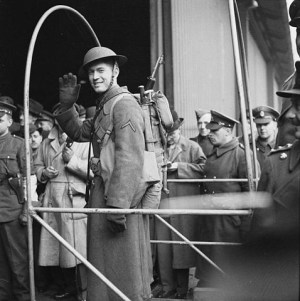
Today is a significant date in the history of America’s involvement First GI NIin the Second World War. Almost seventy-five years ago today the first ships carrying American troops docked in Belfast; these troops were the first US troops to arrive in Europe. The first enlisted soldier to officially step onto European soil was Private First Class Millburn Henke of the First Battalion, 133rd Infantry Regiment, 34th Infantry Division. Although other units had already disembarked in Belfast that morning before he came ashore at Dufferin Quay, he was chosen to represent the US servicemen and became the face of the ordinary soldier at the official welcoming ceremony. He was interviewed by reporters and posed for photographs, and the resulting newspaper articles were published across America, making him nationally famous.
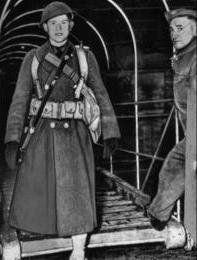
Last year I began writing The Yankee Years, a series of Short Reads and novels set in Second World War Northern Ireland. The impact the arrival of the troops, especially the Americans, had on the people of the province inspired the name I chose for the series. Since I’m writing about the era, I was curious about Private Henke and did a little digging. I learned that he came from the small town, Hutchinson, Minnesota where his family ran a cafe and he was twenty-three years old when he enlisted in October, 1941, two months before the attack on Pearl Harbour. Barely three months after he enlisted, in January 1942, he sailed from Brooklyn, New York with his battalion to join the war in Europe.

When they arrived in Northern Ireland, Henke’s unit was sent to

Private First Class Milburn H. Henke

Camp Bellarena, near Coleraine and he spent nine months in Northern Ireland and England before the 34th Division embarked for North Africa as part of Operation Torch. He spent the next few months fighting in Tunisia and received the Silver Star for his bravery rescuing a wounded officer under fire. While the Division was preparing to land in Italy he was involved in an accident: a weapons carrier rolled over and his back was broken. This ended his active service. He then spent several months in military hospitals in North Africa before being shipped back to America where he spent the remainder of the war.

Once he arrived home he married his girlfriend, Iola Christensen, who had been waiting for him in Hutchinson. After the war, he returned to work in his family’s business and he and his wife lived in Hutchinson until his death in 1998, a few months short of his eightieth birthday.

Throughout his life Henke felt that those in his unit who had died serving in the war deserved more recognition than they received and he downplayed his fame. But he was proud to have served his country and every year he took part in the Veteran’s Day ceremony in Hutchinson.

Posted in January 2016, Uncategorized | Tagged , , , , , | 3 Comments

Discover Decorum

I’d like to welcome Kaaren Christopherson, the author of Decorum, to Ascroft, eh? this morning. Kaaren has written an intriguing tale set in the late nineteenth century in what is described as New York’s Gilded Age but I’ll let my guest tell us more about it.

Welcome Kaaren. Let’s get started, shall we?

Tell us about your novel.

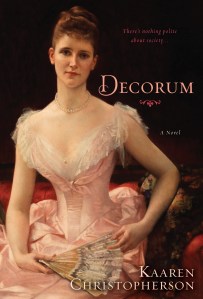
02_DecorumKC: Decorum is about a tycoon (Connor), an heiress (Francesca), a mistress (Blanche), and a gigolo (Edmund) who struggle to find happiness, power, and wealth amid deception, betrayal, bigamy, and murder in Gilded Age New York. Each character has his or her own challenges to overcome: though he has made his money, Connor yearns to break into the big league in New York business; Francesca is trying to move on with her life after her family has been killed; Blanche is trying to shake off her shady past and find security; Edmund, too, is looking for security—and control.

What prompted you to write about this historical period?

KC: When Connor O’Casey, Blanche Alvarado, and Francesca Lund appeared in my imagination, they were wearing Gilded Age fashions, so I never struggled to figure out what time period to portray. It was fascinating to watch these characters function at a time when the country was on the cusp of becoming modern. Horse-drawn carriages would soon be sharing the road with the first motor cars. Gas street lamps were giving way to electric lights. Only a relatively few households had telephones, so most communication that couldn’t take place face to face had to be done through letters and telegrams. Lots of plot twists can happen in the time it takes for a letter to arrive or for a horse to trot across town or to the next village.

How closely did you stick to the historical facts? If you used them loosely, how did you decide whether to deviate from them?

KC: Although Decorum doesn’t recreate specific historical incidents, recreating the look, the feel, the sounds, and smells of the Gilded Age in New York and the Canadian Rockies was essential if the reader is to be “transported” to another time. Though I invented some institutions, such as Venables Gallery and the Blue Iris Tea Room, they were based on actual places. When I do decide to deviate from actual places and invent them for the story, it’s usually because I want to insert some characteristic that helps support the story. So the gallery, for example, is a conglomeration of galleries and antiquities shops I found in my research with some unique features added so that the characters could move throughout the gallery in a way that was natural to the progression of the story. I did, however, make reference to actual events or people, such as Nellie Bly and her trip around the world.

What research did you do for this book?

KC: I began with several survey books about the period—mostly social history about how people lived (what they wore and ate, how they were educated, what work they performed), what technology was like (as it was known at the time), what discoveries had just been made, what political or economic forces affected ordinary people, how people traveled. I didn’t try to know everything. I tried to have a good grasp of what life was like and the limitations and opportunities the period had to offer so that when the characters were set in motion they began to act with credibility. Then I started writing and let the action and the characters dictate the next phase of research, which is largely the details—what to call items of clothing, what kind of carriage might be used for a particular event, how a dinner table is set. Researching the 1890s was very interesting because of the variety of material available, not just history books, but biographies and memoirs, photographs, engravings, paintings, novels from the period, all sorts of resources that helped me get closer to the characters and their surroundings. I also took advantage of historic home shows and what the museums and historic homes in New York and Washington, DC, have to offer for steeping myself in the period. One of my favorite resources was my great-grandmother’s etiquette book called Decorum, published in 1881. It not only gave me a wealth of information on the expected behavior of the period, but also gave me the novel’s title and organizing theme.

Do you use a mixture of historic figures and invented characters in Decorum. Which is more difficult to write? Which to you prefer to write and why?

KC: All the characters in Decorum come out of my imagination. This choice was deliberate; since I was new to novel-writing I wanted to concentrate on making fictional characters as real and three-dimensional as I could. I was keenly aware that introducing real people, especially well-known historical figures who already appear larger than life, might be difficult if all characters whether fictional or real were to be equally well-developed and balanced. So the first time around, I stayed with characters I invented. In another story that might be driven more by actual events, I might include actual historical figures; it would require lots of research to try to find the actual personality behind the history.

In an historical novel you must vividly re-create a place and people in a bygone era. How did you bring the place and people you are writing about to life?

KC: Many of the situations and their visual elements and descriptions in Decorum were inspired by studying engravings from fashion and news magazines of the 1880s and 1890s, photos of events and interiors, and American and European Impressionists. Trips to flea markets and antique shops yielded old cabinet photos that reminded me of the characters, as well as some of the items they may have used. Research on the internet yielded such things as descriptions of the original Metropolitan Opera House, the Tombs, and the Café Savarin, complete with menus. All these resources enhanced what I saw in my imagination and helped me describe it to the reader.

There often seems to be more scope in historical novels for male characters rather than female characters. Do you prefer to write one sex or the other. And, if so, why?

KC: I don’t prefer writing about characters of one sex or the other, but I do find it fascinating to watch different female characters from different backgrounds, with different personalities, experiences, motivations, and resources at their disposal tackle problems in the 1890s. So, for example, Francesca’s wealth and respectability gave her entre and acceptance into parts of society that Blanche, with her shady past, would have had a very difficult time entering. On the other hand, Francesca’s wealth didn’t shield her from a male-dominated world where her opinions could be easily disregarded and her options were few. Yet, like Blanche, if Francesca happened to make bad choices, society could be merciless. Readers can check out the wide array of female characters and their backgrounds through The O’Casey Chronicle the 1890s tabloid on my website: http://www.kaarenchristopherson.com/the-ocasey-chronicle

Thanks for answering my questions, Kaaren, and good luck with your novel.

For more information visit Kaaren Christopherson’s website. You can also find her on Facebook, Twitter, and Goodreads.

About Kaaren Christopherson: She is the author of Decorum—a 03_Kaaren Christophersonnovel about Gilded Age New York—that began taking form in 1999 during a course on writing historical fiction. From that moment, Connor O’Casey (who had been rattling around in her brain for months) finally appeared one night and said, “All right, woman. Here I am. What are you going to do about my story?” So she began to put his words on paper, and he hasn’t kept quiet since. Soon Francesca, Blanche, Tracey, Vinnie, and the rest of the characters began arguing, gossiping, loving, and forming themselves into Kaaren’s first novel.
Kaaren has had a professional career writing and editing for over 30 years and is a senior editor for an international development nonprofit organization in Washington, DC.

She has written fiction since her school days, story poems, children’s books, historical fiction, and time travel, and continues to be active in writers’ groups and writing workshops. In addition to her career as a writer, Kaaren was the owner of a decorative painting business. She loves to travel and prowl through historical sites, galleries, and museums. She is active in several churches in DC and in her local Northern Virginia community, where she shares her home with feline brothers, Archie and Sammy.

A Michigan native, Kaaren received her BA in history and art and her MA in educational administration from Central Michigan University in Mt. Pleasant, Michigan.

Posted in January 2016 | Tagged , , , , , | Leave a comment

Wishing You A Warm, Comforting Christmas

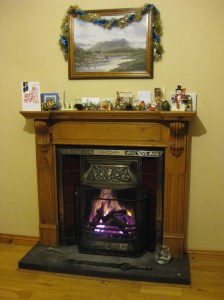
Christmas fireplaceOn Sunday night I left my comfy chair beside our fireplace to attend a concert in Belfast. Relaxing into my seat in the concert hall, I savoured I’m Dreaming of a White Christmas sung by a classical trio. I’m sure you’ve heard the song somewhere; it is considered the best selling single of all time. And it’s a song that always stirs memories for me.
It’s been twenty-five years since I spent Christmas in Canada, my homeland, but the song instantly takes me back to cold, crisp winter evenings on a quiet residential street blanketed by a cover of undisturbed snow. As I stepped out of our house after a fresh snowfall, I felt the cold nipping at my fingers and curling in under the collar of my jacket as flakes of snow tickled my cheeks. All around me lights twinkled on neighbours’ houses, bouncing off snow that had settled on the ground to glint like diamonds. The song also takes me back to sleigh rides through the countryside on a flatbed wagon piled high with hay and pulled by a team of four draught horses, their bells jingling as the wagon wheels crunched over hard packed snow. Everything always seemed magical after it snowed.

chair n tree

Rocking chair in its new home

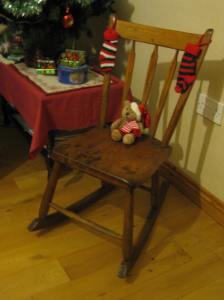
In our house a small tree stood in the corner of the living room and tiny striped stockings hung on the rocking chair beside it; the room was festooned with holly and tinsel. At the farm after our sleigh ride a blazing bonfire warmed the farmyard; we huddled as close to it as we dared until the heat stung our legs and sparks darting from the crackling logs bit into our faces and hands.

No matter where I was, tucked up in our cosy house or at the farm, laughter, camaraderie and love enveloped me. Family and friends were there.

Since I moved to Britain I’ve rarely seen snow on Christmas Day. When it happens there’s excitement but also trepidation as folk deal with the surprise. On Christmas night we often go for a stroll to counter the excesses of holiday meals. As we walk through the Fermanagh countryside, the air is cool and damp and the lane is bare; green fields surround me. In the dark, stars twinkle brightly above us, the darkness a canvas for the display in the sky. The hedges along the lane are grey shadows against the blackness. Deer whistle in the forest behind our farm. I hear the steady thump of our boots on the tarmac.

rocking chairWhen we return home I’m greeted by a house festooned with decorations and other items that are intricately part of Christmas for me. Some of them I brought with me from my home in Toronto, including a set of colourful bells on a bright green braided rope that a Dutch aunt brought to Canada with her, fragile tree baubles that belonged to my mother and even the rocking chair that sat in our Toronto living room and was crafted at my grandfather’s farm in Western Canada long before I was born.
And I’m still surrounded by family and friends. The family are my husband’s family and the friends are ones I’ve made since I moved across the Atlantic – not childhood friends but not so very new after a quarter of a century.

I’m Dreaming of a White Christmas was first sung by Bing Crosby on Christmas Day in 1941. Although it wasn’t an immediate hit, as Christmas approached the next year it topped the ‘Your Hit Parade’ chart in America. It was especially popular with service men and women and the Armed Forces Network was flooded with requests to play it. Why? Probably because it echoed their longing for home mixed with their memories of where they came from. At a time when the world was at war people wanted something familiar and comforting to cling to.

My curiosity was piqued when I stumbled across this connection between the song and the Second World War. Since I began writing The Yankee Years series, set in World War II County Fermanagh, Northern Ireland this year, I’m always keen to discover interesting snippets of information about the era. They fascinate me and these facts add authenticity and sparkle to my stories. So far references to the song haven’t found their way into any of my stories – but you never know. They might yet.

It seems that no matter which era we live in, we gravitate toward what we find familiar and comforting. I enjoy being surrounded by decorations that have been passed down through my family, eating the same special treats and spending time with the people who are important to me each year. And I’m sure I’m not the only person who feels this way.

Family, friends and readers, where ever you are, I’d like to take this time to wish you a holiday season filled with all that warms, comforts and uplifts you. Wishing you love, laughter, family and friends at Christmas and always. Merry Christmas!

Christmas fire

Posted in December 2015 | Tagged , , , , , | 2 Comments