
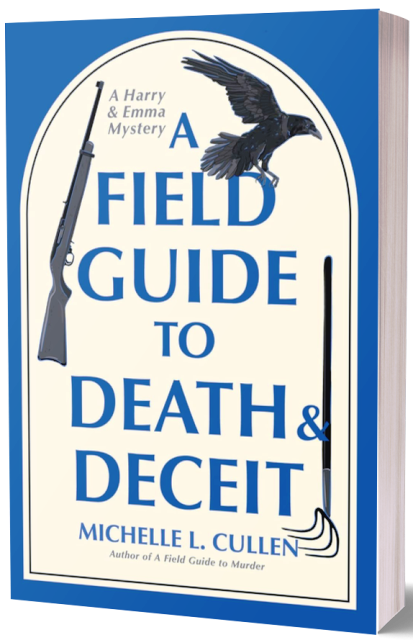
Emma Stockton, from A Field Guide to Death & Deceit, a Harry & Emma mystery, is visiting Ascroft, eh? today to share with us what nursing has taught her about crime-solving
Welcome, Emma. I’ll turn the floor over to you –
Some of you might be wondering how a former ICU nurse, caregiver, and international healthcare consultant ends up helping solve two murders in less than a year. Honestly? I’ve been wondering about that too. My friend and colleague Harry Lancaster deserves a lot of the credit for catching two killers — he’s brilliant, with this uncanny ability to observe and understand people that still impresses me every time. But working these cases with him has made me realize something else: I’m not just along for the ride. I’m actually good at solving crime.
Good enough that I’ve signed up for criminology classes this fall, which might sound like a leap until you consider how the skills I learned in nursing make me a better investigator. Because everything that’s made me halfway decent at solving crimes, I learned in scrubs.
Reading People Is Reading People, Whether It’s a Patient or a Suspect
In the ICU, you learn fast that patients can’t always tell you what’s wrong. Sometimes they’re unconscious. Sometimes they’re scared and downplaying symptoms. Sometimes they’re telling you they feel fine while their body is doing something completely different. So you watch. You learn to read micro-expressions, body language, the way someone’s breathing changes when they’re in more pain than they’re letting on. You develop what I can only describe as a finely tuned radar for when something is off.
This skill translates directly to talking to suspects and witnesses. People who are hiding something have tells — a slight shift in posture, a pause before answering that lasts just a half-second too long, eyes that go somewhere else when they’re getting ready to lie.
Detail and Precision Aren’t Optional in Either Job
Nursing documentation is no joke. Medication dosages, vital sign trends, the exact time a patient’s condition changed — every detail matters because someone’s life can depend on it. You don’t round up. You don’t guess. You don’t skip the thing that seems minor because in a hospital, “minor” has a way of becoming critical very quickly.
Crime scenes work the same way. The detail that seems irrelevant? It probably isn’t. The thing everyone else walked past? That’s worth a second look. I’ve found that my nursing brain refuses to let me gloss over things, which has come in handy more than once when I’ve noticed something that helped identify a killer. Harry — who has way more life experience than me and is an expert when it comes paying attention to detail— told me that this is one of my strongest assets. I’m going to go with him on this one.
Staying Calm When Everything Falls Apart
There is no better training ground for high-pressure situations than an ICU on a bad night. When everything is going wrong at once, you don’t have the luxury to panic. You triage, you prioritize, you act. You learn to slow your breathing down while everything around you speeds up.
I’ll be honest, this has been useful in ways I didn’t plan for. When investigating a murder, the ability to stay functional under pressure isn’t just a professional skill, you need it for survival. My ICU training has kept me level-headed when things have gotten crazy during our investigations. [Long pause.] Well…there was that one time when I fainted after someone pulled a gun on me and Harry, but the next time someone pulled a gun on me, I kept a cool head. Mostly.
Empathy Gets You Further Than You’d Think
People assume that investigation is all logic and instinct, and sure, those things matter. But what people really underestimate is how much empathy helps. When I was a nurse, empathy wasn’t just a nice-to-have characteristic, it was essential. When patients felt heard, they told me more. They trusted me with the symptoms they were embarrassed about, the things they hadn’t told their families. That trust was information; information that saved lives.
The same thing happens when you’re talking to witnesses and suspects. People open up when someone makes them feel safe and understood. They share things they hadn’t planned to share. I don’t think I’d be any good at investigating if I hadn’t spent years at bedsides learning how to make people feel like they mattered — because they do, and because it turns out that genuine care is a surprisingly effective tool to solving crime.
From Nursing to Solving Crime?
I’m not sure where these criminology classes that I’ve signed up to take this fall will lead me. But I do know that I already have several skills important to solving crimes — reading people, paying attention to detail, level-headedness (for the most part), and empathy. So if Harry and I stumble upon another murder in the future, I know I’m ready to help solve it.
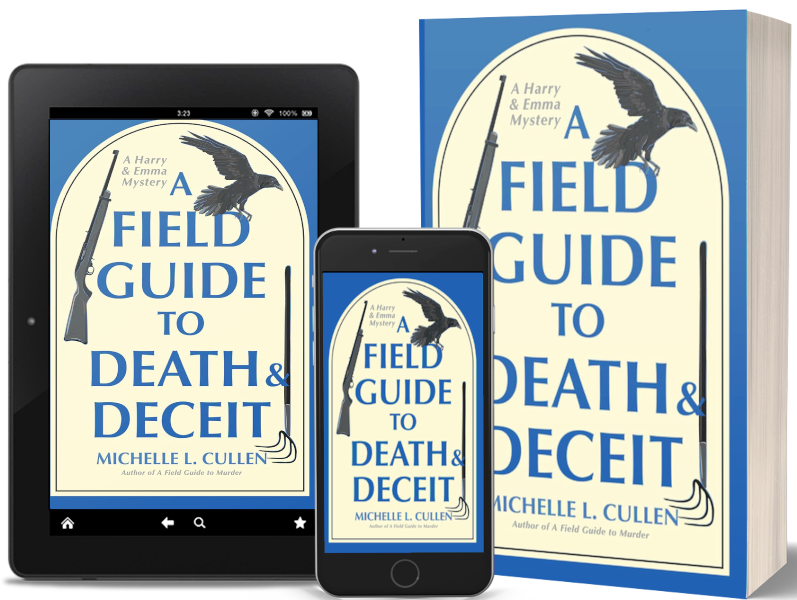
Thank you for sharing this with us, Emma, and good luck to you and your author, Michelle L Cullen, with A Field Guide to Death & Deceit, the latest book in the Harry & Emma mystery series.
Readers can learn more about Emma and her author, Michelle L Cullen by visiting the author’s website and her Facebook, Instagram and Goodreads pages.
The book is available online at the following retailers:
Amazon – PenguinRandomHouse – Barnes & Noble – Books A Million – Bookshop.org – Hudson Booksellers – Target – Walmart
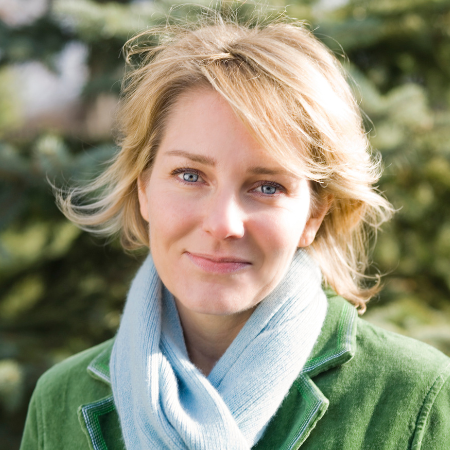
About Michelle L. Cullen: Michelle has lived and traveled all over the world, from working as a bilingual secretary in Paris to backpacking around Europe, Central America, and Southern Africa to helping rebuild communities after war throughout Africa, East Asia, South Asia, and the Pacific — where she saw the best and worst of human behavior. Her lifelong fascination with people and why they do what they do, was further fueled by her academic training. She obtained her PhD from the London School of Economics’ Sociology Department and her master’s degree in anthropology from Melbourne University in Australia.
A fan of adventure, she has a black belt in Taekwondo, has summited 900 feet rock climbing, snorkeled the Great Barrier Reef, and hiked up an active volcano. She currently lives in Annapolis, Maryland, where she’s either doing yoga, playing outside, or plotting murder. She’s a proud member of International Thriller Writers, Sisters in Crime, Mystery Writers of America, and The Authors Guide, and has been gleefully reading and watching murder mysteries since the age of ten.












Thank you, Dianne, for featuring Emma and A Field Guide to Death and Deceit. I really appreciate your support!