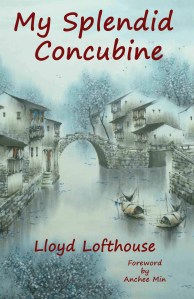
One of my favourite reads recently was My Splendid Concubine by Lloyd Lofthouse. It captured my imagination and aroused my curiosity about nineteenth century China. I knew little about the period before I began reading it so the novel both taught and entertained me.
 Lloyd Lofthouse earned a BA in journalism after serving as a U. S. Marine in the Vietnam War. He then taught English and journalism in the public schools by day and for a time worked as a maitre d’ in a multimillion-dollar nightclub by night. He now lives near San Francisco with his wife, and they have a second home in Shanghai, China. His wife, Anchee Min, is also a writer. Her works include Red Azalea, Becoming Madame Mao and The Last Empress.
Welcome to Ascroft, eh? Lloyd. I really enjoyed reading My Splendid Concubine and want to know more about the novel and that period in Chinese history. So, now let’s get started with the questions I’ve been waiting to ask you-
Where did you first hear the story of Robert Hart’s life and what inspired you to write about it?
Before Anchee and I got married (while we were dating), she mentioned that I might be interested in an Irishman, who went to China and became the most powerful Westerner in Chinese history. The history books called this Irishman the Godfather of China’s modernization.
I Googled Robert Hart to learn more about him, and discovered that Harvard University Press had published several volumes of his journals and letters. I bought those books and started reading.
While reading, I learned about the mystery concerning his relationship with Ayaou, his Chinese concubine, and that mystery lit a fire under my imagination. The historians credited Robert’s relationship with Ayaou as the foundation for his success in China. His love for Ayaou translated into an understanding, respect and love for Chinese culture.
You describe city and country life in nineteenth century China in vivid detail. Was it difficult to write about a time period and culture that is very different to your own?
Not really. It took time–like almost a decade to develop China as another character in the novel.
How did you research it?
Soon after Anchee and I got married, we went to China to meet her family, and we visit every year. We have travelled extensively through China. Before Anchee came to the United States at twenty-eight, she worked as a location scout for the Shanghai Film Studios becoming intimate with China as she travelled.
I also started reading a lot. I have a shelf full of books not counting the books Anchee has on her shelves. I bought historical movies like The Romance of the Three Kingdoms, Farewell My Concubine, Raise the Red Lantern, etc. The Romance of the Three Kingdoms runs more than fifty hours.
When I ran into difficulty, I went to my wife and she pointed me in the right direction. She has written six books about China that have been translated into more than thirty languages.
Lucky for us, Robert Hart’s Irish family and friends did not burn his journals and letters after his death as he requested. Instead, they gave them to the University of Belfast—a treasure trove that goes a long way to help Westerners understand the Chinese. It seems that Robert knew the Chinese better than they knew themselves. He predicted much that took place in China like the Boxer Rebellion years before it took place.
You’ve created believable, almost flesh and blood people in your main characters, Robert Hart, Ayaou and Shao-mei. How closely are they based on the historic people and does the story follow their actual lives?
There isn’t much known about Ayaou, so I had help from my wife to create her character. I also contacted Lisa See, and she recommended some research material that helped.
As for Robert Hart, I had most of his journals and many letters to get to know him. Unfortunately, Robert left a hole in that record. He burned the journals that covered the summer of 1855 to 1858, and he met Ayaou the summer of 1855. Later in life, close to death, Robert deliberately tried to erase Ayaou from the record by going through the surviving journals.
However, he slipped up occasionally as he was inking out passages that mention her in the surviving journals. The historians did not notice the possibility that Ayaou was a boat girl. Yet, when she returns to Canton from Macao, he writes, “My boat girl is back.” He must have missed that line because it survived.
In addition, in a letter he wrote in the 1870s to his agent in London, Robert mentioned that Ayaou was the most sensible person he had ever known and that he (Robert) was a black fool (doesn’t come up in the prequel). The sequel will be out this winter. The ARC (Advanced Review) copies are out now. The sequel is Our Hart. If you are interested, there are a few free episodes posted on the Website.
My Splendid Concubine follows Robert closely. Robert did earn a BA from the university at Belfast, and he womanised and drank too much while there. He arrived in Hong Kong and the conversation he has with the governor in the novel was as Robert documented it in his 1854 journal. The Iona, the ship that he sailed in as a passenger from Hong Kong to Shanghai was chased by Chinese pirates, and he was stationed in the city of Ningpo working for the British consulate.
Many details from the journals find there way into the novel. Like the fight between the Portuguese and Cantonese pirates did take place in Ningpo and Robert had to close the consulate gates to the Portuguese that were seeking shelter from certain death. The Cantonese pirates did catch the Portuguese, put them on one of their ships and set fire to it. That French frigate that’s mentioned in My Splendid Concubine did arrive in time to scare the pirates away before they went after others in the city.
Although I changed the names of some of the people that populated Robert’s life in China, I did use the real names for many of the characters like Horatio Lay and Dr. Winchester.
Why did you decide that Hart would follow the conventional norm of monogamy rather than experiment with what would happen if he chose to pursue a relationship with both women?
It makes sense that the reason Robert decided to be monogamous with Ayaou was due to Robert’s upbringing near Belfast, Ireland. Robert was the oldest of twelve children. His father was a Wesleyan pastor and at dinner each night before any of the children could eat, each child including Robert had to say what they did for God that day. Before going to China, Robert considered becoming a pastor and following his father’s example.
I did think about Robert having an intimate relationship with both sisters, but it would not have fit his real character. When the novel shows Robert going to church twice on the Sabbath due to the temptations he is feeling about Chinese women, Robert wrote about doing that in his 1854 journal. Therefore, it would be safe to say, it isn’t entirely fictional, but since Robert burned the journals from the summer of 1855 to 1858 and spent considerable time going through the others and blacking out lines that mention Ayaou, I had to take some literary license.
What I found interesting is that Robert mentions God a lot in his 1854 journal and after 1858, he doesn’t mention God and his Christian guilt again. It’s too bad he burned the journals covering the summer of 1855 to 1858. He changed a lot during that time. I believe Ayaou was the reason he matured into the great man he becomes in Our Hart, the sequel.
 My Splendid Concubine has been well received since it was first published. What awards has the novel won?
An honourable mention in fiction from the 2008 London Book Festival, an honourable mention in general fiction from the 2009 San Francisco Book Festival and an honourable mention in general fiction from the 2009 Hollywood Book Festival.
What was the most challenging aspect of writing the book? Was there anything you struggled with?
Revisions and editing. After I finished the first rough draft, I spent the next six years editing and revising and adding depth to China and the characters. I felt that it was important to elevate China as if it was a character in the novel, and I spent considerable time researching that era. It helped that my wife researched and wrote about the same time period for her two novels, The Empress Orchid and The Last Empress. Anchee’s Empress Orchid was named a finalist for the British Book Awards and sold well in the UK.
You and your wife, Anchee Min, are both writers. What is it like to have two writers in the family? Do you share your work with each other while you are writing?
No, we don’t share our work with each other while it is being written. I do edit her rough drafts before they go to her publisher. Other than that, she has her space to write and I have mine and we come together to eat, see movies and take walks.
How has your family responded to your new career as a novelist?
No change from our daughter. However, my wife has been pleased with the recognition My Splendid Concubine has received. However, she is a realist and knows how difficult it is to make it big in publishing. Every time she has a new book come out, she worries that it won’t sell—which I understand is a common worry that even authors like Steven King are plagued with.
As for me, winning a few awards and having some positive reviews is nice, but that doesn’t necessarily mean many readers are buying the book and reading it. Who knows what the future will bring? I’m enjoying myself. That’s what counts. Thank you for having me as a guest on your Website.
Thanks, Lloyd, for taking the time to give such full, detailed answers to my questions. You’ve given me a good insight into the background to the novel. I think I’ll start reading the previews of Our Hart on your website – and anticipate the release of the full novel this winter.

 I recently read
  I always have a stack of books in my ‘to be read’ pile – no matter how fast I read, the pile never seems to shrink. Not a bad thing really as I’d hate to be without a book waiting for me. One book I read recently that made an impression on me was
 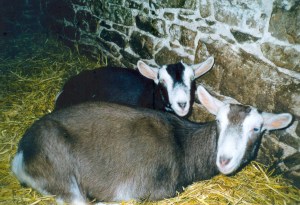 Saturday mornings are my time to spend an extra hour or so in the farmyard – my time to catch up on work with great company. I don’t think anything can beat stretching my muscles with some vigorous sweeping while being shadowed by the four legged inhabitants of our farm. Cats sit on walls patiently surveying my progress. Cows peer over hedges, eyes wide and curious. Goats follow me, softly nibbling and nudging me as I work.
 Continuing the theme of my recent ‘best of times’, my visit to the restored
 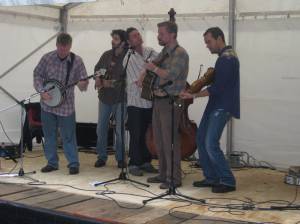 The first one that springs to mind is the
 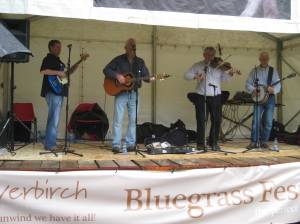 My next stop was to catch one of
 them play it. In fact, it made such an impression on me that I opened a short story, A World Apart (The Fermanagh Miscellany 2, 2008), with lyrics from the song. The cd has a great mix of songs such as John Prine’s Souvenirs, Lynyrd Skynyrd’s Sweet Home Alabama and Greenday’s Time of Your Life as well as an original compositon, The Roundabout. I think it’s the first jazzy bluegrass tune I’ve ever heard. And the cd kicks off with a Mannfred Mann song, Fox On The Run, which has become a bluegrass staple. It’s a shame this band doesn’t have a website but they can be contacted at
 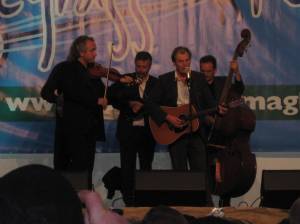 After a whole afternoon of great music I didn’t think I could still be wowed but my last stop of the day was with
  Save Time by Identifying and Changing Your Bad Habits
![nicolas[1].soergel.big](https://dianneascroft.com/wp-content/uploads/2009/09/nicolas1-soergel-big.jpg?w=121&h=150 "nicolas[1].soergel.big") Nicolas Soergel, is the author of Happy About An Extra Hour Every Day. As the CEO of a multi-national corporation, had the opportunity to interview successful executives all over the world about how they manage their time. His book help readers save time negotiating various aspects of their lives, including working, traveling, and housekeeping. Buy the book on Amazon at
Nicolas Soergel, is the author of Happy About An Extra Hour Every Day. As the CEO of a multi-national corporation, had the opportunity to interview successful executives all over the world about how they manage their time. His book help readers save time negotiating various aspects of their lives, including working, traveling, and housekeeping. Buy the book on Amazon at 






 dianneascroft.com