The Case of the Christie Wedding Affair

Theo Sharp is visiting Ascroft, eh? to tell us about The Case of the Christie Wedding Affair, the latest novel in the Detection Club mystery series.

Welcome, Theo. Let’s get started, shall we?

Tell us about the novel that you live inside. Is it part of a series? If so, please tell us about the series too.
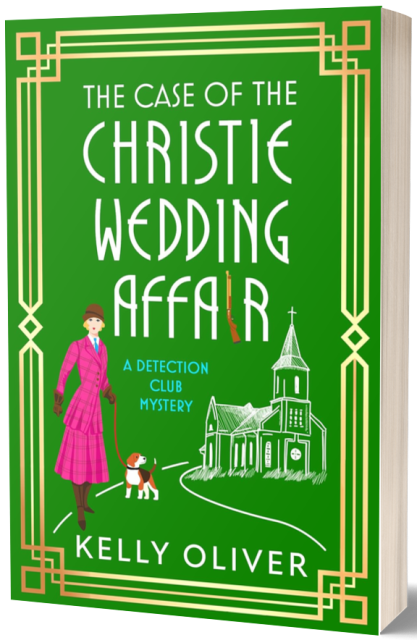
My name is Theo Sharp, and I inhabit a series of mysteries that seem determined to place me in increasingly beautiful locations with increasingly unfortunate corpses. The books follow my investigations alongside the incomparable Eliza Baker, a former Scotland Yard detective with a mind as sharp as a Damascus blade and considerably more practical than my own.

The series begins in England but quickly carries us abroad to Egypt, Mesopotamia, Scotland, and beyond. We solve murders among archaeologists, aristocrats, adventurers, and writers while rubbing shoulders with members of the famous Detection Club, including such luminaries as Agatha Christie and Dorothy L. Sayers.

At its heart, however, the series is not merely about murder. It is about friendship, loyalty, justice, and the stories people tell themselves to live with what they have done. Also, if I may be candid, it is about my ongoing efforts to convince Eliza Baker that life might contain a few pleasures beyond footprints, bloodstains, and suspects with alibis.

Does the writer control what happens in the story or do you get a say too?

The writer would insist she controls everything. The evidence suggests otherwise.

I often begin a novel intending to behave sensibly. Then Eliza dashes headlong into danger, and I find myself following her. I tell myself I shall remain safely in the library with a philosophy book and a pot of tea. A chapter later I’m trapped in a trunk, lost in the desert, or confronting a murderer armed with little more than optimism and poor judgment.

The writer may provide the outline, but characters have a remarkable talent for becoming themselves. Once that happens, we become rather difficult to manage.

How did you evolve as the main character?

When the series began, I was something of an observer. I preferred books to bullets and philosophical puzzles to criminal investigations. I believed reason could explain nearly everything.

Over time I learned that human beings are far messier than philosophical systems. Grief, love, fear, jealousy, and hope rarely fit into tidy categories.

I also discovered courage is not the absence of fear. It is choosing to continue despite it.

The greatest change, however, came through Eliza. She taught me that truth matters not merely as an abstract concept but as a responsibility. One does not pursue justice because it is intellectually satisfying. One pursues it because real people suffer when evil goes unanswered.

I should also confess that somewhere along the way I inherited an earldom. That was rather unexpected, not to mention problematic in its own right… More on that as the series continues.

Do you have any other characters you like sharing the story with? If so, why are you partial to them?

Eliza, naturally. That answer is so obvious it scarcely deserves stating.

She possesses a remarkable ability to cut through nonsense, including my own. While I am inclined to speculate, theorize, and wander into philosophical reflections, Eliza notices the muddy boot print beneath the window. She taught me that while philosophy may help one understand the world, love gives one a reason to improve it.

Together we make a surprisingly effective partnership.

I am also fond of Jane Archer, Eliza’s sister, whose intelligence work often provides crucial assistance, and of Queenie the beagle, who has contributed to several investigations despite lacking formal detective training.

And, of course, there is Agatha Christie herself. One cannot spend time with Mrs. Christie without developing admiration for her keen observations of human nature. She notices everything. She possesses a delightfully sharp wit and a habit of observing everyone in a room while appearing not to observe anyone at all. Spending time with her is rather like playing chess against a grandmaster who politely pretends you’re doing well.

What’s the place like where you find yourself in this story?

That depends on the particular adventure. I have watched the sun rise over the pyramids from the terrace of the Mena House, traveled by steamer along the Nile River, explored ancient ruins in Iraq, and investigated murder on the windswept Isle of Skye.

Our latest adventure finds us in Scotland, whose geography has its own moods, which, for better or worse, make me broodier than usual.

Yet my favorite places are often the quiet ones, a library filled with old books, a drawing room after dinner, a railway compartment carrying one toward an uncertain destination.

Mysteries thrive in such places. They remind us that every stranger carries a story and every story conceals secrets.

Is there anything else you’d like to tell readers about you and the book?

Despite the murders, the danger, and the occasional near-death experience, these stories are fundamentally hopeful. They are not tales about death. They are tales about people choosing what kind of lives they wish to lead.

I began my journey searching for interesting stories. What I found instead were meaningful relationships, difficult truths, and a woman whose courage continually challenges me to become better than I was.

I confess I spend a great deal of time pondering the meaning of life. Eliza would say far too much time. Yet every adventure seems to bring me to the same conclusion. Life is not measured by wealth, titles, or even intellectual accomplishments. It is measured by the people who stand beside you when darkness falls.

If readers close the book having enjoyed a clever mystery, all the better. But I hope they also come away believing that goodness matters, that friendship matters, and that even the smallest act of courage can change the course of a story.

After all, that is how every great mystery is solved. One clue. One choice. One brave step at a time.

Just be warned. Wherever Eliza Baker goes, murder has an alarming tendency to follow. And wherever murder appears, I seem destined to be standing nearby, notebook in hand, wondering how on earth I got involved again.

Thank you for answering my questions, Theo, and good luck to you and your author, Kelly Oliver, with The Case of the Christie Wedding Affair, the latest book in the Detection Club mystery series.

Readers can learn more about Theo and his author, Kelly Oliver by visiting the author’s website and her Facebook, Bookbub, Instagram @kellyoliverbooks and Pinterest pages.

The novel is available at the following online retailers:

Amazon US   Amazon CA    Amazon UK     Amazon AU     Amazon IN    B&N

About Kelly Oliver: Kelly is the Agatha award-winning and bestselling author of four mystery series: The Jessica James Mysteries, The Pet Detective Mysteries, The Fiona Figg Mysteries, and The Detection Club Mysteries.

The Fiona Figg Mysteries have been on the most anticipated list of Mystery Magazine and won the Mystery and Mayhem Award and the Silver Falchion Award for Best  Historical Mystery. And The Case of the Christie Conspiracy, Detection Club Mystery  book one, is currently nominated for an Agatha Award for Best Historical Mystery.

Kelly is Past President of Sisters in Crime National, current Education Coordinator for SinC Guppies, and a Distinguished Emerita Professor of Philosophy at Vanderbilt University.

Posted in Archives, July 2026 | Tagged , , , , , | Leave a comment

Edited Out

Rebecca M Douglass, author of Edited Out, the latest novel in the Seffi Wardwell mysteries series, is visiting Ascroft, eh? today.

Welcome, Rebecca.

Tell us about your novel. Is it part of a series? If so, please tell us about the series too.

Edited Out is the third book in the Seffi Wardwell Maine mystery series. The series starts with A Coastal Corpse, which takes place shortly after Seffi has moved to the tiny Maine village of Smelt Point. She’s struggling to get acquainted and be accepted in a region notorious for suspicion of outsiders. By the time we reach Edited Out, people have gotten pretty used to her and she’s found her place in the community. So a big part of the series, aside from solving a murder or two along the way, is about Seffi finding home. In addition, pretty much everything I write is written with humour—I’m willing to push the limits of reality a little for the sake of some fun!

Where did the idea for the mystery that is central to the story come from?

I can never really answer this question. Honestly, the idea of a corpse showing up at a writer’s or artist’s retreat is probably one of those that’s just floating around out there. But I also came up with this about the time I was applying for a lot of artist’s residencies, and was fortunate enough to be accepted for a couple of them, so it was fun to turn that into a problem for Seffi to solve.

Is there a theme or subject that underlies the story? If so, what prompted you to write about it?

I think every mystery story has a theme of the triumph of justice and right. Aside from that, Seffi’s story is about acceptance, and people learning to accept difference. There are a lot of LQBTQ characters in the books, including Seffi. I wanted to write such characters in a way that their sexual orientation or gender identity isn’t the focus of the story, that it’s just a part of who they are, because everyone is so much more than those narrow labels. I think the need for models of—not tolerance, but acceptance—is obvious in this day and age.

How do you create your characters? Do you have favourite ones? If so, why are you partial to them?

Some characters I have to sweat into existence, because I know I need someone in a particular role. But Seffi popped into my head pretty well formed. In fact, a version of her showed up in one of my Pismawallops PTA mysteries, and I knew right away I wanted to write about her. I didn’t want to do it in that setting, so I reinvented her for this series. And yes, Seffi is a favourite, but I’m very fond of most of my characters. I even enjoy inventing the nasty ones—it’s fun to let the imagination loose on that!

How do you bring to life the place you are writing about?

I hope I succeed in doing this! I have a pretty clear vision of the setting in my head all the time I’m writing, and try to make that come out so my readers can visualize it as well. The weather often plays an important part in the stories as well, which I think makes it feel more real. Seffi is a botanist by training, so she is generally aware of the natural surroundings.

What research do you do to provide background information to help you write the novel?

Spending time in Maine is the number one way I’ve gained the knowledge to write about Smelt Point! But I’ve also read books on the history of Maine (which explains a lot) and about the fishing industry and the people of the coast. Also, when I’m working on a story I keep tide charts and sunrise/sunset times on hand, and look at average temperatures for that time of year, and so on. Then there’s the research on plants and poisons…

Is there anything else you’d like to tell readers about the book?

Even though this is the third in the series, and I hope you’ll read them all, it stands on its own just fine, so feel free to jump in with this one. I think you’ll like Seffi and her friends, and want to keep going back to Smelt Point for more!

Thank you for answering my questions, Rebecca, and good luck with Edited Out, the latest book in the Seffi Wardwell mystery series.

Readers can learn more about Rebecca M Douglass by visiting the author’s website and her Facebook, Instagram and Goodreads pages.

The novel is available at the following online retailers:

Amazon Kindle     Amazon Paperback     Books2Read Universal Link     Buy Me A Coffee store 

About Rebecca M. Douglass: Rebecca has lived, worked, and hiked around the American West for more years than she’ll admit, while raising two children to adulthood and dreaming up interesting ways to bump people off. Thanks to good friends in Maine, she has also fallen in love with that mysterious coast. Since retiring from work at the library, the author has moved to Seattle, where she is writing the Seffi Wardwell Mysteries. In addition to her Ninja Librarian series for younger readers and the Pismawallops PTA mystery series, she has had short stories published in a  magazines and anthologies. When she isn’t writing, Ms. Douglass likes to go hiking and backpacking, or travels to discover new places or revisit old favorites, including the Sierra Nevada mountains, the desert Southwest, and of course Maine, where so many of the best cozy mysteries are found.

Posted in Archives, July 2026 | Tagged , , , , , | 3 Comments

The Case of the Bullfighting Builder

Debbie de Louise, author of The Case of the Bullfighting Builder, the latest novel in the Buttercup Bend mysteries series, is visiting Ascroft, eh? today.

Welcome, Debbie.

Tell us about your novel. Is it part of a series? If so, please tell us about the series too.

The Case of the Bullfighting Builder is the sixth book in the Buttercup Bend cozy mystery series. The main character, Cathy Carter, orphaned after her parents were killed in an automobile crash in which she was injured but survived, co-owns a pet rescue center and pet cemetery. She lives with her grandmother next door to her brother Doug and his wife. Cathy also works for the town’s newspaper, the Buttercup Bugle, as a photographer. In the first book of the series, The Case of the Cat Crazy Lady, which is now perma-free, she discovers her interest in sleuthing and helps solve the murder of the town’s “Cat Crazy Lady,” Maggie Broom, along with her best friend, Nancy. As the series progresses, Cathy and Nancy become detectives and solve the murders of a parrot-loving professor, a llama raising librarian, a whale watching wedding planner, and a reptile raising receptionist. Each book focuses on a different animal and victim’s occupation. In The Case of the Bullfighting Builder, Cathy investigates the murder of the builder who is building the new home she plans to share with her husband who she married in the fourth book of the series. She also discovers the truth behind her parents’ decade-old death.

Where did the idea for the mystery that is central to the story come from?

In the previous book, Cathy’s husband moves in with her and her grandmother, and they plan to build a home. I picked up this storyline and decided to have the builder as a victim. To keep an alliterative theme to the title, I chose a bull as the animal to feature and that the builder would be a bullfighter.

Is there a theme or subject that underlies the story? If so, what prompted you to write about it?

In this book, the theme is one of seeking closure. Not only does Cathy need closure regarding her parents’ death, but Ferdinand needs closure about his brother’s murder so that he can be vindicated. I didn’t intend to use this theme, but it came about as the story developed.

How do you create your characters? Do you have favourite ones? If so, why are you partial to them?

I usually don’t base my characters on real people, although I might include a trait or two from people I’ve met or known. Cathy, of course, is my favorite because her personality is a lot like mine. She’s curious but can be shy. She’s come out of her shell through her detective work, as I’ve become less introverted through my writing and other activities.

How do you bring to life the place you are writing about?

Buttercup Bend is a fictional town in upstate New York where I’ve visited for various trips. Cathy has also travelled to other areas to solve crimes. In the current book, she goes back to Long Island to her old college to track down clues about her parents’ murder which occurred when her parents drove her home from the school during the winter recess. Since I also attended college on Long Island, I was able to describe the setting realistically while still fictionalizing it.

What research do you do to provide background information to help you write the novel?

In most cases, for the series, I Google information regarding the animals to pick out things people may not know about them.

Is there anything else you’d like to tell readers about the book?

The book can be read as a standalone, but my publisher has also published 3-book volumes of the previous books in the series. The second volume that was just published features this book with the two before it. The first three books are also available in a single volume either as an eBook or print copy. Also, for the first time, I’ve given a teaser at the end of the story to the next book.

Thank you for answering my questions, Debbie, and good luck with The Case of the Bullfighting Builder, the latest book in the Buttercup Bend mystery series.

Readers can learn more about Debbie de Louise by visiting the author’s website and her Facebook, Goodreads and Amazon Author pages. You can also follow her on Twitter/X.

The novel is available at the following online retailers:

 Amazon     Universal Link

About Debbie de Louise: Debbie is an award-winning author and a retired reference librarian. She is a member of Sisters-in-Crime, International Thriller Writers, the Cat Writers’ Association, and the South Carolina Writers Association. She’s written over twenty books including three cozy mystery series: the Cobble Cove Mysteries, Buttercup Bend Mysteries, and her new series, Soup the Supernatural Kitten Mysteries. She’s also written a paranormal romance, standalone mysteries, a time-travel novel, and a collection of cat poems. Her stories and poetry appear in more than a dozen anthologies. Originally from Long Island, she moved to South Carolina where she now lives with her husband, daughter, and three cats.

Posted in Archives, July 2026 | Tagged , , , , | Leave a comment

Acadian Shorelines

Patrick d’Entremont, author of Acadian Shorelines, is visiting Ascroft, eh? today.

Welcome, Patrick.


Tell us about your novel.

Once exposed to the world around him via television and U.S. radio stations, Tommy Breau, a teenager in an Acadian village in the 1960s, finds himself questioning everything about himself and his upbringing. He feels speaking French puts him at a disadvantage as “the world runs in English.” Narrated by the adult looking back and relaying the hilarity and heartbreaks of young Tommy, he ends up wondering if the upbringing he was so eager to escape may have been the best years of his life.


What prompted you to write about this historical event?

I attended a high school reunion for the graduating class of 1971—well into the counterculture and just ahead of the drug scene where I grew up, and I thought about how naïve and happy we all were. As the narrator in my novel figured out, those may in fact have been the best years of my life.
 

How closely did you stick to the historical facts? If you used them loosely, how did you decide whether to deviate from them?

The late 1960s were rife with worldwide historic events and I tried very hard to portray them accurately and work them seamlessly into the story. I also worked hard to portray the setting for my novel accurately according to the time, the place, and the culture of the people. Unlike most historical novels, this one took place in a time where many people living today will remember; I think people who grew up there and then will say, “Yep, he nailed it.” But I decided to use fictitious characters and an “unreliable narrator” who just may have been prone to a foggy memory and a little exaggeration at times.

What research did you do for this book?

In my first draft, in keeping with my “unreliable narrator” convention, I did very little research. I just wrote about things I remembered and built fictious scenes around them. I then showed it to relatives who would question things and remind me of other things I may have neglected to include. Where I had to do hard research was in areas such as the price of goods, and especially if certain things—car models, for example—existed in that time period. Also slang; it is surprising how many sayings I thought I remembered from high school in fact did not exist until later. I did much of this research on the Internet, but also spent a lot of time at the library and at the Nova Scotia Archives. You can learn a lot from old newspapers.
 
Do you use a mixture of historic figures and invented characters in the novel. Which is more difficult to write? Which to you prefer to write and why?

All the characters are invented. I never have them interacting with real people. The challenge was to keep them from all sounding the same, and I worked quite hard in revision to give them their unique dialog and mannerisms.
 
In an historical novel you must vividly re-create a place and people in a bygone era. How did you bring the place and people you are writing about to life?

I think this is the best part of my novel. With the help of these other people I mentioned above, I got into the nitty-gritty details of the place where I grew up, which I unapologetically recreated as realistically as I could, including the way people spoke. Any quirk I could think of got put in. Use of nicknames was another thing. I think people who grew up in an Acadian community will recognize themselves, and people who did not will still recognize themselves in the ordinary things that teenagers concerned themselves with.

There often seems to be more scope in historical novels for male characters rather than female characters. Do you prefer to write one sex or the other. And, if so, why?

An interesting question. Being male, I find it easier to write male characters, and for a while, I contented myself in portraying the main female character in my story through the eyes of the protagonist. After all, if he didn’t fully understand her, why should the narrator and why should the reader? Well, that only worked to a point. My wife read the whole novel in the very late stages of editing and pointed out certain things a teenage girl would and would not do, and how certain aspects of my heroine were not entirely realistic. So—very late in the game—I changed this female character and invented a new female character as a best friend to help make it all work. That doesn’t really answer your question, but it gives some insight into my thinking about the genders. Okay, I prefer male characters. Because it’s easier. There.

Thank you for answering my questions, Patrick, and good luck with Acadian Shorelines.

Readers can learn more about Patrick d’Entremont by visiting his website.

The novel is available at Amazon from July 11.

About Patrick d’Entremont: Patrick is a former newspaper and magazine columnist who now writes novels set in rural Nova Scotia, based on his childhood growing up in the 1960s. This is his first published novel.

Patrick grew up in West Pubnico, a fishing community in the Acadian region founded in 1653, where descendants of the original families continue to live to this day. His coming-of-age stories reflect how growing up in this milieu shaped who he became as an adult, a reminiscing that he hopes resonates with many people, whether or not of Acadian descent. 

Patrick lives in Halifax with his wife, Cindy.

Posted in Archives, July 2026 | Tagged , , , , , | Leave a comment

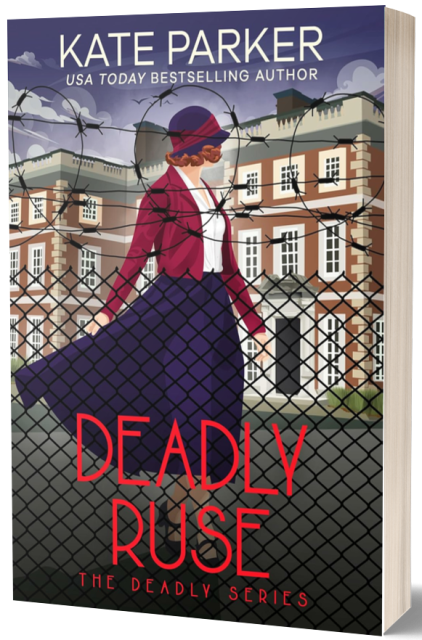
Deadly Ruse

General Wilhelm Bernhard, from Deadly Ruse, A Deadly mystery, is visiting Ascroft, eh? today to introduce himself and the situation he finds himself in.

Welcome, General Bernhard. I’ll turn the floor over to you –

Hello, I’m General Wilhelm Bernhard, a character in Deadly Ruse, and I could teach you a great deal about how to lose a war. Despite how some of my fellow detainees see me, I am not the cause of Germany’s loss during World War II. That would be Hitler. That man should have listened to his generals. We all told him invading Russia was a stupid idea. That was how we ended up in a two-front war, bogged down in the sands of North Africa, without enough fuel or ammunition.

Despite being in military intelligence, hunting out our adversaries’ weaknesses, they put me in charge of a Panzer division. I used my skills in espionage to fight until out of fuel and supplies, we surrendered. And that led me to being a prisoner of war in Trent Park House, or “guest” as our British captors call us. What nonsense.

There are two groups of prisoners in Trent Park House, pro-Nazi and anti-Nazi. I don’t think of myself as either. I’m a soldier who fought for my country, not some political party. I think everyone else puts me in the anti-Nazi group, using the idea that if you aren’t one of them, you are against them. All I want to do, as soon as this war is over, is to go home and work on my sister’s farm and hug my children. I never want to lead anything ever again.

That is how I ended up involved in the events of Deadly Ruse and meeting up with Olivia Redmond again. In my espionage days before the war, I met Olivia in several locations while she was helping Jews escape the Nazis. She wasn’t trying to hurt Germany. She was trying to help people who didn’t want to be there to get out. Nothing wrong with that. So, when she needed a little help, I helped her. I like her. She has spirit. And she reminds me a little of my wife who died as a young woman so many years ago.

Somehow, I ended up calling Olivia “Frau” and she calls me “Oberst,” my rank when we first met. Even though I am now a general, she still calls me Oberst, which annoys some of my more rigid fellow prisoners. Another thing I secretly enjoy.

I find Olivia brightens up the dull military prisoner of war camp I find myself in. She teaches drawing to a bunch of bored prisoners, a few of whom enjoy drawing and the rest who are just looking for a diversion. I don’t blame them. I find Olivia diverting, so I watch her classes and talk to her afterward. She doesn’t have a military mind, which is a relief after dealing with men whose brain matter is khaki colored.

And when things start to go wrong at Trent Park House and danger begins to stalk the hallways in Deadly Ruse, I am glad to have Olivia there to talk things through with her. Together I hope we can find the source of the danger in this prisoner of war camp before anyone else gets killed.

Thank you for sharing this with us, General Bernhard, and good luck to you and your author, Kate Parker, with Deadly Ruse, the latest book in the Deadly mystery series. I’ve just read the book and thoroughly enjoyed it.

Readers can learn more about General Bernhard and his author, Kate Parker by visiting the author’s website and her Facebook page.

The book is available online at the following retailers:

Amazon – B&N – Kobo 

About Kate Parker: Kate Parker has long wanted to build a time travel machine. However, after several false starts, she gave up and created time travel by going back in time inside her  books. Since she’s fond of murder mysteries, it is probably best that all of her travel is inside books or police from various ages would be hunting her. When not recreating old time buildings and fashions, she can be found with a modern computer and modern air conditioning in North Carolina with her daughter and a 115 lb. puppy who could just crash through any time barrier.

Posted in July 2026 | Tagged , , , , , , , | Leave a comment

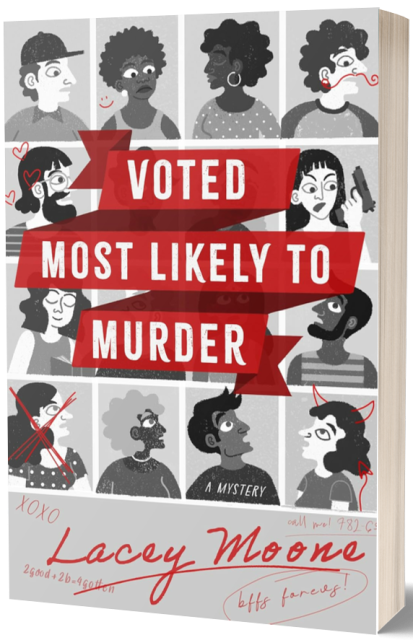
Voted Most Likely to Murder

Belinda Bishop is visiting Ascroft, eh? to tell us about Voted Most Likely to Murder, a mystery novel.

Welcome, Belinda. Let’s get started, shall we?

Tell us about the novel that you live inside. Is it part of a series? If so, please tell us about the series too.

Voted Most Likely to Murder (starring yours truly, Belinda) is an adult cozy mystery about a complete dumpster-fire of a human being (I’m paraphrasing here) named Belinda Bishop who is forced to move back to her hometown and work for her parents at their rental cottage and RV park in Little Blue Harbour, Nova Scotia after both her journalism career goes down in flames. Her upcoming high school reunion is just the cherry on the craptastic sundae. When she (literally) stumbles across the dead body of an old classmate, it just might be the killer story she needs to get her life back on track. Unfortunately, in order to crack this case, Belinda will need to work with the woman who made her teen years a living nightmare—Jolene Dexter, high school nemesis and current prime suspect. They’ll need to put aside their differences (fat chance) and work together (hard pass) to catch a killer before their sleepy coastal town is rocked to its foundations.

Right now, it’s a standalone mystery, but you never know. Small towns have long histories, with lots of secrets simmering beneath the surface. If murder comes to town again, I’ll be there to help uncover the truth.

Does the writer control what happens in the story or do you get a say too?

Look, she can write all the plot summaries and chapter outlines she wants, but at the end of the day, I’m going to do what I need to do to keep the story moving and get to the bottom of things. Sure, sometimes I rush into situations without considering the consequences or potential plot holes, but that’s for her to figure out. My job is to catch a killer and keep the readers entertained, not follow outlines.

How did you evolve as the main character?

I came back to Little Blue Harbour with a lot of baggage and resentment towards the town and some of its residents. I hid all my true feelings behind a mask of sarcasm and overconfidence, telling myself it didn’t matter if I struggled to connect with others because I was destined for better things than this dinky Nova Scotia town. Thankfully, I eventually learned to climb down from my pedestal, accept my past and the part I played in it, and move forward to the next stage in life, whatever that might be.

Do you have any other characters you like sharing the story with? If so, why are you partial to them?

It’s amazing how investigating a murder can bring people together. I don’t know what I would have done without my friend, Stevie Hart, and—believe it or not—Jolene. I can always count on Stevie to be the voice of reason when I get a little too caught up in investigation shenanigans, while Jolene is usually the one to help rebuild one of the (many) bridges I burned on my way out of town the first time around. Despite our differences, I trust these women with my life. There’s also a certain handsome local pub owner whose fiery red (and possibly cursed?) beard is always welcome.

What’s the place like where you find yourself in this story?

My story takes place in the fictional village of Little Blue Harbour, Nova Scotia, a coastal community known for its historical boardwalk, yummy seafood, strange local superstitions, ghosts that supposedly haunt the shoreline, and being home to more busybodies than seagulls. Apparently, it’s loosely inspired by the writer’s hometown. (But not the busybody part, she was very clear on that. Forget I said busybodies.)

Is there anything else you’d like to tell readers about you and the book?

If you like quaint coastal towns and amateur sleuths who are as sarcastic as they are tenacious, you’ll love this mystery!

Thank you for answering my questions, Belinda, and good luck to you and your author, Lacey Moone, with Voted Most Likely to Murder, a mystery novel.

Readers can learn more about Belinda and her author, Lacey Moone by visiting the author’s website and her Facebook, and Instagram pages. You can also follow her on Twitter/X, BlueSky and Threads.

The novel is available at the following online retailers:

 Amazon US    Amazon Canada    B&N    Bookshop.org

About Lacey Moone: Lacey was born and raised on the south shore of Nova Scotia, Canada. As a former military spouse, she has lived from one end of the country to the other, even as far north as the Northwest Territories. She currently resides in Alberta. She loves to write mysteries starring tenacious women who are as clever as they are sarcastic, with a focus on strong female friendships.

Posted in Archives, June 2026 | Tagged , , , , | Leave a comment

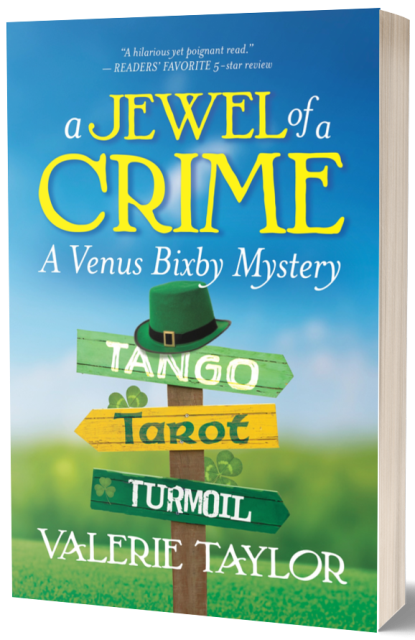
A Jewel of a Crime

Valerie Taylor, author of A Jewel of a Crime, the latest novel in the Venus Bixby mysteries series, is visiting Ascroft, eh? today.

Welcome, Valerie.

Tell us about your novel. Is it part of a series? If so, please tell us about the series too.

A Jewel of a Crime is part of the Venus Bixby Mystery trilogy, set in Chatham Crossing, a fictional whaling town between Providence and Cape Cod. The series features Venus Bixby, who early on owned an oldies music store and bakery. She inherits her late husband’s dance studio and eventually replaces the bakery with a bookstore, and then opens a kitty day care center. Clearly, an ambitious woman of influence in Chatham Crossing, Venus has an itch to do something else with her life other than stumbling over murder victims.

Ultimately, she gets that chance in A Jewel of a Crime. Venus sells the dance studio hoping to spend time traveling through Europe and recovering stolen art. But when she finds the studio’s new owner dead behind a curtain, Venus becomes the prime suspect. While trying to clear her name, she uncovers a secret from her late husband’s past involving an emerald ring—that’s missing. As burglaries ripple through the town and rumors swirl, Venus will need sharp instincts—and a dash of Irish luck—to catch the real killer before her dream of a new adventure turns into a nightmare.

Where did the idea for the mystery that is central to the story come from?

Once I decided Venus would sell the dance studio, logically the mystery just had to focus on the new owners. And then, in order for Venus to truly move on with her life, she had to close the book on her marriage. But how could she do that if her husband took a secret to his grave? These two ideas intertwined to form the idea for this mystery.

Is there a theme or subject that underlies the story? If so, what prompted you to write about it?

Oddly enough, perhaps, I’ve never started writing with a theme in mind. It’s only after I’ve read a solid draft does a theme emerge. For example, in A Jewel of a Crime the underlying theme could be a drive to have a fresh start. Venus Bixby isn’t the only one, though, who wants to hit the reset button.

How do you create your characters? Do you have favourite ones? If so, why are you partial to them?

Actually, Venus Bixby was born as a secondary character in my romantic comedy What’s Not Lost. I loved her so much I decided she needed her own series. So I made her my sleuth.From there, she needed a supporting cast that included a detective, a victim, and an ensemble of suspects. As I began telling the story, I considered how the characters interrelated, and whether they’d play a primary or secondary role. At times, that was easy. Take Venus’s sister, Sherrie Moore. While Sherrie has the more vivacious personality, their symbiotic relationship and their shared attention to details helped drive the plots forward. As it turned out, becauseA Jewel of a Crime has the largest cast of characters of the three novels, I included a list at the beginning of the book.

How do you bring to life the place you are writing about?

Spending a day several years ago in charming and historic New Bedford, Massachusetts, inspired me to create Chatham Crossing, a fictional whaling town situated between Providence and Cape Cod. Since I live in Connecticut, I took advantage of a number of webinars and videos offered by the New Bedford Whaling Museum. I learned about the whaling industry, ship building, and of course, pirates. One of the ways I hoped to bring Chatham Crossing to life was to reference locations and establishments in the New England region that readers would recognize.

What research do you do to provide background information to help you write the novel?

In A Jewel of a Crime I finally took advantage of its proximity to Salem, Massachusetts. The new shopping center in the story is managed by a handful of women who call themselves the Moonstone Guild. In addition, a new aromatherapy shop holds tarot readings. Though I believe there’s a little witch in all of us, I still read about the history of witchcraft and meditation, and kept one of my tarot card decks near me at all times. To put me in the mood, I watched Practical Magic, one of my favourite witchy movies.

Is there anything else you’d like to tell readers about the book?

Just as in the first two cozies in the series, A Jewel of a Crime has cookie recipes and an oldies playlist in the back. Here’s a link to the playlist:

Thank you so much for your interest in me and the Venus Bixby Mysteries!

Thank you for answering my questions, Valerie, and good luck with A Jewel of a Crime, the latest book in the Venus Bixby mystery series.

Readers can learn more about Valerie Taylor by visiting the author’s website and her Facebook, Instagram and Substack pages.

The novel is available at the following online retailers:

Amazon Print Book     Amazon eBook

About Valerie Taylor: Valerie Taylor considers herself an “average Jane.” She might remind you of a reclusive neighbor who’s secretly writing her next novel. Unlike many of the writers she admires, she doesn’t hold a degree in literature. Instead, she credits her love of storytelling to a steady diet of classic comedy and suspense.

She’s the award-winning author of the romantic comedy trilogy What’s Not Said, What’s Not True, and What’s Not Lost, as well as of the first two  books in the Venus Bixby cozy mystery series, A Whale of a Murder and Switched at Death. Her affinity for humor and whodunits was shaped early on by watching Carol Burnett, Jack Benny, Red Skelton, and The Twilight Zone.

When she’s not writing, Valerie enjoys oldies music, a passion sparked by hours growing up spent listening and dancing to Elvis Presley and The Beatles—and by proudly belonging to the Bobby Darin fan club.

Valerie lives close to her family in Connecticut.

Posted in Archives, June 2026 | Tagged , , , , | 1 Comment

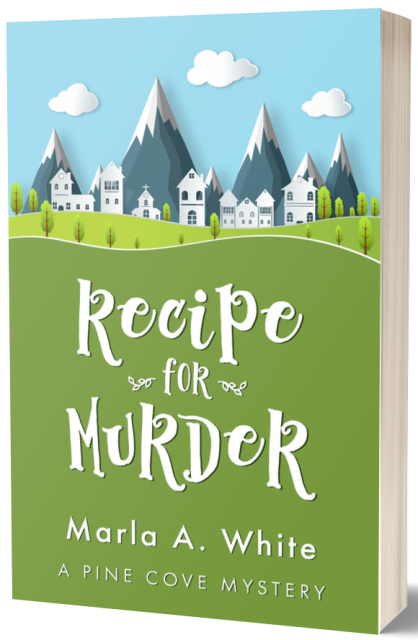
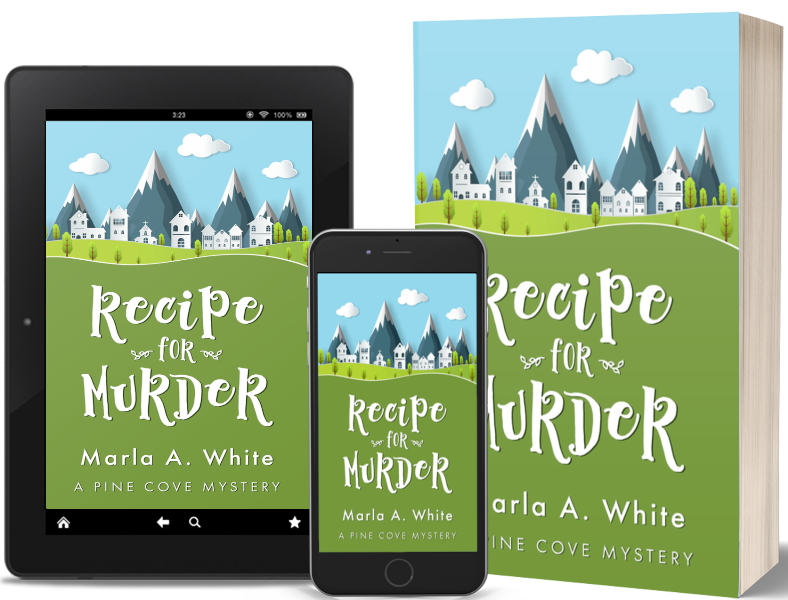
Recipe for Murder

Minnie O’Rourke, better known as Grandma O’Rourke, from Recipe for Murder, A Pine Cove mystery, is visiting Ascroft, eh? today and interviewing potential suitors for her granddaughter.

Welcome, Minnie. I’ll turn the floor over to you –

Deputy Gregg Marks, in his crips khaki uniform, sits in a chair opposite a desk. Next to him but a deliberate distance away sits Jackson Thibodeaux. He ignores Marks and brushes an invisible piece of lint off his white linen shirt, tucked into faded jeans. There’s an awkward silence between them.  Marks checks his watch with an impatient grunt.

The door to the office opens and in walks Minnie O’Rourke, although neither of them know her as anything other than Grandma O’Rourke, Mel’s grandmother. The two men exchange wary looks as she settles in behind the desk.

“What happened to that reporter, Carla Cole?” Gregg leans back suspiciously. “She asked me to come to her office to be interviewed about the New Orleans case?”

“Us,” Jackson corrects him, an unmistakable edge to his voice. Gregg waves it off.

“She’s indisposed at the moment,” the older woman answers. “I figured while you’re both here, I had some questions of my own to ask you two.”

“What do you mean by ‘indisposed’, is she okay?” She grins at the level of alarm in Jackson’s voice.

“Untwist your knickers, kid, she’s fine. Someone will hear her knocking on that broom closet door eventually.”

“What?!” Both men exclaim in unison.

“Oh, calm down, although that’s the first time you two knuckleheads have been on the same page about anything since the day I met you.” Grandma O chuckles. “If Mel could see the two of you now, she’d hardly believe it.”

“What do you mean?” Gregg narrows his eyes at the woman, knowing her granddaughter, Emmeline O’Rourke, both cherishes her and thinks she’s a pain in the neck almost simultaneously.

“I mean, the two of you have been pining over that girl for the better part of a year now. While it’s been fun having my own personal Thunderdome, wondering which one of you eegits will finally make your move, enough is enough already.”

Both men stare at her, mouths gaping open. Jackson clears his throat before squawking out, “What are you expecting us to do, throw her over a shoulder and take her home caveman style?”

The broader, thicker built Gregg snickers. “Good luck with that, Bakery Boy.”

Grandma O ignores both of them. “I want to know what your intentions are toward my granddaughter.” Both men stammer nonsensical sounds that might be words, just not in English. She talks over both of them. “I’m not getting any younger and I want great-grandchildren before I die.”

“But Mel’s sister, Vinnie, already has children so…mission accomplished?” She shoots Gregg a death glare for his remark.

“I mean from all of my son’s children, not just the one with the most sense. So hit me, what’s your big plan for wooing Mel?” Jackson points a finger at himself in the universal sign for, “who, me?” “No, the guy standing behind you. Of course I mean you,” she barks at him, taking a flask out of her over-sized bag and gulping down a swallow. Clearly for Minnie, this is going to be a long day.

“Well, there’s the annual home tour coming up. I thought I’d take her on that, show her some of the history of Pine Cove since she hardly ever gets to go out an explore.”

The motorboat noise she makes with her lips makes it clear how she feels about that idea. She adds her commentary anyway. “Like that’s going to get you laid. What about you, cowboy?” she asks, swinging her beady-eyed attention to Gregg.

“I was thinking of taking her to the amphitheater for a concert one night. This summer’s acts look pretty good.”

The rolling of her eyes relayed what she thought of that. “The girl grew up seeing huge names at the Hollywood Bowl, and the best you can come up with is a mosquito-ridden night listening to an Elvis cover band?  Christ on a cracker, are you trying to make her homesick?”

The two men, usually frenemies at best, exchange a look and lean closer to Grandma O. “Do you have any recommendations?” Jackson asks, Gregg nodding in agreement.

“Thought you’d never ask,” the older woman replies, reaching into her bag once again as she drinks down her flask. She takes out a multi-page document, typed in single spacing. “Since I’ve been forced to watch this love triangle unfold with all the speed and intensity of paint drying, I’ve come up with a few ideas for either one of you to try to claim my granddaughter’s heart. You’re welcome,” she heaves herself out of the chair heading toward the door.

The two men, heads bowed over the pages, skimmed the contents. “Wait, is this even legal in California?” Gregg asks, pointing to an item on page two.

“Won’t know till you try it,” she called out from the hallway. Suddenly a breathless, disheveled woman appears at the door.

“Gentleman, I’m so sorry to keep you waiting. You won’t believe what just happened to me. I- I think an old lady hi-jacked my interview?”

Gregg and Jackson lean back, trade now a look of understanding, before Jackson replies, “I think she just hi-jacked our lives.” The two men stand, split the list of suggestions in half and exit, each going their own way.

“Good luck on number twelve,” Gregg snorts. Jackson merely gives him a wave that may or may not be of the single finger salute variety. Carla Cole flops in her seat, confused by what the heck just happened. 

Thank you for sharing this with us, Minnie, and good luck to you and your author, Marla A. White, with Recipe for Murder, the latest book in the Pine Cove mystery series.

Readers can learn more about Minnie and her author, Marla A. White by visiting the author’s Facebook, Instagram, Substack, TikTok, BookBub and Goodreads pages. You can also follow her on Twitter and Threads.

The book is available online at the following retailers: 

Amazon –  Barnes&Noble   –  Apple Books – GoodReads – AllAuthor – Books2Read – Book Bub

About Marla A. White: Marla White kills people for a living—on paper, at least.

An award-winning mystery and suspense author with roots in Hollywood, Marla White made a striking debut with Cause for Elimination, earning recognition from Killer Nashville, the RONE Awards, Reader’s Favorite, and a second-place finish with the Orange County Romance Writers in Romantic Suspense.

Originally from Oklahoma, Marla carved her path through multiple states before landing in Los Angeles, where she built a career in television development and now teaches screenwriting at UCLA Extension—including the fine art of script coverage and story analysis.

When she’s not plotting her next murder (fictional, we promise), she can be found in her garden, on a hiking trail, cheering for the LA Kings, or field-testing craft cocktails in the name of research.

Posted in Archives, June 2026 | Tagged , , , , | 1 Comment

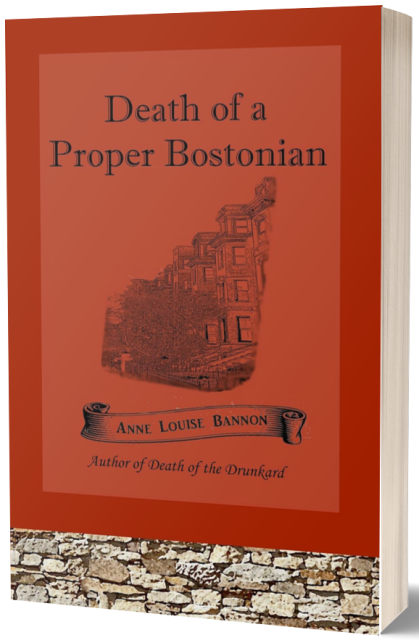
Death of a Proper Bostonian

Maddie Wilcox, physician and winemaker, is visiting Ascroft, eh? to tell us about Death of a Proper Bostonian, the latest novel in the Old Los Angeles mystery series.

Welcome, Maddie. Let’s get started, shall we?

Tell us about the novel that you live inside. Is it part of a series? If so, please tell us about the series too.

It’s quite simple, really. These are my memoirs. My grand-nieces and nephews badgered me into writing them down, although I gravely fear that the badgering had more to do with them being rather tired of hearing about my various adventures. That’s probably why I began them with the water overseer’s body turning up in my irrigation ditch. You might know it as Death of the Zanjero.

I’ve written six, so far. The young people all seem to think that my life has been terribly exciting, having to search out and find so many killers. I don’t think that at all. I would far rather be writing about my medical practice than all of the mayhem that was the usual in Los Angeles in the 1870s, and then finding the same in Boston. Even as the pueblo grew more civilized, I managed to stumble onto more than my fair share of murders.

How did you evolve as the main character?

Oh, dear. That is a difficult one, as I prefer to believe that I am continuing to evolve as a person, even now in my 80s. But I did grow from being a healing woman and terrified that anyone would find out that I have my degree in medicine, to (I hope) a reasonably confident woman who has been able to recognize even the difficult turns one life has taken as ultimately the greatest blessings.

Do you have any other characters you like sharing the story with? If so, why are you partial to them?

Do you mean my dear, dear friends Mrs. Angelina Sutton and Mrs. Regina Medina? I don’t know how I could have found half of the killers I did without them. They were incredibly intelligent and amusing women, sadly gone now. Angelina’s daughter still comes to visit quite often.

Then there are the Ortiz brothers and their families. Sebastiano and Enrique were my partners for a very long time, and their wives, Olivia and Magdalena, respectively, kept house for me. I couldn’t have managed my vineyard without any of them.

But in terms of this book, it is definitely my dear, dear sister Carrie and her family who had the strongest claim on my heart and it was so very good to see her after my thirteen-year absence. And one other, but that should be obvious if you know me.

What’s the place like where you find yourself in this story?

Boston’s Back Bay. This was my first trip back to my hometown of Boston after being unceremoniously dragged to Los Angeles by my late and unlamented husband. I stayed in my sister Carrie’s townhouse with her delightful husband Ambrose Stanton, a poet you may have heard of, and their lovely children. They were so sweet and cunning at the time, I almost forget that several of them are already grandparents now.

Carrie’s house had three floors and an attic, made of brick, as most of those homes were. I suddenly wonder if it’s still there. So much has changed in Boston since then, and had even by the time I made that particular visit. What hadn’t was the smell, although it struck me quite forcefully the day I arrived with my ward Elaine Orton in tow.

The city was a veritable font of culture and learning, but the people remained as narrow-minded as they ever were. The resistance to Women’s Suffrage was endless, and the only worse part were the terrible attitudes toward the Irish, poor immigrants who had only come to this country to escape starvation because of the terrible famine.

Is there anything else you’d like to tell readers about you and the book?

One does not wish to pander; however, there may be a scandalous revelation or two. Nothing terribly salacious, of course. I may not have been the most conventional of women, but I still believe that some standards are worth maintaining. Oh, and thank you for your thoughtful questions. This was quite entertaining.

Thank you for answering my questions, Maddie, and good luck to you and your author, Anne Louise Bannon, with Death of a Proper Bostonian, the latest book in the Old Los Angeles mystery series.

Readers can learn more about Maddie and her author, Anne Louise Bannon by visiting the author’s website and her Facebook, Goodreads, LinkedIn, Instagram and Pinterest pages. You can also follow her on BlueSky, Mastodon and Substack.

The novel is available at the following online retailers:

Barnes & Noble     Kobo    Books2Read    Apple    Amazon      Google

    Bookshop.org  

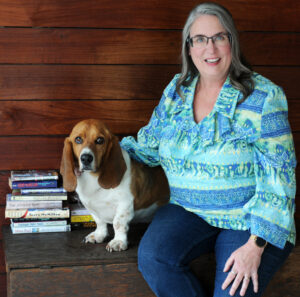
About Anne Louise Bannon: Author Anne Louise Bannon’s husband says that his wife kills people for a living. Bannon does mostly write mysteries, including the Old Los Angeles Series, the Freddie and Kathy series, and the Operation Quickline series. She has worked as a freelance journalist for magazines and newspapers, including the Los Angeles Times. She and her husband, Michael Holland, created a wine education blog, and she co-wrote a  book on poisons. She and her husband live in Southern California with an assortment of critters. 

Posted in Archives, June 2026 | Tagged , , , , , | 1 Comment

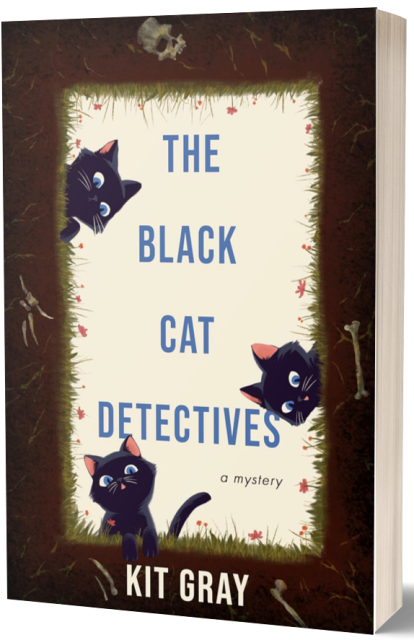
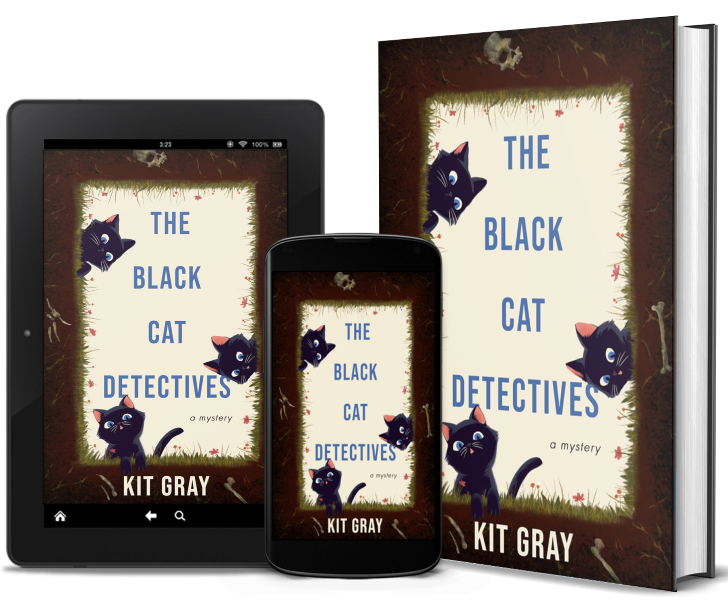
The Black Cat Detectives

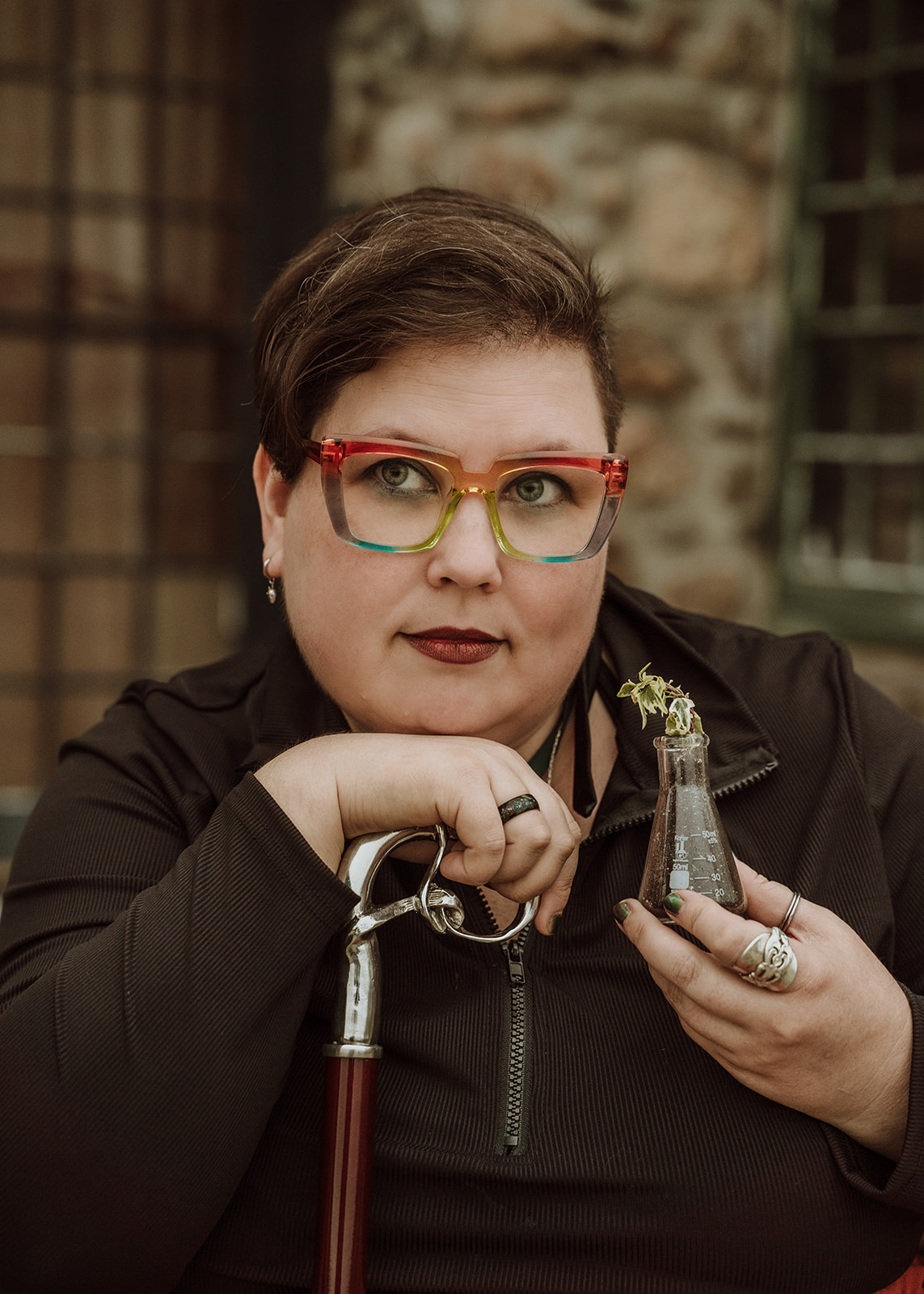
Kit Gray, author of The Black Cat Detectives mystery, is visiting Ascroft, eh? today to share with us how they balance writing and the solo-parenting life.

Welcome, Kit. I’ll turn the floor over to you –

I wasn’t planning on becoming disabled and being my daughter’s only parent, but here I am. And you know what? It’s AMAZING.

Sometimes, it’s hard, of course. But I wouldn’t change a single thing about how my journey has gone so far, because I love who my daughter is and I love my life.

I know a lot of people who are parents. I even know a few who are doing it alone, like me. I have a lot of writer friends with young children. I don’t know any parent who doesn’t struggle to find time for their own interests. I get it. When you are the only caregiver for a kiddo 24/7/365, it’s incredibly difficult to find time and energy for writing.

So here’s a bit about my journey and how I make it work. Hopefully, this is helpful for any parents out there trying to figure it out as you go.

  1. Acknowledging the reality.

I loved my daughter’s toddler years. She was a tiny, adorable little thing with zero fear, a bottomless yearning for adventure, a nimble and clever mind, and emotions the size and volume of a stampeding herd of wooly mammoths. My only opportunities to write were usually when she was asleep. Advice like “a serious writer will write everyday” was so destructive for me. It took me a while to realize that I got to decide for myself how writing fit into my life. For me, that meant a lot of adaptability and nimbleness. That didn’t make me any less serious about writing. I did what I could, and told myself over and over that it would get easier.

2 Finding rhythms and strategies that work for you.

The winter after my daughter turned four, I started a new bedtime routine where I’d build a fire in the fireplace after bath time and make a healthy snack. We’d put on a movie, and for ninety minutes, I’d write. The entire first draft of The Black Cat Detectives was written during those wintry fire-time evenings. Afterward, we’d have a dance party to get our wilds out, and we always finished with a slow song called Days Aren’t Long Enough by Thomas Dybdahl and Lera Lynn, during which we’d drift around the house saying goodnight to all the fur family, then story time and off to sleep.

Adorably, one night my little four-year-old daughter asked me to read her some of what I’d written. I left out anything too intense (there wasn’t much of that, it being a cozy mystery and all), and I was shocked to discover that she was rapt the entire time. The next night, she asked again, and then again. When I had a night where I was feeling too cruddy to write, her little face fell.

Talk about motivation!

3 Ups and downs don’t mean you’re failing.

I bet a lot of you are really good at being hard on yourselves. Me too. So when I’d have chunks of time where every day was filled with new challenges to surmount and new barriers to crash into, and my writing would fall by the wayside, I was really good at telling myself that maybe I wasn’t a *real* writer after all. Maybe I wasn’t putting enough into it. Maybe I wasn’t trying hard enough.

Guess what? This thought-spiral was actually far more of a drain on my ability to write than life’s obstacle course. I had to accept that I am not a slow-and-steady person. I am a wild, passionate bursts of effort followed by fallow periods person. My disability is part of that, but honestly, a lot of it is also how my brain works. But the better I understand that about myself, the better I can give myself permission to work in my own rhythm. These days, I’m pretty much always working on something writing-related. Planning, drafting, revising, editing, marketing… I try to lean into what feels doable for me and not stress about the things that I’m not doing, but “should.”

Am I good at it? I’d like to say yes, but like everything else, I have my ups and downs.

4 It does get easier! Lots!

When my daughter was a toddler and I’d tell myself it gets easier, I mostly meant less impossible.

What I never imagined was that my daughter would become one of my biggest fans. She always wants me to read her whatever I’m writing. She’s remarkably precocious for a 9-year-old, but I’m sure you can imagine there are still plenty of things I skip over, and some entire projects that are not age-appropriate.

But Bippity, Boppity, and Boop? She’s their biggest fan. She even wrote her own early chapter book, about 4000 words in 12 chapters, in which they meet a magical faerie fox and save the world from a tyrant.

I always tell her she’s welcome to participate in my author journey, but her job is to be a kid, not to support me. I don’t ever want my journey to occlude her childhood. Not even a little bit.

But time after time, she eagerly joins in. She learned close-up magic with me when I was researching. She brainstorms with me about marketing content, gives feedback on my Canva designs, comes along to author events, even gives me editorial notes on drafts of new work when I read it to her. She’ll go, “mama, I don’t think that’s how Boppity would react to that,” or, “I like that scene with the tree, but wouldn’t it be even more amazing if you tried this instead?”

When I had a rubber stamp made for a seal I can sign at book events, I had one made for her, too, in case she wanted to sign books with me, on the dedication page where her name appears.

The grin she gave me when she saw it?

Best motivation ever.

Thank you for sharing this with us, Kit, and good luck with The Black Cat Detectivse mystery. Readers can learn more about Kit Gray by visiting the author’s website and their Facebook, Goodreads, Storygraph and Instagram pages. You can also follow them on BlueSky and Twitter/X.

The book is available online at the following retailers:

Penguin Random House     Amazon       B&N      Bookshop.org 

About Kit Gray: Kit Gray aka Elise Scott writes from their lived experiences of queerness, disability, neurodivergence, fat-positivity, and petting three cats with two hands. Their life has been an adventure, from facilitating equine therapy for trauma survivors to counseling at-risk youth with the aid of an inordinately large sub-woofer and beyond. They earned their BA from Mount Holyoke and their MS from Capella University. Their debut novel, a cozy mystery featuring three kittens with the ability to bend the laws of physics, who must solve a murder to save their rescuer from the human pound, was published by Crooked Lane in May 2026. Elise is a Not Quite Write Prize winner and Best-of-the-Net nominee. Their short work has appeared/is forthcoming in The Advocate, Choices: An Anthology of Reproductive Horror, The Not Quite Write Anthology 2025, The B’K, Five Minutes, Knee Brace, All Existing, and Quibble, among others. 

Posted in Archives, June 2026 | Tagged , , , , | Leave a comment