
Today James J. Cudney is visiting Ascroft, eh? to tell us about Haunted House Ghost, his latest novel in the Braxton Campus mystery series.
Welcome, James. Let’s get started, shall we?
Tell us about your novel. Is it part of a series? If so, please tell us about the series too.
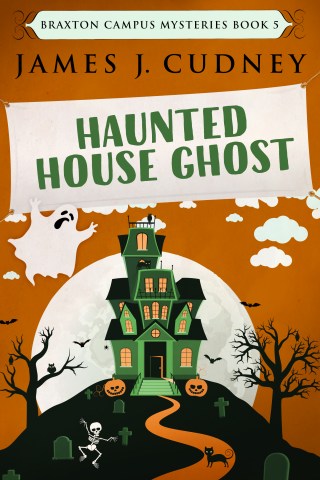 JJC: Haunted House Ghost is the fifth novel in the Braxton Campus Mysteries series. The protagonist is Kellan Ayrwick, a ~30ish single father who moves home to Pennsylvania after a disastrous end to his marriage. I don’t want to give away any spoilers, but the first few books detail specifically what happened between him and his wife, and it’s definitely not what normally happens in a cozy mystery series. Kellan worked as a director in Hollywood and took a role as a professor at Braxton College, but he’s also solved a few murders. It’s put him in the line of fire with the county sheriff, April Montague, and set up tons of banter and chemistry. Throw in his boss, Dr. Myriam Castle, an acerbic and indomitable Shakespeare lover, and his eccentric but demanding grandmother, Nana D, you’ve got a trio of women to keep Kellan in line. While the series follows all the cozy guidelines (no foul language, graphic violence, or sexual content), it is not your typical lighter cozy with romance, recipes, or pets as the focus (all of which I LOVE). There is a dog. Kellan loves to eat. And he does date a little. It’s just not at all the primary focus of the story or the theme that connects the series. There are lots of characters with many subplots, and I’ve turned the genre upside down with how Kellan goes about his day – he’s highly intelligent but often pushed around by the women in his life. He’s incredibly fun to write for, but I have to be careful not to make him too sarcastic or too wimpy, as I want him to come across as the kinda guy everyone would want to know or date.
Haunted House Ghost is a Halloween story filled with all the things we love about the autumn season. At the end of the last book, Kellan was motivated to find a new place to live, based on the cliffhanger Nana D dropped on him. He’s bought The Old Grey Place from the county judge, but apparently it’s haunted. Someone has been stalking Kellan, and the contractor renovating the home has seen a ghost. When a skeleton is found during the new library construction, everyone assumes it’s Judge Grey’s first wife, the missing Prudence Grey. Once Kellan asks questions and is attacked by the supposed ghost, everything begins to explode. Another body shows up. Multiple people look guilty based on their actions from fifty years ago, and a psychic causes total chaos during the Fall Festival. Not only does the book focus on the murders and the haunted house, the side stories are getting even more feverish. Kellan and April begin to explore their relationship. A local Catholic priest is acting strange. The Grey family causes trouble all around town. Kellan’s siblings are driving him batty. Throw in several scenes with bonfires, spooky corn mazes, horse drawn carriage hayrides, and goofy trick-o’-treating, and this is the perfect October read.
Where did the idea for the mystery that is central to the story come from?
JJC: Halloween is one of my favorite holidays. I wanted to publish a book that brought out the best of the fall season. What would be better than a haunted house and a ghost? Each book in the series has explored one of the major families in Wharton County. The focus of this one is the Grey family, headed by Hiram, the local judge. We’ve met a few of his grandchildren in previous books, but now we meet the man himself. He and Nana D have a bit of history, so it was fun to explore the dynamics of a 50-year-old mystery in which tons of the county’s important and beloved citizens are accused of something horrible.
I am not a fantasy or science-fiction reader by nature. Yet, I love a bit of paranormal without getting too over-the-top. It needs to be funny and/or real, like some of the series with ghosts or skeletons that I’ve read and enjoyed. I wanted to provide elements of spookiness (séance, ghosts, paranormal visions, premonitions) without getting too far out of the realistic realm. By throwing in all the awesome parts of the autumn season, I could create a really immersive experience where you are slightly scared by the story but only in terms of ‘oh no, not my favorite character’ as opposed to a true horror or thriller (which I will write one day).
Is there a theme or subject that underlies the story? If so, what prompted you to write about it?
JJC: Not in this book, for the first time. Usually, there is a strong theme in past books, e.g. sorority shenanigans in Mistaken Identity Crisis, drugs in Broken Heart Attack, cutthroat baseball scouts in Academic Curveball. This is all about enjoying the season and thinking about pumpkin spice lattes and apple pie. You know how much Kellan loves his desserts.
How do you create your characters? Do you have favourite ones? If so, why are you partial to them?
JJC: Character creation is the best part of being a writer. At the conclusion of this 5th book, I have 125 characters that have appeared in the series. While that is a huge amount, some are only here for a few pages in every book, others are prominent in a single book then disappear. To me, it’s about creating a universe where readers wish they could live. I adore college campuses. I love family drama and dynamics. I think cozy little towns are the best places to live. Murders happen all over the place, and to both good and bad people. I want everyone to feel real, sometimes over-the-top, but always reachable. My characters should resemble the friends, neighbors, family, and acquaintances in our lives.
Sometimes, if somebody angers me in real life, I base a character on them. Or, if someone has been wonderful to me, I’ll throw a nod in his or her direction. Many of the last names are from my own family tree too. It’s fun to share this closeness with the world I’ve made up. Kellan, of course, is my favorite character, but I’m sure you want to know who else, not just the protagonist. My obvious favorite to write for is Nana D. She can say anything and get away with it. My other favorite, though not a major character in the series, is Sam Taft. He doesn’t appear until the 2nd book, and he’s conspicuously absent in the 5th book (for a reason), but he’s someone who feels entirely too pure and innocent not to love. I suspect he’s hiding a secret we haven’t learned yet, but he just hasn’t told it to me. Soon… soon, I’ll get to share more about him.
How do you bring to life the place you are writing about?
JJC: Braxton is based on the concept of the school I graduated from, Moravian College. No murders ever happened there, that I’m aware of… The specific layout of each campus is very different. The key thing that drives the setting for my town is the cable car that transports students and staff from North to South Campus. It’s one mile long and has a cozy street of shopping, bars, and history. That’s really Bethlehem, Pennsylvania, where Moravian resides. I started with that image, then rolled in the larger town and county. Wharton County is made-up, but it’s pieces of all different towns in Pennsylvania. Much of my family moved there in the last decade, so I’ve been all over the state. I created a fictional place with a national forest, river, lake, mountains, farmland, 4 towns (Braxton, Woodland [from my other book, Father Figure], Millner Place, and Lakeview), in the northcentral region close to the NY border. All my experiences created the concepts, but then I picture the things I want to be part of the story. Crilly Lake for summer fun, mountains for hiking, a river for a cruise and fishing, farmland for a connection to nature and organic life. In the college, it’s all about the major buildings you need, places where people have been and like going – the library, the academic hall, the sports complex, the theater, etc.
What research do you do to provide background information to help you write the novel?
JJC: I’m not a huge fan of researching information for a book. I only half believe that statement, I say with a devious laugh. Truthfully, I like creating and inventing rather than reusing something. Of course, everything is a version of something else, but when you deal with real-life details, you have to nail everything perfectly—there’s little room for nuance or open-minded changes. I love books based on reality, historical fiction that requires immense detail, but I’m not that kind of writer. I don’t do well with a structure I can’t alter, in terms of creativity. I’d rather not make a mistake, so I stick to my own world of imagination. I would love to write a book based on research in the future though… I’m just not there yet.
That said… each book contains several things I do have to research. Things like medical conditions, police procedures, college policies, etc. For example, I wasn’t sure of the college baseball season for the first book, Academic Curveball. I knew the professional league season, but not the college one. I did all the research to pick the late February / early March start timeline for a first college game. I checked various colleges in PA to ensure they had outdoor baseball fields, even in the cold of winter. Even then, a reader pointed out that it didn’t feel realistic. Someone will always have a difference of opinion, even if there are facts to support what your research shows. I try to not offend anyone in my writing, but I also want to be as realistic as possible… of course no small town has as many murders as a cozy one does, but still… everything else must feel as real as possible.
Is there anything else you’d like to tell readers about the book?
JJC: Yes! If you love cozies, you will hopefully love this series. It follows all the rules but pushes the limits in terms of the audience. The amateur sleuth is a man, and he is single and has a six-year-old daughter. He’s going to date women, and he’s going to have urges and desires, but I try to show those personality traits and actions without making him weak or too seductive. He’s young but an old soul. He’s not your typical kind of nosy… and his job has trained him to ask questions. The series lets readers navigate the mystery, but it’s also about showcasing the life of a fun place and family in a typical American small town. Humor is a big part of my writing, but not the over-the-top kind… more subtle and endearing. I like to create scenes and concepts, describe with lots of details, then let the reader interpret it based on how they want to envision things. I’ve tried to put my personality into the book… not that everyone will understand it or like it… but I want there to be a balance of everything we love about reading and all those things that make us want to explore the world around us.
Thanks for answering my questions, James, and good luck with Haunted House Ghost, the latest book in the Braxton Campus Mystery series.
Readers can learn more about James and his writing by visiting his website and his Facebook, Goodreads, Pinterest and Ingragram pages. You can also follow him on Twitter.
The novel is available online at Amazon.
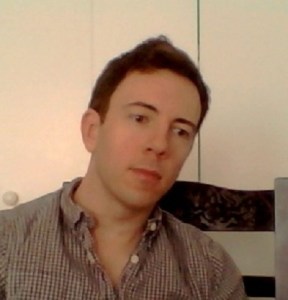 About James J. Cudney: James is his given name; most call him Jay. He grew up on Long Island and currently lives in New York City, but he’s traveled all across the US (and various parts of the world). After college, he spent 15 years working in technology and business operations in the sports, entertainment and media industries. Although he enjoyed my job, he left in 2016 to focus on his passion: telling stories and connecting people through words. His debut novel is ‘Watching Glass Shatter,’ a contemporary fiction family drama with elements of mystery, suspense, humor and romance. Outside of writing he is an avid genealogist (discovered 2K family members going back about 250 years) and cooks (I find it so hard to follow a recipe.

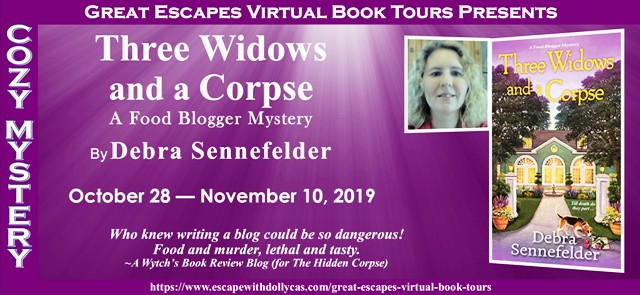
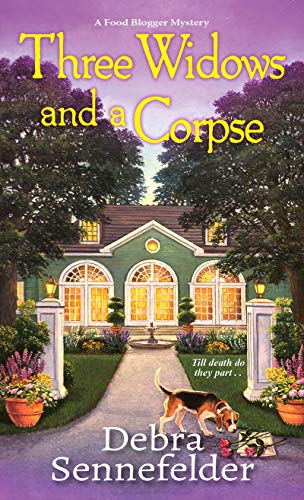 DS: When I was submitting the first book in the series, THE UNINVITED CORPSE, to editors, I had to include summaries for the next two books in the series. While I had a completed draft of the second book, I needed an idea for the third book. The idea of three women claiming to be married to the same man popped into my head and then I got the idea for a scavenger hunt. I wrote up a fast paragraph and then about a year later I was writing the story.
 About Debra Sennefelder: Debra is the author of the Food Blogger Mystery series and the Resale Boutique Mystery series, and is an avid reader who reads across a range of genres, but mystery fiction is her obsession. Her interest in people and relationships is channeled into her novels against a backdrop of crime and mystery. When she’s not reading, she enjoys cooking and baking and as a former food blogger, she is constantly taking photographs of her food. Yeah, she’s that person.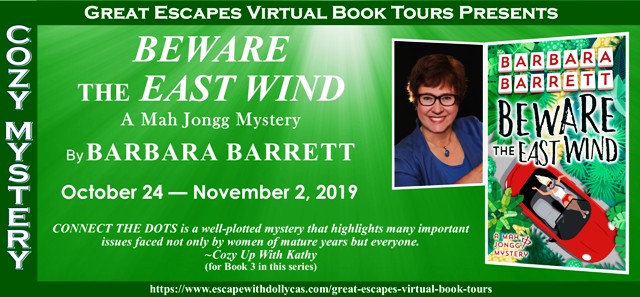
 BB: The initial idea for Beware the East Wind started when my Sisters in Crime chapter in Iowa invited a hypnotist to be their guest speaker. She became interested in hypnotism in her middle years, and after taking several courses and receiving certification, leveraged her new interest into entertaining at various functions like high school graduation parties. She later expanded into offering personal counselling services featuring hypno-therapy. The idea stuck around in the back of my brain until this year when I needed a victim for this fourth book. Let me be clear, the victim in this book is purely fictional; nothing about her is based on the real-life hypnotist that was our speaker.
 About Barbara Barrett: She started reading mysteries when she was pregnant with her first child to keep her mind off things like her changing body and food cravings. When she’d devoured as many Agatha Christies as she could find, she branched out to English village cozies and Ellery Queen. Later, to avoid a midlife crisis, she began writing fiction at night when she wasn’t at her day job as a human resources analyst for Iowa State Government. After releasing eleven full-length romance novels and one novella, she returned to the cozy mystery genre, using one of her retirement pastimes, the game of mah jongg, as her inspiration. Not only has it been a great social outlet, it has also helped keep her mind active when not writing. Anticipating the day when she would write her first mystery, she has been a member of the Mystery/Romantic Suspense chapter of Romance Writers of America for over a decade. She credits them with helping her hone her craft. Barbara is married to the man she met her senior year of college. They have two grown children and eight grandchildren.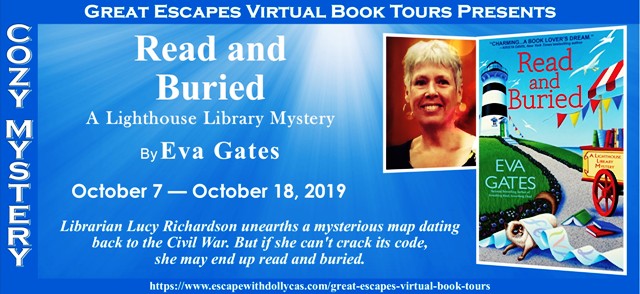
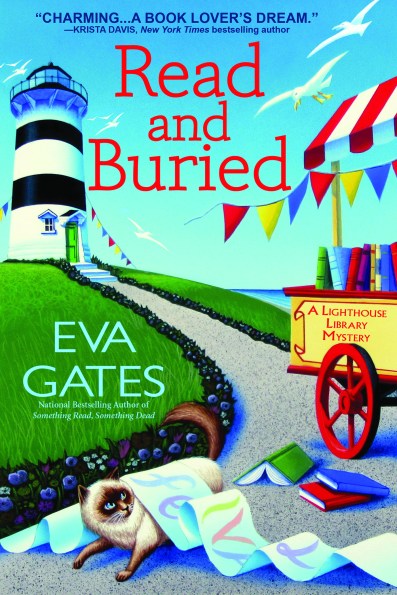 There are a lot of good reasons to create a fictional setting for a book: No one can point out all your mistakes; if something doesn’t work for you, you can just make it up; avoids all that pesky research.
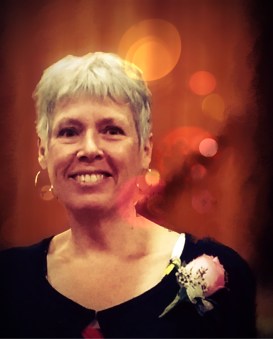 About Eva Gates/Vicki Delany: Vicky is one of Canada’s most prolific and varied crime writers and a national bestseller in the U.S. She has written more than thirty books: clever cozies to Gothic thrillers to gritty police procedurals, to historical fiction and novellas for adult literacy. She is currently writing four cozy mystery series: the Tea By The Sea mysteries for Kensington, the Year Round Christmas mysteries for Penguin Random House, the Sherlock Holmes Bookshop series and, as Eva Gates, the Lighthouse Library books for Crooked Lane. Vicki is a past president of the Crime Writers of Canada and co-founder and organizer of the Women Killing It crime writing festival. She lives in Prince Edward County, Ontario, Canada.
![Pageflex Persona [document: PRS0000031_00001]](https://dianneascroft.com/wp-content/uploads/2019/10/galliano-gold-final.jpg?w=349&h=536) Every time I write a new Franki Amato mystery, I have a mental checklist that I follow. First, I pick an Italian liqueur or a wine for the title with a matching color. There has to be either a rhyme, as with Limoncello Yellow, the first book in the series, or alliteration, like the other books to date: Prosecco Pink, Amaretto Amber, Campari Crimson, and most recently, Galliano Gold.
Every time I write a new Franki Amato mystery, I have a mental checklist that I follow. First, I pick an Italian liqueur or a wine for the title with a matching color. There has to be either a rhyme, as with Limoncello Yellow, the first book in the series, or alliteration, like the other books to date: Prosecco Pink, Amaretto Amber, Campari Crimson, and most recently, Galliano Gold.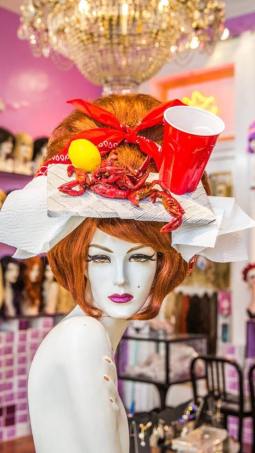 Lastly, I try to include an unusual item from the city. Thanks to the suggestion of my audiobook narrator, the multi-talented and multi-voiced Madeline Mrozek, I had Franki go undercover wearing a crawdad boil-themed wig from Fifi Mahony’s in Galliano Gold. If you have never heard of Fifi Mahony’s, I urge you to check out their Facebook page, because nothing showcases the weird, wild, and wonderful aspects of New Orleans like a Fifi Mahony’s wig.
 About Traci Andrighetti: Traci is the USA TODAY bestselling author of the Franki Amato Mysteries and the Danger Cove Hair Salon Mysteries. In her previous life, she was an award-winning literary translator and a Lecturer of Italian at the University of Texas at Austin, where she earned a Ph.D. in Applied Linguistics. But then she got wise and ditched that academic stuff for a life of crime–writing, that is. Her latest capers are teaching mystery writing for Savvy Authors and taking aspiring and established authors on intensive writing retreats to Italy with LemonLit.
 Does the writer control what happens in the story or do you get a say too?
  Is there anything else you’d like to tell readers about you and the book?
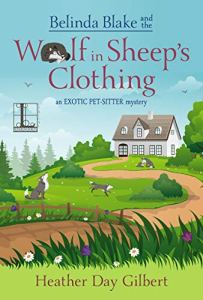 BB: My latest mystery is Belinda Blake and the Wolf in Sheep’s Clothing. It’s book 2 in the Exotic Pet-Sitter series, because I happen to be an exotic pet-sitter. 🙂 In this book, I’m working at a wolf preserve in Greenwich, Connecticut, and let’s just say things get a bit hairy!
 About Heather Day Gilbert: An ECPA Christy award finalist and Grace award winner, Heather is the author of the bestselling Exotic Pet-Sitter mystery series. Her novels feature small towns, family relationships, and women who aren’t afraid to protect those they love. Like her amateur sleuth Belinda Blake, Heather plays video games, although so far she hasn’t done any exotic pet-sitting or hunted any murderers.
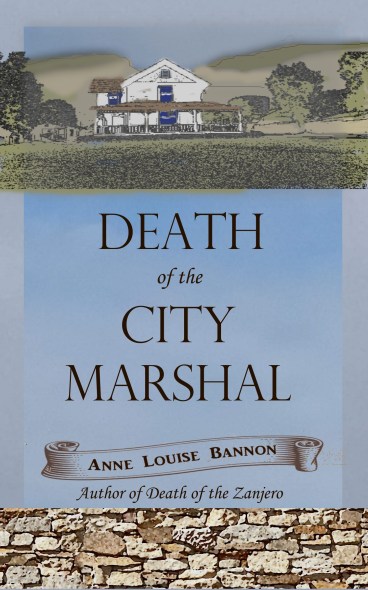
 ALB: Death of the City Marshal is the second in my Old Los Angeles series, featuring doctor and winemaker Maddie Wilcox in 1870. Maddie is a widow who was brought to Los Angeles by her husband, who bought a vineyard, then died. She spent a lot of time hiding that she holds a medical degree, but that got revealed in the first book, Death of the Zanjero, which is about the politics of water in a very arid climate.
 ALB: Being married to an archivist really helps. But even beside that, I read a lot of periodicals from the time period, novels from the time. The tourist literature is a tremendous help, since that records the sort of things most people didn’t bother writing down. I mean, if you know how to make wine, you’re not going to write about it in your diary. On the other hand, if you’re a tourist, you’re going to write about what you saw those people do in that strange place.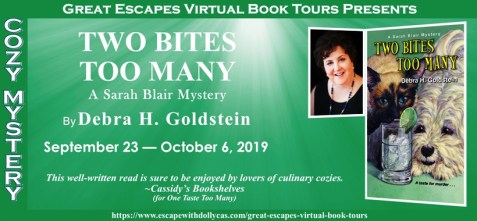
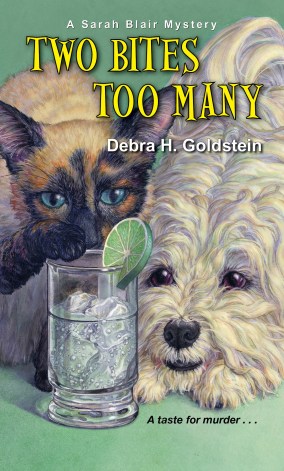 DHG: Two Bites Too Many is the second book in Kensington’s new Sarah Blair cozy mystery series. In the first book, One Taste Too Many, which was released in January 2019, we met Sarah, for whom cooking from scratch is a fate worse than murder. Married at 18, divorced by 28, the only thing she got out of her divorce was her Siamese cat, RahRah. She’s the polar opposite of her twin sister, Emily, an accomplished chef. Of course, when Emily is accused of killing the rat who was Sarah’s ex-husband, with a taste of her award-winning rhubarb pie, Sarah must clear Emily’s name while trying to avoid stepping into a kitchen.
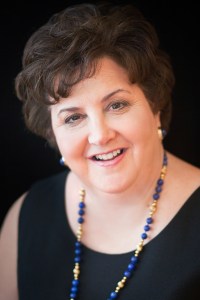 About Debra H. Goldstein: Judge Debra H. Goldstein is the author of Two Bites Too Many, as well as One Taste Too Many, the first of Kensington’s new Sarah Blair cozy mystery series. She also wrote Should Have Played Poker and IPPY Award-winning Maze in Blue. Her short stories, including Anthony and Agatha nominated “The Night They Burned Ms. Dixie’s Place,” have appeared in numerous periodicals and anthologies including Alfred Hitchcock Mystery Magazine, Black Cat Mystery Magazine, and Mystery Weekly. Debra serves on the national boards of Sisters in Crime and Mystery Writers of America and is president of the Southeast Chapter of MWA and past president of SinC’s Guppy Chapter.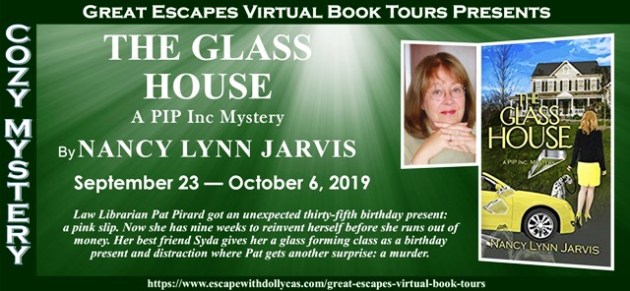
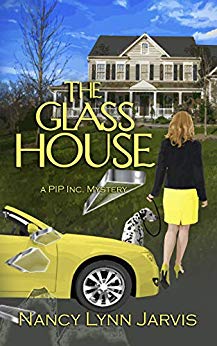 NLJ: When I’m not writing, I host Airbnb. I have a guest from Long Island who is a glass artist. She flies to California every few months to take glass fabrication classes taught at a local glass studio. She does take pictures of what she’s making in class, but I never get to see the finished product because it’s always carefully packaged for her flight home. Recently she took a poppy making class and was so enthusiastic about what the class creations that she wanted me to see her finished creation. She suggested that I should slip into the studio while the class was having lunch in the owner’s house and sneak a peek. I did, but I felt so guilty for breaking and entering that after I satisfied my curiosity, I went to the owner’s house and confessed what I had done. Instead of calling out police with handcuffs, the owners invited me to join the class for lunch.
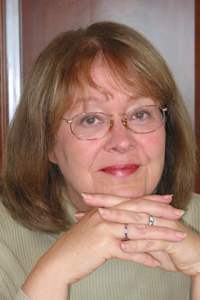 About Nancy Lynn Jarvis: Nancy was a Santa Cruz, California, Realtor® for more than twenty years before she fell in love with writing and let her license lapse. After earning a BA in behavioral science from San Jose State University, she worked in the advertising department of the San Jose Mercury News. A move to Santa Cruz meant a new job as a librarian and later a stint as the business manager for Shakespeare/Santa Cruz at UCSC. Nancy’s work history reflects her philosophy: people should try something radically different every few years, a philosophy she applies to her writing, as well. She has written seven Regan McHenry Real Estate Mysteries; a stand-alone novel “Mags and the AARP Gang” about a group of octogenarian bank robbers; edited “Cozy Food: 128 Cozy Mystery Writers Share Their Favorite Recipes” and a short story anthology, “Santa Cruz Weird;” and even done a little insider’s book, “The Truth About Hosting Airbnb” about her first year as a host. “The Glass House” is the first book in a planned series of PIP Inc. Mysteries. Now she’s trying to figure out when to work on another series she’d love to do called “Geezers with Tools” about two older handymen who will solve mysteries in the course of doing their work, and setting up writer retreats at her house.





 dianneascroft.com