Today I’ve invited Kevin O’Connell to Ascroft, eh? talk about his historical novel, Beyond Derrynane. Welcome Kevin. Let’s get started, shall we?
Tell us about your novel.
KC: Beyond Derrynane: A Novel of Eighteenth Century Europe is the first of a series of four  novels, which together will constitute The Derrynane Saga. Beginning in 1760 and focusing on that era of the Gaelic poet, Eileen O’Connell, the book relates the largely-fictional lives of members of the O’Connell family of Derrynane, in County Kerry, Ireland. Dramatizing for the first time the roles played by a small number of expatriate Irish Catholics of the fallen “Gaelic Aristocracy” at the courts of Catholic Europe, Derrynane also explores the oft-times dangerous lives of the O’Connells and others in Protestant Ascendancy-ruled Ireland.
Though I’ve always felt some gentle mystical connection with her, it was not my intent that it be so, but the first part of the book is “Eileen’s story” – as, at sixteen, she is wed in an arranged marriage to a man nearly fifty years her senior and becomes the mistress of Ballyhar, the great estate of John O’Connor, one of the wealthiest and most influential men in Ireland. When O’Connor dies suddenly seven months into their marriage, Eileen must decide whether she will fulfil her brother’s strategic goals for her family by marrying her late husband’s son.
Determined to never again be under her brother’s control, through the auspices of her uncle, General Moritz O’Connell of the Imperial Austrian Army, she, along with her ebullient elder sister, Abigail, spend the ensuing richly-dramatic and eventful years at the court of the Empress Maria Theresa in Vienna. As they take their places at the glittering Habsburg court, together with the general they experience a complex life, while others of their family become part of the equally-dazzling, but ultimately doomed French court at Versailles.
The tantalisingly few facts that are actually known of Eileen’s and the other O’Connells’ lives provide the basic threads around which I’ve woven the tale. It is my hope that the numerous strategic additions I have made, of both fictional and historical personalities and events, seamlessly intertwine with these threads, to create a complex and dramatic tapestry of historical fiction.
What prompted you to write about this historical event or era?
KC: Like virtually all Irish (whether or not the nationality is followed by a hyphen and an additional geographic location), children of the post-World War II era, I grew up listening to countless stories. There were more characters than one could possibly list, from fairies – good and naughty – to brave warriors and kings; bold, arrogant (and seemingly always beautiful!) queens, even a king with horses’ ears! All were vivid, colourful and memorable.
Amongst those tales I recall most clearly were those involving people whose surname I share (as well as their spouses, neighbours, friends and enemies), referencing a place with the lyrically-magical sounding name of “Derrynane”.
As a result of this, by the time I became an adolescent I had developed a fascination with the tumultuous world of Eighteenth Century Europe – and of Ireland’s place in it. Despite that it was in many ways a difficult, dangerous and frightening time, this is also perhaps my favourite period of Irish history.
Well-aware that several of the O’Connells were amongst those of the fallen Catholic order who had found their way from their remote part of Ireland to the Continent, it was only when several years ago as I was re-reading John Cornelius O’Callaghan’s massive classic work, History of the Irish Brigades in the Service of France (originally published in the 1860s), that I began to consider the possibilities of a fictional treatment of the people and the period – despite that I’d never given any thought – serious or otherwise – to writing a novel.
Once I’d begun writing Derrynane (which wasn’t even named this at that point) I decided to also relate some of the experiences the O’Connells had living under Protestant Ascendancy rule – after surviving, the family reasonably intact, both the cataclysm unleashed by Cromwell’s invasion in the mid-1650s as well as the Jacobin defeats of twenty-odd years thereafter.
How closely did you stick to the historical facts? If you used them loosely, how did you decide whether to deviate from them?
KC: As to historical places and events, I believe I have stayed true to the documented facts, though I have taken liberties as to certain historical figures. Historically-recorded events that play a part in the fictional story are depicted accurately – in terms of what happened and where, as well as the actual people who were involved. Into most of these events I have inserted one or more of my characters. [In doing so I have been mindful of the need to craft a valid reason for the character to be present – well beyond “How nice it would be for (the character) to meet (a famous person).”]
An example of this in the book is that the description and the particulars of the dramatic departure of the Emperor and Empress for their son’s July 1765 wedding in Innsbruck is based on detailed contemporary records; Eileen’s presence at and involvement in this event, including her conversations with the “real people”, are melded with these facts. Given the position she holds at court, she would most definitely have been present at this event.
An illustration of what I would consider a dramatically-permissible deviation from actual fact relates to how I have written the Empress Maria Theresa:
From what I knew generally of her and certainly from what I came to learn from my substantial research, she was a relatively cold woman; she was also a prude. As I have written her, she is a warmer, perhaps even more “human” individual and there is no mention of her “morality squads” roaming the court and the streets of Vienna, policing the mores and activities of her subjects, both courtly and otherwise. That she is a warmer, gentler woman is the result of the presence and influence of several of my characters – so, while it is not wholly historically-accurate, it is believable.
In terms of the O’Connells, I have made up much of their lives and careers, how they appeared, certainly their individual personalities, how they spoke, what they believed in, I have then placed them in actual historical settings, where they live amongst and interact, in some cases intimately, with historical figures. All of the conversations, and with very few exceptions, the contemporarily-recorded writings, in the story are wholly fictional.
In sum, in terms of deviating from or toying with historical facts, I have done so for dramatic purposes, though, in a believable fashion. The manner in which the book is written would make it rather difficult for the average reader to tell precisely what had or had not actually occurred – or, other than familiar historical figures, which of the characters had actually lived or are fictional; in an effort to assure this, I have written nothing that could not have happened and quite some number of things that, though they find their origin in my imagination alone, could well indeed have happened!
What research did you do for this book?
KC: The book is partially the product of growing up with O’Connell family lore, some of which has become part of the spoken history of Ireland, as well as a near-lifetime of reading and studying the people, places and the period dramatised in Derrynane. As I began to write, I returned frequently to many dozens of well-read, much-loved books acquired over the years, and sought, discovered and immersed myself in a not inconsiderable number of new ones.
Regarding activities which some today might view as being exotic or esoteric, but which in the Eighteenth Century were parts of daily life – such as riding and equine care, including the process of foaling, what goes on, what can go wrong when a foal is being birthed – I have experienced, have been familiar with and involved in for much of my life, so this was far less demanding, though I did refer more than once to veterinary medicine materials to assure that what the character was doing was sound medicine, at least as it was practised in the period.
In the same vein, I worked hard to familiarise myself with the assembly, workings, use and maintenance of a variety of Eighteenth Century devices, including firearms, coaches, carriages and ships.
Amongst the more challenging area of research – which also proved to be amongst the most interesting and, eventually, actually quite fun (such as learning that the waistcoat is one of the few articles of clothing whose origin historians can date precisely, in that King Charles II formally decreed it to be a part of correct court dress following the Restoration in 1660) – involved the complexities of Eighteenth Century men’s and, especially, women’s “fashion”.
I not only came to learn what the people wore and when, which depended on their stations in life and where they lived more than the season of the year, but to understand the intricacies involved in the lengthy (and demanding!) process of dressing a woman, especially at court, and with it the uses of hip pads, panniers, stays and stomachers. Men clearly had it easier in that, unlike their female contemporaries, their shirts, waistcoats, breeches and stockings clearly have their twenty-first century counterparts. Significantly, unlike many women, most men, even at court, could, if they chose to do so, actually dress themselves without assistance!
Do you use a mixture of historic figures and invented characters in the novel. Which is more difficult to write? Which do you prefer to write and why?
KC: Because of the nature of the story, my characters are a mix of historical figures and largely- or wholly-invented characters. Upon reflection, I have generally found it more enjoyable to write of the self-imagined, fictional characters, primarily because one is not restricted by historically-documented facts or actual portraits but, rather, is free to create these individuals, and, at least to some extent, the lives they lead.
This being said, I also do very much enjoy writing of historical figures, especially the opportunity it provides to put my own perspective on their lives and personalities – as well as to subtly alter the same.
Each character, whether a wholly imaginary or a well-known historical person, is challenging in his or her own way. As I touched on before, in connection with chronicling the lives of the O’Connells, I have clearly had to make up a great deal about them, in most cases elaborating and embellishing the snippets of information that are actually recorded about them.
While we know from portraits and contemporary written accounts, generally what, for example, Maria Theresa looked like, what her personality was, this was, in many instances in writing Derrynane, not the case at all. Perhaps the most significant example of this lack of detailed information involves Eileen O’Connell herself, of whom, at least at this stage of her life, we know principally by virtue of her being historically referred to, in Irish, as “Eibhlin Dubh” – which in English translates as her being “Dark Eileen” or, perhaps more poetically, “Eileen of the Raven Locks” that she had black hair.
In developing her character I have used this as a distinguishing feature – one that sets her apart, even from her own family, as the O’Connells of the period whose appearance we do know were largely fair-haired. In the book, Eileen’s hair is a thick blue-black mane that cascades to her waist. So unique is it and such is the personality that I have created for her (based on a single written reference that she was a “headstrong” young girl), in a time when “ladies at court” wore their hair fashionably-dressed and, at least in part, covered, Eileen does neither.
In an historical novel you must vividly re-create a place and people in a bygone era. How did you bring the place and people you are writing about to life?
KC: In addition to reading voraciously, I have been fortunate to have visited and experienced first-hand (contemporaneous with which notes were made and photos taken, both augmented by books, booklets, pamphlets and images obtained in each locale) the places – Ireland, especially County Kerry and Derrynane, Vienna and Paris, and elsewhere in France and Austria – in which the story is set. I was fortunate to have been able to, for example, walk the beach at Derrynane and the spaces between it and Derrynane House, where the story literally begins, as well as the halls and the rooms at Schönbrunn in Vienna and Versailles.
Spending an afternoon at the Spanish Riding School, also in Vienna, permitted me to see what the characters ultimately see and to imbue them with the awe I experienced, at the striking beauty of the place and of the Lipizzan stallions themselves. Much the same is true of the hours spent in the actual churches where the weddings and interments of which I write happened, and on the streets, the roads the characters traverse to get from one place to another.
I have, as I touched on previously, been fortunate to have ridden and been around horses for most of my life – such that, when I speak of how it feels to ride, whether in a ring or careening across the countryside; or to walk a horse slowly, as on a journey; the sounds of jangling tack, the subtle sound and sense of the squeak of the soft leather, the feel of it on the character’s bottom, beneath his/her thighs – I have experienced all of these.
In the same vein, I have attempted to employ a variety of sounds and senses throughout the book: The feel, the scent of an alpine wind or a harsh ocean squall, the crunch of a character’s boots on crushed rocks or of dainty French slippers on palace floors, the delicate click of a door closing at Schönbrunn or the angry slamming of one at Derrynane, as I believe all of this serves to heighten the reader’s experience.
In order to have, I believe successfully, brought these by-gone places and people, to life, I have spent a not insignificant amount of time these last few years placing, imagining myself, to the extent possible – physically, mentally, emotionally in Eighteenth Century Europe – so that, as I write of people, events, locations, actions I believe I have likewise been able to place the reader in these settings – real or imagined – so the she or he can visualise the stark beauty, sense the powerful remoteness of Derrynane, as well as the magnificence of the various palaces, and practically hear the various people speaking – the tones of their voices, their accents, the languages in which they speak, hopefully being able to visualise them as they are speaking, as well as sitting, standing, walking, riding, dancing.
One phenomenon I experienced while writing Derrynane was that much of the time I sensed myself being virtually an observer – as were I witnessing events unfold, hearing people speak. Candidly, I had only the loosest of story lines, so that many days I felt like I was following the characters along, letting them lead me.
There often seems to be more scope in historical novels for male characters rather than female characters. Do you prefer to write one sex or the other. And, if so, why?
KC: I agree that for one writing of the Eighteenth Century, because of the realities at the time, there are a greater array of settings for male fictional characters, especially if the author desires to remain fairly true to the actual history.
On the other hand, other than Grace O’Malley (who is actually a Seventeenth Century figure) and Anne Bonney, both Irish, most pirates at the time were men. Similarly, Maria Theresa, Empress Elisabeth and Catherine the Great of Russia were amongst the few independently-reigning female sovereigns of the period.
I found writing female characters in this period to be rather challenging, especially as we live today in a world where the concepts of women’s rights and, indeed, full gender equality are widely, if not universally, accepted. Neither was the case in the 1700s.
Thus, situations arise and events occur in the book where, for example, the actions taken by a female character may trouble the modern reader – she is permitting herself to be “controlled” or she is “weak”. In other instances, the behaviour of a male character may be viewed, from a Twenty-first Century perspective, with horror, at best being wholly inappropriate, unacceptable – at worst illegal. In writing of both, one can only hope that the reader will understand that good historical fiction involves more than dressing the characters in a certain way or having them use language appropriate for the period.
The fact remains that even a colourfully-independent character such as Eileen is still very much an Eighteenth Century woman: She generally understands and accepts, albeit sometimes reluctantly, her role, indeed her “place” in the world. Marriage and children are important to her, as they are to her sister, Abigail. Along with their male counterparts they are firm, outspoken absolute-monarchists; despite that some of them may be socially liberal in today’s jargon, they are strongly conservative, as befitting members of an aristocratic class, albeit a fallen one.
Not for the least of which reason being that there are a number of leading, continuing female characters, I found it more interesting, more challenging to write of them as opposed to the men, as women of the period, especially educated and (at least for the age) independent ones had far more numerous opportunities to act smart, stealthful and even cunning in order to achieve their goals than do the male characters, for whom simple violence may accomplish the same end.
Thanks for answering my questions, Kevin.
Readers can learn more about Kevin and his books by visiting his website. Beyond Derrynane can be purchased online at
and other online retailers.
About Kevin O’Connell: He is a native of New York City and a descendant of a young  officer of what had—from 1690 to 1792—been the Irish Brigade of the French army, believed to have arrived in French Canada following the execution of Queen Marie Antoinette in October of 1793. At least one grandson subsequently returned to Ireland and Mr. O’Connell’s own grandparents came to New York in the early twentieth century. He holds both Irish and American citizenship.
He is a graduate of Providence College and Georgetown University Law Centre.
For more than four decades, O’Connell has practiced international business transactional law, primarily involving direct-investment matters, throughout Asia (principally China), Europe, and the Middle East.
Mr. O’Connell has been a serious student of selected (especially the Eighteenth Century) periods of the history of Ireland for virtually all of his life; one significant aspect of this has been a continuing scholarly as well as personal interest in the extended O’Connell family at Derrynane, many even distant and long-ago members of which, especially the characters about whom he writes, he has “known” intimately since childhood.
The father of five children and grandfather of ten, he and his wife, Laurette, live with their golden retriever, Katie, near Annapolis, Maryland.



 After fleeing post-Civil War Georgia, John Masters, Sr., his wife Virginia Masters, and their rebellious servant Jessie Lindsey have built new lives in Texas ranch country. Now their offspring, Johnny Masters and Rachel Lindsey, are in love. On the isolated, sprawling Sedahlia ranch, their youthful dalliances are largely overlooked until Rachel becomes pregnant, forcing Rachel to leave Texas for a freedman’s school in Georgia.
 About Cynthia D. Toliver:
 NT: In some respects, A Minor Deception, is about Haydn’s search for his principal violinist, a dangerous man, who disappears barely weeks before the Empress Maria Theresa’s visit, and must be found. The consequences of not finding him would be disastrous; and not just for Haydn.
 About Nupur Tustin: A former journalist, Nupur relies upon a Ph.D. in Communication and an M.A. in English to orchestrate fictional mayhem. The Haydn mysteries are a result of her life-long passion for classical music and its history. Childhood piano lessons and a 1903 Weber Upright share equal blame for her original compositions, available on
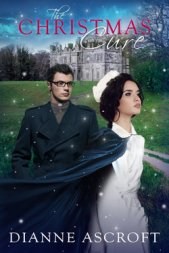
 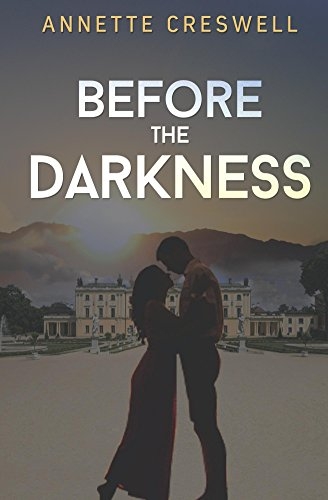 In pre-World War Two London, Penny works as a maternity nurse at the Royal Women’s Hospital. Happy in her work and with two really good friends and several doctor suitors, little does she realise how her life will be changed by a chance lunch-time encounter. Who is the ruggedly handsome man who helps her? And how will their lives entwine as the war clouds gather?
 moaning as I removed the clock from the wall in the livingroom and replaced it with a large wreath when I was putting up the Christmas decorations a couple weeks ago. The clock has relocated to the kitchen for the rest of December and early January (or whenever I manage to put the decorations away), and my husband, who doesn’t wear a watch, is frustrated that he never knows what time it is now.
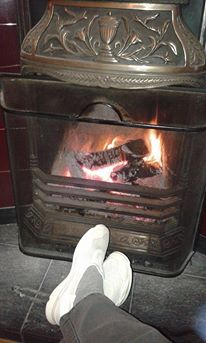 When I think of Christmas, in my head I see black evenings illuminated by light: candle flames, flickering fires, a string of coloured lights winking on the Christmas tree in an ever-changing pattern and sparkling mini-beacons secured to the window frames. Then there’s the more subtle pin pricks of natural light twinkling in the sky above me when I step outside into our farmyard and, on the rare occasions when it snows, the sharp glint of shimmery lights flashing across the snow’s surface.
 And there’s warmth: physical and emotional. I love the heat from a fire in the hearth, a steaming mug of mulled wine, cider or hot chocolate in my hands, the happiness a hug from someone I love generates and the joy of spending time with people I care about.
 and this makes Christmas timeless for us. Last year in a
 During the Second World War, one song familiar to American servicemen and women around the world conjured warm, comforting memories like no other. But, for some “White Christmas” unbearably deepened their longing for home.
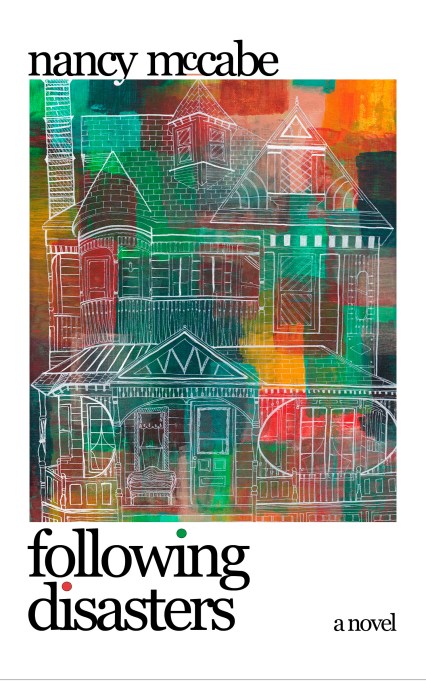 Here’s how the publisher describes the novel: “On her twenty-first birthday, Maggie Owen receives an unusual birthday gift: a house. That same day, the house’s owner, her aunt, dies. For three years, Maggie has been fleeing her childhood demons: the deaths of her parents, estrangement from her terminally-ill aunt, and a betrayal by her best friend. But now her career on the road, following natural disasters in temporary insurance claims offices, ends abruptly as Maggie returns home to face her past. But why does the house hold a mysterious spell over her? Why does she have the persistent feeling that her aunt is haunting her? Why did her aunt lie to her about the circumstances of her parents’ deaths? Who is the ghost child that may be hanging around the house? And what’s with the guy next door who seems so hostile toward her? FOLLOWING DISASTERS is tightly woven ghost story that raises questions about legacies and their influence on our choices.”
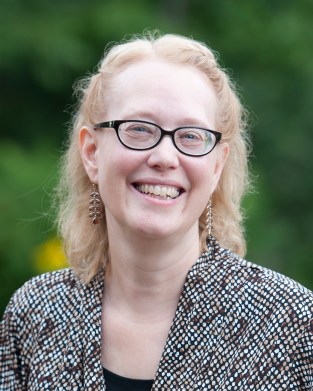 About Nancy McCabe: Following Disasters is Nancy McCabe’s first novel. She has also published four books of creative nonfiction, including Meeting Sophie: A Memoir or Adoption; Crossing the Blue Willow Bridge: A Journey to My Daughter’s Birthplace in China; and From Little Houses to Little Women: Revisiting a Literary Childhood. She is a regular blogger for Ploughshares and has published work in Newsweek, Writers’ Digest, Prairie Schooner, Gulf Coast, Fourth Genre, and other magazines and anthologies. Her work has received a Pushcart and six times made notable lists in Houghton Mifflin Best American anthologies.
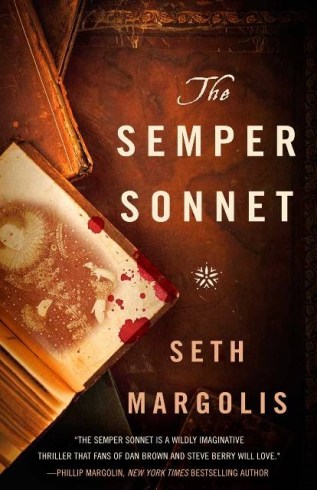 Columbia University in New York, unearths a never-before published sonnet by William Shakespeare. When she reads a portion of the poem on the air, she triggers a series of events, including attacks on her, that convinces her that something in the language of the sonnet, in its allusions and wordplay, is highly threatening to her – and invaluable to others.
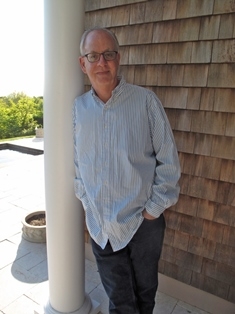 About Seth Margolis: He is a writer whose most recent novel, THE SEMPER SONNET, was published on April 19. He is the author of six earlier novels, including LOSING ISAIAH, which was made into a film starring Halle Berry and Jessica Lange.