Today I’m featuring an excerpt from a new amateur detective novel, Semblance of Guilt, by Claudia Reiss.
Here’s the publisher’s summary of the story:
 Ellen Davis’s husband left her for another woman. Post-divorce, she’s trying to reassert her independence and lands a job as a reporter for her local newspaper. One of her assignments is covering weekly items on the police blotter, which is how she gets to know Lieutenant Pete Sakura—a handsome, witty Japanese-American Ellen is drawn to immediately.
Another of Ellen’s assignments is interviewing for the paper’s “Around The Town” column, and in this capacity, she meets Graham and Sophia Clarke, newcomers to the community. He’s an administrator at Columbia; she’s his beautiful Greek wife. Ellen and Sophia become fast friends, so it comes as a great shock when Sophia ends up dead.
Sophia Clarke is found murdered, and to all appearances, Ellen is the last person to have seen her alive. When Ellen’s fingerprints are found on the murder weapon, she’s arrested, and evidence steadily mounts against her. Ellen takes matters into her own hands as her romantic feelings for Pete intensify. Closing this case could either save Ellen or lead to her destruction.
Two excerpts from the novel:
After navigating past the desks, she knocked on the door of the cubicle. No response. The second, more deliberate, rap was answered with an impatient “Come!”
Ellen entered the office and was somewhat taken aback by the sight of an attractive Asian man in shirt-sleeves awkwardly poised by the side of his desk, arms out, legs spread one behind the other, the front one slightly bent, the rear rigidly locked. He looked, she thought, as if he were trying to keep his balance on a skateboard. His attention was fixed on an open book sitting at the edge of his desk. “Give me a second,” he said testily, without taking his eyes off the book and at the same time adjusting the position of his front foot to a more pigeon-toed angle.
“I won’t ask what you’re doing,” Ellen said.
“Smart.” There was a sound of raised voices coming from the outer room. “The door!”
She closed it. “However, maybe you’d like to know what I’m doing?”
He ignored her question. “Damn, I’m not getting it.” He glanced up. “Do me a favor, take a look at number fifty and tell me what the hell is wrong here.”
Ellen approached the desk and peered down at the open book. A two-page spread of photographs showed a man in what looked like an usher’s uniform demonstrating a series of exercises. “Is this tai chi?”
“This is a pain in the ass. Could you look at the picture, tell me where I’m off, please?”
“‘Fair Lady works at Shuttles,’” she read aloud. She looked up from the page at him then back down again. “I see where you are. Figure fifty-A. It says: ‘Elbow bent, your right hand comes to your center line, fingers pinched together…’” She looked up. “For starters, your fingers aren’t pinched together.”
“Just hold the book up so I can see it from a better angle, okay?”
She held the book, show-and-tell style. He went through a variety of disconnected motions, clearly becoming more frustrated. “Shit.”
Ellen had formed a perception of the Japanese male as meditative, controlled, mysterious, soft-spoken, one who quietly went about transcending the material world while politely manipulating it. She had never realized she harbored this fully defined and fallacious stereotype until that moment, as she was looking at what appeared to be its antithesis. “If your phone rings, should I answer it?”
“Forget it.” He dropped the pose, took the book from her and put it back on the desk. “I’m all out of sync.”
“Now I’ll ask. What are you doing?”
“Getting my goddamn yin and yang together. My doctor tells me I have an ulcer and prescribes pills, but I don’t like pills. I’m taking up the eastern approach.”
“But isn’t tai chi Chinese?”
“Yeah, so?”
“‘Sakura’ sounds like a Japanese name.”
“Let me ask you a question. You ever eat chow mein?”
“Well, yes.”
“I rest my case.” He waved her toward the chair on the other side of the desk and dropped down into his own. “Sit.”
She remained on her feet. “I’m Ellen Davis. I was told you had the data for the Chronicle’s ‘Blotter’ column. I’m just here to collect it.”
He threw up a hand. “What’s the point of that column? All it does is stigmatize the poor saps who appear in it. There’s no investigation of circumstances, no disclaimers stating charges could be erroneous. Just a cold-blooded list of citations.”
“It’s supposed to serve as a deterrent,” she said without conviction. “Actually, I don’t particularly like the column myself, but I don’t make up the rules. I’m sorry I messed up your exercise routine. May I have the material, please?”
She became aware of herself as an unattached, uncompromised individual as she once was at Penn. She sensed the boundaries of her being as clearly as she felt the hem of her knit dress pull tightly against her legs with each step she took. It was as if she had never been married, had instead dressed for an interview and walked straight out of west Philadelphia into Morningside Heights.
***
Mid-block between 109 and 108 Streets, as she was passing a shoe store and scanning the view across the way, her attention was drawn to the bright blue awning of Charlie’s Snack Bar. At that moment the door to the restaurant opened, and a tall young woman with cropped red hair and wearing a tight black turtleneck sweater, clingy black pants and black cowboy boots, stepped out into the daylight. The girl stood aside to allow the man behind her to pass, and as he emerged completely into the sunlight, Ellen recognized Graham. She was about to hail him, when he took a step toward the redhead and Ellen realized he was with her. Unable to tear her focus from the scene or insinuate herself into it, she backed up into the shadow cast by the overhanging eave of the shoe store.
While Graham snapped down and adjusted the removable sun-visors of his eyeglasses, the young woman reached into the breast pocket of his blazer, drew out a pair of sunglasses he must have been holding for her, and put them on, in the process grazing her breasts against his left elbow. The act defined them as intimate friends, yet the distance springing up between them immediately afterward seemed devised to refute it. They stood apart talking to each other, their postures stiff and formal, their not touching as conspicuous as an open embrace.
Ellen watched them as her years at Penn were sucked into a black hole, and all she could remember was her husband Kevin dropping the bomb, telling her he was leaving her. Watching Graham and the redhead across the street was like catching the discovery scene she had missed, seeing it replayed for her benefit, like a burlesque in which she was both captive audience and object of scorn.
Almost at once she felt a connection with Sophia.
Sophia pulled her hands away and struck out at Ellen in one continuous movement, throwing herself off balance and stumbling sideways. She stared in horror at the gouge one of her nails had made on Ellen’s chest, and Ellen, stunned by the violence and not yet feeling the pain, gazed in disbelief at the drop of blood tracking toward the scalloped edge of her white satin bustier.
“Go—get out of here,” Sophia rasped. “I’m afraid what I might do to you. Get out, get out.”
The blood trickled onto the rim of smooth white fabric, forming a small, irregular stain. Ellen looked up at Sophia. The woman she thought she knew had become a trapped animal, her eyes wary-wild.
A sharp pain from the nick in her chest jolted her from her numbing inertia. She moved quickly from the room, feeling the tears coming, holding them back, postponing them as she ran silently down the hall. She descended the steps with blazing deliberation, her pace quick and even, her focus on reaching the door and disappearing into the sheltering night. She could feel her eyes, static-wide in bewildered alarm, betraying her attempt to appear in total control. Still, she focused straight ahead, concentrating on her goal, hearing Anna calling her name but moving through the sound, pacing herself to simulate haste without flight as she sliced through the clear zone of the foyer and pushed open the storm door. Midway across the porch she collided with an incoming guest, all pearls and black silk, the woman’s staccatoed “Shit!” like a gunshot in an open field of combat.
Picking up speed, she hurtled down the bluestone drive, anticipating the sound of the engine starting up even before she could spot her car.
Readers can learn more about the author and her novel by visiting her website, Facebook and Goodreads pages and Twitter. The ebook version of the novel is available at a reduced price (£1.49) on Amazon throughout July.
 About Claudia Riess: A Vassar graduate, she has worked in the editorial departments of The New Yorker and Holt Rinehart and Winston. On her first novel, Reclining Nude, Oliver Sacks, M.D. commented: “exquisite—and delicate.” Her second, art suspense Stolen Light earned: “complex and intriguing” —Kirkus Review.

 an archer or a writer. I write mostly novels and Short Reads (longer short stories). But I also pen the odd poem as well as short narratives – the latter are often funny or reflective. These are handy when I am asked to ‘do a turn’ at a festival or other performance. I don’t think most audiences would sit through a 25,000 word short story…
 suggested to me that we should get a few writers together to produce a collection of short stories set during World War II. From this initial conversation, the idea quickly snowballed and we soon had a band of writers trailing along with us and a private group on Facebook (No, I’m not going to tell you the name of the group – it’s a secret).
 I was a superhero this week. Not that I did anything extraordinary or anything like that but Maria Grace thought I was. She invited me to her blog last Sunday to chat about my writing and she compared me to a superhero. Can’t really see that, can you? Well, you could drop by her blog to see what she had to say – and my responses. You’ll find
  Here’s what Lake Union Publishing says about
  About M.K. Tod:
  stories set in Northern Ireland. I’ve released the first 3 Short Reads and a boxset collection of the stories will be available later this week. I already have the rough plotlines for the next 2 Short Reads rattling around in my head and I have a full length novel for the series almost completed. But, despite being immersed in my series, The Yankee Years, during the past year and a half, I sometimes still wonder what I should write.
 her father’s war-trophy portrait of Eva Braun. This baffling situation has never been explained, other than that the portrait is a symbol for her father of the Allies’ triumph over the evils of the Third Reich.
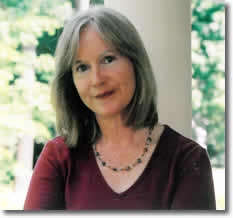 Phyllis Edgerly Ring watches for the noblest possibilities in the human heart. She’s always curious to discover how history, culture, relationship, spirituality, and the natural world influence us and point the way for the human family on its shared journey. Her childhood years in Germany left her with the deep desire to understand the experience of Germans during the Second World War. She has studied plant sciences and ecology, worked as a nurse, been a magazine writer and editor, taught English to kindergartners in China, and served as program coordinator at a Baha’i conference center.
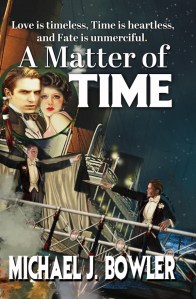 Here’s how the publisher Outskirts Press describes the story: “The world’s greatest evil stalks the world’s greatest ship, and the only one who can stop him hasn’t been born yet.
 nine novels––A Boy and His Dragon, A Matter of Time (Silver Medalist from Reader’s Favorite), and The Knight Cycle, comprised of five books: Children of the Knight (Gold Award Winner – 2013 Wishing Shelf Book Awards; Reader Views Honorable mention; Runner-Up Rainbow Awards; Honorable Mention – Southern California Book Festival), Running Through A Dark Place (Bronze Award Winner – 2014 Wishing Shelf Book Awards), There Is No Fear (Finalist – 2015 Wishing Shelf Book Awards), And The Children Shall Lead, Once Upon A Time In America, Spinner (Winner – Hollywood Book Festival; Honorable Mention – San Francisco Book Festival; Bronze Medal from Readers’ Favorite; Literary Classics Seal of Approval; Runner-Up – Southern California Book Festival; Honorable Mention – Halloween Book Festival; Finalist – 2015 Wishing Shelf Book Awards), and Warrior Kids: A Tale of New Camelot (Honorable Mention in the London Book Festival and The New England Book Festival; Finalist – 2015 Wishing Shelf Book Awards.)
 June and July have been busy months for me. I’ve been to Poland and visited Auschwitz and Birkenau concentration camps and done a few of other things besides. Then I settled down to revise a couple of stories I’ve been working on. One of them will be released a couple weeks from now.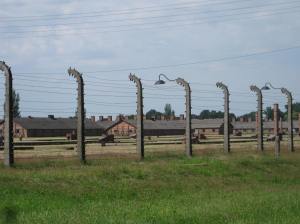
 Here’s how the publisher, Thomas & Mercer, describes the novel: “England, 1185. John is a prince without prospect of a crown. As the youngest son of Henry II, he has long borne the hated nickname ‘Lackland’. When warring tribes and an ambitious Anglo-Norman lord threaten Henry’s reign in Ireland, John believes his time has finally come. Henry is dispatching him there with a mighty force to impose order.
 About E.M. Powell: E.M. Powell’s medieval thrillers The Fifth Knight and The Blood of the Fifth Knight have been number-one Amazon bestsellers and on the Bild bestseller list in Germany.









 dianneascroft.com