The Black Orchestra

I recently read The Bird Watcher by JJ Toner and I enjoyed it immensely. I loved the way he portrayed the reactions of the residents of an Irish village to a stranger who settles amongst them during The Emergency (as World War II was referred to in Ireland at that time). With this story fresh in my mind and my own interest in World War II, I was interested to hear that JJ Toner released a World War II novel, The Black Orchestra, in January. Anyone who knows me won’t be surprised to hear that it wasn’t enough for me to just add the book to my reading pile – I had to ask JJ to answer a few questions about the novel.

Welcome JJ. Let’s get started, shall we?

Tell us about your novel

Black Orchestra coverJJ: The Black Orchestra is my third published novel. I have it billed as a spy thriller on Amazon, but it’s also a coming-of-age book and a bit of a love story. Kurt Muller works as a signalman for the Abwehr (military intelligence) in Berlin. He speaks fluent English,having studied for his degree in Trinity College Dublin. The book opens with Kurt being questioned by the KRIPO (criminal police) about the death of a colleague. The police quickly dismiss the death as suicide; Kurt has his doubts. As the story unfolds he stumbles across various other clues that eventually lead him to the German resistance movement. At the same time he begins to recognize the evil that is the Third Reich.

What prompted you to write about this historical event or era?

JJ: I read a book (Irish Secrets by Mark Hull) about German spies in Ireland during World War 2. To a man, they were a comical bunch of incompetents, poorly trained and ill-equipped for their roles. Most of them were picked up and interned within hours of arriving in the country. Their exploits read like a Spike Milligan comedy. I also read about how Admiral Canaris and the Abwehr worked to undermine the Third Reich, and put 2 and 2 together.

How closely did you stick to the historical facts? If you used them loosely, how did you decide whether to deviate from them?

JJ: I mapped out the main historical events of the early years of the war and stuck to them. You might think this would be like writing dressed in a straightjacket, and I suppose it was, to an extent, but on balance, it provided a structure which helped me to focus.

What research did you do for the book?

JJ: Apart from Mark Hull’s book and its predecessor, Spies in Ireland by Enno Stephan, I read everything I could find on code-breaking, the Enigma, and Bletchley Park. I also read every WW2 novel I could find – all of Philip Kerr’s Bernie Gunther novels, Christopher Isherwood, Hans Hellmut Kirst, Hans Fallada, Robert Harris, Ken Follett, to name just a few. I found a 1939 map of Berlin on the Internet, and enlisted the help of a young lady living in Berlin today. I began research for this book in 2008, and it was published this year, so you could say the research took about 4 years.

Do you use a mixture of historic figures and invented characters in the novel? Which is more difficult to write? Which do you prefer to write and why?

JJ: Yes. The notorious Reinhard Heydrich is an important character in the book. I think I find it equally difficult and equally enjoyable to write about real historic figures and my own invented characters. I treat them all as fictional anyway. As some journalist said: “Why let the truth stand in the way of a good story?”

In an historical novel you must vividly re-create a place and people in a bygone era. How did you bring the place and people you are writing about to life?

JJ: Creating believable Nazis was probably the biggest challenge for me. So much has been written and so many films have been made about the war, I knew it was going to be difficult to avoid painting them (especially the Gestapo) as stereotypes. I put a huge amount of work and research into the locations — Berlin in particular — and one agent that I queried remarked on that.

There often seems to be more scope in historical novels for male characters rather than female characters. Do you prefer to write one sex or the other. And, if so, why?   

JJ: Being male, I’m definitely better at writing from the male perspective, but I enjoy trying to portray the female point of view.

 Thanks for answering my questions, JJ. I just have one more – what does JJ stand for?

JJ Toner photoReaders may learn more about JJ Toner, his novels, and his blogs by visiting his web site, Facebook (JJTonerYA) or Twitter (@JJToner_ya). The Black Orchestra is available on Amazon.com, Amazon UK, Smashwords, iBooks, and lots of other eReaders.

About JJ Toner: JJ’s background is in Mathematics and computing. After 35 years developing computer systems all over Europe, he dropped out and began writing. He’s been writing full time since 2007 and has amassed countless short stories and 5 novels, 3 of which he has published as eBooks for the Kindle.

Posted in March 2013 | Tagged , , , , , , , , | 1 Comment

Hurray For Babyboomer Lit

I thought I might be the only writer who wants to write about women my own age (over 50, that is) with similar experiences to me until I read an interview with Adele Park in Publishing Talk magazine and Empty Nest Lit in Mslexia magazine.

You can read my post on Writers Abroad’s blog: http://www.writersabroad.com/pt/In-Praise-Of-Older-Women/blog.htm

Posted in Uncategorized | Leave a comment

St Patrick’s Day Stories

shamrockIt’s St Patrick’s Day. What do you think of when you think of the Irish? One of the first things that usually comes to mind is that they are reputed to have the gift of the gab. Where I live in County Fermanagh most people will stop and chat when you meet them on the street. They love a good yarn, as they say around here.

They also love another kind of yarn: a good story. There’s always been a strong tradition of storytelling in Ireland and the art has been kept alive in many places, especially rural ones like where I live. I first encountered the wonders of storytelling at a local historical society’s Christmas party. During the evening’s entertainment, in between the jigs and reels played by traditional musicians and the dancing, several storytellers told tales – they made you laugh and they also moved you.

It’s believed that Irish short stories evolved from this storytelling tradition. There are many noteworthy Irish short story writers. Among my favourites are Michael McLaverty, Maeve Binchy, Eugene McCabe, Bernard MacLaverty and Claire Keegan. There’s been a lot written about what makes a good story and how to write one but I won’t go into the theory today.

One of the important elements for me, and one I think many Irish writers excel at, is capturing places and people. That’s what brings the tale to life.

When I first read Michael McLaverty’s stories back in the 1970s I was a teenager living in Toronto. They conjured in my mind the places and people and their way of life in rural areas during the first half of the twentieth century. It was so different from my life in a huge city and the tales intrigued me.

Let me show you what I mean. Here’s a couple passages from McLaverty’s The Prophet in his Collected Short Stories:

 cottage“The byre door was open and the dark entrance showed the rain falling in grey streaks; it stuttered in the causeway and trickled in a puddle around the stone, carrying with it bits of straw and hens’ feathers. Beside him was a steaming manure heap with a pitchfork sticking in the top, its handle varnished with the rain.”

“For a moment the woman leaned on the half-door, looking at her son, at his brown jersey black with rain around his shoulders, his tattered trousers clinging to his wet-pink knees, and his bare legs streaked with mud.”

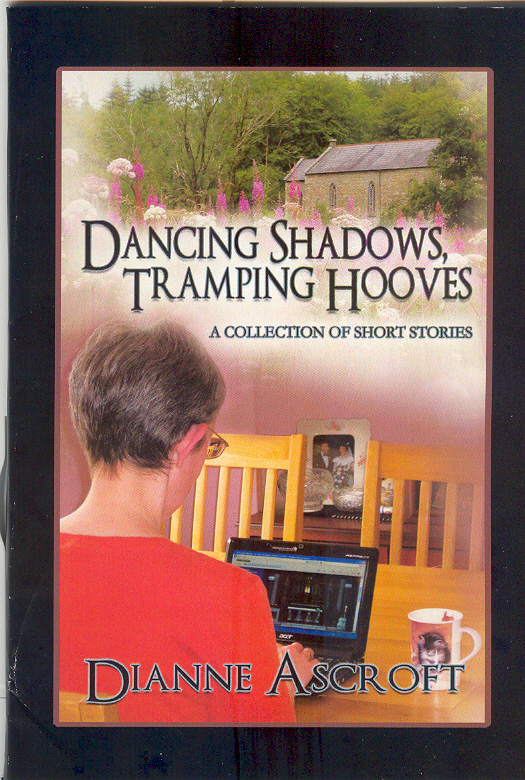
As I read McLaverty’s stories I could see the people and places in my mind and the images stayed there for years afterwards. When I moved to rural Ireland nearly a decade ago I found modern rural life as strange to me as the scenes described in McLaverty’s stories. It was far removed from my Canadian urban experience. As I puzzled over my new way of life I began to write about it. Most of the stories in my short story collection, Dancing Shadows, Tramping Hooves have come from this, a newcomer making sense of life around her.

DS cover low resI’m not an Irish writer but I have been influenced by the Irish writers I’ve read. And now that I live in their land it’s only natural that I write about it. I put pen to paper in order to interpret my new home as I see it.

I think there’s more to St Patrick’s Day than green beer. So why not step into the land of the Irish – open a book and enjoy one of the many wonderful stories set in Ireland. Then the Shamrock Isle will linger in your mind long after St Patrick’s Day.

Posted in March 2013 | Tagged , , , , , , , | Leave a comment

Patricia O’Reilly Helps Writers Polish Their Work

red penI spent a worthwhile afternoon yesterday at Patricia O’Reilly’s Successful Editing workshop. When you spend several weeks each year proofreading non-fiction material for an anthology you can get lost in the grammar points. It was good to be reminded that when editing your own fiction you need to look at the overall structure of the work.  Believable characters and setting, effective dialogue and plot, and powerful sentences are what bring a story alive. I will keep the points we discussed in mind as I fine tune stories I’m working on.

Here’s a bit more about the workshop.

Posted in March 2013 | Tagged , , , | Leave a comment

Cologne: A Whiff Of The Past

My guest today is Sarah Pleydell, author of Cologne, an historical fiction set in the Second World War era and 1960s London. I’ve invited Sarah to visit Ascroft, eh? to answer some questions about the book. Welcome, Sarah. Let’s get started, shall we?

Tell us about your novel.
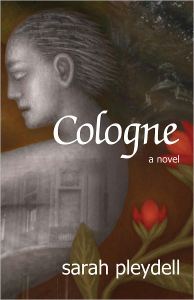
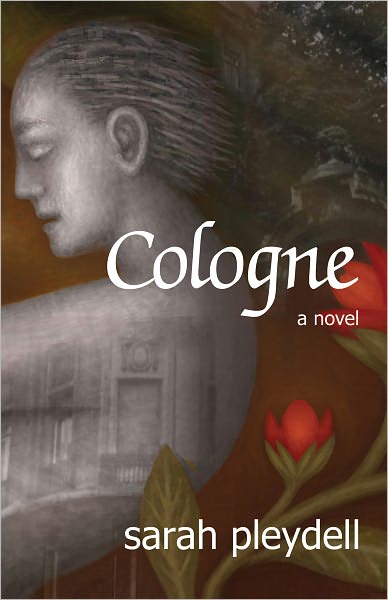
Cologne coverSP: London, 1960, Renate von Hasslemann, a German au pair, arrives at Victoria Station prepared to meet her new charges, Caroline and Maggie Whitaker. Yet she is ill-prepared for their parents: the mother, Helen, knows more about Nazi Germany than Renate does, and the father, Jack, disarms Renate with his quicksilver charm.  In my debut novel Cologne (FUZE Publishing; October, 2012; $14.95 trade paperback), childhood and history collide, blurring the distinctions between victim and victor, ruin and redemption.  With delicate humour, the novel presents a portrait of a family on the cusp of great social change, while reminding us that the traumas of war revisit the children of the peace.

What prompted you to write about this historical event or era?

SP: Much of the history in the novel is derived from my vivid recollections of growing up in London during the nineteen fifties and sixties and from my mother’s tales of World War II.  She would sit up with us at night and tell us all about the buzz bombs, the American soldiers and the black market nylons they brought with them. My brother and sister and I sat rapt taking them all in. During the nineteen nineties I was flooded with these memories and realized that they were fertile ground for a novel set in the pre and post World War II period.

How closely did you stick to the historical facts? If you used them loosely, how did you decide whether to deviate from them?

SP: Although the characters in Cologne emerged from the environment of memory, as I began to remember the sentient details of this world certain figures began to assert themselves within in. At first they resembled people in my childhood, but the more I wrote the more they assumed their own discrete fictional identities.

For example, Renate the au pair. We had fifteen au pairs in our household as I was growing up and the character of Renate draws on them all. As the fictional Renate developed her own history, temperament and fate, the personality that evolved bristled with anger but was confused both by its source and the fact that the longer she was in England the fiercer it became. As a result she was forced to recall the personal and collective traumas she had been so determined to suppress. This echoed the themes that were building in the book as a whole: the impact of repressed trauma on both individuals and their families.

What research did you do for this book?

SP: Cologne is set in London in nineteen-sixty; however, it refers back and forth into the fifties and sixties as well as to pre and post war England and Germany, and in particular to the Rhineland city of Cologne. Thus there was a lot of territory to cover in my research. Fortunately, I had a designated shelf in the Library of Congress and could order up books with ease, but of course I had to locate and identify them first.

I knew a lot about the London bombing; for CoIogne, I had to do a lot of research at the Library of Congress and discovered that the British firebombed Cologne as they had so many German cities. I also learned of the city’s rich cultural history. I have never been to Germany let alone Koln  (as it is known in German with an umlaut over the ‘o’),  and there were slim pickings in the LC, especially if I wanted to read in English. I finally secured a travel guide from the nineteen sixties that I hoped I could extrapolate from. It had all the landmarks, street names as well as references to the museums and their significant cultural artifacts. My research turned up a painting called the Virgin of the Roses, which was serendipitous given how important roses were to the novel.  Still, incorporating all these details required a lot of imaginative embellishment if I were to reinvent them in the post and pre war period. I still wish I had found out more. I also read up on the kinder transport, the trains that took Jewish children to Britain just before the war. I hoped I might include a reference to them, but in the end none was apt. I wish there had been an occasion as this material was so wrenching yet such a blessing given the alternate fate awaiting these little ones. And the fate of children is such a pervasive theme in my own novel.

Do you use a mixture of historic figures and invented characters in the novel. Which is more difficult to write? Which to you prefer to write and why? 

SP: As the novel began to take shape, questions began to arise about Renate and her family’s lived experiences. What if Renate’s father were a museum curator?  What if the family left Cologne to escape the bombings, but he remained to protect his artifacts? How would Renate, as a small child, feel abandoned by a father whose art mattered to him more? What about her older brother, who would have fought on the side of the Nazis? What if he were maimed by the Russians instead of killed?

Writing from memory and imagination are not two distinct processes but rather the latter the outgrowth of the former.  I vividly remember an acting teacher describing how the creation of character resembles the alphabetical letter ‘y’. At first the fictional and the invented person share the same biography (represented by the stem of the ‘y’). At a certain point, the requirements of the art form, be it a novel or a play, demand the fictional and the historical character diverge, one in a narrative direction and the other in fact.  In this story, the split occurred when I was obliged to ask even more questions: how would the loss of a father and the maiming of an older brother have impacted an impressionable young girl like Renate?  And how would a sophisticated family like hers fare after so many personal and economic losses? I began to reflect on how Germans like Renate who were mere children during the war would have reacted to carrying a legacy of shame and crime they had no part in. By this point then the German girl born of memory had acquired the dimensionality and inner conflict and complexity of a fictional character.

In an historical novel you must vividly re-create a place and people in a bygone era. How did you bring the place and people you are writing about to life?

SP: Returning to the landscape of my own childhood was challenging, as I found myself reliving not only sensory details but also the sensate experiences they evoked, replete with both kinds of “feeling”: I felt them on my skin and I knew them as emotions.  As the book addresses child abuse this was both difficult and cathartic.

The novel covers nine months in the Whitaker girls’ lives, so I had to track the changes in setting over four seasons. On the one hand, I derived great joy from recalling the flowers –rhododendrons, marigolds, wallflowers and exquisite roses—the butterflies, moths and bees, and, on the other, the dreariness, the damp, the pervasive grey of the British weather. The book’s terrain had grown to include streets, houses, shops and even the British seaside.

I realized that not only were these details—the sights, sounds and scents of London – essential for me as the British writer, but they were also the lures that would make this foreign environ tangible to the American reader. In addition, therefore, I added signature British tastes –the sweet and starchy puddings, the kippers, kidneys and tripe. Every sense would come alive, every sense would draw the reader in and every feeling could be tasted.

There often seems to be more scope in historical novels for male characters rather than female characters. Do you prefer to write one sex or the other. And, if so, why?

SP: Actually, the balance of male and female characters in Cologne tips toward the feminine. I originally tried to make the Whitaker children a brother and sister duo but felt in the end that the brother just did not ring true. Possibly this was a limitation of my writing skills at the time or perhaps the consequence of the subject matter of the novel. I am leery of calling this a “women’s book” per se, but it does focus on the domestic and emotional consequences of external political events, and the former is often characterized as feminine. However, Jack’s limitations are as much a product of his historical moment as Helen’s are and their impact on his female children are enormous. In some ways, of course, as a woman it is easier to write from that point of view, and this is an area of my craft where I need to challenge myself in the future.

Thanks for answering my questions, Sarah. I have to admit that the Second World War era is one that particularly interests me and I’ve written about it so I’m looking forward to reading Cologne.

Readers may learn more about Sarah and her novel by visiting her Facebook page and also the novel’s Goodreads page and its Amazon page. You can also follow Cologne’s blog tour hosted by Tribute Books.

sarah-pictureAbout Sarah Pleydell: A graduate of Oxford and London Universities, Sarah Pleydell is an award-winning writer, performer and playwright who teaches English and writing at the University of Maryland. For the past twenty years, she has been a master teaching artist and arts integration specialist, working with institutions that include The Wolf Trap Institute for Early Learning Through the Arts, The Kennedy Center for the Performing Arts and the Luce Institute. In 2000, she won the American Association for Theatre Educators’ award for best book of the year with co-author Victoria Brown. Most recently she wrote the script and played the role of Isadora in Revolutionary: The Life and Times of Isadora Duncan with Word Dance Theater.
Based on her childhood in London, Cologne has been twenty years in the making. It has benefited from fellowships at the Virginia Center for the Creative Arts and input many generous and gifted writers.

Posted in February 2013 | Tagged , , , , , , , , | 1 Comment

Untimed: A Rollicking, Fun Read

When Tribute Books asked me to review Untimed by Andy Gavin as part of the author’s current blog tour I was intrigued by the book’s description so I agreed. I have to admit that I didn’t find it a chore to read and review the novel. It was a fun read and I still smile whenever I think about the story.

Pageflex Persona [document: PRS0000040_00004]Here’s what the publisher’s description says about the book: Charlie’s the kind of boy that no one notices. Hell, even his own mother can’t remember his name. And girls? The invisible man gets more dates.
As if that weren’t enough, when a mysterious clockwork man tries to kill him in modern day Philadelphia, and they tumble through a hole into 1725 London, Charlie realizes even the laws of time don’t take him seriously.
Still, this isn’t all bad. In fact, there’s this girl, another time traveler, who not only remembers his name, but might even like him! Unfortunately, Yvaine carries more than her share of baggage: like a baby boy and at least two ex-boyfriends! One’s famous, the other’s murderous, and Charlie doesn’t know who is the bigger problem.
When one kills the other — and the other is nineteen year-old Ben Franklin — things get really crazy. Can their relationship survive? Can the future? Charlie and Yvaine are time travelers, they can fix this — theoretically — but the rules are complicated and the stakes are history as we know it. And there’s one more wrinkle: he can only travel into the past, and she can only travel into the future!

Untimed is a very engaging fantasy, coming of age story. I easily warmed to the two main characters, Charlie and Yvaine, so it wasn’t hard to root for them. From the first page the story held my attention. I knew little about Benjamin Franklin’s early life so I wasn’t aware that he had worked in London as a young man. I enjoyed the way the author pivoted the story around this detail of his life. I had hoped for a happily-ever-after ending right up until the last page but the author threw in a neat twist that scuppered that so I guess I will have to read the next book to find out how it all turns out.

As I have said, this is a coming of age story. Fifteen year old Charlie is thrown into a new place and time alone and has to fend for himself. By the time he is re-united with his father later in the story he has begun to mature and develop his own ideas and values. He has learned to stand on his own feet. When he questions the premises his father lives by it causes conflict between them. As the story progresses each of them learns to respect the other’s point of view and actions resolving the conflict.

The author’s description of each of the novel’s settings is almost too believable. He utilises all the senses to bring to life each place, not shying away from gruesome sights and foul odours. As I read, some of the places became real enough to make me uneasy. The author also cleverly throws in modern references to describe historical objects, people and places. The references he chooses are often funny but they create images that help modern readers understand eras they probably are not familiar with.

When I began reading the novel I wasn’t sure whether it was an adult or young adult book despite the fact that the main characters are teenagers. The author has graphically re-created 1725 London and not spared the details. I was surprised to find a great deal of sex and violence, more than I expected to find in a novel aimed at mid-teens. But I’ve learned that this doesn’t seem to be unusual in young adult fiction. After talking to friends who write young adult books, I realised that I may be a bit behind the times. They told me that young adult books are much more adult now than when I read them several decades ago.  

There’s no doubt that Untimed is a rollicking, fun read. I enjoyed the story and cared about the characters. And I still want to know how Charlie and Yvaine finally manage to undo their mistakes and restore historical events to their proper order. I guess I will have to wait for the sequel.

You can read an excerpt from Untimed here.

To find out more about the book and its author visit Andy Gavin’s website and his blog. Also visit the book’s Amazon page.

Andy GavinAbout Andy Gavin: Andy is a serial creative, polymath, novelist, entrepreneur,computer programmer, author, foodie, and video game creator. He co-founded video game developer Naughty Dog and co-created Crash Bandicoot and Jak & Daxter. He started numerous companies, has been lead programmer on video games that have sold more than forty million copies, and has written two novels.

Posted in February 2013 | Tagged , , , , , , , , , | 1 Comment

Frank Nappi Discusses Echoes From The Infantry

I recently read and reviewed Nobody Has To Know by Frank Nappi. It is a powerful thriller and I was gripped by it. Frank is currently on a blog tour with Tribute Books for Echoes From The Infantry and, since I was impressed by Nobody Has To Know, I asked him to visit Ascroft, eh? to talk about Echoes From The Infantry.

Welcome Frank. Let’s get started, shall we?

Tell us about your novel.

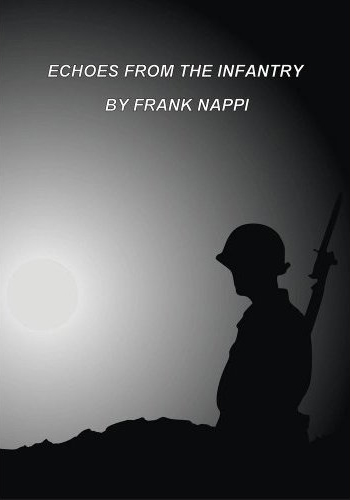
Echoes coverFN: Echoes From The Infantry is the tale of one Long Island World War II veteran, the misery of combat, and the powerful emotional bonds that brought him home to Rockaway Beach and the love of his life, Madeline Brandt. It is about a father and son, and their ultimately redeeming struggle to understand each other’s worlds – one a world at war, the other shaped by its veterans. The book, which has been described as an artful movement between the present and past, is a stirring fictionalized tale of this Long  Islander’s struggle to reconcile with the demons from long ago and his family’s never ending battle with many of the intangible burdens caused by the private  life of a man they never really knew. 

What prompted you to write about this historical event?

FN: My motivation for writing anything has always been simply a genuine interest in the human condition — more specifically, what makes us act and react in the manner that we do. Human beings are so very complex and are often immersed in situations that result in a struggle of sorts. This sort of drama exists all around us. Whenever I observe a facet of this condition or struggle, I am intrigued and ultimately compelled to explore it further through fiction.

This has caused me to become very versatile in my literary endeavours. While many writers remain faithful to one genre, mostly because they possess an affinity for that type of writing, my inspiration comes from a true penchant for exploring that about which I am most passionate. Consequently, I have travelled down a rather eclectic path, ranging from the horrors of WWII and the insidious residue of war that destroyed so many veterans and their families, to a 17 year old autistic baseball player in the 1940’s who inspires others around him to become more tolerant and understanding, to a young teacher whose indiscretions lead him down a dark and self-destructive path. Clearly these stories are all unique in their own way, and fall into very different genres. However, what binds them together is that same basic element that really defines who I am as a writer – someone who is moved by the human struggle.

So many of my life experiences have inspired me. It began with a most fortuitous encounter with two very special WWII veterans with whom I became very close. Mr. Bill McGinn and Mr. Eddie Hynes changed my life forever. Their willingness to share with my classes their poignant reminiscences of their time in war torn Europe and also the subsequent obstacles they faced once they came back home was truly the most compelling moment in my classroom. They visited for years, and the three of us became very close. The time I spent with both men, both in and outside of my classroom, was life altering for me. I have had other moments like this as well, each which has found its way into my fiction. My work with Challenger Baseball and Best Buddies brought my Mickey Tussler series to life and my twenty five years teaching in a high school exposed me to some of the difficulties that our young people sometimes face – difficulties that make leading a “normal” life an impossibility. However, the WWII era as described to me by these two very special veterans led me to explore this epoch even further. 

How closely did you stick to the historical facts? If you used them loosely, how did you decide whether to deviate from them?

FN: Like all historical fiction, the crux of what I have revealed is true. The rest is artful embellishment, resulting in a true amalgamation of fact and fiction. However, for those history purists who have to know in more detail just how “truthful” the book is, I’d say a safe estimate is about 80%.

 
What research did you do for this book?

FN: All of my research was confined to interviews of about 135 WWII veterans, with the emphasis being placed on the reminiscences of Mr. Bill McGinn and Mr. Eddie Hynes. These two men experienced more in their time overseas than all of the others combined. 
Do you use a mixture of historic figures and invented characters in the novel. Which is more difficult to write? Which to you prefer to write and why?

FN: Echoes does not contain any historical characters. The soldiers depicted in the novel are again composites — personalities drawn from the men with whom I spoke.  In some instances, creative license was used to convey a certain idea or concept. This was not very difficult to do, for my friendship with these men allowed me to gain access into the psyche of the WWII soldier both during and after  the war. 
In an historical novel you must vividly re-create a place and people in a bygone era. How did you bring the place and people you are writing about to life?

FN: For the most part, when writing about the battles that took place in Europe, I was simply replicating events that were told to me. The characters are true representations of young men and women of that time. In addition, I am somewhat of a 1940’s buff so the “color” of the time came easily — things like slang, music, film references, pop culture, etc. Since the book vacillates between past and present, the current scenes were easy to create. 

There often seems to be more scope in historical novels for male characters rather than female characters. Do you prefer to write one sex or the other. And, if so, why? 

FN: Naturally, authors have an easier time writing about same gender characters. Makes sense. I do feel, however, that most authors are also students of human nature; consequently, the ability to create characters from the opposite gender is quite possible. And in fact, at times, this is more challenging and rewarding as well.

Thanks for answering my questions, Frank. I also have an interest in the Second World War era and have written about it so I enjoyed learning a bit about the background to Echoes From The Infantry. Readers who wish to peek inside the first chapter of the book may do so here.

You can also learn more about Frank and his work at his website and his blog.

And the first person to comment on this post will receive a free copy of Echoes From The Infantry ebook.

frank nappiAbout Frank Nappi: Frank has taught high school English and Creative Writing for over twenty years. His debut novel, Echoes From The Infantry, received national attention, including MWSA’s silver medal for outstanding fiction. His follow-up novel, The Legend of Mickey Tussler, garnered rave reviews as well, including a movie adaptation of the touching story “A Mile in His Shoes” starring Dean Cain and Luke Schroder. Frank continues to produce quality work, including Sophomore Campaign, the intriguing sequel to the much heralded original story and the just released thriller, Nobody Has to Know, which received an endorsement from #1 New York Times bestselling author Nelson DeMille. Frank is presently at work on a third installment of his Mickey Tussler series and his next thriller. He lives on Long Island with his wife Julia and their two sons, Nicholas and Anthony.

Posted in February 2013 | Tagged , , , , , | 1 Comment

Ten Sentence Historical Fiction Blog Hop

Writer Jessica Knauss is hosting an historical blog hop today and I’ve signed up to link into the chain. My mission is to post ten sentences from my historical fiction writing as part of the blog hop.

cottageRecently I’ve been thinking about the story of the Coonian Ghost House near where I live in Co Fermanagh, Northern Ireland. The centenary of the first reports of unnatural happenings at the cottage is next month so maybe that’s what prompted me to post the passage I’ve chosen.

I’ve taken my ten sentences from The Empty Cottage, a short story I’m working on. It’s set on a farm in Co Fermanagh, Northern Ireland c.1910. A young lad, Johnny, goes with his two uncles, Dermot and Michael Reilly, and a neighbor, Tom McNulty, to investigate lights they notice flickering in an empty cottage on the Reillys’ farm. An elderly man, Willie Donegan, lived in the cottage until his recent death. The group crowds behind Dermot as he leads them up the path and opens the cottage door:

We stumbled into the room and looked around. The fire was burning in the grate and the candles glowing in the windows. There was no sign of anyone else there. I’m sure I heard a collective sigh of relief from the three men in front of me.

     “It looks just as if oul’ Willie was still here,” Tom said. Everyone muttered uneasy agreement.

     “Maybe he doesn’t want to leave,” Michael whispered.

     “Sure, it’s not Willie. There’s no such thing as ghosts,” Dermot said.

     “Well, who did this then?” Michael asked.

I hope you enjoyed this peek into The Empty Cottage. The story isn’t finished yet but, if you like eery stories, I included another one, Conquering the Shadows, in my short story collection, Dancing Shadows, Tramping Hooves.

Now that you have stepped back in time with me why not check out the other blogs taking part in the historical fiction blog hop? You’ll find links to them on Jessica Knauss’ blog.  

Posted in February 2013 | Tagged , , , | 7 Comments

Writing.ie Meets the HNS Irish Chapter

hns-twitterTwo years ago this month the Irish chapter of the Historical Novel Society met for the first time. This week I introduced Writing.ie to our merry little band.

You can read the post here:  http://www.writing.ie/resources/the-historical-novel-societys-irish-chapter-all-welcome/


Posted in February 2013 | Tagged , , , | Leave a comment

Would I Deceive You? No, But Laura Elliot Might

I recently discovered a new author, Laura Elliot – new to me, she’s been writing for a number of years. I found her novel The Prodigal Sister a gripping and poignant story. The characters in the novel were a mix of ordinary people you might meet on the street and ones who live lives outside the realm of many people’s experience – and all of them were believable. I marvelled at the array of characters she included and wondered where she met people in real life who inspired some of them – I think I may have a rather sheltered life here in the country in Northern Ireland.

I enjoyed the novel immensely and am looking forward to reading her latest novel, Deceptions.

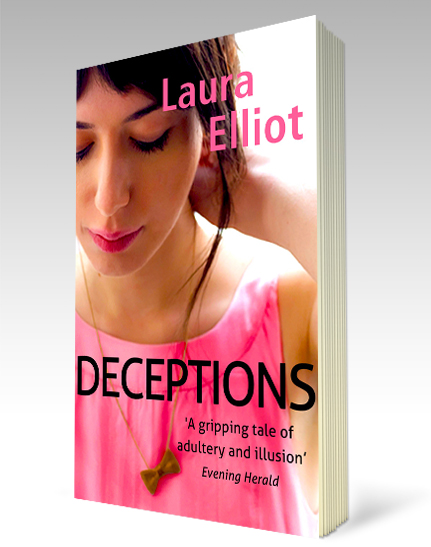
DeceptionsbookHere’s what the publisher says about Deceptions: “When the effects of an illicit love affair destroys Lorraine Cheevers’ marriage, the artist and mother uproots her teenage daughter from their comfortable city-centre home to make a new life for themselves in the small seaside village of Trabawn. She is determined to forget the past but it is following her and catching up.
     As Lorraine adjusts to her new surroundings, Killian Devine-O’Malley, the young victim of the hit and run, lies in a coma. His father, the well-known screen writer Michael Carmody, is determined to find the person responsible for his son’s accident.
     His search brings him to Trabawn where he comes into contact with Lorraine. Though she has resolved to be alone, she cannot deny the strong attraction she feels towards this troubled stranger who has appeared so suddenly in her life.
     But why has Lorraine turned her back on friendship and love? What lies behind her flight from all that was once familiar? As the bond between her and Michael grows, the stakes rise. Because what neither of them know is just what the other is running from. Or why it matters.”

Are you intrigued? I am and I’ve invited Laura here today to talk about Deceptions.

Welcome Laura. Let’s get started, shall we?

Tell us about your novel.

LE: Deceptions – as its title suggests is about lies and betrayal – and explores the theme of adultery. A couple who are having an affair are involved in a hit-and-run accident. The consequences of this accident have far reaching effects, not only on the couple but on their partners and the family of the hit-and-run victim.

What prompted you to write about this subject? 

LE: The seed for the story was sown one night when I was working as a journalist and had been commissioned to do a series of features on night life in the city.  One feature involved homeless people. I did an interview on the South Wall – an industrial area in Dublin’s docklands – with a young man who lived in a make-shift cement shelter. It was dark and desolate that night and when I finished the interview I noticed the dimmed headlights of a car. A second car pulled up beside it. A man and a woman emerged from both cars and embraced before disappearing into the deeper shadows of the pier. As I drove away I wondered why they had to meet in such an isolated, secret location. The reason seemed obvious and I wondered what would happen if they were together in one car and involved in an accident. 

What research did you do for this book?

LE: It’s set in contemporary Dublin and in Kerry so there was no historical research involved.  I went back to the Great South Wall a number of times at night and absorbed the atmosphere. The North Wall is on the opposite side, full of light and movement as the ferries sail in and out of the bay – and such a contrast to where my couple are seeking their privacy.

Part of the book is set on the Dingle Peninsula where I holiday every year. There’s an old, abandoned house almost hidden from view along a country lane and always, at some point during the holiday, I visit it to see if anyone has taken it over. No one ever has and it’s slowly decaying. I decided to give it new life by incorporating it into my novel and housing my main female character there. 

How did you bring the place and people you are writing about to life?

LE: In the beginning my hit-and-run victim was an old alcoholic tramp.  After working for a couple of months trying to bring the story to life, and failing, I realised he was the wrong character. Sadly, but truthfully, I knew that the death of a troublesome, old hobo was not going to engender a massive amount of energy and emotion from police or his family – but if it was a young, troubled boy with parents it would be different. Almost immediately the story took off and developed a shape I had not even envisaged. 

 
In some fiction genres there often seems to be more scope for male characters rather than female characters. Do you prefer to write one sex or the other. And, if so, why?

LE: I don’t have a preference. I suppose it’s always easier to write from a female point of view. In Deceptions I wrote from both points of view. The male voice was very immediate as it was the father speaking to his unconscious son. The book I’m currently writing is told equally from a male and female point of view – it’s slightly more challenging but I’m enjoying exploring the male psyche

Is there anything else you would like to tell us about Deceptions?

LE: Yes. It was a difficult book to write. As the author I was also engaged in deceiving the reader for part of the narrative. Also, as character A believed he was being deceived by character B – who had no awareness of this – I had to create innocuous dialogue for character B which was then misinterpreted by character A to feed his suspicions.  Not easy! 

Thanks for answering my questions, Laura. If I disappear for a few days now, you’ll know I’ve got my nose buried in the book.

_N4L3137_b_resize June ConsidineFor more information about Laura and her writing visit her website as well as Deceptions Amazon page.

About Laura Elliot: Laura is an Irish novelist and lives in the coastal town of Malahide, Co. Dublin. Her three novels are The Prodigal Sister, Stolen Child and Deceptions. Aka June Considine, she has written many books and short stories for children. She loves travelling. The beautiful South Island of New Zealand was the inspiration for her setting in The Prodigal Sister. The Burren, a karst-landscape, rich in history and archaeology in the county of Clare became the mysterious setting for Stolen Child. She gives regular creative writing workshops and is currently working on her latest novel. She has also worked as a journalist and editor.

Posted in February 2013 | Tagged , , , , , | Leave a comment