The Writing Process Blog Hop

Historical fiction writer, E M Powell, author of The Fifth Knight, The_Fifth_Knight_V4recently asked me to take part in this Blog Hop and I happily agreed. I’ve been involved in a few blog hops over the past couple years and I find them fun and a great way to connect with readers and other writers. The title of this Hop series is The Writing Process, where writers answer four set questions about that topic. It was the perfect topic for me as I’ve just started working on a new novel and am enjoying the experience so much that I’m eager to talk about it. E M Powell has written her post and you can read all about it here. She has tagged me and so now it’s my turn! At the end of this post, you’ll find out a bit about Patricia O’Reilly who comes next. She’ll be posting on 5th May, 2014. Okay, let’s get to the questions.

What am I working on?

I’m writing an historical romance which has a paranormal element to it. It’s set in Northern Ireland against the backdrop of the Second World War and the influx of American soldiers into the province. One of these soldiers, Mike Keegan, has an Irish cottagemother who moved to America before he was born and has always refused to talk about her life in Northern Ireland. While preparing for deployment to the European front, Mike meets and falls in love with local girl, Ellen Corrigan, and delves into his family’s past and the secret that drove them from their homeland.

How does my work differ from others of its genre?

This story doesn’t follow the common pattern in the genre of a mortal falling in love with a fantasy being. The paranormal entity is malevolent and Mike has to do everything in his power to stop it harming his friends and the woman he loves.

It’s also set in the countryside in County Fermanagh, Northern Ireland, an unusual location for a war story. There are some great stories to tell about this locale during the Second World War but they have rarely been explored in writing so I wanted to change that.

Why do I write what I do?

This story is a little different from what I have written before. I had never written a supernatural story but they intrigue me and I love reading them so I decided to try my hand at it. I think heartwarming is a good word to describe my writings. I want to leave readers with hope and a good feeling at the end of each story so I guess it’s natural that there’s a romantic thread in this one. I also love history and have gleaned some interesting facts about Northern Ireland during the war years from my reading so I was keen to have a chance to use some of them.

How does my writing process work?

Usually an idea pops into my head and I think about it for a while, considering whether it’s feasible and gradually adding characters and complexity to it. Over a period of time I jot down any ideas I have related to it and when I have enough material gathered I consider how it all fits together. Then I write a plot outline and character descriptions.

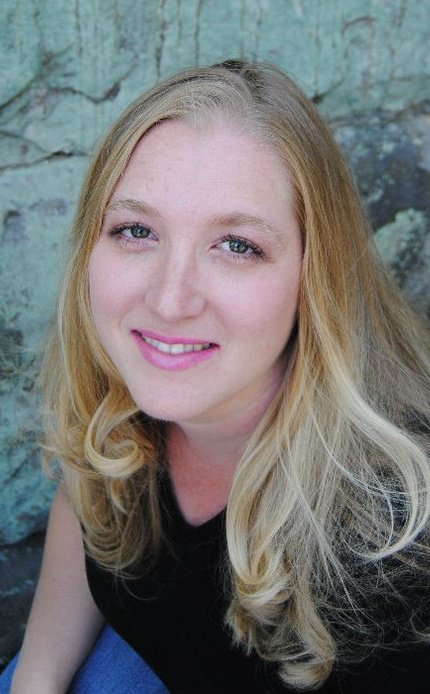
Link Past image 2I don’t sketch out every detail in my outline but I include the major events and a timeline. Then I start writing. I work on one scene at a time, usually in order. When the first draft of each scene is done I jot down any facts I need to remember (eg. The colour of a character’s hair or an important memory or event in that character’s life) and to do some basic editing. If I allowed myself to do what I really want to, I would spend ages editing every scene as I went along and it would be a very slow process. So I try to keep myself going forward, writing new scenes until I get to the end then editing the whole manuscript.

I don’t have much time to write each day as I work fulltime and also have chores to do in the house and on our small farm in the evenings and on weekends so I dedicate an hour each evening to writing and squeeze in any other writing time when I can. When it’s possible, I like to work early in the morning on weekends when I am free from any distractions other than the cats clamouring for more food (I feed them first, honestly!).

So that’s it – my writing process. I’m now tagging Patricia O’Reilly who’ll be telling you all about her Writing Process next week. You’ll find her post here next Monday. Make sure you check out her blog – and her books!

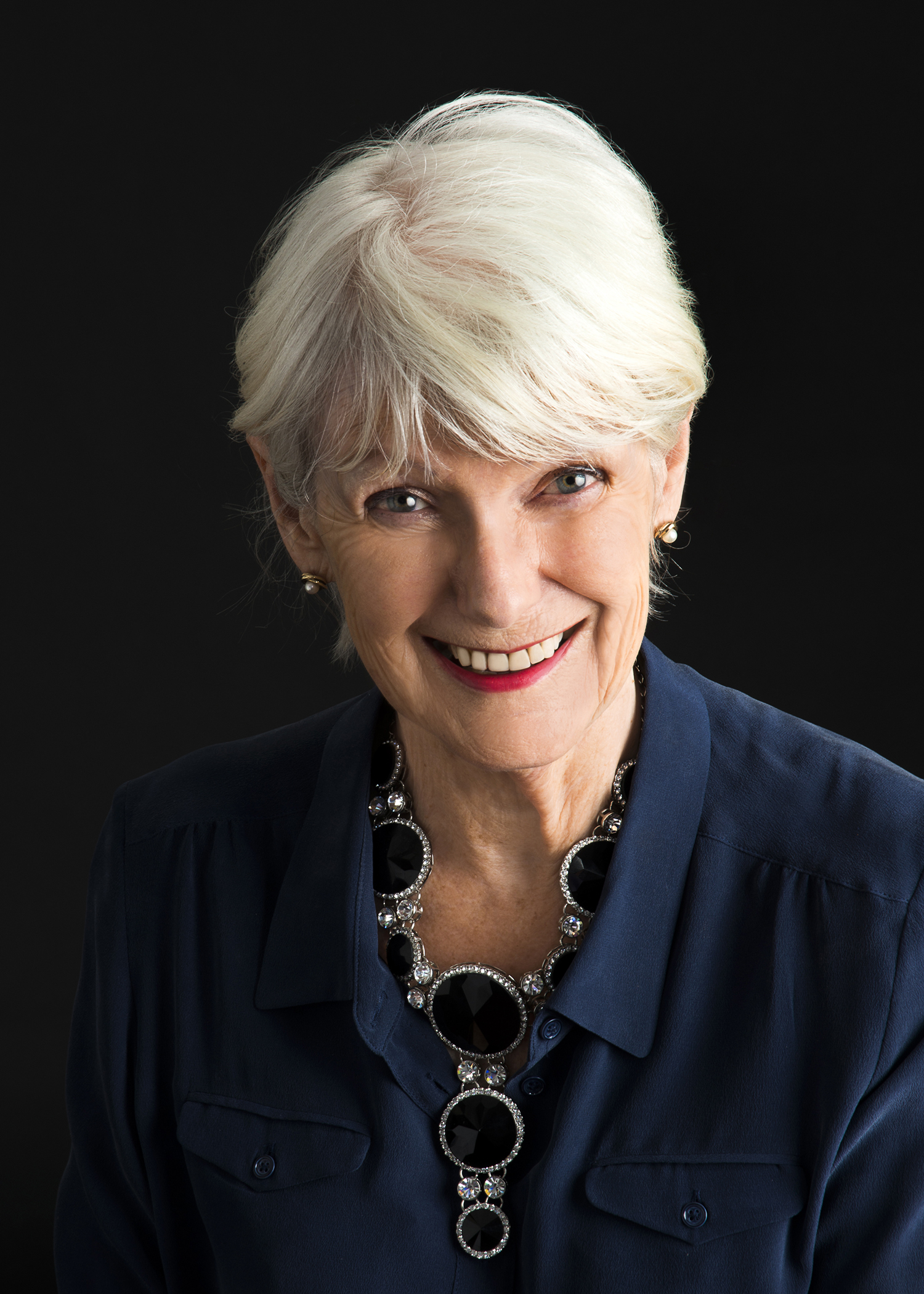
P.O'Reilly (Blue top).July13Patricia O’Reilly is a writer & writing course convenor. Her latest novel is The Interview.

Her fiction: A Type of Beauty, the story of Kathleen Newton; Time & Destiny; Felicity’s Wedding; Once upon a Summer.

Non-fiction: Writing for Success; Working Mothers; Earning Your Living from Home; Writing for the Market and Dying with Love. Her short stories are published in magazines and anthologies.

TheInterviewCoverImage.Mar14

Posted in April 2014, Uncategorized | Tagged , , , , , , | 1 Comment

Presenting Perfiditas: An Interview With Alison Morton

Anyone who drops by Ascroft, eh? regularly will know that historical fiction is one of my favourite genres. Today I’m going to dip my toes into a sub-genre within it that’s still quite new to me: alternative historical fiction. I’ve invited my fellow Alliance of Independent Authors member Alison Morton who is currently on a blog tour to visit and tell us about her latest novel, Perfiditas.

Welcome, Alison. Shall we get started?

Tell us about your novel.

First of all, thank you so much, Dianne, for inviting me here – I’m delighted to be able to share my particular vision of history and talk about PERFIDITAS, the latest in my series of alternate history thrillers.

Perfiditas - Front Cover_smWe’re in Roma Nova, an imaginary country in present day Europe, the last remnant of the Roman Empire that has survived into the 21st century. It’s been seven years since Karen Brown fled New York (see INCEPTIO) to become Carina and take up her inheritance as the heir of a leading family and pursue a career as an officer in the Praetorian Guard Special Forces.

But she’s in trouble – one colleague has tried to kill her and another has set a trap to incriminate her in a conspiracy to topple the government of Roma Nova. Founded sixteen hundred years ago by Roman dissidents and ruled by women, Roma Nova barely survived a devastating rebellion thirty years ago. Carina swears to prevent a repeat and not merely for love of country.

Seeking help from a not quite legal old friend could wreck her marriage to the enigmatic Conrad. Once she’s proscribed and operating illegally, she risks being terminated by both security services and conspirators. As she struggles to overcome the desperate odds and save her beloved Roma Nova and her own life, she faces the ultimate betrayal…

What prompted you to write about this historical event or era?

PERFIDITAS isn’t about one event, but a story set in an alternate timeline that stemmed from one point in the past. In AD 395, Christian Emperor Theodosius outlawed all pagan religious practice on pain of death. This edict prompted four hundred Romans to trek north to found a new colony where they could live in the way they wished free from persecution. Through staying tough and struggling through, Roma Nova, has survived into the 21st century. Roman in values and culture, their social system has changed through the centuries in that women now rule.

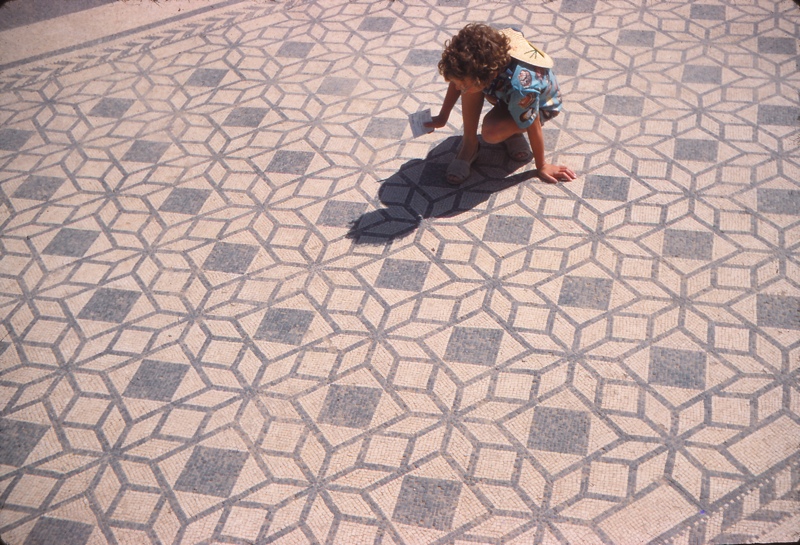
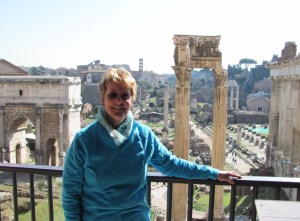
Why Romans? I’ve been deep-steeped in Romans most of my life. Here I am at age eleven fascinated with my first my first Roman mosaic floor. And I’ve never run out of curiosity…

AMM Ampurias 1_sm

And why the feminist angle? Well, at that same age, I wanted to know what Rome would have been like if women had been in charge. The idea stayed in my head over the decades and I knew I’d have to set the story in the 21st century to make it more plausible.

How closely did you stick to the historical facts? If you used them loosely, how did you decide whether to deviate from them?

Alternate history is by definition history that has diverged from the standard timeline, but which should follow historical logic as well as taking into account the social, economic and political development throughout that history. My imaginary country of Roma Nova tends to keep out of alliances and being sucked into wars, but it has interacted with the rest of Europe throughout its sixteen hundred years’ existence. For instance, remembering their Byzantine cousins’ defeat in the Fall of Constantinople, Roma Novan troops assisted the western nations at the Battle of Vienna in 1683 to halt the Ottoman advance into Europe. More of Roma Nova’s history here.

What research did you do for this book?

Luckily, I have a general grounding in Roman history from reading classical texts, such as Pliny, Suetonius, Caesar’s Gallic Wars and modern history texts, plus my years of visiting Roman sites and museums throughout Europe. So much so, that it seemed perfectly normal to clamber over Roman aqueducts, walk on mosaic pavements, follow the German limes, pretend I was a Roman playactor in classic theatres all over Europe from Spain to then Yugoslavia, from Hadrian’s Wall to Pompeii. So I have a ‘feel’ for the Roman world. But I keep reading as there are new discoveries and new research appearing all the time.
ALISON Capitoline - 56

You always have to keep connecting with cultural and historical roots of a society if you are extrapolating from them in your writing. My characters catch bad guys in the 21st century, but I wanted to find out if there had been special forces and spies during the ancient Roman period so I could bring in anything with a Roman flavour. I found Exploratio by Austin and Rankin about military and political intelligence in the Roman world. Perfect!

It turns out that there was no centralized intelligence organization and it was all chaotically arranged on a regional basis or by legion with a lot of infighting in Rome itself until near the later Roman period. Good to know…

Oh, and I spent six years in the reserve forces, which gave me experience of military life first hand and enabled me to write the military scenes in PERFIDITAS.

Do you use a mixture of historic figures and invented characters in the novel. Which is more difficult to write? Which to you prefer to write and why?

All the characters are made up!  I do refer back to historical characters (Theodosius, Caesar, etc. but only in passing) and I stick to information from accredited sources when I mention them.

In an historical novel you must vividly re-create a place and people in a bygone era. How did you bring the place and people you are writing about to life?

Crucial question! For me there are twin elements: the first is our old friend research. Knowing about food, costume and work, but also attitudes to crime, life, death, servants, masters, marriage, trade, property will give a writer a firm knowledge base against which to work.
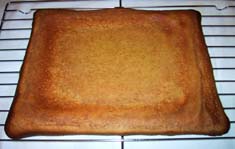
romanhoneycakeWriting ‘into the void’ with alternate history, you have to be careful to keep it plausible or you’ll lose the reader’s trust. One way I did this was to infuse the story with corroborative detail so reinforced the narrative. Even though my books are set in the 21st century, the characters say things like ‘I wouldn’t be in your sandals (not shoes) when he finds out.’  And my characters still eat Roman honey cake…

Reaching into the past means not only researching a period in meticulous detail, but getting inside the heads of the characters, imagining what they see in their everyday world, what they smell, eat and touch. Writing a diary of your character’s typical day is a salutary way of showing yourself whether you have done enough research!

Human beings of all ages and cultures have similar emotional needs, hurts and joys. Of course, they’re expressed differently, sometimes in an alienating or (to us) peculiar way but they bind us into the story.
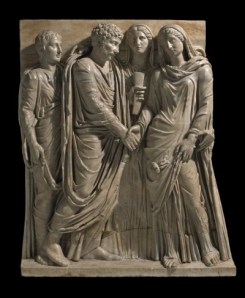
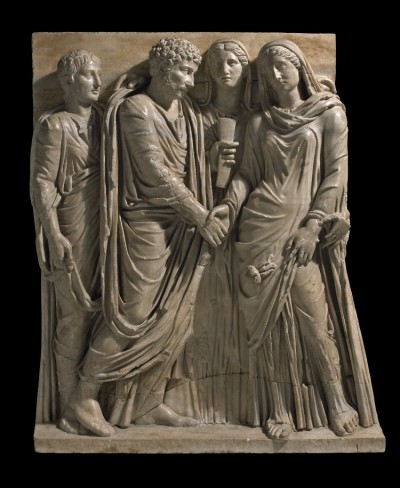
Roman WeddingThe hardest element is the conflict between projecting our timeline sensitivities and viewpoints on to people living in a completely different set of circumstances. The ancient Romans were very open about sexual matters as they regarded sex as allied to fertility and survival rather than embarrassment and guilt. And they would have given you a puzzled look if you’d suggested love was the main reason for marriage. In Roma Nova, women head the families and it is up to them to choose their partners and whether to marry them or not.

There often seems to be more scope in historical novels for male characters rather than female characters. Do you prefer to write one sex or the other. And, if so, why?

In PERFIDITAS, the women run things! 😉 And that for me was a great motivation to sit down and write the stories. As the female characters are necessarily more assertive in this society I use a technique I call gender-mirroring. If I’m not sure how Carina, my heroine, should act in a certain scene, I think it through with a male character leading the scene. Then I substitute Carina for that character. It’s sometimes a revelation just how much we take the male point of view as the norm. And sometimes quite amusing.

I’m very happy to write male characters, though, and relish making them as diverse as the women characters: grumpy, heroic, sensitive, clever, nasty, loyal or any combination thereof!

Characters are characters whatever gender they are technically and they must be multi-faceted, complex and above all engaging. Of course, in historical fiction, the sexes live within the context of their times. On this note, I’m sure there are thousands of women’s stories in history waiting to be told – a rich seam we have yet to mine fully.

Thank you for answering my questions so well, Alison, and good luck with Perfiditas. Your novels have been receiving enthusiastic reviews from readers. Simon Scarrow, author of the Eagle (Macro and Cato) series said:

“Alison Morton has built a fascinating, exotic world! Carina’s a bright, sassy detective with a winning dry sense of humour. I warmed to her quickly and wanted to find out how she dealt with the problems thrown in her path. The plot is pretty snappy too and gets off to a quick start which made it easy to keep turning the pages. There are a fair number of alternative historical fictions where Rome never disappeared, but for my money this is one of the better ones.”

Readers can find Alison on her website, Facebook page and Goodreads page. Perfiditas is available on Amazon. Follow Alison’s blog tour here.

Alison MortonAbout Alison Morton: She writes Roman-themed alternate history thrillers with strong heroines. She holds a bachelor’s degree in French, German and Economics, a masters’ in history and lives in France with her husband.

A ‘Roman nut’ since age 11, she has visited sites throughout Europe including the alma mater, Rome. But it was the mosaics at Ampurias (Spain) that started her wondering what a modern Roman society would be like if run by women…

INCEPTIO, the first in the Roma Nova series, was shortlisted for the 2013 International Rubery Book Award and awarded a B.R.A.G. Medallion® in September 2013. The next in series, PERFIDITAS, published October 2013, has also just been honoured with the B.R.A.G. Medallion®. Alison is working on the third book SUCCESSIO which will be out in June 2014.

Posted in April 2014 | Tagged , , , , , | 1 Comment

The Terminals: Beginning Of A Gripping Series

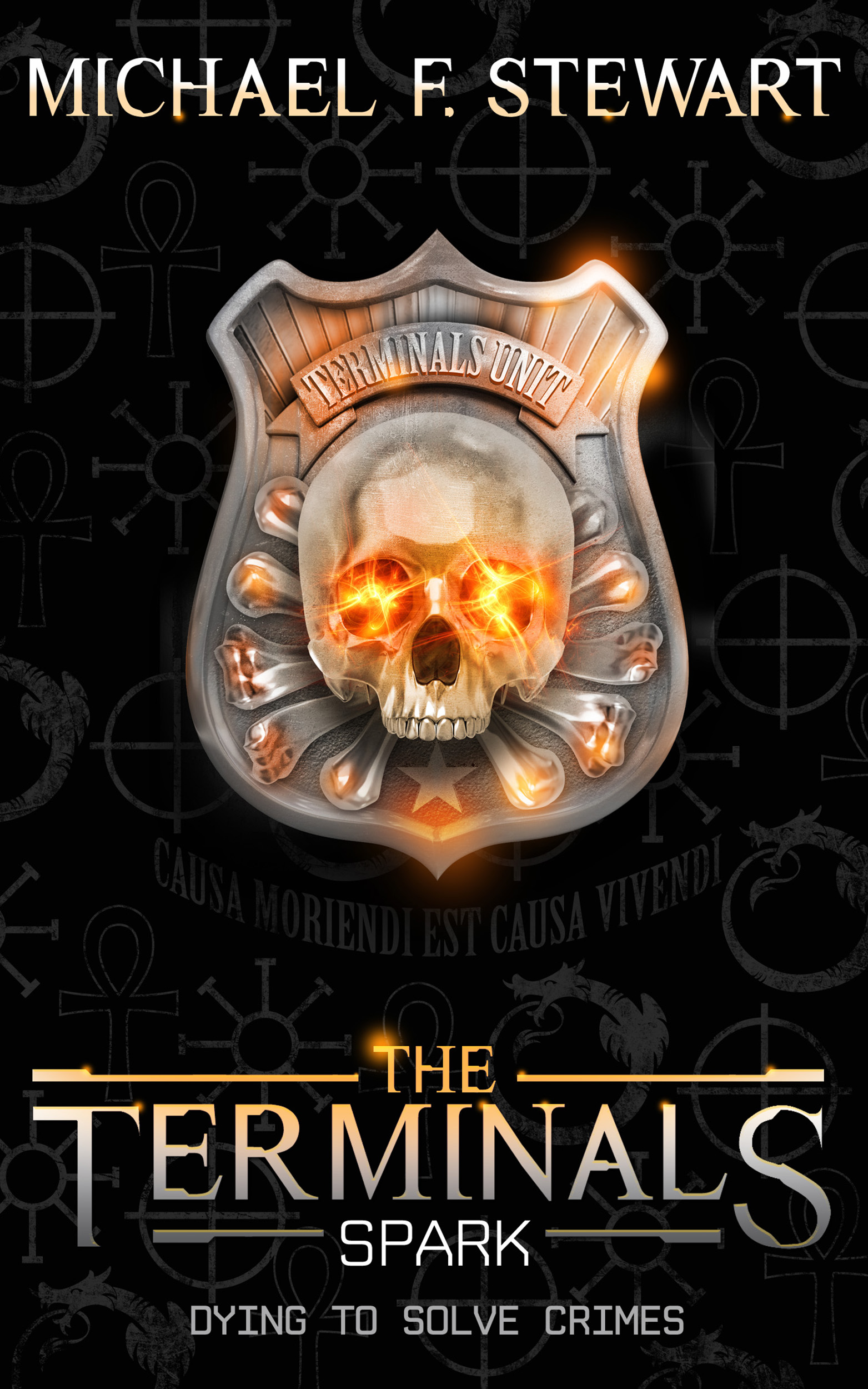
Terminals_coverI’ve already read several of Michael F. Stewart’s novels so I was delighted when I was asked to review The Terminals as part of the book’s blog tour. I might never have discovered Stewart’s books if I hadn’t been asked to review 24 Bones a couple years ago. I loved its rich fantasy world so I later readily agreed to review one of his Young Adult novels, Assured Destruction: Script Kiddie. I fell in love with the characters in that book and when I finished it I immediately bought the first one in the series to learn the background to the story. So, needless to say, I approached The Terminals with anticipation.

This is how the publisher describes the book: “Terminals solve crimes in this realm by investigating them in the next. Lt. Col. Christine Kurzow, fresh from a failed suicide attempt after she cost 11 of her soldiers their lives, is recruited into the covert unit of Terminals as a handler. It’s an easy sell. If she’s really determined to die, it’s a chance to give her death meaning. But her first case—convincing a monk to chase Hillar the Killer into the afterlife to find the location of a missing bus and the children it carried—has her wondering how to make a dead psychopath talk. Christine must follow the clues sent back by the shotgun-toting monk, who tracks Hillar through the seven deeps of hell, so she can find eleven kids before it’s too late. Maybe this time killing a man will give Christine a reason to live.”

The Terminals is a powerful, often chilling and thought provoking, novel. It’s fantasy but it raises real ethical questions about euthanasia.

Although they don’t lack humour, Stewart’s adult books are much darker and deeper than the ones he writes for young adults. One of the themes he often explores in his adult novels is different concepts of the afterlife. As he did in 24 Bones, in this book the author weaves a compelling story around a little known set of religious beliefs and, using his ability to create almost tangible characters and settings, draws the reader into an unusual and frightening afterlife.

The story is fast paced, gripping and tense. It’s not an easy read and I found the scenes where the children are held captive harrowing but, at the same time, I couldn’t put the book down. There is a brief respite in several tender scenes where characters face turning points in their lives, often saying goodbye to their past or to each other. I was particularly touched by the monk Charlie’s farewell to the monastery where he had spent his adult life. The book keeps the reader on edge until the end because when you think it’s reached the climax there’s still more. Everything seems to be resolved then another problem rears its head and you are gripped again. When it’s all over there’s still a couple unanswered questions, whetting the reader’s interest for a sequel.

One of Stewart’s fortes is his characters. They are complete: the reader sees, hears and smells them and empathises with their struggles. We know the psychic Attila by his coffee smell and the three elderly soldiers in the unit by their banter and never ending card game. The elderly soldiers are gutsy, funny and vulnerable. Readers admire their indomitable spirits and are moved by their frailty and vulnerability. The main character, Christine Kurzow isn’t your usual army officer. She’s tough, determined and suicidal. The reader roots for her as she fights to save a busload of kidnapped children and wonders until the end whether she will decide to live or die once her mission is completed. As Christine gets to know a couple other members of the unit, the psychic Attila and fellow female soldier Morph, we see the depth of their characters and are moved by the challenges they face. Stewart portrays all of this without verbose prose; often simple, well-chosen comments and actions by characters reveal all the reader needs to know.

The story flows between the two primary settings: a contemporary veteran’s hospital’s secret locked ward in the palliative care unit and the fantasy world of the Borborite afterlife. Like his characters, Stewart’s settings are vivid and tangible. He is able to create believable contemporary and fantasy worlds with equal skill. The worlds are never comfortable and may make you squirm as you absorb the graphic detail but it’s impossible not to get lost in them.

While cautioning that this book isn’t for readers who are disturbed by gritty stories, The Terminals is a novel I would recommend to anyone who enjoys a gripping, thought provoking story. And now, as I’m wait for The Terminals’ sequel, I’m going to skip back to Stewart’s Assured Destruction series and read Book 3 which was also recently released.

To learn more about the author visit his website, Facebook page and Goodreads page. Find out more about The Terminals on its Amazon page and Goodreads page.

About Michael F. Stewart:

MikesHeadMichael F. Stewart is the author of the Assured Destruction series, which sprawls across 3 books, 2 websites, 1 blog, 7 Twitter accounts, tumblr, Facebook, and 6 graphic origin stories. He likes to combine storytelling with technology and pioneered interactive storytelling with Scholastic Canada, Australia and New Zealand’s, anti-cyberbullying program Bully For You. He has authored four graphic novels with Oxford University Press Canada’s award winning Boldprint series. Publications of nonfiction titles on Corruption and Children’s Rights published by Rubicon Publishing as well as early readers with Pearson are all forthcoming in 2014 and 2015.

For adults, Michael has written THE SAND DRAGON a horror about a revenant prehistoric vampire set in the tar sands, HURAKAN a Mayan themed thriller which pits the Maya against the MS-13 with a New York family stuck in the middle, 24 BONES an urban fantasy which draws from Egyptian myth, and THE TERMINALS—a covert government unit which solves crimes in this realm by investigating them in the next. This series has already been optioned for film and television. Herder of four daughters, Michael lives to write in Ottawa where he runs free writing workshops for teens and adults.

Posted in April 2014 | Tagged , , , , | 2 Comments

Time Slipping Into A Good Story

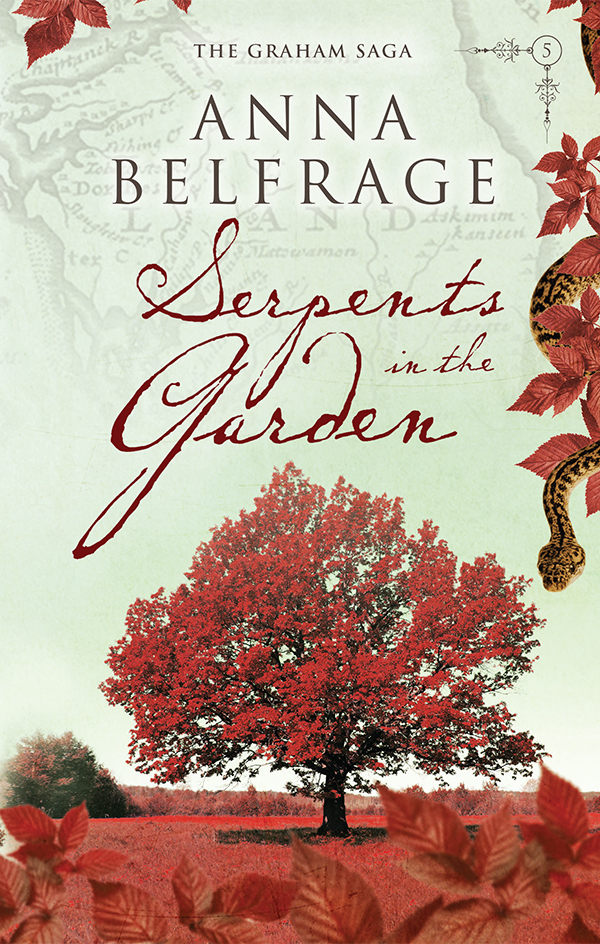
I recently received a copy of Serpents in the Garden by Anna Belfrage to review. The publisher, Silverwood Books says this about the story: “After years of hard work, Matthew and Alex Graham have created a thriving home in the Colony of Maryland. About time, in Alex’s opinion, after far too many adventures she is really looking forward to some well-deserved peace and quiet.

Serpents-in-the-GardenA futile hope, as it turns out. Things start to heat up when Jacob, the third Graham son, absconds from his apprenticeship to see the world – especially as Jacob leaves behind a girl whom he has wed in a most irregular fashion.

Then there’s the infected matter of the fellow time traveller Alex feels obliged to help – no matter the risk. Worst of all, one day Philip Burley and his brothers resurface after years of absence. As determined as ever to make Matthew pay for every perceived wrong – starting with the death of their youngest brother – the Burleys play out a complicated cat and mouse game, and Alex is thrown back into an existence where her heart is constantly in her mouth, convinced as she is that one day the Burleys will achieve their purpose.

Will the Burleys succeed? And if they do, will the Graham family survive the exacted price?”

I’ve read several time slip novels during the past year or so and I’m always fascinated by the idea of time travel and what it would be like to find yourself in another era. This novel is the first one that has transported me to seventeenth century America and I enjoyed the experience. Serpents in the Garden is well written and has a plot that keeps the reader’s attention. I was intrigued by the storylines of each of the main characters and found myself wanting to continue reading about a particular character, especially Jacob, whenever the narrative shifted away from his or her story. I knew we would get back to it but I was impatient to find out what happened next.

There is a good contrast in settings between the American wilderness and seventeenth century London. The author describes both settings vividly so that they are easy for the reader to see inside his head. I was especially intrigued by the world of the English apothecary.

Characters are, of course, central to any story. This was my first introduction to Alex and her family but I related easily to the twenty-first century woman who has found herself in a very different world from her own. Alex is a modern woman who has been dropped into the past and I thought she is very credible as such. Her husband, Matthew is also realistically drawn, reacting with a mix of courage and fear in dangerous situations. He isn’t a larger than life hero but a man who faces what life throws at him. I like this believable portrayal of a character. I found the main characters engaging and quickly became immersed in their stories. I also particularly liked some of the minor characters such as the feisty Mrs Parson and Alex’s wily brother-in-law, Simon Melville.

I did not find it difficult to pick up the threads of the story even though this is the fifth book in a series. Details from previous books were seamlessly woven into this novel and explained so that the reader isn’t confused. It’s possible to read Serpents in the Garden as a standalone book or as part of the series.

All the strands of the story come together for a satisfying conclusion to the book. But it’s not the end of the story: one key strand is very clearly left hanging, making the reader eager to start the next book in the series. It seems I’ll have the next novel to add to my TBR pile….

I can honestly recommend this novel to anyone who enjoys historical fiction, fantasy/time-slip or just a good story.

For more information about the author visit her website and her Facebook page. Serpents in the Garden can be found on its Amazon page and Goodreads.

Anna-Belfrage-150x150About Anna Belfrage: Anna was raised abroad, on a pungent mix of Latin American culture, English history and Swedish traditions. As a result she’s multilingual and most of her reading is historical – both non-fiction and fiction.

She was always going to be a writer – or a historian, preferably both. Instead she ended up with a degree in Business and Finance, with very little time to spare for her most favourite pursuit. In between juggling a challenging career she raised four children on a potent combination of invented stories, historical debates and masses of good food and homemade cakes. Nowadays she spends most of her spare time at her writing desk. The children are half grown, the house is at times eerily silent and she slips away into her imaginary world, with her imaginary characters. Every now and then the one and only man in her life pops his head in to ensure she’s still there.

Posted in April 2014 | Tagged , , , , , , , | 1 Comment

Where Would You Like To Be On St Patrick’s Day?

cottageOn St Patrick’s Day many people, especially Irish expats and those who wish they were Irish, think of Ireland. Whether they remember their home place or the location of a memorable holiday, they return to it in their minds.

For St Patrick’s Day I’ve asked a couple Irish authors to tell me about their favourite places in Ireland.

Patricia O’Reilly said: “My favourite Irish place is brownswoodBrownswood, Enniscorthy Co Wexford, the home of Eileen Gray (1878-1896) and the subject of my new book, The Interview which will be released in May by New Island Books. While researching, I retraced her footsteps all over Europe, but access to Brownswood defied me. Letters, emails and telephone calls all went unanswered. Then one autumn afternoon, I just rolled up unannounced. Brownswood stands on the banks of the river Slaney. As I stood in admiration, a man appeared by my side. With no prompting but great enthusiasm, he took a key from his pocket and opened the huge hall door. And I stood on the tiles in the footstep of Eileen Gray. He knew the house’s history intimately.  Few of the original features remain, but what does is well cared for. The wood panelling on the stairs and landing is in pristine condition; the old kitchen still has features dating back more than 100 years; and the stain glass windows cast glorious jewels of light. The building has passed through various uses from being the country Georgian home of the Pounden family (Eileen Gray’s mother’s family), to being ‘renovated’ to its current flamboyant style by Eileen Gray’s brother-in-law, Sir Henry Tufnell. Around the early part of the 20th century, it lay empty for many years before being bought by the Eastern Health Board and turned into a TB hospital; with the eradication of TB, it became a nursing home, primarily for the elderly and now finally it is a thriving Gaelscoil and resonates with the sounds of young voices speaking in Irish. Eileen Gray loved Brownswood with a passion that she never surpassed even with designing and building E.1027, regarded as the most iconic house of the 20th century. She always regretted the pain of returning from Paris for the auction. But I like to believe she’d approve of its current status.”

Laura Elliot said: “Every August I go on holidays to the Wine June photo 4 postStrand.  This rugged stretch of coastland is a few miles outside the small Irish-speaking village of Ballyferriter on the Dingle peninsula. Apart from the breath-taking scenery, what makes the Wine Strand extra special are the people I meet. The same faces every year―Irish, Welsh, Scottish, and, occasionally, French―all drawn together through our love of music, song and good conversation.

My holiday routine never changes. There’s the drive across Slea Head to Dunquin and Ventry, the hair-raising journey through the Connor Pass, the walk across the beach to Ballydavid, and, always, a long, quiet stroll through a country lane where rosy-hued fuchsia grows abundantly in the hedgerows and the wild montbretia cuts a fiery swathe through the wild grass.

I pass a long-abandoned, solitary house that grows more dilapidated every year. I dream of buying it. I imagine restoring the rooms from the wreckage of time and bringing the overgrown garden back to life. But that’s a holiday dream and, even if I could afford to indulge it, I could never imagine living anywhere but Dublin.

When I started my novel, Deceptions, I needed a refuge where Lorraine, my main character, could begin her life anew. Suddenly, I was able to bring the old house to life. I decorated its walls and hung them with paintings. I tamed the overgrown garden and gathered fruit from the overhanging trees. I lit fires in the winter and threw the windows open to the summer air. From my bedroom window I watched the dawn rise redly above the surrounding hills and, as I walked the long lane in the evenings, I watched the swallows swooping through the purple twilight. Loraine found peace there…and happiness.

Isn’t imagination a wonderful gift?”

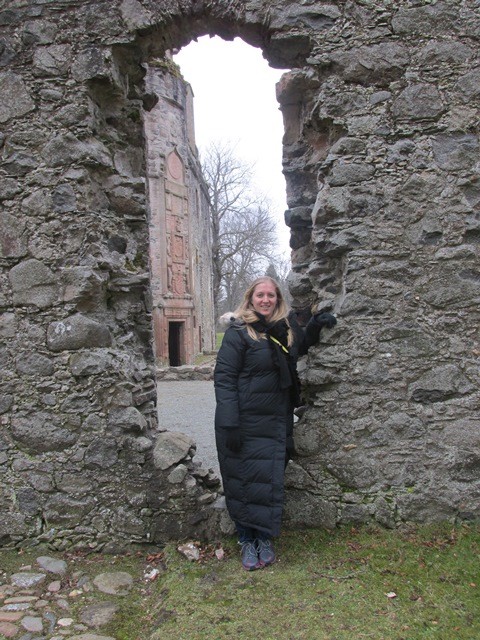
I’m not an Irish author but I have lived on the island for more Country 2than two decades. Ever since I moved to County Fermanagh a decade ago I’ve been discovering little known places that amaze me and I’ve compiled articles I’ve written about them into a book, Fermanagh Gems. On Sunday afternoons I love to roam with my husband not far from our home along forest paths that meander up and down hill, past tiny lakes, fields of blooming wild flowers and large expanses of bog. It’s quiet and refreshing. Hidden on forested land we often stumble across long abandoned cottages and stone walls disguised by years of accumulated moss – places where time has stood still. There’s even an aged stone church that would be the perfect setting for a gothic film. The mystery of these stones moulded by man fuels my imagination and I wonder what these dwellings and farms were like so many years ago before they were abandoned. In the story I’m currently working on I’m exploring what happened in one of these cottages that drove the family from it. But I’ll keep that story to share with you another day.

Where’s your favourite place in Ireland? And why are you so fond of it?

Happy St Patrick’s Day wherever you are today.

Posted in March 2014 | Tagged , , , , , , , , , , | 1 Comment

St Patrick’s Weekend Free Offer

DA-DSTH-Amazon[1]-newIreland has always been a place of tales and legends. In bygone days storytellers at campfires regaled their listeners with their tales and held them spellbound.  Do you fancy a yarn? Or two? Or half a dozen?

On St Patrick’s weekend I’m offering my short story collection, Dancing Shadows, Tramping Hooves, FREE on Amazon US & Amazon UK – from now until 18th March (I’ll give you an extra day in case you get distracted by celebrations on Monday).

Dancing Shadows, Tramping Hooves is a heartwarming collection of stories with an Irish flavour. Is it possible to conquer shadows on the wall, in the heart and clouding memories? Find out in these tales.

Excerpt from Much More Than A Dancer (included in Dancing Shadows, Tramping Hooves):

“Catherine pushed through the crowd, away from the bar. She balanced the drinks with both hands. Shying away from a group of youths, laughing and jostling each other, she passed a compact, middle-aged man with short, greying hair. He was chatting with the man beside him.

Kevin Sullivan was the new bank manager, a widower who had moved to town a few month ago. Flustered, Catherine looked away , unsure whether she wanted him to notice her or not. She rushed past, keeping her eyes straight ahead and her face an inscrutable mask…”

Posted in March 2014 | Tagged , , , , , , | Leave a comment

Finding The Women In Historical Fiction

Until recently I was inclined to think that there was more scope for male than female characters in historical fiction as men were generally the ones in the positions of power. So, when I interview authors who write historical fiction about their work for this blog, I’m interested in their thoughts on this. One of the questions I ask them is “Do you prefer to write one sex or the other? And if so, why?”

For International Women’s Day today, I’ll recap the answers of some of my recent guests to that question.

Eliza Knight who writes historical romance set in Scotland said: “I have to say, I think that is because male historical figures were documented more. If you look back, there are just as many female historical figures that were instrumental in challenging and changing the world (even if they didn’t have a front row seat), just not as well documented. One of my all-time favorite female historical figures is Elizabeth I—she ruled for forty-four years, without marrying, and was hounded for it. Women were not supposed to be superior to men—and thank goodness there has been a shift in thinking!

I definitely prefer a female, because I can relate better, as I’m a woman. In historical fiction (my E. Knight books coming out later this year), I tackle the female’s point-of-view only—these books are generally about the journey of that historical female figures life. But in romance, I think it’s important to see both sides of the story. To watch them fall in love and understand the motivations, goals and conflicts on both sides. When I first started writing, I would ask my husband what he thought of my depiction of my male characters, and he was instrumental in telling me whether or not a man would think like that, or say something like that. Crit partners help, too. So my answer is two-fold. For romance, I prefer both. For historical fiction, so far, I prefer to write from a female’s perspective—but that only means I’ve now challenged myself to take on a male!”

Christina Courtenay who also writes historical romance said: “I enjoy writing both.  Naturally the men had many advantages in the past and so much more freedom, but that just means the heroines have to be more feisty or clever in order to get their way.  It can be great fun to try and figure out how they can manipulate the people around them in order to achieve their goals.  It also means they sometimes need the hero’s help and if he is reluctant to give it, that can create sparks.  I like reading and writing both the male and female point of view as I feel that makes for a more rounded story.”

Alrene Hughes, a debut author who is writing an historical trilogy set in wartime Northern Ireland, said: “Martha’s Girls focuses on five feisty women at a time when young women, in particular, sensed a sudden opportunity to shape their own lives. Many worked in the war industries, the girls in the book seized the opportunity to join a troupe of entertainers, and the ever present threat of bombing encouraged a ‘live for the moment’ attitude. I also enjoyed writing about Martha, especially her attempts to control her girls. As a mother, I knew the delicate line she had to tread and the unspoken fears that haunted her. So maybe I prefer to write women, but sometimes you just fall in love with a man you’ve created!”

My current work-in-progress features a Fermanagh woman at the turn of the last century. And when I’ve finished writing tonight I think I’ll go back to where I left off in Fenella Miller’s Barbara’s War: The Middle Years.

On International Women’s Day it’s good to know that women characters are on stage, not hiding in the wings, in recent historical fiction.


Posted in March 2014 | Tagged , , , , , | Leave a comment

Need A Spring Fling?

Fed up with winter? You need a Spring Fling – and it starts today.

From sweet to sizzling with a couple surprises thrown in – that’s what you’ll find in the ebook bundles to be won as part of the Spring Fling Giveaway. There’s also Amazon gift vouchers worth $100, $40 and $10.

The giveway runs 7-31 March. Why not ENTER for a chance to win?

share-graphic-date

Posted in March 2014 | Tagged | Leave a comment

Debuting The Duke’s Shadow

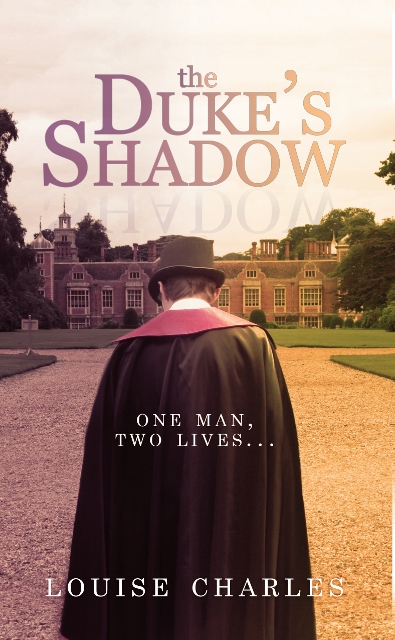
The Duke’s Shadow, an historical fiction, by Louise Charles launches today. I’ve known Louise through an online writers’ group, Writers Abroad, for several years and I’ve had a chance to get sneak peaks at the novel as it evolved. So I’m delighted it is finally out there for everyone to read and I’ve invited Louise to Ascroft, eh? to tell us a bit about the book on its launch day.

Welcome Louise. Now, as you know I don’t hang about, I tend to jump in with both feet – so let’s get started.

Tell Us About Your Novel.

DukesShadow_2.0 (395x640)ONE MAN, William Kenilworth, a young Victorian aristocrat, was never born to be the Duke of Romsey. When his older brother, Henry dies in a freak racing accident, William inherits a legacy and title he has not been groomed for nor wants. TWO LIVES… Bullied by his domineering mother and rejected by love, William falls into a deep depression. His saviour is his sister, Lottie, who helps him to create a second identity as Reuben Chambers, a London business man. SHADOWS FROM THE PAST… As Reuben, he finds true happiness which helps him to fulfil his duties as William, heir to the Dukedom. But a secret from the past threatens his family and the delicate balance he has created for his double identity. Can he continue to keep his two lives separate?

What prompted you to write about this historical event?

It wasn’t an historical event as such, but I read a snippet in Bill  Bryson’s book ‘Notes from a Small Island’ about the ‘mad’ 5th Duke of Portland who it was alleged, lived a double life. This was the inspiration behind the book.

How closely did you stick  to the historical facts? If you used them loosely, how did you decide whether to deviate from them?

More loosely. I moved the time from early Victorian to mid Victorian just as there was big cultural change in outlook. However, I have tried to replicate this time as closely as possible.

What research did you do for this book?

As I live in Italy, it’s much harder to access traditional methods of research like a library or museums. However access to the internet has changed the way we do  most things and I sourced a lot of information from there,  keeping references and notes that I could refer back to. For instance I needed to be clear about how the system of  marriage worked at that time as it was quite important to  the plot line.

Do you use a mixture of historic figures and invented characters in the  novel. Which is more difficult to write? Which to you prefer to  write and why?

The main character is very loosely based on the snippet I read initially but all  the characters are fictional. As this is my first novel, at the moment it is all difficult to write! But I think I prefer to invent characters and paint them in my own words  rather than paint what people expect to see in an historic figure. That may change…

In an historical novel you must vividly re-create a place and people in a bygone era. How did you bring the place and people you are writing about to life?

I tried to bring about the historical setting in a subtle way, based on my own reading preferences. I am taken in by novels that naturally create the setting without spelling it out, so I can fill in the gaps. So the style of dress at the time was important, modes of travel and to a lesser extent, language.
I don’t give a history lesson but hopefully scattered a consistent setting throughout.

There often seems to be  more scope in historical novels for male characters rather  than female characters. Do you prefer to write one sex or the other. And, if so, why?

I don’t think I particularly have a preference, at the moment. I have drafted three other historical based novels, and two have  female leads. It was certainly hard to find images of male characters for the cover of The Duke’s Shadow that represented the novel!

Thanks for answering my questions, Louise. I’m intrigued and looking forward to reading the book.

Readers can learn more about Louise at her website. And The Duke’s Shadow can be found on Amazon. Why not also stop by the Facebook launch party today?

LouiseCharles author pic (640x480)About Louise Charles: She writes fiction, in the short and long form. She has had short stories published in Peoples Friend, My Weekly, Anthologies and several online ezines and fiction sites. She is now dedicating her pen, ink and paper to her novels, four of which are in varying states of completion. ‘The Duke’s Shadow‘ is her debut novel and it will be self published on 1st March 2014. Louise also created the online writing group for expat writers, Writers Abroad, where she finds support and advice on her writing from all over the world. The group has published an annual Anthology for the past four years and all profits have been donated to book charities.

Posted in March 2014 | Tagged , , , , | 3 Comments

Historical Romance in the Highlands

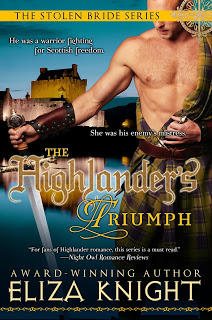
As anyone who reads my blog regularly knows, Ireland and Scotland are my favourite settings for historical fiction. So today I’ve invited Eliza Knight, author of The Stolen Bride series to visit Ascroft, eh? to talk about her series and its most recent release, The Highlander’s Temptation.

Welcome Eliza! Let’s get started, shall we?

Tell us about your novels.

ElizaKnight_TheHighlandersTriumph_2500There are seven books in The Stolen Bride Series—tales of adventure, love and triumph in the brutal Braveheart era of Scotland.

The newest release is The Highlander’s Temptation, which is actually the prequel to the entire series.

Desire tempted them, but love conquered all…
Laird Jamie Montgomery is a warrior with a mission. When he travels to the northern Highlands on the orders of William Wallace, temptation in the form of an alluring lass, could be his undoing.

Lady Lorna Sutherland can’t resist the charms of one irresistible Highlander. Though she’s been forbidden, she breaks every rule for the pleasure of his intoxicating embrace.
When their love is discovered, Jamie is tossed from Sutherland lands under threat of death. But danger can’t keep the two of them apart. No matter what perils may try to separate them—Lorna and Jamie swear they’ll find a way to be together.

What prompted you to write about this historical event?

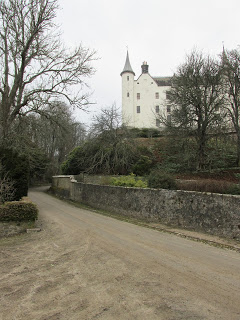
Dunrobin Castle

Dunrobin Castle

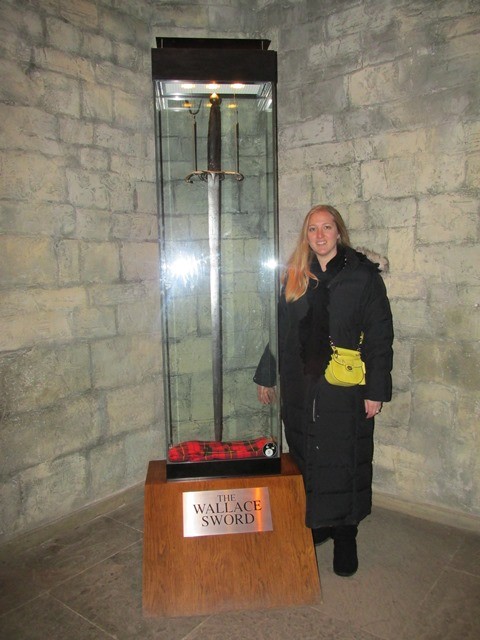
I love Scotland and the medieval era. The War for Scottish Independence and its brave warriors (ie. William Wallace), have always fascinated me. In fact, one of my all-time favorite movies is Braveheart—however many historical issues it might have. One of the lines from the movie, I actually had inscribed on my husband’s wedding ring. So, naturally, when I decided to write a Scottish romance, I was drawn to these events. I created an entire world and families that were dealing with the events of the time. I wanted to bring about joy and happiness in a time period that I love, that was so full of strife. While each book is a romance, and has its own subplots, the connecting plot is the war for freedom, and William Wallace makes a cameo in each book. When I visited Scotland early in 2013, I made a point to visit most of the places within the series, and even got a picture beside Wallace’s sword.

How closely did you stick to the historical facts? If you used them loosely, how did you decide whether to deviate from them?
I try to stick very closely to all historical facts when I write, because while my characters are fictional, the time that they lived was not. I want to bring that time period to life. I want my readers to experience the era while reading—and get a happy ending. Some of the facts that I have changed in the book are dates. I have moved some dates around—not anything major, such as a battle, but perhaps a date that a castle was built, or a date that The Bruce was visiting a castle, or the date a title may have been given. I only changed those dates to match my timeline.

What research did you do for this series?
I am a huge research fanatic—mostly because I actually enjoy it! I have tons of research books on Scotland’s history, Highlanders, Clans, castles, herbs. I’ve watched documentaries on Scotland, William Wallace, the war, the medieval era. I also took a research trip to Scotland early last year, which was instrumental! I’m planning to go again later this year.

Do you use a mixture of historic figures and invented characters in the series? Which is more difficult to write? Which do you prefer to write and why?

Eliza with the Wallace Sword

Eliza with the Wallace Sword

I do use a mixture! I think a story can be much more authentic with historical figures included. Even though I’m writing fiction, I still want my stories to be believable, especially since I’m dealing with a very real event—the war for freedom. Some historic figures that make cameos in the books are, William Wallace, Robert the Bruce, Longshanks aka King Edward of England. My heroes/heroines are all fictional, but they do reside in real castles, and have real Clan names.

Great question on difficulty! I think I’m going to have to say that the level of difficulty is equally matched. I say this because, with fictional characters you have to stay true to their goals and motivations, but you also have to do that with a historical figure. Maybe slightly more so with a historical figure, because we already know what happened, whereas with your fictional characters you can change what happens because you make it up—but because you can make it up, there is a lot more potential for creating issues.

I actually prefer writing both. Under the name E. Knight, I have written two historical fiction novels, based on historic figures, that will be releasing later this year.

In an historical novel you must vividly re-create a place and people in a bygone era. How did you bring the place and people you are writing about to life?
By doing a lot of research, I was able to close my eyes and recreate the scenery in my mind. I’m a very visual person. So watching documentaries, looking at pictures and visiting a place really help me to create it inside my mind where I can see it, and then lay it out on paper. Even just being outside, smelling the air, smelling a campfire, going on a hike and studying the way the leaves crunch under my feet or feeling the bark of a tree. I’m really big into those sensory details, and I want to immerse my readers inside the time.

There often seems to be more scope in historical novels for male characters rather than female characters. Do you prefer to write one sex or the other. And, if so, why?

???????????????????????????????I have to say, I think that is because male historical figures were documented more. If you look back, there are just as many female historical figures that were instrumental in challenging and changing the world (even if they didn’t have a front row seat), just not as well documented. One of my all-time favorite female historical figures is Elizabeth I—she ruled for forty-four years, without marrying, and was hounded for it. Women were not supposed to be superior to men—and thank goodness there has been a shift in thinking!

I definitely prefer a female, because I can relate better, as I’m a woman. In historical fiction (my E. Knight books coming out later this year), I tackle the female’s point-of-view only—these books are generally about the journey of that historical female figures life. But in romance, I think it’s important to see both sides of the story. To watch them fall in love and understand the motivations, goals and conflicts on both sides. When I first started writing, I would ask my husband what he thought of my depiction of my male characters, and he was instrumental in telling me whether or not a man would think like that, or say something like that. Crit partners help, too. So my answer is two-fold. For romance, I prefer both. For historical fiction, so far, I prefer to write from a female’s perspective—but that only means I’ve now challenged myself to take on a male!

Thanks for giving me such detailed answers to my questions. It gives me and my readers a great insight into your books. And by the way, I enjoyed Braveheart too, despite its inaccuracies.

Readers can learn more about Eliza at her website, Facebook page and Goodreads page and will find the whole series on Eliza’s Amazon Author page.

Eliza KnightAbout Eliza Knight: She is the multi-published, award-winning, bestselling author of sizzling historical romance and erotic romance. While not reading, writing or researching for her latest book, she chases after her three children. In her spare time (if there is such a thing…) Eliza likes daydreaming, wine-tasting, traveling, hiking, staring at the stars, watching movies, shopping and visiting with family and friends. Being a self-proclaimed history nerd, she owns the acclaimed historical blog, History Undressed. Eliza lives atop a small mountain, and enjoys cold winter nights when she can curl up in front of a roaring fire with her own knight in shining armor.

Posted in February 2014 | Tagged , , , , | Leave a comment