The Cunning Man Reviewed

I recently read The Cunning Man, a unique short story collection by John Yeoman.

02_The Cunning Man CoverTo give you a quick feel for it, here’s the publisher’s description: “Looking for clever, fast-paced historical mysteries? Here you’ll discover seven ‘impossible’ crimes, locked room puzzles, passion and riddles galore. Enjoy these lusty crime stories set in Elizabethan England where a ‘cunning man’, Hippo Yeoman, must solve devilish cases to save his friends’ lives, or even his own.

This anthology of short historical mystery stories is a world ‘first’. It’s not only a joy to read in its own right, but it’s also a ‘fictorial’: a collection of crime thrillers packed with clever but unobtrusive tips that show you precisely how they were written, to help you write your own stories! They will appeal equally to avid readers of historical crime and students of creative writing who want to enhance their story or novel writing skills, in any genre.

Can you find the culprit before Hippo does? Challenge your own detective skills, enjoy a thundering good read in settings that are wholly authentic to 16th century London, and discover – while you read – how to write a great story!”

I enjoyed this collection of stories and found the notes on their construction interesting and informative. The author combines clever plots, with interesting tweaks to the historical record, and a likeable main character, Hippo, to produce a satisfying collection of stories. Each tale can be read entirely on its own but, by reading the stories in order, I enjoyed ‘experiencing’ the developments in Hippo’s life over a period of months. Including a back story and references to the main character’s own life added depth to the stories so that they were not only a series of mysteries which Hippo solved. The author’s ability to convincingly evoke the sights, sounds and smells of Elizabethan England also added to my enjoyment of the stories. Fans of historical mysteries as well as writers looking for insights into short story writing will find this a worthwhile collection to read.

For more information about the author and his work, please visit John Yeoman’s website, and follow him on Twitter.

Cunning John YeomanAbout Dr John Yeoman: He holds a PhD Creative Writing and is a total rogue. His first adventure when leaving Oxford university with an MA in English literature was to host a witchcraft cabaret in a London cellar. This so enchanted him with devilry that he took up a career in public relations. Across 42 years he has edited a newspaper, chaired a big PR consultancy and trained several thousands of people to write for fame, fun and occasionally fortune.

For fifteen years he ran Britain’s largest self-publishing business and earned up to $1.4 million annually from his own living room. He founded Writers’ Village in 2009, now one of the world’s largest short fiction contests. It’s no coincidence that its blog is titled the Wicked Writing Blog and it hosts guest posts every week from every best-selling author who is not ashamed to show their face there.

He lives in central England with his wife Celia, a dynasty of children and a tortoise. His passions include Jacobean literature, heirloom vegetable gardening and antique wines.

Posted in April 2015 | Tagged , , , , , | Leave a comment

Immigrant Soldier: A New Look At WWII

Last week I finished reading Immigrant Soldier, the Story of a Ritchie Boy, by Kathryn Lang-Slattery. I received a free copy of the novel in exchange for an honest review as part of the author’s Historical Fiction Virtual Tour.

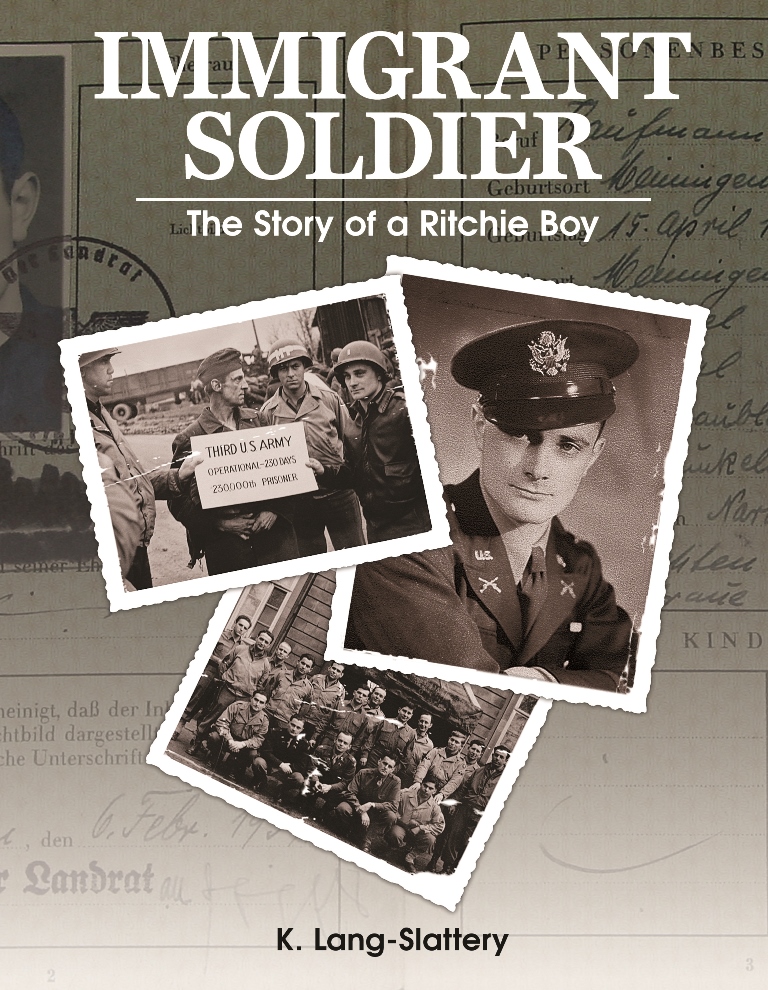
02_Immigrant Soldier_CoverThe publisher, Pacific Bookworks, states that the novel is “based on the true experiences of a refugee from Nazi Germany, combines a coming-of-age story with an immigrant tale and a World War II adventure. On a cold November morning in 1938, Herman watches in horror as his cousin is arrested. As a Jew, he realizes it is past time to flee Germany, a decision that catapults him from one adventure to another, his life changed forever by the gathering storm of world events. Gradually, Herman evolves from a frustrated teenager, looking for a place to belong, into a confident US Army intelligence officer who struggles with hate and forgiveness.”

It is easy to see that the novel is based on Herman Lang’s real experiences as it sometimes reads more like a biography than a novel, especially when imparting information about developments in pre-war Germany and during the Second World War. But, whether it seems more biography or novel, it is still an engrossing story. The book is a very thorough account of Herman’s life from 1938 when he begins to plan his escape from Nazi Germany until the end of the Second World War.

I enjoyed watching Herman grow and mature and found him a very likeable character. The author captures his youthful innocence on an English country estate and in carefree California as well as his experiences as a soldier in battle and vividly evokes the places where Herman finds himself, from pre-war Germany to a California beach town to an English estate to war-torn Europe.

The author has researched and delved into an aspect of the war that has rarely been highlighted before and brings the world of US military interpreters and their importance to US military strategy to the reading public, portraying Herman’s experiences through a series of interesting scenes and anecdotes. His experiences are made more interesting when well-known military figures such as General George S. Patton are part of his story, giving readers a glimpse into the lives of these important historical figures.

Readers who are looking for the excitement and gore of frontline battle may not be drawn to this book but anyone who wants to experience the broader canvas of the run up to and events of the Second World War will find this a fascinating read.

For more information about the author, please visit at K. Lang-Slatter’s website and blog. You can also find her on Facebook, LinkedIn, and Twitter.

Immigrant Soldier Kathryn Lang-SlatteryAbout Kathryn Lang-Slattery: A published author of fiction and nonfiction for youth, she became fascinated with her uncle’s World War II stories and began taping his conversations in 1996. Soon she knew she had found a fascinating untold story of Jewish refugees who became silent heroes. More than a decade spent researching, interviewing Ritchie Boys, and turning the true story of her uncle into fiction became an odyssey of discovery that resulted in the novel, Immigrant Soldier, The Story of a Ritchie Boy.

Posted in April 2015 | Tagged , , , , , , | Leave a comment

Getting To Know An Unknown Woman

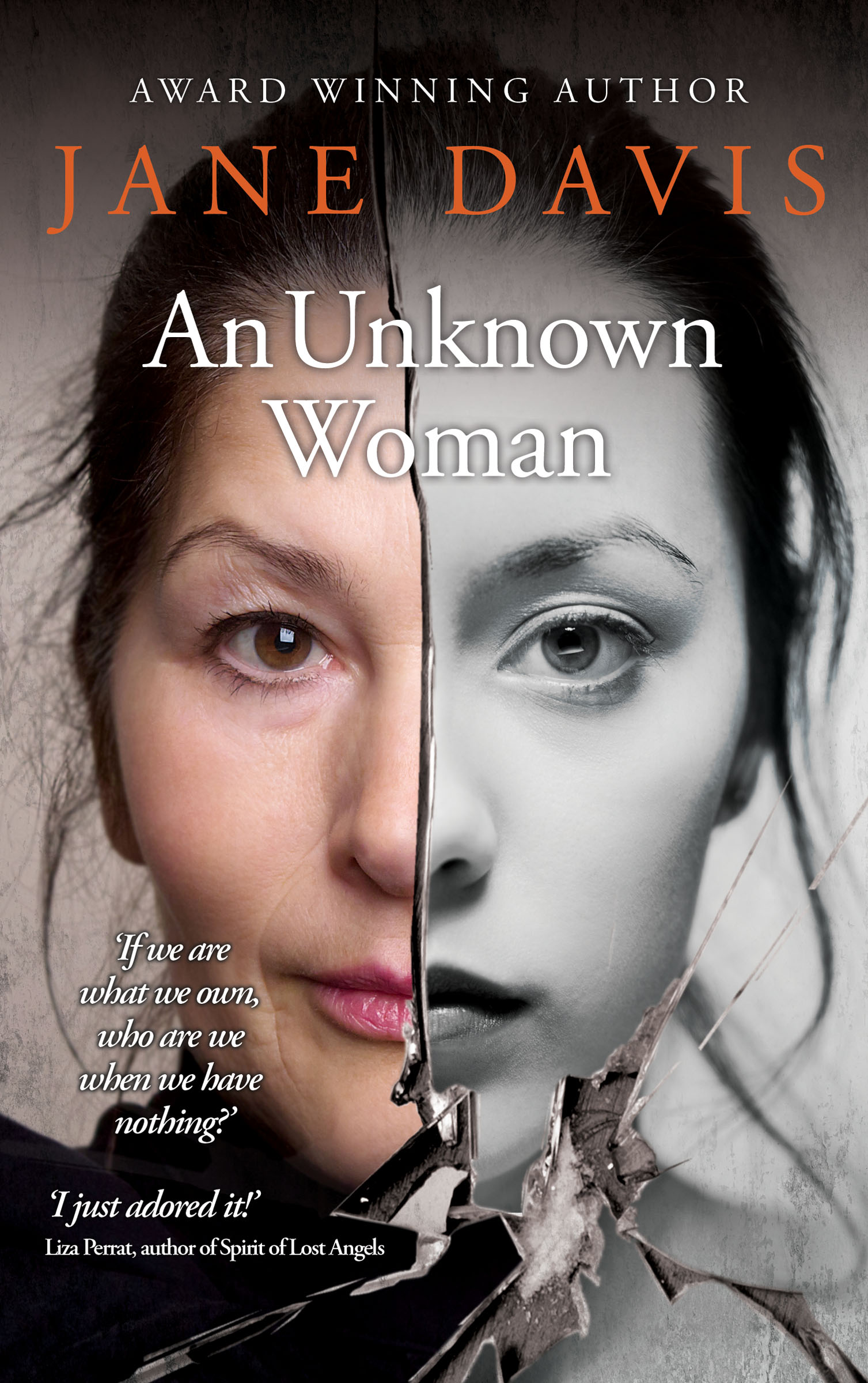
Today Jane Davis is visiting Ascroft, eh? to tell us about her latest novel, An Unknown Woman.

Davis BenchLet me tell you a little bit about Jane (I cheated – I got all of this from her biography!): Jane lives in Carshalton, Surrey with her Formula 1 obsessed, star-gazing, beer-brewing partner, surrounded by growing piles of paperbacks, CDs and general chaos. She spent her twenties and the first part of her thirties chasing promotions at work, but when Jane achieved what she’d set out to do, she discovered that it wasn’t what she had wanted after all. In search of a creative outlet, she turned to writing fiction, but cites the disciplines learnt in the business world as what helped her finish her first 120,000-word novel.

Her first, Half-truths and White Lies, won the Daily Mail First Novel Award and was described by Joanne Harris as ‘A story of secrets, lies, grief and, ultimately, redemption, charmingly handled by this very promising new writer.’ She was hailed by The Bookseller as ‘One to Watch.’ Five self-published novels have followed: I Stopped Time, These Fragile Things, A Funeral for an Owl, An Unchoreographed Life and now her latest release, An Unknown Woman. Jane’s favourite description of fiction is that it is ‘made-up truth.’

Welcome, Jane. Shall we get started?

Tell us about your novel.

JD: My main character is Anita Hall who, at the age of forty-six, thinks she knows exactly who she is. She has lived with partner Ed Davis An Unknown Woman finalfor fifteen years and is proud of all they’ve achieved. They go out into the world separately: Ed with one eye on the future in the world of finance; Anita with one foot the past, a curator at Hampton Court Palace. She is living the life she has chosen – choices that weren’t open to her mother’s generation – working in her dream job, being part of an equal partnership, living mortgage-free in a quirky old house she adores. Her future seems knowable and secure.
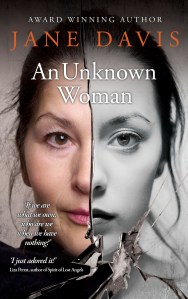
But then Anita finds herself standing in the middle of the road watching her home and everything inside it burn to the ground. And before she can come to terms with the magnitude of her loss, hairline cracks begin to appear in her perfect relationship. Very quickly it becomes apparent that nothing is as it had seemed. Then, when she returns to her childhood home in search of comfort, she stumbles upon the secret that her mother has kept hidden, a taboo so unspeakable it can only be written about.

I read a quote I liked the other day. “The writer’s job is to get the main character up the tree, and once they are there, to throw rocks at them.” I don’t want to give too much away, but Anita finds one hell of a lot of rocks flying in her direction.

What is the theme of the story and what prompted you to write about this subject matter?

JD: An Unknown Woman is very personal to me. In 2013, I took the decision to cut back on paid work, which meant selling the car and ridding myself of a lot of material baggage along the way. The book is in part an exploration of how our material possessions inform our identities. It begins with a couple standing in the road outside their house watching it burn to the ground. It is very recognisably my house. Then in February 2014, life reflected art/fiction when my sister lost her house and everything in it to the winter floods.

In the book, I ask the question, ‘If we are who we own, who are we when we have nothing?’ Parker J. Palmer described identity as ‘an ever-evolving core within which our genetics, culture, loved ones, those we cared for, people who have harmed us and people we have harmed, the deeds done (good and ill) to self and others, experiences lived, and choices made come together to form who we are at this moment.’ So, in a way, it is quite a reflective novel in which Anita has to revisit her past before she can move forwards. But when she goes home in search of comfort, she not only encounters one of those people who has caused her harm in the past, but stumbles upon the secret that her mother has kept hidden.

There were several sources of inspiration, but one of them was my elderly neighbour who told me his story and said, ‘I’d like you to write about it’. His wife had very much wanted a child, but when their daughter was born, his wife was unable to bond with her. This wasn’t post natal depression, which is relatively common, but an active dislike which only worsened over the years. They never acknowledged it, never spoke about it, but it was always there: the unspoken truth. My neighbour spent his married life trying to compensate, being both mother and father to their daughter. When I put pen to paper, I thought that I was putting one family under the microscope, but several of my beta readers responded with details of very similar experiences, either relating to their relationships with their children or their mothers. They were glad that it had been written about. We hold the mother/daughter relationship in particular in such high esteem that it seems particularly difficult to accept that it’s not always an easy and natural thing. In fact, in many cases it seems to be the very opposite.

What research did you do for this book?

JD: This book is very much a reflection of what was happening in my own life over the fifteen months that I wrote it. Having given up a high-powered job (and the salary that went with it) my life felt as if it had shrunk.

With many adults still living at home with their parents at the age of thirty, and with life expectancy on the increase, middle-age, too, seems to have shifted. In my late forties, logic tells me that I am middle-aged, and yet in many ways, with less responsibility than I’d had since starting work at the age of sixteen, it is as if I’ve fallen out of adulthood. I wanted to write something that reflects this new state of affairs. The childless forty-something-year old, who is still thinks of herself (and is thought of) as being young, who has perhaps paid off the mortgage, but still goes to gigs.

The main character, Anita, is the same age that I was at the time I began to write the book. Her personal circumstances are also similar to mine. She lives in my house, for example. She has been living with a man she is not married to for fifteen years and they have made the decision not to have children. And even though she believes that this was the right decision for them, it isolates her from her contemporaries, whose children are their main focus. She feels cut off from the life she imagined for herself since the age of ten.

During the writing of the book I began to experience severe panic attacks, something I thought I had grown out of (I am told they that often return with the menopause), so Anita’s anxiety attacks are mine.

I had a very happy few outings to Hampton Court Palace, quizzing the staff about their jobs and studying ancient graffiti, which I find endlessly fascinating. It’s strange how our attitude to graffiti changes when it is historical. I also went to a couple of evening events to get a feel for them, and for the opportunity to see the Palace at night. One thing that I didn’t do that I’d really hoped to was manage to see The Portrait of the Unknown Woman, which is Anita’s obsession. It is housed in an area that is not normally open to the public – although, unbeknown to me, it actually was open on one of the days I visited! Although the identity of many of the people in portraits in the palace is unknown, this particular one has attracted so many controversial theories because it was previously displayed under the title Queen Elizabeth In fanciful Dress. It has also has been extensively altered. http://goo.gl/A5IXyG

Do you prefer to write one sex or the other? And, if so, why?

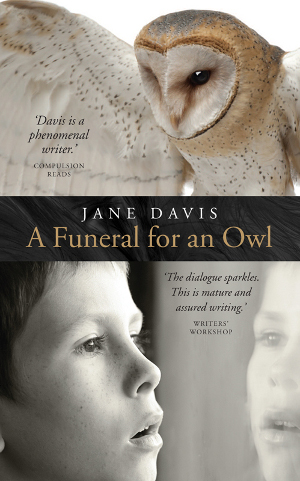
JD: I write from multiple viewpoints, and so routinely write as both men and women. There are challenges about writing from a man’s Davis A Funeral for an Owlperspective. Some of them are based on the myths planted in our heads by women’s magazines – about how many times a day men think about sex, for example. When I’m not sure how to approach a topic, I might use my partner as a sounding board, or I turn to books. I also rely on gut feeling about how much detail people actually want to read. Something implied can be far more powerful than something that is explicit. I prefer describing emotions rather than mechanics. For example, in my novel A Funeral for an Owl, young Jim undergoes something of a sexual awakening when he meets Aimee White, a girl from the other side of the tracks – smart and what we used to call ‘middle class’. Graham Joyce’s The Tooth Fairy provided a wonderful example of the confusion of finding yourself aroused by someone you are not attracted to. Jennifer Egan’s A Visit from the Goon Squad provided fantastic examples of how to portray flawed characters in a non-judgemental way – people who don’t always understand the reasons why they do things. I am not so convinced as Cosmopolitan is that there is such a thing as a ‘typical male’ but, even if I’m wrong, my characters are not intended to be typical. I hope I managed to sympathetically address the pressures boys feel to behave in a so-called ‘masculine way.’
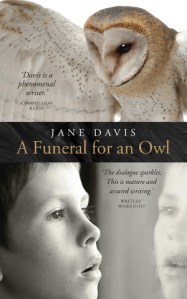
In the same novel, the main challenge for me was writing a fight scene for my teenage mixed-race character, Shamayal. That was totally new territory. My intention was to create a sense of fear rather than to be graphic (this wasn’t a book about sex and violence.) My editor’s advice was to make it even more visceral.

Whether male or female, you have to be confident in the character that you are writing. You can only do that by getting right inside his or her head and understanding what made him what she is. In fact, this was never so apparent to me as when in An Unchoreographed Life, I wrote from the perspective of a six year old girl. Some of my beta readers thought she was too old for her age, some thought she was too young. One friend with a child of a similar age made the very sensible comment, ‘Of course, we only know what comes out of their mouths. We don’t know what goes on in their heads.’ Novels are the only narrative form that transport the reader directly inside the character’s head, describing their conflicts, emotions and thoughts from the inside.

The male character in An Unknown Woman is Ron, a man in his late seventies. He’s, someone who experienced the Liverpool Blitz before being evacuated, who has carried his own guilty secret for the whole of his life, and who shelters his wife’s guilty secret. In many ways, he’s an everyman, but he is also heroic to me because his marriage is a model of enduring love, and despite not being married myself, that’s something I have a great deal of respect for.

Where is the novel set and why did you choose to set it there?

JD: The novel has several settings. Some of the action takes place in Hampton Court Palace, where Anita works as a curator (and is also close to where I live). It somewhere that I feel people can imagine – and of course, the recent dramatisation of Wolf Hall helps with that. I think that my job is to zone in on the detail. There is a processional passage in the Tudor Palace and, on a deep windowsill, there is a graffiti outline of a hand. Somehow, despite the fact that we’ll never know the identity of this person, it seems far more personal than carving your initials. In fact, I found it very moving. My instinct on seeing it was to put my hand within the outside of the hand, and I could see from the sheen of the stone that many others had done this before me, so there is a whole trail of connectivity between me and whoever it was that left their mark.

Anita’s hometown is Liverpool. Since it’s also my partner’s hometown, it’s a city I have visited often over the past fifteen years and I’ve witnessed the changes, including the sandblasting of the grime that had blackened the frontage of the famous Three Graces, the redevelopment of the dock area and, most recently, the construction of the new museum and Liverpool One. Anita has a complex relationship with her hometown. The level of unemployment in the seventies and eighties was such that careers’ advice was ‘Leave – and while you’re at it, lose the accent.’ The city Anita returns to as an adult is a very different place. Each time she visits, she experiences a complex range of emotions: the pull of the Mersey flowing in her veins, guilt of having abandoned the place, and a sense of no longer belonging. She certainly questions whether she has any right to feel proud of her cultural heritage.

Ron’s relationship with the city is different as I hope this passage illustrates:

“There was something transportative about living in the same city all of your life; walking around familiar geography, knee-deep in the history of the place. And superimposed over a street map carried both inside and outside his head (the then and the now), were the milestones of his own life. Now he was older – with less to look forward to, he supposed – Ron spent a great deal of time in the past. In a single half hour, he might be a child crying in a damp cellar, clasped to his mother’s chest; a child of five sitting on the clean-swept step of his grandmother’s terraced house, while the adults crammed themselves into the front parlour, discussing things that didn’t concern him. He might be a school-leaver, discovering the pleasure of smoking illicit ciggies on park benches (illicit because he’d bought them with coins dropped into his cap while he pretended to be collecting for the Sailors’ Home).

Once, an office worker stopped and asked for a light. Before Ron could reach for his matches, she scooped back her hair, and bent down to touch the end of her cigarette to his, her blouse falling open as the embers flared. A quick thank you, smoke coiling in his face and him left with a grin that made his jaw ache all afternoon.

Passing Queen Square, he might be a boy weaving through the fruit and vegetable market, snaring himself a crisp apple when no one was looking.

He might be a lad of fifteen (though, with his first paid job, he thought himself a man), the pads of his fingers permanently ink-stained, parcel string cutting off his circulation as he hauled bundles up from the print rooms where the giant presses roared, sending reams of paper flying, ready to be cut and folded. Everything a great hurry, accompanied by hollering and the sound of running feet. From there, the papers would be rushed to station forecourts, newsstands and corner shops. Taking his father’s advice, he kept one eye on the job he wanted: the spectacle-wearing writers, banging out copy in smoke-filled offices, untended cigarettes dripping from the corners of mouths. Writers impressed girls. Become one, and he might get a date – that was his thinking. “Yes, Sir!” he shouted on cue, talking a good line; making sure he was in the right place when errands needed to be run. And when they said, “I think we might have something for a bright lad like you,” his chest swelled with anticipation.”

Thank you, Jane, for your honest answers to my questions. They will give readers an insight into your own experiences as well as the novel. Good luck with your latest release, An Unknown Woman.

Readers can learn more about Jane by visiting her website and Facebook and Pinterest pages. They can also follow her on Twitter @janedavisauthor. The book is available on Amazon as an ebook and a paperback.

Posted in April 2015 | Tagged , , , , , | Leave a comment

Delving Into Deep Deceit

Today I’ve invited Anne Louise O’Connell to Ascroft, eh? to tell us a little about her mystery/thriller, Deep Deceit.

Welcome, Anne. Let’s get started, shall we?

Tell us about your novel.

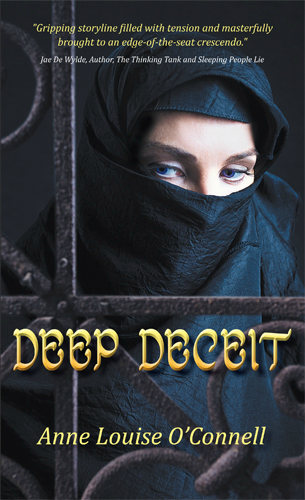
deep deceit 3ALO: My novel, Deep Deceit, revolves around a young girl named Tamara who gets kidnapped in Dubai and her mother Celeste’s mission to find her, despite the numerous roadblocks she faces. Celeste engages the help of a fellow expat named Susan whom she meets at a beach boot camp. The two women launch the search that the authorities will not, because at 18, Tamara is technically an adult.

The clues to Tamara’s whereabouts take Celeste and Susan down a dark alley of deep deceit. From exotic nightclubs and high-class call girls to mysterious Saudi palaces hidden behind ominous walls, they follow each lead while uncovering the unthinkable. As they come closer to finding Tamara, the secrets Celeste and Susan uncover threaten not only her daughter’s life but everyone in their families as well.

What is the theme of the story and what prompted you to write about this subject matter?

ALO: As I contemplate this question now that I’ve finished my second novel, I can see a common theme has evolved in my writing that will actually appear again in my next novel. The protagonist, a 40-something female, faces what she perceives as an insurmountable challenge but finds an inner strength she never knew she had for various reasons. In Celeste’s case, she has been oppressed by her first and second husbands, who have both taken advantage of her vulnerabilities, convincing her that she is incapable of independent thinking and that she needs a ‘big strong man’ to take care of her. The story arc highlights the relationship between Celeste and Susan; the strong bond that grows very quickly in the intensity of the circumstances; and the strength that women can draw from each other. The theme of female oppression is also explored when comparing the cultural differences between the Arab and Western worlds. However, I feel like it’s presented in a balanced way. One of the rescuers, a character named Aliya, is a Saudi woman married to a very forward-thinking husband, who fluctuates between his loyalty to his very old-fashioned father and what is ‘right’ in his own mind. The other ‘hero’ is a Western educated Arab man who is secretly in love with Celeste. A sub-theme that came out in the story is how a mental illness, especially those that go undiagnosed, untreated or improperly treated, can impact people’s lives. I honestly don’t know what has prompted me to write about these themes. The story ideas tend to come first and the underlying themes seem to follow naturally. I don’t make a conscious decision to write about certain subject matter. My focus is to write a compelling and evocative mystery/thriller with strong female characters.

What research did you do for this book?

ALO: My initial ‘research’ was on the ground! I lived in Dubai for four years and a lot of the geographical descriptions, locations and scenarios are from personal observation and experience. I have family and friends who have lived in, traveled to and/or worked in Saudi so I interviewed them for their perspectives and continually asked for ‘reality checks’. I also used references and resources I found on the Internet to help flesh out details, such as what happens at an Arab wedding and to fact check certain things like the correct names for traditional Arab clothing, for example.

How did you bring the place and people you are writing about to life?

ALO: When I’m writing character descriptions and scenes that need to draw readers in, I tend to sit back and close my eyes and begin to imagine details in my mind’s eye. I put myself into the scene and turn slowly around to get a 360-degree perspective. Once I can ‘see’ it clearly, I start writing. Sometimes I will search for photos on the Internet to spark ideas. I did that when writing the description of the wedding dress and also when trying to decide what Ryan’s office building looked like as well as the majlis in the palace where Tamara was being held.

Do you prefer to write one sex or the other? And, if so, why?

Anne Louise O'Connell

Anne Louise O’Connell

ALO: That’s a very interesting question and one that found me at a stand still about halfway through writing Deep Deceit. I was having a hard time writing Ryan because he was such a narcissistic creep. I found myself deeply disliking him and that’s not a good thing when you have to spend so much time with your characters while writing a novel. On the other hand, I loved writing Mitch as he’s a warm and loving, wine-pouring, spaghetti-making hubbie that was a pleasure to conjure up. In order to get back to writing and be able to continue developing Ryan’s character, I had to come up with a back-story that would justify his sociopathic behavior. Being able to understand your antagonist is important but you don’t necessarily have to like him. As an author, how you feel about your characters will come across to the reader. I was very pleased with the ‘realness’ of Ryan’s character in the end once I fleshed him out and I hope that comes across. I guess the answer to your questions is, I enjoy writing certain character types better than others rather than male versus female.

Thanks for answering my questions, Anne. Readers can learn more about Anne and her writing by visiting her website. Deep Deceit is available online from Amazon and other retailers.

Posted in March 2015 | Tagged , , , , | 2 Comments

Looking At Letters To Kezia

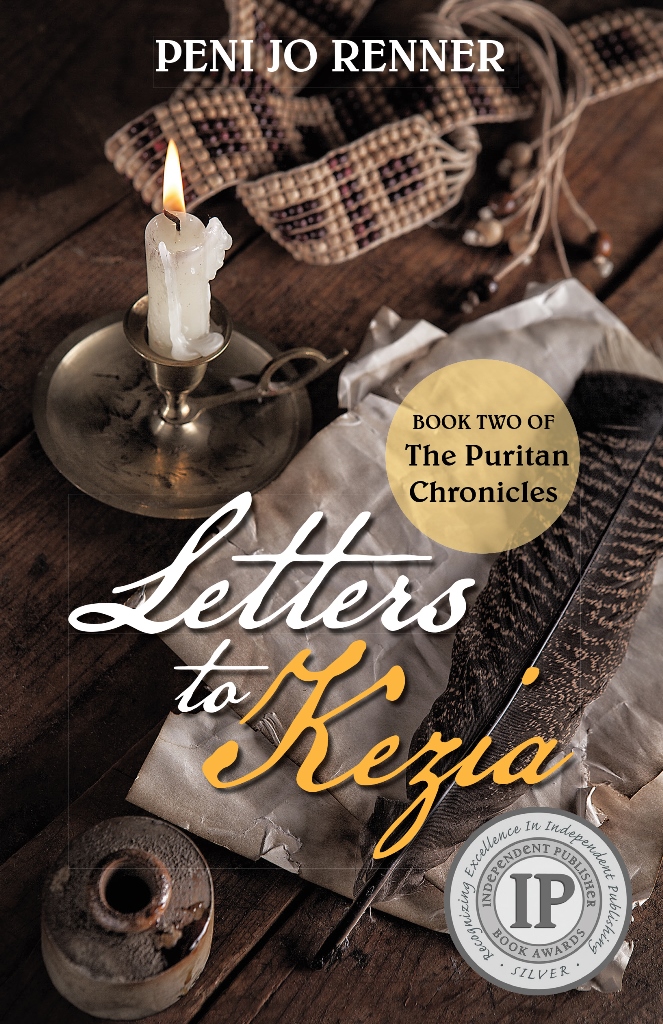
I think most people prick up their ears when the Salem Witch Trials are mentioned. More than three centuries later the era still fascinates us. So I’m delighted to welcome Peni Jo Renner to Ascroft, eh? today to talk about her  novel, Letters To Kezia.

Welcome Peni. Let’s get started, shall we?

Tell us about your novel.

????????????????????????PJR: It’s a sequel to Puritan Witch; The Redemption of Rebecca Eames, which fictionalized my own 9th great grandmother’s ordeal during the 1692 Salem Witch Trials. Her son Daniel was also accused and Letters to Kezia tells his story after the events in Puritan Witch. It’s set in 1693 Connecticut, told in a series of letters and flashbacks.

What prompted you to write about this historical event?

PJR: After the publication of Puritan Witch, a lot of people’s first question to me was, “What happened to Daniel?” Since there is very little factual information on what happened to him after 1692, my imagination had a broad field to play in!

How closely did you stick to the historical facts? If you used them loosely, how did you decide whether to deviate from them?

PJR: The setting is a completely fictionalized town called Hereford, because most of the characters (except for Daniel, Mary and a handful of other characters) are my own invention. I found an unsatisfactory amount of information on colonial Hartford, CT (where Daniel actually did show up in 1693) so I created Hereford.

What research did you do for this book?

PJR: I was unable to visit the actual area, so I surveyed the land on Google Earth. I had done a lot of research on Puritan life for my first book, and since most of this story was completely fiction, I pretty much had free rein on the setting. But I did brush up on some colonial folkways.

Do you use a mixture of historic figures and invented characters in the novel. Which is more difficult to write? Which to you prefer to write and why?

PJR: It depends. Sometimes the historic figures start to tell me their stories (with Puritan Witch, I felt as though I was channelling Rebecca after a while!). But then sometimes, like with the case of Absalom Hart, a completely fictitious character gets so fleshed out I prefer working with them because I don’t have to work around historical facts about them.

In an historical novel you must vividly re-create a place and people in a bygone era. How did you bring the place and people you are writing about to life?

PJR: By trying to be as descriptive as possible without making the story drag. One book I tried to read began describing the main character’s ear for half a page! I try to keep the pace pretty fast (especially for the readers out there like me who have short attention spans!) and I hope I succeeded I bringing these characters to life enough that the reader could relate to them.

There often seems to be more scope in historical novels for male characters rather than female characters. Do you prefer to write one sex or the other. And, if so, why?

PJR: I must have tried 5 or 6 times to begin this novel from Daniel’s perspective, but a male perspective is just not easy for me! So eventually I decided I had to make it Mary’s story. I guess the male frame of mind is too much of a mystery to me! Absalom Hart was set to be the main character for the 3rd book in The Puritan Chronicles series. But despite being my own pure creation, I know now I can’t seem to do a male perspective, so I created a female character whose point of view will be paramount in that book.

Thanks for answering my questions, Peni. Despite the already teetering pile of books I have waiting to be read, I will have to add this one to it – and hope the whole lot doesn’t topple over on me…

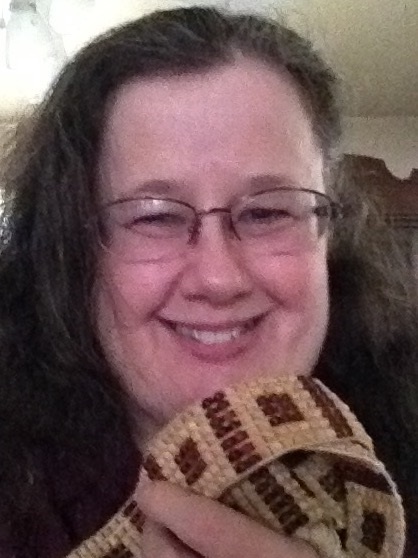
Kezia Peni Jo RennerFor more information about the Puritan Witch series please visit the  website and Facebook page. You can also follow Peni Jo Renner on Twitter.

About PENI JO RENNER: She is the author of the IPPY award-winning novel, Puritan Witch: the Redemption of Rebecca Eames. Originally from North Dakota, Peni now lives with her husband in Maryland where she is currently researching for the third book in the Puritan Chronicles series.

Posted in March 2015 | Tagged , , , | Leave a comment

Celebrating St Patrick’s Day

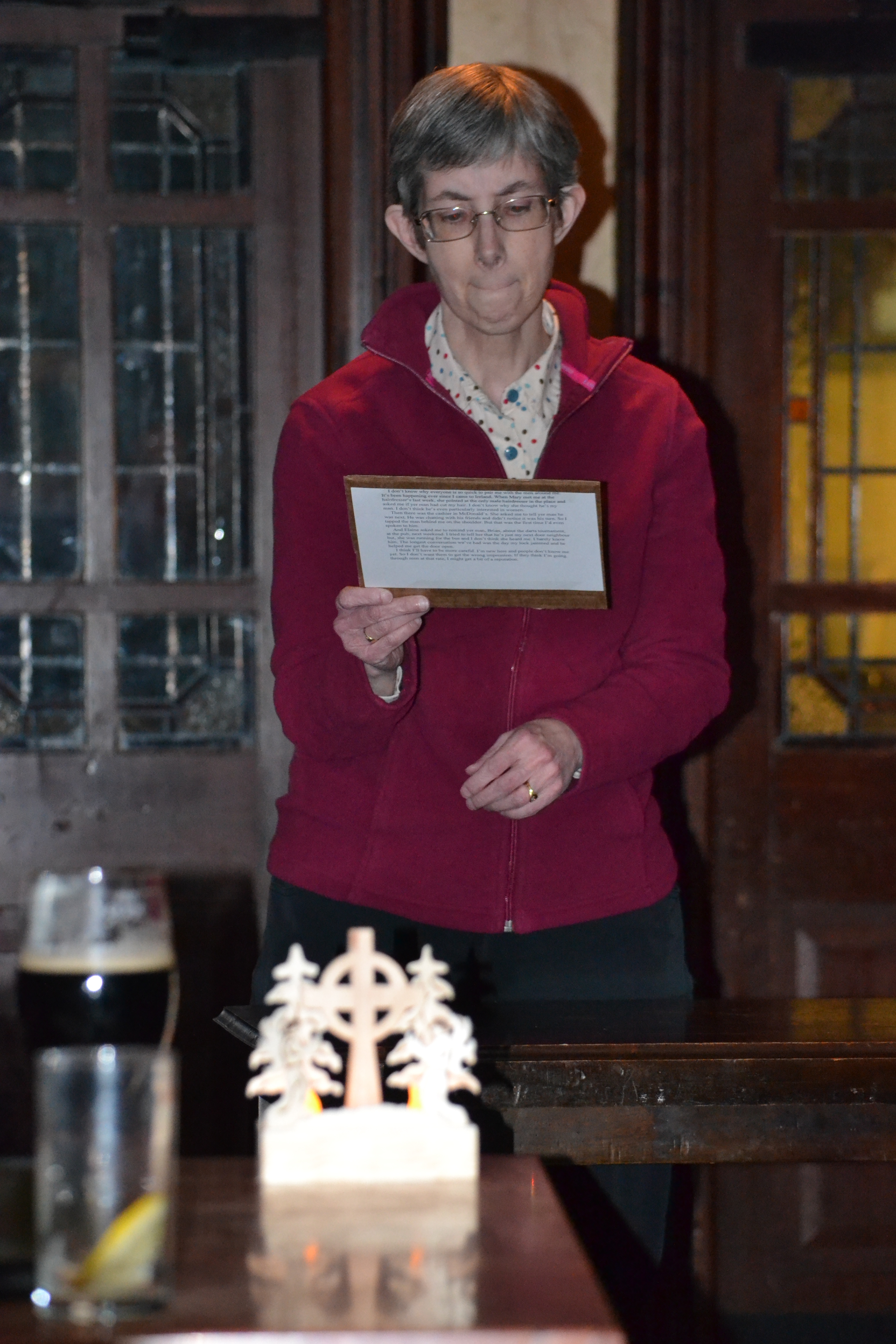
Pats DianneFermanagh Writers  celebrated St Patrick’s Day by hosting Legends, Lies, and Lore Galore in Blake’s Pub, Enniskillen on the eve of St Patrick’s Day and I was delighted to be part of it.

Since we were celebrating all things Irish I chose to read Yer Man, a short piece I’ve written about my confusion regarding Irish expressions when I first arrived in Ireland and the difficulties that this caused me.

To hear a bit more about our evening, hop over to Fermanagh Writers blog.

Posted in March 2015 | Tagged , , | Leave a comment

Bewitched By A Neopolitan Medium

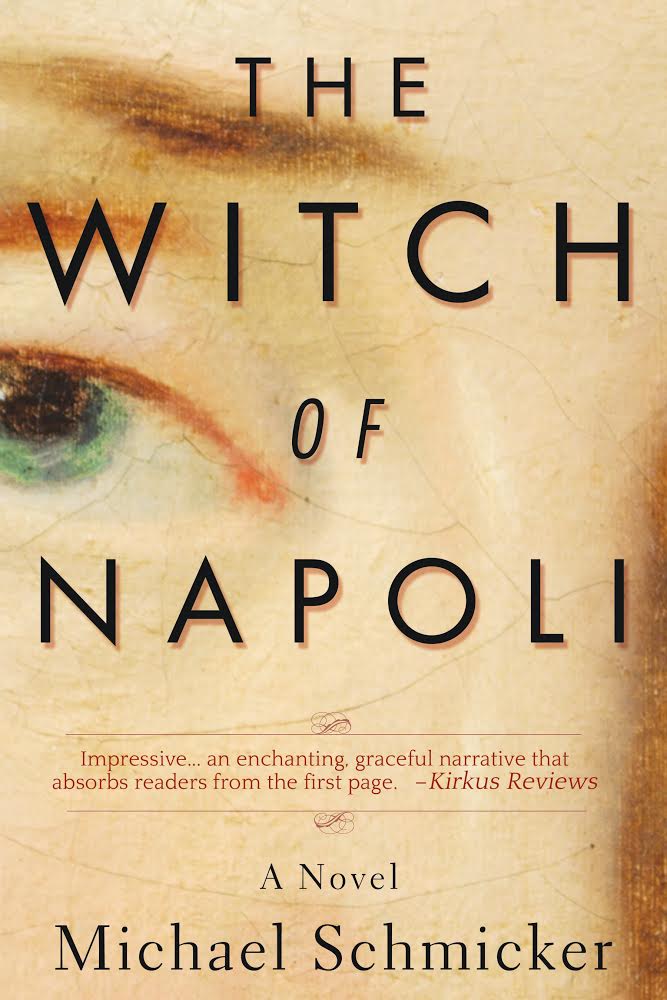
Last weekend I finished reading The Witch of Napoli by Michael Schmicker. Before I started the book, I decided that I shouldn’t spend time reading it immediately before I went outside in the evenings to work in the farmyard. I feared that I would jump at every noise and shadow. I soon found that The Witch of Napoli isn’t that type of book but it gripped me, nevertheless.

02_The Witch of Napoli CoverThis is how the publisher, Palladino Books describes the novel: “Italy 1899: Fiery-tempered, erotic medium Alessandra Poverelli levitates a table at a Spiritualist séance in Naples. A reporter photographs the miracle, and wealthy, skeptical, Jewish psychiatrist Camillo Lombardi arrives in Naples to investigate. When she materializes the ghost of his dead mother, he risks his reputation and fortune to finance a tour of the Continent, challenging the scientific and academic elite of Europe to test Alessandra’s mysterious powers. She will help him rewrite Science. His fee will help her escape her sadistic husband Pigotti and start a new life in Rome. Newspapers across Europe trumpet her Cinderella story and baffling successes, and the public demands to know – does the “Queen of Spirits” really have supernatural powers?

Nigel Huxley is convinced she’s simply another vulgar, Italian trickster. The icy, aristocratic detective for England’s Society for the Investigation of Mediums launches a plot to trap and expose her. The Vatican is quietly digging up her childhood secrets, desperate to discredit her supernatural powers; her abusive husband Pigotti is coming to kill her; and the tarot cards predict catastrophe.”

On the personal level as well as the grander historical one, the novel spins an engrossing tale. It convincingly evokes the era, early in the twentieth century, when the Western world yearned to know whether there was an afterlife, and spiritualism and the investigation of psychic phenomenon flourished. And it entertains readers as it opens a window into the personal triumphs and struggles of the main characters, Alessandra Poverelli and Tomaso Labella.

When I began the book, I expected to find myself unnerved by a chilling ghost story and was surprised to discover that the story centres around the investigation of Alessandra’s psychic powers and spends little time dwelling on events that occur during the séances. I wasn’t disappointed by this though as I became absorbed in the quest to discover whether Alessandra would be proved genuine or not.

The novel gripped me for several reasons: I was fascinated by the portrayal of the early twentieth century in Italy and England; the suspense of the trials to test Alessandra’s psychic powers kept me turning the pages and the relationships between the main characters resonated with me.

A vital part of any story that I enjoy is the connection I feel with the characters. I found it easy to empathise with these characters. Alessandra’s impoverished life with a brutal partner disturbed me and I rooted for her to break free of it. I liked the shy and resourceful Tomaso and cheered his efforts to rise in his career. There were poignant moments for both of them when relationships they cherished were wrenched from them. These incidents deepened my connection to the characters and the novel.

In summary, The Witch of Napoli has lots going for it: a good historical story as well as tales of suspense and romance. I can easily recommend the novel to readers.

Readers may learn more about Michael Schmicker by visiting his Facebook, Twitter, and Goodreads pages. The novel is available on Amazon as well as other online retailers.

03_Michael Schmicker Witch AuthorAbout Michael Schmicker: He is an investigative journalist and nationally known writer on the paranormal. He’s been a featured guest on national broadcast radio talk shows, including twice on Coast to Coast AM (560 stations in North America, with 3 million weekly listeners). He also shares his investigations through popular paranormal webcasts including Skeptiko, hosted by Alex Tsakiris; Speaking of Strange with Joshua Warren; the X-Zone, with Rob McConnell (Canada); and he even spent an hour chatting with spoon-bending celebrity Uri Geller on his program Parascience and Beyond (England). He is the co-author of The Gift, ESP: The Extraordinary Experiences of Ordinary People (St. Martin’s Press). The Witch of Napoli is his debut novel. Michael began his writing career as a crime reporter for a suburban Dow-Jones newspaper in Connecticut, and worked as a freelance reporter in Southeast Asia for three years. He has also worked as a stringer for Forbes magazine, and Op-Ed contributor to The Wall Street Journal Asia. His interest in investigating the paranormal began as a Peace Corps Volunteer in Thailand where he first encountered a non-Western culture which readily accepts the reality of ghosts and spirits, reincarnation, psychics, mediums, divination, and other persistently reported phenomena unexplainable by current Science. He lives and writes in Honolulu, Hawaii, on a mountaintop overlooking Waikiki and Diamond Head.

Posted in March 2015 | Tagged , , , , , , , | Leave a comment

So Many Books, So Little Time

Powell_Knight_Cover_Template_UK.inddHave you ever heard anyone say what’s written in the title of this post? I have – and I’ve said it myself. Booklovers have hijacked Mae West’s ‘So many men, so little time’ comment and twisted it to refer to the unending supply of books we want to read. It seems an appropriate quotation for a World Book Day post. I doubt my to-be-read pile will ever disappear. I always have something else I am dying to read. And my mind is filled with the wonderful stories I’ve already read.

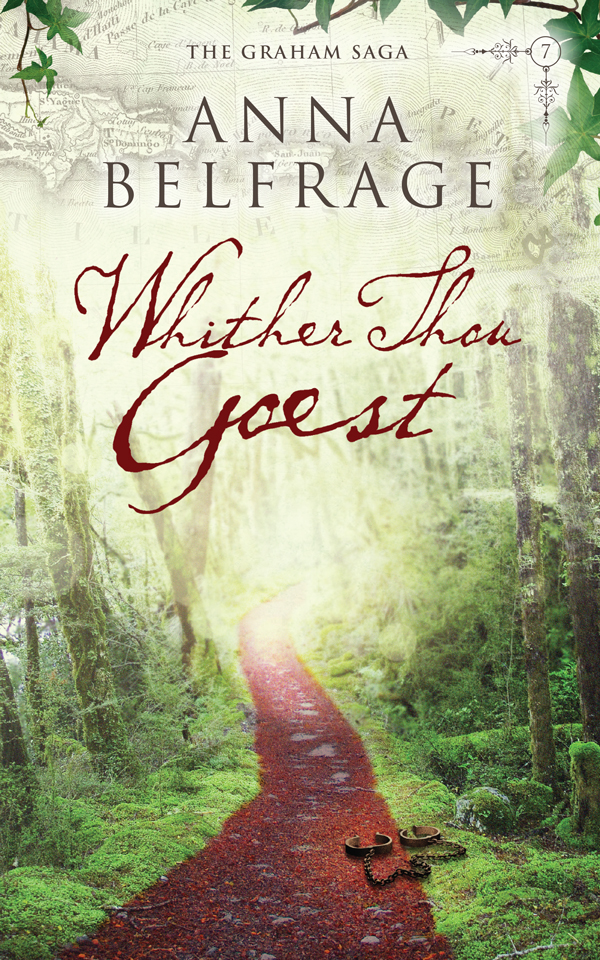
01_Whither Thou GoestIf you’re looking for something new to read on World Book Day, here’s some of the wonderful novels I’ve enjoyed recently:

The Interview by Patricia O’Reilly

Fragile Lies by Laura Elliot

The Root of the Tudor Rose by Mari Griffith

Maybe This Christmas by Sarah Morgan

Whither Thou Goest by Anna Belfrage

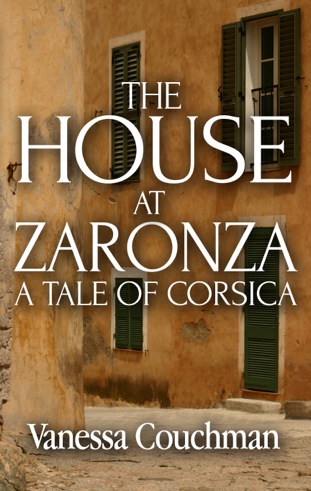
House ZaronzaThe Blood of the Fifth Knight by E M Powell

The Turn of the Tide by Margaret Skea

The House of Zaronza by Vanessa Couchman

Crack open a book and celebrate World Book Day!

Posted in March 2013 | Tagged , , , | Leave a comment

Welcoming A Memory Of Violets

In the spring of 2012 I was captivated by Hazel Gaynor’s novel, The Girl Who Came Home, a story of several Irish passengers on RMS Titanic. This month Hazel releases her second novel, A Memory Of Violets, and once again steps back into 1912, though this time the setting is London.  Since I enjoyed her first book so much I’ve invited her to join me at Ascroft, eh? to tell me more about her new release.

Welcome, Hazel. Let’s get started, shall we?

Tell us about your novel.

HG: Inspired by true events surrounding flower sellers in turn-of-the-century London, A MEMORY OF VIOLETS is a historical novel about a young woman who finds the diary of an orphaned flower seller who was separated from her sister in Victorian England, and her journey to learn the fate of the long lost sisters.

What prompted you to write about this historical event or era?

MemoryVioletPB c (2)HG: The novel was inspired by my love of Pygmalion/My Fair Lady (I played the role of Eliza Doolittle in my school musical when I was seventeen). I wanted to understand more about the real Elizas – the young women who sold flowers and watercress on the streets of Victorian and Edwardian London. I hadn’t appreciated just how many young children were selling flowers on the streets, many looking after their own siblings and becoming ‘little mothers’ themselves. I spent many years living in London and always loved the atmospheric cobbled streets of Covent Garden.

Although fiction, the book was inspired by true events surrounding a charity that was set up in the late 1800s by philanthropist, John Groom. He set out to take the orphaned, blind and physically disabled flower sellers off the streets and teach them how to make artificial flowers. Their work became widely known in London and eventually reached the attention of Queen Alexandra – great-great-grandmother to the current Queen Elizabeth II. The very first Queen Alexandra Rose Day was held in June 1912, and the charity still exists today.

How closely did you stick to the historical facts? If you used them loosely, how did you decide whether to deviate from them?

HG: Ah, the eternal historical fiction dilemma: how much history, how much fiction? Where I feel the history demands, I will always stick to the historical facts. For example, significant dates, places, the layout of London at the time, modes of transport, how people lived their day-to-day lives. It is very important to me to stick to those historical facts to lend the necessary historical authenticity to the novel. As Hilary Mantel once said, ‘I will make up the content of a man’s heart, but never the colour of his wallpaper.’

As a novelist, I obviously relish the challenge and the creative freedom to tell a story in my own way and I enjoyed developing my character of Albert Shaw who was based on the real John Groom. Rather than strictly adhering to the known facts about John Groom’s life, I also drew on other influential characters from the era, other philanthropists and social observers. I felt strongly that I wanted to create my own character, based on Groom, but who had his own conflicts, relationships and dilemmas. This allowed me more scope and depth in developing the various threads of the novel, rather than sticking strictly to the known facts.

What I have been very conscious of in writing both my novels is to not let them become a vehicle for me to insert all the fascinating things I discover in my research. Readers are far too astute to allow the author to get away with shoe-horning something ‘clever’ into a novel just because they found it interesting. At the HNS Conference in London last September, Essie Fox described this as ‘wearing your research lightly’ and I think that’s a great expression. The history should form the backbone to the novel, but be almost transparent to the reader. It is the characters and the story unfolding that should grab the readers’ attention. While it is important to be authentic, I remind myself not to be stifled by the history, but to allow myself the freedom to create the magic of a novel.

What research did you do for this book?

HG: I absolutely love the research phase of writing my novels. It really is like finding hidden treasure and I become utterly fascinated with the smallest of details: what people ate, how they dressed, the vocabulary they used, how they travelled etc. The problem is definitely knowing when to stop researching and start writing – after my initial phase of research I tend to do the two in tandem.

I usually start with that initial spark of an idea, which might come from anywhere at any time, and from there I read lots and lots of books (both non-fiction and novels) written in that era, or about the subject matter. I then use the internet to find more detailed information – newspaper reports, old video footage, photographs, locations I might visit – and when I have this broad basis of information I start to write and create my characters. With A MEMORY OF VIOLETS I visited locations and historical archives to deepen my knowledge and really immerse myself in the era. I like to have a general sense of my characters and plot before I get into the very detailed research.

Of particular help to me was the time I spent at the London Metropolitan Archives, where I gathered a vast amount of information about Groom’s Flower Homes in London, the Flower Village orphanage in Clacton on the south coast of England, and about Queen Alexandra and her Rose Day. From newspaper reports, photographs, ledgers, personal letters and other documents from the period, I developed a real sense of the era and of these young girls and women, particularly what it meant to them to have been given an opportunity to improve their circumstances. I also got a real sense of the family bond that existed between the girls and women in the homes they shared. For many, it was the first time they had experienced any sort of family life, and from this, I developed the novel’s central theme of family relationships – particularly the relationship between sisters.

From this material, and reading widely around the social history of Victorian London, I created my cast of fictional characters to fill these institutions. This is the joy of writing historical fiction – the ability to create characters and conflict and story and present all of that in the novel form, where those characters become real to the reader. I particularly enjoyed developing the main protagonists: my little flower-sellers, Florrie and Rosie; Marguerite Ingram who enjoys a contrasting life of privilege and Tilly Harper, the young woman who arrives in London to work at the Flower Homes and who ultimately connects all the threads of the story as it reaches its emotional conclusion.

Do you use a mixture of historic figures and invented characters in the novel. Which is more difficult to write?

HG: I tend to use mainly invented characters. There are definite constraints to using historic figures and I personally find them harder to write.

Which to you prefer to write and why?

HG: I prefer creating my own characters. There is a wonderful freedom in creating an entire person with a past and emotions and complexity. Whenever I do use actual people, there is always that sense of duty to portray them accurately, and I find that a little stifling. For example, when I describe the scene when Queen Alexandra drives through London on Alexandra Rose Day, I used a lot of historical records and photographs to describe her, the carriage, her daughter and the scene accurately. I enjoy this, but the novelist in me loves a blank canvas to create one of my own characters. It is fun to intermingle the two.

In an historical novel you must vividly re-create a place and people in a bygone era. How did you bring the place and people you are writing about to life?

author Hazel Gaynor

author Hazel Gaynor

HG: It is really down to research and to understanding the period so that it almost becomes second-nature to you to know how someone would speak or what social constraints would have influenced someone’s behaviour. Henry Mayhew’s work London Labour and the London Poor gives an extraordinary amount of colour and detail to the period and was particularly helpful to me in developing a sense of Victorian London. Photographic records of the era are also incredibly helpful in imagining a setting. I love drawing on the five senses to really add a sense of place – there is so much to draw from in the market and street scenes in London during the period the novel is set in. Dialogue is also important in bringing characters to life, and can be particularly helpful in portraying the social class an individual belonged to. I enjoyed switching between the different narratives in the novel to express the different characters. Weaving all the threads, time periods and storylines together was a challenge. In many ways this was a much more complex novel to write than THE GIRL WHO CAME HOME, but I think it is natural for every writer to want to stretch themselves with each new novel they write.

There often seems to be more scope in historical novels for male characters rather than female characters. Do you prefer to write one sex or the other. And, if so, why?

HG: I actually find the opposite! I am especially interested in female historical characters. Typically, women weren’t considered to be as significant as their male contemporaries, so were written out of history to some degree (mostly by predominantly male historians). It has been fascinating to see so many ‘forgotten’ women come to the forefront of historical writing in recent years. Writers like Philippa Gregory and Alison Weir have written well known historical events from a new, and fascinating, female perspective. I am naturally drawn to writing strong and interesting female characters, but I also enjoy writing in the male voice, and it was interesting to write the ‘Memoirs of Albert Shaw’ which come as an additional section at the back of A MEMORY OF VIOLETS. If pushed, I would have to say that I prefer writing female characters at the moment, but who knows what’s down the line? Perhaps there is a Heathcliff or a Robert Merivel brewing in the back of my mind!

Thanks for answering my questions so thoroughly and with such enthusiasm, Hazel. I have A Memory Of Violets on my tbr list and look forward to starting it soon.

Readers can learn more about Hazel by visiting her website and her Goodreads and Facebook pages. A Memory Of Violets is available from many retailers, including Amazon and Barnes and Noble.

Posted in February 2015 | Tagged , , , , , | 1 Comment

Historical Novel Blog Tour

This week I’m delighted to be part of the Historical Novel Blog Tour which has been running since late last year, hosted by my fellow historical fiction author, Tiffani Burnett-Velez. Every Monday the tour stops at another historical fiction author’s blog and readers have a chance to get to know them and their books. My special thanks to author, Tiffani Burnett-Velez, for inviting me to participate, and to author, Viktor Steiner for introducing me last week!

Without delay I’ll get started answering Tiffani’s questions:

Who you are, where you’re from, your writing credits.

DA-DSTH-Amazon[1]-newI’m an urban Canadian who has steadily downsized until I eventually settled into rural life in Northern Ireland. I came to the province from Canada to work for a while, and almost a quarter of a century later, I’m still here. Downsizing from life in Toronto, a bustling city; to Belfast, a smaller city; to Troon, a town in Scotland; and finally to the tranquility of a small farm in County Fermanagh was good for me. I’ve always been an avid reader and, with ever fewer social activities to distract me in my adopted home, about a decade ago I decided to try my hand at writing.

I write a mix of contemporary and historical fiction as well as the occasional magazine article. The island of Ireland has had quite an impact on me and my writing: most of my stories and articles have some connection to my adopted home. I’ve indie published an historical novel, Hitler and Mars Bars and a short story collection, Dancing Shadows, Tramping Hooves. My articles and short stories have been printed in Irish and Canadian magazines and newspapers.

What is your latest historical fiction piece?

I’m writing a novel that’s a mixture of an historical tale, a romance and a ghost story, set during World War II not far from where I live. I’m in the process of revising the manuscript and plan to have it ready for publication this summer or early autumn. The working title is An Elusive Enemy.

Why did you choose to write it?

I really love where I live so I couldn’t resist digging into the area’s history for inspiration and a story. I think one of the things that fascinates me about Northern Ireland is that many aspects of the rural way of life have changed little during the past few generations. This is a great bonus for an historical fiction writer as it’s easy to imagine what the people and the place would have been like in earlier eras. During my local history research, I came across a legend about a ghost that is reputed to have tormented a family until they finally set sail for America during the First World War. The legend captured my imagination. It was the spark I needed and my story grew as I wondered what would happen if the ghost were to reappear and wreak havoc during the Second World War.

What about that era appeals to you?

Enemy-Draft-1e[1] revisedI set the novel during World War II as it was a pivotal point in Northern Ireland’s history. The influx of Allied troops, especially the Americans, to train and prepare for deployment to the battlefront, had a major impact on the economy and society of the province. The old way of life was disrupted and challenged when confronted by incomers from an unfamiliar culture. Personal accounts I have heard and read about life during this period entertained me and set my imagination racing. How could anyone resist the novelty, excitement and spirit of such an era?

Are your characters real or fictional? If they’re real, how did you fictionalize them?

All the major characters in the novel are fictional. Sir Basil Brooke, Prime Minister of Northern Ireland, and US Army General George S. Patton, two historic figures of regional and international importance, make brief appearances – walk-on parts, you might say. Each of them appears in a single scene and I based my storyline on historic events. Biographical background reading about each of them ensured that their actions and speech were credible and, in a scene where General Patton addresses US troops at an army camp, I based what he says on a recorded morale boosting speech that he is known to have delivered to troops on his tour of US army camps throughout Northern Ireland prior to D-Day.

What kind of research is involved in writing your novel?

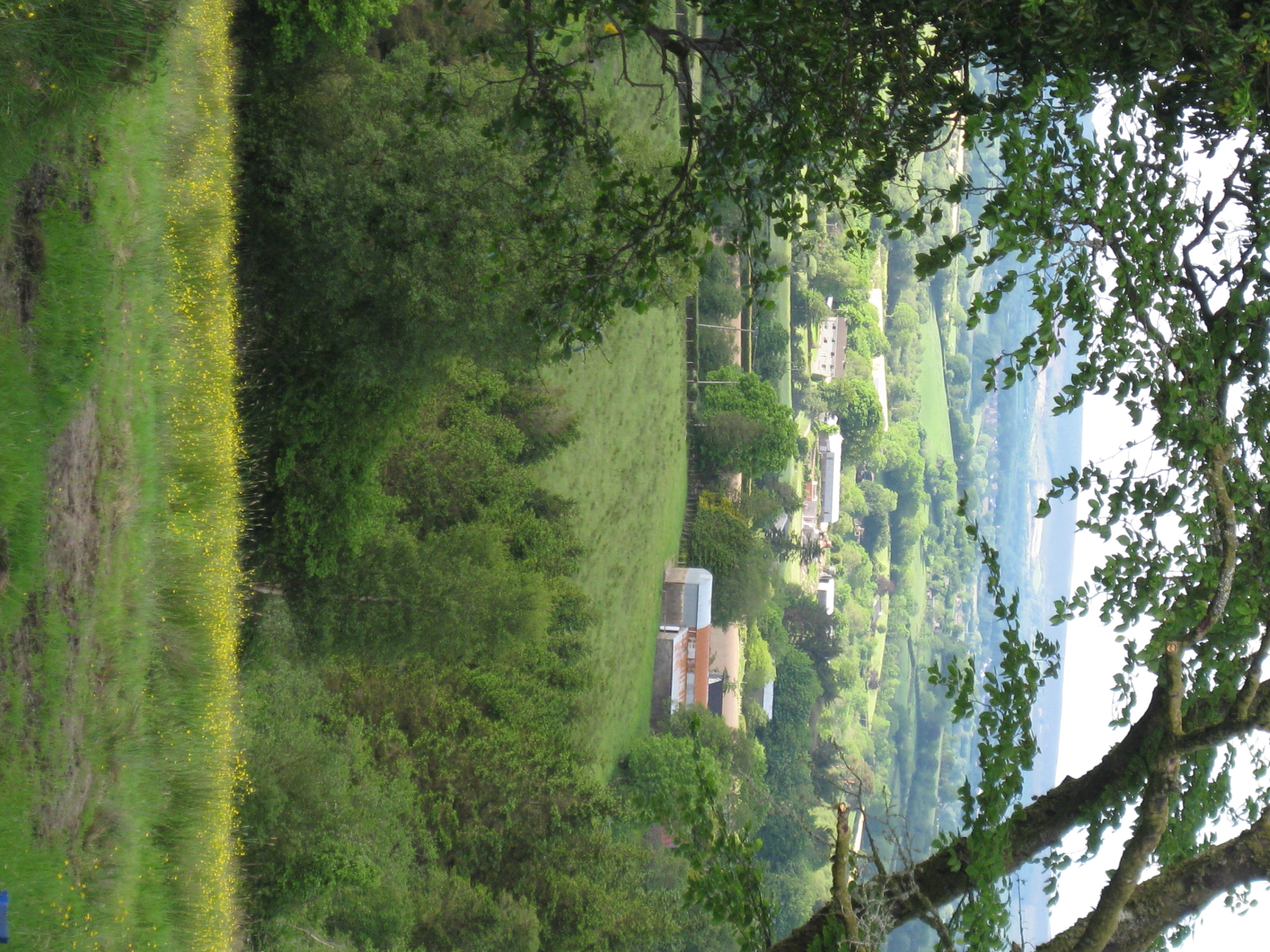
Farm distance

Rural County Fermanagh

There is a lot of information available about the Second World War so I had to sift through it to find the most relevant materials. My background reading included general history books about the period as well as regional histories and memoirs. I’ve asked people to recount their memories and trawled through countless photographs to get a flavor of the era. Visiting regional museums including Enniskillen Castle Museum, Headhunters Railway Museum and the now closed Brookeborough Bicycle Museum has also been very informative.

I am fortunate that there are several writers living near me, who specialize in local history, including John B. Cunningham, Breege McCusker, Joe O’Loughlin, Seamas Mac Annaidh and Dermot Maguire. When I get stuck as I search for information or try to verify a fact, one of them is often able to answer my question or point me in the right direction.

How do you organize the fictional aspects of your writing vs. the historical facts?

I have framed my story to fit within the timeline of historic events, focusing on the months when the 121st Infantry Division was stationed in Northern Ireland and concurrent events in the European theatre of war.

How does the historical timeline move your plot along or influence the actions of your characters?

The characters’ knowledge that the clock is ticking and the troops will soon be deployed to the battlefield is the spur that prompts them to relentlessly pursue their goals. Private Mike Keegan is desperate to defeat the ghost that torments his family and win the girl he loves before he ships out and Ellen Corrigan must overcome her father’s opposition and her own fears in order to accept Mike’s love.

How do you feel about writers taking creative license with historical facts? Or, does it bother you when facts area changed to fit the story in a movie or a book?

There are many times when there is no historical evidence available and writers must be imaginative to fill in the gaps. I have no qualms about this. When I open a novel I want to read a fleshed out story so I’m happy for a writer to use his imagination in order to create a complete world and story. But I don’t like to see accepted facts changed to suit a fictional tale. The only exception I would make to this would be if the writer could build a case that his version of events is plausible and possibly the “truth”.

What’s next for you after this present work?

I’m planning to write a series of novels set in Northern Ireland during the Second World War. The second book will continue the story of the two main characters I introduce in An Elusive Enemy. Subsequent books will be set in the same area but will introduce new characters.

I have enjoyed answering these questions that Tiffani Burnett-Velez has posed to me. Thanks for including me, Tiffani. Now it’s my turn to introduce you to next week’s host of the tour:

Vanda, an Edward Albee Fellow, and National Lambda Literary Award Finalist, was profiled in The Dramatists’ cover story, “50 To Watch.” Her play, PATIENT HM, recently won The Pride Film and Stage 2011 Women’s Work Contest. This same play was also a finalist in the Eugene O’Neill Playwriting Conference, the TRU Voices Series and the Seven Devils Conference. Original Works published her play, VILE AFFECTIONS in 2008 after a sold-out run at the International Fringe Festival. This play, now in its second edition, can be found in hard copy at amazon.com, in digital copy at Google Books and at Kindle. Another play, Why’d Ya Make Me Wear This, Joe? won Celebration Theater’s New Play Contest and was a winner in the Ashland New Plays series; it was also a finalist in the Reva Shriner, the Panowski, Play Labs, the O’Neill Conference, and the Cherry Lane Alternative Mentor Program. Vanda’s non-fiction story was published in Prairie Schooner, Sum, ’11. She is a member of The League of Professional Theatre Women, Emerging Artists Theater, The Continuum @ The Players Club and the Dramatists’ Guild. She is an Associate Professor at Metropolitan College of New York. Next Monday you can read her Historical Novel Blog Tour post on her blog: here.

Posted in February 2015, Uncategorized | Tagged , , , , , | 1 Comment