Delving Into The Blood of the Fifth Knight

I have read The Fifth Knight and its sequel, The Blood of the Fifth Knight, and loved both of them. So I’m absolutely delighted to welcome the author E. M. Powell to Ascroft, eh? to talk with me about The Blood of the Fifth Knight which was released on New Year’s Day.

Welcome E. M.! Let’s get started, shall we?

Tell us about your novel.

EMP: It’s set in England, 1176. King Henry II has imprisoned his Powell_Knight_Cover_Template_UK.inddrebellious Queen for attempting to overthrow him. But with her conspirators still at large and a failed assassination attempt on his beautiful mistress, Rosamund Clifford, the King must take action to preserve his reign. Desperate, Henry turns to the only man he trusts: a man whose skills have saved him once before. Sir Benedict Palmer answers the call, mistakenly believing that his family will remain safe while he attends to his King. As Palmer races to secure the throne for the King, neither man senses the hand of a brilliant schemer, a mystery figure loyal to Henry’s traitorous Queen who will stop at nothing to see the King defeated.

The publisher very kindly describes it as: ‘The Blood of the Fifth Knight is an intricate medieval murder mystery and a worthy follow-on to E.M. Powell’s acclaimed historical thriller The Fifth Knight.’

What prompted you to write about this historical event?

EMP: To explain this book, I need to refer to the first in the series, The Fifth Knight, which was intended as a stand-alone book. My agent said I should do a few minor re-writes to allow for the fictional hero, Sir Benedict Palmer, to be summoned back to Henry’s service once again. As The Fifth Knight became a #1 Historical Thriller on Amazon in the US, the UK and Australia, I am very glad I allowed myself to be persuaded! I then needed to find an interesting event in Henry’s life that could involve the fictional Sir Benedict. I had heard of the Fair Rosamund and was aware of the myths and legends surrounding her death. I came up with my own version.

How closely did you stick to the historical facts? If you used them loosely, how did you decide whether to deviate from them?

EMP: The entire framework for the novel is based on facts. Henry’s penance for the murder of Thomas Becket. The rebellion led by Eleanor of Aquitaine, which almost cost Henry his throne. Eleanor’s uncle, Raoul de Faye, was a real person, as was of course Rosamund Clifford. Many of the locations are real. No-one knows how Rosamund died, so that is my fictional interpretation. And of course Sir Benedict Palmer is not a real person, nor is his wife, Theodosia. Theodosia is a fictional daughter of Henry II.

What research did you do for this book?

EMP: I wish I could include a picture of the tottering pile of non-fiction books that I read! There is of course a huge list of reputable websites that I frequently consulted. I made several research trips, visiting the Tower of London, Knaresborough and other important historical sites. I also had wonderful input from a group of medieval reenactors, Historia Normannis. And I read Chrétien de Troyes’ medieval romance,Yvain: the Knight of the Lion. I had de Faye imagining himself as the hero Yvain, so I have lots of references to that legend that the reader may not even notice. I did investigate medieval sorcery quite a lot, but drew the line at inviting the Devil for tea.

Do you use a mixture of historic figures and invented characters in the novel. Which is more difficult to write? Which to you prefer to write and why?

EMP: I do have a mix. My view as a novelist is that they are all invented. Yes, we can have factual information about a person or records of what they said or did. But when I bring them to the fictional page, they are my creation. I’m putting words in their mouths, assigning action to them, breaking their hearts or stirring them to anger or desire. I can of course make a best guess from what I know from the historical record, but beyond that, it’s all up to me. I think that’s my job! All characters present their challenges, whether they or real or fictional. I have most fun with my minor characters. They can get up to all sorts without having to carry the weight of a novel.

In an historical novel you must vividly re-create a place and people in a bygone era. How did you bring the place and people you are writing about to life?

EMP: Partly through the research that I’ve mentioned. But I believe that once you nail a character, the rest follows. Also, I believe that most human experience is universal. Yes, I might not know what it’s like to have my throne at risk and neither, I suspect, do most other people. But we all laugh, cry, get angry, worry about how we will pay for our livelihoods, and love those we love. I don’t think those fundamentals change.

There often seems to be more scope in historical novels for male characters rather than female characters. Do you prefer to write one sex or the other. And, if so, why?

EMP: I enjoy writing both genders. If I have a dividing line, it’s between good and bad. I love my villains far, far more than my heroes. There’s nothing quite so satisfying as having characters do things that are outrageous. They of course get their comeuppance in the end. Which is just as much fun!

Thanks for answering my questions, E.M. It’s great to get an insight into what went into crafting the novels. Good luck with The Blood of the Fifth Knight – and I hope there will be another in the series soon!

EM PowellAbout E M Powell
: E.M. Powell is the author of medieval thriller THE FIFTH KNIGHT which was a #1 Amazon Bestseller. Born and raised in the Republic of Ireland into the family of Michael Collins (the legendary revolutionary and founder of the Irish Free State) she now lives in the north west of England with her husband and daughter and a Facebook-friendly dog. She is a member of the Historical Novel Society, International Thriller Writers and Romance Writers of America. She is a reviewer of fiction and non-fiction for the HNS. Find out more by visiting www.empowell.com. You can also connect with her on Facebook, Twitter, and Goodreads.
Posted in January 2015 | Tagged , , , , , | Leave a comment

Joni Rodgers Discusses Indie Publishing and Literary Fiction

Today Joni Rodgers is visiting Ascroft, eh?. She’s participating in a blog tour to celebrate the upcoming release of Outside the Box: Women Writing Women, a limited edition collection of literary novels featuring unlikely heroines.

Is indie publishing the new high ground for literary fiction?

Guest post by Joni Rodgers

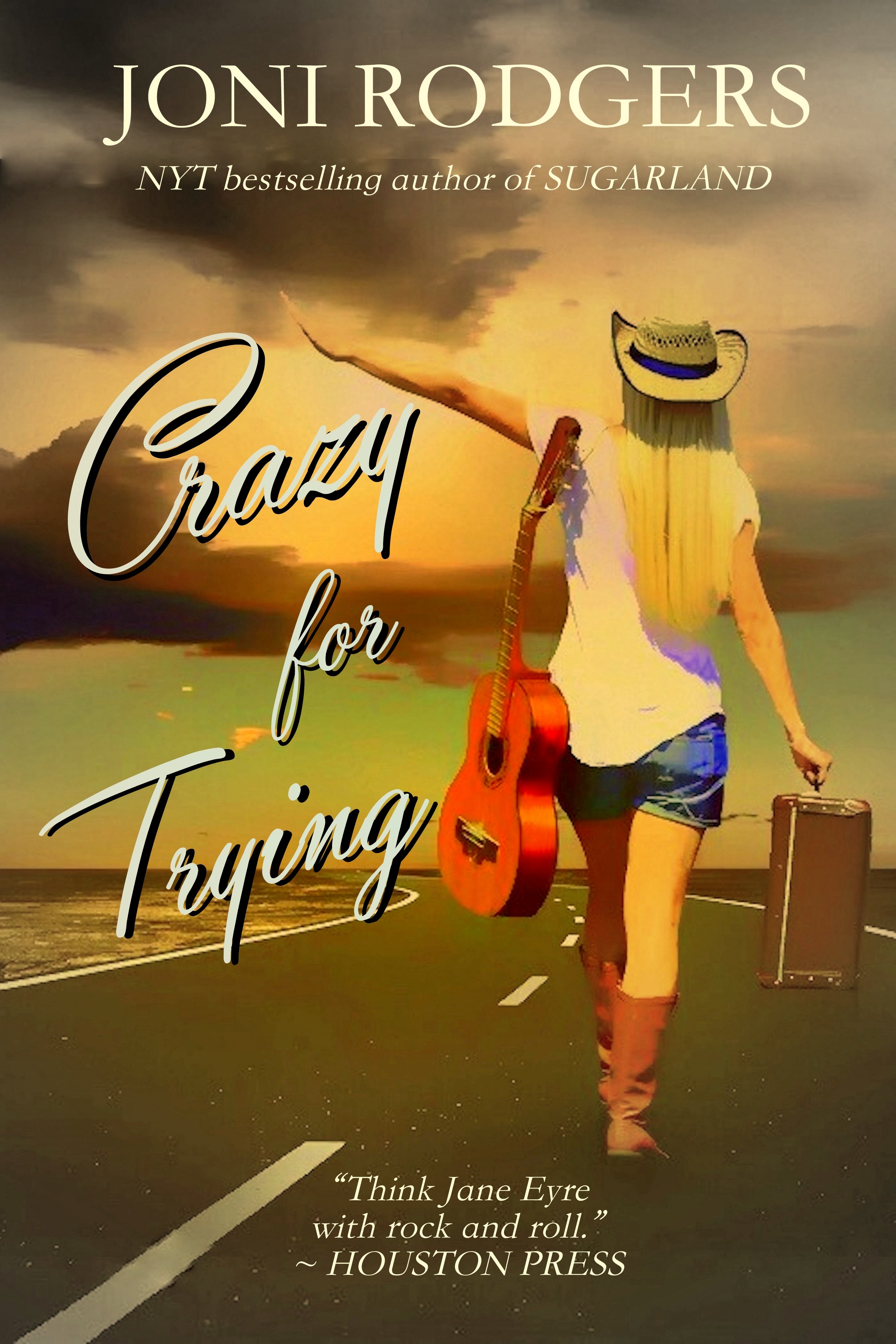
CRAZY 2015Back in the mid-1990s, when books were made of paper and self-publishing was called “vanity”, my debut novel, Crazy for Trying, was published in hardcover and paperback by a small but prestigious literary press. I felt like God had pulled my name out of a hat. The advance was small, just enough for my husband and I to take out kids to Disneyworld, but the impact on my life was huge. Now I was an author instead of a talented dabbler with a pipedream of publishing. I approached my work—and my life—differently from that moment forward.

My second novel, Sugarland, went to another small press in the USA and Bertelsmann abroad. Then HarperCollins picked up my memoir, Bald in the Land of Big Hair, which did surprisingly well in the severely shaken publishing climate of 2001. By the time HC released my third novel, The Secret Sisters, I had ghostwritten the first of several bestselling celebrity memoirs for Simon & Schuster and Random House. I was feeling pretty good about things when I sat down with my New York agent to discuss the next step, but when I said I was writing another novel, she said, “Don’t waste your time. The midlist is dead.”

For her, it was pretty cut and dried: I could make a lot more money as a ghostwriter than I could as a novelist. There would never be a shortage of celebrity book projects, while the bottleneck for literary novels was exceedingly narrow. Publishers could no longer afford to invest in midlist authors, no matter how talented. In 2005, according to BookScan, only one of the nominees for the National Book Award had sold more than 2,000 copies, and once that BookScan garrote is around an author’s neck, it’s a struggle to sell her next book.

Bottom line: if the publisher couldn’t make money off a book, neither could an agent or an author. An author may be willing to devote thousands of hours to a book purely out of love or joy or whatever it is that drives us to create, but agents and publishers quite reasonably chose to funnel the lion’s share of their resources to projects that were less risky or downright commercial no-brainers.

That was a dry word season for me. As a writer, I was working on a soul project novel I couldn’t resist writing, even though I knew the odds were against it ever seeing the light of day. As a voracious reader, I was overwhelmed with the over-editing and lack of creative risk that had come over so much of the fiction I was being fed by the marketing machine.

Then the earth moved. The ebook was born. The indie publishing revolution rewrote the balance sheet and brushed aside the crowd of people who used to stand between author and reader. Less than ten years later, we’re living in a totally new publishing universe where literary fiction is on the rise, because it’s created within the artistic values systems of authors rather than the commercial values systems of corporate publishing.

I don’t put myself out there as a publishing expert. (Is there such a thing? Seems like you’d have an easier time being an expert on something less changeable—like soap bubbles.) But I do believe my experience as a reader and a writer are a microcosm of the big publishing picture.

As an indie author, I’m back to writing for the right reasons. After twenty years in the biz, I feel quite capable in the driver’s seat, and I’m past craving the validation I’d get from a publishing contract. I’m not raking in riches, but I make more money on my backlist and new fiction than I could earn doing any day job I’m fit for. In a single BookBub promotion, my fourth literary novel reached more readers than reputable publishers had reached with my first three hardcover novels combined. Last year, I left my big New York literary agent for a talent agent in Houston; she reps me as an artist rather than repping individual books as isolated commercial endeavors, which works better for both of us.

As a reader, I’m now gobbling down raw, risky, beautifully written fiction by the likes of Orna Ross, Roz Morris, John A. A. Logan and many other talented authors who’d proven their craft chops in the old-school publishing system and were now blazing trails in the new publishing universe. Yes, undeniably, the ease of self-publishing gave rise to a “tsunami of crap,” as it’s been called, but as the tsunami recedes, I’m getting better at curating my TBR pile.

For me as a reader, 2014 was a richly rewarding year in which I discovered some truly extraordinary novels, and 2015 is already stacked with promising prospects. Off the top of my head, I’d say my reading list is now 85% indie. I still ghostwrite books for Big 5 publishers, but the majority of my writing time is devoted to the soul projects where I maintain total creative control.

And so we return to the bottom line. For me as an indie, publishing my quirky literary fiction is profitable; for a top-heavy New York publishing machine, it isn’t. The audience for literary fiction is not a commercial tour de force like the audience for genre fiction, but it is a living, breathing, hungry audience. I know because I am part of that audience.

Women-Writing-Women-Box-Set-Cover_finalJPEGThe challenge for indies—as is always has been for corporate publishers—is connecting book and reader. It’s personal. That’s why indie collections like Outside the Box: Women Writing Women work so well for both readers and authors. I love stepping aside from the noise and introducing books I can highly recommend to readers who really get it—and not everyone does. These aren’t the commercial no-brainers; they’re the thoughtful books that jump the turnstile and do all sorts of things that well-behaved books don’t do. It’s a thrill to be part of it, as an author and a reader.

Joni Rodgers

Joni Rodgers

Literary fiction was always (IMHO) better off in the hands of small presses, and indie publishing is the ultimate small press. It’s the new high ground where a novel is nurtured for all the right reasons, authors are supported for doing work that matters to a core audience, and readers are rewarded with fresh voices and great books.

Thank you for your insightful post, Joni. I hope Outside the Box: Women Writing Women will be very successful.

Joni’s novel, Crazy For Trying, is included in the collection, Outside the Box: Women Writing Women.

Posted in January 2015 | Tagged , , , , , , , | 1 Comment

A Conversation With Carol Cram

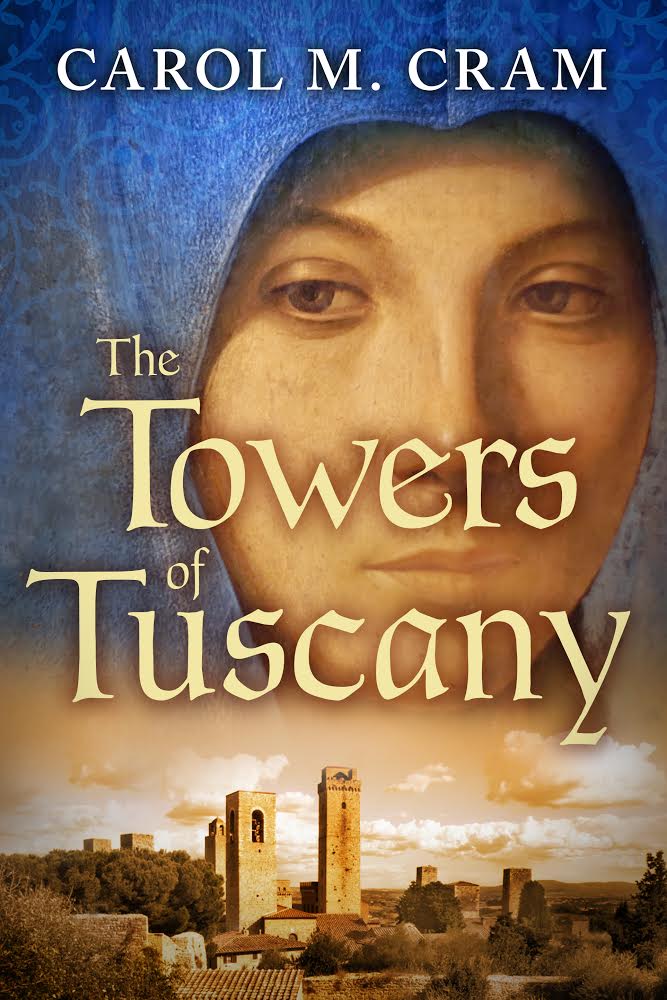
I first heard about The Towers of Tuscany when I met Carol Cram at the Historical Novel Society’s conference in London last September. Lake Union Publishing had accepted the novel and Carol was looking forward to the release of the book at the end of the year. Although the era the novel is set in isn’t a favourite of mine to read about, the premise of the story is intriguing so I’ve added it to my to-be-read pile. Meanwhile I’ve invited Carol to join me to answer a few questions about The Towers of Tuscany.

Welcome Carol. Let’s get started, shall we?

Tell us about your novel.

01_The Towers of Tuscany CoverCMC: The Towers of Tuscany tells the story of a woman artist in 14th Century Italy during a period when there were no women artists—so far as we know. The key phrase here is “so far as we know.” In the 14th Century, painting was very much a family affair. The master who ran a workshop passed his knowledge down to his sons and brothers and nephews. But what if a master had no sons or brothers or nephews? What if he had a daughter—a bright, precocious child fascinated by the tools of the painter’s trade? I contacted an expert in art of the period, the wonderful Dr. Efrat El-Hanany who later became my historical advisor on the novel, and asked her if it was plausible that a man could teach his daughter how to paint. She thought that yes, the idea was plausible. That’s all I needed to dive in and invent Sofia Barducci—a young, spirited woman who makes a very big mistake. Unlike most girls of her era, Sofia is allowed to marry the man she chooses. Unfortunately, she chooses wrong. How many women have made that mistake? Sofia’s plight, although rooted in the prejudices and customs of 14th Century Tuscany, is not so different from the plight of many women all over the world in our own time.

What prompted you to write about this historical event?

CMC: I was intrigued by the art the 14th century. Painters were struggling with perspective, experimenting with fresco and tempera (no oil paints yet!), and starting to explore non-religious themes. I wanted to dig deeper into the psyche of a 14th Century painter to reveal their passions and their struggles.

How closely did you stick to the historical facts? If you used them loosely, how did you decide whether to deviate from them?

CMC: The novel is fiction; however, I was careful to make my settings as historically accurate as possible. All references to existing paintings and frescoes, such as those by Duccio, Martini, and Lorenzetti, are correct in terms of the time period and subject matter. I also refer to the historic feud in San Gimignano between the Ardinghelli and Salvucci families; however, I invented Messer Delpino and allied him with the Salvuccis. All the descriptions of the plague are adapted from Boccaccio’s Decameron which contains one of the only eyewitness accounts of the plague to have survived. In addition, all references to laws such as the law prohibiting women from wearing men’s clothing (and men from wearing women’s clothing) are historically accurate. My intention was to never use a fact that I had not verified; however, all the events related to Sofia’s story are fictional.

What research did you do for this book?

CMC: My research consisted of many, many hours flipping through academic texts related to the period (I LOVE university libraries!) and searching out primary sources. My most-used source was Cennini’s Il Libro dell’Arte, which played a huge role in teaching me about painting practices in the 14th Century. Written in the late 14th Century by Cennino d’Andrea Cennini, Il Libro dell’Arte is an amazing handbook for painters. Cennini advises painters about all aspects of the trade—from grinding pigments to making sizing from goat’s hooves to using gold leave to build haloes. He acknowledges the need for painters to have “passion and enthusiasm” for their work. A painter in the 14th Century did not consider himself an “artist” as we would use the word. A painter was a craftsman who served a long apprenticeship to learn the skills of the trade. Painters were also businesspeople who, with their painted panels and frescoes, made important contributions to religious and secular life in the 14th Century.

In addition to reading books and poring over source materials, I spent a great deal of time just looking at reproductions of the paintings and frescoes of the period. The historical novelist can learn a great deal about the dress, customs, and physical appearance of people by studying the art. For more information about the art that influenced Sofia and The Towers of Tuscany, readers can check out the Art Guide on my Web site: http://carolcram.com/art-guide/

Over the past two decades, I’ve visited Italy several times on family trips, but in 2011 I made a solo trip to Tuscany to research The Towers of Tuscany. I spent many happy hours wandering the streets of San Gimignano and Siena, where the novel takes place. I also visited several art galleries, most memorably the Vatican Museum in Rome, the Uffizi in Florence, and the Pinoteca in Siena. In San Gimignano, I also visited San Gimignano 1300—a museum that includes a scale model of how San Gimignano looked in the year 1300. What a gift to an historical novelist! I spent an amazing morning examining the model from all angles and talking with a lovely young guide who good-humoredly answered as many of my questions as she could. Readers who visit San Gimignano should put San Gimignano 1300 high on their list of things to see: http://sangimignano1300.com/eng/index_eng.html

Do you use a mixture of historic figures and invented characters in the novel. Which is more difficult to write? Which to you prefer to write and why?

CMC: I did not include historic figures in The Towers of Tuscany. As mentioned above, I occasionally referenced an artist who actually existed, but the artist never made a physical appearance in the novel. I included historic figures in my second novel (A Woman of Note to be published in 2015), but only in supporting roles. I don’t think an historic figure is necessarily any more difficult to write than a fictional character. In some ways an historic figure is easier to write because the writer already knows what the person looked like and something about his or her personality. However, I have yet to include an historic figure in a leading role, which I’m sure would be much trickier!

In an historical novel you must vividly re-create a place and people in a bygone era. How did you bring the place and people you are writing about to life?

CMC: I visited the locations where the novel takes place and spent many hours poring over the art of the period, then in my imagination transported myself to the locations and wrote what I saw. I don’t think people’s motivations, hopes, desires, etc., have changed much over the centuries. The most important—and challenging task—is to make the characters real and believable. Sofia may have lived in the 14th Century, but she’s not so different from anyone in our own time who is consumed by a passion to produce art. What Sofia wore, ate, worshipped, etc., are all important to “get right,” but I think readers care even more about identifying with her and finding out what happens to her. That said, I love the challenge of setting a character in an historical setting and weaving in the beliefs and world views of the period.

There often seems to be more scope in historical novels for male characters rather than female characters. Do you prefer to write one sex or the other. And, if so, why?

CMC: The Towers of Tuscany is the first in a series of three novels about women in the arts. I’m intrigued by the untold stories about women, particularly women who engaged in artistic pursuits such as painting, music, and acting (the subjects of the three novels). Women may not figure large in currently recorded history, but a little bit of digging reveals just how influential women have been throughout the centuries. Well of course they have! The 21st Century didn’t invent strong and talented women. In my second novel (A Woman of Note), I tell part of the story from the point of view of a man, but the central character is a woman. Perhaps in later novels, I’ll include more male characters in central roles; it depends upon the story!

Thanks for answering my questions, Carol. I look forward to reading The Towers of Tuscany. Readers can learn more about Carol and her writing by visiting her website.

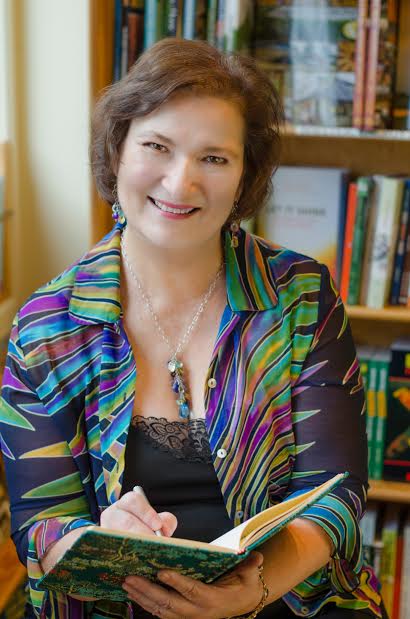
02_Carol CramAbout Carol M. Cram: She is the author of The Towers of Tuscany, an historical novel about a woman painter in fourteenth century Italy. In addition to writing fiction, Carol has enjoyed a great career as an educator, teaching at Capilano University in North Vancouver for over twenty years and authoring forty-plus bestselling textbooks on business communications and software applications for Cengage Learning. She holds an MA in Drama from the University of Toronto and an MBA from Heriot-Watt University in Edinburgh, Scotland. Carol is currently focusing as much of her attention as she can spare between walks in the woods on writing historical novels with an arts twist. She and her husband, painter Gregg Simpson, share a life on beautiful Bowen Island near Vancouver, Canada.

Posted in January 2015 | Tagged , , , | 1 Comment

New Year’s Reflections

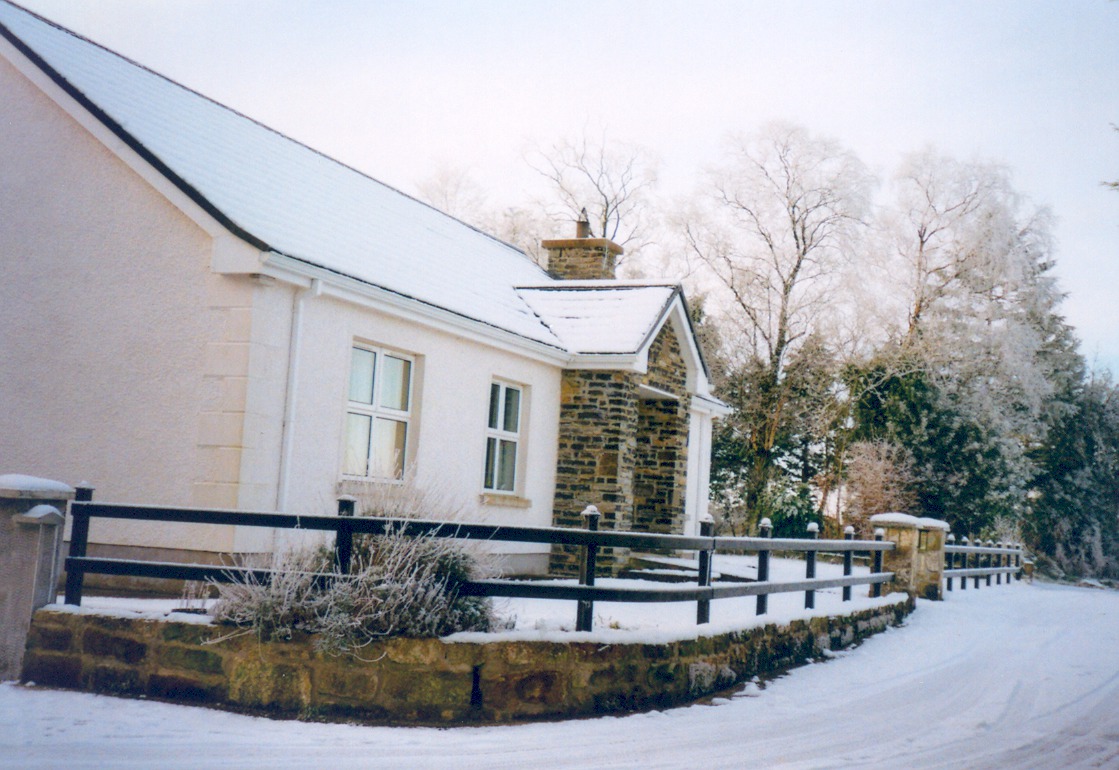
The end of a year is a time for reflection. A time to look back on winter Derrycullion-p19ab837651tltjfq730eoe164hwhat’s happened: what you accomplished or failed to do. And a time to plan for the future. Recently Bob Clary from Webucator contacted me. During November and December the organisation has been asking authors to share their thoughts on novel writing and their writing careers. Two of their trainers who love writing, but never found a way to make it their full-time occupation, had written blog posts about their struggles and these posts spurred Webucator to ask other writers about their experiences. Their goal is to provide insights into writers’ journeys in order to motivate new writers. Since I’m in the mood to reflect at this time of year, their request to share my journey was timed perfectly. I’m happy to sit in my living room, looking out on the winter landscape, and assess my writing career so far.

Here’s Webucator’s questions and my responses:

What were your goals when you started writing?

When I started writing about fifteen years ago I didn’t have any specific goals but I yearned to write fiction – short stories and eventually a novel. But first, I wanted to find out if I could write and, if I had any ability at all, I wanted to work on developing it. I signed up for a Writers Bureau course and began to learn the basics. This course encouraged new writers to produce work that is marketable. Initially, since there’s a bigger demand for non-fiction than fiction in the magazine industry, this meant that I was writing non-fiction articles. Later I moved on to writing short stories. I still remember my joy that first year when I had a non-fiction article accepted by an Irish magazine, Ireland’s Own. When I received the acceptance letter I jumped up and down with excitement in our living room. My husband and the cat both frowned and shied away from me.

What are your goals now?

pine cones-p19ab8ee7m1au1mgj1p921j5ucimI’ve written a wide variety of articles and stories over the years. I still write the occasional non-fiction article and usually have a couple short stories in progress but my focus is currently on novels. I have a concept in mind for a series of historical romance novels set during World War II. I’ve finished the first draft of Book 1 and am revising it. I hope to see it released in 2015 then I will get to work on the next book in the series.

What pays the bills now?

A mundane office job has always paid the bills. Earnings from my non-fiction articles and short stories, published in magazines and newspapers, have provided some extras but were never my main source of income. I’ve gone the Indie publishing route with my longer works. During the past six years I’ve released an historical novel, a contemporary short story collection and two collections of my magazine articles as ebooks on Amazon. Profits from their sales, as well as yearly Public Lending Rights payments from the library system for borrows of the novel, provide sporadic income but not enough to allow me to quit my day job. Ideally I’d love to turn my writing into my main career but, for me like many other writers, that’s not been possible. I’m glad that I have earnings from my writing but I don’t have unrealistic expectations that it will make me rich one day – though I do dream once in a while.

Assuming writing doesn’t pay the bills, what motivates you to keep writing?

pine cones-p19ab8ee7m1au1mgj1p921j5ucimWriting books that I’m proud of and readers enjoy is most important to me. I get excited about the stories going around in my head and want to get them on paper so others can enjoy them too. Launching a book I’ve written gives me a sense of accomplishment.

I guess I’m an optimist as I haven’t given up hope that my income from my writing will eventually increase – maybe once the books in my new series are released. If they sell well and I can quit the day job – fantastic! I’ll be delighted. But if I’m still not earning enough to pay the bills I won’t be devastated. And it won’t keep me from writing. Money isn’t the most important motivator for me.

What advice would you give young authors hoping to make a career out of writing?

If they want to earn a living from writing I would say to them: Don’t give up your day job until you are earning enough from your writing to support yourself. Be passionate about your writing but be realistic about the business side of it. At the same time, if the financial aspect isn’t your priority then write want to write, make it the best it can be and enjoy seeing your work in print. The publishing industry has changed drastically in the last decade. At one time it was an incredible struggle to even get your book into print and most published writers couldn’t live on their royalties alone. With the advent of indie publishing, writers have a choice of the traditional or indie route or even a mixture of both. With the indie route, you can have the satisfaction of seeing your work in print and know that it’s out there for others to enjoy. That, in itself, is rewarding. And, if your work proves popular, you may also earn a good income.

Thanks for asking me to answer your questions, Bob. Hopefully my answers will help new writers. It’s also been beneficial for me to look at where I’ve come from and where I’m going – and why.

pine cones-p19ab8ee7m1au1mgj1p921j5ucimSince today is the last day of 2014 and I’m reflecting, I can say that I’m satisfied, even pleased, with my accomplishments over the past year as well as the path my writing career has taken since I wrote that first article fifteen years ago. For the last three years I’ve been working with a polio survivor to write his memoir. During the summer we completed the project and in early December we launched the print edition of Against All Odds. I also contributed to and co-edited Fermanagh Miscellany 2015, the ninth edition of an annual Fermanagh history publication.

With those books completed and released, I have cleared the slate and can devote my energy in the coming year to the first book in the historical romance series which I started writing in April. For the next few months my focus will be on the craft, rather than the business, side of writing. For me 2015 is the year when I step back in time to the Second World War and see where that road leads me.

I hope 2015 leads you in the directions you want to go. It’s a few hours early but I want to wish my family, friends, fellow writers and readers a Happy New Year!

Rocket winter-p19ab8vfvkgvg1afp3gq1m4lrcr

Posted in December 2014 | Tagged , , , , | Leave a comment

Wishing You Light, Love and A Bright New Year

night christmas treeThis year I’ve noticed fewer external Christmas lights on houses and gardens in County Fermanagh than in previous years. I don’t know whether people are trying to be more frugal and keep the cost of their energy bills down or whether there’s another explanation for it. For a few years there was an increasing number of houses decorated with external lights and I welcomed the trend because it was cheery and reminded me of my childhood Christmases.

candles 3I’ve always loved to walk past houses lit up for the holiday season. Where I grew up in Toronto nearly every house on our street was ablaze with holiday decorations. My family had wreaths, with candles set in them, hanging in our two front windows; their flames glowed red and welcoming as I returned home each evening. Some houses had multi-coloured flashing extravaganzas, others glittering white lights like brilliant snowflakes and still others, my favourites, tranquil blue ones that had the power to mesmerise me. I loved the sense of peace they radiated. When I gazed at them I would forget that I lived in a bustling city. Especially after a fresh fall of snow, they made me feel as if I was alone in a dormant, untouched landscape.

I don’t know why I’m thinking about Christmas lights as I write this post. Maybe the idea lodged in my mind because Writers Abroad, an online writers’ group I belong to, is considering Light as the theme for their next anthology. Or maybe it is just that I miss being surrounded by neighbours who dazzle the world with their luminary displays.

candle 2Whatever the reason, this Christmas I’ve been thinking about light. It features in many religious festivals around the world and has many meanings, including a symbol of the divine, of rebirth and of hope.

Last Sunday was the shortest day of the year and at this, the darkest time of the year, I’m I’m not the only person who thinks we need something to dispel the gloom. Light provides warmth and cheer and I like the fact that it symbolises rebirth and hope. As this year ends and a new one approaches, whether the past year has been a good one or not, there’s the expectation of something better to come. Light’s ability to pierce the darkness is an encouraging reminder of this.

cabin fireOn these dark evenings, as I walk around our farmyard with a torch to keep me from falling into the water trough or over the tractor, I look up at the stars and am awed by their delicate twinkling. And when I step into the house I smile when I see red, green and blue sparkling and fading in sequence on our Christmas tree and the glow of blue lights nestled on the mantelpiece. All of this makes me warm and happy. I’m enjoying the season and looking forward to the New Year.

I would like to take this opportunity to wish my family, friends and readers a holiday season filled with light and love and anticipation of a bright New Year.

Christmas fire

Posted in December 2014 | Tagged , , , , , | 1 Comment

A Welcome Return Of Neve & Egan

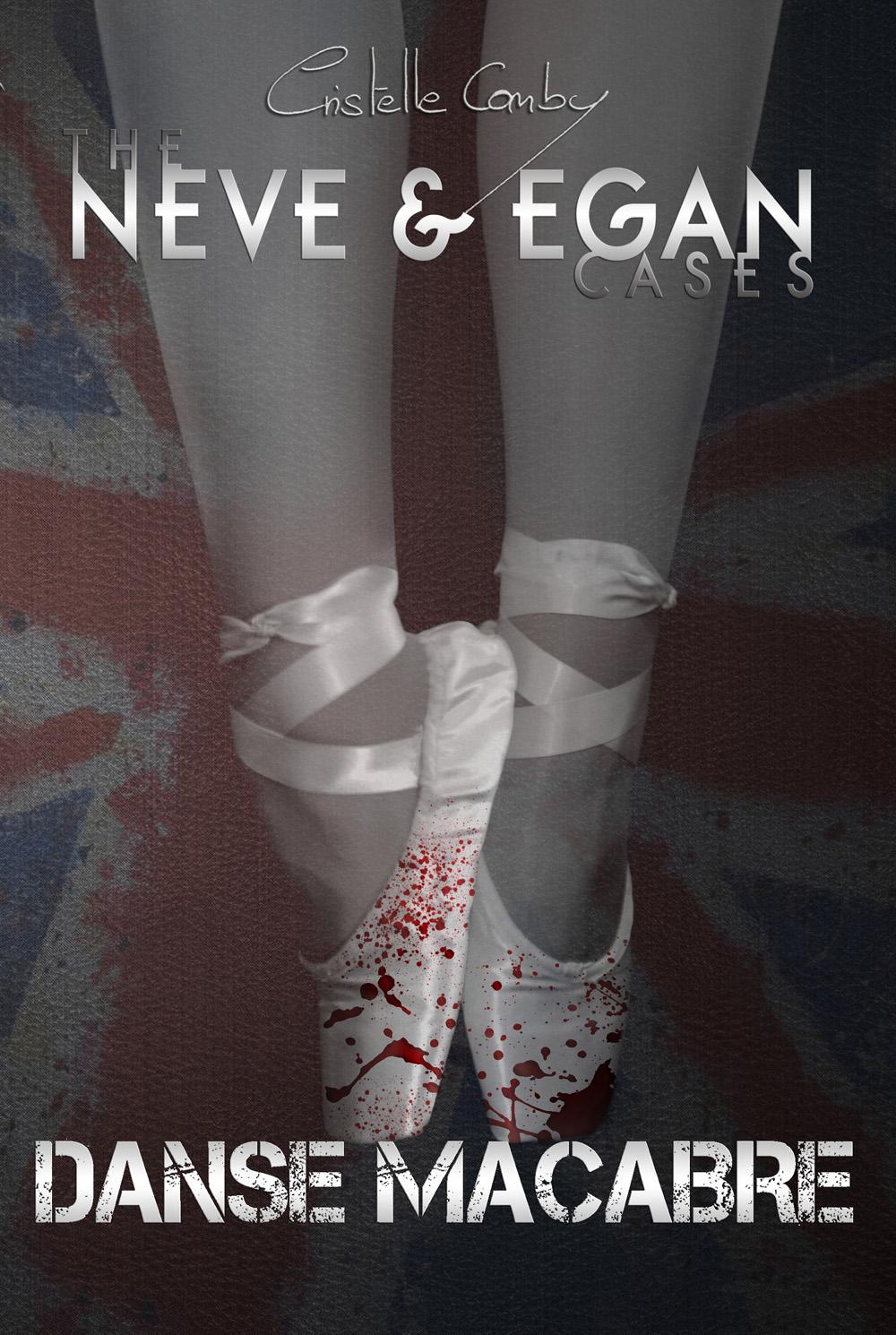
Last weekend I finished reading Danse Macabre, the third novel in the Neve & Egan crime novels series. The author, Cristelle Comby is on a blog tour and I received a complimentary copy in exchange for an honest review. I’ve also read Russian Dolls and Ruby Heart, the previous books in the series, and reviewed the latter in December 2013. I enjoyed the previous novels’ upbeat, humorous approach to crime fiction so when I started the latest book I knew what to expect and was looking forward to it.

Dance Macabre coverHere’s how the author describes Danse Macabre: “Private investigators Alexandra Neve and Ashford Egan are hired to succeed where the police have failed, to safely return home a missing ballerina. With no lead to pursue and no idea who could be behind the young woman’s kidnapping, they soon find themselves at a loss as to what to do.

To make matters worse, the heart of England seems to be caught in the middle of a little Ice Age. With snow endlessly falling and Tube lines either too cramped up to use or out of service, it is a pain to do any legwork in the huge metropolis.

Oh, and because trouble never comes alone, there may also be a serial killer on the loose in the streets of East London…”

The novel is aimed at the new adult market but, with its skilful use of humour, it sits well in the cosy mystery genre too. It has that upbeat feel to it and, even in the most gripping moments of the story, undercurrents of humour run through it. It isn’t sugar coated though. The gruesome details of the crimes are not glossed over but the author doesn’t dwell on them either. They provide a sense of reality to the story without overwhelming the reader.

The plot incorporates expected elements of the murder mystery while throwing in a couple unique twists, including the killer’s motivation for his crimes. Some developments in the storyline I saw coming but not all of them. But that wasn’t important as the increasing tension as the pair of private investigators got closer to solving the case kept me reading. When I was satisfied that everything had been neatly tied up at the end of the story I was surprised by the twist that brings about the cliffhanger ending. Generally I’m not a fan of such endings but, since I want to know what happens next, I’ll forgive the author as long as she releases the next book soon.

For me, the essence of these novels is the relationship between the main characters and their development from bumbling amateurs to professional investigators. Each story is told convincingly from Lexa’s point of view. She’s a young, spirited woman who is learning and maturing with each case she encounters. Her business partner, Ash, is older and more guarded about his thoughts and feelings than his vibrant partner but he is slowly revealing the depths of his character. With each snippet that he divulges, I want to know more. Lexa and Ash are each quirky in their own ways and form a strong partnership. I like the way they are gaining skill and confidence as investigators with each new case they tackle. The author depicts their tender yet respectful relationship through their subtle verbal and physical communication, using a minimum of dialogue. Detective Stenson, who is their ally and Lexa’s love interest, is the right balance of a man with a maverick streak and a tough cop. He is often the catalyst that gives the investigative duo access to information and evidence to help them solve cases. There are stereotypical elements to several of his police colleagues but, as minor characters, the way they are depicted fits the genre of the story.

Like the previous books in the series, Danse Macabre has a witty and feel good element that enervates the novel. Despite the grisly subject matter, it left me feeling uplifted. The novel is written in a simple but effective style. Since English isn’t her native tongue, I am impressed with the author’s command of the language. My one criticism of the novel relates to the prologue: I didn’t think it was necessary as the author fills in any background information that readers who have not read the previous books in the series will need as the story unfolds.

I see this novel as one that will appeal to a wider audience than the new adult market it is aimed at. Readers who enjoy cosy mysteries as well as general readers will also enjoy this story.

To learn more about Cristelle Comby and Dance Macabre visit her webpage and Goodreads page and the book’s Amazon page.

About Cristelle Comby:

Cristelle CombyCristelle was born and raised in the French-speaking area of Switzerland, in Greater Geneva, where she still resides. Thanks to her insatiable thirst for American and British action films and television dramas, her English is fluent. She attributes to her origins her ever-peaceful nature and her undying love for chocolate. She has a passion for art, which also includes an interest in drawing and acting.

Danse Macabre is her third new-adult novel, and she’s hard at work on the next titles in the Neve & Egan series.

Posted in December 2014 | Tagged , , , , , , | 3 Comments

Chatting With Laura Joh Rowland

Today we’re stepping out of historical Britain and Ireland, the places I always gravitate to, in order to explore Japan during the early 1700s. I’ve invited Laura Joh Rowland, author of The Iris Fan to visit Ascroft, eh? to answer some questions about her most recent novel.

Welcome Laura. Let’s get started, shall we?

Tell us about your novel.

02_The Iris Fan CoverLR: The Iris Fan is the conclusion to my series of thrillers set in feudal Japan.  Amid the ever-treacherous intrigue in the shogun’s court, Sano Ichirō has been demoted from chamberlain to a lowly patrol guard.  Then a horrific crime takes place:  The shogun is stabbed with a fan made of painted silk and sharp-pointed iron ribs.  Sano is restored to the rank of chief investigator to find the culprit.  He becomes enmeshed in the most dangerous investigation of his life, at the center of warring forces that threaten not only his own family but the fate of his entire world.

What prompted you to write about this historical event?

LR: The Iris Fan was inspired by a real-life rumor that the shogun was murdered.  The official cause of death was measles (there was a raging epidemic at the time), but I thought the rumored version was far more interesting.  I wanted to show a “behind-the-scenes” view of what could have happened and the consequences of the shogun’s murder.

How closely did you stick to the historical facts? If you used them loosely, how did you decide whether to deviate from them?

LR: I try to stick closely to the realities of the period, including customs, class structure, and the position of women in society.  I think that’s crucial to respecting Japanese culture as well as establishing a sense of verisimilitude for my readers.  But I take big liberties with the details.  My book is fiction, and most of the events in it never happened.  If I have to choose between absolute historical accuracy and a good story, I’ll pick the good story, because that’s ultimately what readers of mystery fiction want, not a dissertation.

What research did you do for this book?

LR: I’ve been on a 20-year, self-taught crash course on Japanese history, religion, art, literature, and everything else related to the culture.  That includes studying books, movies, paintings, websites, and YouTube videos.

Do you use a mixture of historic figures and invented characters in the novel?  Which is more difficult to write? Which to you prefer to write and why?

LR: Some of the characters are based on real historic people—the shogun, Chamberlain Yanagisawa, and Lord Ienobu.  In some ways it’s easier to write about real people because they come with a ready-made biography.  But it’s tricky to flesh them out and incorporate them into a novel without distorting them too much.  Sano and Reiko, their children, Hirata and his family are fictional.  I had to make them up from scratch, but I like having the freedom to make them whatever I want, within the parameters of their society.  Overall, I prefer invented characters, and my real historic characters are heavily fictionalized.

In an historical novel you must vividly re-create a place and people in a bygone era. How did you bring the place and people you are writing about to life?

LR: I give my characters wants, needs, and emotions that are timeless and universal—they’re as old as the human race and will probably never change.  Power, fame, fortune, a happy home, and a secure future for one’s children.  Love, hate, fear.  Those are things readers can understand.  There are also physical phenomena that are the same now in the United States as in feudal Japan:  the beauty of springtime, the sound of ocean waves, and the smell of a rotting corpse.  I use these details to create a sense of place.

There often seems to be more scope in historical novels for male characters rather than female characters. Do you prefer to write one sex or the other, and, if so, why?

LR: I find it easier and more personal to write about my own sex.  I “get” women in a way that I don’t naturally “get” men, and I have more in common with my female characters.  Sano’s wife Reiko has to be an unconventional woman who steps outside the bounds of her society, or she would be stuck at home instead of solving crimes.  But I’ve had a great time writing about Sano, Yanagisawa, Hirata, and my other guys.  I think that after living in their heads for so long, I understand men better.  You might say they made a man out of me!

Thanks for answering my questions, Laura. It’s quite an achievement to produce an eighteen book series. Sano and his cronies have obviously garnered fans as the series progressed. Congratulations and good luck with this last novel.

For more information about the novels and Laura please visit her website. You can also follow her on Facebook.

03_Laura Joh RowlandAbout Laura Joh Rowland: Granddaughter of Chinese and Korean immigrants, Laura grew up in Michigan where she graduated with a B.S. in microbiology and a Master of Public Health at the University of Michigan. She is the author of seventeen previous Sano Ichiro thrillers set in feudal Japan. The Fire Kimono was named one of the Wall Street Journal’s “Five Best Historical Mystery Novels”; and The Snow Empress and The Cloud Pavilion were among Publishers Weekly’s Best Mysteries of the Year. She currently lives in New Orleans with her husband. She has worked as a chemist, microbiologist, sanitary inspector and quality engineer.

Posted in December 2014 | Tagged , , , , , | Leave a comment

Engrossed In The Graham Saga Once Again

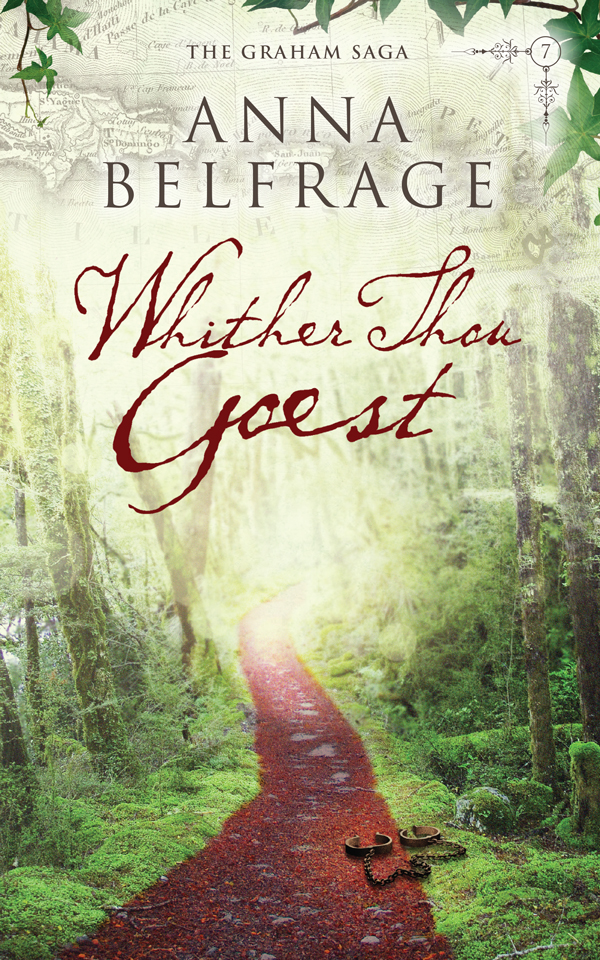
This must be a record for me: reading three books in the same series within less than a year. For several years I’ve been following Diana Gabaldon’s Outlander series but I don’t often get through even two of the books in a year. I dip in and out of them when I’m in the mood. This year I received copies of the Graham Saga novels as they were released in exchange for honest reviews. I started reading and just kept going. Whither Thou Goest by Anna Belfrage, who is on a Historical Fiction Virtual Blog Tour with the book, is number 7 in an eight book timeslip historical fiction series set in the seventeenth century. I reviewed Book 5, Serpents in the Garden, in April and Book 6, Revenge and Retribution, in September. I enjoyed books 5 and 6 so I had no qualms about reviewing the next book too.

01_Whither Thou GoestThis is how the publisher, SilverWood Books describes the novel: “Whither Thou Goest is the seventh book in Anna Belfrage’s series featuring time traveller Alexandra Lind and her seventeenth century husband, Matthew Graham.

In their rural home in the Colony of Maryland, Matthew and Alex Graham are still recovering from the awful events of the previous years when Luke Graham, Matthew’s estranged brother, asks them for a favour.

Alex has no problems whatsoever ignoring Luke’s sad plea for help. In her opinion Matthew’s brother is an evil excuse of a man who deserves whatever nasty stuff fate throws at him. Except, as Matthew points out, Luke is begging them to save his son – his misled Charlie, one of the Monmouth rebels – and can Charlie Graham be held responsible for his father’s ill deeds?

So off they go on yet another adventure, this time to the West Indies to find a young man neither of them knows but who faces imminent death on a sugar plantation, condemned to slavery for treason. The journey is hazardous and along the way Alex comes face to face with a most disturbing ghost from her previous life, a man she would much have preferred never to have met.

Time is running out for Charlie Graham, Matthew is haunted by reawakened memories of his days as an indentured servant, and then there’s the eerie Mr Brown, Charlie’s new owner, who will do anything to keep his secrets safe, anything at all.

Will Matthew deliver his nephew from imminent death? And will they ever make it back home?”

I’m sure to repeat myself in this review as everything I’ve said about previous books in the series holds true about this one. It is a well written, engaging story that allowed me to escape into an earlier century and live in that world for a while. I wouldn’t want to find myself trapped in the seventeenth century as one of the main characters, Alex, has done but I loved slipping into it to follow the Grahams’ story.

Once again the plot moves along at an enervating pace, blending the events in each character’s life to paint the overall picture. In this book the task Matthew and Alex undertake is the focus of the story but events affecting other members of the Graham clan are not ignored either. There’s more than enough happening to keep the reader’s attention.

I enjoy the diverse settings that I find in these novels. We began this story in the familiar setting of the Grahams’ homestead and eventually arrived on an exotic Caribbean island that wasn’t paradise for some of its inhabitants. The author vividly depicts the wonders and the horrors of each place included in the story.

While we encountered old and new characters throughout the story, Matthew and Alex dominated this book. After three novels, I still find them believable, engaging characters who are each a product of the era they were born into. I don’t always like everything that Matthew does but I believe a man from his era would behave as he does. I especially enjoyed watching the couple’s relationship deepen as the years pass, despite the many trials they have faced. In this novel, Alex’s brother-in-law, Simon Melville, redeemed himself in my eyes after his selfish actions in the previous book. I was also touched by the relationship between Ruth and Father Munoz.

I can honestly recommend this book to anyone who enjoys historical fiction, timeslip stories or just a good tale.

Each of the books in the series can be read as standalone novels but now that I’m three books into the series I know I will have to continue reading. So it’s just as well that Book 8, To Catch A Falling Star, will be released next March.

For more information, please visit Anna Belfrage’s website and blog. You can also find her on Facebook, Twitter, and Goodreads.

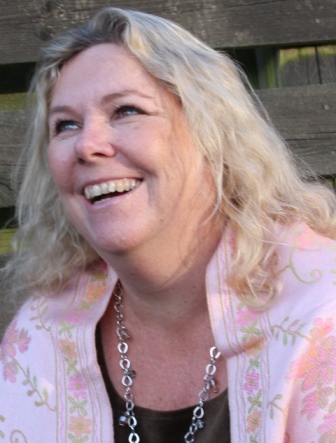
About Anna Belfrage: Anna was raised abroad, on a pungent mix 03_Anna Belfrageof Latin American culture, English history and Swedish traditions. As a result she is multilingual and most of her reading is historical – both non-fiction and fiction.

She was always going to be a writer – or a historian, preferably both. Instead she ended up with a degree in Business and Finance, with very little time to spare for her most favourite pursuit. Still, one does as one must, and in between juggling a challenging career she raised her four children on a potent combination of invented stories, historical debates and masses of good food and homemade cakes. They seem to thrive … Nowadays she spends most of her spare time at her writing desk. The children are half grown, the house is at times eerily silent and she slips away into her imaginary world, with her imaginary characters. Every now and then the one and only man in her life pops his head in to ensure she’s still there. She was always going to be a writer. Now she is – she has achieved her dream.

Posted in December 2014 | Tagged , , , , | Leave a comment

Celebrating Against All Odds

When I think of book launches my mind conjures up a scene in the middle of a bookshop after closing time, filled with writers and publishing industry professionals, wandering around chatting with each other, glasses of wine in hand. The author who is launching the book likely knows many of the guests but they would have been invited to attend because of their status in the genre or in the publishing world, rather than their connection to the author. Although these events are often entertaining and beneficial for author and guests alike, they have a rather formal air about them.

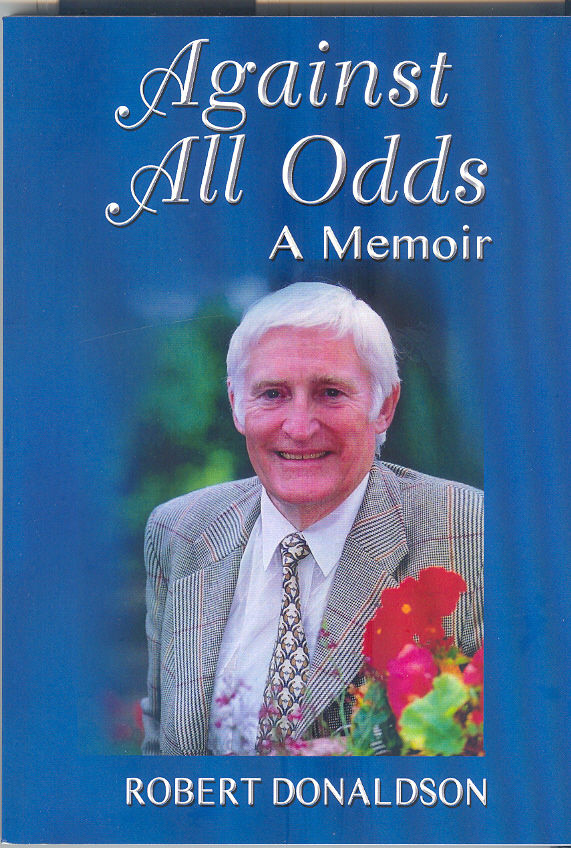
RD cover 1On Tuesday evening I attended a different sort of book launch. Everyone was well dressed and there was wine flowing and nibbles to be had but it just had a different feel to it. The book being launched, Against All Odds, is a memoir by Robert Donaldson, a polio survivor who has gone on to lead a full, active life despite disability resulting from his illness. Over the past three years I have worked with Robert to record his memories and get it all down on paper.

The launch was held in the local library. When I arrived just before the official starting time to help with any last minute arrangements that needed to be sorted out before the guests arrived, I was amazed to find that the room was already half full and buzzing with talk and laughter. People were flocking in and Robert was busy signing copies of the book near the door. I joined him to play cashier for the evening. As I listened to snatches of conversation it became apparent that the guests were Robert’s friends, family, work colleagues and people he had met through the organisations and industries he has been involved in. Some of them featured in the book and it was delightful to meet them in person after hearing tales about them and committing them to paper. Many of the people I met had stories to tell about Robert and all of them were effusive in their praise of him. And everyone was enthusiastic about the book. As I collected the money for book sales I heard Robert chatting with everyone from breeders of champion race horses to hospital porters. The conversations were lively and warm. It was obvious these people liked the author and many admired him too. The launch was a celebration of contacts and friendships made throughout a lifetime as well as the release of the book. I was pleased to be a part of it.

The book launch was held for the many people who know Robert to join in celebrating with him. It was a local affair but I think the book itself will have a wider appeal than only his circle of friends and family. His experiences and how he has coped with, and sometimes overcome, the limitations of his disability will resonate with readers. So will his enthusiasm for life.

To give you an idea of what I’m talking about, here’s the blurb from the back cover of the book:

When he was five years old polio changed Robert Donaldson’s life forever. After spending much of his childhood in Musgrave Park Orthopaedic Hospital – and only to be permanently discharged in his late teens – his doctor predicted that he would spend the rest of his life in a wheelchair. However, his disability was never going to defeat him. Sheer determination and an unshakeable belief in himself, propelled Robert from the confines of a wheelchair onto his feet and to greater accomplishments. While he still has physical limitations, he does what he can to the best of his ability. When he was asked once why he strives to excel and pursues his passions with gusto he replied, “Because I can.”

Robert became a successful businessman who brought many snooker greats, including Alex Higgins, Dennis Taylor and Stephen Hendry, to County Fermanagh. For a quarter of a century, as Chairman of NIACTA, he spearheaded the development of the Gaming industry within Northern Ireland. A skilled angler, he was a member of the Irish team in the 1991 World Sea Angling Championships. In his professional life, he was the first DUP councillor to sit on Fermanagh District Council. Passionate about horses, he was the first horse breeder on the island of Ireland to raise the rare equine breeds Falabella horses and Sardinian donkeys. A man of many talents, he never forgot the care he received as a child and served for many years as a volunteer in both the Red Cross and the National Hospital Service Reserve.  

In this warm, frank, humorous memoir Robert recounts how he has lived his life to the fullest Against All Odds.

The paperback edition is being available in shops in Enniskillen and the ebook version will be available soon.


Posted in December 2014 | Tagged , , , | Leave a comment

Tempted Into The Medieval World

One of the ways that I find out about new historical fiction releases is through the Historical Fiction Virtual Tours blog. I often read and review the novels of authors who are on blog tours with them and I discover some wonderful books this way. One of the books they have recently alerted me to won’t be released until 1st January – but I got a sneak peak and I really enjoyed it. I’ve already posted a review on Amazon UK and, since I enjoyed the book so much, I’m also posting my review here:

Blood Fifth Knight coverI was delighted to receive an advance copy of The Blood of the Fifth Knight in exchange for an honest review of the book. Since I thoroughly enjoyed the first book in the series, The Fifth Knight, I was eager to step into the lives of Benedict and Theodosia once again.

Like the first novel, this book is a fast paced historical thriller. It picks up the Palmers’ story several years after the close of the first novel with a convincing plot and lots of action. Reading about leopard attacks, preparations to burn a convicted witch and a fight to the death between two determined women had me gripping my chair and trying to turn the pages of my Kindle reader.

As in the first novel in the series, the story is driven by the characters, their emotional lives providing a backdrop of passion, warmth and humour. Benedict is still a brave, loyal servant of the King and now also a devoted husband and father. Theodosia has matured into a loving mother without losing her valiant spirit. Memorable characters such as the tempestuous King Henry and the steadfast Sister Amelie return as well as a host of new ones, both trustworthy and treacherous. Two of my favourite minor characters were the messenger, Hugo Stanton, who learns some difficult lessons, and the Palmers’ outspoken neighbour, Enide Thatcher, a staunch friend to them.

The author evokes medieval life in the village, the Royal household and a cloistered nunnery all with equal skill. The sights and sounds are vivid.

The medieval era isn’t my preferred historical period to read but EM Powell has once again tempted me back to that time and place and I enjoyed every second I was there. I can wholeheartedly recommend this novel to anyone who enjoys a good story and to all lovers of historical fiction. Check it out when The Blood of the Fifth Knight is released in January.

Posted in December 2014 | Tagged , , , | Leave a comment