Charyn Is Not An Average Thriller Writer

A couple days ago I finished reading my second Jerome Charyn novel. After reading The Secret Life of Emily Dickinson last year I expected this novel to be somewhat different than the average thriller and I wasn’t wrong.  Under the Eye of God by Jerome Charyn is a quirky book: a thriller that doesn’t seem overly concerned with the action in the story. The Examiner.com  provides a good introduction to this book:
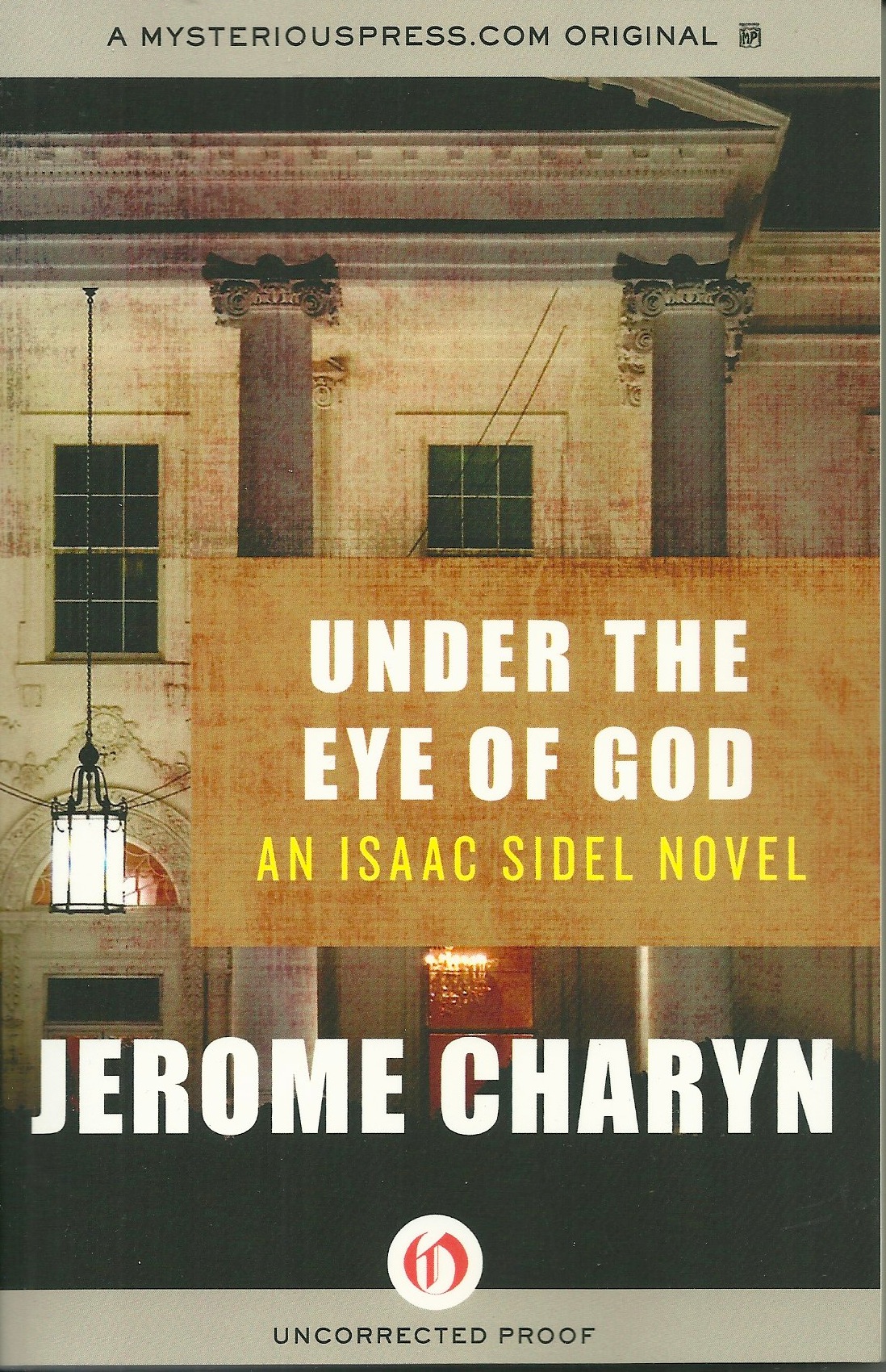
Under the Eye of God is the eleventh Isaac Sidel Novel by Jerome Charyn. For those of you that are not familiar with this series, Isaac Sidel was a New York City Police Department commissioner, turned Mayor. As a popular Mayor, Baseball Czar J. Michael Storm asks Sidel to join him on the Democratic ticket as his Vice President. The Democrats win the election by a landslide.

Writing to some degree as satire, this thriller pokes fun at the political process and at the candidates. You will read about corruption and sex scandals including accusations of pedophilia. A rogue astrologer also becomes involved. Issac Sidel, however, remains above the scandals. He may be loosely based on the author’s brother, Harvey, who is a homicide detective with the NYPD.”

This novel is definitely not a run of the mill thriller. It seems to be more of a character study of the main character, Isaac Sidel. The reader spends a lot of time inside Sidel’s head discovering what he is thinking and feeling about everything that’s happening around him as well as getting a glimpse into his past. The reader gets to know Sidel very well by the end of the story. Some of the tensest action scenes are not played out on the page but are recounted by Sidel as he ponders the events.

I didn’t find this book an easy read. The plot doesn’t unfold in a straightforward manner. I had to keep reading and let Sidel’s thoughts and memories spill out, gradually giving me the entire picture. I have to admit I wasn’t terribly interested in the actual plot of the book even though, with the US presidential election held early this month, it is very topical. There is too much double crossing and scheming going on for the reader to guess who can be trusted and what is likely to happen next – maybe it’s more like real life than the average novel.

But I found it worth persevering with the story for the chance to slip into the world that Charyn creates. He takes Sidel back in his memories to his childhood in 1940s gangster run New York City. It’s a world of violence and opulence with a moral code all its own. Having a good grasp of American modern history will definitely help the reader understand the significance of Charyn’s references to various aspects of the social history and politics of that era (the New Deal, Franklin Roosevelt, J Edgar Hoover, Arnold Rothstein and Lindy’s Deli) but it’s not obligatory.  The novel evokes this bygone era of American history vividly and fondly. Despite the brutality of the crime underworld, Charyn depicts 1940s New York as a place of lavish excess and vitality – the place and the people are larger than life. There’s the grandeur of hotels like the Waldorf Astoria and the hypnotic effect of dancehall girls on the men they meet in the midst of unmerciful Mafia and police violence. The reader gets lost in the elegant Old World charm of the New York Sidel remembers in the middle of this fast paced thriller. When I began the book I found this juxtaposition hard to fathom but I warmed to it as I continued to read.

I think one of Charyn’s greatest strengths is the unique voices his characters possess. Each character is complex, motivated by a plethora of values and desires that often war with each other. Although the story is told mainly by Sidel we also get glimpses into the minds of other prominent characters and they are fascinating people. I particularly liked the woman Sidel believes he is in love with: Trudy Winkelman. She is well drawn; Charyn creates a gutsy, conflicted woman, in an impossible situation, who is devoted to her children and smitten by the man she is supposed to ensnare.

Charyn’s narrative style is unusual and nothing is ever described simply. His prose seems to ramble along with his characters’ thoughts and the metaphors he chooses may not be immediately clear to the average reader. But the sometimes ornate language he uses and his characters’ unique voices combine to paint almost a 3D image of his characters’ world.  

I’m not sure whether this book will appeal to the average thriller reader. The author’s writing style sets it apart from many books in the genre. But it is a great book for readers who want to explore the mind of a conflicted character while they enjoy a dramatic plot. Historical fiction fans will also find the evocation of 1940s New York intriguing. I have to admit that it took me a while to get into this book and I wasn’t sure that I wanted to continue reading but after I finished it my head was filled with the voices of some very unusual and beguiling characters and visions of New York as it was in an exciting era before my time. I’m glad I persevered to the end and I can recommend the book to other readers. Enjoy Charyn’s and Sidel’s New York, past and present.

The author is currently on a blog tour. For more reviews and information about this book visit the tour site.
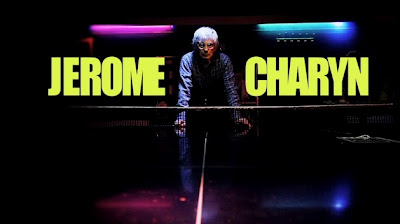
About Jerome Charyn: He is the critically acclaimed author of nearly fifty books. Born in the Bronx in 1937, he attended Columbia College, where he fell in love with the works of William Faulkner and James Joyce. After graduating, he took a job as a playground director and wrote in his spare time, producing his first novel, a Lower East Side fairytale called Once Upon a Droshky, in 1964. 

In 1974 Charyn published Blue Eyes, his first Isaac Sidel mystery. Begun as a distraction while trying to finish a different book, this first in a series of Sidel novels introduced the eccentric, near-mythic detective and his bizarre cast of sidekicks. Charyn followed the character through Citizen Sidel (1999), which ends with his antihero making a run at the White House. Charyn, who divides his time between New York and Paris, is also accomplished at table tennis, and once ranked amongst France’s top Amazon10 percent of ping-pong players. Readers are invited to visit his website.
Posted in November 2011 | Tagged , , , , , , , | 2 Comments

Too Many Titanic Books? Is There Room For Another?

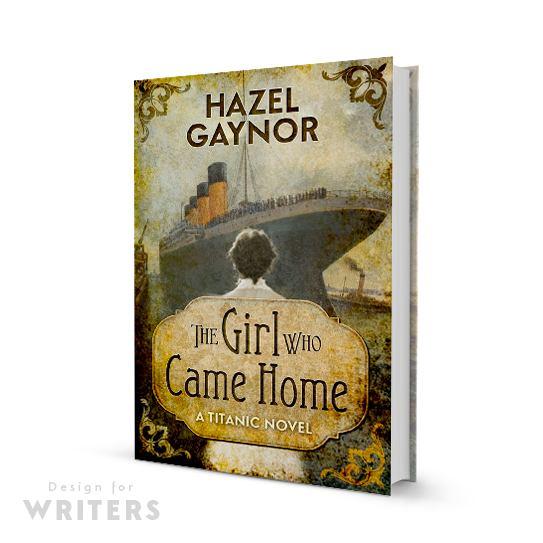
When I first noticed The Girl Who Came Home by Hazel Gaynor listed in Amazon’s historical fiction new books I wasn’t interested. I thought that the sinking of the Titanic was a topic that had just been done too often – books about it were everywhere as the centenary of the event approached. I had read Walter Lord’s account of the event when I was in my teens and I was very moved by it. So I didn’t think a novel could compete with that non-fiction book and I brushed past it in Amazon’s listings.

I don’t know what made me change my mind. Maybe the centenary documentaries on tv stirred my memories of how A Night To Remember had gripped me and re-kindled my interest in the Titanic. Or it may have been because I learned that the novel’s plot centred on Irish passengers aboard the ship and I am always drawn to books with an Irish connection. Whatever the reason I downloaded the novel and started to read – and I didn’t find it a well-worn story at all. The characters and the story ensnared me. The world one hundred years ago came alive and I enjoyed stepping back in time, even though the events unfolding were harrowing. Since I enjoyed the story, I’m pleased to welcome Hazel to Ascroft, eh? to answer a few questions about the novel. So shall we get started?  

Tell us about your novel, Hazel.
HG: My novel is called The Girl Who Came Home and was inspired by true events surrounding a group of fourteen friends and relatives from a small, rural Parish in County Mayo, who travelled together on Titanic. The group is known locally as The Addergoole Fourteen. My novel tells the imagined story of one of the survivors and her great-granddaughter. It is, at its core, a story about love and hope in the face of adversity and, I hope, tells a less well known and very human side of the Titanic story.

What prompted you to write about this historical event?
HG: I don’t have a grandfather who played in the band, a grandmother who was hoping to start a better life in America and I don’t come from any of the Titanic towns or cities. In fact, there is very little to connect me to Titanic at all, other than a long held fascination with the story of the unsinkable ship of dreams. I was in my teens when the wreck of Titanic was discovered and I remember being completely fascinated by so many aspects of the story: the Edwardian era, the unimaginable human tragedy, the stark divisions of social class and the remarkable chain of events which contributed to Titanic’s demise. It is simply beyond belief, and that is what makes it so fascinating.

For many years I have said I will write a book about Titanic, but whenever it came to putting pen to paper (or fingers to typewriter) it was just far too daunting a prospect to tackle. Where to start? How would I ever do justice to the event? Would I ever be able to capture a sense of life aboard this amazing ship? It was only last year, after pursuing my writing seriously for two years, that I started doing detailed research, particularly into the Irish connection with Titanic.

Writing The Girl Who Came Home was a daunting and incredibly moving experience. For me, this wasn’t simply about writing a book – it was about understanding better a part of history, and doing justice to the memory of all those who lost their lives that night. I knew I wanted to tell a very human story about Titanic, and that I was interested in exploring the aftermath for the survivors, and for relatives waiting back home. I was also particularly interested in the Irish passengers. One day, when I was studying the passenger manifests and press reports from the survivors, I came across information relating to Annie McGowan and Annie Kate Kelly. Realising then that they were part of a larger group who had travelled from Mayo, I searched for more information and came across the website for the Addergoole Titanic Society. I read a wonderful book about the group, which was written by Pauline Barrett, a descendant of one of the fourteen. I knew, immediately, that theirs was the story I wanted to tell.

How closely did you stick to the historical facts? If you used them loosely, how did you decide whether to deviate from them?
HG: In terms of the Titanic itself – its layout, journey, experience of passengers on board etc. – I stuck to the facts meticulously. Titanic’s size, opulence and passengers are so well documented and are so much a part of the Titanic story and legend that I obviously couldn’t change any of that. Also, I was terrified that a ‘Titanorak’ would spot a flaw in my description of the ship, the cutlery, the layout of the cabins that I was extremely painstaking in my research from that aspect of the story!

The story of Grace, the great-granddaughter in my novel, is entirely fictional and while I was inspired by the true story of The Addergoole Fourteen, and based my characters loosely on those individuals, including my heroine, Maggie Murphy, I added my own elements to their personalities and to their family lives and relationships.

What I found particularly interesting when researching the events surrounding the sinking of the Titanic was the less well known side of the event – the experience of relatives awaiting the arrival of the Carpathia in New York and the experience of survivors who were on board the Carpathia for several days and then had to spend days and weeks in hospitals in New York before making their onward journeys. I stuck closely to the facts when re-telling those parts of the story.

What research did you do for this book?
HG: Being such a huge event, and being the first real event to be broadcast in mass media, there is an incredible volume of information and detail available on Titanic. I researched and researched online and in press archives, right down to the smallest details of the cabins my characters slept in, the meals they ate aboard the ship and the songs they sang during their evenings. I spoke to members of The Addergoole Titanic Society who were extremely helpful. I watched the movie again (of course!). I listened to audio recordings of the survivors and watched incredible images of the Titanic setting out from Belfast and other footage of passenger’s relatives and friends massing outside the White Star Line offices on Broadway in New York when news of the disaster arrived. I studied Father Browne’s incredible photographs and read books about the disaster. I read survivor letters and newspaper articles. I was entirely immersed in Titanic’s story and rarely talked about anything else (much to the delight of my family and friends, I’m sure!).

Do you use a mixture of historic figures and invented characters in the novel. If so, which is more difficult to write? Which to you prefer to write and why?

HG: I did use some historic figures – key individuals on Titanic – although my main characters were invented. I think it is perhaps easier to write a character you have imagined entirely as nobody can correct you or disagree with your depiction of them. When writing about an actual person, you are always very conscious of ‘getting them right’; of reflecting them accurately and credibly. I think I enjoy combining both real and imagined characters in my novels and considering how my imagined character may interact with a well-known historical figure. There is always, of course, scope to add your imagined conversations and emotions to a historical character – that is what makes a book historical fiction rather than just history.

When writing the novel, I had to make notes on each character – fictional and real – to ensure that I had their role in the event correct. While my story is based around the true story of the Addergoole Fourteen, I accepted that it would be confusing for the reader if I attempted to tell each of the fourteen passenger’s stories equally. That is why I focused on just one of the girls as the central character (my character, Maggie, is actually an amalgamation of two of the youngest girls of the Addergoole group), along with her Aunt and her two friends, who are depicted to a lesser extent. The addition of the character of Harry, the steward, gave me a way in which to show the experience of crew members working on Titanic and the character Vivienne Walker-Brown (loosely based on the real passenger, actress Dorothy Gibson) provided a way to incorporate the experience of the First Class passengers as a contrast to the Ballysheen (Addergoole) group. 

In an historical novel you must vividly re-create a place and people in a bygone era. How did you bring the place and people you are writing about to life?

HG: From the start, I had a very clear vision for the book; that it would be set in two periods of time: 1912 and 1982, but with the 1912 story taking up the majority of the narrative. Essentially, this was two stories running in parallel. I then mapped out loosely what would happen in each chapter; particularly how I would take Maggie and the group she was travelling with from their village in Mayo to Queenstown, what would happen when they were on Titanic, and what was happening to their relatives in Ireland and New York while they were at sea.

I knew I wanted to capture the drama of the sinking, but that this wasn’t the main focus of my story. I wanted to focus on the experience of the relatives awaiting news at home, and on what the experience was like for the survivors in the lifeboats and once they arrived in New York. It is this aftermath of the event which isn’t so well known.

Once the structure of the chapters was in place, I wrote the story quite quickly, being careful to weave in my research details as I wrote. Although I had a mass of information to hand, and in my head, I would research specific details as I was writing that part of the book. For example, when I was writing about the experience in the lifeboats, I researched as I wrote. Again, when I wrote about the experience of the relatives waiting for survivors to disembark The Carpathia, I researched passenger accounts as I wrote. That way, I took each stage of the experience and each step, in turn – which prevented me from getting bogged down and overwhelmed by the magnitude of the story I was hoping to tell.

I think, from a research point of view, it is fantastic to have such a rich source of primary evidence as that which an event such as Titanic can provide. Such a well-known event also has an existing emotional appeal to potential readers, and they know – at least, in part – what the novel is about, which helps their purchasing decision. This has certainly helped with raising awareness of the book and generating publicity. Of course, there is always the worry that you have your facts straight, as there will – inevitably – always be someone just waiting to pick you up on your smallest of oversights. If James Cameron can admit to getting the odd thing slightly incorrect, then so can I!

There often seems to be more scope in historical novels for male characters rather than female characters. Do you prefer to write one sex or the other. And, if so, why?

HG: Actually, I disagree! I think there are some incredible historical women and, in fact, the dramatic change in the role of women over time provides great scope for a novelist. I am completely fascinated by discovering less well-known historical events and by people who may have been an interesting or influential character at the time they lived, but who may not yet be very well known as they haven’t caught the attention of historians.

I think I am naturally drawn to tell women’s stories – writing from the perspective of a woman in the early 19th century, for example, challenges a writer in 2012 to totally change your mind-set as women’s roles and attitudes were so very different. Also, I grew up reading Jane Austen and the Brontes, so I think I am possibly influenced by their incredible heroines and, even though they wrote memorable male characters, it is the women in those novels who really stand out for me. If I could emulate them, even just a little, I would be a very, very happy writer!

Thanks for answering my questions so thoroughly, Hazel. It’s obvious that your subject matter fascinated you and you put a lot of work into writing this book. I think there’s no better way to create an engaging story that readers will remember. The success your novel has already had in the short time since it was released is well deserved.  

About Hazel Gaynor: Hazel is an author and freelance writer. She started writing when she left her corporate career in March 2009; initially focusing on her award-winning parenting and lifestyle blog, Hot Cross Mum. She has since gone on to write regularly for the national press, and has appeared on TV and radio.

Her debut novel The Girl Who Came Home – A Titanic Novel was self-published in March 2012 and went on to become a number one bestseller on the Kindle Historical Fiction and Historical Romance charts. Staying with her passion for historical fiction, Hazel has just completed her second novel, set in Victorian London, for which she hopes to find a publisher very soon!

Hazel now writes a book review blog for Hello Magazine as well as guest blogging and writing regular features for writing.ie and interviewing guest authors, most recently Philippa Gregory and Sebastian Faulks.

Originally from North Yorkshire, Hazel has lived in Kildare, Ireland for the past seven years with her husband and two young children. She was the recipient of the Cecil Day Lewis Literary Bursary for Emerging Writers in October 2012 and is represented by Sheila Crowley of Curtis Brown, London.

Online she can be found on her website, her Facebook page and Twitter (@HazelGaynor).

Posted in November 2012 | Tagged , , , , , , , | 1 Comment

National Short Story Week Kindle Offer

I seem to see short story collections everywhere this week. I guess National Short Story week has made me more aware of them. When I was browsing in Easons at lunch hour today I noticed that My Weekly and The People’s Friend have both released short story collections in time for Christmas (shh – I know I shouldn’t mention that word before December….). And scanning my own bookshelves tonight I lingered at my most recent The Sunday Miscellany collection and Ireland’s Own 2012. Since the weather’s been so lousy this week I’ve used it as an excuse to take a magazine with me and grab a coffee on my lunch hour – a cosy cafe and a quick read help brighten up wet days for me.

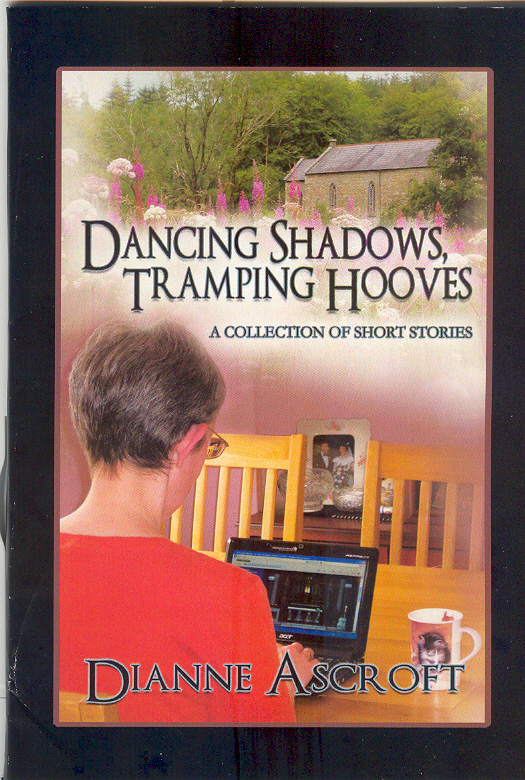
In honour of National Short Story week I gave away copies of my own short story collection, Dancing Shadows, Tramping Hooves in a Goodreads giveaway yesterday. Copies are already on their way to the winners. And today I’m offering the collection free on Amazon Kindle for one day only. 

If you’d like to brighten up your week, pop over to Amazon and download a free copy of Dancing Shadows, Tramping Hooves – today only! Enjoy the rest of National Short Story week!

Posted in November 2012 | Tagged , , , , , , , , | Leave a comment

A Serial For National Short Story Week

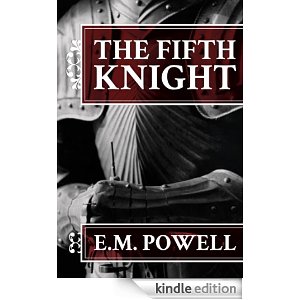
A new novel, The Fifth Knight, that’s released today is just the thing for National Short Story week.  You may be thinking that a novel isn’t really appropriate for National Short Story week – well, this one is. It’s released as a 6 part serial – every fortnight a new episode will be published until the ebook is complete. So it will feel like you are reading short stories that weave together to tell a single tale.

I’ve had a sneak preview of the novel and I was captivated by Sir Benedict, the knight the title refers to and his feisty companion, Sister Theodosia. The book is a fast paced story that provides a new twist on the story of Thomas Becket’s murder.

I wholeheartedly recommend this novel and, if you need an excuse to add another ebook to your collection, National Short Story week is the perfect time to treat yourself to the first episode of this serial, The Fifth Knight.

Posted in November 2012 | Tagged , , , , , | Leave a comment

My Contribution to National Short Story Week

Today begins National Short Story week (12-18th November). Since I was a child I’ve always loved a good story – short or long, it never mattered. Before I was old enough to read my grandfather used to spend whole afternoons reading children’s stories to me. Once I learned to read and write I was never far from a book and I began writing my own stories – and I’m still writing them.

It’s not always easy to tell a complete story in a few hundred words but I like the challenge. Sometimes you only give the reader glimpses into a character’s life. But, if these moments that are revealed are significant ones then that’s all that’s needed.

During this past summer I put together a collection of half a dozen of my short stories that have been published in various magazines, websites and anthologies. The stories in Dancing Shadows, Tramping Hooves capture moments of happiness and the dawn of understanding in several women’s lives.

In honour of National Short Story week I’m giving away copies of Dancing Shadows, Tramping Hooves this week. It is available to UK readers as a Goodreads giveaway – the offer ends 14thNovember. Details of the giveaway can be found here: http://www.goodreads.com/book/show/16080070?utm_medium=api&utm_source=giveaway_widget

Dancing Shadows, Tramping Hooves will also be available for one day only as a free Kindle ebook on Friday, 16th November.

Enjoy National Short Story week and take time out to enjoy a good tale or two – or as many as you like.

Posted in November 2012 | Tagged , , , | Leave a comment

A New Thornleigh Tale

In September I met Barbara Kyle at the Historical Novel Society’s bi-annual UK conference in London. Soon after we met I finished reading my first novel by her. Despite Barbara’s prolific output of historical fiction the first novel I was drawn to was one of her thrillers, Entrapped. I think what caught my attention was its Canadian setting – maybe a yearning for my native land surfacing. From the first page I got caught up in the action and the characters’ lives and thoroughly enjoyed the book. So now, I’m ready to move on to Barbara’s ‘Thornleigh’ novels. But first I’ve invited her here today to tell us a bit about the latest one in the series. Welcome Barbara.

Thanks for inviting me to your blog, Dianne. I appreciate the chance to reach out to your readers.

Tell us about your novel.

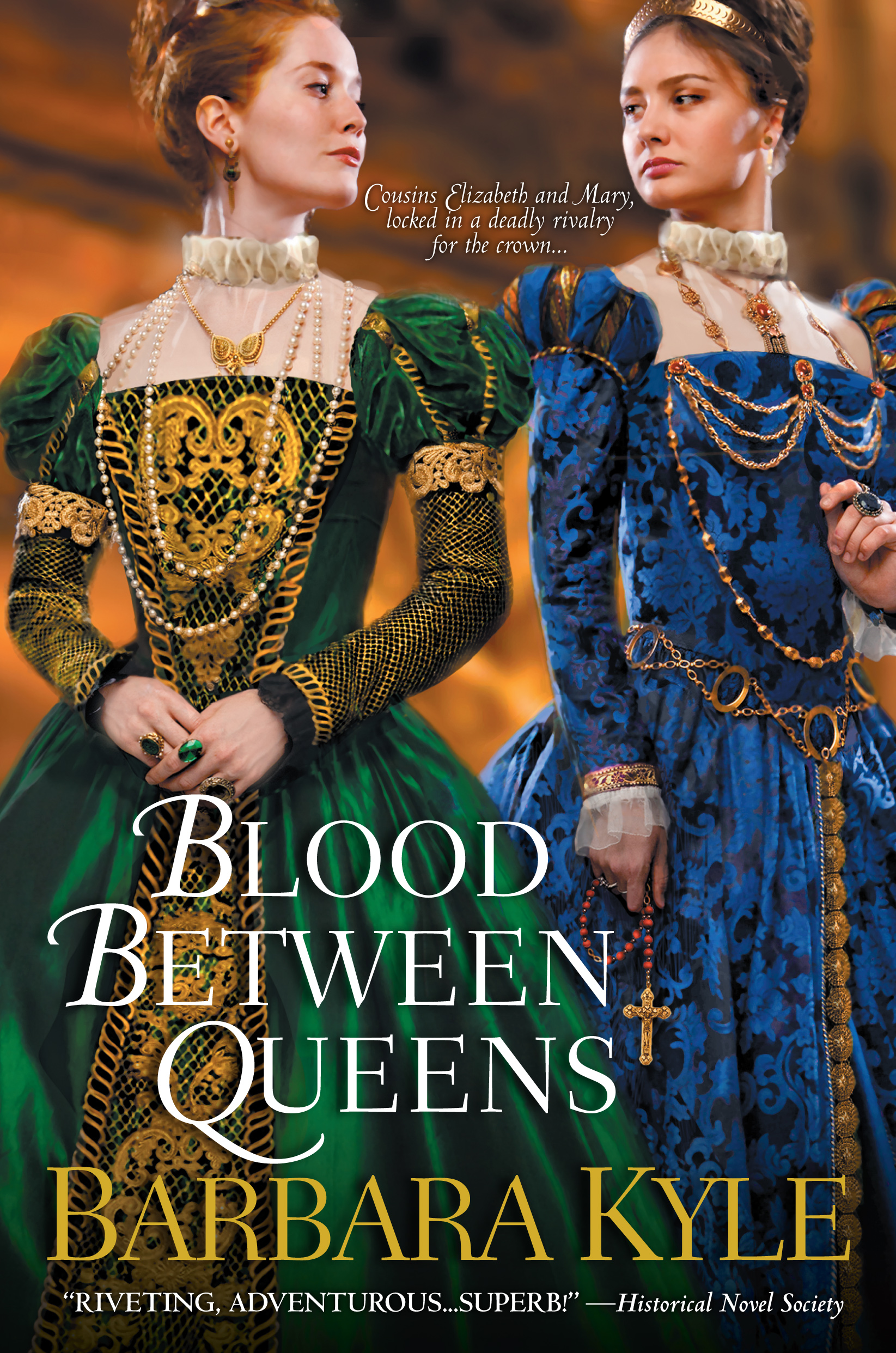
BK: Blood Between Queens takes place in London, 1568. Justine Thornleigh is a ward of Baron Thornleigh and loves his nephew Will Croft, a promising young lawyer at Queen Elizabeth’s court. Will’s marriage proposal thrills Justine – but she has kept a dark secret from him: she is the daughter of the traitor Christopher Grenville, presumed dead. Worse, she learns to her dismay that the Thornleighs and Grenvilles were once locked in a lethal feud, and that Will hates the Grenvilles for murdering his father. Eager to prove her loyalty to the Thornleighs and Elizabeth, Justine accepts a mission as lady-in-waiting to Mary Queen of Scots who has fled to England: Justine will spy on Mary for Elizabeth.

But Justine soon comes to admire the enchanting Mary and pities her plight as Elizabeth’s virtual prisoner. And she is stunned when she comes face to face with her father, Christopher Grenville, Mary’s secret agent. Grenville begs her to help him gain Mary’s freedom, and convinces her that the Thornleighs stole his lands and stole her. Believing that her father and Mary have both been wronged, Justine steals evidence from Will to help liberate Mary. Will discovers her theft and is appalled by her betrayal.

Too late, Justine discovers that her father and Mary have set in motion a plot to assassinate Elizabeth and put Mary on the throne. To prevent that catastrophe, and to win Will back, Justine risks her life in a desperate gamble to save Elizabeth’s life.
Blood Between Queens is the fifth in my “Thornleigh” series, published internationally. Each book stands alone as the series follows a rising middle-class family through the tumultuous reigns of three Tudor monarchs: Henry VIII, Mary I, and Elizabeth I. Blood Between Queens, will be released in early 2013.

What prompted you to write about this historical event and era?

BK: For over four centuries the world had been enthralled by the rivalry between Mary Stuart (Mary Queen of Scots) and Elizabeth Tudor. Mary was born to be queen, while Elizabeth grew up never dreaming she would be queen. Yet by Elizabeth’s royal order Mary lost her liberty, never to regain her crown, and nineteen years later, by Elizabeth’s order, Mary was executed. The two were cousins, but they never meI believe their extraordinary story holds such perennial world-wide fascination because it is a dramatic example of the primal divide of head vs. heart. In Jane Austen’s term: sense vs. sensibility.

Mary, crowned queen when she was six days old, spent her youth in luxury, and impulsively followed her passions all her life. She made two disastrous marriages, hazarded all on the battlefield, lost her kingdom – twice – and met a violent end, beheaded by Elizabeth.

Elizabeth, though passionate, ruled with Machiavellian shrewdness born of her insecure youth. She grew up in fear for her life. When she was three her father, Henry VIII, disinherited her and beheaded her mother, Anne Boleyn, for adultery. When Elizabeth’s half-sister Mary Tudor became queen she imprisoned her twenty-year-old sibling in the Tower where Elizabeth fully expected to be executed. Finally, four years later, the crown came to her.

In the seventh year of Mary Stuart’s reign in Scotland she fled to England to escape the Protestant lords who had deposed her. She wrote to her cousin Elizabeth asking for protection and an army to help restore her to her throne. Elizabeth, however, needed Protestant Scotland as a bulwark against a feared invasion by Catholic France, and so decided it was prudent to keep Mary under house arrest. Mary’s captivity, a comfortable one befitting her status as a queen, continued for nineteen years. During it she plotted ceaselessly to overthrow Elizabeth with foreign help and to take her crown.

Finally, after Mary’s last assassination plot against Elizabeth almost succeeded, Elizabeth executed Mary. Signing her cousin’s death warrant was the hardest decision she ever made, haunting her until her own death.

I’m fascinated by how these two queens exercised leadership. Their views were formed by their radically different upbringing. Mary went to France at age six to join the French royal family where she grew up in the most glittering court in Europe. At sixteen she married the heir to the throne, and when his father died the teenage couple became king and queen of France. A year later Mary was a widow and reluctantly returned to her homeland to take up her birthright, the crown of Scotland.

Elizabeth grew up in a secluded country house, anxiously watching from afar the dangerous court intrigues of her royal father and her two siblings. Only when they had all died did she, at age twenty-four, become queen of England. Her reign eventually spanned a peaceful forty-three years.

The two queens’ actions regarding marriage were utterly opposite. Mary had three husbands, two of whom, Lord Darnley and the Earl of Bothwell, she impetuously chose for herself. Elizabeth, famously, never married, knowing that a king would eclipse her power. She kept her long and intimate friendship with her dashing courtier, the Earl of Leicester, a private affair.

They were equally divergent in their decisions about governance: how they managed their over-mighty nobles and their countries’ religious strife. Mary’s actions in Scotland led to a civil war that she lost, while Elizabeth, faced with a massive buildup of French troops on her Scottish border in 1559, took a calculated risk on sending an army against them before they could attack England, and won.

How closely did you stick to the historical facts? If you used them loosely, how did you decide whether to deviate from them?

BK: I am meticulous about being faithful to the historical record on facts that are indisputable, such as, in the case of Blood Between Queens, Mary being put under house arrest at Lord Scope’s castle in Bolton; the inquiry that Elizabeth set up with commissioners to hear the charges against Mary; the commissioners being given evidence in the form of the infamous “casket letters,” love letters purportedly written by Mary to Bothwell. This fidelity to facts includes dates, places, and names of the principle actors in such events. However, then I take great license by “inserting” my fictitious characters into those events: Justine being sent to serve Mary; Will acting as Cecil’s clerk at the inquiry, etc.

And, of course, in depicting even the factual events I take the novelist’s liberty of writing dialogue for the historical characters. That’s pure creation. Still, often there is solid information on which to base such dialogue, including letters they wrote and ambassadors’ reports, so I can get a good sense of how they felt about situations. For example, there is a wealth of reports by contemporaries of Elizabeth and Mary about exactly what they said in many instances. However, at a certain point I’m on my own, creating events, scenes, dialogue, and characters’ feelings out of whole cloth.

Readers come to a historical novel for the history, but they stay for the characters. So for me it’s vital to depict the emotional lives of the characters, both fictional and real, so that they live and breathe for the reader. To me, that’s Job #1.       

What research did you do for this book?

BK: Plenty of reading! Biographies are wonderfully helpful, of course. For Blood Between Queens two books in which I highlighted many paragraphs were Alison Weir’s masterly Mary, Queen of Scots, and the Murder of Lord Darnley and Mary, Queen of Scots: Politics, Passion, and a Kingdom Lost by Jenny Wormald.

And, before writing the first “Thornleigh” book I spent a month in England for research, with a carefully planned itinerary of visiting historical sites throughout the country. I take a lot of care, especially, in getting London right (readers love London), and that has meant poring over historical maps and reading contemporary accounts like John Stow’s survey of London. That survey was published in the latter part of the 16th century, but it’s still a grand resource full of marvelous details and descriptions of places that were not materially different from the mid-century.     

Do you use a mixture of historic figures and invented characters in the novel. Which is more difficult to write? Which to you prefer to write and why?

BK: Yes, I do use a mixture in my “Thornleigh” novels. The core Thornleigh family characters – Honor, Richard, Adam, Isabel, and Justine – are fictional, as are their nemesis counterparts, the Grenville family, and they become dramatically enmeshed in the lives of historical figures of the day, from the monarchs Henry VIII, Mary I, Elizabeth I , and Mary Queen of Scots, to movers and shakers like Thomas Cromwell and Sir Thomas More, and revolutionaries like Sir Thomas Wyatt and John Knox.

I honestly don’t find either group (real or fictional) more difficult to write, nor do I prefer one over the other. To me they’re all just people, and once I get a deep sense of who they are and what drives them, I’m off to the races.  

In an historical novel you must vividly re-create a place and people in a bygone era. How did you bring the place and people you are writing about to life?

BK: I get grounded in as many facts as possible through the research, and then I take off and “fly solo.” At a certain point it becomes totally my own imagination in rendering the sights, sounds, smells, and tastes of places so that the reader feels they are actually there, whether it’s in the hectic streets of London, or at a royal banquet with Queen Elizabeth, or aboard Adam Thornleigh’s ship limping into port with his starving crew. 

There often seems to be more scope in historical novels for male characters rather than female characters. Do you prefer to write one sex or the other. And, if so, why?

BK: That’s a great question. In all my novels I depict scenes from the point of view of both female and male characters. My heroines are all very dynamic people; I give them plenty of scope for action. They are drawn into rebellions (Isabel Thornleigh in The King’s Daughter) and risky missions of mercy (Honor Larke in The Queens’ Lady), and dangerous missions on behalf of Elizabeth (Isabel again in The Queen’s Gamble and Justine in Blood Between Queens). These are not “stay at home” women!

Having said that, I must add that I love writing the men. It’s a real adventure in imaginative empathy to create, believably, the heart and mind of a mercenary soldier (Carlos Valverde in The King’s Daughter), a wool merchant and ship’s master (Richard Thornleigh in The Queen’s Lady), a seafaring young adventurer smitten by Princess Elizabeth (Adam Thornleigh in The Queen’s Captive) and Will Croft, the Thornleighs’ nephew, an up-and-coming young lawyer.

Male or female, the one constant in my characters is that they are fully and actively engaged in the crises of the times. So I say, bless them all!

Thanks for taking the time to answer my questions with so much interesting detail, Barbara. You’ve whetted my appetite for your new ‘Thornleigh’ book. But I think I have some catching up to do  – I’d better start with the first one.

About Barbara Kyle: She is the author of the acclaimed Tudor-era “Thornleigh” novels The Queen’s Gamble, The Queen’s Captive, The King’s Daughter and The Queen’s Lady, all published internationally, and of the contemporary thrillers Entrapped and The Experiment. Over 400,000 copies of her books have been sold. Her next book, Blood Between Queens, will be released in April 2013. Before becoming an author Barbara enjoyed a twenty-year acting career in television, film, and stage productions in Canada and the U.S. For more information – or to sign up to receive Barbara’s newsletters – visit her website.

Posted in November 2012 | Tagged , , , | Leave a comment

Time For A Foreign Encounter

I’ve lived away from my home country for more than two decades now so I should be well assimilated in my adopted land, a small patch of countryside in Northern Ireland. But there are still things I find strange, amusing or noteworthy about this place. Those who best understand my perspective are other ex-pats, including my fellow writers in Writers Abroad, and I enjoy sharing anecdotes about my life with them. I also have a chance to share my experiences with a wider audience by writing short stories and reminiscences about life in my adopted land. These writings often find their way into Writers Abroad’s yearly anthology.

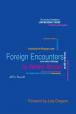
This year the theme of the book is Foreign Encounters. An encounter can be a chance meeting, a planned get-together or even a confrontation. The anthology is a collection of stories, non-fiction articles and poems featuring a variety of foreign encounters: with family, friends, lovers, animals, cultures, or just with one’s own prejudices and preconceptions.

Foreign Encounters is the third anthology published by Writers Abroad, a virtual group of ex-pat writers. All the contributors are, or have been, ex-pats. They live in, and have written about, more than 50 countries across all continents. Author Julia Gregson, a former ex-pat whose bestselling novel East of the Sun won the Prince Maurice Prize for romantic fiction, has written the foreword.      

All proceeds from the sale of this book will go to Books Abroad, a charity which coordinates the donation of free books for schools throughout the world, believing that education is a crucial aspect of human progress. The charity celebrates its 30th anniversary this year and has supplied over 1,600 schools with desperately-needed books.

I enjoyed sharing my experiences of ex-pat life in Foreign Encounters and I think the rest of the contributors to this book did too. So I hope readers will be entertained by our tales.

Foreign Encounters is available from Lulu, price €9.99 (approximately £8.00), from today, Wednesday 24th October. You’ll find it here: http://www.lulu.com/shop/writers-abroad/foreign-encounters/paperback/product-20450826.html.

Posted in October 2012 | Tagged , , , , , | 2 Comments

Too Much Information?

We’ve all heard the expression ‘too much information’ applied to instances where someone relates too much detail about an unpleasant or disturbing topic. So how much is too much information? Dr Ian Mortimer made me think about this question at the Historical Novel Society conference in London a couple weeks ago. I threw my thoughts out to my fellow members of Writers Abroad on their blog today – you’ll find it here, if you are interested.

Posted in October 2012 | Tagged , , , , , | Leave a comment

Facing An Audience – FLive and All Ireland Poetry Day

I doubt I’ll ever join Toastmasters – and I have been invited by friends to do so. I really am not keen on public speaking and I would rather stay behind the scenes. But when the local writers group I belong to, Fermanagh Writers, organise public readings then I do my bit – though, as secretary and organiser, I always schedule myself near the end of the rota and hope that we will run out of time before it’s my turn…

Last week we had not one but two public engagements: All Ireland Poetry Day and FLive, the Fermanagh Arts Festival. So I spent more time in the spotlight than I would choose to do but it was fun and I love to see people enjoying our writings (they did look like they were enjoying it – really!).

For All Ireland Poetry Day we ventured into Erneside Shopping Mall and read our verse to unsuspecting customers in the centre’s restaurant. Let me tell you, it does take nerve to walk into such an establishment and start reading when you know that your listeners are not expecting it and may have little or no interest in poetry. For an account of our adventure check out Fermanagh Writers’ blog post.

Last Saturday at FLive we had an audience that was more prepared for our presentation and they seemed to enjoy it. I doubt the free wine had anything to do with their enthusiasm…Our members’ readings ranged from humorous looks at Fermanagh life to thoughtful explorations of social problems in modern society. Where did my work fit in on this spectrum? Well, I contributed a gentle, romantic story that ended happily. I don’t know what put me in that frame of mind – we still have to get through Halloween and Christmas before Valentine’s Day. Will my romanticism and optimism hold out until then? Who knows? But let’s not worry about that for now. If you’d like to hear more about our FLive afternoon click here.

Posted in October 2012 | Tagged , , , , | 1 Comment

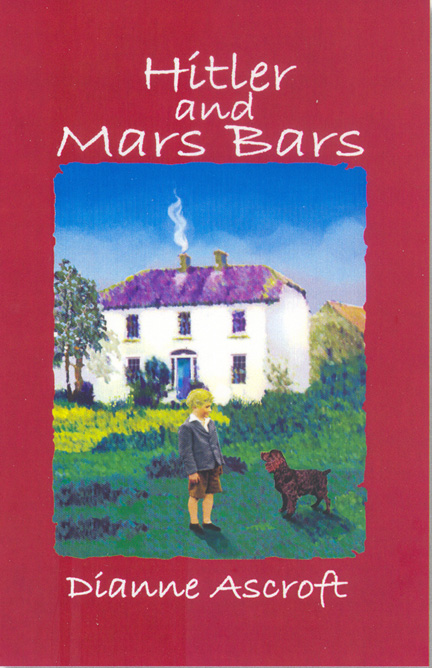
Hitler and Mars Bars Available As Amazon Ebook

Hitler and Mars Bars is now available as a Kindle ebook.

Set against the backdrop of the little known Red Cross humanitarian aid endeavour, Operation Shamrock, the novel tells the story of Erich, a German boy growing up alone in Ireland. He dreams of finding his mother. He yearns for a family who will love and keep him forever. He learns his brother is his ally not his rival. Plucky and resilient he surmounts the challenges his ever changing world presents. Caught in war’s vicelike grip and flung into a new land he must grow and forge a new life.

If you’d like to know more, check Hitler and Mars Bars’ Amazon page: http://www.amazon.co.uk/Hitler-and-Mars-Bars-ebook/dp/B009IT1RQU/ref=sr_1_2?ie=UTF8&qid=1349122866&sr=8-2

Posted in Uncategorized | Tagged , , | Leave a comment