Orna Ross Awakens Tumultuous Irish Past

No green beer and crowded pubs for me today – I’d rather curl up and lose myself in a good yarn. (And I’ve got a couple bottles of Guinness in the house – no fighting my way to the bar). So, what better way to celebrate St Patrick’s Day than to feature an Irish author who can spin a good yarn?

I recently read After The Rising by Orna Ross and it was one of the most captivating books I’ve read in a long while. I was gripped by the story and it gave me a fresh perspective on what I thought was a well-worn topic. It illustrated how bitterly the Irish Civil War divided families and friends and tore apart communities. I hadn’t fully appreciated how complex the issues were and how they still affect individuals and communities.  I’ve posted a review of the book on Amazon and I enjoyed it so much that I asked Orna to visit Ascroft, eh? to tell me a bit more about the book.

Welcome Orna. I’m looking forward to learning more about After The Rising. Shall we get started?

Tell us about your novel.

OR: ‘After The Rising’ and ‘Before the Fall’ are a pair of linked novels. One is sequel or prequel to the other and each can be read separately. The same characters and settings inhabit both: 1920s & 1990s Ireland, 1970s London, 1980s San Francisco. They are stories about the struggle between men and women, war and peace, freedom and belonging, set against the background of the Irish Civil War of 1922/3. I very much wanted to include the female experience during that war — called ‘The War of The Brothers’ though women were more involved in it than in the Independence struggle — and draw parallels between that and other sorts of private, more intimate and personal wars, around sexuality, and family, and love. So it turned into a family saga, with a contemporary (1990s) narrator tracing her family history back to a similar event and coming to terms with the layers of silence around a particular murder, the consequences of which has haunted four generations and had deep ramifications for her own life.

What prompted you to write about this historical event?

OR: Isabel Allende once said, ‘Write what should not be forgotten’. That’s my guiding principle as a writer. I grew up in a small Irish village where one half of the people seemed to be ‘out’ with the other half and my father’s uncle had been shot during the civil war though nobody was able to say by whom. The event gave me an outline for part of what I wanted to say about silence and the struggle that every human being experiences between belonging and freedom. 

How closely did you stick to the historical facts? If you used them loosely, how did you decide whether to deviate from them?
OR
: I trained as an historian so I’m a stickler for facts, too much so probably for a novelist. I invent situations and characters and feelings, of course, but I always need to find out what’s known and researched first. Hilary Mantel once said it took her a long time to realise she could just make stuff up and I can identify with that. As I write more books, I’m getting better at letting the demands of the story lead the process.

What research did you do for this book?
OR
: Ooodles! County Wexford is blessed with the greatest group of local historians in the country — possibly the world. I drew on much of their work – especially those books that acknowledged the contribution of women. The local newspapers of the time were another wonderful source. One of the problems with researching the Civil War aspect of the book is the silence around the event. It wasn’t so much ‘Don’t mention the war’ as ‘There was no war’. Even in our schoolbooks, it was a blank; we jumped straight from the glories of the War of Independence to 1924.  But there was lots there at the local level, if you knew where to look. I also travelled to San Francisco to research the background to that part of the book, investigating life there in the 1980s, trying to capture that unique moment of sexual and social liberation. 
Do you use a mixture of historic figures and invented characters in the novel. Which is more difficult to write? Which to you prefer to write and why?

OR: I find real life historical figures harder to write, because of my sense of responsibility to the facts!  Except in ‘A Dance in Time’, real life characters tend to be very much on the periphery in my books. I’m too careful, too aware of the fact that they once lived and breathed, always wondering would they really say or do that? It’s inhibiting. Having said that, there’s a thrill when you feel you’ve got it right with a historical personage.
 
In an historical novel you must vividly re-create a place and people in a bygone era. How did you bring the place and people you are writing about to life?
OR:
It’s the small, sensory details that count, the telling detail. Milk in a churn, the click of a bicyle wheel, the feel of a pony-and-trap under you. The world I write about was still alive, to some degree, in the 1960s when I was growing up, so I can draw on memory as well as research and imagination. I love to recreate these physical details of clothes and transport and daily life. You have to get it right in order to provide the right background to those permanent things that never change — the ocean, stars, the birth of a child…


There often seems to be more scope in historical novels for male characters rather than female characters. Do you prefer to write one sex or the other. And, if so, why?

OR: I don’t prefer to write one sex over another, what I’m always on the lookout for is whatever character I’m writing, male or female, to get up on their legs and walk. I write about – and to – the female dimension. In my understanding, every man and woman is a mix of both ‘male’ and ‘female’ — which is why many men also read my books and find them worthwhile.  Articulating the female experience is very much one of my reasons for writing, that which should not be – yet so often is – forgotten.

Thank you, Orna, for your thorough and honest answers.

When I finished reading After The Rising a couple months ago I wanted to know what happened next to the characters so I was keen to read the sequel. But I had to wait until February for it to be released as an ebook. Both novels were originally published as Penquin paperbacks and they have now been released as ebooks. I’m halfway through Before The Fall at the moment – so I may have even more questions for Orna soon.

Readers can learn more about Orna and her writing by visiting her website. She’s hosting Before The Fall’s launch party on Facebook today and everyone is invited to drop by.

Posted in March 2012 | Tagged , , , , , , , , | Leave a comment

Read It And Whoop

This morning I was telling my colleagues at Writers Abroad that I’ve recently realised that it’s good to look back on your previous writings. You can learn from mistakes and improve your work – and you will also be inspired and heartened when you read stories that you are pleased with. It’s a great way to give yourself a boost when you need it.

You can read my full post on Writers Abroad.

Posted in March 2012 | Tagged , , | Leave a comment

Dead Chuffed About Dead Ink

I couldn’t resist the title of this post – you may groan if you wish…But I am chuffed – I just heard this morning that my short story, A World Apart, has been published on digital publisher, Dead Ink’s website. It’s an amusing story about adapting to a new land and a new life.Dead Ink is a relatively new digital publisher, partly funded by the Arts Council England. Just before Christmas I heard about their forthcoming launch and I eagerly watched for their arrival on the publishing scene (oh – I submitted my story to them too). You can see all they have to offer at http://deadinkbooks.com.

And you can also read A World Apart here:
http://deadinkbooks.com/archives/990

Posted in March 2012, Uncategorized | Tagged , , , | 1 Comment

World Book Day – An Excuse To Explore New Authors

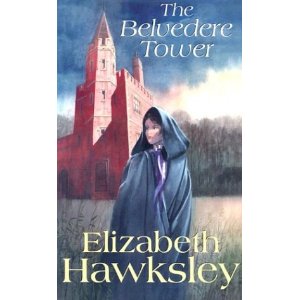
It’s appropriate on World Book Day (in the UK and Ireland, anyway) that I’m exploring a new (for me!) author. I reserved a copy of Elizabeth Hawksley’s Belvedere Towerlast week and it’s now at my local library. So I’m off to collect it. No doubt I’ll start the first chapter in the coffee shop during my lunch hour. Can’t wait!Meanwhile there’s also a huge ‘pile’ of books on my Kindle waiting for me too. I might indulge in one (or two or three…) of them too later today. World Book Day will be my excuse for shirking chores tonight….I’ve got Orna Ross’ Before The Fall and M C Scott’s Rome: The Coming of the King both on my current reading list. Definitely no chores tonight!

Posted in March 2012, Uncategorized | Tagged , , , , , , , | Leave a comment

How Recent Is History?

We’re talking about one of my favourite subjects again today: historical fiction. Larry Peterson is my guest and he’s mulling over whether a story set in the past, within living memory, can be an historical fiction. In January he released his first young adult book, The Priest and The Peaches, which is set in the Bronx during the 1960s.

The publisher says this about the book:
Take a seven day journey with the five, newly orphaned Peach kids, as they begin their struggle to remain a family while planning their dad’s funeral.

They find an ally in the local parish priest, Father Tim Sullivan, who tries his best to guide them through the strange, unchartered and turbulent waters of the “grown-up world.” A story that is sad, funny, and inspiring as it shows how the power of family love and faith can overcome seemingly insurmountable obstacles.

Welcome Larry. I’m interested to hear your thoughts on writing historical fiction.

LP: When I was knee-deep into the writing of The Priest and The Peaches I never considered that it might be considered historical fiction. I was of the mindset that I was simply writing a book at the YA level. In my mind “historical” dealt with things that had taken place way before I was but a twinkle in my parents’ eyes. Then the reality of the concept sunk in. The story was taking place during my early years on this planet. I was alive and experiencing those days that I was writing about. I suddenly felt old because I had become “historical” also. I realized that the time frame I was dealing with was almost 50 years ago. I was here and still reeling (as were so many others) over the Kennedy assassination. The Vietnam War was escalating and a close friend I had gone to school with, Stevie O’Shea, had just been killed in action bringing the war home to our neighbourhood. Medicare had just been signed into law. The Voting Rights Act of 1965 had been passed. A year earlier, the Civil Rights Act had also been enacted. There were riots in the Watts section of Los Angeles and The Sound of Music was released. I could go on but it is obvious why this work is classified as historical fiction.

I discovered that the advantage for me, as a writer and having actually experienced those days, was that they are part of who I am. The result is, when writing about the time frame, you can “feel” it. You were there and the sounds and sights and people are indelibly embedded in your mind. I did not realize that until I started jarring memories loose, memories that must have been stuck deep down in a hidden cave somewhere in my brain. So many things began popping up. It was like I had stuck a shovel in the ground, dug down and hit a hidden reservoir which contained my past. I was amazed that I was seeing “Joe the Bungalow Guy” driving his ice-cream truck down the street. Or “Little Louie,” the UPS man, and Gus, who had a merry-go-round on the back of a pick-up truck and for ten cents a kid could get on it and Gus would pull the thing around by hand. The subways, the candy stores, the movie theaters and so much more once again became vivid sights.

I guess I should end by saying that unexpectedly revisiting all of these memories became a part of the journey. It enabled me to see not only myself but my family and friends and so many things from days gone by. It was almost as if I were watching an old Super * movie reel.  Talk about “perks” of the job. WOW!

Thanks, Larry, for sharing with us what you discovered about writing historical fiction as you worked on your novel. Readers can learn more about The Priest and The Peaches at Larry’s blog and can also find the book online in numerous places, including Amazon.

About Larry Peterson: He was born and raised in the Bronx, New York. A former Metal Lather/Reinforcing Iron-worker, he left that business after coming down with MS. He, his wife and three kids moved to Florida 30 years ago. Larry began doing freelance newspaper commentary after graduating from Tampa College in 1984. He lives in Pinellas Park, Florida.

His first children’s picture book, Slippery Willie’s Stupid, Ugly Shoes was published in 2011. In 2012, his full length novel, The Priest and the Peaches was released and he is presently working on the sequel.

Posted in February 2012 | Tagged , , , , | 3 Comments

Irish HNS Still Battling The Bands

Where can I find a pub or cafe in Belfast city centre that is quiet on a Saturday afternoon? I’ve been on a quest to find one for over a year now. The Irish branch of the Historical Novel Society meets in Belfast twice a year and we’re still searching for a quiet spot to chat. So far we’ve battled a lounge pianist, a jazz band and a folk singer – not to mention insidious background piped music. We haven’t beaten any of them so we’re still searching.

Despite the problems with our venues, I enjoy our meetings. I use the word ‘meetings’ loosely. I think gatherings would be a better word. We rarely have an agenda, and if we do, we probably won’t stick to it. Before we met yesterday we put discussing our favourite novels on our informal agenda but we never got around to that subject. That didn’t matter though as we covered lots of topics of interest to readers and writers of historical fiction – including how to effectively use regional dialects in stories, how to begin editing a novel once the first draft is complete and the range of genres that historical fiction can be set in. We also shared what we’ve been reading or writing. Our discussions didn’t always reach specific conclusions but I came away with lots to think about – I had also added to my to-be-read list by the end of the afternoon.  

I always leave the gatherings excited about historical fiction – ready to read and write. That’s a great Saturday afternoon for me. Now I just have to find a quiet Belfast pub before our next meeting. Any venue suggestions welcome!

Posted in February 2012 | Tagged , , , , , , | 2 Comments

Peering Into The Butterfly Cabinet

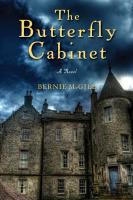
I recently read The Butterfly Cabinetby Bernie McGill and I was fascinated by the tale it weaves. Historical fiction based on real events always stirs my imagination but it was more than that. The story drew me in as I was moved by the plight of the child and I found the voices of the two characters who narrate this story very believable. Harriet, the mistress of the house, and Maddie, one of the servants, became real for me as I turned the pages (ok, I was pressing the button on my Kindle – but I was so engrossed that I was feeling for the edge of the page as I read). Since I enjoyed the book so much I invited the author, Bernie McGill, to visit Ascroft, eh? to answer a few questions about it.

Welcome Bernie. Shall we get started?

Tell us about your novel

BMcG: The novel is inspired by the true story of what happened in a big house in Portstewart in 1892 when the mother of the family was charged and convicted with the killing of her only daughter, a three year old child. The family were large land owners and very well connected, with relatives in both the House of Lords and in Parliament so, as you can imagine, it was a huge scandal at the time. My version of the story has two tellers: Harriet, the mother herself, through entries in the fictional diary she kept while she served her sentence, and through an invented character, Maddie who was a maid in the house at the time. In the book, Maddie is telling the story to Harriet’s grand-daughter, Anna. 


What prompted you to write about this historical event?

BMcG: I came across the story quite a few years ago in a local parish bulletin and I couldn’t get it out of my head. It was quite a short article about the tragedy. The mother was found guilty of tying up her daughter and leaving her alone in a wardrobe room in the house. The child strangled. The mother was imprisoned, at the time pregnant with her ninth child.


How closely did you stick to the historical facts? If youused them loosely, how did you decide whether to deviatefrom them?

BMcG: I stuck to the facts pretty closely in terms of the recorded sequence of events that led up to and immediately followed the child’s death, and I kept the story in the historical timeframe in which it had happened, but I decided to move the site of the house. The incident that inspired the book happened at Cromore House, which is inland from Portstewart, hidden from the main road, but I wanted the building to be closer to the sea, and in a position that physically dominated the town, so I changed the setting to O’Hara Castle, now Dominican College. O’Hara Castle was owned by the same family at the time. Although I knew that they hadn’t, it wasn’t beyond the bounds of possibility that the newly married son would have gone to live there with his young wife. That was a crucial decision because it gave me a bit of freedom to imagine the story of what could have happened there. It was very clear to me that I was writing a fiction. I think that, sometimes, you have to free yourself from the strait jacket that the facts can be in order to create something new. 


What research did you do for this book?

BMcG: The trial had been very well documented in the Coleraine Chronicle at the time so I spent many hours in Coleraine library reading the coverage on microfilm. The husband of the family was a justice of the peace, his father was an MP and I found references to national and international newspaper coverage as well. I travelled to Dublin to read copies of the Irish Times held at the National Library, and to examine the prison records from Grangegorman prison which are held at the National Archive. I also read books and articles on conditions in late Victorian prisons, and on nineteenth century domestic service and life in a big house. And I read lots of folk legend material and, of course, I read about butterflies and butterfly collecting.

Do you use a mixture of historic figures and inventedcharacters in the novel. Which is more difficult to write? Which do you prefer to write and why?

BMcG: The mother’s back story and interest in butterfly collecting was an invention of mine, as was the story of what happened to her after she was released from prison. The second narrator in the book, Maddie, was in some ways an amalgam of the servants who gave evidence at the trial but again, her personal story was an invention of my own. There were gaps in the newspaper coverage. The mother gave a statement at the child’s inquest but because neither the defendant, nor close relatives of the defendant could legally be cross-examined in court in 1892, that is the only public record of her account. The statement she gave was quite detailed and emotionless and it was re-read several times during the course of the trial. She mentioned that she locked the child in the room and put the key in her pocket and I became quite fixated about that. She seemed to be making it clear that she, herself, was to blame for what happened and that made me wonder about the kind of person she was and if there was something she wasn’t saying. That was one of the reasons why I wanted her to narrate part of the story. I wanted to hear what she might have said, had she been given the chance. I find it really useful to have some solid ground to push off from when I’m writing, whether that be an historical incident, or a personal experience of some kind, or even research into a particular interest or obsession. I like that grounding in the real. Paradoxically, for me at least, it makes it easier to leap off into a space where you can create.

In an historical novel you must vividly re-create a place and people in a bygone era. How did you bring the place and people you are writing about to life?

BMcG: I use photographs a lot when I’m writing: they’re so crammed with clues as to how people lived, dressed, behaved that it would take pages and pages to detail it in writing. I looked at a lot of photographs of the locality in the period of the late nineteenth century, as well as lots of posed Victorian studio images. It’s rare for us to take the time to really examine a photograph or an image properly, but when you do, it’s extraordinary the information that you take away from it. 


There often seems to be more scope in historical novels for male characters rather than female characters. Do you preferto write one sex or the other. And, if so, why?

BMcG: Nearly everything I write is from the point of view of a female character. I think that’s because I have trouble getting inside the male psyche. (I have two daughters: my husband is a mystery to all of us!) I’m writing something at the moment from a male perspective and it’s an interesting exercise. I don’t think the character in question comes out of it very well! I really admire writers that can make that creative leap from one gender to another. Of the books I’ve read in the last year or two, I think Joseph O’Connor does it very successfully in Ghost Light and Colm Toibin in Brooklyn, and of course Sebastian Barry in The Secret Scripture and more recently in On Canaan’s Side. I’ve just read Belinda McKeon’s Solace which is partly written from a male perspective, as is Kate Atkinson’s Started Early, Took My Dog but I can’t think of a contemporary female writer that I’ve read recently who has written a novel, historical or otherwise, entirely from a male perspective. Is Hilary Mantel’s Wolf Hall written from Cromwell’s perspective? I have a copy but haven’t read it yet. Now that I think of it, if anyone has any suggestions, I’d be very interested to hear them.

Thanks, Bernie, for the insight you’ve given us into how you conceived and wrote The Butterfly Cabinet.

Visit Bernie’s website to learn more about the book and her writing career.

About Bernie McGill: She studied English and Italian at Queen’s University, Belfast and graduated with a Masters degree in Irish Writing. She has written for the theatre, short stories and a novel, The Butterfly Cabinet. Her short fiction has been shortlisted for numerous awards and in 2008 she won the Zoetrope: All-Story Short Fiction Award in the US. She is a recent recipient of the Arts Council of Northern Ireland’s inaugural ACES(Artists’ Career Enhancement Scheme) Award in association with the Seamus Heaney Centre at Queen’s University, Belfast. She lives in Portstewart, Northern Ireland with her family and works as a Creative Writing facilitator.

Posted in February 2012 | Tagged , , , | Leave a comment

Articles That Build Businesses

Today  Sue Kasson, sales management coach and originator of Zero Stress Selling is my guest on Ascroft, eh?. She’s here to talk about one element of her marketing strategy for businesses: how to use article marketing to build up a client base.

Welcome Sue. Please tell us a bit about  the purpose your marketing strategy and how business people can use article marketing.

SK: Your journey towards your thriving, full and successful practice will be simple yet practical – 5 no-fail strategies to help you achieve your goal of filling your practice with your ideal clients. You will learn the no-fail strategies of building your list, selling your services, doing profitable teleseminars, creating products, marketing with articles and how to connect with joint venture partners. 

Executing an article marketing strategy

Here are some things to consider when you’re getting ready to execute an article marketing strategy. First, be consistent. The bottom line to all of this is that you’re in business. Successful business owners are consistent with their actions and their marketing activities.

Remember to think about the big picture. At some point, any one article can bring someone back to your website who buys a $500 product.

With articles, the cool part is that you do the work only once, and it keeps coming back for years to come. Once your article is out there, it ends up on more and more sites over time, with more and more potential eyeballs that you can send directly to your website. It may not happen tomorrow. It may not happen with every article. But when you have enough articles out there, you’re going to get quality traffic that converts to sales. It’s simply a matter of being effective and doing what it takes to get business done.

The reason this works so well is because 99% of all other people aren’t willing to do it! So if you’re the one willing to sit down and do it the right way, your results are going to mirror exactly the efforts that you put in.

The important part is that you’re building credibility with somebody before they ever even opt-in to your list. And as a result, your opt-in rate is higher once they get to your web page from an article. You may also find that the time it takes to convert a prospect to a customer is shorter when they’ve come to your site from an article rather than with other sources of traffic. They often have a higher customer value as well.

When it comes to article marketing, it simply comes down to making a commitment and sticking to it. You’ll rise quicker than your competition because they’re simply not doing the consistent activity of writing an article weekly.

Also, remember that article marketing works for local businesses, brick and mortar businesses, businesses that sell physical products, businesses that sell services and subscriptions, and anything else in-between. You name it, and article marketing will work.

The article writing system is quite simple.

  • Create quality content
  • Maximize the distribution

While your competitors are out there trying to figure out how to trick the search engines and are focused solely on gathering back links, you’re scooping up qualified traffic that think of you as the “expert”. 

Plus, you’re creating additional content that you can repurpose over and over again across different media.

Here are two more final things you’ll want to remember. The first is to get started now! Commit to doing 4 articles over the next 4 weeks. Get yourself into a pattern that you can commit to regularly. People generally create sustainable habits by doing something every day for 21 days. If you commit to the next 4 weeks, you’ll have created a habit that will set you up for long-term success.

Then follow the results you are getting for the 4 weeks. And don’t take my word for it.  Implement it and see what results you have at the end of that time period.

  • See how many back links you have showing up in Google after a couple of weeks
  • See how many visitors you get
  • See what kind of response you’re getting.
  • And then make adjustments

And remember, one single article isn’t going to change your business overnight. This is a long-term strategy. Sure, it’s possible that you hit a homerun with one of your first articles. You hit it right and you get instant results.

But for the majority of us, it’s a long-term strategy that grows over time. And if you’re doing any kind of content marketing, then you’re coming up with the content anyway. 

Think of your article marketing efforts like brushing your teeth. If you do it every day, it becomes a habit. You’ll see the results from your efforts and it just becomes a part of what you do on a regular basis.

The point is that people want content. The Internet is driven by content. And you’ll be pleasantly surprised when you see the great results you get for what turns into something that can become a significant portion of your overall business.

Thanks for joining me, Sue. Readers who enjoyed these tips and would like to learn more about Sue’s practical sales strategies, may visit Sue’s website.

About Sue Kasson: She has a 20+ year sales and sales management background with several Fortune 500 companies and, in the last 11 years, has trained and coached hundreds of people to help them get more clients and sell more of their products and services. She is also the author of two books.

She specializes in helping business owners get more clients by having relaxed, authentic and confident client enrollment conversations. She is on a mission to help coaches and consultants fill their practices and learn to enjoy getting clients without stress or fear.

Posted in February 2012 | Tagged , , , , , , | 5 Comments

My Plea To The Groundhog

This is my plea to the groundhog today –

Keep your head below the parapet

Lest stray sunbeams frighten you

On winter’s banishment, my heart is set

Bring me those summer days, so brief and few.

Posted in February 2012 | Tagged , , | Leave a comment

An Encounter With Karma: Paul Magid’s New Novel

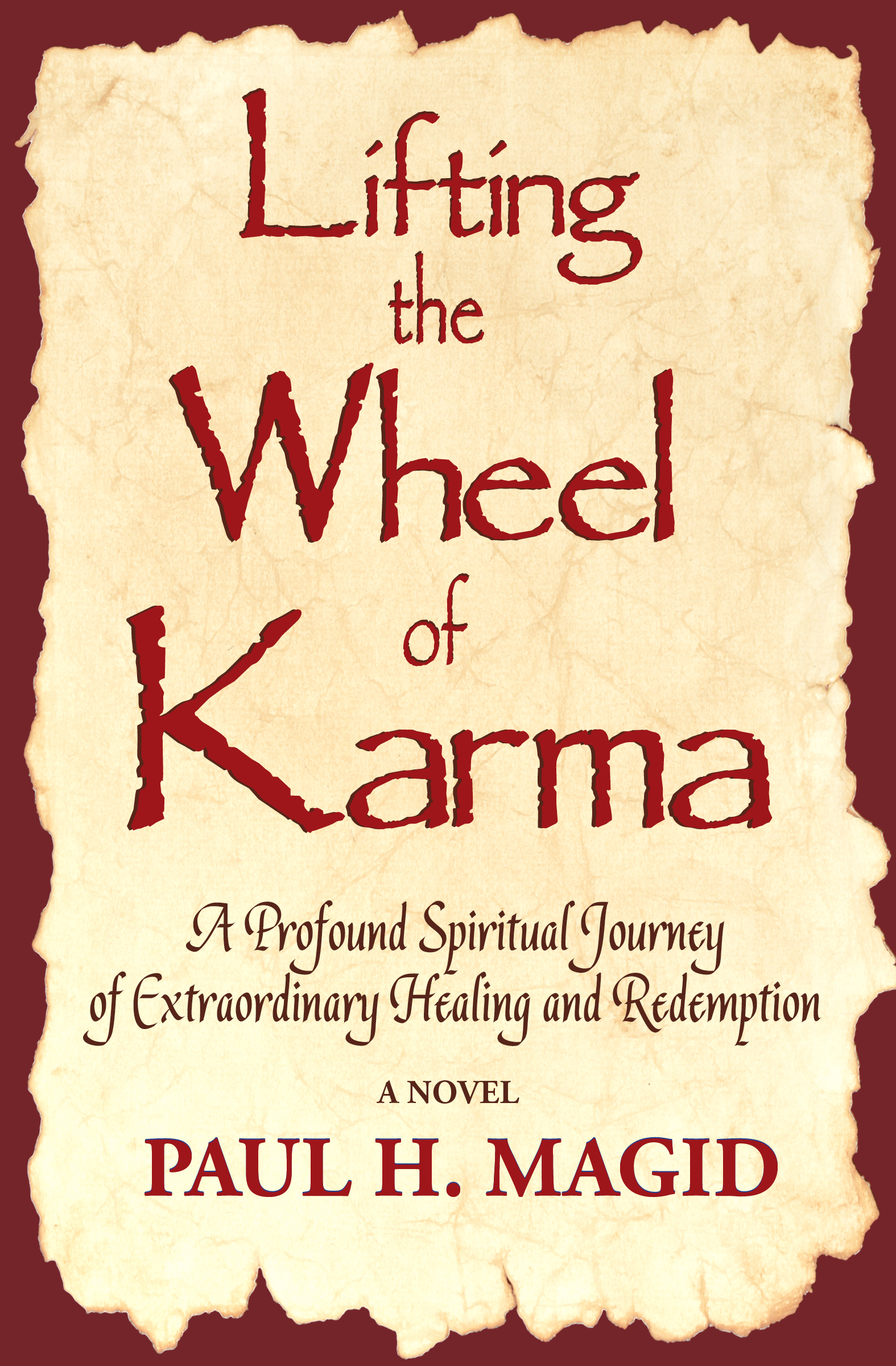
Today I’m hosting Paul H. Magid to Ascroft, eh? to discuss his new young adult novel, Lifting the Wheel of Karma.

He describes the book as “a modern tale that harkens back to the myths of antiquity. It takes you on a remarkable journey, while exploring the themes of healing, redemption, forgiveness, sacrifice, and ultimately…peace within.”

The publisher summarises the plot thus: Joseph Connell is a gifted high school athlete from Montana, loved deeply by his family, yet tormented by nightmarish visions he can neither explain nor escape. He believes the answer to what threatens to crush him can be found in the knowledge possessed by a mystical old wise man who lives deep within the remote Himalayas of India. If Joseph is ever to find the peace he so desperately seeks, he must get this wise old man to reveal what he truly knows, but that will not be easy…for this sage knows far more than he admits.

Welcome Paul. Thanks for dropping by during your blog tour. Let’s get started, shall we?

How do you go about making the setting come alive for the reader?
PM
: I literally read dozens and dozens of books on northern India, and the Himalayas in particular, but while that gave me interesting information, it didn’t help me bring it “alive”. To do that, I had to travel them personally. Truth be told, it was a gruelling experience. Over several weeks I would often spend up to twelve hours per day in the car, which wasn’t as easy as it sounds. I travelled to literally the highest mountain peaks in all of India, where the roads were more often than not narrow and filled with hairpin turns every fifty feet or less. In some places there wasn’t even a “road” in the traditional sense, and very often we had to navigate around cattle and Holy Men trekking to temples as old as the 8th Century A.D. So for me, travelling as my main characters did was the most authentic way to make the area come alive for the reader.

How do you introduce them to a place they may not be familiar with?
PM:
I like to start with details and descriptions so that the setting feels tangible and real. Once the physical setting, especially such an unfamiliar and exotic one, has been established, it makes for a more powerful reading experience.

How do you transport them there through your writing?
PM: I made sure the reader felt as if they were traveling along with my characters, which is exactly what several readers and reviewers said.

Why did you choose this setting?
PM: I chose this setting to enhance the magical and mystical experience for the reader.

How is it a fundamental part of your overall theme?
PM:
The setting of the Himalayas adds to the sense of spiritual journey.

What inspired you to write this book?

PM: I am often asked that. While I always knew I wanted to share with the world a deeply meaningful tale, I also knew I wanted to deliver one that recognizes that our lives are permeated and guided by forces beyond our control, forces more powerful than us, and very often with designs not of our choosing that will challenge us physically, emotionally, and spiritually.

I believe that Life itself is a spiritual journey, often a painful one, yet persevering through that pain can lead to powerful wisdom and healing insights. For me, the most engaging spiritual stories are the ones that tap into the mythical dimension that resonates deep within the collective unconscious of us all, which is why I chose to write a modern tale that harkens back to the myths of antiquity.

I was also most certainly inspired by the events of my own life, which gave my novel its singular sense of intensity and purpose. Sometimes I think I have endured more in this one lifetime than some people might endure in ten. I have been paralyzed from the neck down in a severe spinal compression accident, though fortunately I made a full recovery.

I was beset in the decades that followed with multiple painful joint reconstruction surgeries, Hashimoto’s Disease (thyroid), Gilbert’s Disease (liver), Crohn’s Disease (intestinal), and Addison’s Disease (adrenal). I still must take more medications each day than most people take in vitamins in a week’s time. I made a searing film about my life, A Life Unfinished, which screened in The Hamptons International Film Festival.

It was this lifetime filled with unrelenting hardship and penetrating adversity that severely tested my inner strength, resolve, belief system, and infused me with the creative drive to craft a novel that is a distinctive mix of enlightening spiritual journey with the intensity and power of the ancient mythological archetype.

I actually started writing Lifting the Wheel of Karma, 25 years ago while I was still in high school. To be candid, I tried repeatedly to abandon it, because it was so difficult and demanding and taxing to “get it right”. But fortunately for me, the work refused to be forsaken, and in time I realized that writing this story was my Dharma – my duty in life.

Thank you, Paul, for visiting Ascroft, eh? to tell us a bit about Lifting the Wheel of Karma. The book is available in paperback and ebook forms from booksellers, including Amazon and Barnes and Noble. Readers can learn more about the book and how to purchase it on Paul’s website and also on the book’s Facebook page.

About the Author: Paul H. Magid started writing his debut novel, Lifting the Wheel of Karma, twenty-five years ago while still in high school. It took him so long to complete because he tried repeatedly to abandon it, but the work refused to be forsaken. Along the way he has worked as a Wall Street financial analyst, a waiter (not a very good one), a Hollywood Agent Trainee, a real estate developer, a summer day camp director, an award winning screenwriter, and independent filmmaker—including his autobiographical film, A Life Unfinished, which screened in The Hamptons International Film Festival.

Posted in January 2012 | Tagged , , , , , , | 2 Comments