O’Dowd Duo’s First Novel: The Scarlet Ribbon

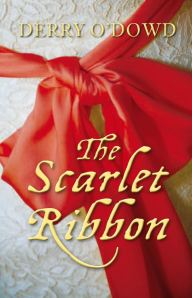
The Scarlet Ribbon by Derry O’Dowd is the novel which was chosen to launch The History Press Ireland’s fiction line. Last week I featured the author of another one of this publisher’s titles, Annemarie Neary who wrote A Parachute in the Lime Tree. 

The Scarlet Ribbon explores the subject of the first man-midwives and the development of scarlet coverobstetrics and gynaecology as a branch of medicine. I knew nothing about this subject before I read the novel but I was curious. So I started reading. The details of real obstetric cases that are woven into the story intrigued me and I also empathised with the plight of the widowed protagonist, James Quinn – in other words, I enjoyed the book.

I’ve invited one half of the duo, Derry O’Dowd, to Ascroft, eh? to answer a few questions about the book. Welcome Katy. Let’s get started, shall we?

Tell us about your novel.

The Scarlet Ribbon follows James Quinn, a young Irish surgeon battling prejudice, suspicion and personal demons in his controversial quest to change the face of medicine. Following his marriage, tragedy strikes, thrusting James into a life of turmoil and despair. Throwing himself into his work, the young surgeon eventually begins to find solace in the most unexpected of places. From the backstreets of Paris, through the glittering social whirl of London, and finally back to Ireland again, this is a story of the thorns of love and the harsh reality of life in the eighteenth century, where nothing is simple and complications of all kinds surround James Quinn, man midwife.

What prompted you to write about this historical event or era?

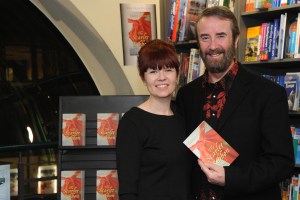
Writing duo, Katy O'Dowd and Michael O'Dowd

Writing duo, Katy O’Dowd and Michael O’Dowd

I write under my own name, Katy O’Dowd, but also with my Dad as Derry O’Dowd – The Scarlet Ribbon was his idea. He is an obstetrician gynaecologist and medical historian, and he wanted to write about the birth (pardon the pun) of that branch of medicine.

How closely did you stick to the historical facts? If you used them loosely, how did you decide whether to deviate from them?

The historical facts were stuck to fairly rigidly. For example, all of the medical cases in the book are based on real events.

What research did you do for this book?

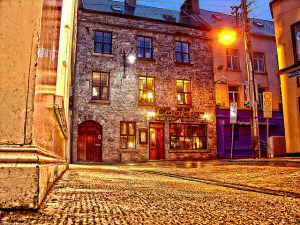
James Quinn's family home

James Quinn’s family home

As mentioned above, Dad is a medical historian, and he had already done a huge amount of research for his books The History of Medications for Women and The History of Obstetrics and Gynaecology. I did some supplementary research on things like the clothing, furniture, buildings, and customs of the era along with reading about herbal treatments and household management of the time. We also took a trip to Paris. I was six months pregnant at the time, and still suffering from horrendous morning sickness, so it could have been a bit more idyllic to say the least, but I’m very glad we went as I think it really helped when writing the scenes set in Paris.

Do you use a mixture of historic figures and invented characters in the novel. Which is more difficult to write? Which do you prefer to write and why?

I think it is probably more difficult to write about historic figures. Although they had been researched thoroughly, it was daunting to put words into their mouths.  

In an historical novel you must vividly re-create a place and people in a bygone era. How did you bring the place and people you are writing about to life?

The research trip to Paris, using pictures – for example the outfits and furniture at the V&A Museum (had a visit there too to see things in ‘real life’) and listening to music from the era really helped.

There often seems to be more scope in historical novels for male characters rather than female characters. Do you prefer to write one sex or the other. And, if so, why?

I used to prefer writing male characters, but now like writing female characters just as much – if they step outside the bounds of their traditional roles of home-makes and child-bearers they quickly become extraordinary, which is great fun.

Was it difficult to write with another person and how did you split the work?

I didn’t find it difficult. Dad came to me with the idea and asked me to write it. He worked out a plot and we sat and went through chapter by chapter, adding to things, talking about the characters in-depth. And of course he had to explain the medical scenes to me. I went away and wrote a couple of chapters at a time and then we reviewed them. We are collaborating again now, on the follow-up to The Scarlet Ribbon.

Thank you, Katy, for telling us a bit more about the book – the story and the research that went into creating it. Readers can learn more about The Scarlet Ribbon on Derry O’Dowd’s website. Katy can be contacted through her website and her Facebook page as well as on Twitter (@katyod).

Posted in December 2012 | Tagged , , , , , , , , | 2 Comments

Nobody Has To Know: A Life Unravelling

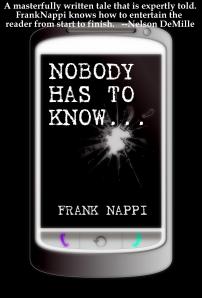
Last week I finished reading Nobody Has To Know by Frank Nappi. At first I thought the novel was a story about romantic relationships and moral boundaries – and it was. But then it went beyond this theme and slipped into the darker realm of blackmail and murder. The novel is a gripping read and, although I had my suspicions, I didn’t manage to figure everything out before the end of the book. But by the time I got to the last page the pieces fell into place.

I’ve invited Frank Nappi here today to tell us a bit more about his novel. Welcome Frank. Let’s get started, shall we?

Tell us about your novel.

hNobody Has to Know is a dark and somewhat daring psychological thriller that, tells the story of Cameron Baldridge, a popular high school teacher whose relationship with one of his students leads him down an unfortunate and self-destructive path. Stalked through text-messages, Baldridge fights for his life against a terrifying extortion plot and the forces that threaten to expose him. Nobody Has to Know is a sobering look into a world of secrets, lies, and shocking revelations, and will leave the reader wondering many things, including whether or not you can ever really know the person you love. On a more profound level, Nobody Has To Know illustrates how the landscape of our past influences our present and how, sadly, some of these more indelible moments hold us prisoner for the duration of our lives.

What prompted you to write about the topic of sexual relationships between minors and adults?

The book is not about sexual encounters between minors and adults. While this is one of the darker aspects of the story, the indiscretions that occur in the story are simply vehicles through which the issues of pain and loss and damaged psyches may be explored. It is my hope that readers will not become mired in this one facet of the story and that they will take more than just a cursory look at the story and allow themselves to delve deeper into the real issues that are examined.

What research did you do for this book?

For this novel, there was no research necessary. The plot is fiction. My experience as a teacher also assisted me in replicating some of the school scenes and other areas germane to the world of education.

How did you bring the characters you are writing about to life?

My approach to this is most likely no different than the approach of other authors. In any great work, one that resonates with the reader, there needs to be authenticity with regard to the characters. If a reader does not invest in the characters, the author’s message is lost. It is my experience that “real characters” think and act just as real folks would. There is nothing contrived about their existence – their words and emotional responses to situations are emblematic of those of real people. This can be accomplished in part through the use of flashbacks, which become windows into the psyches of these individuals. If a reader knows where a character has been, where he is presently becomes far more plausible.

It can be difficult to get inside the mind of someone of the opposite sex. Do you prefer to write male or female characters. And why?

Naturally, it easier to write from the perspective of your own gender. However, I believe that all characters that authors create are composites – amalgamations of a variety of people whom we have met and with whom we have interacted during our lives. That being said, it is very possible for an author to create an authentic, heartfelt character of the opposite gender. It may be more challenging, but I feel as though really good authors are also exceptional students of human nature as well. This “study” of human behaviour helps to bridge the gender gaps. I have no preference as to what type of character I write. It is more important to me to craft a persona that resonates with my readers.

Thanks for stopping by and telling us a bit about Nobody Has to Know, Frank. I started reading the novel, expecting to explore the subject of the boundaries of student-teacher relationships, and found that there was much more to this book. I had to keep turning the pages to find out who was tormenting Baldridge and how he would escape the quagmire he had dropped himself into.

Readers can learn more about the author by visiting his website and his blog.

Nobody Has To Know: Amazon page.

About Frank Nappi:

frankFrank has taught high school English and Creative Writing for over twenty years. His debut novel, Echoes From The Infantry, received national attention, including MWSA’s silver medal for outstanding fiction. His follow-up novel, The Legend of Mickey Tussler, garnered rave reviews as well, including a movie adaptation of the touching story “A Mile in His Shoes” starring Dean Cain and Luke Schroder. Frank continues to produce quality work, including Sophomore Campaign, the intriguing sequel to the much heralded original story, and is presently at work on a third installment of the unique series. He lives on Long Island, New York with his wife Julia and their two sons, Nicholas and Anthony.

Posted in December 2012 | Tagged , , , , | 3 Comments

Fermanagh Miscellany 2012 Is Here

I’ve delayed starting my Christmas preparations because I had a book to get to the printers and then a launch to organise. So there’s no decorations up at our house, few gifts bought and no Christmas cards written – don’t tell me the last posting dates. I know!

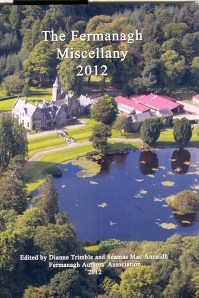
Launch 2012 6Well, my co-editor, Seamas Mac Annaidh and I checked the print proof a couple weeks ago and Fermanagh Miscellany 2012 went to the printer. A stack of boxes arrived on my doorstep earlier this week and,once I knew we had the books ready, I scrambled to get press releases out and bits and pieces organised so we would have some nibbles at the launch. Everything came together ok and we held the launch today in Enniskillen library.

This year’s anthology is dedicated to retired Bishop of Derry, Dr Edward Daly. He accepted our invitation to attend the launch and he spoke about his fond memories of growing up in County Fermanagh. He has lived a full and varied life and he is still looking forward to more adventures and challenges. There’s a lesson for me there and I hope I will always challenge myself too.

More information about the launch and Fermanagh Miscellany 2012 can be found on Fermanagh Authors’ Association’s blog post today.

This was my fourth time as co-editor of the anthology and I was still excited when the order arrived and I opened the first box of books and held a copy in my hands. So today was definitely a day to celebrate. And I had a great day – but now it may just be time to dig out that Christmas card list…

FM 2012 low res

Posted in December 2012 | Tagged , , , , , , | 1 Comment

An Intriguing Find: A Parachute in the Lime Tree

At the Historical Novel Society conference in September I met Annemarie Neary, the author of A Parachute in the Lime Tree, and I was intrigued to hear about her book as it is one of the first novels to be published by the predominantly non-fiction publisher, The History Press Ireland. I read the book soon after I returned home from the conference and enjoyed it immensely. The book is a completely different look at the Emergency as World War II was known as in Ireland. It is partly love story and partly historical novel and gives a glimpse into what life was like in Ireland when most of the Western world was officially at war.

Events in this story don’t follow a predictable path – it’s not a formulaic war romance and that made it interesting to me. As I read things didn’t always turn out as I willed them to but I was still satisfied with the novel’s conclusion. The four main characters’ stories weave together in a clever, believable way and I got involved in each person’s struggles. This is a quirky historical fiction that will stay in my mind. So I’m delighted to welcome Annemarie Neary here today to talk about the book. Let’s get started, shall we?

Tell us about your novel

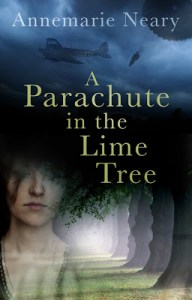
ParachuteThe novel is set in neutral Ireland in 1941 during the tense weeks following the Belfast blitz. The morning after Belfast is bombed, Kitty discovers a German parachute caught in one of the lime trees on her land. That sets up a chain of events with life-changing consequences for all concerned. Most of the narrative takes place in Ireland, but the story’s roots are in Berlin, in the relationship between Oskar, whose parachute Kitty discovers, and his Jewish sweetheart, Elsa. 

What prompted you to write about this historical event or era?

My aunt was a student at a music school in Dublin where one of the students was a German-Jewish prodigy exiled from pre-war Berlin so that might well have been one reason. However, I think it was fundamentally a ‘what if?’ In this case, what if a man fell from the sky?

How closely did you stick to the historical facts?

The story is fictional, of course, but I did set myself the condition that everything that happens in the book must have been possible. 

If you
used them loosely, how did you decide whether to deviate
from them?

I didn’t knowingly deviate from the historical framework.

What research did you do for this book?

A lot! I read many books on neutral Ireland (In Time of War by Robert Fisk is by far the most comprehensive but there are good accounts on certain aspects by people like Clair Wills, T Ryle Dwyer and others). I also managed to contact an octogenarian former member of a Luftwaffe crew. Someone I encountered on the internet very kindly interviewed him on my behalf at his home in Australia and sent me the tape. I scoured contemporary newspapers for little details of everyday life glimpsed in the background of photographs or through the small ads.  


Do you use a mixture of historic figures and inventedcharacters in the novel?

All my characters are fictional. In only a very few cases are real characters referred to and they all remain off–stage.

In an historical novel you must vividly re-create a place and people in a bygone era. How did you bring the place and people you are writing about to life?

Annemarie Neary

Annemarie Neary

It’s important to remember that some things never change. A daisy is still a daisy and milk goes sour. When you include historical detail you must be careful not to shoe-horn it in. It must arise naturally and be the kind of thing that your characters would notice in the normal course. 


There often seems to be more scope in historical novels for
male characters rather than female characters. Do you prefer
to write one sex or the other. And, if so, why?

Not sure why this should necessarily be the case. I have four point-of-view characters, two male and two female. I think it is probably easier to write your own gender, but to cross over and imagine yourself a 20-year old Luftwaffe conscript is for me the essence of what writing is about.


I’m always curious about how the novels I read were created so thank you for answering my questions, Annemarie.

To learn more about Annemarie and A Parachute in the Lime Tree readers are invited to visit  her website.

The book is available on Amazon in print and ebook forms.

Posted in December 2012, Uncategorized | Tagged , , , , , , , | 1 Comment

The Women’s War

I first met Fenella Miller at the Historical Novel Society conference in Manchester a couple years ago. As I talked to her I was impressed to learn how quickly she is able to complete each novel she writes – she has a long list of publishing credits. After the conference I checked my local library for her books. I found A Suitable Husband, a Regency romance. I enjoyed the book but I’m not really a fan of Regency fiction so I didn’t immediately search for any of her other titles.

Fenella recently released part 1 of Barbara’s War, a novel set during World War II and this title caught my attention.  When I read the book I immediately warmed to it as this era particularly interests me and I’ve spent a lot of time researching the Second World War for my own writing. The more I learn about the period, the more I want to know so I’m always intrigued by books set during this era. Fenella is currently writing the second part of Barbara’s War – which I’m waiting to read! Last week she also released another novel set during the same period, Hannah’s War. Fenella is visiting Ascroft, eh? today to talk about Hannah’s War.

Welcome, Fenella. Shall we get started?

Tell us about your novel.

Hannah’s War is a romantic historical suspense set in WW2. 

What prompted you to write about this historical event or era?
I had been writing Regency romance and wanted to do something different. WW2 is an era I am also familiar with so this is when I set it. 

How closely did you stick to the historical facts? If you used them loosely, how did you decide whether to deviate from them?

This is a work of fiction so the characters are entirely from my imagination. However the place, Debfield, is in fact Debden in Suffolk. The peripheral events mentioned are factual but the events involving my characters are fictional.

What research did you do for this book?

I spent two days in Debden and Saffron Walden and spent time with the local historian and a local farmer who had lived through the war. He drove me around the actual RAF base – an amazing experience. I think this might be the only undeveloped base – the infrastructure in the surrounding area is too poor for any building to have taken place. I have dozens of research books and used the internet. The buildings mentioned in Debfield (Debden) are as they were in the war. 

Do you use a mixture of historic figures and invented characters in the novel or any of your novels. If so, which is more difficult to write? Which to you prefer to write and why?

All my characters are fictional but many of the events are true.  A German plane did land on Debden base.

In an historical novel you must vividly re-create a place and people in a bygone era. How did you bring the place and people you are writing about to life?

Talking to people who were alive during the period is the best way – and I did a lot of this. My father and stepfather both talked a lot about their experiences in the RAF so I had that to draw on too. A writer must study the period, read books written then, do sufficient research to get the details right.

There often seems to be more scope in historical novels for male characters rather than female characters. Do you prefer to write one sex or the other. And, if so, why?

I write from both viewpoints. I don’t agree that there is more scope for male characters – if you’re writing fiction you create the main protagonists.  A historical written by a man will tend to have a male lead and be more action based – Bernard Cornwall being a perfect example. Of course Elizabeth Chadwick writes fact based books about the lives of real people and has several with male leads.

I enjoy writing from either viewpoint – I like to be in the heads of all my characters.

Thank you, Fenella, for answering my questions. I look forward to reading part 2 of Barbara’s War and I’ve just started Hannah’s War too.

About Fenella Miller: Before becoming an indie author, she had 9 novels published by Robert Hale and numerous novellas published by Linford, My Weekly and The People’s Friend. Readers can learn more about Fenella and her writing at her website.   

Posted in November 2012 | Tagged , , , , , , , | 2 Comments

Charyn Is Not An Average Thriller Writer

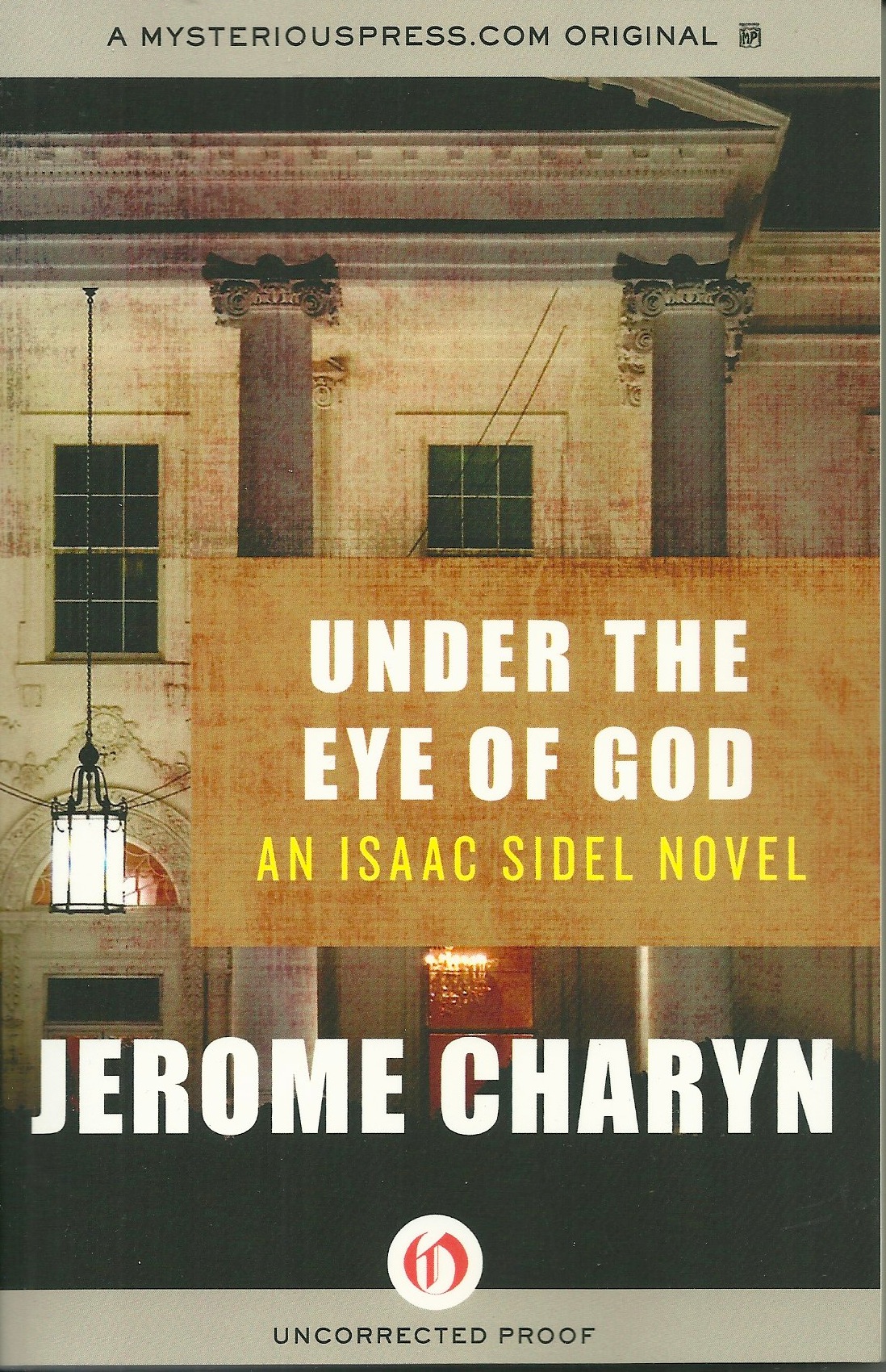
A couple days ago I finished reading my second Jerome Charyn novel. After reading The Secret Life of Emily Dickinson last year I expected this novel to be somewhat different than the average thriller and I wasn’t wrong.  Under the Eye of God by Jerome Charyn is a quirky book: a thriller that doesn’t seem overly concerned with the action in the story. The Examiner.com  provides a good introduction to this book:

“Under the Eye of God is the eleventh Isaac Sidel Novel by Jerome Charyn. For those of you that are not familiar with this series, Isaac Sidel was a New York City Police Department commissioner, turned Mayor. As a popular Mayor, Baseball Czar J. Michael Storm asks Sidel to join him on the Democratic ticket as his Vice President. The Democrats win the election by a landslide.

Writing to some degree as satire, this thriller pokes fun at the political process and at the candidates. You will read about corruption and sex scandals including accusations of pedophilia. A rogue astrologer also becomes involved. Issac Sidel, however, remains above the scandals. He may be loosely based on the author’s brother, Harvey, who is a homicide detective with the NYPD.”

This novel is definitely not a run of the mill thriller. It seems to be more of a character study of the main character, Isaac Sidel. The reader spends a lot of time inside Sidel’s head discovering what he is thinking and feeling about everything that’s happening around him as well as getting a glimpse into his past. The reader gets to know Sidel very well by the end of the story. Some of the tensest action scenes are not played out on the page but are recounted by Sidel as he ponders the events.

I didn’t find this book an easy read. The plot doesn’t unfold in a straightforward manner. I had to keep reading and let Sidel’s thoughts and memories spill out, gradually giving me the entire picture. I have to admit I wasn’t terribly interested in the actual plot of the book even though, with the US presidential election held early this month, it is very topical. There is too much double crossing and scheming going on for the reader to guess who can be trusted and what is likely to happen next – maybe it’s more like real life than the average novel.

But I found it worth persevering with the story for the chance to slip into the world that Charyn creates. He takes Sidel back in his memories to his childhood in 1940s gangster run New York City. It’s a world of violence and opulence with a moral code all its own. Having a good grasp of American modern history will definitely help the reader understand the significance of Charyn’s references to various aspects of the social history and politics of that era (the New Deal, Franklin Roosevelt, J Edgar Hoover, Arnold Rothstein and Lindy’s Deli) but it’s not obligatory.  The novel evokes this bygone era of American history vividly and fondly. Despite the brutality of the crime underworld, Charyn depicts 1940s New York as a place of lavish excess and vitality – the place and the people are larger than life. There’s the grandeur of hotels like the Waldorf Astoria and the hypnotic effect of dancehall girls on the men they meet in the midst of unmerciful Mafia and police violence. The reader gets lost in the elegant Old World charm of the New York Sidel remembers in the middle of this fast paced thriller. When I began the book I found this juxtaposition hard to fathom but I warmed to it as I continued to read.

I think one of Charyn’s greatest strengths is the unique voices his characters possess. Each character is complex, motivated by a plethora of values and desires that often war with each other. Although the story is told mainly by Sidel we also get glimpses into the minds of other prominent characters and they are fascinating people. I particularly liked the woman Sidel believes he is in love with: Trudy Winkelman. She is well drawn; Charyn creates a gutsy, conflicted woman, in an impossible situation, who is devoted to her children and smitten by the man she is supposed to ensnare.

Charyn’s narrative style is unusual and nothing is ever described simply. His prose seems to ramble along with his characters’ thoughts and the metaphors he chooses may not be immediately clear to the average reader. But the sometimes ornate language he uses and his characters’ unique voices combine to paint almost a 3D image of his characters’ world.  

I’m not sure whether this book will appeal to the average thriller reader. The author’s writing style sets it apart from many books in the genre. But it is a great book for readers who want to explore the mind of a conflicted character while they enjoy a dramatic plot. Historical fiction fans will also find the evocation of 1940s New York intriguing. I have to admit that it took me a while to get into this book and I wasn’t sure that I wanted to continue reading but after I finished it my head was filled with the voices of some very unusual and beguiling characters and visions of New York as it was in an exciting era before my time. I’m glad I persevered to the end and I can recommend the book to other readers. Enjoy Charyn’s and Sidel’s New York, past and present.

The author is currently on a blog tour. For more reviews and information about this book visit the tour site.

About Jerome Charyn: He is the critically acclaimed author of nearly fifty books. Born in the Bronx in 1937, he attended Columbia College, where he fell in love with the works of William Faulkner and James Joyce. After graduating, he took a job as a playground director and wrote in his spare time, producing his first novel, a Lower East Side fairytale called Once Upon a Droshky, in 1964. 

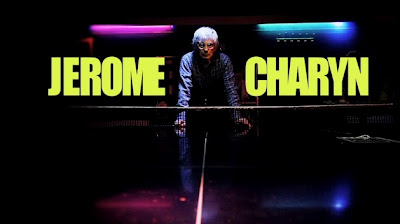
In 1974 Charyn published Blue Eyes, his first Isaac Sidel mystery. Begun as a distraction while trying to finish a different book, this first in a series of Sidel novels introduced the eccentric, near-mythic detective and his bizarre cast of sidekicks. Charyn followed the character through Citizen Sidel (1999), which ends with his antihero making a run at the White House. Charyn, who divides his time between New York and Paris, is also accomplished at table tennis, and once ranked amongst France’s top Amazon10 percent of ping-pong players. Readers are invited to visit his website.

Posted in November 2011 | Tagged , , , , , , , | 2 Comments

Too Many Titanic Books? Is There Room For Another?

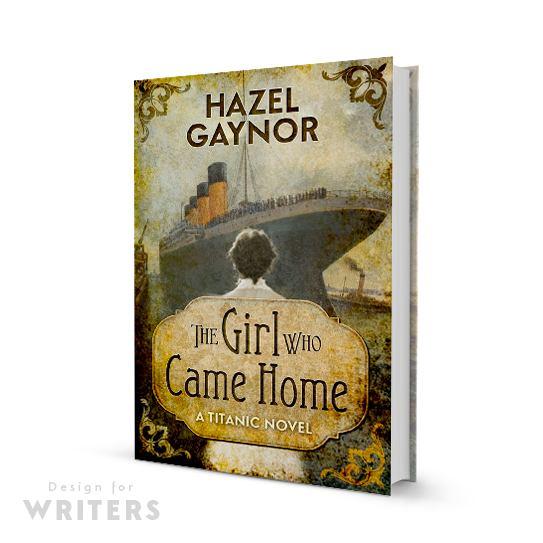
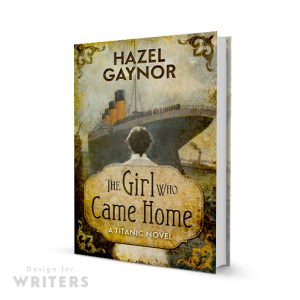
When I first noticed The Girl Who Came Home by Hazel Gaynor listed in Amazon’s historical fiction new books I wasn’t interested. I thought that the sinking of the Titanic was a topic that had just been done too often – books about it were everywhere as the centenary of the event approached. I had read Walter Lord’s account of the event when I was in my teens and I was very moved by it. So I didn’t think a novel could compete with that non-fiction book and I brushed past it in Amazon’s listings.

I don’t know what made me change my mind. Maybe the centenary documentaries on tv stirred my memories of how A Night To Remember had gripped me and re-kindled my interest in the Titanic. Or it may have been because I learned that the novel’s plot centred on Irish passengers aboard the ship and I am always drawn to books with an Irish connection. Whatever the reason I downloaded the novel and started to read – and I didn’t find it a well-worn story at all. The characters and the story ensnared me. The world one hundred years ago came alive and I enjoyed stepping back in time, even though the events unfolding were harrowing. Since I enjoyed the story, I’m pleased to welcome Hazel to Ascroft, eh? to answer a few questions about the novel. So shall we get started?  

Tell us about your novel, Hazel.
HG: My novel is called The Girl Who Came Home and was inspired by true events surrounding a group of fourteen friends and relatives from a small, rural Parish in County Mayo, who travelled together on Titanic. The group is known locally as The Addergoole Fourteen. My novel tells the imagined story of one of the survivors and her great-granddaughter. It is, at its core, a story about love and hope in the face of adversity and, I hope, tells a less well known and very human side of the Titanic story.
What prompted you to write about this historical event?
HG: I don’t have a grandfather who played in the band, a grandmother who was hoping to start a better life in America and I don’t come from any of the Titanic towns or cities. In fact, there is very little to connect me to Titanic at all, other than a long held fascination with the story of the unsinkable ship of dreams. I was in my teens when the wreck of Titanic was discovered and I remember being completely fascinated by so many aspects of the story: the Edwardian era, the unimaginable human tragedy, the stark divisions of social class and the remarkable chain of events which contributed to Titanic’s demise. It is simply beyond belief, and that is what makes it so fascinating.

For many years I have said I will write a book about Titanic, but whenever it came to putting pen to paper (or fingers to typewriter) it was just far too daunting a prospect to tackle. Where to start? How would I ever do justice to the event? Would I ever be able to capture a sense of life aboard this amazing ship? It was only last year, after pursuing my writing seriously for two years, that I started doing detailed research, particularly into the Irish connection with Titanic.

Writing The Girl Who Came Home was a daunting and incredibly moving experience. For me, this wasn’t simply about writing a book – it was about understanding better a part of history, and doing justice to the memory of all those who lost their lives that night. I knew I wanted to tell a very human story about Titanic, and that I was interested in exploring the aftermath for the survivors, and for relatives waiting back home. I was also particularly interested in the Irish passengers. One day, when I was studying the passenger manifests and press reports from the survivors, I came across information relating to Annie McGowan and Annie Kate Kelly. Realising then that they were part of a larger group who had travelled from Mayo, I searched for more information and came across the website for the Addergoole Titanic Society. I read a wonderful book about the group, which was written by Pauline Barrett, a descendant of one of the fourteen. I knew, immediately, that theirs was the story I wanted to tell.

How closely did you stick to the historical facts? If you used them loosely, how did you decide whether to deviate from them?
HG: In terms of the Titanic itself – its layout, journey, experience of passengers on board etc. – I stuck to the facts meticulously. Titanic’s size, opulence and passengers are so well documented and are so much a part of the Titanic story and legend that I obviously couldn’t change any of that. Also, I was terrified that a ‘Titanorak’ would spot a flaw in my description of the ship, the cutlery, the layout of the cabins that I was extremely painstaking in my research from that aspect of the story!

The story of Grace, the great-granddaughter in my novel, is entirely fictional and while I was inspired by the true story of The Addergoole Fourteen, and based my characters loosely on those individuals, including my heroine, Maggie Murphy, I added my own elements to their personalities and to their family lives and relationships.

What I found particularly interesting when researching the events surrounding the sinking of the Titanic was the less well known side of the event – the experience of relatives awaiting the arrival of the Carpathia in New York and the experience of survivors who were on board the Carpathia for several days and then had to spend days and weeks in hospitals in New York before making their onward journeys. I stuck closely to the facts when re-telling those parts of the story.

What research did you do for this book?
HG: Being such a huge event, and being the first real event to be broadcast in mass media, there is an incredible volume of information and detail available on Titanic. I researched and researched online and in press archives, right down to the smallest details of the cabins my characters slept in, the meals they ate aboard the ship and the songs they sang during their evenings. I spoke to members of The Addergoole Titanic Society who were extremely helpful. I watched the movie again (of course!). I listened to audio recordings of the survivors and watched incredible images of the Titanic setting out from Belfast and other footage of passenger’s relatives and friends massing outside the White Star Line offices on Broadway in New York when news of the disaster arrived. I studied Father Browne’s incredible photographs and read books about the disaster. I read survivor letters and newspaper articles. I was entirely immersed in Titanic’s story and rarely talked about anything else (much to the delight of my family and friends, I’m sure!).

Do you use a mixture of historic figures and invented characters in the novel. If so, which is more difficult to write? Which to you prefer to write and why?

HG: I did use some historic figures – key individuals on Titanic – although my main characters were invented. I think it is perhaps easier to write a character you have imagined entirely as nobody can correct you or disagree with your depiction of them. When writing about an actual person, you are always very conscious of ‘getting them right’; of reflecting them accurately and credibly. I think I enjoy combining both real and imagined characters in my novels and considering how my imagined character may interact with a well-known historical figure. There is always, of course, scope to add your imagined conversations and emotions to a historical character – that is what makes a book historical fiction rather than just history.

When writing the novel, I had to make notes on each character – fictional and real – to ensure that I had their role in the event correct. While my story is based around the true story of the Addergoole Fourteen, I accepted that it would be confusing for the reader if I attempted to tell each of the fourteen passenger’s stories equally. That is why I focused on just one of the girls as the central character (my character, Maggie, is actually an amalgamation of two of the youngest girls of the Addergoole group), along with her Aunt and her two friends, who are depicted to a lesser extent. The addition of the character of Harry, the steward, gave me a way in which to show the experience of crew members working on Titanic and the character Vivienne Walker-Brown (loosely based on the real passenger, actress Dorothy Gibson) provided a way to incorporate the experience of the First Class passengers as a contrast to the Ballysheen (Addergoole) group. 

In an historical novel you must vividly re-create a place and people in a bygone era. How did you bring the place and people you are writing about to life?

HG: From the start, I had a very clear vision for the book; that it would be set in two periods of time: 1912 and 1982, but with the 1912 story taking up the majority of the narrative. Essentially, this was two stories running in parallel. I then mapped out loosely what would happen in each chapter; particularly how I would take Maggie and the group she was travelling with from their village in Mayo to Queenstown, what would happen when they were on Titanic, and what was happening to their relatives in Ireland and New York while they were at sea.

I knew I wanted to capture the drama of the sinking, but that this wasn’t the main focus of my story. I wanted to focus on the experience of the relatives awaiting news at home, and on what the experience was like for the survivors in the lifeboats and once they arrived in New York. It is this aftermath of the event which isn’t so well known.

Once the structure of the chapters was in place, I wrote the story quite quickly, being careful to weave in my research details as I wrote. Although I had a mass of information to hand, and in my head, I would research specific details as I was writing that part of the book. For example, when I was writing about the experience in the lifeboats, I researched as I wrote. Again, when I wrote about the experience of the relatives waiting for survivors to disembark The Carpathia, I researched passenger accounts as I wrote. That way, I took each stage of the experience and each step, in turn – which prevented me from getting bogged down and overwhelmed by the magnitude of the story I was hoping to tell.

I think, from a research point of view, it is fantastic to have such a rich source of primary evidence as that which an event such as Titanic can provide. Such a well-known event also has an existing emotional appeal to potential readers, and they know – at least, in part – what the novel is about, which helps their purchasing decision. This has certainly helped with raising awareness of the book and generating publicity. Of course, there is always the worry that you have your facts straight, as there will – inevitably – always be someone just waiting to pick you up on your smallest of oversights. If James Cameron can admit to getting the odd thing slightly incorrect, then so can I!

There often seems to be more scope in historical novels for male characters rather than female characters. Do you prefer to write one sex or the other. And, if so, why?

HG: Actually, I disagree! I think there are some incredible historical women and, in fact, the dramatic change in the role of women over time provides great scope for a novelist. I am completely fascinated by discovering less well-known historical events and by people who may have been an interesting or influential character at the time they lived, but who may not yet be very well known as they haven’t caught the attention of historians.

I think I am naturally drawn to tell women’s stories – writing from the perspective of a woman in the early 19th century, for example, challenges a writer in 2012 to totally change your mind-set as women’s roles and attitudes were so very different. Also, I grew up reading Jane Austen and the Brontes, so I think I am possibly influenced by their incredible heroines and, even though they wrote memorable male characters, it is the women in those novels who really stand out for me. If I could emulate them, even just a little, I would be a very, very happy writer!

Thanks for answering my questions so thoroughly, Hazel. It’s obvious that your subject matter fascinated you and you put a lot of work into writing this book. I think there’s no better way to create an engaging story that readers will remember. The success your novel has already had in the short time since it was released is well deserved.  

About Hazel Gaynor: Hazel is an author and freelance writer. She started writing when she left her corporate career in March 2009; initially focusing on her award-winning parenting and lifestyle blog, Hot Cross Mum. She has since gone on to write regularly for the national press, and has appeared on TV and radio.

Her debut novel The Girl Who Came Home – A Titanic Novel was self-published in March 2012 and went on to become a number one bestseller on the Kindle Historical Fiction and Historical Romance charts. Staying with her passion for historical fiction, Hazel has just completed her second novel, set in Victorian London, for which she hopes to find a publisher very soon!

Hazel now writes a book review blog for Hello Magazine as well as guest blogging and writing regular features for writing.ie and interviewing guest authors, most recently Philippa Gregory and Sebastian Faulks.

Originally from North Yorkshire, Hazel has lived in Kildare, Ireland for the past seven years with her husband and two young children. She was the recipient of the Cecil Day Lewis Literary Bursary for Emerging Writers in October 2012 and is represented by Sheila Crowley of Curtis Brown, London.

Online she can be found on her website, her Facebook page and Twitter (@HazelGaynor).

Posted in November 2012 | Tagged , , , , , , , | 1 Comment

National Short Story Week Kindle Offer

I seem to see short story collections everywhere this week. I guess National Short Story week has made me more aware of them. When I was browsing in Easons at lunch hour today I noticed that My Weekly and The People’s Friend have both released short story collections in time for Christmas (shh – I know I shouldn’t mention that word before December….). And scanning my own bookshelves tonight I lingered at my most recent The Sunday Miscellany collection and Ireland’s Own 2012. Since the weather’s been so lousy this week I’ve used it as an excuse to take a magazine with me and grab a coffee on my lunch hour – a cosy cafe and a quick read help brighten up wet days for me.

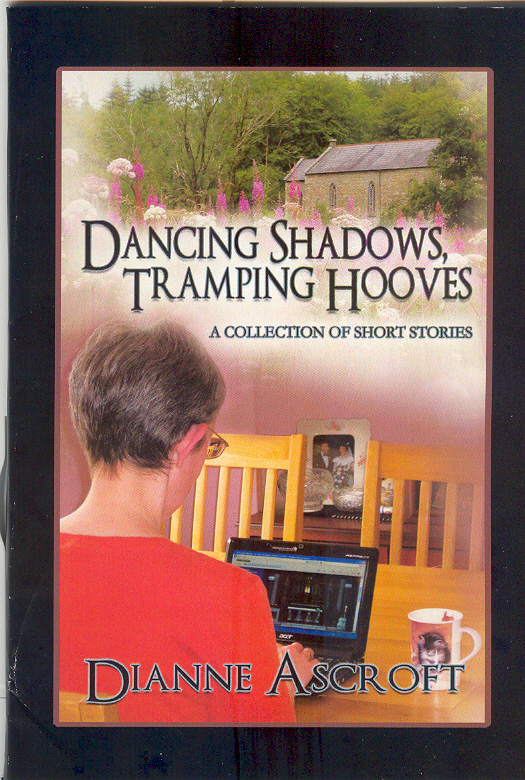
In honour of National Short Story week I gave away copies of my own short story collection, Dancing Shadows, Tramping Hooves in a Goodreads giveaway yesterday. Copies are already on their way to the winners. And today I’m offering the collection free on Amazon Kindle for one day only. 

If you’d like to brighten up your week, pop over to Amazon and download a free copy of Dancing Shadows, Tramping Hooves – today only! Enjoy the rest of National Short Story week!

Posted in November 2012 | Tagged , , , , , , , , | Leave a comment

A Serial For National Short Story Week

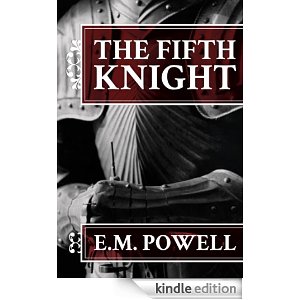
A new novel, The Fifth Knight, that’s released today is just the thing for National Short Story week.  You may be thinking that a novel isn’t really appropriate for National Short Story week – well, this one is. It’s released as a 6 part serial – every fortnight a new episode will be published until the ebook is complete. So it will feel like you are reading short stories that weave together to tell a single tale.

I’ve had a sneak preview of the novel and I was captivated by Sir Benedict, the knight the title refers to and his feisty companion, Sister Theodosia. The book is a fast paced story that provides a new twist on the story of Thomas Becket’s murder.

I wholeheartedly recommend this novel and, if you need an excuse to add another ebook to your collection, National Short Story week is the perfect time to treat yourself to the first episode of this serial, The Fifth Knight.

Posted in November 2012 | Tagged , , , , , | Leave a comment

My Contribution to National Short Story Week

Today begins National Short Story week (12-18th November). Since I was a child I’ve always loved a good story – short or long, it never mattered. Before I was old enough to read my grandfather used to spend whole afternoons reading children’s stories to me. Once I learned to read and write I was never far from a book and I began writing my own stories – and I’m still writing them.

It’s not always easy to tell a complete story in a few hundred words but I like the challenge. Sometimes you only give the reader glimpses into a character’s life. But, if these moments that are revealed are significant ones then that’s all that’s needed.

During this past summer I put together a collection of half a dozen of my short stories that have been published in various magazines, websites and anthologies. The stories in Dancing Shadows, Tramping Hooves capture moments of happiness and the dawn of understanding in several women’s lives.

In honour of National Short Story week I’m giving away copies of Dancing Shadows, Tramping Hooves this week. It is available to UK readers as a Goodreads giveaway – the offer ends 14thNovember. Details of the giveaway can be found here: http://www.goodreads.com/book/show/16080070?utm_medium=api&utm_source=giveaway_widget

Dancing Shadows, Tramping Hooves will also be available for one day only as a free Kindle ebook on Friday, 16th November.

Enjoy National Short Story week and take time out to enjoy a good tale or two – or as many as you like.

Posted in November 2012 | Tagged , , , | Leave a comment