It Was A Pleasure To Meet Martha’s Girls

It’s no secret that I enjoy reading historical fiction. I don’t limit myself to any particular era but wartime stories always interest me. Since I moved to Northern Ireland more than two decades ago I’ve developed an interest in stories set here. I haven’t found many wartime novels set in the province though so I was pleased recently to learn about Martha’s Girls by Alrene Hughes. The storyline intrigued me and I was keen to read it. I can honestly say that I wasn’t disappointed when I reached the last page. It’s an exciting and heartwarming story – anyone who knows me, knows that’s exactly my type of book. So I enjoyed Martha’s Girls immensely.

I’ve invited Alrene to join me on Ascroft, eh? to answer a few questions about the book. Welcome Alrene. Let’s get started, shall we?

Tell us about your novel.

Martha coverAH: Martha’s Girls is a family saga set in Belfast during WWII. It follows the lives of Martha and her four daughters during this historic period, portraying their everyday lives and showing dramatic events such as the Blitz through their eyes. The girls are talented singers in the style of the Andrews Sisters and join an entertainment troupe led by Goldstein, a Polish Jew, to raise morale and funds for the war effort. But Martha is torn between allowing her girls the freedom to perform and her desire to keep them safe from their own headstrong personalities. The rise in their popularity is set against life in wartime Belfast: from elegant Royal Avenue; into the mills and aircraft factory; concert and dance halls; to the heart of the Stormont government.  The city is unprepared and vulnerable, its people unaware of the horror about to befall them, and Martha’s family will need all their strength and courage to survive.

What prompted you to write about this historical era?

AH: I’ve always been interested in World War II, especially the lives of women on the Home Front. I love the popular culture of the time – music, cinema, fashion. Maybe some of this comes from my mother and aunts who were, quite literally, Martha’s girls. The novel is loosely based on them and their singing career as The Golden Sisters. I was given a scrap book many years ago full of concert programmes and photographs of them and, of course, there were snatches of stories I heard as a child about life in wartime Belfast.

How closely did you stick to the historical facts?

rsz_m2AH: The historical events are accurate but what I tried to do was to show them through the perspective of this Belfast family. They listen to the declaration of war on the radio, but have no way of knowing what it means. The tragedy of Dunkirk touches their lives and they mourn for a friend. They slowly become aware of the vulnerability of the city and, of course, they experience the full force of the blitz. It was interesting to come across less well known incidents, such as the sinking of the Liverpool-Belfast mail boat, and to ask ‘What if a character was on that boat?’

What research did you do for the book?

AH: I read books about Belfast in the war years; most notably Brian Barton’s very thorough account of that time in which he dealt with not only the historical events but the social and political life in the city. The eye witness accounts of the bombings were also very useful. I visited the wonderful Linen Hall Library in Belfast to read newspaper reports, not only of war events but also local social news and concert and cinema listings and reviews. Because music plays a big part in the lives of Martha’s daughters, I also used the internet a great deal to ensure that the songs they sang had actually been released at the time they were singing them – I was very disappointed to find that ‘Don’t Sit Under the Apple Tree’ wasn’t released until 1942 when I really wanted that to be the girls’ signature tune in 1940!  

Did you use a mixture of historical figures and invented characters in the novel? Which is more difficult to write? Which do you prefer to write and why?

AH: My mix was even more complicated. I had members of my family, my grandmother, mother and aunts, who were very easy to recreate on the page. I just had to invent a situation or storyline and I knew how each individual would react. I felt like I was eavesdropping on their conversations, so the dialogue was written very quickly.  There were also many characters created from scratch. I loved writing about Harry Ferguson, who courts Peggy, such a likeable rogue, funny and sexy. Then there were famous historical figures, like Churchill, who made cameo appearances. All in all, I liked the variety of mixing these characters to give the book an authenticity and a range of attitudes in the early years of the war.

In an historical novel you must vividly recreate a place and people in a by-gone era. How did you bring the place and people you are writing about to life?

AH: In terms of place, I grew up in Belfast in the ‘50s and early ‘60s. It was my city and I knew it well and I think it’s fair to say that at that time it had hardly changed since the end of the war. My mother would sometimes point out a cleared area between buildings and explain it was a bomb site, or she’d tell me about a dance hall where she sang. I also studied lots of old photographs and checked old street maps in case my memory was playing tricks.  Similarly, I can recall in minute detail my grandmother’s house (I expect most people can do the same) which was exactly how it would have been in the war years. Minus the blackout curtains, of course!

People must be seen by the reader and I like to use little details of clothes, hair, make up to convey the style of the period.  Attitudes and social mores need to be finely judged; characters have to respond to situations with 1940s sensibilities and, unlike today, people were more reserved when discussing their feelings and relationships and in a novel that’s a good source of tension and misunderstandings.

There often seems to be more scope in historical novels for male characters rather than female characters. Do you prefer to write one sex or the other, and if so, why?
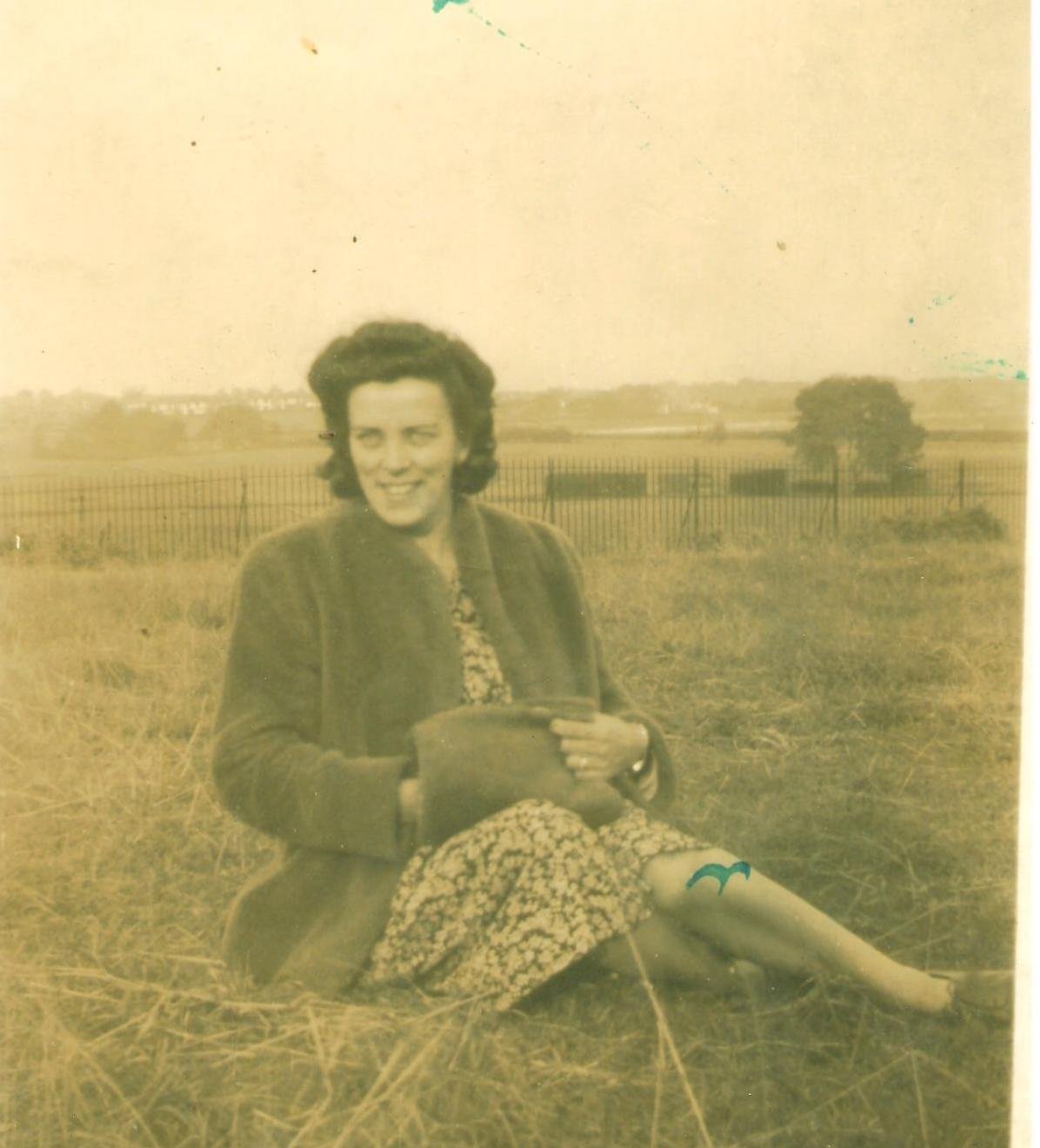
rsz_m1AH: Martha’s Girls focuses on five feisty women at a time when young women, in particular, sensed a sudden opportunity to shape their own lives. Many worked in the war industries, the girls in the book seized the opportunity to join a troupe of entertainers, and the ever present threat of bombing encouraged a ‘live for the moment’ attitude. I also enjoyed writing about Martha, especially her attempts to control her girls. As a mother, I knew the delicate line she had to tread and the unspoken fears that haunted her. So maybe I prefer to write women, but sometimes you just fall in love with a man you’ve created!

Thanks for answering my questions so well, Alrene. You gave us a great overview of the book and your writing but your last comment leaves me wanting to ask you further questions. What happens when you fall in love with a man you’ve created? I’m very curious to know….I understand Martha’s Girls is the first book in a series and you are currently working on the sequel. Don’t forget to let me know when the next one is available!

alreneReaders can learn more about Alrene and Martha’s Girls on her website and the book’s Amazon page.

About Alrene Hughes: She was born in Enniskillen and grew up in Belfast. She is a member of the Manchester Irish Writers and has written poetry and short stories for over twenty years. Martha’s Girls is her first novel. 


http://alrenehughes.com/

Posted in May 2013 | Tagged , , , , | 1 Comment

Irish Sanctuaries

One Sunday we went for a drive and stopped along the shore of Lough Derg in County Donegal. We got out of the car and wandered along the edge of the lough. Gazing across the water I spotted a huge grey complex on an island. It was a breezy March day and there was no sign of life on the island. I wondered whether the buildings were a long deserted monastery or church, although not decrepit the complex looked old. When I got home and did some research I found that what I’d seen was St Patrick’s Purgatory, Lough Derg, a place of pilgrimage that is visited by thousands each summer. Curiosity got the better of me and I later visited the island and wrote about it for Ireland’s Own magazine. That same curiosity also pulled me to two monasteries in Ulster to find out a bit about them. 

DA-Isanctuary-300x450The result of that curiosity and nosing around is Irish Sanctuaries, a collection of articles about three places that are considered holy in the Christian tradition, a place of pilgrimage and two monasteries: St Patrick’s Purgatory, Lough Derg, Co Donegal; the Graan Monstery, Co Fermanagh and Holy Cross Monastery, Rostrevor, Co Down. Each of them is considered a sacred place and a refuge, welcoming all who come to them, whether they come to pray and meditate, seek spiritual guidance or, following the Catholic tradition, for penance and reconciliation. I’m sure many people, like me, feel that monasteries and places of pilgrimage have an aura of mystery about them and they would like to understand them better.

In Irish Sanctuaries I’ve tried to provide a glimpse inside their world and their ministries.

Irish Sanctuaries is available as an ebook on Amazon.

Posted in Uncategorized | Tagged , , , , , , , , | Leave a comment

Calling Ex-Pat Writers

The online ex-pat writers’ group I belong to, Writers Abroad, is putting together an anthology to celebrate our experiences far from our native lands and we’re looking for other ex-pats to share their stories in the collection.

Here’s the details:

“Writers Abroad will be publishing their fourth anthology, with the working title of Far Flung and Foreign, this year.

We are seeking submissions of short stories, flash fiction, non-fiction pieces and poetry on the theme of foreign places, which must be firmly grounded in a particular place such as a country, area, town, village, building. The anthology will be print published and later available as an e-book.

This year Writers Abroad will be donating all profits made to the charity: Book Aid International. Book Aid International increases access to books and supports literacy, education and development in sub-Saharan Africa. They provided 543,280 new books to over 2,000 libraries last year alone and have sent more than 30 million books to partner libraries since 1954.

Author Amanda Hodgkinson will be writing the foreword. Amanda currently lives in the south west of France with her family. Her debut novel, 22 Britannia Road, was released in April 2011. 
            “An affecting story, extremely well told” (The Times)
            “Riveting, luminous” (New York Times Book Review)
            “Convincing and touchingly portrayed” (Independent on Sunday)”

The deadline for submissions is 31st July. To view the rules and conditions of entry and how to submit please see Writers Abroad’s website.

Posted in Uncategorized | Tagged , , , | 1 Comment

Exploring Getting Published With Feldstein Literary Agency

I’ve been to my share of writing classes and workshops and I always get some useful information that I can use to hone my writing skills. There are workshops on just about every aspect of writing you could imagine. But I’ve rarely seen any advertised in Northern Ireland dealing with the business side of writing – things like how to get published or what to consider if you decide to self-publish. So, ever since Fermanagh Writers organised the Getting Published workshop with the Feldstein Literary Agency I eagerly anticipated the day of the workshop.

Feldstein 2The workshop was held on Saturday and I wasn’t disappointed. I enjoyed a day crammed with information about the publishing side of writing. What I learned will help me if I decide to one day approach a traditional publisher and it also gave me an insight into the current world of publishing which is very different than that world was even a decade ago. It was one of the most interesting workshops I’ve attended – definitely a day well spent. An added bonus was that the Feldsteins knew their stuff and were very approachable.

You can read more about the day on the Fermanagh Writers’ blog.

Posted in April 2013 | Tagged , , , , , , | Leave a comment

Fermanagh Gems

With the thirty-ninth G8 Summit soon to be held in a quiet corner of County Fermanagh in Northern Ireland, not too far from where I live, I got to thinking that there’s probably lots of people who know little about this county. They likely were never really interested before but they might just want to know a bit about it now. So I got together several articles that I had written for an Irish magazine about people, places and institutions in the county and I put them together in a short collection, Fermanagh Gems.

DA-FGEMS-432x648County Fermanagh has pretty and sometimes dramatic landscapes, a rich history and talented local artisans. For these six articles I selected several gems: a natural wonder, enduring or innovative institutions and a gifted craftsman. Some are well-known, others might be called hidden gems; I wrote about each of them because I felt they deserved to be allowed to shine.

Each of the articles in Fermanagh Gems is a snapshot of a Fermanagh place, institution or person at a significant moment in its existence. In my writing I visited Marble Arch Caves on the twenty-fifth anniversary of the opening of its show cave, Belleek Pottery on its 150th anniversary, the Graan monastery during its centenary year, Headhunters Railway Museum at the end of its first decade and Frankie McPhillips, a craftsman who has carried on the Irish fly-tying tradition for the past thirty-five years. Together I hope these articles will give readers a glimpse into Fermanagh life.

Fermanagh Gems is available as an Amazon ebook.

Posted in April 2013 | Tagged , , , , , , , | Leave a comment

The Black Orchestra

I recently read The Bird Watcher by JJ Toner and I enjoyed it immensely. I loved the way he portrayed the reactions of the residents of an Irish village to a stranger who settles amongst them during The Emergency (as World War II was referred to in Ireland at that time). With this story fresh in my mind and my own interest in World War II, I was interested to hear that JJ Toner released a World War II novel, The Black Orchestra, in January. Anyone who knows me won’t be surprised to hear that it wasn’t enough for me to just add the book to my reading pile – I had to ask JJ to answer a few questions about the novel.

Welcome JJ. Let’s get started, shall we?

Tell us about your novel

Black Orchestra coverJJ: The Black Orchestra is my third published novel. I have it billed as a spy thriller on Amazon, but it’s also a coming-of-age book and a bit of a love story. Kurt Muller works as a signalman for the Abwehr (military intelligence) in Berlin. He speaks fluent English,having studied for his degree in Trinity College Dublin. The book opens with Kurt being questioned by the KRIPO (criminal police) about the death of a colleague. The police quickly dismiss the death as suicide; Kurt has his doubts. As the story unfolds he stumbles across various other clues that eventually lead him to the German resistance movement. At the same time he begins to recognize the evil that is the Third Reich.

What prompted you to write about this historical event or era?

JJ: I read a book (Irish Secrets by Mark Hull) about German spies in Ireland during World War 2. To a man, they were a comical bunch of incompetents, poorly trained and ill-equipped for their roles. Most of them were picked up and interned within hours of arriving in the country. Their exploits read like a Spike Milligan comedy. I also read about how Admiral Canaris and the Abwehr worked to undermine the Third Reich, and put 2 and 2 together.

How closely did you stick to the historical facts? If you used them loosely, how did you decide whether to deviate from them?

JJ: I mapped out the main historical events of the early years of the war and stuck to them. You might think this would be like writing dressed in a straightjacket, and I suppose it was, to an extent, but on balance, it provided a structure which helped me to focus.

What research did you do for the book?

JJ: Apart from Mark Hull’s book and its predecessor, Spies in Ireland by Enno Stephan, I read everything I could find on code-breaking, the Enigma, and Bletchley Park. I also read every WW2 novel I could find – all of Philip Kerr’s Bernie Gunther novels, Christopher Isherwood, Hans Hellmut Kirst, Hans Fallada, Robert Harris, Ken Follett, to name just a few. I found a 1939 map of Berlin on the Internet, and enlisted the help of a young lady living in Berlin today. I began research for this book in 2008, and it was published this year, so you could say the research took about 4 years.

Do you use a mixture of historic figures and invented characters in the novel? Which is more difficult to write? Which do you prefer to write and why?

JJ: Yes. The notorious Reinhard Heydrich is an important character in the book. I think I find it equally difficult and equally enjoyable to write about real historic figures and my own invented characters. I treat them all as fictional anyway. As some journalist said: “Why let the truth stand in the way of a good story?”

In an historical novel you must vividly re-create a place and people in a bygone era. How did you bring the place and people you are writing about to life?

JJ: Creating believable Nazis was probably the biggest challenge for me. So much has been written and so many films have been made about the war, I knew it was going to be difficult to avoid painting them (especially the Gestapo) as stereotypes. I put a huge amount of work and research into the locations — Berlin in particular — and one agent that I queried remarked on that.

There often seems to be more scope in historical novels for male characters rather than female characters. Do you prefer to write one sex or the other. And, if so, why?   

JJ: Being male, I’m definitely better at writing from the male perspective, but I enjoy trying to portray the female point of view.

 Thanks for answering my questions, JJ. I just have one more – what does JJ stand for?

JJ Toner photoReaders may learn more about JJ Toner, his novels, and his blogs by visiting his web site, Facebook (JJTonerYA) or Twitter (@JJToner_ya). The Black Orchestra is available on Amazon.com, Amazon UK, Smashwords, iBooks, and lots of other eReaders.

About JJ Toner: JJ’s background is in Mathematics and computing. After 35 years developing computer systems all over Europe, he dropped out and began writing. He’s been writing full time since 2007 and has amassed countless short stories and 5 novels, 3 of which he has published as eBooks for the Kindle.

Posted in March 2013 | Tagged , , , , , , , , | 1 Comment

Hurray For Babyboomer Lit

I thought I might be the only writer who wants to write about women my own age (over 50, that is) with similar experiences to me until I read an interview with Adele Park in Publishing Talk magazine and Empty Nest Lit in Mslexia magazine.

You can read my post on Writers Abroad’s blog: http://www.writersabroad.com/pt/In-Praise-Of-Older-Women/blog.htm

Posted in Uncategorized | Leave a comment

St Patrick’s Day Stories

shamrockIt’s St Patrick’s Day. What do you think of when you think of the Irish? One of the first things that usually comes to mind is that they are reputed to have the gift of the gab. Where I live in County Fermanagh most people will stop and chat when you meet them on the street. They love a good yarn, as they say around here.

They also love another kind of yarn: a good story. There’s always been a strong tradition of storytelling in Ireland and the art has been kept alive in many places, especially rural ones like where I live. I first encountered the wonders of storytelling at a local historical society’s Christmas party. During the evening’s entertainment, in between the jigs and reels played by traditional musicians and the dancing, several storytellers told tales – they made you laugh and they also moved you.

It’s believed that Irish short stories evolved from this storytelling tradition. There are many noteworthy Irish short story writers. Among my favourites are Michael McLaverty, Maeve Binchy, Eugene McCabe, Bernard MacLaverty and Claire Keegan. There’s been a lot written about what makes a good story and how to write one but I won’t go into the theory today.

One of the important elements for me, and one I think many Irish writers excel at, is capturing places and people. That’s what brings the tale to life.

When I first read Michael McLaverty’s stories back in the 1970s I was a teenager living in Toronto. They conjured in my mind the places and people and their way of life in rural areas during the first half of the twentieth century. It was so different from my life in a huge city and the tales intrigued me.

Let me show you what I mean. Here’s a couple passages from McLaverty’s The Prophet in his Collected Short Stories:

 cottage“The byre door was open and the dark entrance showed the rain falling in grey streaks; it stuttered in the causeway and trickled in a puddle around the stone, carrying with it bits of straw and hens’ feathers. Beside him was a steaming manure heap with a pitchfork sticking in the top, its handle varnished with the rain.”

“For a moment the woman leaned on the half-door, looking at her son, at his brown jersey black with rain around his shoulders, his tattered trousers clinging to his wet-pink knees, and his bare legs streaked with mud.”

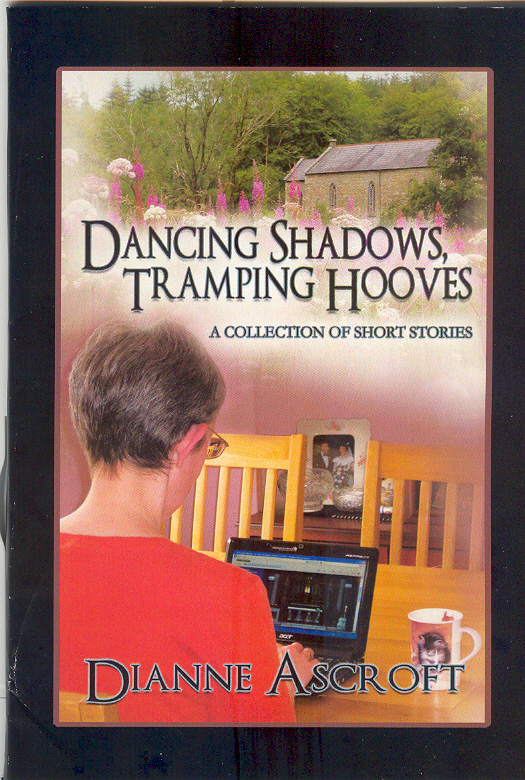
As I read McLaverty’s stories I could see the people and places in my mind and the images stayed there for years afterwards. When I moved to rural Ireland nearly a decade ago I found modern rural life as strange to me as the scenes described in McLaverty’s stories. It was far removed from my Canadian urban experience. As I puzzled over my new way of life I began to write about it. Most of the stories in my short story collection, Dancing Shadows, Tramping Hooves have come from this, a newcomer making sense of life around her.

DS cover low resI’m not an Irish writer but I have been influenced by the Irish writers I’ve read. And now that I live in their land it’s only natural that I write about it. I put pen to paper in order to interpret my new home as I see it.

I think there’s more to St Patrick’s Day than green beer. So why not step into the land of the Irish – open a book and enjoy one of the many wonderful stories set in Ireland. Then the Shamrock Isle will linger in your mind long after St Patrick’s Day.

Posted in March 2013 | Tagged , , , , , , , | Leave a comment

Patricia O’Reilly Helps Writers Polish Their Work

red penI spent a worthwhile afternoon yesterday at Patricia O’Reilly’s Successful Editing workshop. When you spend several weeks each year proofreading non-fiction material for an anthology you can get lost in the grammar points. It was good to be reminded that when editing your own fiction you need to look at the overall structure of the work.  Believable characters and setting, effective dialogue and plot, and powerful sentences are what bring a story alive. I will keep the points we discussed in mind as I fine tune stories I’m working on.

Here’s a bit more about the workshop.

Posted in March 2013 | Tagged , , , | Leave a comment

Cologne: A Whiff Of The Past

My guest today is Sarah Pleydell, author of Cologne, an historical fiction set in the Second World War era and 1960s London. I’ve invited Sarah to visit Ascroft, eh? to answer some questions about the book. Welcome, Sarah. Let’s get started, shall we?

Tell us about your novel.

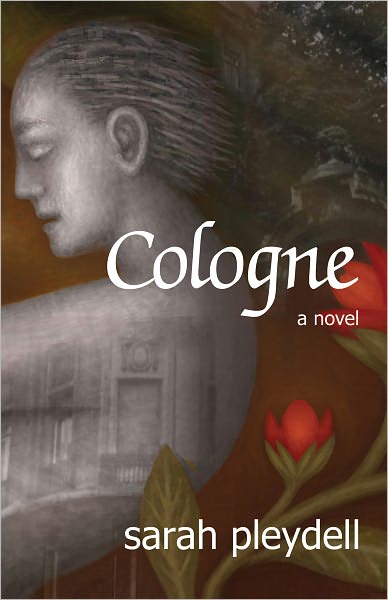
Cologne coverSP: London, 1960, Renate von Hasslemann, a German au pair, arrives at Victoria Station prepared to meet her new charges, Caroline and Maggie Whitaker. Yet she is ill-prepared for their parents: the mother, Helen, knows more about Nazi Germany than Renate does, and the father, Jack, disarms Renate with his quicksilver charm.  In my debut novel Cologne (FUZE Publishing; October, 2012; $14.95 trade paperback), childhood and history collide, blurring the distinctions between victim and victor, ruin and redemption.  With delicate humour, the novel presents a portrait of a family on the cusp of great social change, while reminding us that the traumas of war revisit the children of the peace.

What prompted you to write about this historical event or era?

SP: Much of the history in the novel is derived from my vivid recollections of growing up in London during the nineteen fifties and sixties and from my mother’s tales of World War II.  She would sit up with us at night and tell us all about the buzz bombs, the American soldiers and the black market nylons they brought with them. My brother and sister and I sat rapt taking them all in. During the nineteen nineties I was flooded with these memories and realized that they were fertile ground for a novel set in the pre and post World War II period.

How closely did you stick to the historical facts? If you used them loosely, how did you decide whether to deviate from them?

SP: Although the characters in Cologne emerged from the environment of memory, as I began to remember the sentient details of this world certain figures began to assert themselves within in. At first they resembled people in my childhood, but the more I wrote the more they assumed their own discrete fictional identities.

For example, Renate the au pair. We had fifteen au pairs in our household as I was growing up and the character of Renate draws on them all. As the fictional Renate developed her own history, temperament and fate, the personality that evolved bristled with anger but was confused both by its source and the fact that the longer she was in England the fiercer it became. As a result she was forced to recall the personal and collective traumas she had been so determined to suppress. This echoed the themes that were building in the book as a whole: the impact of repressed trauma on both individuals and their families.

What research did you do for this book?

SP: Cologne is set in London in nineteen-sixty; however, it refers back and forth into the fifties and sixties as well as to pre and post war England and Germany, and in particular to the Rhineland city of Cologne. Thus there was a lot of territory to cover in my research. Fortunately, I had a designated shelf in the Library of Congress and could order up books with ease, but of course I had to locate and identify them first.

I knew a lot about the London bombing; for CoIogne, I had to do a lot of research at the Library of Congress and discovered that the British firebombed Cologne as they had so many German cities. I also learned of the city’s rich cultural history. I have never been to Germany let alone Koln  (as it is known in German with an umlaut over the ‘o’),  and there were slim pickings in the LC, especially if I wanted to read in English. I finally secured a travel guide from the nineteen sixties that I hoped I could extrapolate from. It had all the landmarks, street names as well as references to the museums and their significant cultural artifacts. My research turned up a painting called the Virgin of the Roses, which was serendipitous given how important roses were to the novel.  Still, incorporating all these details required a lot of imaginative embellishment if I were to reinvent them in the post and pre war period. I still wish I had found out more. I also read up on the kinder transport, the trains that took Jewish children to Britain just before the war. I hoped I might include a reference to them, but in the end none was apt. I wish there had been an occasion as this material was so wrenching yet such a blessing given the alternate fate awaiting these little ones. And the fate of children is such a pervasive theme in my own novel.

Do you use a mixture of historic figures and invented characters in the novel. Which is more difficult to write? Which to you prefer to write and why? 

SP: As the novel began to take shape, questions began to arise about Renate and her family’s lived experiences. What if Renate’s father were a museum curator?  What if the family left Cologne to escape the bombings, but he remained to protect his artifacts? How would Renate, as a small child, feel abandoned by a father whose art mattered to him more? What about her older brother, who would have fought on the side of the Nazis? What if he were maimed by the Russians instead of killed?

Writing from memory and imagination are not two distinct processes but rather the latter the outgrowth of the former.  I vividly remember an acting teacher describing how the creation of character resembles the alphabetical letter ‘y’. At first the fictional and the invented person share the same biography (represented by the stem of the ‘y’). At a certain point, the requirements of the art form, be it a novel or a play, demand the fictional and the historical character diverge, one in a narrative direction and the other in fact.  In this story, the split occurred when I was obliged to ask even more questions: how would the loss of a father and the maiming of an older brother have impacted an impressionable young girl like Renate?  And how would a sophisticated family like hers fare after so many personal and economic losses? I began to reflect on how Germans like Renate who were mere children during the war would have reacted to carrying a legacy of shame and crime they had no part in. By this point then the German girl born of memory had acquired the dimensionality and inner conflict and complexity of a fictional character.

In an historical novel you must vividly re-create a place and people in a bygone era. How did you bring the place and people you are writing about to life?

SP: Returning to the landscape of my own childhood was challenging, as I found myself reliving not only sensory details but also the sensate experiences they evoked, replete with both kinds of “feeling”: I felt them on my skin and I knew them as emotions.  As the book addresses child abuse this was both difficult and cathartic.

The novel covers nine months in the Whitaker girls’ lives, so I had to track the changes in setting over four seasons. On the one hand, I derived great joy from recalling the flowers –rhododendrons, marigolds, wallflowers and exquisite roses—the butterflies, moths and bees, and, on the other, the dreariness, the damp, the pervasive grey of the British weather. The book’s terrain had grown to include streets, houses, shops and even the British seaside.

I realized that not only were these details—the sights, sounds and scents of London – essential for me as the British writer, but they were also the lures that would make this foreign environ tangible to the American reader. In addition, therefore, I added signature British tastes –the sweet and starchy puddings, the kippers, kidneys and tripe. Every sense would come alive, every sense would draw the reader in and every feeling could be tasted.

There often seems to be more scope in historical novels for male characters rather than female characters. Do you prefer to write one sex or the other. And, if so, why?

SP: Actually, the balance of male and female characters in Cologne tips toward the feminine. I originally tried to make the Whitaker children a brother and sister duo but felt in the end that the brother just did not ring true. Possibly this was a limitation of my writing skills at the time or perhaps the consequence of the subject matter of the novel. I am leery of calling this a “women’s book” per se, but it does focus on the domestic and emotional consequences of external political events, and the former is often characterized as feminine. However, Jack’s limitations are as much a product of his historical moment as Helen’s are and their impact on his female children are enormous. In some ways, of course, as a woman it is easier to write from that point of view, and this is an area of my craft where I need to challenge myself in the future.

Thanks for answering my questions, Sarah. I have to admit that the Second World War era is one that particularly interests me and I’ve written about it so I’m looking forward to reading Cologne.

Readers may learn more about Sarah and her novel by visiting her Facebook page and also the novel’s Goodreads page and its Amazon page. You can also follow Cologne’s blog tour hosted by Tribute Books.

sarah-pictureAbout Sarah Pleydell: A graduate of Oxford and London Universities, Sarah Pleydell is an award-winning writer, performer and playwright who teaches English and writing at the University of Maryland. For the past twenty years, she has been a master teaching artist and arts integration specialist, working with institutions that include The Wolf Trap Institute for Early Learning Through the Arts, The Kennedy Center for the Performing Arts and the Luce Institute. In 2000, she won the American Association for Theatre Educators’ award for best book of the year with co-author Victoria Brown. Most recently she wrote the script and played the role of Isadora in Revolutionary: The Life and Times of Isadora Duncan with Word Dance Theater.
Based on her childhood in London, Cologne has been twenty years in the making. It has benefited from fellowships at the Virginia Center for the Creative Arts and input many generous and gifted writers.

Posted in February 2013 | Tagged , , , , , , , , | 1 Comment