Untimed: A Rollicking, Fun Read

When Tribute Books asked me to review Untimed by Andy Gavin as part of the author’s current blog tour I was intrigued by the book’s description so I agreed. I have to admit that I didn’t find it a chore to read and review the novel. It was a fun read and I still smile whenever I think about the story.

Pageflex Persona [document: PRS0000040_00004]Here’s what the publisher’s description says about the book: Charlie’s the kind of boy that no one notices. Hell, even his own mother can’t remember his name. And girls? The invisible man gets more dates.
As if that weren’t enough, when a mysterious clockwork man tries to kill him in modern day Philadelphia, and they tumble through a hole into 1725 London, Charlie realizes even the laws of time don’t take him seriously.
Still, this isn’t all bad. In fact, there’s this girl, another time traveler, who not only remembers his name, but might even like him! Unfortunately, Yvaine carries more than her share of baggage: like a baby boy and at least two ex-boyfriends! One’s famous, the other’s murderous, and Charlie doesn’t know who is the bigger problem.
When one kills the other — and the other is nineteen year-old Ben Franklin — things get really crazy. Can their relationship survive? Can the future? Charlie and Yvaine are time travelers, they can fix this — theoretically — but the rules are complicated and the stakes are history as we know it. And there’s one more wrinkle: he can only travel into the past, and she can only travel into the future!

Untimed is a very engaging fantasy, coming of age story. I easily warmed to the two main characters, Charlie and Yvaine, so it wasn’t hard to root for them. From the first page the story held my attention. I knew little about Benjamin Franklin’s early life so I wasn’t aware that he had worked in London as a young man. I enjoyed the way the author pivoted the story around this detail of his life. I had hoped for a happily-ever-after ending right up until the last page but the author threw in a neat twist that scuppered that so I guess I will have to read the next book to find out how it all turns out.

As I have said, this is a coming of age story. Fifteen year old Charlie is thrown into a new place and time alone and has to fend for himself. By the time he is re-united with his father later in the story he has begun to mature and develop his own ideas and values. He has learned to stand on his own feet. When he questions the premises his father lives by it causes conflict between them. As the story progresses each of them learns to respect the other’s point of view and actions resolving the conflict.

The author’s description of each of the novel’s settings is almost too believable. He utilises all the senses to bring to life each place, not shying away from gruesome sights and foul odours. As I read, some of the places became real enough to make me uneasy. The author also cleverly throws in modern references to describe historical objects, people and places. The references he chooses are often funny but they create images that help modern readers understand eras they probably are not familiar with.

When I began reading the novel I wasn’t sure whether it was an adult or young adult book despite the fact that the main characters are teenagers. The author has graphically re-created 1725 London and not spared the details. I was surprised to find a great deal of sex and violence, more than I expected to find in a novel aimed at mid-teens. But I’ve learned that this doesn’t seem to be unusual in young adult fiction. After talking to friends who write young adult books, I realised that I may be a bit behind the times. They told me that young adult books are much more adult now than when I read them several decades ago.  

There’s no doubt that Untimed is a rollicking, fun read. I enjoyed the story and cared about the characters. And I still want to know how Charlie and Yvaine finally manage to undo their mistakes and restore historical events to their proper order. I guess I will have to wait for the sequel.

You can read an excerpt from Untimed here.

To find out more about the book and its author visit Andy Gavin’s website and his blog. Also visit the book’s Amazon page.

Andy GavinAbout Andy Gavin: Andy is a serial creative, polymath, novelist, entrepreneur,computer programmer, author, foodie, and video game creator. He co-founded video game developer Naughty Dog and co-created Crash Bandicoot and Jak & Daxter. He started numerous companies, has been lead programmer on video games that have sold more than forty million copies, and has written two novels.

Posted in February 2013 | Tagged , , , , , , , , , | 1 Comment

Frank Nappi Discusses Echoes From The Infantry

I recently read and reviewed Nobody Has To Know by Frank Nappi. It is a powerful thriller and I was gripped by it. Frank is currently on a blog tour with Tribute Books for Echoes From The Infantry and, since I was impressed by Nobody Has To Know, I asked him to visit Ascroft, eh? to talk about Echoes From The Infantry.

Welcome Frank. Let’s get started, shall we?

Tell us about your novel.

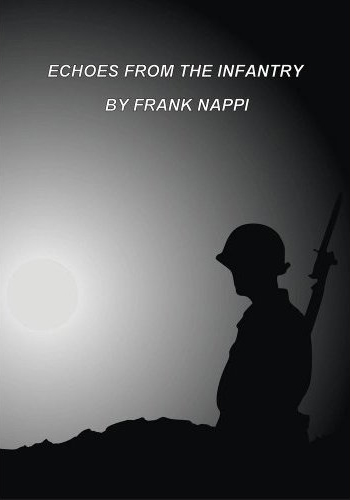
Echoes coverFN: Echoes From The Infantry is the tale of one Long Island World War II veteran, the misery of combat, and the powerful emotional bonds that brought him home to Rockaway Beach and the love of his life, Madeline Brandt. It is about a father and son, and their ultimately redeeming struggle to understand each other’s worlds – one a world at war, the other shaped by its veterans. The book, which has been described as an artful movement between the present and past, is a stirring fictionalized tale of this Long  Islander’s struggle to reconcile with the demons from long ago and his family’s never ending battle with many of the intangible burdens caused by the private  life of a man they never really knew. 

What prompted you to write about this historical event?

FN: My motivation for writing anything has always been simply a genuine interest in the human condition — more specifically, what makes us act and react in the manner that we do. Human beings are so very complex and are often immersed in situations that result in a struggle of sorts. This sort of drama exists all around us. Whenever I observe a facet of this condition or struggle, I am intrigued and ultimately compelled to explore it further through fiction.

This has caused me to become very versatile in my literary endeavours. While many writers remain faithful to one genre, mostly because they possess an affinity for that type of writing, my inspiration comes from a true penchant for exploring that about which I am most passionate. Consequently, I have travelled down a rather eclectic path, ranging from the horrors of WWII and the insidious residue of war that destroyed so many veterans and their families, to a 17 year old autistic baseball player in the 1940’s who inspires others around him to become more tolerant and understanding, to a young teacher whose indiscretions lead him down a dark and self-destructive path. Clearly these stories are all unique in their own way, and fall into very different genres. However, what binds them together is that same basic element that really defines who I am as a writer – someone who is moved by the human struggle.

So many of my life experiences have inspired me. It began with a most fortuitous encounter with two very special WWII veterans with whom I became very close. Mr. Bill McGinn and Mr. Eddie Hynes changed my life forever. Their willingness to share with my classes their poignant reminiscences of their time in war torn Europe and also the subsequent obstacles they faced once they came back home was truly the most compelling moment in my classroom. They visited for years, and the three of us became very close. The time I spent with both men, both in and outside of my classroom, was life altering for me. I have had other moments like this as well, each which has found its way into my fiction. My work with Challenger Baseball and Best Buddies brought my Mickey Tussler series to life and my twenty five years teaching in a high school exposed me to some of the difficulties that our young people sometimes face – difficulties that make leading a “normal” life an impossibility. However, the WWII era as described to me by these two very special veterans led me to explore this epoch even further. 

How closely did you stick to the historical facts? If you used them loosely, how did you decide whether to deviate from them?

FN: Like all historical fiction, the crux of what I have revealed is true. The rest is artful embellishment, resulting in a true amalgamation of fact and fiction. However, for those history purists who have to know in more detail just how “truthful” the book is, I’d say a safe estimate is about 80%.

 
What research did you do for this book?

FN: All of my research was confined to interviews of about 135 WWII veterans, with the emphasis being placed on the reminiscences of Mr. Bill McGinn and Mr. Eddie Hynes. These two men experienced more in their time overseas than all of the others combined. 
Do you use a mixture of historic figures and invented characters in the novel. Which is more difficult to write? Which to you prefer to write and why?

FN: Echoes does not contain any historical characters. The soldiers depicted in the novel are again composites — personalities drawn from the men with whom I spoke.  In some instances, creative license was used to convey a certain idea or concept. This was not very difficult to do, for my friendship with these men allowed me to gain access into the psyche of the WWII soldier both during and after  the war. 
In an historical novel you must vividly re-create a place and people in a bygone era. How did you bring the place and people you are writing about to life?

FN: For the most part, when writing about the battles that took place in Europe, I was simply replicating events that were told to me. The characters are true representations of young men and women of that time. In addition, I am somewhat of a 1940’s buff so the “color” of the time came easily — things like slang, music, film references, pop culture, etc. Since the book vacillates between past and present, the current scenes were easy to create. 

There often seems to be more scope in historical novels for male characters rather than female characters. Do you prefer to write one sex or the other. And, if so, why? 

FN: Naturally, authors have an easier time writing about same gender characters. Makes sense. I do feel, however, that most authors are also students of human nature; consequently, the ability to create characters from the opposite gender is quite possible. And in fact, at times, this is more challenging and rewarding as well.

Thanks for answering my questions, Frank. I also have an interest in the Second World War era and have written about it so I enjoyed learning a bit about the background to Echoes From The Infantry. Readers who wish to peek inside the first chapter of the book may do so here.

You can also learn more about Frank and his work at his website and his blog.

And the first person to comment on this post will receive a free copy of Echoes From The Infantry ebook.

frank nappiAbout Frank Nappi: Frank has taught high school English and Creative Writing for over twenty years. His debut novel, Echoes From The Infantry, received national attention, including MWSA’s silver medal for outstanding fiction. His follow-up novel, The Legend of Mickey Tussler, garnered rave reviews as well, including a movie adaptation of the touching story “A Mile in His Shoes” starring Dean Cain and Luke Schroder. Frank continues to produce quality work, including Sophomore Campaign, the intriguing sequel to the much heralded original story and the just released thriller, Nobody Has to Know, which received an endorsement from #1 New York Times bestselling author Nelson DeMille. Frank is presently at work on a third installment of his Mickey Tussler series and his next thriller. He lives on Long Island with his wife Julia and their two sons, Nicholas and Anthony.

Posted in February 2013 | Tagged , , , , , | 1 Comment

Ten Sentence Historical Fiction Blog Hop

Writer Jessica Knauss is hosting an historical blog hop today and I’ve signed up to link into the chain. My mission is to post ten sentences from my historical fiction writing as part of the blog hop.

cottageRecently I’ve been thinking about the story of the Coonian Ghost House near where I live in Co Fermanagh, Northern Ireland. The centenary of the first reports of unnatural happenings at the cottage is next month so maybe that’s what prompted me to post the passage I’ve chosen.

I’ve taken my ten sentences from The Empty Cottage, a short story I’m working on. It’s set on a farm in Co Fermanagh, Northern Ireland c.1910. A young lad, Johnny, goes with his two uncles, Dermot and Michael Reilly, and a neighbor, Tom McNulty, to investigate lights they notice flickering in an empty cottage on the Reillys’ farm. An elderly man, Willie Donegan, lived in the cottage until his recent death. The group crowds behind Dermot as he leads them up the path and opens the cottage door:

We stumbled into the room and looked around. The fire was burning in the grate and the candles glowing in the windows. There was no sign of anyone else there. I’m sure I heard a collective sigh of relief from the three men in front of me.

     “It looks just as if oul’ Willie was still here,” Tom said. Everyone muttered uneasy agreement.

     “Maybe he doesn’t want to leave,” Michael whispered.

     “Sure, it’s not Willie. There’s no such thing as ghosts,” Dermot said.

     “Well, who did this then?” Michael asked.

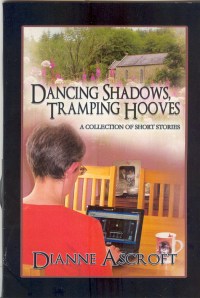
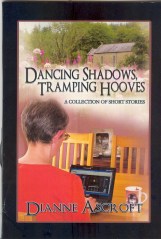
I hope you enjoyed this peek into The Empty Cottage. The story isn’t finished yet but, if you like eery stories, I included another one, Conquering the Shadows, in my short story collection, Dancing Shadows, Tramping Hooves.

Now that you have stepped back in time with me why not check out the other blogs taking part in the historical fiction blog hop? You’ll find links to them on Jessica Knauss’ blog.  

Posted in February 2013 | Tagged , , , | 7 Comments

Writing.ie Meets the HNS Irish Chapter

hns-twitterTwo years ago this month the Irish chapter of the Historical Novel Society met for the first time. This week I introduced Writing.ie to our merry little band.

You can read the post here:  http://www.writing.ie/resources/the-historical-novel-societys-irish-chapter-all-welcome/


Posted in February 2013 | Tagged , , , | Leave a comment

Would I Deceive You? No, But Laura Elliot Might

I recently discovered a new author, Laura Elliot – new to me, she’s been writing for a number of years. I found her novel The Prodigal Sister a gripping and poignant story. The characters in the novel were a mix of ordinary people you might meet on the street and ones who live lives outside the realm of many people’s experience – and all of them were believable. I marvelled at the array of characters she included and wondered where she met people in real life who inspired some of them – I think I may have a rather sheltered life here in the country in Northern Ireland.

I enjoyed the novel immensely and am looking forward to reading her latest novel, Deceptions.

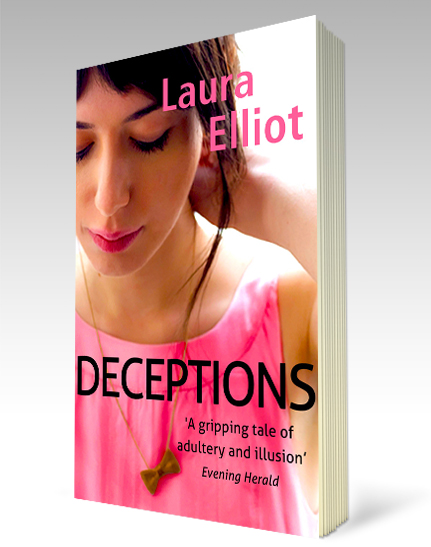
DeceptionsbookHere’s what the publisher says about Deceptions: “When the effects of an illicit love affair destroys Lorraine Cheevers’ marriage, the artist and mother uproots her teenage daughter from their comfortable city-centre home to make a new life for themselves in the small seaside village of Trabawn. She is determined to forget the past but it is following her and catching up.
     As Lorraine adjusts to her new surroundings, Killian Devine-O’Malley, the young victim of the hit and run, lies in a coma. His father, the well-known screen writer Michael Carmody, is determined to find the person responsible for his son’s accident.
     His search brings him to Trabawn where he comes into contact with Lorraine. Though she has resolved to be alone, she cannot deny the strong attraction she feels towards this troubled stranger who has appeared so suddenly in her life.
     But why has Lorraine turned her back on friendship and love? What lies behind her flight from all that was once familiar? As the bond between her and Michael grows, the stakes rise. Because what neither of them know is just what the other is running from. Or why it matters.”

Are you intrigued? I am and I’ve invited Laura here today to talk about Deceptions.

Welcome Laura. Let’s get started, shall we?

Tell us about your novel.

LE: Deceptions – as its title suggests is about lies and betrayal – and explores the theme of adultery. A couple who are having an affair are involved in a hit-and-run accident. The consequences of this accident have far reaching effects, not only on the couple but on their partners and the family of the hit-and-run victim.

What prompted you to write about this subject? 

LE: The seed for the story was sown one night when I was working as a journalist and had been commissioned to do a series of features on night life in the city.  One feature involved homeless people. I did an interview on the South Wall – an industrial area in Dublin’s docklands – with a young man who lived in a make-shift cement shelter. It was dark and desolate that night and when I finished the interview I noticed the dimmed headlights of a car. A second car pulled up beside it. A man and a woman emerged from both cars and embraced before disappearing into the deeper shadows of the pier. As I drove away I wondered why they had to meet in such an isolated, secret location. The reason seemed obvious and I wondered what would happen if they were together in one car and involved in an accident. 

What research did you do for this book?

LE: It’s set in contemporary Dublin and in Kerry so there was no historical research involved.  I went back to the Great South Wall a number of times at night and absorbed the atmosphere. The North Wall is on the opposite side, full of light and movement as the ferries sail in and out of the bay – and such a contrast to where my couple are seeking their privacy.

Part of the book is set on the Dingle Peninsula where I holiday every year. There’s an old, abandoned house almost hidden from view along a country lane and always, at some point during the holiday, I visit it to see if anyone has taken it over. No one ever has and it’s slowly decaying. I decided to give it new life by incorporating it into my novel and housing my main female character there. 

How did you bring the place and people you are writing about to life?

LE: In the beginning my hit-and-run victim was an old alcoholic tramp.  After working for a couple of months trying to bring the story to life, and failing, I realised he was the wrong character. Sadly, but truthfully, I knew that the death of a troublesome, old hobo was not going to engender a massive amount of energy and emotion from police or his family – but if it was a young, troubled boy with parents it would be different. Almost immediately the story took off and developed a shape I had not even envisaged. 

 
In some fiction genres there often seems to be more scope for male characters rather than female characters. Do you prefer to write one sex or the other. And, if so, why?

LE: I don’t have a preference. I suppose it’s always easier to write from a female point of view. In Deceptions I wrote from both points of view. The male voice was very immediate as it was the father speaking to his unconscious son. The book I’m currently writing is told equally from a male and female point of view – it’s slightly more challenging but I’m enjoying exploring the male psyche

Is there anything else you would like to tell us about Deceptions?

LE: Yes. It was a difficult book to write. As the author I was also engaged in deceiving the reader for part of the narrative. Also, as character A believed he was being deceived by character B – who had no awareness of this – I had to create innocuous dialogue for character B which was then misinterpreted by character A to feed his suspicions.  Not easy! 

Thanks for answering my questions, Laura. If I disappear for a few days now, you’ll know I’ve got my nose buried in the book.

_N4L3137_b_resize June ConsidineFor more information about Laura and her writing visit her website as well as Deceptions Amazon page.

About Laura Elliot: Laura is an Irish novelist and lives in the coastal town of Malahide, Co. Dublin. Her three novels are The Prodigal Sister, Stolen Child and Deceptions. Aka June Considine, she has written many books and short stories for children. She loves travelling. The beautiful South Island of New Zealand was the inspiration for her setting in The Prodigal Sister. The Burren, a karst-landscape, rich in history and archaeology in the county of Clare became the mysterious setting for Stolen Child. She gives regular creative writing workshops and is currently working on her latest novel. She has also worked as a journalist and editor.

Posted in February 2013 | Tagged , , , , , | Leave a comment

How Are Ireland’s Own and Writing.IE Linked This Week?

For the past few months I’ve been keeping a low profile. But that doesn’t mean I’ve been idle – I’ve been hidden away working hard on several projects. And this week a couple pieces I’ve written have found their way into print.

In Clout and Collaboration on the Writing.IE website I discussed the difference between writing groups and writing associations and why I belong to the Fermanagh Authors’ Association:  

“I often refer to the Fermanagh Authors’ Association as a writers’ group but that really isn’t accurate: it is a writers’ organisation. Is that just a grand name for the same thing? Not really. So, what’s the difference? And what do I get out of belonging to it?” If you want to know the answer you can read the full article here.

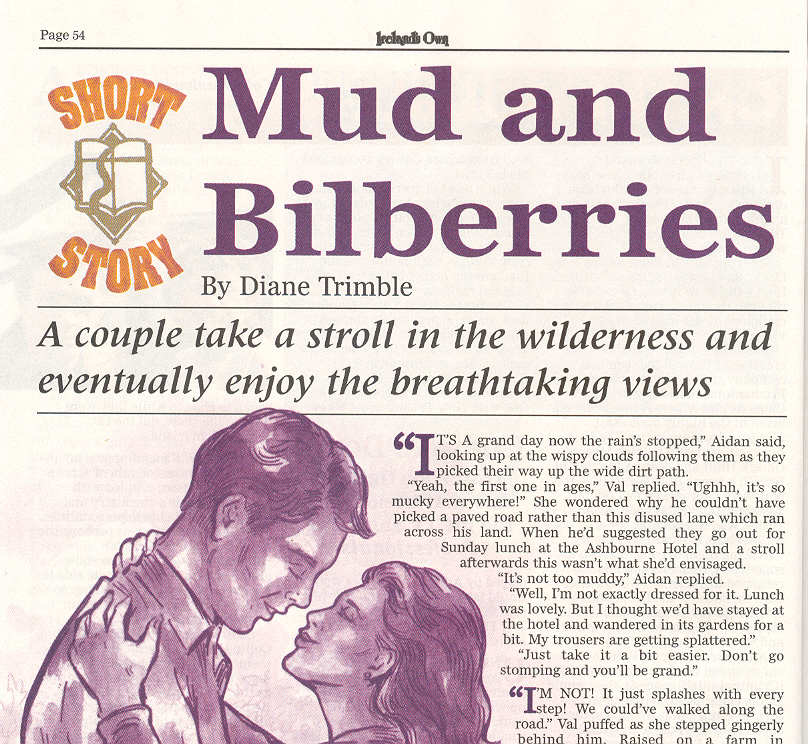
The other piece that was printed this week was my short story, Mud and Bilberries. It’s in the 8th February issue of Ireland’s Own magazine. I’m afraid you’ll have to brave the weather and tramp to the newsagents if you wish to read it as the magazine is not available online.

Mud header

Posted in January 2013 | Tagged , , , , , , , | Leave a comment

Shrouded in Humour

A couple years ago I read and reviewed The Big Show Stopper by Ken Dalton and I thoroughly enjoyed the zany detective tale. So I when I was asked to review The Tartan Shroud, the latest book in this series I immediately agreed. And I’m glad I did because I laughed just as much this time as I did when I read my first Pinky and the Bear novel. Not what you would expect to hear about a crime novel, eh?

Dalton’s detective stories are light hearted romps with snappy dialogue, lots of action and outrageous characters who often upend a few stereotypes as they bumble to their clients’ rescue.

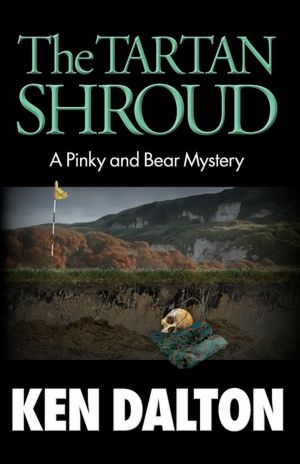
cover_tartan_shroudLike the first Pinky and the Bear novel I read, the story is told mainly from two viewpoints: the sophisticated and unscrupulous lawyer, Pinky Delamont, and his bumbling but honest redneck private investigator, Bear Zabarte. The main characters are still outrageously, unselfconsciously not politically correct. Pinky hasn’t learned a thing that would improve his morals and Bear is no wiser than he ever was. The reader is privy to their thoughts and understands the self-seeking, and occasionally noble, motives behind their every action.

It’s Pinky’s gorgeous ex-wife, Willow, who draws them into this adventure. After the body of a teenage girl who disappeared more than a decade ago is discovered on a golf course in Pitlochry, Scotland, Willow’s Scottish cousin, Detective Inspector Fergus Murray, asks her to help him solve this old case.

 Willow persuades Pinky to help her so he and Bear turn their full attention to the case. But once again Bear’s busty, image conscious girlfriend, Flo, the intelligent one of the pair, is the real force behind the investigation.

Pinky, Bear, Willow and Flo, and Bear and Flo’s foster child, Ettamae, head off to the ould country to lend a hand to Willow’s kin. They wade through dusty records and old files searching for clues to the killer’s identity and information about other possible victims until this past crime suddenly becomes a current case, all the pieces fall into place and they are racing to Blair Castle to save Ettamae from the killer. In the midst of all of this Pinky is trying to outwit a criminal he encountered during a past investigation who is now threatening him and tries to extort a large sum of money. Although there is a lot of action in this story, it’s not terribly fast paced. The plot unfolds steadily, bit by bit, with just enough information revealed on each page to keep the reader hooked. Although I wondered who the killer was and tried to piece the clues together, I also got caught up in other aspects of the characters’ lives and was drawn into these subplots which Dalton wove smoothly into the story.

Moving the story to Scotland for this book added a new dimension to the series. The main characters were out of their comfort zone and this led to a few misunderstandings and lots of laughs. The verbal, and occasional physical, sparring between the American and Scottish characters vividly revealed their differences and common ground. I enjoyed the author’s humorous treatment of the culture clash and his sometimes irreverent views, expressed by Pinky and Bear, about Scottish traditions and its revered institutions such as the Old Course at St Andrew’s Golf Course.

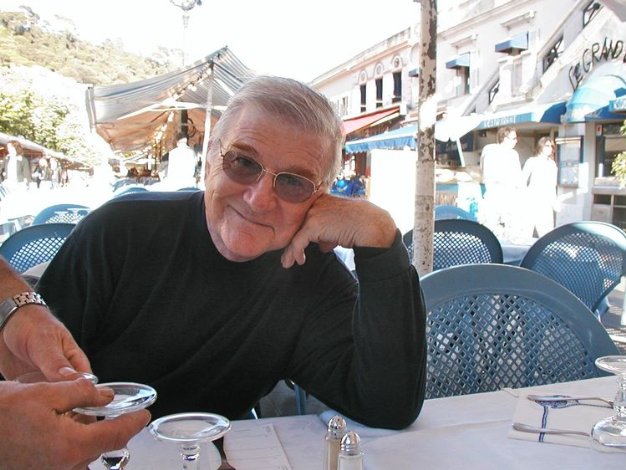
ken_daltonLike Dalton’s previous books, the humour is what makes this novel. It swings from amusing to absolutely farcical but fits perfectly into the story. Once again he has delivered crime fiction without too much grit and lots of laughs. It’s a dead guid read.

For more information about Ken Dalton and his novels visit his website and The Tartan Shroud’s Amazon page.


Posted in January 2013 | Tagged , , , , , , | 1 Comment

This Week’s Next Big Things

woodpileLast Wednesday I jumped on the bandwagon for The Next Big Thing Author’s Blog Hop. I was tagged by Elisabeth Storrs to answer 10 questions about my current work-in-progress and I did so. I then tagged several fellow writers to follow me this week in the Blog Hop.

You can read about their writing projects in their blog posts today.

Here’s where you’ll find them:

Laura Elliot’s website  

Hazel Gaynor’s website 

E. M. Powell’s website

Posted in January 2013 | Tagged , , , , , , , , | Leave a comment

The Next Big Thing – An Authors’ Blog Hop

Elisabeth Storrs, author of The Wedding Shroud, tagged me in the Next Big Thing Author Blog Hop. Elisabeth is passionate about legends, myths and history, having studied Classics as a student. Inspired by a terracotta sculpture of two ancient lovers, she wrote The Wedding Shroud – A Tale of Ancient Rome. Endorsed by Ursula Le Guin, the novel tells of a young treaty bride married to an enemy nobleman from a decadent society. Determined to stay true to Rome, she instead finds herself seduced by her husband and the sinful freedoms his society offers her. Yet as war looms, she must decide where her allegiance lies.  You can read Elisabeth’s contribution to the Next Big Thing at her blog, Triclinium.  

How The Next Big Thing Blog hop works: An author answers ten questions and then tags five authors (if you are able to find them during the festive season – I managed to get four) to do the same thing the following week on the same day, which in this case is a Wednesday.

Here’s my answers to the ten questions:


What is the working title of your next book?

The Winding Road Home. I must add that this is only a working title. I don’t think I’ll find the real title for it until I’ve completed the book and know every nuance of the tale.

Where did the idea come from for the book? 

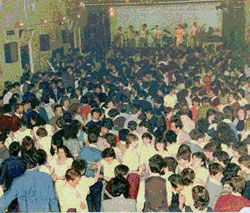
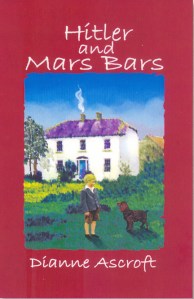
The Winding Road Home is the sequel to Hitler and Mars Bars, a novel I wrote several years ago. The story follows naturally from events in the first book. The Winding Road Home opens in 1955 when showbands were revolutionising the Irish social scene. After doing a bit of background reading about the era I knew the story that this sequel to Hitler and Mars Bars had to tell.

After spending a year at a Barnardo’s Home near Chester, England fifteen year old German orphan Erich Schnell is poised to leave school and begin an apprenticeship. Despite his burning ambition to join the railway, a letter from the Elliotts, the Irish foster family he loved but was forced by circumstances to leave four years previously, sends him rushing back to their farm in County Cavan, Ireland. Ecstatic to be reunited with his foster family, he also finds camaraderie and an outlet for his passion for singing in a local showband. When he takes to the road with the band he forms new friendships, has tense a reunion with his estranged brother, Hans, discovers girls and renews a friendship which will lead to love with his former neighbour, Rebecca Neill despite often encountering pervasive, subtle prejudice as a foreigner in Ireland. When his foster mother Aunt Elsie’s heart ailment worsens he is compelled to choose between loyalty to his foster family and his career with the band.  He returns to the farm to help his foster father but he is persuaded to join the band for one more gig, the prestigious Rose of Tralee Ball. After tasting success at this gig he once more considers whether his future path leads toward or away from the only real home he has ever known.

What genre does your book fall under?

Historical fiction.

What actors would you choose to play the part of your characters in a movie rendition? 

That’s a difficult question. I have a clear image in my mind of each of my characters but I can’t match actors to these images. A young actor with Colin Farrell’s ability to portray a lovable imp would be ideal to play Erich and a young actress with Niamh Cusack’s poise and quiet strength would suit Rebecca.

What is the one sentence synopsis of your book?

 Against the backdrop of the Irish showband scene, Erich Schnell, an outsider who knows no home except Ireland, struggles to find love, acceptance and his niche in his adopted country, battling the subtle undercurrent of prejudice in a parochial society that distrusts aliens.

Will your book be self-published or represented by an agency? 

DS cover low resI haven’t decided yet. I self-published Hitler and Mars Bars and also my short story collection, Dancing Shadows, Tramping Hooves and I don’t regret those decisions. But I may approach an agency this time to try another route to publication.

How long did it take you to write the first draft of the manuscript?

I haven’t completed it yet. Soon after I started work on the book I was asked to ghost write a memoir for a polio survivor and I’ve been concentrating on that project. But I plan to complete the first draft of this novel within the coming year. Editing it will then take a few more months.

What other books would you compare this story to within your genre? 

The novel will be written in a style similar to books by Anne Doughty (On A Clear Day, Shadow On The Land) and Helen Forrester (Tuppence To Cross The Mersey, Liverpool Basque). I will probably never write epic novels about monumental events in history; I prefer to delve into ordinary individual’s lives to understand the everyday events of the past. So this is a character driven story set into the small canvas of a rural, parochial community.

Who or what inspired you to write this book?

hmb cover hr 432x648

Hitler and Mars Bars, the prequel to this story, begins Erich’s story. He is brought to Ireland, from war ravaged Germany, by the Red Cross humanitarian aid effort, Operation Shamrock a decade before The Winding Road Home opens. Hitler and Mars Bars follows the boy’s struggles to find his place in a new, strange land. Erich is a complex character – appealing and frustrating at once. As I wrote the first novel he crept off the page and plonked himself in my mind. I wanted to find out where his journey would take him so I had to write the sequel.  

What else about the book might pique the reader’s interest?

Although it is little more than half a century ago, 1950s Ireland was a place and time so different from the present that it could be centuries rather than decades ago. Irish society sauntered into the modern era, far behind England and America. The 1950s and 1960s dance and showband craze was a driving force for social change on the island. It was a turning point in modern Irish social history but it has attracted the attention of few novelists. This story juxtaposes the excitement and intensity of the showband scene with the life of the slower moving, close knit rural community – I hope it vividly evokes the era for readers.

The authors I have tagged are:

Laura Elliot is the author of three novels, Stolen Child, The Prodigal Sister and Deceptions, which have been widely translated. Aka June Considine, she has written twelve books for pre-teens and young adults. She gives regular workshops on creative writing and is on the board of the Irish Writers’ Centre. 

June Considine’s website

Laura Elliot’s website   

Hazel Gaynor is the author of the self-published debut novel, The Girl Who Came Home – A Titanic Novel which was a Kindle Historical Fiction bestseller in 2012. Her second novel is currently in submission with several publishers. She writes a book review blog for Hello Magazine and is a feature writer for writing.ie – recently interviewing Philippa Gregory and Sebastian Faulks. Hazel lives in Ireland with her husband and two children and is represented by Sheila Crowley of Curtis Brown, London.

Hazel’s website

Hazel’s Facebook page 

Hazel’s Twitter: @HazelGaynor

E. M. Powell is the author of The Fifth Knight. She was born and raised in Ireland, a descendant of Irish revolutionary Michael Collins. At University College Cork, she studied Anglo-Saxon and medieval English. She is a member of Romance Writers of America, the Historical Novel Society, and International Thriller Writers. A reviewer for the Historical Novel Society, she lives today in Manchester, England, with her husband and daughter.

E. M. Powell’s website 

E. M. Powell’s blog  

James Vella-Bardon commenced work on his debut potboiler ‘The Sassana Stone’ in 2009. In 2005 he completed a doctoral dissertation entitled ‘Self-Determination of Indigenous Minorities’ at the University of Malta. A stint spent working as lawyer-linguist with the European Parliament in Belgium was followed by a move to Sydney in 2007.

James’ website

Posted in January 2013 | Tagged , , , , , , , , , , , , , | 2 Comments

Taking Time To Send You Holiday Greetings

Anyone who knows me well has heard me say “I don’t have time right now”. It seems to be my Christmas firecatchphrase. I always seem to be juggling multiple tasks and scrambling to get them completed by their deadlines. So one of the things I like best about Christmas is that I finally find some free time during the holiday season – after I finish the Christmas cards and put up the last of the decorations – I do have the tree up. Just don’t mention last posting dates – I know, I know, I know…

It’s great to just relax and chill out but I’m not one to do absolutely nothing very often – I have to be very ill to stop completely. So my favourite way to unwind is to curl up beside the fire and read.  While I always have a novel on the go too, I’ve found that short stories and novellas are great when you are pressed for time or aren’t ready to focus on a longer read. I’ve read Heather Richardson’s Chilled and Other Stories and Tim Hodkinson’s All The King’s Thanes on two separate bus journeys to Belfast recently. The former borders on horror and the latter is historical fiction. They are very different from each other but that’s another plus for short works: you can jump from one genre to another quickly as the whim takes you.

FE coverI’ve been involved in writing and publishing three anthologies this year and that has also given me a greater appreciation of short works. I co-edited Fermanagh Miscellany 2012 with Seamas Mac Annaidh. The book is a mixture of local historyFM 2012 low res articles, reminiscences and short stories; I love finding such a variety of material in one book. I stepped back in time as I read a couple reminiscences about the war years and I learned facts about the area where I live in historical pieces – so I had to remember to keep my mind on the editing and not allow myself to get completely immersed in the book. I contributed stories to Tuesdays at Charlie’s and Foreign Encounters and got my copies of the books as soon as they were launched. I’ve had both books for several months but I’m still finding gems within their pages as I dip in and out of them. It’s great to keep going back and finding another story that Tuesdays covercaptivates me.

As you may have concluded by now, I’m very much a fan of short stories. So this summer, when I was casting around for something else to do with several of my previously published stories, I decided to release a short story collection. I hated to think of the stories languishing in a drawer (or more likely under a stack of papers in the corner of my study…) after fleeting appearances in weekly magazines and newspapers so Dancing Shadows, Tramping Hooves was born.

DS cover low resIf I disappear during the coming week you’ll know where to find me. Tiptoe into my living room and you’ll spot me in the frayed armchair in the corner with one of the cats on my knee, a pile of books beside the chair and the Kindle reader on the coffee table.

So I’ll take time now to wish you a Merry Christmas and a wonderful year in 2013 – in case I get lost in a story later and forget to send my greetings.   

I hope all my friends and family have a safe, happy holiday season!

cabin fire

Posted in December 2012 | Tagged , , , , , , , , , | Leave a comment