My Favourite To-Do List – My Reading Pile

Ireland and Britain are celebrating World Book Day today. There’s few things I enjoy doing more than reading and I always have a pile of books waiting for me – I just need more hours in a day to get through them all! So, in honour of the day, I think I should just retreat to a corner and bury my nose in a book…that’s how I’ll justify why I should take some me time today….don’t think it’s going to happen but I can dream…oh well, my reading pile’s still there waiting for me. When no one’s looking I’ll sneak back to it…

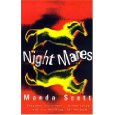
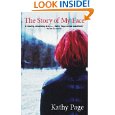
Here’s a few of the books that I’m eager to get started into:

Posted in March 2011 | Tagged , , , , , , , , , , , , , , , | Leave a comment

Sandy Sims Strategy for Creative Thinking

Wright design

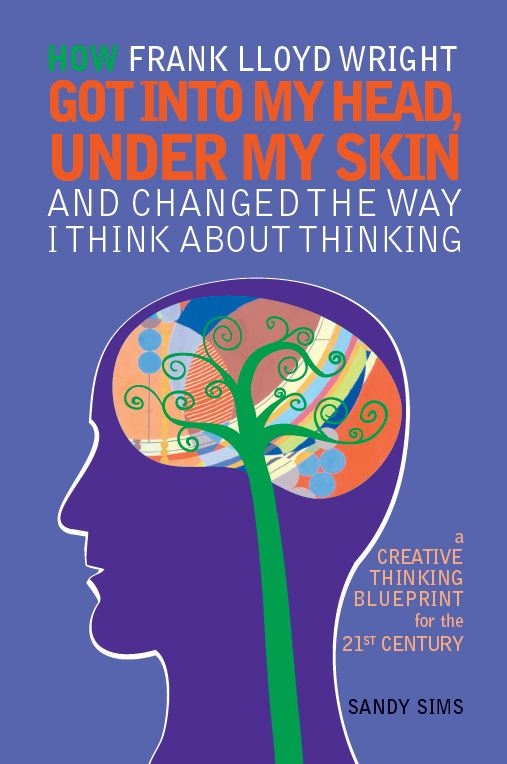
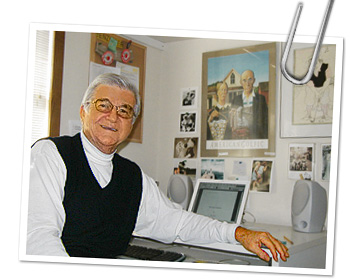
 Today I’m hosting a question and answer session with Sandy Sims, author of How Frank Lloyd Wright Got Into My Head, Under My Skin And Changed The Way I Think About Thinking, A Creative Thinking Blue Print For the 21st Century. The book  is Sims’ memoir, exploring the lessons he learned from studying architect Frank Lloyd Wright’s work and how he has applied them.

Would you explain to readers how Frank Lloyd Wright’s architectural designs influenced you?

Wright design

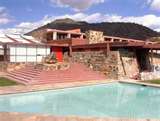
SS:  Frank Lloyd Wright was famous in the public eye, and was viewed as a genius by those who worked in his presence. To an even smaller audience he was known as a mystic.  His apprentices knew he was a genius because when Edgar Kaufman asked Wright if the plans for “Fallingwater,” considered by many to be the most famous residence in America, were completed, Wright said, “Yes, drive on up and see them.” The apprentices were dumbfounded because Wright had not committed one idea to paper. In the following eight hours they witnessed the design with all elevations from all perspectives pour out of him like a slow moving Xerox machine;  an impossibility for virtually anyone else.  He was coloring in the last shrubbery detail when Kaufman walked through the front door.  I visited many of Wright’s designs and was an overnight guest in his own home. I eventually was compelled to find out what it would be like to live inside the design of mystical genius.  So I built one of his last designs and found out. 

You have subtitled your book, Blueprint for Creative Thinking. What are you trying to convey to readers in this ‘map’ or ‘blueprint’?

SS: I feel we are in the midst of a major paradigm shift, one moving us from linear decision making towards intuitive decision making, the awareness of which is being catalyzed by technology. We feel an ever increasing sense of time compression. For example, when I first entered the advertising business we might have been allowed three weeks to create an ad. When I left the business, some twenty odd years later, the joke was that we would be lucky to have been given three hours.

In this type of environment we no longer have the luxury of being able to ponder. We must depend more and more on our intuition and trust that all will fall into place.

Once we are on this intuitive journey, there are synchronicities both positive and negative that can help us navigate. This method of navigating I refer to as the “blueprint.”

What would you like readers to learn?

SS: In the past there was a saying that went, “Plan the work, and then work the plan.” It was a very logical linear process. What is at play now is learning to discern what an intuitive hit is, being willing to follow through on this intuition, looking for confirming signs, and trusting the process. Like anything else, it takes practice to gain more confidence. This is the process I wrote about -consciously testing, a little bit at a time, and slowly raising the ante. I might add that this does not mean abandoning reason or linear thinking – not at all. It means learning to be comfortable with both modes and accepting that the intuitive model is not just blind luck, but it is as real as the linear model.

You say that ‘our intention does indeed affect the material world’. Can you explain what this means and what it means to readers?

SS: I am sure that some day in the future a scientist will be awarded the Nobel Prize for showing the mechanics of how this works. In the mean time it appears that our intentions seem to be the force and energy source that gives our thoughts their power to attract events into existence. Lynne McTaggert, in her book, “The Field” as well as through her ongoing Intention Experiment is documenting this process.

The bottom line is that what you think about with strong intent somehow begins to organize and order creative forces into play. Obviously where there are opposing forces there will be limitations. But the importance is that we all have this potential. If we accept and consciously try it out we can look for verification.  As we do that, we can see that we have created much more than we previously were willing to acknowledge.  This process builds on itself providing us with  a useful tool to deal with the future.

Can your blueprint help world problems and, if so, in what way?

SS:  Yes. I feel that as more people begin to trust their intuition and experience the results there will a shift towards more trusting in general and cooperating to get things done.  As this happens fearfulness will begin to recede. Problems will be solved much quicker.

Why did you write the book?

SS: In the beginning it was just to have a cathartic experience. In so doing I realized that because I had been on a journey of self inquiry I felt compelled to make a report. You could say I was following another strong urge. I felt many people are having similar experiences and sharing the results seems like a good thing to do.

About the author:    Sandy Sims was raised and educated in the American South.  After serving as Naval Officer and finishing graduate business school, he followed a dream to live in Honolulu where he built one of Hawaii’s most successful advertising agencies.

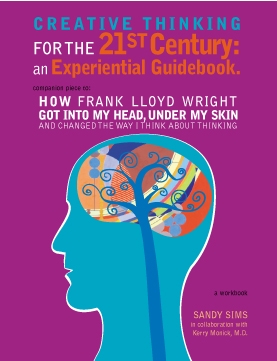
The crisis of personal health and business setbacks opened the way to larger spiritual dimensions including a long association with the Caddy family, founders of the Findhorn Spiritual Community in Scotland. His book, How Frank Lloyd Wright Got Into My Head, Under My Skin And Changed The Way I Think About Thinking, A Creative Thinking Blue Print For the 21st Century,  is a memoir of his journey culminating in a 20 year project with the Frank Lloyd Wright Foundation.  He has collaborated with Psychiatrist, Kerry Monick MD, and authored Creative Thinking For The 21st Century, An Experiential Guidebook.

When not travelling, Sandy resides in San Miguel de Allende, Mexico where he writes, plays tennis, pokes around with his camera and embraces a new culture.

For more information about Sandy Sims and How Frank Lloyd Wright Got Into My Head, Under My Skin And Changed The Way I Think About Thinking, A Creative Thinking Blue Print For the 21st Century, visit http://creativethinkingbook.com/ and visit this page to get the Amazon links http://creativethinkingbook.com/buy-your-copy/. 

Posted in March 2011 | Tagged , , , | 3 Comments

The Big Show Stopper: A Cavorting Crime Caper

Last week I read The Big Show Stopper because I had arranged to review it on Ascroft, eh?.  I found it a relaxing break as I settled down with it for an hour or so each night.

The Big Show Stopper by Ken Dalton   is very different from my usual reading choices. It’s a zany, amusing detective story that approaches the normally serious crime genre in a light hearted way. The rare times I read crime novels, books by Ian Rankin, Val McDermid or Manda Scott are my first choice. But this book isn’t in the same mould at all.

The plot revolves around a lawyer’s race to find a suitable suspect to pin a murder on so that his client, who has been charged with the murder of a renowned country singer, can be cleared of guilt and released from jail. The lawyer’s rush to accomplish this is fuelled by his greed: collecting a huge ‘fee’ (more like a bribe!) for freeing his client hangs on meeting the time deadline his client’s girlfriend sets. Initially the plot unfolds in a somewhat predictable manner but a few unexpected twists provide a plausible motive for the murder and reveal the real killer.  

The story is told from two viewpoints: the sophisticated and unscrupulous lawyer, Pinky Delamont, and his bumbling but honest redneck private investigator, Bear Zabarte. The main characters are both outrageously, unselfconsciously non-politically correct. The reader is privy to the characters’ thoughts and understands the self-seeking motives behind their every action. It’s obvious that the heroes are nearly as corrupt as the criminals. Anyone with scruples couldn’t approve of their behaviour but it’s hard not to laugh at their audacity. In real life I wouldn’t like either of these men but as characters I rooted for them.

I think Dalton’s characters are deliberately stereotypical but he also throws in quirky details to good effect, making them more interesting and realistic. He tosses one stereotype on its ear: Bear’s busty, image conscious girlfriend, Flo, is the intelligent one of the pair. They are a brawn and brains combination and Bear’s investigation couldn’t succeed without her. Snappy, amusing dialogue helps to make the characters memorable and carries the story along at a steady pace.   

I won’t labour my review – the book is a quick, fun, entertaining read. And I was still laughing at the characters’ antics after I read the last page. If you like crime fiction without serious grit this is a book for you.

For more information visit Ken Dalton’s website at www.kendalton.com.

Posted in February 2011 | Tagged , , , , | 1 Comment

Making a Living as a Writer in the 21st Century

Today was the first time I’ve attended a seminar or class in the Crescent Arts Centre in nearly 20 years – the building is wonderfully improved from the last time I was there. Compared to what I remembered,  I didn’t even recognise the interior. I have happy memories of classes I’ve attended there and I was nostalgic and excited to return and see how it’s turned out. 

Once I had a look around I headed up to the studio on the top floor and spent the whole day engrossed in LitnetNI’s  How to Make a Living as a Writer in the 21st Century. While I don’t earn my fulltime income from writing, the seminar was beneficial for me and I can apply what I learned to my own writing career.

Eoin Purcell provided up to date and comprehensive technical information about building a public profile, with specific reference to Facebook, Twitter, LinkedIn and other social and business media. I got a good overview of the subject from him and also answers to my own questions.  

Since my novel, Hitler and Mars Bars, was published in 2008 I’ve been steadily learning about marketing and developing an online presence. Catherine Ryan Howard’s presentation was a great pep talk – an example of what marketing can do when you put your mind to it. I was familiar with many of the topics she covered but I also picked up new information that I’m itching to use.

And Carlo Gebler pulls no punches – he tells it like it is. He has a very straightforward, sensible approach to writing as a job and gave very useful tips. Making a living as a writer isn’t the easy option but he’s focussed my thoughts about the course I need to follow.

I was excited about the seminar before I attended it and even more excited when the day ended. It was time well spent – a very worthwhile day for me. But, I’d better get on as I have lots of work to do!

Posted in February 2011, Uncategorized | Tagged , , , , , , | Leave a comment

The Poet Rambling Round My Mind

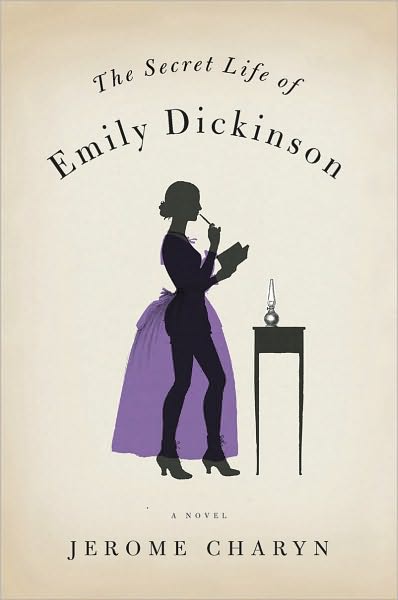
I recently volunteered to post a review of The Secret Life of Emily Dickinson as part of the author’s blog tour. Sometimes when you agree to review a book, you have second thoughts once you start reading it if you can’t find anything positive to say about it. But I didn’t have that problem with this book. I enjoyed it so much that reviewing it hasn’t been a chore at all.

Jerome Charyn’s The Secret Life of Emily Dickinson is an unusual novel that I won’t forget quickly. A very clear image of its main character was still roaming around in my mind several days after I read the last page. The novel reads like a memoir and it’s easy to forget that it is fiction; readers finish the book feeling like they have met the real Emily Dickinson not the person Charyn imagines her to be. This fictional work loosely follows the known course of the poet’s life and presents it from her perspective. Charyn has taken hinted references in Dickinson’s poetry and used them to create the thoughts, feelings and desires of his fictional Emily.

 The real poet was considered mysterious while she was alive and it is now impossible to answer many questions about her. This book offers a window into what might have been going on in her mind and creates a memorable main character in the process.

The novel begins in 1848 at Mount Holyoke Female Seminary which Dickinson attended briefly in her late teens. Like the real person, the fictional Emily rebels against the strict evangelical ethos. During her early adulthood, after she returns to her family home, we see the fictional Emily enjoying small town life in a world which revolves around her domineering father and her close knit family. Through the years she gradually withdraws from local society and confines herself to the family home. Her animated inner life always finds expression in her poetry. Appropriately, the novel closes with the fictional Emily’s last thoughts, relinquishing her cares and pre-occupations as death sweeps her away.

Charyn has created a very well-drawn main character and writes convincingly from her point of view. Readers hear the fictional Emily’s innermost thoughts and feelings and will believe they have entered the real poet’s inner world. To make the character believable he writes in a similar style to Dickinson, using creative metaphors and vivid descriptions, rather than quoting her own words. The character’s voice is often fanciful, seductive and even wheedling – a childlike person with barely contained exuberance. The fictional Emily is a very engaging person – easy to like and someone you want to protect. She’s imaginative, eccentric and impulsive with a strong personality beneath her coquettish manner.

While the historical fiction lover in me wants to constantly sort out which episodes in the book are based on fact and which are imagined, in the end, it doesn’t matter. This portrayal of who Emily Dickinson may have been will arouse curiosity and interest about the real poet and her work – and it’s just an entertaining book to read. 

The abiding impression I had after I finished it was of the fictional Emily. Her voice is so convincing that I still hear her in my head. The character came to life for me and I think that is the mark of a good novel.

Click here for details about the book.

The author: Jerome Charyn (born May 13, 1937) is an award-winning American author. With nearly 50 published works, Charyn has earned a long-standing reputation as an inventive and prolific chronicler of real and imagined American life.

Since the 1964 release of Charyn’s first novel, Once Upon a Droshky, he has published 30 novels, three memoirs, eight graphic novels, two books about film, short stories, plays and works of non-fiction. Two of his memoirs were named New York Times Book of the Year. Charyn has been a finalist for the PEN/Faulkner Award for Fiction. He received the Rosenthal Award from the American Academy of Arts and Letters and has been named Commander of Arts and Letters by the French Minister of Culture.

Charyn was Distinguished Professor of Film Studies at the American University of Paris until he left teaching in 2009.

In addition to his writing and teaching, Charyn is a tournament table tennis player, once ranked in the top 10 percent of players in France. Noted novelist Don DeLillo called Charyn’s book on table tennis, Sizzling Chops & Devilish Spins, “The Sun Also Rises of ping-pong.” He lives in Paris and New York City.

More about the book and author:  Jerome Charyn’s website

Links to author and book:

Facebook:   Jerome Charyn              The Secret Life of Emily Dickinson

Twitter:  Jerome Charyn               The Secret Life of Emily Dickinson

Posted in February 2011, Uncategorized | Tagged , , , , , | 7 Comments

Are Hearts and Roses Tacky?

I thought about filling this post with whimsical hearts and red roses for Valentine’s Day – but that would be tacky, eh?

So I’ll just say, on this day that’s hyped as the most romantic day of the year, I hope you’re surrounded by those you love and who love you. You don’t have to fall into extravagant commercialism to take a moment to appreciate the important people in your life – and to let them know…but there’s no reason to skimp on the chocolate – isn’t it supposed to be good for you?! 

Happy Valentine’s Day!

Posted in February 2011 | Tagged , , , , , | 1 Comment

M C Scott and Rome: The Emperor’s Spy

I first ‘met’ M C Scott on a Yahoo discussion group. Reading her comments in the discussions prompted me to check the library for her books. The first one I read was The Crystal Skull. I loved its fantasy escapism and drama so I next read her first crime novel, Hen’s Teeth. Again I loved the book. The characters drew me into this gripping story and I had to keep turning the pages. So, as soon as I could (with the co-operation of the local library’s interlibrary loan system – I’m not a complete skinflint, I’m just running out of space on my bookshelves…), I got my hands on her latest book, Rome: The Emperor’s Spy. Again I wasn’t disappointed. I enjoyed the book so much that I’ve invited Ms Scott to join me to answer a few questions about the book.

So, shall we start?

Rome: The Emperor’s Spy is the first book in your new series. Would you tell readers about the novel.

 MCS: The Emperor’s Spy is essentially what it says on the tin: a spy thriller set in ancient Rome, based on the true story of the fire that destroyed four out of fourteen districts. I had originally conceived of it as a sequel to the Boudica: Dreaming series: the fire was started barely 3 years after the end of the revolt, and I had left a family: Mother, father and newborn baby – in Gaul at the end of Book 2 of the Boudica series: Dreaming the Bull, expressly for this purpose. I had a mental image of a young boy who desperately wants to be a charioteer and ride in front of the Emperor driving his chariot against the backdrop of a burning city.

I envisaged it as a simple thriller to begin with, but found soon that the fire had been lit on the night of the 18th July AD 64 – which was the night that Sirius, the Dog Star, rose over Rome for the first time that year. There were apocalyptic manuscripts in circulation at the time containing a prophecy that the Kingdom of Heaven could not arise until or unless Rome had burned under the eyes of the Dog Star. SO the contention was that ‘one of the early sects of Christianity’ had lit the fire. I ran with that for several months, researching the various sects – until I tracked back and discovered that *none of them existed before the 2nd century* certainly not as early as 64AD – at that point, there were the men and women who had lived and fought alongside the Galilean (who was the 1st century insurgent on whom Paul modelled his god – violently anti-Roman and aiming for a theocracy to overthrow Rome)… and there was Paul who was sprinting round the eastern Mediterranean, trying to stay one step ahead of the men who were hunting him – and who was basically making up his own religion as he went along: and his version was decidedly pro-Roman and essentially contrary to all the Hebrew teachings. It had no basis in truth, but enough basis in half-truth to catch hold in the diaspora where the people had only read the Greek version of the scriptures and knew of the Galilean and his followers only by reputation. They were, in short, gullible and easily led by a man who was essentially the Tony Blair of his time.

SO I had to work out why Paul might do that – and it made sense that he was a Roman agent tasked with neutralising the sect that Josephus calls the Fourth Philosophy – led by the Galilean. He used torture and executions first – Josephus says that the agents of the high priest tortured the children in front of their parents and still couldn’t get them to acknowledge Caesar as their god – and when that failed, he realised the way to undermine them was to take their leader and turn him into the start of a new religion – one that was the polar opposite of all he had fought for. When the Hebrews finally caught up with Paul and got him to Jerusalem, they tried to execute him – but the Romans sent half a legion in to get him out, which kind of clinches the deal in my view: they wouldn’t do that for someone who didn’t matter a lot.

He vanishes from history before the fire, but I’m pretty sure he was around, or his followers were. SO he’s the basis of my spy story – and I made a balancing spy – the good guy – to hunt him down and try to stop the fire from destroying Rome. Pantera is one of my all time favourite characters. His name is based on a real name taken from a tomb stone – and it means ‘leopard’ which is perfect for a spy. I gave him a back story where he had gone under cover in Britain before the revolt, and basically ‘gone native’ and been captured and crucified at the end, then cut down when they realised he was Roman. But he absolutely doesn’t want to spy again. Ever. Nero has to lure him in from the cold, so to speak, and that sets our narrative in train.


You use a mixture of historic figures and invented characters in the novel. Which is more difficult to write? Which do you prefer to write and why?

MCS: I used to massively prefer my own fictional characters, but these days, it doesn’t make much difference. Nero, for instance, has been the subject of two thousand years of slander, when at the time, the early years of his reign were considered a golden age of reason and moderation. When the fire struck Rome, he was 11 miles away and quite safe. He chose to drive (that is, his chariot was driven, I doubt if he drove it himself) back into the fire and opened the gates of his palace, with its stone walls, to the people, and gave them food, water and shelter. He helped organise the fire defences and as a result, only 4 sectors were lost. Afterwards, he made sure the rebuilding didn’t leave Rome open to another fire as devastating. So while he clearly lost the plot in the end, and did things that really upset the Senate, he wasn’t the monster he has been made out to be. I rather liked rehabilitating him. Similarly with Shimon, aka Simon Peter who was almost certainly Simon the zealot, who was the lieutenant of the Galilean and violently anti-Roman. Paul clearly loathed him and has traduced his memory. It was fun rehabilitating him, too.

The hypothesis that drives the story is that the fire in Rome in AD 64 was set by a group of early Christians for their own ends. Would you tell readers a little more about this theory? Do you think that this is the likely explanation for the origin of the fire or did you follow this storyline because makes a good tale?

MCS: See above for narrative – I am as certain as I can be that this is true – the fire was lit on the 18th of July. There was a prophecy. Even to a hardened cynic such as myself, that’s too much of a coincidence.

Did you have a clear idea of the storyline for this series while you were still writing the Boudica series or did it come later?

MCS: I had a clear outline for a story involving a fire – at the time of writing, I came to realise it was a spy story and it was only when it was in bound proof form that we decided to take Pantera on beyond the end of this book. The series is currently planned as 4 books long, and may continue – there’s such a rich, rich vein of history there, with so many interesting characters – Josephus, Vespasian, the heirs of Seneca who I am sure was a spy master of sorts… there is so much to write about…

I’ve heard that you do considerable research about the ancient world for your books. Besides academic research, what else did you do to research this book?

MCS: Not as much actual on-the-ground archeology as I did for the Boudica series (where I slept in a round house for a week, and went to find a man who made his own harness to find out how the harness mounts worked). Most of this is reading texts on very early christianity, and surrounding areas – the sources texts are from Josephus, with help from Philo, Tacitus and Suetonius, but most of the deconstruction of, for instance, Paul’s relations with the Fourth Philosophy and his creation of a pseudo-Dionysian myth are in modern texts.

Your crime novels feature strong female lead characters. In Rome, many of the central characters are male. What was it like writing about mainly male characters for this book?

MCS: The sad thing is that it’s very hard to find ways women can express their own strengths in a plausible fashion in the ancient world. The Sibyls were a gold mine because they were highly respected by Rome, and there’s reasonable evidence that Roman men were actually afraid of them (yay!) but beyond that…. it’s hard. I wrote Hannah as a healer – and daughter of the Galilean, conceived on a woman of the Sibyls, and she has autonomy and is free to move about. In the new book, I found queen Berenice who was another gold mine, and gave her a niece who is one of my favourite characters, so the women who exist are strong, but I have to factor them in very carefully. And I love writing Pantera, Ajax, Math… I think I’ve come to the stage where gender doesn’t matter in terms of the writing, except that I have to make it work in the historical narrative.
How many books will there be in the series? Where will the story go as the series progresses?

MCS: There are 4 books planned in the Rome series – maybe more if we like where it’s going. They follow Pantera mostly, although the 3rd, which is 2/3 of the way through as we speak, is entitled ‘The Eagle of the Twelfth’ and those of you who remember Rosmary Sutcliff’s ‘The Eagle of the Ninth’ will recall that it’s a first person narrative from the perspective of the man who goes to find the eagle. The Eagle of the Ninth was never truly lost, whereas the Eagle of the Twelfth was, and under pretty astonishing circumstances, so this book is written first person from the viewpoint of a legionary with the Twelfth and starts several years before Pantera came to Gaul at the beginning of The Emperor’s Spy. SO we see him through other eyes, which has been fun to write.

The fourth will head back to Rome, I think, tho’ I do want to see the point where Josephus declares Vespasian as the inheritor of the Star Prophecy (which declared, with perfect accuracy, that a man would arise from the east and come to rule the known world. Vespasian was in Judaea when Nero died, and did, indeed, come to rule the world). So we’ll see his route to the throne, I think – tho it may take more than one book.

After that, who knows? I have a Young Adult book I want to write, part of which is set in Ireland, so I may try to fit that in… and then after that – we’ll see where we get to.

Thank you for taking the time to answer my questions. I quite like the idea of an YA book set (evenly partly!) in Ireland. Ok, I’m biased but…great setting. Meanwhile I look forward to reading Rome: The Coming of the King as soon as possible. 

MCS: Thank you for giving me space on your blog, and good luck with your own writing.

For further details about M C Scott, Rome: The Emperor’s Spy and its sequels, visit Ms Scott’s website at www.mandascott.co.uk

Posted in February 2011, Uncategorized | Tagged , , , , , | 3 Comments

Six More Weeks?!!!!

This year I wouldn’t actually mind a frightened groundhog. Now, I’m not trying to be cruel but if he goes back to his burrow for 6 more weeks and keeps spring at bay for a little longer, it’ll give me more time to catch up on my reading pile. I might even have time to enjoy re-reading Rome: The Emperor’s Spy before it’s time to uncurl myself from the armchair and get outside in the evenings again.

Don’t forget to join me here on Friday when M C Scott will answer questions about her latest novel, Rome: The Emperor’s Spy.

Posted in February 2011 | Tagged , , | Leave a comment

M C Scott’s Rome

“It looks as if we will have a new trilogy to rival Lord of the Rings. Actually, I think it will be better.” The Scotsman

“A powerful novel, alive with love, deceit, wisdom and heroics of humanity and with characters so true they jump off the page.” Jean Auel

“Not many…writers can move so quickly and deeply into the hearts of their characters, and of their readers.” Chicago Tribune

The above quotes refer to M C Scott and her latest novel, Rome: The Emperor’s Spy. The book is filled with intrigue, fast paced action and captivating characters. And its plot is built on a premise that some readers will find startling.

Since I thoroughly enjoyed the novel I’ve invited Ms Scott to visit Ascroft, eh? to tell us more about it.

Join us here on Friday, 4th February to hear what Ms Scott has to say about Rome: The Emperor’s Spy and the sequels she is working on.

Posted in February 2011 | Tagged , , , , | Leave a comment

Bundoran Day Trip

Silky, warm blond sand and tousled hills like sunbleached craggy stone

Meet pallid blue sky, sheltering mountains dyed a deeper blue

A clean, deserted January beach hugged by a faded cotton landscape

Bundoran’s comfortable familiarity embraces me.

Posted in January 2011 | Tagged , | Leave a comment