
I’ve invited Nupur Tustin to Ascroft, eh? to introduce us to her Joseph Haydn Mystery Series.
Welcome Nupur.
Let’s get started, shall we?
Tell us about your novel. Is it part of a series? If so, please tell us about the series too.
NT: Prussian Counterpoint is the third novel in the Joseph Haydn Mystery Series. Haydn was an eighteenth-century Austrian composer, a man who was the son of a wheelwright and a cook and who, in his own lifetime, achieved remarkable fame and wealth.
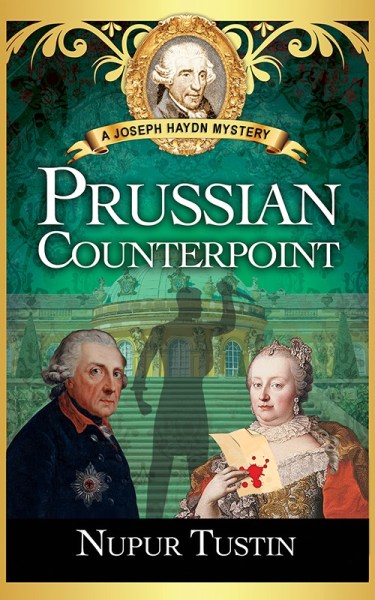 From the very beginning, I knew I would be writing a historical mystery series. Although my tastes have since expanded to contemporary mystery and thriller writers—from Aaron and Charlotte Elkins to Jeffrey Deaver and Michael Connelly—at the time, seven years ago, I refused to read anything other than historical mysteries, and I was especially fond of Stephanie Barron’s Jane Austen series and Susan Wittig Albert’s Beatrix Potter series.
Believe it or not, it was the author’s note in one of the Beatrix Potter mysteries that inspired the Joseph Haydn Series. Albert talks about the immense satisfaction she’d had researching Beatrix Potter’s life. I’d just come out of a Ph.D. program, and as a former journalist, research was something I was very comfortable with.
I was a new mother, confined to the house, unable to even sit at the piano for a little while because my baby had severe acid reflux disease and needed constant care. Researching a composer was my way of keeping in touch with music and planning a mystery series was a way of keeping my sanity intact.
Haydn faced a number of setbacks. His career as a singer was doomed when his voice broke and then he was thrown out of St. Stephen’s Cathedral, where he was a choirboy, with just the shirt on his back. Yet he remained unfailingly optimistic. And years later, he still remembered the people who, poor themselves, had reached out to help him.
He was the perfect sleuth in so many ways: a man from the lower classes, but who as a respected musician enjoyed the confidence of the nobility; a person so grateful for the support he himself had received, he would never turn down a request for help. But more than that, he became my muse. The path of a writer isn’t easy, and every time I’ve faced a setback, I’ve turned to and received inspiration from Haydn—from the details of his life and from his attitude.
Even so, I never thought I’d get one novel written much less three!
Where did the idea for the mystery that is central to the story come from?
NT: Researching Haydn also meant researching his times, in particular the political situation in Europe. Before I knew it, I was reading a biography of Maria Theresa, a woman I’ve come to greatly admire. It may seem strange to think of an Empress as a career woman, but in a sense that was what she was. We read about her juggling her need to be a mother and a wife—she was very much in love with her Francis—with her need to manage affairs of the state.
From the moment she ascended the throne in 1740, she was threatened from all sides—the biggest threat of all coming from Prussia where Frederick II, only a few years older than she, had been King for only a few months longer.
At the time that Frederick decided to march into Silesia—with no warning of his actions—Maria Theresa was heavily pregnant. Can you imagine being a few months from giving birth, having to learn at the young age of twenty-three how to govern with aged advisors and an empty treasury, and then having to contend with an invasion?
I was pregnant myself with my second child when I read about all this. My heart went out to the young Queen—Maria Theresa was Archduchess of Austria and Queen of Hungary at the time. The War of Austrian Succession lasted eight years and then only a few years later was followed by the Seven Years’ War. That lasted until 1763. And throughout that period, Maria Theresa continued to govern and to give birth. Her youngest, Antoine—Marie Antoinette—was born in November, 1755.
I knew I wanted to involve Haydn in a mystery that brought Maria Theresa into a confrontation with her old nemesis, Frederick of Prussia. At first, I thought it would be a short story. It took me some time to realize that the backdrop of their old enmity, of Austria’s marriage negotiations with France, were simply too large in scope to be explored fully in a story.
Is there a theme or subject that underlies the story? If so, what prompted you to write about it?
NT: In addition to the relationship between Maria Theresa and Frederick II, which I’ve discussed above, the novel also revolves around the partition of Poland. The chain of events that would lead to the first partition of Poland in 1772 began shortly after the Seven Years’ War ended in 1763.
Prussian Counterpoint is set in 1768, in the year that Russia forced the Polish Sejm, practically at gunpoint, to grant certain rights to religious minorities—Lutherans and those belonging to the Orthodox Christian Church. When two elderly Catholic Bishops protested, they were summarily arrested and the Polish King, placed on the throne by his former lover Catherine of Russia, did nothing.
Incensed, some of the Polish gentry organized a confederation at Bar to protest this. That, of course, led to Russia sending troops into Poland to crush the protest.
You have to understand that all this had more to do with Russian—and Prussian—control of Poland than it had with any concern for religious tolerance. Russia, in particular, was seeking a way of opening a route to the Black Sea. Peter the Great had managed to gain access to the Baltic Sea. Catherine was simply following in his footsteps.
But other than the political events taking place at the time, there’s also the idea of espionage. In the eighteenth century, women had a particular advantage in the field: they were invisible. As Nadine Akkerman points out in her excellent book Invisible Agents, women could in the guise of exchanging notes on domestic matters convey information of a more political nature.
And from artichoke juice to raw eggs, women had a number of excellent remedies for conveying messages concealed so well that no one realized a message even existed.
How do you create your characters? Do you have favourite ones? If so, why are you partial to them?
NT: For my historical figures, I read biographies, letters, any material I can get my hands on to get a sense of the personalities of the people I’m writing about. When it comes to characters like Rosalie and Greta, maids at the Esterházy Palace where Haydn is employed as Kapellmeister, Director of Music, they develop more organically through the scenes that I write.
I don’t feel that I create any of my fictional characters. I feel that they already exist. My job is to see them and portray them clearly enough to convey their personality to my readers. I’ve found that my characters won’t work with me if I try to make them into something they’re not. So I try to see them in my mind’s eye as closely as I can and to listen to their words very carefully.
How do you bring to life the place you are writing about?
NT: In the same way that I do my characters—by immersing myself in descriptions of locations in the eighteenth century. I pore over maps, look to see what streets existed and what they were called at the time that my novels are set.
Finding this type of information is exactly like working a case. Everything isn’t neatly available all in one place. Sometimes, one has to go about finding what one needs in a roundabout fashion. If I need to know what eighteenth-century Vienna was like, I might find more information in the biographies of Mozart than in any biography of Haydn.
I’ve mentioned sleigh rides in Prussian Counterpoint. I’d never even known the Viennese enjoyed sleigh races until I read Stefan Zweig’s biography of Marie Antoinette. I followed up on that information by writing to people in Vienna.
When all else fails, I follow Catriona McPherson’s excellent advice: I make stuff up. I remind myself I’m writing historical fiction not fact, take a huge gulp of wine to assuage my guilt, and set to work.
I’m joking about the wine. But yes, if all of my research efforts have failed to yield any clues, I do the best I can with the information I have. I can’t say it makes me happy to do that. But sometimes one doesn’t have a choice.
Unfortunately eighteenth-century individuals seem to have taken much of their lives for granted and have sadly failed to record every aspect of it as meticulously as the contemporary writer of historical mysteries might wish.
I try to remember that when I write in my own journal, but it’s so hard to predict what someone in the future might or might not be familiar with that I can’t say I blame my predecessors for not being so very precise. I sometimes wonder how much of twenty-first century life people centuries later will be able to infer from our written accounts. And how accurate will they be?
What research do you do to provide background information to help you write the novel?
NT: The best research one can do is to immerse oneself in biographies of people who lived in the times and in the places where one’s work is set. Letters and diaries and sometimes just the oddest of books can have nuggets of valuable information. You always have to be on the lookout for interesting books and sources of information.
But when I’m at my wits’ end, and I feel like I’ve turned every stone to no avail, I turn, as I always do, to the Österreichische Nationalbibliothek or the Austrian National Library.
Or I turn to academic experts in the field. Whether it’s espionage or authenticating works of music, funeral rites or Monteverdi, one can always find scholars who are more than willing to share their expertise.
Is there anything else you’d like to tell readers about the book?
NT: I think readers will enjoy seeing Haydn pitting his wits against the Prussian King. But if they’d like to see how the son of a market-judge solves other smaller cases in his town, they’re welcome to get a complimentary taste of his sleuthing skills from: http://bit.ly/Haydn_Taste_of_Murder
I’m offering three short mysteries there, which I’m sure readers will enjoy.
Thank you for answering my questions, Nupur, and good luck with your latest book in the series. Readers can learn more about Nupur by visiting her website, and her Facebook, Goodreads and Bookbub pages.
Prussian Counterpoint is available on Amazon, Kobo, Nook and Apple.
 About Nupur Tustin: A former journalist, Nupur relies upon a Ph.D. in Communication and an M.A. in English to orchestrate fictional mayhem. The Haydn mysteries are a result of her life-long passion for classical music and its history. Childhood piano lessons and a 1903 Weber Upright share equal blame for her original compositions, available on ntustin.musicaneo.com.
Her writing includes work for Reuters and CNBC, short stories and freelance articles, and research published in peer-reviewed academic journals. She lives in Southern California with her husband, three rambunctious children, and a pit bull.
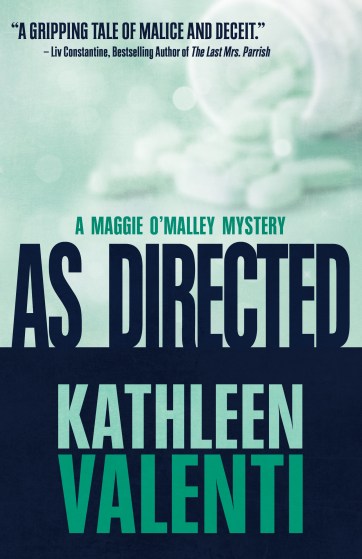 In it, former pharmaceutical researcher Maggie O’Malley is rebuilding her life, trading test tubes for pill bottles as she embarks on a new career at the corner drugstore. But as she spreads her wings, things begin to go terribly wrong. A customer falls ill in the store. Followed by another. And then more. The spectre of poisoning arises, conjuring old grudges, past sins, buried secrets and new suspicions from which no one is immune. As Maggie and her best friend Constantine begin to investigate, they discover that some of the deadliest doses come from the most unexpected places.
 About Kathleen Valenti: Kathleen is the author of the Maggie O’Malley Mystery Series, which includes her Agatha- and Lefty-nominated debut novel, Protocol. When Kathleen isn’t writing page-turning mysteries that combine humor and suspense, she works as a nationally award-winning advertising copywriter. She lives in Oregon with her family where she pretends to enjoy running.
 KBH: Cyanide with Christie is the third book in the Crime with the Classics series. The protagonist, Emily Cavanaugh, is a retired literature professor who solves crimes by relating them to her favorite classic novels. Each book focuses on a different classic author.
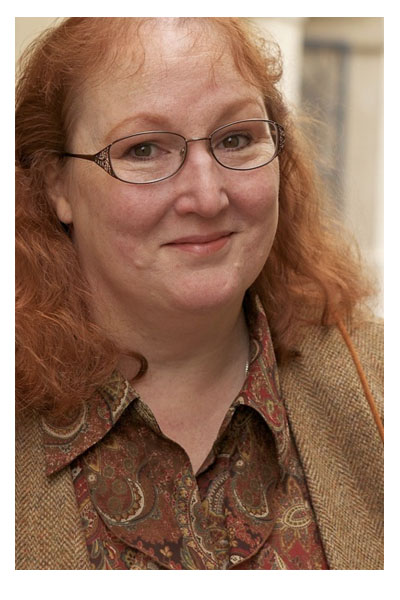 About Katherine Bolger Hyde: Katherine was born almost in New York City in 1956 and has lived all over the US, but currently makes her home in the redwood country of California with her husband, youngest child, and two obstreperous cats. She decided at age eleven to become a writer, her initial idols being Mark Twain and Louisa May Alcott. In college she majored in Russian literature and expanded her favorites to include Dostoevsky, Tolstoy, Austen, Dickens, and many more.Katherine writes the Crime with the Classics traditional mystery series for adults as well as fantasy and picture books for children. When not writing, reading, or editing (her day job), she can usually be found singing, dancing, knitting, or drawing plans for her dream house.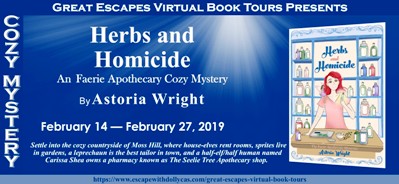
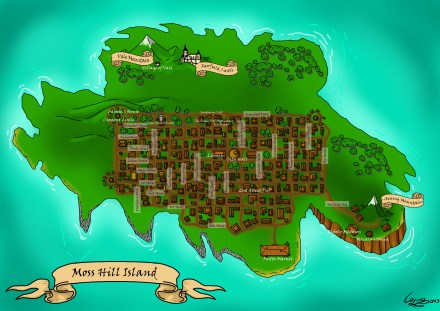 Moss Hill is not your typical town. An island off the western shores of the United Kingdom, right near the Great Blasket, it’s a stunning sight when it’s visible and has easy access from Ireland when it’s accessible by ferry boat. The island is covered in mist, but it all becomes clear the closer you are to it. You’ve also probably never heard of us because the islands around us are either abandoned or too small to hold a community like ours.
 If you want to see the whole town in one glance, the view is breathtaking from the top of Mount Aisling. Just don’t go into Mount Vale. The hiking trails there are a bit dangerous, and visitors often lose their way on the treacherous trails. It’s best to avoid that mountain, but you can still appreciate the view. The sight of it is otherworldly even from a distance.
  About Astoria Wright: Astoria is the author of The Faerie Apothecary Mysteries, including the bestselling prequel novella Chaos in the Countryside. Intrigued by myths and inspired by cozy mystery writers before her, Astoria tries to combine two worlds with human and faerie neighbors trying to solve puzzling crimes on the fictional island of Moss Hill. She’s also a poet, which shows in the Moss Hill poetry anthology “written” by the characters in the series. Her goal is to bring Moss Hill to life in her stories, because who doesn’t wish we lived in a town with magical faeries as neighbors?
 If you’ve read the first book in the series, A Timeless Celebration, you’ll know that the series is set in Fenwater, a small town in rural Ontario that has a strong connection with its Scottish heritage. Since things Scottish will frequently play a part in the stories in the series, I thought it would be apt to take a couple minutes today to mark Burns Night, an occasion that is celebrated in Scotland and in Scottish communities worldwide. Burns Night is a night to honour the Scottish national poet, Robert Burns, and to celebrate all things Scottish – sort of like St Patrick’s Day without the green beer if you have Scottish ancestry. If you haven’t encountered Burns Night before and you’d like to learn more about it, you’ll find a
  Lois Stone, the main character in the Century Cottage Cozy Mysteries series, has Scottish ancestry that she doesn’t really want to talk about and she plays the bagpipes. So, although I haven’t asked her, I’m sure she’s at a Burns Night celebration today. Maybe she’s even the piper who is piping in the haggis. She’ll be wearing tartan and surrounded by friends and neighbours as they toast the haggis and Burns’ memory. I think she deserves an evening to enjoy herself after the turbulent introduction she had to Fenwater last year in A Timeless Celebration. When the second book in the series is released later this year, we’ll drop in on her again and find out how she’s settling into her new home.
 The day after tomorrow is Christmas Day. For most of us, when we think of Christmas, lots of familiar images flood our minds: the crunch of boots on snow, festooned Christmas trees, a roaring fire in the hearth, the scent of pine drifting through the house, dancing lights strung around windows, the tangy scent of cinnamon and cloves, the sweet scent of buttered popcorn, colourful ornaments glinting on the tree, the smell of turkey roasting in the oven, Christmas songs playing in every shop you enter. The list could go on and on.
 Many of the images I mentioned have traditions associated with them: some families cut down their own Christmas tree, decorations are often hung on a certain date, children string popcorn onto threads to create garlands to decorate the tree, turkey is served for Christmas lunch. Some traditions are part of the celebrations of whole communities and countries, and others are ones that have become tradition to a family because they have done it like that for years.
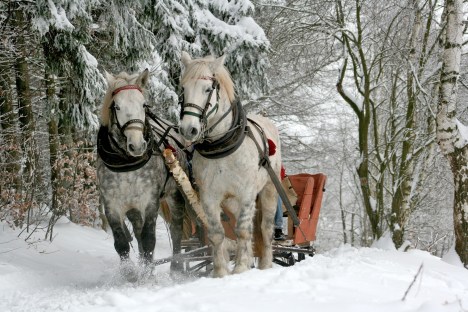 During my teens, a winter tradition for our youth group was Hayride Saturday in Ontario’s farmland. When we arrived at the farm, less than an hour’s drive outside Toronto, we city kids thought we were miles from civilisation. Wrapped up in coats, hats and mittens we bundled onto a large, flatbed wagon piled high with hay. We wriggled into the hay for warmth, the girls covertly trying to edge in beside the boys we fancied. The wagon would lurch off down the country road, pulled by a pair of shaggy draught horses, as we squealed and clutched the edges of the creaking vehicle. Invariably the boys would roughhouse, pushing and shoving each other, until at least one of them tumbled off. We’d shout encouragement as the man overboard ran to catch up with the wagon. The horses lumbered along the frosty road at an easy pace so there was never any danger that he would be left behind.
 By the time we arrived back at the farmyard, we were hoarse from shouting and laughing, and shivering with cold, our noses glowing like Rudolph’s. Laughing, we’d hop off the wagon and troop into the barn where refreshments were laid out on a long wooden table. A hotdog stopped my stomach rumbling, but a cup of steaming apple cider was the real treat. I would wrap my chilled hands around the cup and inhale the scents of cinnamon, orange rinds and cloves before I took my first sip. Nothing could beat its sweet, tangy taste. Armed with my liquid hand warmer, I’d wander outside to huddle at the bonfire that was lit as darkness fell. Sitting on a bale of hay with sparks from the fire popping and floating past me, blowing wood smoke through my hair, I thought that this was country life. Nowadays I’m more familiar with real country life. I pitch in when we make hay on our farm each summer, gathering the bales together to be lifted and brought into the byre, and feed cattle in winter, lifting sections of hay and throwing them into the feeder while dodging the animals’ swinging heads.
 Then a few days before that holiday ended, I got a pleasant surprise when I discovered that you can now buy cartons of apple cider. All you need to add to the mixture is hot water. It isn’t quite the same as fresh cider but it’s the next best thing. So, before I left Toronto, I trooped off to the supermarket to buy a carton and packed as many of the individual sachets as I could into my backpack. Fortunately I wasn’t searched at the airport. If I had been, would they have believed that the white powdered substance I was carrying was nothing more sinister than cider mixtures?
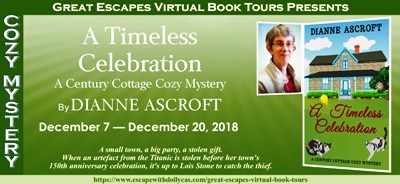
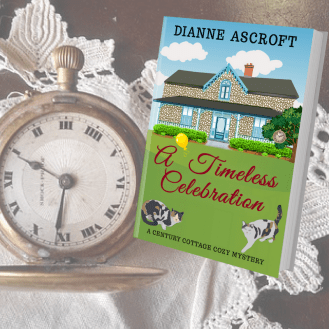 On December 8 I was invited to guest post at StoreyBook Reviews about where the idea came from for A Timeless Celebration. I’ll give you a clue: it’s partly related to the Titanic.
  On December 15 I shared in a guest post with Terry Ambrose at Mysteries With Character why Fenwick is the perfect town for my cozy mysteries.
 My novel, War King, is the third novel in my series about the Norse king Hakon Haraldsson, or “Hakon the Good” as he is also known in history.
 About Eric Schumacher: Eric was born in Los Angeles in 1968 and currently resides in Santa Barbara, CA with his wife, two children and dog. He is the author of two historical fiction novels, God’s Hammer and its sequel, Raven’s Feast. Both tell the story of the first Christian king of Viking Norway, Hakon Haraldsson, and his struggles to gain and hold the High Seat of his realm.
 WHJ: Antiques and Alibis is the first book in a brand-new humorous crime series set in Scotland. It is not a series, or indeed a book which takes itself seriously. The book description will give you a flavour of the general tone of the book and the series.
 About Wendy H. Jones: Wendy is an award-winning Scottish Crime Writer who lives and sets her books in Dundee, Scotland. She is also an International Public Speaker talking about writing and marketing. Killer’s Crew, the first book in her DI Shona McKenzie Mysteries was the Winner of the Books Go Social Book of the Year 2017. The Dagger’s Curse, the first book in her Young Adult mystery series, was a finalist in the Woman Alive Magazine Readers Choice Award 2017. She has signed a publishing contract with Malcolm Down and Sarah Grace Publishing for the first book in a children’s picture book series, based on a true story about a little Buffalo in Scotland. The first, Bertie’s Great Escape will be released late October 2018. When she’s not writing, Wendy spends her time travelling the world. She is also President of the Scottish Association of Writers and co-founder of Crime at the Castle, a Scottish literary festival held at Glamis Castle Scotland.
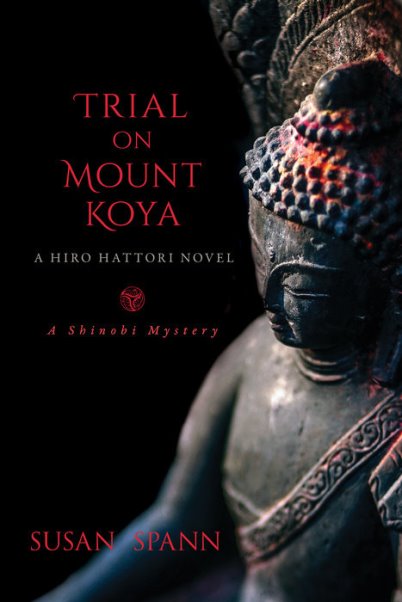 SS: Although TRIAL ON MOUNT KOYA is the sixth Hiro Hattori mystery, it’s designed to stand alone, so readers don’t have to be familiar with Hiro and Father Mateo’s previous adventures to enjoy this book.
 About Susan Spann: Susan is the award-winning author of the Hiro Hattori mystery novels, featuring ninja detective Hiro Hattori and Portuguese Jesuit Father Mateo. She began reading precociously and voraciously from her preschool days in Santa Monica, California, and as a child read everything from National Geographic to Agatha Christie.




 dianneascroft.com