Today I’d like to welcome Rita Moreau to Ascroft, eh?. She has dropped by to tell us about her writing process as she created The House on Xenia, her latest novel in the Mary Catherine Mahoney mystery series.
Welcome, Rita. Without any preamble, I’ll turn it over to you:
The Writing Process
One question my readers always ask me is “How do you write a novel?” I usually respond, “You write a novel one page at a time.”
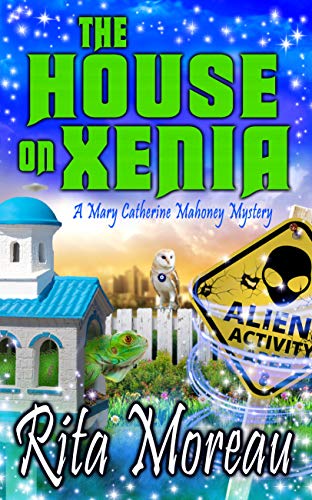 The House on Xenia is my latest novel in the Mary Catherine Mahoney mystery series. I am proud that my readers enjoy my writing and tell me that they enjoy learning something along the way. My novels do fit the definition of cozy in that we have a whodunit featuring an amateur sleuth (Mary Catherine Mahoney), a distinctive setting (Florida), no explicit sex or violence. With that said I would venture to say my novels are a hybrid genre since I do employ large impersonal groups like drug cartels or secret government agencies. I like to call it a cozy with an edge. My novels all contain humor and are light and quick reads. No dark themes although I do have a theme in most of my novels. In The House on Xenia I celebrate the strength of a single Mom and in doing so I celebrate my mother who was one of the strongest women I have known in my life.
In The House on Xenia I introduce some new characters along with the zany and quirky characters my readers have come to enjoy. One is Mabel Gold and she will be the protagonist in a new series I am working on currently.
I also employ what is called the fourth wall, in writing The House on Xenia. The fourth wall is a conceptual barrier between those presenting some kind of a communication and those receiving it. The term originated in the theater, where it refers to the imaginary wall at the front of the stage separating the audience from the performers.
Xenia, (the house on Xenia) is a character in the book that breaks the fourth wall and speaks directly to the reader. This is employed in films where the characters in films break the fourth wall and talk to us, meaning they ignore the imaginary “wall” that keeps the actors from the audience.
In the movie, “Ferris Bueller’s Day Off” the lovable Ferris Bueller (played by Matthew Broderick) is constantly talking to the audience like they’re his best friends. The film makes it clear in the very beginning that it’ll be ignoring the rule of audience movie subject separation. More recently the villainous Frank Underwood breaks the fourth wall in the Netflix series, “House of Cards.”
I also introduced aliens in The House on Xenia. I am from Dayton, Ohio and nearby Dayton is Wright Patterson AFB. I researched the crash at Roswell and Area 51 and how it tied into Wright Patterson AFB in Dayton, Ohio, which was (and may still be) the headquarters of government sponsored UFO investigations. I weaved that long held rumor into The House on Xenia.
I also hired a house historian who gave me the history of the house I grew up in on Xenia Avenue in Dayton, Ohio. That was very interesting to know the history of the house. I think we all have memories of the house or neighborhood we grew up in that stays with us throughout our life.
I’m always happy to hear my readers tell me that they found humor in my writing and escape from their worries. My job is done.
Thanks for sharing an insight into your writing with us, Rita, and good luck with The House on Xenia, the latest book in the Mary Catherine Mahoney Mystery series.
Readers can learn more about Rita and her writing by visiting her website and her Facebook and Goodreads pages.
The novel is available online on Amazon
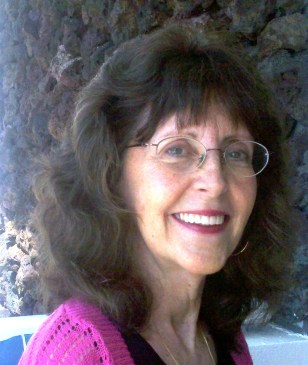 About Rita Moreau: A workaholic by nature, upon retirement, Rita Moreau began work on her bucket list, writing a book. Traveling the national parks with her husband George in a vintage Bluebird motor home, (on George’s list), Rita completed her first novel Bribing Saint Anthony. Back home she completed Nuns! Psychics! & Gypsies! OH! NO, Feisty Nuns, The Russian & Aunt Sophia and The House on Xenia. Rita and her husband live in a postcard called Florida where he has fun telling everyone he is the author’s husband. When not writing she joins PatZi Gil on the Joy on Paper radio program with Book Buzz Mysteries or you can find her teaching fitness classes and doing her best to keep busy. She loves connecting with readers.
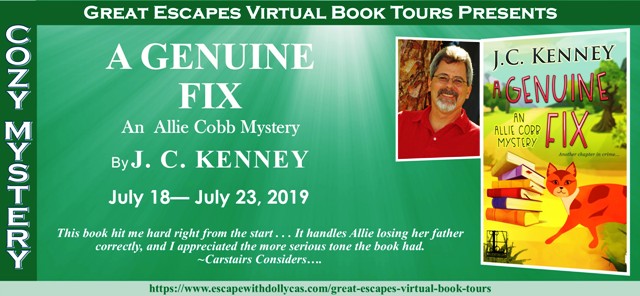
 JCK: A Genuine Fix is book two in the Allie Cobb Mysteries series. Set in the fictional southern Indiana town of Rushing Creek, it follows the exploits of amateur sleuth Allie Cobb. She’s got a lot on her plate, that’s for sure.
 About J.C. Kenney: He is the author of the Allie Cobb Mysteries, which are set in the fictional small town of Rushing Creek, Indiana. He lives in Indianapolis with his wife, two sons, and a snuggly kitty cat. He loves motor sports, so when he’s not writing, you can probably find him checking in on the latest from IndyCar and other forms of racing. J.C. is a member of Sisters in Crime.
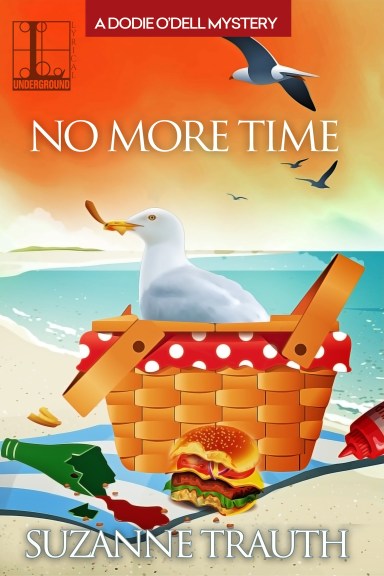 ST: My novel No More Time is the fifth book in the Dodie O’Dell mystery series. The series takes place, for the most part, in Etonville, New Jersey, a small town a stone’s throw from New York City. Dodie grew up down the Jersey Shore and lived and worked in Candle Beach. But after Hurricane Sandy destroyed her home and the restaurant she managed, Dodie came north to Etonville where she manages the Windjammer restaurant. Next door to the Windjammer is the Etonville Little Theatre, a community theatre whose members are Dodie’s good friends. In fact, Dodie pops over to see rehearsals and has been known to help out with costumes and lights. Until she gets involved in a murder investigation due to her infamous instincts. Then Dodie becomes Etonville’s amateur detective – but don’t tell her she’s an amateur!
 About Suzanne Trauth is a novelist, playwright, screenwriter, and a former theatre professor at a university. She is a member of Mystery Writers of America, Sisters in Crime, the Dramatists Guild, and League of Professional Theatre Women. When she is not writing, Suzanne coaches actors and serves as a celebrant performing wedding ceremonies. She lives in Woodland Park, New Jersey.
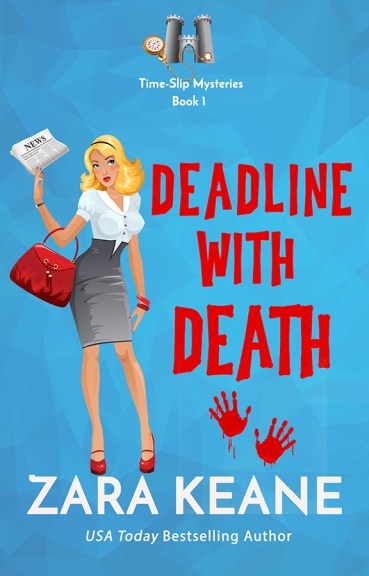 ZK: Deadline with Death is a time travel cozy mystery set in Ireland. It’s the first book in the Time-Slip series. Over the course of the first three books, the historical mystery introduced in Deadline with Death will be explained. As well as the ongoing historical mystery, each book has a self-contained contemporary murder mystery that’s solved by the end of that book.
 About Zara Keane: USA Today bestselling author Zara Keane grew up in Dublin, Ireland, but spent her summers in a small town very similar to the fictional Ballybeg and Smuggler’s Cove.
 MF: Cliff Hanger is the fifth book in the Maggie McDonald Mystery series. Maggie, a professional organizer turned amateur detective, restores order to her tightknit and quirky community in these California-based, character-driven, cozy mystery novels. In book five, an ultra-light pilot is found fatally injured in the cliffs above Monterey Bay, and the investigation into his death becomes a cluttered mess. Professional organizer Maggie McDonald sorts the clues to catch a coastal killer before her family becomes a target.
 About Mary Feliz: Mary writes the Maggie McDonald Mysteries featuring a Silicon Valley professional organizer and her sidekick golden retriever. She’s worked for Fortune 500 firms and mom and pop enterprises, competed in whale boat races and done synchronized swimming. She attends organizing conferences in her character’s stead, but Maggie’s skills leave her in the dust. Her first book, ADDRESS TO DIE FOR, received a Kirkus Star and was named a Best Book of 2017 by Kirkus Reviews.
 CH: DOWN IN FLAMES is the sixth book in the Webb’s Glass Shop Mystery Series. Savannah Webb is the owner of a glass shop and she teaches a different type of glass art in each book. As a subject matter expert within the art community, she consults with the St. Petersburg Police Department when a crime is committed.
 About Cheryl Hollon: Cheryl now writes full-time after she left an engineering career of designing and building military flight simulators in amazing countries such as England, Wales, Australia, Singapore, Taiwan, and India. Fulfilling the dream of a lifetime, she combines her love of writing with a passion for creating glass art. In the small glass studio behind her house in St. Petersburg, Florida, Cheryl and her husband design, create, and produce fused glass, stained glass, and painted glass artworks.
 HDG: I wanted to come up with an occupation for my sleuth that hadn’t been overdone in the cozy mystery genre, and somehow I stumbled onto the idea for an exotic pet-sitter. Her first “mission” is sitting a ball python. It was challenging to bring that to life in a way that wouldn’t repulse readers, but I think it worked—one endorser (cozy author Emily James) said that although she didn’t like snakes going into the book, the snake wound up being one of their favorite characters!
 About Heather Day Gilbert: Heather is an ECPA Christy award finalist and Grace award winner, writes contemporary mysteries and Viking historicals. Her novels feature small towns, family relationships, and women who aren’t afraid to protect those they love. Like Belinda Blake, Heather plays video games, although so far she hasn’t done any exotic pet-sitting or hunted any murderers.
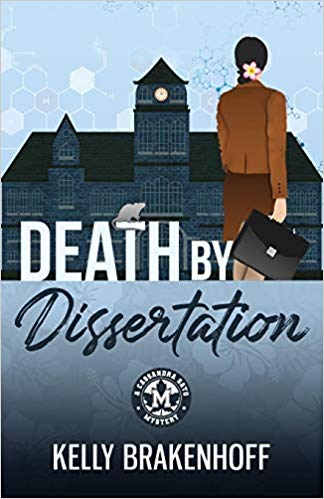 KB: After years of dreaming, writing, and re-writing, Death by Dissertation is my first novel and the beginning of the Cassandra Sato mystery series set in the U.S. in rural Nebraska. After graduating with a Ph.D. and working a few years at a college in Hawai’i—where she was born and raised—Cassandra moves to Morton College in the heart of the Midwest because she thinks it will help her get experience to someday become a university president.
 About Kelly Brakenhoff: Kelly is an American Sign Language Interpreter whose motivation for learning ASL began in high school when she wanted to converse with her deaf friends. As an American Sign Language Interpreter with more than twenty years of experience, Kelly’s worked in college classrooms for fifteen different majors. From traipsing across muddy farm fields to stomach-churning medical procedures, and stage interpreting for famous figures, Kelly’s community interpreting interactions number in the thousands. Unfortunately, once she’s stepped away from the job, she usually forgets 90% of what happened. Which helps her keep confidential information safe, but also makes it really hard to grocery shop for more than 5 items without a written list.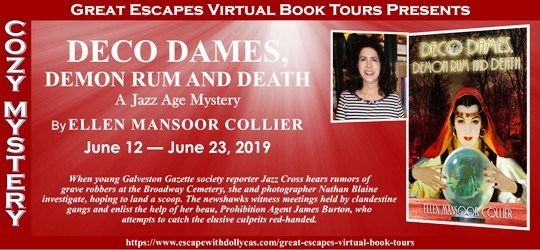
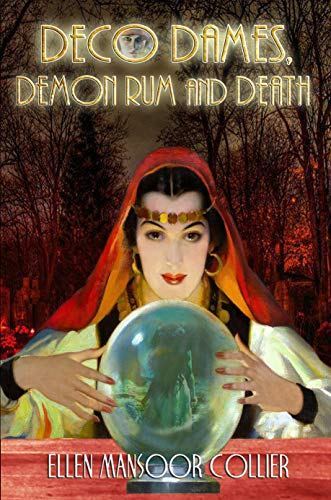 EMC: DECO DAMES is the last novel in my five-part series featuring Jasmine (Jazz) Cross, a society reporter who’s caught between two clashing cultures: the high society and high-rollers she covers in the Galveston Gazette, and her brother’s illicit underground world of gangsters, speakeasies and bootleggers.
 About Ellen Mansoor Collier: Ellen is a Houston-based freelance magazine writer and editor whose articles and essays have been published in a variety of national magazines. Several of her short stories have appeared in Woman’s World. During college summers, she worked as a reporter for a Houston community newspaper and as a cocktail waitress, both jobs providing background experience for her Jazz Age mysteries.
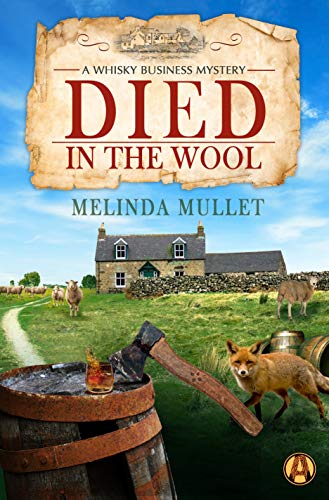 MM: Died in the Wool is the fourth book in the Whisky Business Mystery Series. The protagonist is a young woman named Abi Logan. A highly respected, globe-trotting photojournalist who suddenly finds herself thrust into the male dominated world of whisky making in rural Scotland when she inherits a distillery from her uncle. Being both inexperienced and a woman she’s harassed and threatened, but she refuses to back down especially after one of her employees is found murdered in a vat of the distillery’s finest. It’s a murder mystery of course, but it’s also a journey of personal discovery for a woman burnt out by her own over-stressed life. In the whisky world she finds a new life, and a new purpose.
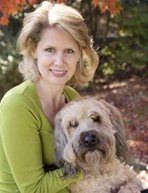 About Melinda Mullet: Melinda was born in Dallas and attended school in Texas, Washington D.C., England, and Austria. She spent many years as a practicing attorney before pursuing a career as a writer. Author of the Whisky Business Mystery series, Mullet is a passionate supporter of childhood literacy. She works with numerous domestic and international charities striving to promote functional literacy for all children. She lives in Washington, D.C., with her family.