I’ve invited Nupur Tustin to Ascroft, eh? to introduce us to her Joseph Haydn Mystery Series.
Welcome Nupur.
Let’s get started, shall we?
Tell us about your novel. Is it part of a series? If so, please tell us about the series too.
NT: Prussian Counterpoint is the third novel in the Joseph Haydn Mystery Series. Haydn was an eighteenth-century Austrian composer, a man who was the son of a wheelwright and a cook and who, in his own lifetime, achieved remarkable fame and wealth.
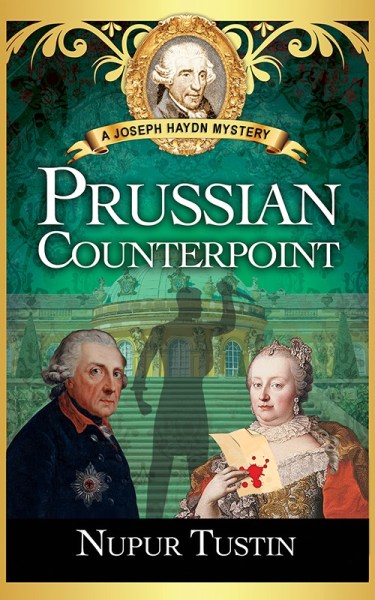 From the very beginning, I knew I would be writing a historical mystery series. Although my tastes have since expanded to contemporary mystery and thriller writers—from Aaron and Charlotte Elkins to Jeffrey Deaver and Michael Connelly—at the time, seven years ago, I refused to read anything other than historical mysteries, and I was especially fond of Stephanie Barron’s Jane Austen series and Susan Wittig Albert’s Beatrix Potter series.
Believe it or not, it was the author’s note in one of the Beatrix Potter mysteries that inspired the Joseph Haydn Series. Albert talks about the immense satisfaction she’d had researching Beatrix Potter’s life. I’d just come out of a Ph.D. program, and as a former journalist, research was something I was very comfortable with.
I was a new mother, confined to the house, unable to even sit at the piano for a little while because my baby had severe acid reflux disease and needed constant care. Researching a composer was my way of keeping in touch with music and planning a mystery series was a way of keeping my sanity intact.
Haydn faced a number of setbacks. His career as a singer was doomed when his voice broke and then he was thrown out of St. Stephen’s Cathedral, where he was a choirboy, with just the shirt on his back. Yet he remained unfailingly optimistic. And years later, he still remembered the people who, poor themselves, had reached out to help him.
He was the perfect sleuth in so many ways: a man from the lower classes, but who as a respected musician enjoyed the confidence of the nobility; a person so grateful for the support he himself had received, he would never turn down a request for help. But more than that, he became my muse. The path of a writer isn’t easy, and every time I’ve faced a setback, I’ve turned to and received inspiration from Haydn—from the details of his life and from his attitude.
Even so, I never thought I’d get one novel written much less three!
Where did the idea for the mystery that is central to the story come from?
NT: Researching Haydn also meant researching his times, in particular the political situation in Europe. Before I knew it, I was reading a biography of Maria Theresa, a woman I’ve come to greatly admire. It may seem strange to think of an Empress as a career woman, but in a sense that was what she was. We read about her juggling her need to be a mother and a wife—she was very much in love with her Francis—with her need to manage affairs of the state.
From the moment she ascended the throne in 1740, she was threatened from all sides—the biggest threat of all coming from Prussia where Frederick II, only a few years older than she, had been King for only a few months longer.
At the time that Frederick decided to march into Silesia—with no warning of his actions—Maria Theresa was heavily pregnant. Can you imagine being a few months from giving birth, having to learn at the young age of twenty-three how to govern with aged advisors and an empty treasury, and then having to contend with an invasion?
I was pregnant myself with my second child when I read about all this. My heart went out to the young Queen—Maria Theresa was Archduchess of Austria and Queen of Hungary at the time. The War of Austrian Succession lasted eight years and then only a few years later was followed by the Seven Years’ War. That lasted until 1763. And throughout that period, Maria Theresa continued to govern and to give birth. Her youngest, Antoine—Marie Antoinette—was born in November, 1755.
I knew I wanted to involve Haydn in a mystery that brought Maria Theresa into a confrontation with her old nemesis, Frederick of Prussia. At first, I thought it would be a short story. It took me some time to realize that the backdrop of their old enmity, of Austria’s marriage negotiations with France, were simply too large in scope to be explored fully in a story.
Is there a theme or subject that underlies the story? If so, what prompted you to write about it?
NT: In addition to the relationship between Maria Theresa and Frederick II, which I’ve discussed above, the novel also revolves around the partition of Poland. The chain of events that would lead to the first partition of Poland in 1772 began shortly after the Seven Years’ War ended in 1763.
Prussian Counterpoint is set in 1768, in the year that Russia forced the Polish Sejm, practically at gunpoint, to grant certain rights to religious minorities—Lutherans and those belonging to the Orthodox Christian Church. When two elderly Catholic Bishops protested, they were summarily arrested and the Polish King, placed on the throne by his former lover Catherine of Russia, did nothing.
Incensed, some of the Polish gentry organized a confederation at Bar to protest this. That, of course, led to Russia sending troops into Poland to crush the protest.
You have to understand that all this had more to do with Russian—and Prussian—control of Poland than it had with any concern for religious tolerance. Russia, in particular, was seeking a way of opening a route to the Black Sea. Peter the Great had managed to gain access to the Baltic Sea. Catherine was simply following in his footsteps.
But other than the political events taking place at the time, there’s also the idea of espionage. In the eighteenth century, women had a particular advantage in the field: they were invisible. As Nadine Akkerman points out in her excellent book Invisible Agents, women could in the guise of exchanging notes on domestic matters convey information of a more political nature.
And from artichoke juice to raw eggs, women had a number of excellent remedies for conveying messages concealed so well that no one realized a message even existed.
How do you create your characters? Do you have favourite ones? If so, why are you partial to them?
NT: For my historical figures, I read biographies, letters, any material I can get my hands on to get a sense of the personalities of the people I’m writing about. When it comes to characters like Rosalie and Greta, maids at the Esterházy Palace where Haydn is employed as Kapellmeister, Director of Music, they develop more organically through the scenes that I write.
I don’t feel that I create any of my fictional characters. I feel that they already exist. My job is to see them and portray them clearly enough to convey their personality to my readers. I’ve found that my characters won’t work with me if I try to make them into something they’re not. So I try to see them in my mind’s eye as closely as I can and to listen to their words very carefully.
How do you bring to life the place you are writing about?
NT: In the same way that I do my characters—by immersing myself in descriptions of locations in the eighteenth century. I pore over maps, look to see what streets existed and what they were called at the time that my novels are set.
Finding this type of information is exactly like working a case. Everything isn’t neatly available all in one place. Sometimes, one has to go about finding what one needs in a roundabout fashion. If I need to know what eighteenth-century Vienna was like, I might find more information in the biographies of Mozart than in any biography of Haydn.
I’ve mentioned sleigh rides in Prussian Counterpoint. I’d never even known the Viennese enjoyed sleigh races until I read Stefan Zweig’s biography of Marie Antoinette. I followed up on that information by writing to people in Vienna.
When all else fails, I follow Catriona McPherson’s excellent advice: I make stuff up. I remind myself I’m writing historical fiction not fact, take a huge gulp of wine to assuage my guilt, and set to work.
I’m joking about the wine. But yes, if all of my research efforts have failed to yield any clues, I do the best I can with the information I have. I can’t say it makes me happy to do that. But sometimes one doesn’t have a choice.
Unfortunately eighteenth-century individuals seem to have taken much of their lives for granted and have sadly failed to record every aspect of it as meticulously as the contemporary writer of historical mysteries might wish.
I try to remember that when I write in my own journal, but it’s so hard to predict what someone in the future might or might not be familiar with that I can’t say I blame my predecessors for not being so very precise. I sometimes wonder how much of twenty-first century life people centuries later will be able to infer from our written accounts. And how accurate will they be?
What research do you do to provide background information to help you write the novel?
NT: The best research one can do is to immerse oneself in biographies of people who lived in the times and in the places where one’s work is set. Letters and diaries and sometimes just the oddest of books can have nuggets of valuable information. You always have to be on the lookout for interesting books and sources of information.
But when I’m at my wits’ end, and I feel like I’ve turned every stone to no avail, I turn, as I always do, to the Österreichische Nationalbibliothek or the Austrian National Library.
Or I turn to academic experts in the field. Whether it’s espionage or authenticating works of music, funeral rites or Monteverdi, one can always find scholars who are more than willing to share their expertise.
Is there anything else you’d like to tell readers about the book?
NT: I think readers will enjoy seeing Haydn pitting his wits against the Prussian King. But if they’d like to see how the son of a market-judge solves other smaller cases in his town, they’re welcome to get a complimentary taste of his sleuthing skills from: http://bit.ly/Haydn_Taste_of_Murder
I’m offering three short mysteries there, which I’m sure readers will enjoy.
Thank you for answering my questions, Nupur, and good luck with your latest book in the series. Readers can learn more about Nupur by visiting her website, and her Facebook, Goodreads and Bookbub pages.
Prussian Counterpoint is available on Amazon, Kobo, Nook and Apple.
 About Nupur Tustin: A former journalist, Nupur relies upon a Ph.D. in Communication and an M.A. in English to orchestrate fictional mayhem. The Haydn mysteries are a result of her life-long passion for classical music and its history. Childhood piano lessons and a 1903 Weber Upright share equal blame for her original compositions, available on ntustin.musicaneo.com.
Her writing includes work for Reuters and CNBC, short stories and freelance articles, and research published in peer-reviewed academic journals. She lives in Southern California with her husband, three rambunctious children, and a pit bull.


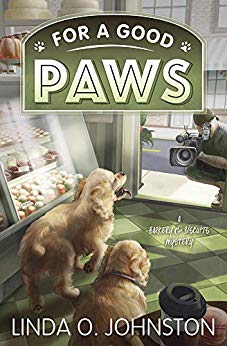 LOJ: My novel For A Good Paws is the fifth and last in my Barkery & Biscuits mystery series, about Carrie Kennersly, a veterinary technician, who buys a human bakery, Icing on the Cake, from a friend and turns half into Barkery and Biscuits, where she bakes and sells the healthy dog treats she created as a vet tech. From the first story on, she or her friends seem to wind up being prime suspects in murders, so she had to solve them.
 About Linda O. Johnston: Linda is a former lawyer who is now a full-time writer. She writes the Barkery & Biscuits Mystery Series for Midnight Ink. Her fifth and final book in the series, For a Good Paws, is a May 2019 release. She has also written Superstition Mysteries for Midnight Ink, and the Pet Rescue Mystery Series and Kendra Ballantyne, Pet-Sitter mysteries for Berkley Prime Crime. Linda also writes for Harlequin Romantic Suspense, and nearly all her current stories involve dogs.
 AD: FAIR GAME is the eighth in the Zoe Chambers Mystery Series. Zoe is a paramedic and deputy coroner in rural southwestern Pennsylvania’s Monongahela County. Throughout the series, she stubbornly fights for her friends, both new and old, seeking justice for those whose lives she can’t save. This leads her to assist and often hinder local Chief of Police Pete Adams, with whom she’s fallen in love. In FAIR GAME, she has escaped to the county fair with her horse to work through some personal issues but finds herself bonding with a troubled teen and a grieving father. Meanwhile, back in Vance Township, Pete investigates a dead woman’s mysterious final hours. Was her homicide a tragic accident? Or something much more sinister?
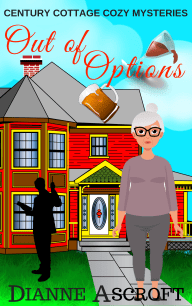 A dry district, a shocking secret, a missing person. When Lois Stone’s friend, Beth Darrow, arranges to meet her to reveal an astonishing discovery, Lois’s curiosity is piqued. Then Beth doesn’t keep their lunch date and Lois becomes worried. What has happened to her friend?
 When established house flippers Jazzi Zanders and her cousin Jerod donate a week’s worth of remodeling work to Jazzi’s sister Olivia, they’re expecting nothing more than back-breaking roofing work and cold beers at the end of each long, hot day. With Jazzi’s live-in boyfriend and partner Ansel on the team, it promises to be a quick break before starting their next big project—until Leo, an elderly neighbor of Olivia’s, unexpectedly goes missing . . .
 About Judi Lynn: Judi Lynn received a Master’s Degree from Indiana University as an elementary school teacher after attending the IPFW campus. She taught 1st, 2nd, and 4th grades for six years before having her two daughters. She loves gardening, cooking and trying new recipes.
 CB: A Dream of Death, first in the Kate Hamilton Mystery series, is set in the UK and features American antiques dealer Kate Hamilton and Detective Inspector Tom Mallory.
 About Connie Berry: Like her main character, Connie Berry was raised by charmingly eccentric antique collectors who opened a shop, not because they wanted to sell antiques but because they needed a plausible excuse to keep buying them. Connie adores history, off-season foreign travel, cute animals, and all things British. She lives in Ohio with her husband and adorable Shih Tzu, Millie.
 Tell us about your novel. Is it part of a series? If so, please tell us about the series too.
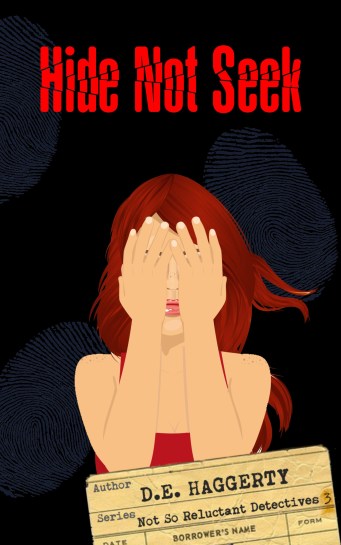
 About D.E. Haggerty: She grew up reading everything from her mom’s Harlequin romances to Nancy Drew, to Little Women. When she wasn’t flipping pages in a library book, she was penning horrendous poems, writing songs no one should ever sing, or drafting stories which have thankfully been destroyed. College and a stint in the U.S. Army came along, robbing her of free time to write and read. After surviving the army experience, she went back to school and got her law degree. She jumped ship and joined her hubby in the Netherlands before the graduation ceremony could even begin. A few years into her legal career, she was exhausted, fed up, and just plain done. She quit her job and sat down to write a manuscript, which she promptly hid in the attic before returning to the law. But practicing law really wasn’t her thing, so she quit (again!) and went off to Germany to start a B&B. Turns out running a B&B wasn’t her thing either. She polished off that manuscript languishing in the attic before following her husband to Istanbul where she decided to give the whole writer-thing a go. But ten years was too many to stay away from my adopted home. I packed up again and moved to The Hague where, in between tennis matches and failing to save the world, she’s currently working on her next book. Hide Not See is her fifteenth novel.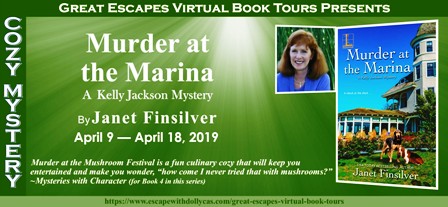
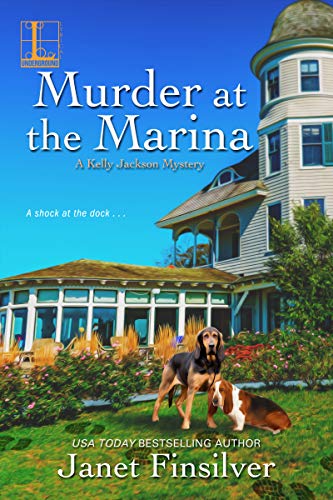 Kelly: My name is Kelly Jackson, and I’m the protagonist in a mystery series written by Janet Finsilver. It’s been such a fun experience! I’m the manager of Redwood Cove Bed and Breakfast in a small tourist town on the northern California coast.
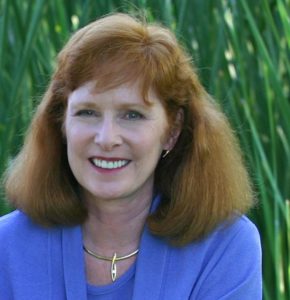 About Janet Finsilver: Janet is the USA TODAY bestselling author of the Kelly Jackson mystery series. She worked in education for many years as a teacher, a program administrator, and a workshop presenter. Janet majored in English and earned a Master’s Degree in Education. She loves animals and has two dogs–Kylie and Ellie. Janet has ridden western style since she was a child and was a member of the National Ski Patrol. One of the highlights of her life was touching whales in the San Ignacio Lagoon.
 DWG: Sifting Through Clues is the 8th in the Cookbook Nook Mysteries. In the first in the series, Final Sentence, Jenna Hart, an ex-advertising executive, moves home to Crystal Cove, California to help her aunt open a culinary bookshop and café and to find her smile.
 About Daryl Wood Gerber: Agatha Award-winning Daryl Wood Gerber writes the nationally bestselling Cookbook Nook Mysteries as well as the French Bistro Mysteries. As Avery Aames, she pens the popular Cheese Shop Mysteries. Daryl also writes stand-alone suspense. Fun tidbit: as an actress, Daryl appeared in “Murder, She Wrote.” She loves to cook, and she has a frisky Goldendoodle named Sparky who keeps her in line!
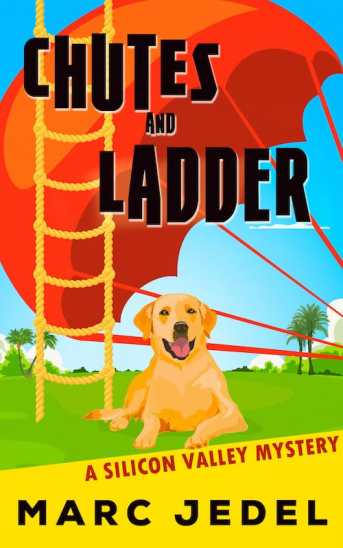 MJ: Chutes and Ladder is the second book in the Silicon Valley Mystery series, but can be read standalone. Marty Golden is not your typical, cozy mystery protagonist. As a male sleuth who doesn’t own a bakery, bookstore, or bed & breakfast, or live by the beach, he stands out from the crowd of cozy protagonists. To stay with the “B” alliteration, Marty does bumble his way through the investigations, armed with nothing but an eye for detail and powers of self-delusion.
 About Marc Jedel: For most of my life, I’ve been inventing stories. Some, especially when I was young, involved my sister as the villain. As my sister’s brother for her entire life, I’m highly qualified to tell the tale of this evolving, quirky sibling relationship.








 dianneascroft.com