The day after tomorrow is Christmas Day. For most of us, when we think of Christmas, lots of familiar images flood our minds: the crunch of boots on snow, festooned Christmas trees, a roaring fire in the hearth, the scent of pine drifting through the house, dancing lights strung around windows, the tangy scent of cinnamon and cloves, the sweet scent of buttered popcorn, colourful ornaments glinting on the tree, the smell of turkey roasting in the oven, Christmas songs playing in every shop you enter. The list could go on and on.
 Many of the images I mentioned have traditions associated with them: some families cut down their own Christmas tree, decorations are often hung on a certain date, children string popcorn onto threads to create garlands to decorate the tree, turkey is served for Christmas lunch. Some traditions are part of the celebrations of whole communities and countries, and others are ones that have become tradition to a family because they have done it like that for years.
The images we hold in our minds of a traditional Christmas are often linked to memories of our own Christmases past. And memories are an important part of the holiday season.
When I first arrived in Britain almost thirty years ago and encountered the apple cider that is served in pubs, it sparked my memories of the non-alcoholic version of the drink that I enjoyed during my teenage winters and Christmases in Canada. A few years ago I wrote about these memories for Foreign Flavours, an anthology of writings by ex-pat writers around the world, and I shared the piece with listeners at Woolly Winter Tales, an evening in Enniskillen Castle Museum last week.
As my contribution to the warm glow of Christmas, I’d like to share the memory with you today:
“Cider, with a dash of blackcurrent, has been an intrinsic part of many evenings I’ve spent at folk clubs and Irish music sessions since I first came to Ireland almost thirty years ago. It’s always been one of my favourite drinks. Sometimes the next morning, a pounding head makes me rue indulging, but I still wouldn’t refuse a glass of cider as I sit in a pub, tapping my foot to the music.
When I first arrived in Ireland I was surprised to find cider on tap in the pub. I had only encountered the unfermented, non-alcoholic variety as I was growing up in Canada. Its taste might make your lips pucker but it doesn’t make your head buzz after a few glasses.
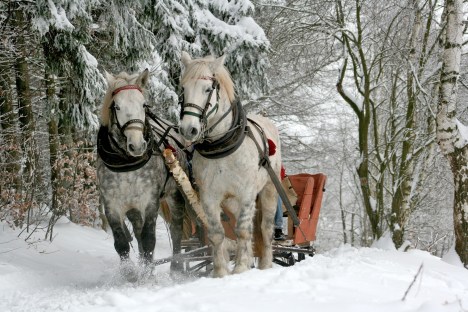 During my teens, a winter tradition for our youth group was Hayride Saturday in Ontario’s farmland. When we arrived at the farm, less than an hour’s drive outside Toronto, we city kids thought we were miles from civilisation. Wrapped up in coats, hats and mittens we bundled onto a large, flatbed wagon piled high with hay. We wriggled into the hay for warmth, the girls covertly trying to edge in beside the boys we fancied. The wagon would lurch off down the country road, pulled by a pair of shaggy draught horses, as we squealed and clutched the edges of the creaking vehicle. Invariably the boys would roughhouse, pushing and shoving each other, until at least one of them tumbled off. We’d shout encouragement as the man overboard ran to catch up with the wagon. The horses lumbered along the frosty road at an easy pace so there was never any danger that he would be left behind.
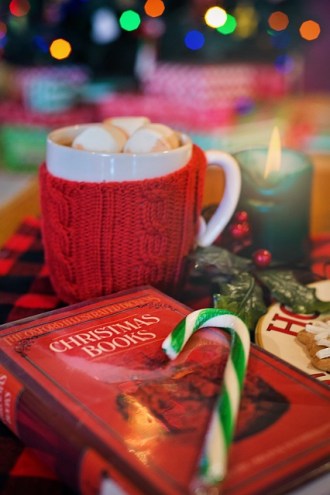 By the time we arrived back at the farmyard, we were hoarse from shouting and laughing, and shivering with cold, our noses glowing like Rudolph’s. Laughing, we’d hop off the wagon and troop into the barn where refreshments were laid out on a long wooden table. A hotdog stopped my stomach rumbling, but a cup of steaming apple cider was the real treat. I would wrap my chilled hands around the cup and inhale the scents of cinnamon, orange rinds and cloves before I took my first sip. Nothing could beat its sweet, tangy taste. Armed with my liquid hand warmer, I’d wander outside to huddle at the bonfire that was lit as darkness fell. Sitting on a bale of hay with sparks from the fire popping and floating past me, blowing wood smoke through my hair, I thought that this was country life. Nowadays I’m more familiar with real country life. I pitch in when we make hay on our farm each summer, gathering the bales together to be lifted and brought into the byre, and feed cattle in winter, lifting sections of hay and throwing them into the feeder while dodging the animals’ swinging heads.
But let’s get back to the apple cider. Hot apple cider was an integral part of winter and Christmas for me. There was always cider at skating parties, sleigh rides, and Christmas festivities. During my youth as the cold weather set in, wherever there were family, friends and fun, there was also hot apple cider.
On a visit home several years ago, I was delighted to discover that the drink is now on the menu at Tim Horton Donut Shops. It was the middle of a muggy Toronto summer and daytime temperatures hovered around 30 degrees celcius but that didn’t deter me. Either early in the morning or in the evening as the sun was dipping toward the horizon, I would stroll to the local donut shop and order a hot cider. I savoured these treats as I knew I’d miss them when I returned to Ireland.
 Then a few days before that holiday ended, I got a pleasant surprise when I discovered that you can now buy cartons of apple cider. All you need to add to the mixture is hot water. It isn’t quite the same as fresh cider but it’s the next best thing. So, before I left Toronto, I trooped off to the supermarket to buy a carton and packed as many of the individual sachets as I could into my backpack. Fortunately I wasn’t searched at the airport. If I had been, would they have believed that the white powdered substance I was carrying was nothing more sinister than cider mixtures?
Ever since that summer, each Christmas friends and family send me ‘care packages’ of cider sachets. I could survive without my fix of cider but I enjoy it. So, for a few weeks each winter, until the stash of sachets runs out, I sit with my husband in our living room in front of a roaring fire savouring my steaming brew and making new Christmas memories.”
So that’s a glimpse into my memories of Christmases past and present. I hope you also have fond memories of your Christmases past to cherish, and I wish you new, wonderful memories this holiday season.
Enjoy the holidays! Merry Christmas and a very Happy New Year!

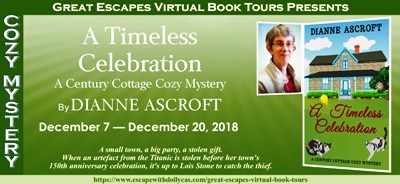
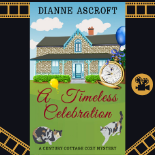
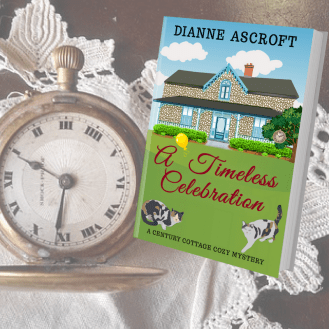 On December 8 I was invited to guest post at StoreyBook Reviews about where the idea came from for A Timeless Celebration. I’ll give you a clue: it’s partly related to the Titanic.
  On December 15 I shared in a guest post with Terry Ambrose at Mysteries With Character why Fenwick is the perfect town for my cozy mysteries.
 My novel, War King, is the third novel in my series about the Norse king Hakon Haraldsson, or “Hakon the Good” as he is also known in history.
 About Eric Schumacher: Eric was born in Los Angeles in 1968 and currently resides in Santa Barbara, CA with his wife, two children and dog. He is the author of two historical fiction novels, God’s Hammer and its sequel, Raven’s Feast. Both tell the story of the first Christian king of Viking Norway, Hakon Haraldsson, and his struggles to gain and hold the High Seat of his realm.
 WHJ: Antiques and Alibis is the first book in a brand-new humorous crime series set in Scotland. It is not a series, or indeed a book which takes itself seriously. The book description will give you a flavour of the general tone of the book and the series.
 About Wendy H. Jones: Wendy is an award-winning Scottish Crime Writer who lives and sets her books in Dundee, Scotland. She is also an International Public Speaker talking about writing and marketing. Killer’s Crew, the first book in her DI Shona McKenzie Mysteries was the Winner of the Books Go Social Book of the Year 2017. The Dagger’s Curse, the first book in her Young Adult mystery series, was a finalist in the Woman Alive Magazine Readers Choice Award 2017. She has signed a publishing contract with Malcolm Down and Sarah Grace Publishing for the first book in a children’s picture book series, based on a true story about a little Buffalo in Scotland. The first, Bertie’s Great Escape will be released late October 2018. When she’s not writing, Wendy spends her time travelling the world. She is also President of the Scottish Association of Writers and co-founder of Crime at the Castle, a Scottish literary festival held at Glamis Castle Scotland.
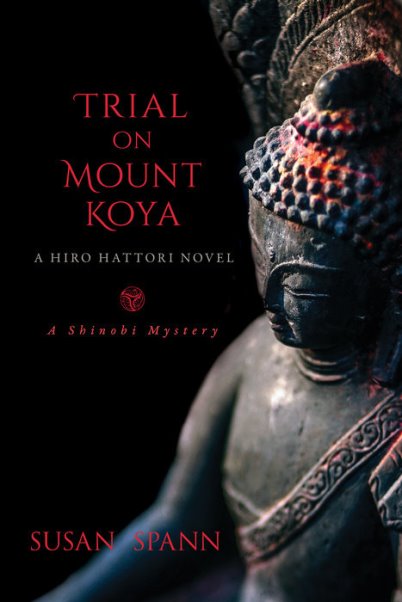 SS: Although TRIAL ON MOUNT KOYA is the sixth Hiro Hattori mystery, it’s designed to stand alone, so readers don’t have to be familiar with Hiro and Father Mateo’s previous adventures to enjoy this book.
 About Susan Spann: Susan is the award-winning author of the Hiro Hattori mystery novels, featuring ninja detective Hiro Hattori and Portuguese Jesuit Father Mateo. She began reading precociously and voraciously from her preschool days in Santa Monica, California, and as a child read everything from National Geographic to Agatha Christie.
 KC: Thank you, Dianne, for inviting me. LAST DANCE IN KABUL is set in 1841 Afghanistan. When his superiors ignore his warnings of an impending Afghan insurrection, Reeve Waterton vows never to return to Kabul. But then the ex-army captain rescues strong-willed Sarah Kane from an ambush, and his plans for civilian life and self-preservation unravel around him. At first Reeve dislikes Sarah as much as she loathes him. It’s only after Reeve’s closest friend is brutally murdered and the Afghan tribes explode in revolt that he and Sarah discover their desperate need for each other.
 About Ken Czech: Dr. Ken Czech is a retired history professor and an internationally recognized authority on the historical literature of exploration and sport. His passion, however, has turned to writing fiction. He and his wife Mary live in Central Minnesota on an abandoned granite quarry.
 Doesn’t it give you a boost when you walk down the street and you meet people you know? A friendly smile, as someone asks how you are, let’s you know they care and it makes you feel like you’re where you belong.
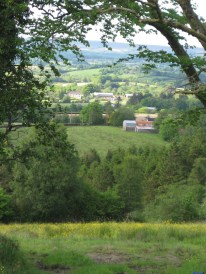 When I later moved west across Northern Ireland, to a farm several miles from the nearest village, I was again amazed and pleased to find that when I bumped into people I knew in the village and the nearby market town they always had time to stop for a chat. I soon knew much more about the families living on the surrounding farms than I ever did about my neighbours in Toronto.
 Spending time there with my mother when she lived in a local nursing home, I discovered the townspeople were friendly and welcoming. When I visited, I pushed my mother’s wheelchair along the peaceful banks of the Grand River, greeting other walkers we passed, and at a nearby diner where we ate lunch, the waitress always remembered my mother’s order. You quickly felt that you were welcome there, just as I later experienced in Northern Ireland. When I remembered the town’s atmosphere, I knew that it was the right setting for a cozy mystery and I set out to infuse the community feeling I experienced there into the fictional Fenwater so that readers will feel welcome there too.
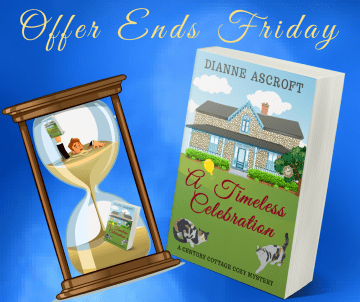 A Timeless Celebration will happen this autumn because more than 70 readers pre-ordered copies of the novel through its Kickstarter campaign. I’m so grateful to them for doing that. Each of those readers will receive their copy a month before the novel is released on Amazon.
 I was excited to stumble across a pocket watch that was labelled as a possession of a Titanic survivor. But I felt a quick let down when I read the detailed description of the item and discovered that the survivor had owned the watch later in life and it had not been aboard the ill-fated ship. The watch lost its significance for me. But, although this item did not have the historical significance I had hoped for, it got me thinking and the idea grew that an artefact from the Titanic should play a part in my novel.
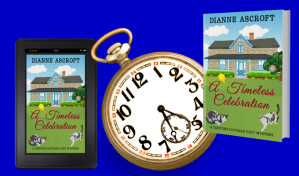 So far, from what I’ve told you, you know that the watch in the story has been stolen. Who did it or why? Well, you’ll have to read the novel for those answers. But the novel isn’t available yet. I’ve finished writing it and am ready to edit and print it – when I have raised the money to do so. Pre-ordering a copy of the novel, which you will receive before it’s released on Amazon, will help to make the book happen. Find out more:
 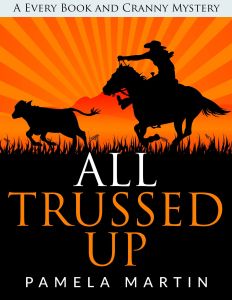 In All Trussed Up, the second book of the series (the first full-length novel), small-town drama catches them off-guard when the town’s mayor, a man everyone loves to hate, is murdered, and Evie ends up at the top of the suspect list. Someone takes exception to their snoop…to their investigation, and it looks like it might cost Fay Lynn everything – including her life.
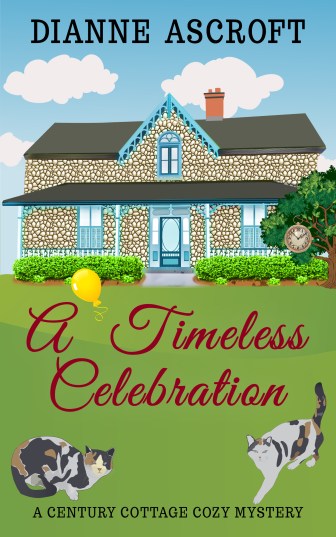 We’re off to a good start one week into the campaign – we’ve received pledges to pre-order the book to bring the total up to 55% of the total goal. If readers continue to pledge to pre-order their copy of the book and the other rewards that I’m offering, we’ll meet the goal and I’ll be able to get A Timeless Celebration edited and out to readers.
 cal Ontario region, they really add to the town’s Scottish flavour.