
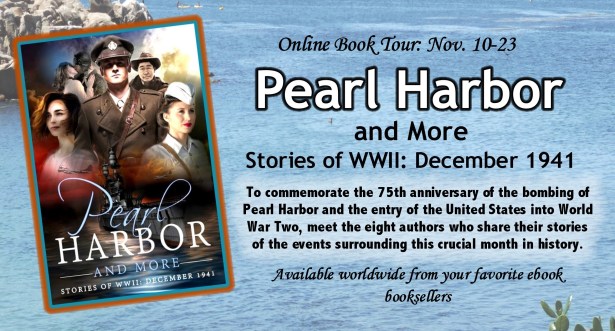
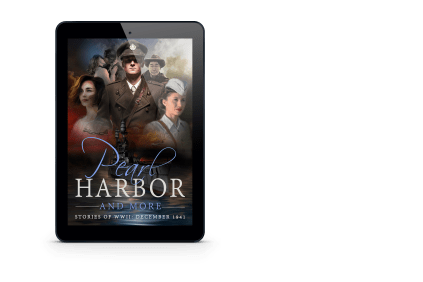
In the middle of October I told you that Pearl Harbor and More, a short story collection I’ve been involved in producing was available for pre-order. Well, now it’s available and I’d like to introduce you to my fellow authors who have written stories for the book. For the next couple weeks we’re doing a blog tour, introducing each of the stories in the book and sharing excerpts from them.
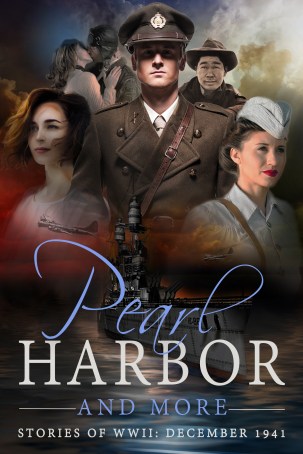 This year is the 75th anniversary of the Battle of Pearl Harbor. On 7th December, 1941, a pivotal event took place that changed the face of World War II. Hundreds of Japanese fighter planes carried out a devastating surprise attack on the American naval base at Pearl Harbor in Hawaii.
Few people’s lives were unaffected in some way by that fateful day. The wide-ranging collection of eight stories in Pearl Harbor and More, by our diverse group of authors, who hail from across the globe and write wartime fiction, reflects this. Some of the stories are set at Pearl Harbor itself, in other parts of the United States and in Singapore. Other stories take place in Europe: occupied France, Germany and Northern Ireland. They are all set in December 1941 and explore the experiences of U.S. servicemen and women, a German Jew, Japanese Americans, a French countess, an Ulster Home Guard, and many others.
We hope readers will enjoy our salute to the people and the events of this momentous era.
Pearl Harbor and More-Stories of WWII: December 1941 is available from the following online ebook booksellers:
Amazon USA | Amazon UK | Amazon CA | Amazon DE | Amazon AU
Nook | iTunes | Kobo | !Indigo | Books2Read

So now let me introduce the authors of this collection and their stories in the order they appear:
Deadly Liberty by R.V. Doon: Connie Collins, a navy nurse on the hospital ship, USS Solace, takes liberty the day before Pearl Harbor. Her budding romance wilts, an AWOL nurse insists she find a missing baby, and she’s in the harbor when WWII erupts. Under fire, she boards the ship—and witnesses a murder during the red alert chaos. When liberty turns deadly, shipmates become suspects.
About R. V. Doon:
 R.V. Doon is a book-lover! She writes medical thrillers, cozy mysteries, historical fiction, and dark fantasy thrillers filled with compelling characters that won’t let you forget them after you’ve read ‘The End.’ She hung up her stethoscope and tossed out her scrubs after leaving the hospital setting, but sadly her addiction to caffeine and chocolate remained. Most days she’s anchored at a writing desk, listening to her dogs snore. She currently lives in a haunted and historical city on the Gulf Coast of the United States of America. When she’s not writing or doing research, R.V. relaxes by taking long walks or going sailing.
Connect with R.V. Doon:
Website | Facebook | Twitter | Goodreads | Amazon Author Page
***
The List by Vanessa Couchman: A high-ranking German officer is assassinated in Western France and 50 hostages are shot. Fifty more will be executed if the killers are not handed over. Jewish communist Joseph Mazelier is on the list. Will Countess Ida agree to help him escape?
About Vanessa Couchman:
 Vanessa Couchman has lived in southern France since 1997 and is a novelist, short story author and freelance writer. Her short stories have been published in numerous anthologies and placed in competitions. She is a member of the Historical Novel Society and the Society of Authors.
Vanessa’s first novel, The House at Zaronza (2014), is set in early 20th-century Corsica and at the Western Front in World War I. A sequel set in World War II and another novel set in 18th-century Corsica are in progress. She also plans to extend ‘The List’ into a full-length novel.
Connect with Vanessa Couchman:
Website | Facebook | Twitter | Goodreads | Amazon Author Page
***
Christmas Eve in the City of Dreams by Alexa Kang: On his last night in New York, a young grifter sets out to turn the table on those who shorted him before he leaves for the draft. Will he win or lose?
About Alexa Kang:
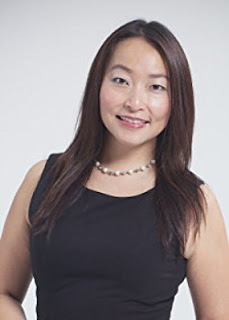 Alexa Kang’s debut series, Rose of Anzio, was first released on Amazon on January 22, 2016. Alexa grew up in New York City, and is a graduate of the University of Pennsylvania. She has traveled to more than 123 cities, and she loves to explore new places and different cultures. This September, she took a special WWII tour of Southern Italy to visit historical sites of the Allies’ Italian campaign (including the sites where scenes from Rose of Anzio occurred). You can view the albums of her tour on her Facebook Author Page. When not at work, Alexa lives a second life as a novelist. Alexa loves writing larger-than-life romantic tales and hopes to bring you many more.
Connect with Alexa Kang:
Website | Facebook | Twitter | Goodreads | Amazon Author Page
***
Allies After All by Dianne Ascroft: Although their nations are allies, from their first meeting American civilian contractor Art Miller and Local Defence Volunteer, Robbie Hetherington loathe each other. But Northern Ireland is too small a place for such animosity. What will it take to make the two men put aside their enmity and work together?
About Dianne Ascroft:
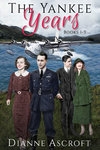
 Dianne Ascroft is a Canadian writer living in Britain. Since moving to Britain in 1990 she has lived in Scotland and Northern Ireland. She writes historical and contemporary fiction, often with an Irish connection. Her series The Yankee Years is a collection of Short Reads and novels set in World War II–era Northern Ireland. After the Allied troops arrived in this outlying part of Great Britain, life there would never be the same again. The series strives to bring those heady, fleeting years to life again, in thrilling and romantic tales of the era.
Connect with Dianne Ascroft:
Website | Facebook | Twitter | Goodreads | Newsletter
***
Time to Go by Margaret Tanner: A young sailor, who died at Pearl Harbor, finally meets his soulmate on the 75th Anniversary of the battle. Will she be prepared to leave the 21st century, and pass through a portal into the other world with him? Or will they forever remain apart?
About Margaret Tanner:
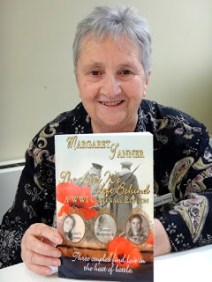 Margaret Tanner is an award-winning, multi-published Australian author who writes Historical Romance and Western Romance. She loves delving into the pages of history as she carries out her research and prides herself on being historically correct. No book is too old or tattered for her to trawl through, no museum too dusty or cemetery too overgrown. Her favorite historical periods are the First and Second World Wars. Margaret is married and has three grown sons and two gorgeous little granddaughters. Outside of her family and friends, writing is her passion.
Connect with Margaret Tanner:
Website | Blog | Facebook | Goodreads | Amazon Author Page
***
Turning Point by Marion Kummerow: Eighteen-year-old German Jew Margarete Rosenbaum is about to be sent to a labor camp, when a bomb hits the building she lives in. Emerging from the rubble she’s presented with an unexpected opportunity. But how far is she willing to go to save her life?
About the Marion Kummerow:
 Marion Kummerow was born and raised in Germany, before she set out to “discover the world” and lived in various countries. In 1999 she returned to Germany and settled down in Munich where she’s now living with her family. After dipping her toes into the publishing waters with non-fiction books, she finally tackled the project dear to her heart. UNRELENTING is the story about her grandparents, who belonged to the German resistance and fought against the Nazi regime. It’s a book about resilience, love and the courage to stand up and do the right thing.
Connect with Marion Kummerow:
Website | Twitter | Facebook | Instagram | Amazon Page | Newsletter
***
I Am An American by Robyn Hobusch Echols: The Japanese bomb Pearl Harbor on December 7, 1941 and the next day the president of the United States calls for a declaration of war on Japan and Germany. For the families of two Livingston, California, USA high school seniors, Ellen Okita, a first generation American who lives in the Yamato Colony composed of about 100 families of Japanese descent, and Flo Kaufmann, whose father is a first generation American in his family, the war hits home fast and brings unforeseen changes.
About Robyn Hobusch Echols:
 Robyn currently lives with her husband in California, USA, near the “Gateway to Yosemite.” She is a member of Women Writing the West, and American Night Writers Association. She enjoys any kind of history including family history. When she is not piecing together novel plots, she pieces together quilt blocks. Robyn also write historical western romance under the pen name of Zina Abbott.
Connect with Robyn Hobusch Echols:
Website | Facebook | Pinterest | Goodreads |
Twitter | Amazon Author Page | Newsletter
Her blogs: Robyn Echols Books | Rumours of Wars
***
A Rude Awakening by Robert A. Kingsley: Singapore, December 1941; the fortress sleeps, believing its own tales of strength and invulnerability. A rigidly class based society throws garden parties and dines sedately, disregarding the slowly growing number of warning signals. Suddenly, the underestimated enemy ferociously attacks and the myth of invincibility is shattered forever.
About Robert Kingsley:
 Robert Kingsley is a Dutch Canadian author who currently lives in Europe. Since his early youth he has had a keen interest in aviation and its influence on modern history – especially World War II. During his travels all over the globe as a lifelong ICT professional, he has gathered first-hand, local knowledge of many countries and places. He has drawn on this knowledge to write “A Rude Awakening.” He has also published a full-length multipart novel titled The Java Gold, of which The Odyssey and Winds of Fortune are the first volumes. Robert is married and has a son and a daughter. When not busy with his consulting business, he spends a lot of time travelling and doing research for future books.
Connect with Robert A. Kingsley:
Blog | Facebook | Goodreads | Amazon Author Page
For readers who love World War I and World War II fiction, come rub elbows with the above authors on the
WORLD WAR TWO CLUB Facebook page.

 an archer or a writer. I write mostly novels and Short Reads (longer short stories). But I also pen the odd poem as well as short narratives – the latter are often funny or reflective. These are handy when I am asked to ‘do a turn’ at a festival or other performance. I don’t think most audiences would sit through a 25,000 word short story…
 suggested to me that we should get a few writers together to produce a collection of short stories set during World War II. From this initial conversation, the idea quickly snowballed and we soon had a band of writers trailing along with us and a private group on Facebook (No, I’m not going to tell you the name of the group – it’s a secret).
 I was a superhero this week. Not that I did anything extraordinary or anything like that but Maria Grace thought I was. She invited me to her blog last Sunday to chat about my writing and she compared me to a superhero. Can’t really see that, can you? Well, you could drop by her blog to see what she had to say – and my responses. You’ll find
  Here’s what Lake Union Publishing says about
  About M.K. Tod:
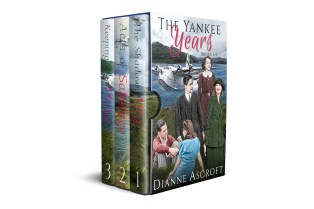
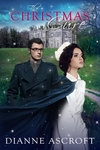
  stories set in Northern Ireland. I’ve released the first 3 Short Reads and a boxset collection of the stories will be available later this week. I already have the rough plotlines for the next 2 Short Reads rattling around in my head and I have a full length novel for the series almost completed. But, despite being immersed in my series, The Yankee Years, during the past year and a half, I sometimes still wonder what I should write.
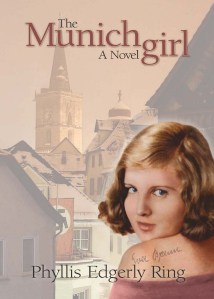 her father’s war-trophy portrait of Eva Braun. This baffling situation has never been explained, other than that the portrait is a symbol for her father of the Allies’ triumph over the evils of the Third Reich.
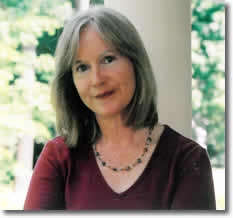 Phyllis Edgerly Ring watches for the noblest possibilities in the human heart. She’s always curious to discover how history, culture, relationship, spirituality, and the natural world influence us and point the way for the human family on its shared journey. Her childhood years in Germany left her with the deep desire to understand the experience of Germans during the Second World War. She has studied plant sciences and ecology, worked as a nurse, been a magazine writer and editor, taught English to kindergartners in China, and served as program coordinator at a Baha’i conference center.
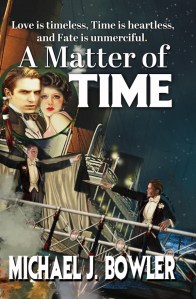 Here’s how the publisher Outskirts Press describes the story: “The world’s greatest evil stalks the world’s greatest ship, and the only one who can stop him hasn’t been born yet.
 nine novels––A Boy and His Dragon, A Matter of Time (Silver Medalist from Reader’s Favorite), and The Knight Cycle, comprised of five books: Children of the Knight (Gold Award Winner – 2013 Wishing Shelf Book Awards; Reader Views Honorable mention; Runner-Up Rainbow Awards; Honorable Mention – Southern California Book Festival), Running Through A Dark Place (Bronze Award Winner – 2014 Wishing Shelf Book Awards), There Is No Fear (Finalist – 2015 Wishing Shelf Book Awards), And The Children Shall Lead, Once Upon A Time In America, Spinner (Winner – Hollywood Book Festival; Honorable Mention – San Francisco Book Festival; Bronze Medal from Readers’ Favorite; Literary Classics Seal of Approval; Runner-Up – Southern California Book Festival; Honorable Mention – Halloween Book Festival; Finalist – 2015 Wishing Shelf Book Awards), and Warrior Kids: A Tale of New Camelot (Honorable Mention in the London Book Festival and The New England Book Festival; Finalist – 2015 Wishing Shelf Book Awards.)
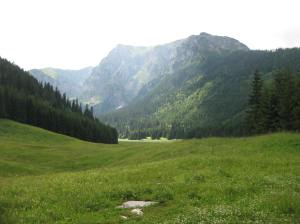 June and July have been busy months for me. I’ve been to Poland and visited Auschwitz and Birkenau concentration camps and done a few of other things besides. Then I settled down to revise a couple of stories I’ve been working on. One of them will be released a couple weeks from now.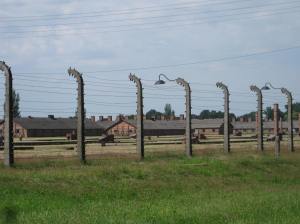
 Ellen Davis’s husband left her for another woman. Post-divorce, she’s trying to reassert her independence and lands a job as a reporter for her local newspaper. One of her assignments is covering weekly items on the police blotter, which is how she gets to know Lieutenant Pete Sakura—a handsome, witty Japanese-American Ellen is drawn to immediately.
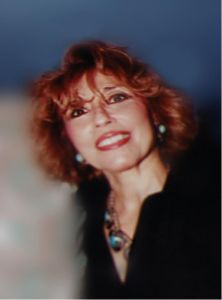 About Claudia Riess: A Vassar graduate, she has worked in the editorial departments of The New Yorker and Holt Rinehart and Winston. On her first novel, Reclining Nude, Oliver Sacks, M.D. commented: “exquisite—and delicate.” Her second, art suspense Stolen Light earned: “complex and intriguing” —Kirkus Review.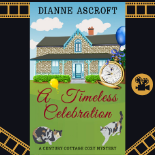




 dianneascroft.com