A Gripping, Good Read

It’s been a couple weeks since I finished reading The Bone Church by Victoria Dougherty and it is still clear in my mind. I’m reviewing the novel as part of its Historical Fiction Virtual Tour.

02_The Bone ChurchThis is how the publisher summarises the novel: “In the surreal and paranoid underworld of wartime Prague, fugitive lovers Felix Andel and Magdalena Ruza make some dubious alliances – with a mysterious Roman Catholic cardinal, a reckless sculptor intent on making a big political statement, and a gypsy with a risky sex life. As one by one their chances for fleeing the country collapse, the two join a plot to assassinate Hitler’s nefarious Minister of Public Enlightenment and Propaganda, Josef Goebbels. But the assassination attempt goes wildly wrong, propelling the lovers in separate directions.

Felix’s destiny is sealed at the Bone Church, a mystical pilgrimage site on the outskirts of Prague, while Magdalena is thrust even deeper into the bowels of a city that betrayed her and a homeland soon to be swallowed by the Soviets. As they emerge from the shadowy fog of World War II, and stagger into the foul haze of the Cold War, Felix and Magdalena must confront the past, and a dangerous, uncertain future.”

The Bone Church is a powerful novel that effortlessly draws together all the threads of interconnected stories that begin in World War II Czechoslovakia and cross Europe during the Cold War.  It has a complex plot full of dramatic action and some heart-stopping moments, weaving together the intrigue and terror of guerrilla warfare with a post war search for lost artefacts and a daring attempt to rescue Magdalena from the clutches of a tyrannical political regime. Several action scenes were so astounding that I just shook my head in amazement – and rooted heartily for the heroes to succeed. I loved the author’s ability to imagine guerrilla warfare that is very different from the norm. How many other novels have used a frozen river and a fire engine to aid the hero’s escape?

There are also intense, heart-wrenching moments and the reader has no trouble empathising with the main characters and the poignancy of their dilemmas. Felix and Magdalena were well drawn and I felt that I knew them. Many of the characters are larger than life but real enough to tug at the reader’s heart. Felix’s gypsy friend, Srut, was one of my favourites. He and Felix are initially wary of each other but circumstances forge an unshakeable bond between them. The reader gradually discovers a caring and selflessness in Srut that is unexpected. I also liked the way the author weaves historical figures into the plot in a convincing way.

Like everything else in this book, the settings are described in vivid, often uncomfortable detail. The author doesn’t shirk from gritty descriptions of truly horrible places but also casts a spell in the reader’s mind with her descriptions of amazing places like the Bone Church.

I thoroughly enjoyed the novel and only a couple things niggled at me. I would have liked a cleaner resolution. As the story closes the remaining characters’ futures are hinted at but not clearly enough for the reader to have confidence that they will find much deserved happiness in their lives. Also, although it was an integral part of the story, I was uncomfortable with the spirits who communicated with and aided Felix. They were an interesting plot device but I felt that toward the end of the story their actions became too fantastical and it pulled me out of the story.

I can easily recommend this novel to anyone who enjoys twentieth century historical fiction, a poignant romance or just a gripping story. To learn more about the author visit her website, Facebook page or Goodreads page. Information about the book can be found on its Amazon US & UK pages.

03_Victoria DoughertyAbout Victoria Dougherty: She writes fiction, drama, and essays that often revolve around spies, killers, curses and destinies. Her work has been published or profiled in The New York Times, USA Today, International Herald Tribune and elsewhere. Earlier in her career, while living in Prague, she co-founded Black Box Theater, translating, producing and acting in several Czech plays. She lives with her husband and children in Charlottesville, Virginia.


Posted in June 2014 | Tagged , , , , , , , | 1 Comment

Discovering The Lost Duchess

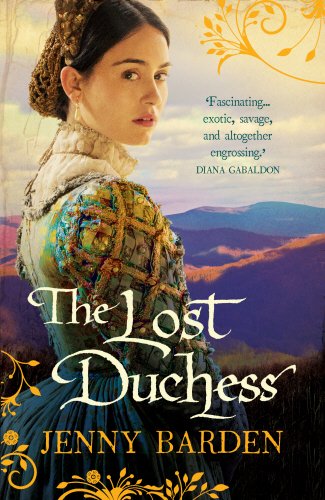
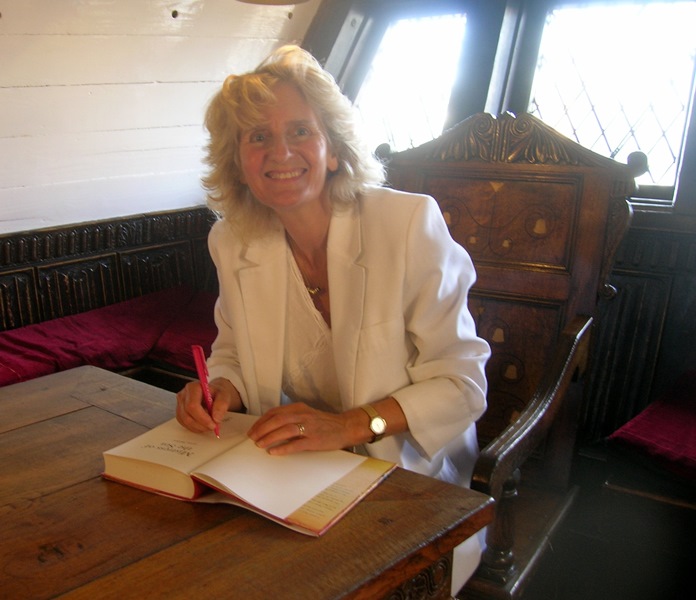
Jenny Barden, author of Mistress of the Sea, has recently released her second novel, The Lost Duchess. I’ve invited her to visit Ascroft, eh? to tell us a little about her most recent book.

You’re very welcome here, Jenny. I’m glad you are able to stop by.

Hi Dianne and thanks for inviting me over; it’s lovely to talk with you.

Let’s get started, shall we?

Tell us about your novel.
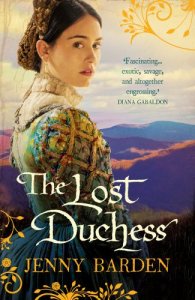
The-Lost-Duchess-jacketJB: The Lost Duchess is an action-packed love story that delves into the mystery surrounding the ‘Lost Colony’ of Roanoke. It follows Emme Fifield, a lady-in-waiting to Queen Elizabeth, who seeks a fresh start in the New World to escape a scandal that threatens to engulf her. She joins Kit Doonan, a mariner who has spent years imprisoned by the Spaniards and living as an outlaw with a band of escaped slaves. They both have dark secrets to keep, and the colonists they travel with – a rag tag band of idealists, desperados and misfits – are ill-equipped to confront the challenges that await them in the new Virginia…

Ever since Sir Walter Raleigh’s settlement in Virginia was abandoned in 1587 its fate has remained a mystery; The Lost Duchess explores what might have happened to the ill-starred ‘Lost Colony’ and the first attempt to found a permanent English colony in America.

What prompted you to write about this historical event? How closely did you stick to the historical facts? If you used them loosely, how did you decide whether to deviate from them?

JB: I think what really inspired me to want to write the story was a fascination with the mystery that remains unsolved to this day. What happened to the Lost Colonists? That’s a question everyone wants to know the answer to, and the fact that they left such puzzling clues as to their whereabouts which no one was ever able to follow through to an answer makes the enigma even more tantalizing.
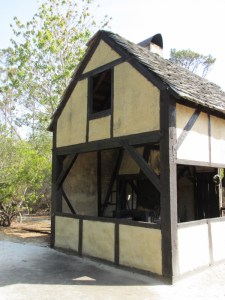
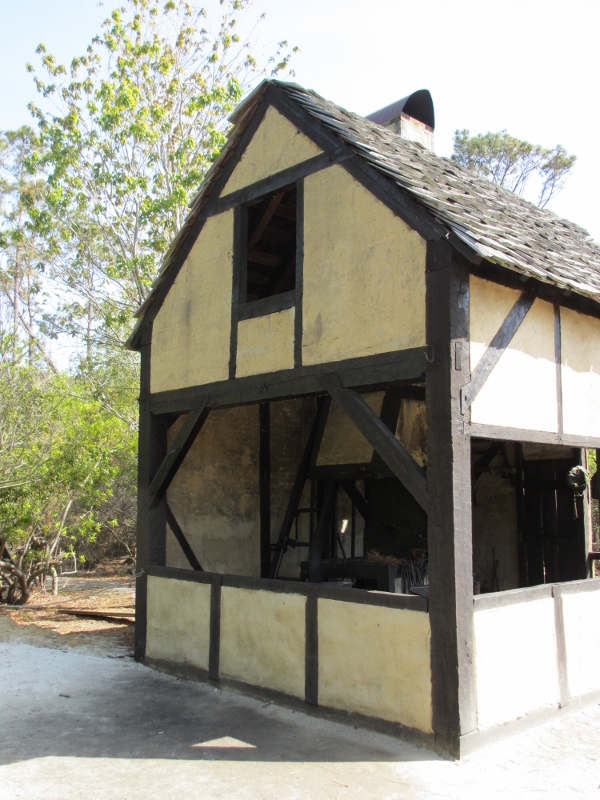
Re-construction of an Elizabethan cottage

Re-construction of an Elizabethan cottage

When I read that the Colony’s Governor returned, three years after leaving to summon help, and found no trace of the Colonists except for the letters ‘CRO’ carved on a tree, and the letters ‘CROATOAN’ at the entrance to the fort, without the agreed sign of a cross, or anything else to suggest that the Colonists had left under duress save the ruined state of the settlement, then I was hooked, just as countless others have been captivated by the story. If the Colonists had gone to Croatoan then why had they not spotted the arrival of the relief ship and set a signal fire or sent out a boat? Where were they? It was as if Governor White had gone back only to find echoes: messages left by his family and countrymen that he could never respond to.

We’ve all experienced the anxiety of broken lines of communication, but this was more extreme, involving messages that still resonate many generations afterwards which are epic in historical significance. Added to this there’s always the faint possibility that some of the Colonists may have survived long enough to leave bloodlines that were not wiped away completely from the face of the earth. There may be Americans alive today who are their descendants.
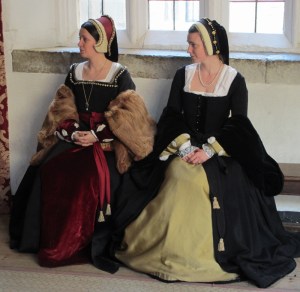
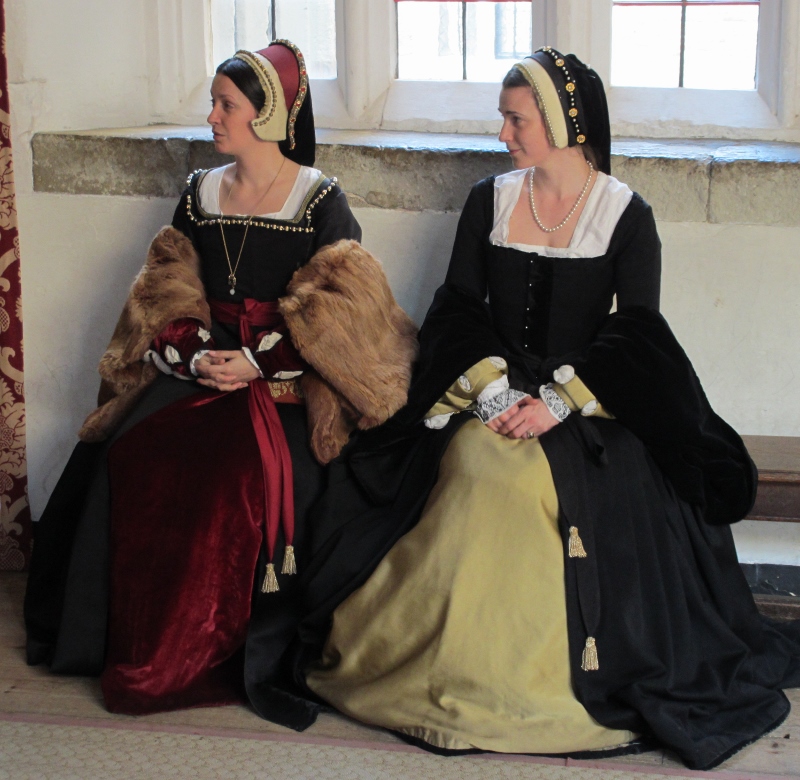
Ladies in waiting (800x780)In writing The Lost Duchess I kept very closely to the facts relating to Roanoke, trying to leave nothing of significance out and not to distort as much as is known. I also used a lot of invention in that I made up stories around my central fictional characters and wove them into the factual framework. I suppose my most adventurous embellishment was to introduce one of the Queen’s ladies and imagine how the Roanoke story might have played out if a woman close to the Queen had been involved from the start. As a self-imposed rule with my historical fiction I never change the facts, but neither will I stick rigidly only to what is most plausible in filling in the historical gaps. In other words, I’ll make free use of my imagination within the constraints of what is known. So the Earl of Hertford is a lecherous manipulator in my story, and Simon Ferdinando is an agent of the Queen’s spymaster; both are suppositions, but both are possible given what the records tell us.

What research did you do for this book?

JB: I did masses of research, from visiting Roanoke and the wider area to the remains of Richmond Palace, now little more than a lawn in a garden by the Thames. The research was many faceted; I moved from an internet trawl to the history books to the first-hand accounts which were my main points of reference. The internet gave me leads to ongoing investigations. While I was still in the midst of unravelling the history, the news broke of the discovery of a patch on a map in the British Library which was found to conceal the icon of a fort. Then speculation ran rife that this might mark the spot where the ‘Lost Colonists’ had relocated. I decided I’d try to work that finding into my story as well.

For anyone interested, most of the first-hand accounts relating to the Lost Colony are contained in The First Colonists – Documents on the Planting of the First English Settlements in North America 1584-1590 edited by DB and AM Quinn. This includes Governor John White’s record of the 1587 expedition which he kept as a kind of diary. The non-fiction texts that I found most useful were Giles Milton’s Big Chief Elizabeth and Karen Ordahl Kupperman’s Roanoke – The Abandoned Colony. I also made extensive reference to two British Museum catalogues focused on John White’s paintings, with expert analysis, edited by Kim Sloan. I spent time exploring the Island of Roanoke, the Outer Banks, and the wider area around the Pamlico Sound. This was followed by trips to Puerto Rico and the sites of some of the old royal palaces in England. I also went to Plymouth, and the tiny village of Fifield in Oxfordshire, and a host of other places with a connection to the story. The final layer of research was all to do with detail and the recreation of the experience of living in the late sixteenth century and through the events at the core of the story. I visited museums and art galleries, castles and period houses. I went back to the ‘Golden Hinde’ reconstruction near London Bridge, and consulted volumes of Elizabethan maps, costumes and recipes. The music of Tallis, Byrd and Dowland would put me in the mood for writing, as would reading extracts from Shakespeare, rubbing rosemary, and handling the caliver I’ve had specially made – that’s a kind of early musket, the most commonly used firearm in Elizabethan times. I’m a bit obsessive about getting the details right!

Do you use a mixture of historic figures and invented characters in the novel. Which is more difficult to write? Which to you prefer to write and why?

JB: I use both real figures from history and invented characters – in fact, a bit of both as well! When all that exists of a real character in history is a name, then, of course, that character is essentially made up. That’s the case with Emme Fifield in The Lost Duchess who assumes the name Emme Murimuth in order to go on the voyage. This is then misspelt as ‘Emme Merrymoth’ and a woman by that name was actually recorded as one of the Lost Colonists. Is she invented? I’m asking you that question with a smile on my face because I think this goes to the root of what novelists do. In truth, whenever we write about a real figure in history, even a very well known one, that character is re-invented. The Wellington who appears in Bernard Cornwell’s Sharpe books is not the same Wellington who appears in George Macdonald Fraser’s Flashman. We’ve all seen a softer side to Thomas Cromwell since Hilary Mantel showed him kissing his dog!

As between famous historical figures and those that are invented, I think the real figures are usually easier to write about simply because the records provide a starting block and familiarity helps with the rest. It’s a bit like humming a few bars of a popular tune knowing that whoever is listening will remember what comes next. So with Queen Elizabeth, everyone has an image of her and knows her place in history. I only need to brush in a few details to bring that image to mind.

In an historical novel you must vividly re-create a place and people in a bygone era. How did you bring the place and people you are writing about to life?

JB: For me, the recreation of place and people from a bygone age is done best through identifiable detail, by which I mean small things that we can easily envisage or have experienced in our modern everyday lives that will translate to other settings and carry the reader to another time. I’ll try and explain in more depth by reference to a few lines from the first chapter of The Lost Duchess where Emme is questioned by Lord Hertford:

‘You like to hear of the world, don’t you? To learn who’s doing what and why. For a young maiden you have a lively curiosity.’

            She lowered her eyes and stared at the cushion, then fiddled with the shaft of a tiny feather she could feel pricking her fingers…

The feather is a small detail, and fiddling with it is a displacement activity on Emme’s part because the Earl has touched on the truth and she is uncertain how to answer. The slightly archaic vocabulary of Hertford’s speech helps set the historical context (no one would speak of a ‘young maiden’ now), as does the fact that Emme is sitting on a cushion (the Elizabethan equivalent of a comfy lounge chair). Most importantly, in terms of taking the reader into this scene, is the toying with the feather, which should be immediately identifiable – it’s something we’ve all done. By using a multitude of these little connections I aim to take the reader to another time and place.

As regards the re-creation of people, it’s really crucial to get a feel for their language, idiom, attitudes, beliefs, culture and aspects of their normal everyday lives that for us might seem very strange. But none of this should ever be so different that it becomes hard to empathise with or understand. In a nutshell, it’s the gradual accumulation of detail that can be referenced by the reader that works best in creating the historical backdrop.

There often seems to be more scope in historical novels for male characters rather than female characters. Do you prefer to write one sex or the other. And, if so, why?

JB: The male/female divide in historical fiction is an interesting subject. I’d say that the reason there seems to be more scope in historical novels for male characters is because more has been documented about men in history. Why? Put bluntly (and I agree with Philippa Gregory on this) it’s because historical records were usually compiled by men, about men, at the direction of men, to be read by men. Up until recently, most women (unless they were queens) featured only at the periphery of historical accounts.

I came across a good example of this in my research for The Lost Duchess. In the records pertaining to Roanoke the names of all the principal indigenous male leaders are noted, but the Croatan tribe, England’s key ally in the region, was led by a woman (the mother of Manteo, the Colony’s interpreter and guide). We do not know who she was; her name was never written down. Indeed, hardly anywhere in the Lost Colony accounts can we find the names of female American-Indians. It’s as if women, even chiefs, were not considered important enough for note by the men from England who did the record-keeping. Needless to say, that does not mean they did not exist!

In my view it is up to historical novelists writing now to redress this imbalance in perception, to try and present a more even-handed truth. So in my stories both men and women are given significant roles. I write from the point of view of both, through the eyes of both hero and heroine. As for which I prefer to write about, I find writing from both perspectives equally satisfying. I suppose, if I’m honest, I have most fun as a man in the thick of daring-do action, but I find the subtleties of women increasingly fascinating to sculpt as characters.

For the reasons I’ve given earlier, there’s often more help in history with regard to male figures in the sense of providing evidence for their role in dramatic situations. The conclusion should not be that women weren’t involved in exciting episodes in history, but in putting them there a novelist may well have to field accusations of invention. Men writing about men have an easier time of it!

Thank you for your very informative and interesting answers to my questions, Jenny. It gives me an insight into how you wrote the book – and also makes me eager to read it (it’s in my tbr pile!).

Thank you so much for your interest, Dianne; chatting with you has been a real pleasure.

Readers can learn more about Jenny by visiting her website and blog, as well as her Facebook and Twitter pages. She is also a contributor to the English Historical Fiction Authors blog. The Lost Duchess is available on Amazon US & Amazon UK as well as other retail outlets.

??????????About Jenny Barden: She’s had a love of history and adventure ever since an encounter in infancy with a suit of armour at Tamworth Castle. Training as an artist, followed by a career as a city solicitor, did little to help displace her early dream of becoming a knight. A fascination with the Age of Discovery led to travels in South and Central America, and much of the inspiration for her debut came from retracing the footsteps of Francis Drake in Panama. The sequel centres on the first Elizabethan ‘lost colony’ of early Virginia. She is currently working on an epic adventure during the threat of invasion by the Spanish Armada.

Her work has appeared in short story collections and anthologies and she has written for non-fiction publications including the Historical Novels Review. She is active in many organisations, having run the ‘Get Writing’ conferences for several years, and undertaken the co-ordination of the Historical Novel Society’s London Conference 2012. She is a member of that organisation as well as the Historical Writers’ Association, the Romantic Novelists’ Association and the Society of Authors. She will be co-ordinating the RNA’s annual conference in 2014.

She has four children and now lives on a farm in Dorset with her long suffering husband and an ever increasing assortment of animals.

She loves travelling, art, reading and scrambling up hills and mountains (though she’s not so keen on coming down!).


Posted in June 2014 | Tagged , , , , , , , | Leave a comment

Love and Treasure: A Real Gem

I finished reading Love and Treasure by Ayelet Waldman last week and I’ve been thinking about it ever since. I’m reviewing the book as part of the novel’s blog tour with Historical Fiction Virtual Tours and, usually when I’m reading to review, I jot notes as I read but this book so captivated me that I just kept reading until I finished it. Then I gathered my thoughts to write the review.

03_Love & TreasureKnopf Publishing says about the book, “A spellbinding new novel of contraband masterpieces, tragic love, and the unexpected legacies of forgotten crimes, Ayelet Waldman’s Love and Treasure weaves a tale around the fascinating, true history of the Hungarian Gold Train in the Second World War.

In 1945 on the outskirts of Salzburg, victorious American soldiers capture a train filled with unspeakable riches: piles of fine gold watches; mountains of fur coats; crates filled with wedding rings, silver picture frames, family heirlooms, and Shabbat candlesticks passed down through generations. Jack Wiseman, a tough, smart New York Jew, is the lieutenant charged with guarding this treasure—a responsibility that grows more complicated when he meets Ilona, a fierce, beautiful Hungarian who has lost everything in the ravages of the Holocaust. Seventy years later, amid the shadowy world of art dealers who profit off the sins of previous generations, Jack gives a necklace to his granddaughter, Natalie Stein, and charges her with searching for an unknown woman—a woman whose portrait and fate come to haunt Natalie, a woman whose secret may help Natalie to understand the guilt her grandfather will take to his grave and to find a way out of the mess she has made of her own life.

A story of brilliantly drawn characters—a suave and shady art historian, a delusive and infatuated Freudian, a family of singing circus dwarfs fallen into the clutches of Josef Mengele, and desperate lovers facing choices that will tear them apart—Love and Treasure is Ayelet Waldman’s finest novel to date: a sad, funny, richly detailed work that poses hard questions about the value of precious things in a time when life itself has no value, and about the slenderest of chains that can bind us to the griefs and passions of the past.”

As I’ve said, I was captivated from the first page of this book. The opening chapter is a touching vignette of the relationship between a dying grandfather and his granddaughter. This simple opening leads into a complex and sweeping novel full of intricate, carefully researched detail. Three stories are linked and held together by the history and fate of a beautiful and unlucky peacock pendant. The story weaves back and forth through the early twentieth century, the post-World War II era and the present day. The author vividly evokes the places, the societies and the people in each of these eras. For me the most powerful storyline is the one set in the post-war era. It explores fascinating and often overlooked aspects of the era and vividly illustrates the prejudices and injustices that continued after the war had ended.

As in any good novel, the characters are the focus of the story. While each era is artfully depicted, it is the characters that the story revolves around. Waldman creates a diverse cast of realistic, engaging characters. Two of the main characters are first introduced as a photo in the locket and a puzzle for two other characters to solve. As the story travels back and forth in time they are brought to life and the reader becomes engrossed in their journey.

My only criticism of the storyline was that after Jack Wiseman’s love, Ilona, leaves Europe we hear no more about her. We learn the ultimate fate of most of the characters by the conclusion of the novel but she just disappears from our radar. After investing considerable time and attention to her complicated and difficult life I felt a loss when she simply disappeared. While I note it as a criticism, my response attests to the author’s skill in creating characters who become so important to the reader that their loss is felt keenly. Maybe Waldman wanted us to feel Jack’s loss.

Love and Treasure is a poignant story: a realistic and captivating exploration of the Holocaust, from events during the years preceding it to its aftermath and legacy. Readers will not be able to put this novel down nor ignore the questions it poses about history and humanity. I can wholeheartedly recommend this book to anyone who enjoys getting to grip with stories about the real past and real emotions.

Readers can learn about Ayelet Waldman on her website, her Facebook page and Twitter. Love and Treasure can be found on its Amazon UK and Amazon US pages.

About Ayelet Waldman: She is the author of the newly Ayeletreleased Love and Treasure (Knopf, January 2014), Red Hook Road and The New York Times bestseller Bad Mother: A Chronicle of Maternal Crimes, Minor Calamities and Occasional Moments of Grace. Her novel Love and Other Impossible Pursuits was made into a film starring Natalie Portman. Her personal essays and profiles of such public figures as Hillary Clinton have been published in a wide variety of newspapers and magazines, including The New York Times, Vogue, The Washington Post, and The Wall Street Journal. Her radio commentaries have appeared on “All Things Considered” and “The California Report.”

Posted in May 2014 | Tagged , , , , , , | Leave a comment

Meet My Main Character

I’ve been tagged by Susan Keogh, author of The Jack Mallory Chronicles, to participate in the Meet My Main Character blog hop. In this latest game of tag for historical fiction authors on the blogosphere, we introduce the main character of our work in progress or soon to be published novel. So here goes –

What is the name of your character? Is he/she fictional or an historic person?

My story has a strong romantic element so there are two main characters, Mike Keegan and Ellen Corrigan. Both characters are fictional but the background to the story is inspired by real events two decades before the year in which the story is set.

When and where is the story set?

Country 2It’s set in County Fermanagh in Northern Ireland during the penultimate year of World War II. Although the county remained part of Britain when Ireland gained its independence more than two decades previously, it experienced the war in a very different way than the rest of Britain did.

What should we know about him/her?

Mike Keegan is an American infantryman who is in County Fermanagh to train for combat. His mother grew up in the county but would never talk to him about her life in Northern Ireland. He wants to know more about her past and why she refuses to talk about it. He wants to get these answers before he is shipped out to a European battlefield.

Ellen Corrigan is the eldest daughter of a local farmer. She yearns for greater freedom: a job away from the farm instead of being her mother’s right hand. The arrival of the American troops adds excitement to her life but an unpleasant encounter with a serviceman leaves her wary of them.

What is the main conflict? What messes up his/her life?

cottageMike discovers that a malicious ghost is somehow connected to his mother’s past. It latches on to him, endangering his growing relationship with Ellen and physically threatening him and those closest to him.

Ellen wrestles with her feelings for Mike and her worries about the relationship, struggling to overcome her distrust of American servicemen and her fear of the supernatural force that Mike has unleashed.

What is the personal goal of the character?

Before he is shipped out to fight Mike wants to solve the mystery of the vengeful ghost and prevent it doing any more damage. He hopes this will clear the way for him to win Ellen’s trust and love.

Ellen must decide what she wants from life and love.

Is there a working title for this novel, and can we read more about it?

The working title of the novella is The Elusive Enemy. It is in the first draft stage so there is no other information available yet.

When can we expect the book to be published?

Link Past image 2It will depend whether I decide to self-publish it or approach a traditional publisher. If I go it on my own then it should be in print sometime between Halloween and Christmas 2014. If I go in search of a publisher then the decision will be out of my hands. Either way I’ll let readers know how things are developing.

Thanks for reading about my latest book-in-progress. I’ll keep you up to date on how it’s progressing during the coming months. Meanwhile I have tagged four authors to follow me; they will post about their main characters about a week from now. Click on their names to visit their blogs:

Louise Charles, author of The Duke’s Shadow

Vanessa Couchman, author of The House At Zaronza

John Eliot, author of The Good Doctor

E M Powell, author of The Blood of the Fifth Knight


Posted in May 2014 | Tagged , , , , , , , , , , , | 3 Comments

Poetry Helps Parkinson’s UK

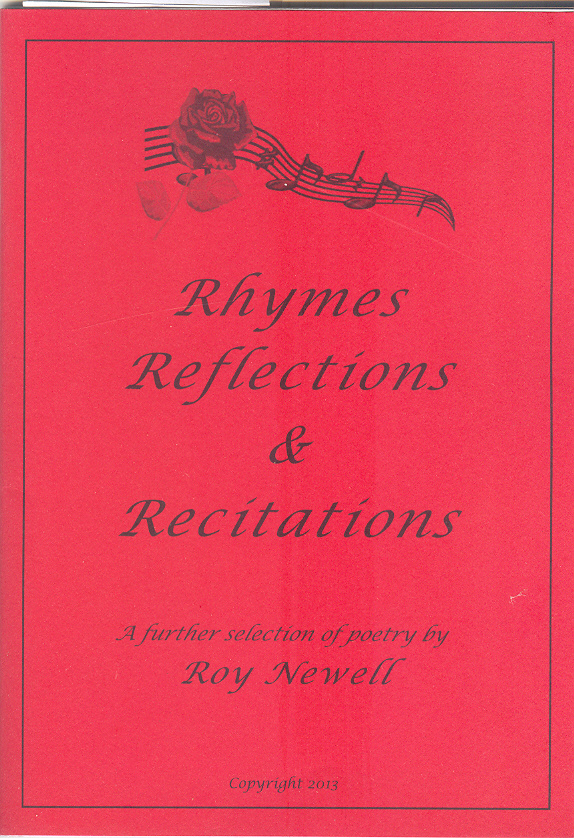
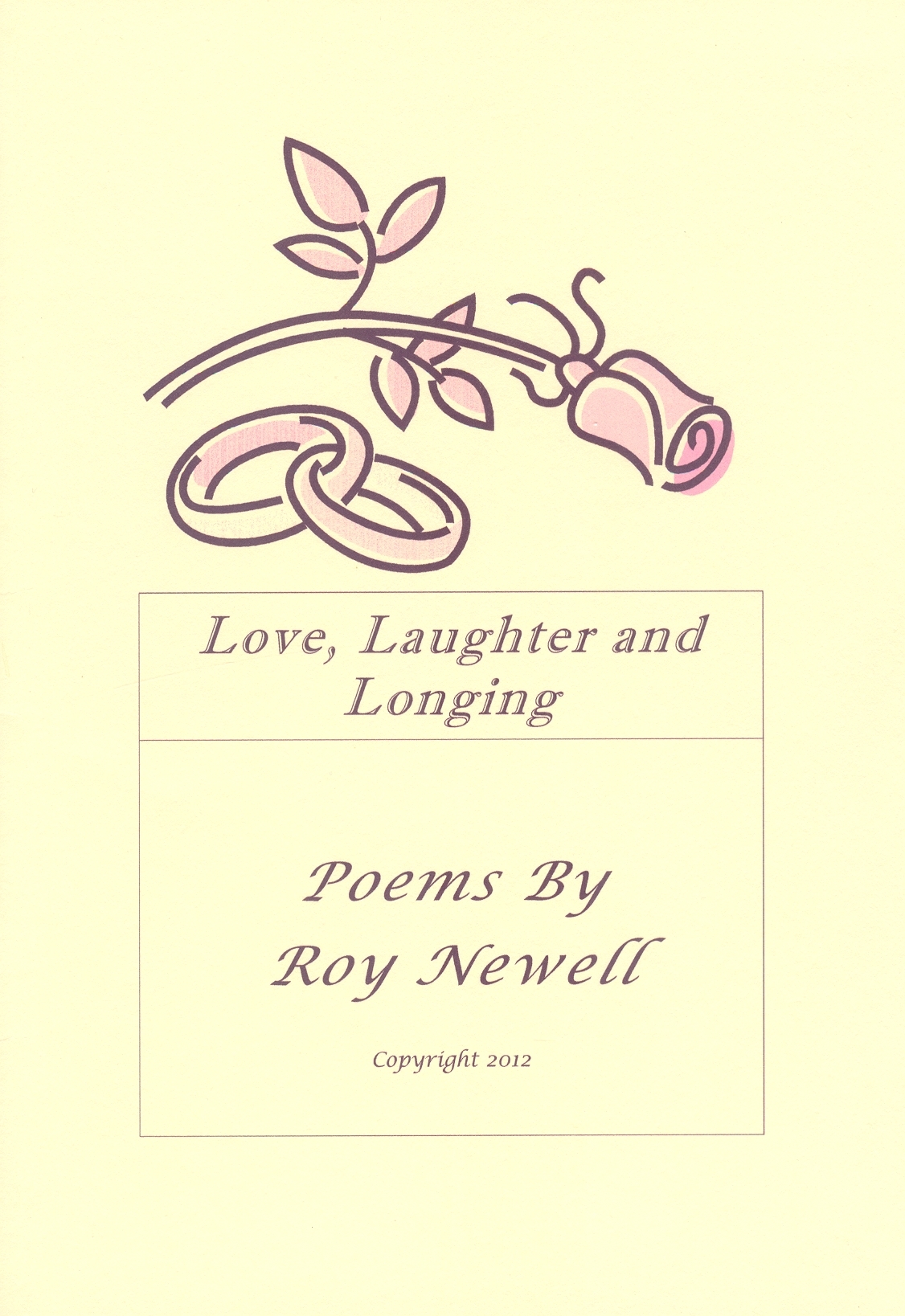
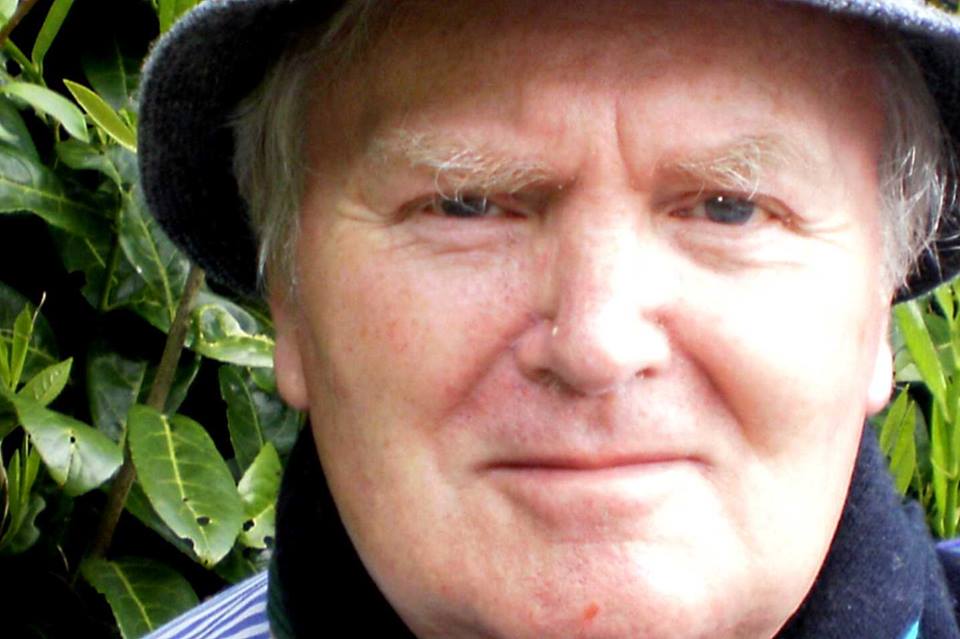
I recently bought Rhymes, Reflections and Recitations and Love, Laughter and Longing, two wonderful poetry booklets written by Roy Newell, a friend of mine who lives in Belfast. I’ve known him for years and, when I lived in Belfast, we often went with a group of friends to folk concerts but I only recently discovered that he writes poetry. I’ve invited him here today to tell us a bit about his poetry.

Welcome, Roy. Let’s get started, shall we?

When did you begin to write poetry?

Roy 1I have been writing seriously for the past 10 years or so – I have always “dabbled” a bit but was in a very demanding day job and never seemed to have the time to devote to it. Since I stopped working 8 years ago I have been able to give it the attention it deserves.

Why do you write poetry and what inspires you?

I have loved poetry since my school days and have read the works of many poets over the years.

I started writing to see for myself if anything worthwhile emerged and found that some of my poems were favourably received.   In time I seemed to develop a better sense of what is good and bad and hopefully the standard of the poetry improved.

Inspiration for individual poems is based a lot on actual experiences, emotions, funny ideas, topics I  feel concerned about eg. the futility of war.   Poems such as the Old House and the Zitherist are based on actual experience with a bit of poetic licence applied.  Inspiration also comes from humour and there is plenty of it in this part of the world.  I sometimes worry that perhaps the humorous poems detract from the serious ones but it appears that readers find the mixture more entertaining.

Do you find it easier to write in prose or rhyme?  Which do you prefer?

Roy 2It’s easier to write in prose.  Getting the right rhyme while maintaining what you want to say can be hard work.  I usually find that the subject of the poem determines whether it should rhyme or not.  A prose poem can have more impact but a good rhyme can enhance the feel and the sentiment of a poem.  A poem such as Sometimes would lose something if it was rhymed. However I don’t subscribe to the notion that rhyming went out with Wordsworth.

Have you any tips for other aspiring poets?

Just the following:

Don’t be put off by those who make fun or try to undermine what you are doing.

Never rush a poem – work at it until you know it’s right.

Always wait for the right word to describe something- don’t use an inferior word in haste to finish a poem – get a good synonym finder.

There is a very valuable publication which comes out annually called “The Poets Market” (available from Amazon) which, although American,  is full of useful tips and advice on writing as well as getting in to print.

You donate the proceeds from the sales of your books to Parkinson’s UK.  Why did you decide to do that?

royI was diagnosed with a mild form of Parkinson’s disease in 2010.  Mine is fairly well controlled by medication but there are many others much worse.  The organisation, Parkinsons UK, provides excellent sympathetic support and advice to sufferers as well as carrying out research for a cure. When I had a considerable number of poems written a friend of mine who has a small printing business suggested the idea of printing small selections to raise money for charity.

Thanks for answering my questions, Roy. I have been dipping into both collections and enjoying your work. Keep writing so I will eventually have a volume 3 too!

Roy hasn’t set a price for his poetry collections. Instead he asks readers to decide the amount they feel is appropriate to give for each booklet. All proceeds are donated to Parkinson’s UK. If you wish to obtain copies of the collections, contact Roy at:

roynewell AT ntlworld.com.


Posted in April 2014 | Tagged , , , , | Leave a comment

The Writing Process Blog Hop

Historical fiction writer, E M Powell, author of The Fifth Knight, The_Fifth_Knight_V4recently asked me to take part in this Blog Hop and I happily agreed. I’ve been involved in a few blog hops over the past couple years and I find them fun and a great way to connect with readers and other writers. The title of this Hop series is The Writing Process, where writers answer four set questions about that topic. It was the perfect topic for me as I’ve just started working on a new novel and am enjoying the experience so much that I’m eager to talk about it. E M Powell has written her post and you can read all about it here. She has tagged me and so now it’s my turn! At the end of this post, you’ll find out a bit about Patricia O’Reilly who comes next. She’ll be posting on 5th May, 2014. Okay, let’s get to the questions.

What am I working on?

I’m writing an historical romance which has a paranormal element to it. It’s set in Northern Ireland against the backdrop of the Second World War and the influx of American soldiers into the province. One of these soldiers, Mike Keegan, has an Irish cottagemother who moved to America before he was born and has always refused to talk about her life in Northern Ireland. While preparing for deployment to the European front, Mike meets and falls in love with local girl, Ellen Corrigan, and delves into his family’s past and the secret that drove them from their homeland.

How does my work differ from others of its genre?

This story doesn’t follow the common pattern in the genre of a mortal falling in love with a fantasy being. The paranormal entity is malevolent and Mike has to do everything in his power to stop it harming his friends and the woman he loves.

It’s also set in the countryside in County Fermanagh, Northern Ireland, an unusual location for a war story. There are some great stories to tell about this locale during the Second World War but they have rarely been explored in writing so I wanted to change that.

Why do I write what I do?

This story is a little different from what I have written before. I had never written a supernatural story but they intrigue me and I love reading them so I decided to try my hand at it. I think heartwarming is a good word to describe my writings. I want to leave readers with hope and a good feeling at the end of each story so I guess it’s natural that there’s a romantic thread in this one. I also love history and have gleaned some interesting facts about Northern Ireland during the war years from my reading so I was keen to have a chance to use some of them.

How does my writing process work?

Usually an idea pops into my head and I think about it for a while, considering whether it’s feasible and gradually adding characters and complexity to it. Over a period of time I jot down any ideas I have related to it and when I have enough material gathered I consider how it all fits together. Then I write a plot outline and character descriptions.

Link Past image 2I don’t sketch out every detail in my outline but I include the major events and a timeline. Then I start writing. I work on one scene at a time, usually in order. When the first draft of each scene is done I jot down any facts I need to remember (eg. The colour of a character’s hair or an important memory or event in that character’s life) and to do some basic editing. If I allowed myself to do what I really want to, I would spend ages editing every scene as I went along and it would be a very slow process. So I try to keep myself going forward, writing new scenes until I get to the end then editing the whole manuscript.

I don’t have much time to write each day as I work fulltime and also have chores to do in the house and on our small farm in the evenings and on weekends so I dedicate an hour each evening to writing and squeeze in any other writing time when I can. When it’s possible, I like to work early in the morning on weekends when I am free from any distractions other than the cats clamouring for more food (I feed them first, honestly!).

So that’s it – my writing process. I’m now tagging Patricia O’Reilly who’ll be telling you all about her Writing Process next week. You’ll find her post here next Monday. Make sure you check out her blog – and her books!

P.O'Reilly (Blue top).July13Patricia O’Reilly is a writer & writing course convenor. Her latest novel is The Interview.

Her fiction: A Type of Beauty, the story of Kathleen Newton; Time & Destiny; Felicity’s Wedding; Once upon a Summer.

Non-fiction: Writing for Success; Working Mothers; Earning Your Living from Home; Writing for the Market and Dying with Love. Her short stories are published in magazines and anthologies.

TheInterviewCoverImage.Mar14

Posted in April 2014, Uncategorized | Tagged , , , , , , | 1 Comment

Presenting Perfiditas: An Interview With Alison Morton

Anyone who drops by Ascroft, eh? regularly will know that historical fiction is one of my favourite genres. Today I’m going to dip my toes into a sub-genre within it that’s still quite new to me: alternative historical fiction. I’ve invited my fellow Alliance of Independent Authors member Alison Morton who is currently on a blog tour to visit and tell us about her latest novel, Perfiditas.

Welcome, Alison. Shall we get started?

Tell us about your novel.

First of all, thank you so much, Dianne, for inviting me here – I’m delighted to be able to share my particular vision of history and talk about PERFIDITAS, the latest in my series of alternate history thrillers.

Perfiditas - Front Cover_smWe’re in Roma Nova, an imaginary country in present day Europe, the last remnant of the Roman Empire that has survived into the 21st century. It’s been seven years since Karen Brown fled New York (see INCEPTIO) to become Carina and take up her inheritance as the heir of a leading family and pursue a career as an officer in the Praetorian Guard Special Forces.

But she’s in trouble – one colleague has tried to kill her and another has set a trap to incriminate her in a conspiracy to topple the government of Roma Nova. Founded sixteen hundred years ago by Roman dissidents and ruled by women, Roma Nova barely survived a devastating rebellion thirty years ago. Carina swears to prevent a repeat and not merely for love of country.

Seeking help from a not quite legal old friend could wreck her marriage to the enigmatic Conrad. Once she’s proscribed and operating illegally, she risks being terminated by both security services and conspirators. As she struggles to overcome the desperate odds and save her beloved Roma Nova and her own life, she faces the ultimate betrayal…

What prompted you to write about this historical event or era?

PERFIDITAS isn’t about one event, but a story set in an alternate timeline that stemmed from one point in the past. In AD 395, Christian Emperor Theodosius outlawed all pagan religious practice on pain of death. This edict prompted four hundred Romans to trek north to found a new colony where they could live in the way they wished free from persecution. Through staying tough and struggling through, Roma Nova, has survived into the 21st century. Roman in values and culture, their social system has changed through the centuries in that women now rule.

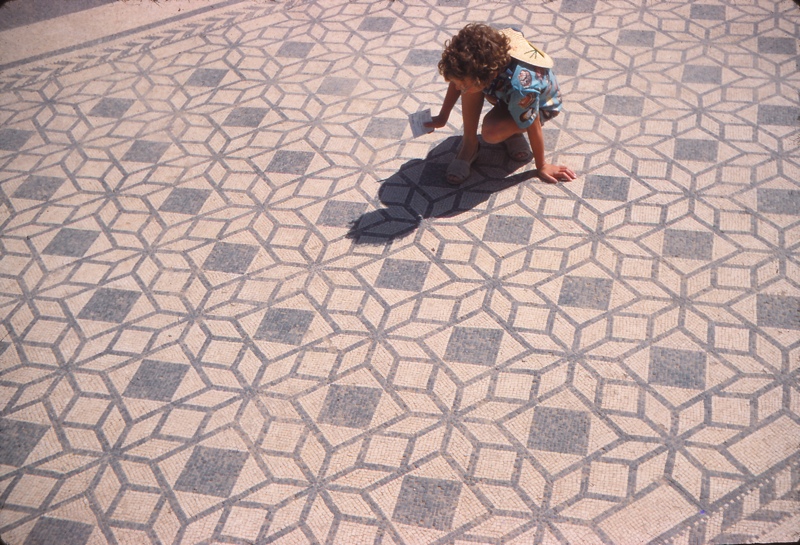
Why Romans? I’ve been deep-steeped in Romans most of my life. Here I am at age eleven fascinated with my first my first Roman mosaic floor. And I’ve never run out of curiosity…

AMM Ampurias 1_sm

And why the feminist angle? Well, at that same age, I wanted to know what Rome would have been like if women had been in charge. The idea stayed in my head over the decades and I knew I’d have to set the story in the 21st century to make it more plausible.

How closely did you stick to the historical facts? If you used them loosely, how did you decide whether to deviate from them?

Alternate history is by definition history that has diverged from the standard timeline, but which should follow historical logic as well as taking into account the social, economic and political development throughout that history. My imaginary country of Roma Nova tends to keep out of alliances and being sucked into wars, but it has interacted with the rest of Europe throughout its sixteen hundred years’ existence. For instance, remembering their Byzantine cousins’ defeat in the Fall of Constantinople, Roma Novan troops assisted the western nations at the Battle of Vienna in 1683 to halt the Ottoman advance into Europe. More of Roma Nova’s history here.

What research did you do for this book?

Luckily, I have a general grounding in Roman history from reading classical texts, such as Pliny, Suetonius, Caesar’s Gallic Wars and modern history texts, plus my years of visiting Roman sites and museums throughout Europe. So much so, that it seemed perfectly normal to clamber over Roman aqueducts, walk on mosaic pavements, follow the German limes, pretend I was a Roman playactor in classic theatres all over Europe from Spain to then Yugoslavia, from Hadrian’s Wall to Pompeii. So I have a ‘feel’ for the Roman world. But I keep reading as there are new discoveries and new research appearing all the time.
ALISON Capitoline - 56

You always have to keep connecting with cultural and historical roots of a society if you are extrapolating from them in your writing. My characters catch bad guys in the 21st century, but I wanted to find out if there had been special forces and spies during the ancient Roman period so I could bring in anything with a Roman flavour. I found Exploratio by Austin and Rankin about military and political intelligence in the Roman world. Perfect!

It turns out that there was no centralized intelligence organization and it was all chaotically arranged on a regional basis or by legion with a lot of infighting in Rome itself until near the later Roman period. Good to know…

Oh, and I spent six years in the reserve forces, which gave me experience of military life first hand and enabled me to write the military scenes in PERFIDITAS.

Do you use a mixture of historic figures and invented characters in the novel. Which is more difficult to write? Which to you prefer to write and why?

All the characters are made up!  I do refer back to historical characters (Theodosius, Caesar, etc. but only in passing) and I stick to information from accredited sources when I mention them.

In an historical novel you must vividly re-create a place and people in a bygone era. How did you bring the place and people you are writing about to life?

Crucial question! For me there are twin elements: the first is our old friend research. Knowing about food, costume and work, but also attitudes to crime, life, death, servants, masters, marriage, trade, property will give a writer a firm knowledge base against which to work.

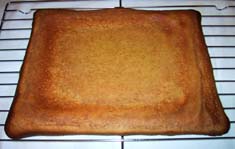
romanhoneycakeWriting ‘into the void’ with alternate history, you have to be careful to keep it plausible or you’ll lose the reader’s trust. One way I did this was to infuse the story with corroborative detail so reinforced the narrative. Even though my books are set in the 21st century, the characters say things like ‘I wouldn’t be in your sandals (not shoes) when he finds out.’  And my characters still eat Roman honey cake…

Reaching into the past means not only researching a period in meticulous detail, but getting inside the heads of the characters, imagining what they see in their everyday world, what they smell, eat and touch. Writing a diary of your character’s typical day is a salutary way of showing yourself whether you have done enough research!

Human beings of all ages and cultures have similar emotional needs, hurts and joys. Of course, they’re expressed differently, sometimes in an alienating or (to us) peculiar way but they bind us into the story.

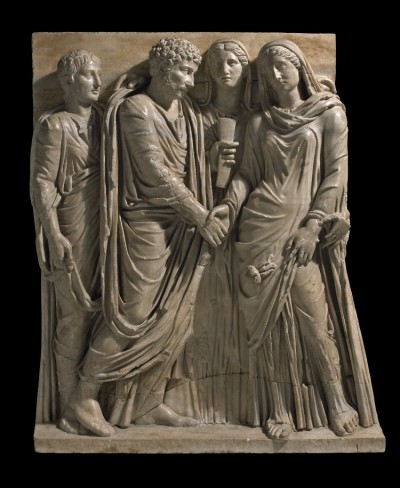
Roman WeddingThe hardest element is the conflict between projecting our timeline sensitivities and viewpoints on to people living in a completely different set of circumstances. The ancient Romans were very open about sexual matters as they regarded sex as allied to fertility and survival rather than embarrassment and guilt. And they would have given you a puzzled look if you’d suggested love was the main reason for marriage. In Roma Nova, women head the families and it is up to them to choose their partners and whether to marry them or not.

There often seems to be more scope in historical novels for male characters rather than female characters. Do you prefer to write one sex or the other. And, if so, why?

In PERFIDITAS, the women run things! 😉 And that for me was a great motivation to sit down and write the stories. As the female characters are necessarily more assertive in this society I use a technique I call gender-mirroring. If I’m not sure how Carina, my heroine, should act in a certain scene, I think it through with a male character leading the scene. Then I substitute Carina for that character. It’s sometimes a revelation just how much we take the male point of view as the norm. And sometimes quite amusing.

I’m very happy to write male characters, though, and relish making them as diverse as the women characters: grumpy, heroic, sensitive, clever, nasty, loyal or any combination thereof!

Characters are characters whatever gender they are technically and they must be multi-faceted, complex and above all engaging. Of course, in historical fiction, the sexes live within the context of their times. On this note, I’m sure there are thousands of women’s stories in history waiting to be told – a rich seam we have yet to mine fully.

Thank you for answering my questions so well, Alison, and good luck with Perfiditas. Your novels have been receiving enthusiastic reviews from readers. Simon Scarrow, author of the Eagle (Macro and Cato) series said:

“Alison Morton has built a fascinating, exotic world! Carina’s a bright, sassy detective with a winning dry sense of humour. I warmed to her quickly and wanted to find out how she dealt with the problems thrown in her path. The plot is pretty snappy too and gets off to a quick start which made it easy to keep turning the pages. There are a fair number of alternative historical fictions where Rome never disappeared, but for my money this is one of the better ones.”

Readers can find Alison on her website, Facebook page and Goodreads page. Perfiditas is available on Amazon. Follow Alison’s blog tour here.

Alison MortonAbout Alison Morton: She writes Roman-themed alternate history thrillers with strong heroines. She holds a bachelor’s degree in French, German and Economics, a masters’ in history and lives in France with her husband.

A ‘Roman nut’ since age 11, she has visited sites throughout Europe including the alma mater, Rome. But it was the mosaics at Ampurias (Spain) that started her wondering what a modern Roman society would be like if run by women…

INCEPTIO, the first in the Roma Nova series, was shortlisted for the 2013 International Rubery Book Award and awarded a B.R.A.G. Medallion® in September 2013. The next in series, PERFIDITAS, published October 2013, has also just been honoured with the B.R.A.G. Medallion®. Alison is working on the third book SUCCESSIO which will be out in June 2014.

Posted in April 2014 | Tagged , , , , , | 1 Comment

The Terminals: Beginning Of A Gripping Series

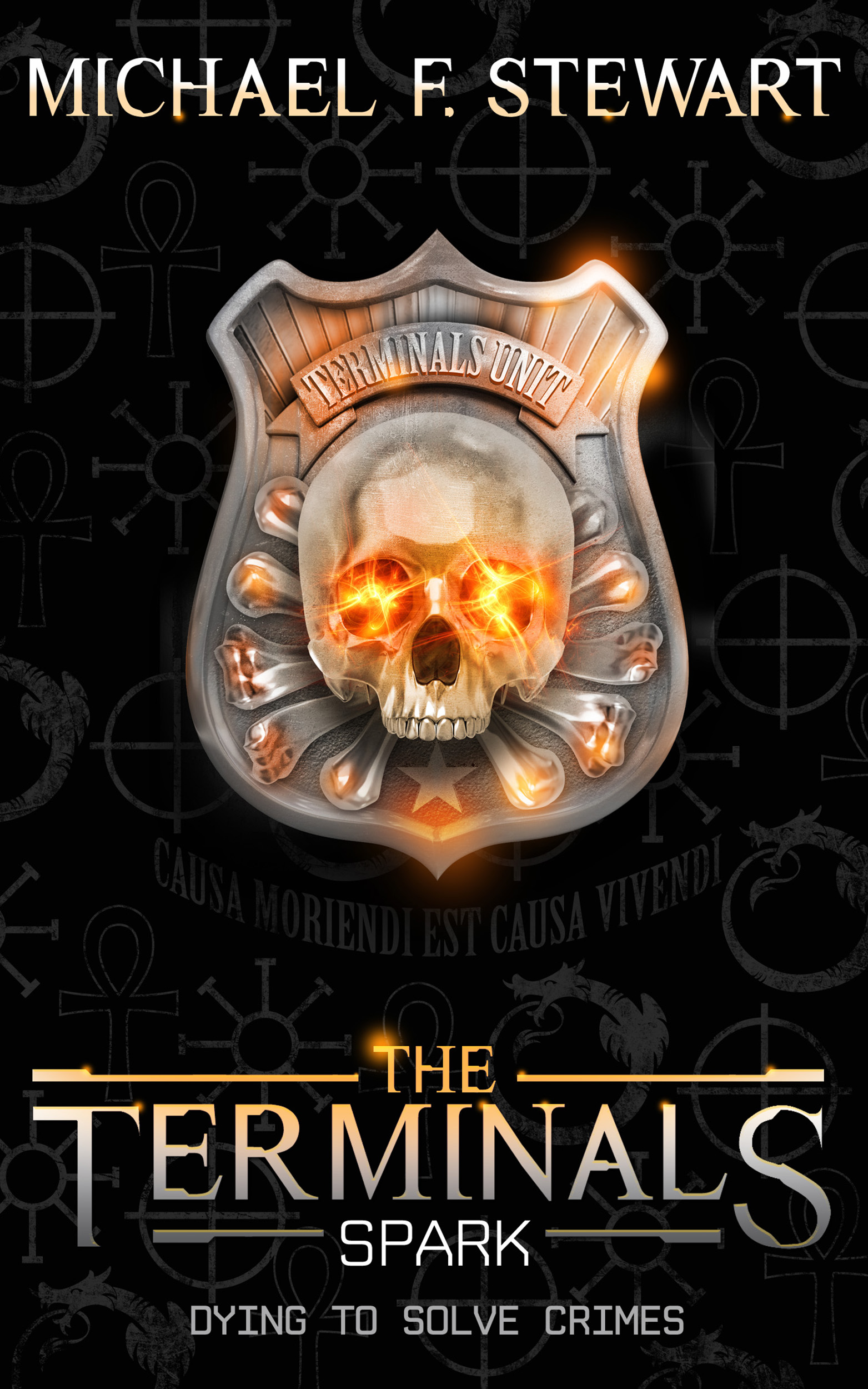
Terminals_coverI’ve already read several of Michael F. Stewart’s novels so I was delighted when I was asked to review The Terminals as part of the book’s blog tour. I might never have discovered Stewart’s books if I hadn’t been asked to review 24 Bones a couple years ago. I loved its rich fantasy world so I later readily agreed to review one of his Young Adult novels, Assured Destruction: Script Kiddie. I fell in love with the characters in that book and when I finished it I immediately bought the first one in the series to learn the background to the story. So, needless to say, I approached The Terminals with anticipation.

This is how the publisher describes the book: “Terminals solve crimes in this realm by investigating them in the next. Lt. Col. Christine Kurzow, fresh from a failed suicide attempt after she cost 11 of her soldiers their lives, is recruited into the covert unit of Terminals as a handler. It’s an easy sell. If she’s really determined to die, it’s a chance to give her death meaning. But her first case—convincing a monk to chase Hillar the Killer into the afterlife to find the location of a missing bus and the children it carried—has her wondering how to make a dead psychopath talk. Christine must follow the clues sent back by the shotgun-toting monk, who tracks Hillar through the seven deeps of hell, so she can find eleven kids before it’s too late. Maybe this time killing a man will give Christine a reason to live.”

The Terminals is a powerful, often chilling and thought provoking, novel. It’s fantasy but it raises real ethical questions about euthanasia.
Although they don’t lack humour, Stewart’s adult books are much darker and deeper than the ones he writes for young adults. One of the themes he often explores in his adult novels is different concepts of the afterlife. As he did in 24 Bones, in this book the author weaves a compelling story around a little known set of religious beliefs and, using his ability to create almost tangible characters and settings, draws the reader into an unusual and frightening afterlife.

The story is fast paced, gripping and tense. It’s not an easy read and I found the scenes where the children are held captive harrowing but, at the same time, I couldn’t put the book down. There is a brief respite in several tender scenes where characters face turning points in their lives, often saying goodbye to their past or to each other. I was particularly touched by the monk Charlie’s farewell to the monastery where he had spent his adult life. The book keeps the reader on edge until the end because when you think it’s reached the climax there’s still more. Everything seems to be resolved then another problem rears its head and you are gripped again. When it’s all over there’s still a couple unanswered questions, whetting the reader’s interest for a sequel.

One of Stewart’s fortes is his characters. They are complete: the reader sees, hears and smells them and empathises with their struggles. We know the psychic Attila by his coffee smell and the three elderly soldiers in the unit by their banter and never ending card game. The elderly soldiers are gutsy, funny and vulnerable. Readers admire their indomitable spirits and are moved by their frailty and vulnerability. The main character, Christine Kurzow isn’t your usual army officer. She’s tough, determined and suicidal. The reader roots for her as she fights to save a busload of kidnapped children and wonders until the end whether she will decide to live or die once her mission is completed. As Christine gets to know a couple other members of the unit, the psychic Attila and fellow female soldier Morph, we see the depth of their characters and are moved by the challenges they face. Stewart portrays all of this without verbose prose; often simple, well-chosen comments and actions by characters reveal all the reader needs to know.

The story flows between the two primary settings: a contemporary veteran’s hospital’s secret locked ward in the palliative care unit and the fantasy world of the Borborite afterlife. Like his characters, Stewart’s settings are vivid and tangible. He is able to create believable contemporary and fantasy worlds with equal skill. The worlds are never comfortable and may make you squirm as you absorb the graphic detail but it’s impossible not to get lost in them.

While cautioning that this book isn’t for readers who are disturbed by gritty stories, The Terminals is a novel I would recommend to anyone who enjoys a gripping, thought provoking story. And now, as I’m wait for The Terminals’ sequel, I’m going to skip back to Stewart’s Assured Destruction series and read Book 3 which was also recently released.

To learn more about the author visit his website, Facebook page and Goodreads page. Find out more about The Terminals on its Amazon page and Goodreads page.

About Michael F. Stewart:

MikesHeadMichael F. Stewart is the author of the Assured Destruction series, which sprawls across 3 books, 2 websites, 1 blog, 7 Twitter accounts, tumblr, Facebook, and 6 graphic origin stories. He likes to combine storytelling with technology and pioneered interactive storytelling with Scholastic Canada, Australia and New Zealand’s, anti-cyberbullying program Bully For You. He has authored four graphic novels with Oxford University Press Canada’s award winning Boldprint series. Publications of nonfiction titles on Corruption and Children’s Rights published by Rubicon Publishing as well as early readers with Pearson are all forthcoming in 2014 and 2015.

For adults, Michael has written THE SAND DRAGON a horror about a revenant prehistoric vampire set in the tar sands, HURAKAN a Mayan themed thriller which pits the Maya against the MS-13 with a New York family stuck in the middle, 24 BONES an urban fantasy which draws from Egyptian myth, and THE TERMINALS—a covert government unit which solves crimes in this realm by investigating them in the next. This series has already been optioned for film and television. Herder of four daughters, Michael lives to write in Ottawa where he runs free writing workshops for teens and adults.

Posted in April 2014 | Tagged , , , , | 2 Comments

Time Slipping Into A Good Story

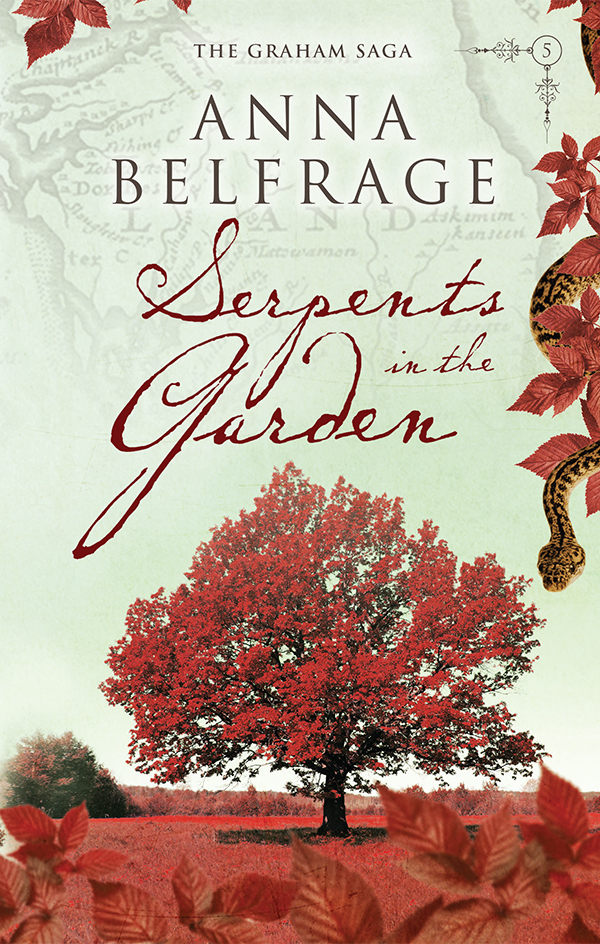
I recently received a copy of Serpents in the Garden by Anna Belfrage to review. The publisher, Silverwood Books says this about the story: “After years of hard work, Matthew and Alex Graham have created a thriving home in the Colony of Maryland. About time, in Alex’s opinion, after far too many adventures she is really looking forward to some well-deserved peace and quiet.

Serpents-in-the-GardenA futile hope, as it turns out. Things start to heat up when Jacob, the third Graham son, absconds from his apprenticeship to see the world – especially as Jacob leaves behind a girl whom he has wed in a most irregular fashion.

Then there’s the infected matter of the fellow time traveller Alex feels obliged to help – no matter the risk. Worst of all, one day Philip Burley and his brothers resurface after years of absence. As determined as ever to make Matthew pay for every perceived wrong – starting with the death of their youngest brother – the Burleys play out a complicated cat and mouse game, and Alex is thrown back into an existence where her heart is constantly in her mouth, convinced as she is that one day the Burleys will achieve their purpose.

Will the Burleys succeed? And if they do, will the Graham family survive the exacted price?”

I’ve read several time slip novels during the past year or so and I’m always fascinated by the idea of time travel and what it would be like to find yourself in another era. This novel is the first one that has transported me to seventeenth century America and I enjoyed the experience. Serpents in the Garden is well written and has a plot that keeps the reader’s attention. I was intrigued by the storylines of each of the main characters and found myself wanting to continue reading about a particular character, especially Jacob, whenever the narrative shifted away from his or her story. I knew we would get back to it but I was impatient to find out what happened next.
There is a good contrast in settings between the American wilderness and seventeenth century London. The author describes both settings vividly so that they are easy for the reader to see inside his head. I was especially intrigued by the world of the English apothecary.

Characters are, of course, central to any story. This was my first introduction to Alex and her family but I related easily to the twenty-first century woman who has found herself in a very different world from her own. Alex is a modern woman who has been dropped into the past and I thought she is very credible as such. Her husband, Matthew is also realistically drawn, reacting with a mix of courage and fear in dangerous situations. He isn’t a larger than life hero but a man who faces what life throws at him. I like this believable portrayal of a character. I found the main characters engaging and quickly became immersed in their stories. I also particularly liked some of the minor characters such as the feisty Mrs Parson and Alex’s wily brother-in-law, Simon Melville.

I did not find it difficult to pick up the threads of the story even though this is the fifth book in a series. Details from previous books were seamlessly woven into this novel and explained so that the reader isn’t confused. It’s possible to read Serpents in the Garden as a standalone book or as part of the series.

All the strands of the story come together for a satisfying conclusion to the book. But it’s not the end of the story: one key strand is very clearly left hanging, making the reader eager to start the next book in the series. It seems I’ll have the next novel to add to my TBR pile….

I can honestly recommend this novel to anyone who enjoys historical fiction, fantasy/time-slip or just a good story.

For more information about the author visit her website and her Facebook page. Serpents in the Garden can be found on its Amazon page and Goodreads.

Anna-Belfrage-150x150About Anna Belfrage: Anna was raised abroad, on a pungent mix of Latin American culture, English history and Swedish traditions. As a result she’s multilingual and most of her reading is historical – both non-fiction and fiction.

She was always going to be a writer – or a historian, preferably both. Instead she ended up with a degree in Business and Finance, with very little time to spare for her most favourite pursuit. In between juggling a challenging career she raised four children on a potent combination of invented stories, historical debates and masses of good food and homemade cakes. Nowadays she spends most of her spare time at her writing desk. The children are half grown, the house is at times eerily silent and she slips away into her imaginary world, with her imaginary characters. Every now and then the one and only man in her life pops his head in to ensure she’s still there.

Posted in April 2014 | Tagged , , , , , , , | 1 Comment

Where Would You Like To Be On St Patrick’s Day?

cottageOn St Patrick’s Day many people, especially Irish expats and those who wish they were Irish, think of Ireland. Whether they remember their home place or the location of a memorable holiday, they return to it in their minds.

For St Patrick’s Day I’ve asked a couple Irish authors to tell me about their favourite places in Ireland.

Patricia O’Reilly said: “My favourite Irish place is brownswoodBrownswood, Enniscorthy Co Wexford, the home of Eileen Gray (1878-1896) and the subject of my new book, The Interview which will be released in May by New Island Books. While researching, I retraced her footsteps all over Europe, but access to Brownswood defied me. Letters, emails and telephone calls all went unanswered. Then one autumn afternoon, I just rolled up unannounced. Brownswood stands on the banks of the river Slaney. As I stood in admiration, a man appeared by my side. With no prompting but great enthusiasm, he took a key from his pocket and opened the huge hall door. And I stood on the tiles in the footstep of Eileen Gray. He knew the house’s history intimately.  Few of the original features remain, but what does is well cared for. The wood panelling on the stairs and landing is in pristine condition; the old kitchen still has features dating back more than 100 years; and the stain glass windows cast glorious jewels of light. The building has passed through various uses from being the country Georgian home of the Pounden family (Eileen Gray’s mother’s family), to being ‘renovated’ to its current flamboyant style by Eileen Gray’s brother-in-law, Sir Henry Tufnell. Around the early part of the 20th century, it lay empty for many years before being bought by the Eastern Health Board and turned into a TB hospital; with the eradication of TB, it became a nursing home, primarily for the elderly and now finally it is a thriving Gaelscoil and resonates with the sounds of young voices speaking in Irish. Eileen Gray loved Brownswood with a passion that she never surpassed even with designing and building E.1027, regarded as the most iconic house of the 20th century. She always regretted the pain of returning from Paris for the auction. But I like to believe she’d approve of its current status.”

Laura Elliot said: “Every August I go on holidays to the Wine June photo 4 postStrand.  This rugged stretch of coastland is a few miles outside the small Irish-speaking village of Ballyferriter on the Dingle peninsula. Apart from the breath-taking scenery, what makes the Wine Strand extra special are the people I meet. The same faces every year―Irish, Welsh, Scottish, and, occasionally, French―all drawn together through our love of music, song and good conversation.

My holiday routine never changes. There’s the drive across Slea Head to Dunquin and Ventry, the hair-raising journey through the Connor Pass, the walk across the beach to Ballydavid, and, always, a long, quiet stroll through a country lane where rosy-hued fuchsia grows abundantly in the hedgerows and the wild montbretia cuts a fiery swathe through the wild grass.

I pass a long-abandoned, solitary house that grows more dilapidated every year. I dream of buying it. I imagine restoring the rooms from the wreckage of time and bringing the overgrown garden back to life. But that’s a holiday dream and, even if I could afford to indulge it, I could never imagine living anywhere but Dublin.

When I started my novel, Deceptions, I needed a refuge where Lorraine, my main character, could begin her life anew. Suddenly, I was able to bring the old house to life. I decorated its walls and hung them with paintings. I tamed the overgrown garden and gathered fruit from the overhanging trees. I lit fires in the winter and threw the windows open to the summer air. From my bedroom window I watched the dawn rise redly above the surrounding hills and, as I walked the long lane in the evenings, I watched the swallows swooping through the purple twilight. Loraine found peace there…and happiness.

Isn’t imagination a wonderful gift?”

I’m not an Irish author but I have lived on the island for more Country 2than two decades. Ever since I moved to County Fermanagh a decade ago I’ve been discovering little known places that amaze me and I’ve compiled articles I’ve written about them into a book, Fermanagh Gems. On Sunday afternoons I love to roam with my husband not far from our home along forest paths that meander up and down hill, past tiny lakes, fields of blooming wild flowers and large expanses of bog. It’s quiet and refreshing. Hidden on forested land we often stumble across long abandoned cottages and stone walls disguised by years of accumulated moss – places where time has stood still. There’s even an aged stone church that would be the perfect setting for a gothic film. The mystery of these stones moulded by man fuels my imagination and I wonder what these dwellings and farms were like so many years ago before they were abandoned. In the story I’m currently working on I’m exploring what happened in one of these cottages that drove the family from it. But I’ll keep that story to share with you another day.

Where’s your favourite place in Ireland? And why are you so fond of it?

Happy St Patrick’s Day wherever you are today.

Posted in March 2014 | Tagged , , , , , , , , , , | 1 Comment