St Patrick’s Weekend Free Offer

DA-DSTH-Amazon[1]-newIreland has always been a place of tales and legends. In bygone days storytellers at campfires regaled their listeners with their tales and held them spellbound.  Do you fancy a yarn? Or two? Or half a dozen?

On St Patrick’s weekend I’m offering my short story collection, Dancing Shadows, Tramping Hooves, FREE on Amazon US & Amazon UK – from now until 18th March (I’ll give you an extra day in case you get distracted by celebrations on Monday).

Dancing Shadows, Tramping Hooves is a heartwarming collection of stories with an Irish flavour. Is it possible to conquer shadows on the wall, in the heart and clouding memories? Find out in these tales.

Excerpt from Much More Than A Dancer (included in Dancing Shadows, Tramping Hooves):

“Catherine pushed through the crowd, away from the bar. She balanced the drinks with both hands. Shying away from a group of youths, laughing and jostling each other, she passed a compact, middle-aged man with short, greying hair. He was chatting with the man beside him.

Kevin Sullivan was the new bank manager, a widower who had moved to town a few month ago. Flustered, Catherine looked away , unsure whether she wanted him to notice her or not. She rushed past, keeping her eyes straight ahead and her face an inscrutable mask…”

Posted in March 2014 | Tagged , , , , , , | Leave a comment

Finding The Women In Historical Fiction

Until recently I was inclined to think that there was more scope for male than female characters in historical fiction as men were generally the ones in the positions of power. So, when I interview authors who write historical fiction about their work for this blog, I’m interested in their thoughts on this. One of the questions I ask them is “Do you prefer to write one sex or the other? And if so, why?”

For International Women’s Day today, I’ll recap the answers of some of my recent guests to that question.

Eliza Knight who writes historical romance set in Scotland said: “I have to say, I think that is because male historical figures were documented more. If you look back, there are just as many female historical figures that were instrumental in challenging and changing the world (even if they didn’t have a front row seat), just not as well documented. One of my all-time favorite female historical figures is Elizabeth I—she ruled for forty-four years, without marrying, and was hounded for it. Women were not supposed to be superior to men—and thank goodness there has been a shift in thinking!

I definitely prefer a female, because I can relate better, as I’m a woman. In historical fiction (my E. Knight books coming out later this year), I tackle the female’s point-of-view only—these books are generally about the journey of that historical female figures life. But in romance, I think it’s important to see both sides of the story. To watch them fall in love and understand the motivations, goals and conflicts on both sides. When I first started writing, I would ask my husband what he thought of my depiction of my male characters, and he was instrumental in telling me whether or not a man would think like that, or say something like that. Crit partners help, too. So my answer is two-fold. For romance, I prefer both. For historical fiction, so far, I prefer to write from a female’s perspective—but that only means I’ve now challenged myself to take on a male!”

Christina Courtenay who also writes historical romance said: “I enjoy writing both.  Naturally the men had many advantages in the past and so much more freedom, but that just means the heroines have to be more feisty or clever in order to get their way.  It can be great fun to try and figure out how they can manipulate the people around them in order to achieve their goals.  It also means they sometimes need the hero’s help and if he is reluctant to give it, that can create sparks.  I like reading and writing both the male and female point of view as I feel that makes for a more rounded story.”

Alrene Hughes, a debut author who is writing an historical trilogy set in wartime Northern Ireland, said: “Martha’s Girls focuses on five feisty women at a time when young women, in particular, sensed a sudden opportunity to shape their own lives. Many worked in the war industries, the girls in the book seized the opportunity to join a troupe of entertainers, and the ever present threat of bombing encouraged a ‘live for the moment’ attitude. I also enjoyed writing about Martha, especially her attempts to control her girls. As a mother, I knew the delicate line she had to tread and the unspoken fears that haunted her. So maybe I prefer to write women, but sometimes you just fall in love with a man you’ve created!”

My current work-in-progress features a Fermanagh woman at the turn of the last century. And when I’ve finished writing tonight I think I’ll go back to where I left off in Fenella Miller’s Barbara’s War: The Middle Years.

On International Women’s Day it’s good to know that women characters are on stage, not hiding in the wings, in recent historical fiction.


Posted in March 2014 | Tagged , , , , , | Leave a comment

Need A Spring Fling?

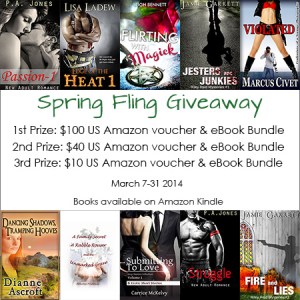
Fed up with winter? You need a Spring Fling – and it starts today.

From sweet to sizzling with a couple surprises thrown in – that’s what you’ll find in the ebook bundles to be won as part of the Spring Fling Giveaway. There’s also Amazon gift vouchers worth $100, $40 and $10.

The giveway runs 7-31 March. Why not ENTER for a chance to win?

share-graphic-date

Posted in March 2014 | Tagged | Leave a comment

Debuting The Duke’s Shadow

The Duke’s Shadow, an historical fiction, by Louise Charles launches today. I’ve known Louise through an online writers’ group, Writers Abroad, for several years and I’ve had a chance to get sneak peaks at the novel as it evolved. So I’m delighted it is finally out there for everyone to read and I’ve invited Louise to Ascroft, eh? to tell us a bit about the book on its launch day.

Welcome Louise. Now, as you know I don’t hang about, I tend to jump in with both feet – so let’s get started.

Tell Us About Your Novel.

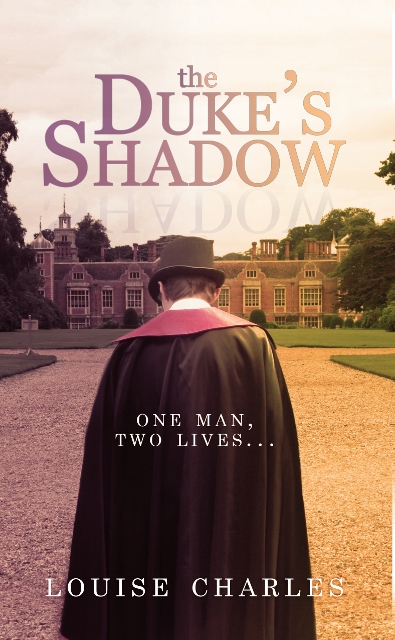
DukesShadow_2.0 (395x640)ONE MAN, William Kenilworth, a young Victorian aristocrat, was never born to be the Duke of Romsey. When his older brother, Henry dies in a freak racing accident, William inherits a legacy and title he has not been groomed for nor wants. TWO LIVES… Bullied by his domineering mother and rejected by love, William falls into a deep depression. His saviour is his sister, Lottie, who helps him to create a second identity as Reuben Chambers, a London business man. SHADOWS FROM THE PAST… As Reuben, he finds true happiness which helps him to fulfil his duties as William, heir to the Dukedom. But a secret from the past threatens his family and the delicate balance he has created for his double identity. Can he continue to keep his two lives separate?

What prompted you to write about this historical event?

It wasn’t an historical event as such, but I read a snippet in Bill  Bryson’s book ‘Notes from a Small Island’ about the ‘mad’ 5th Duke of Portland who it was alleged, lived a double life. This was the inspiration behind the book.

How closely did you stick  to the historical facts? If you used them loosely, how did you decide whether to deviate from them?

More loosely. I moved the time from early Victorian to mid Victorian just as there was big cultural change in outlook. However, I have tried to replicate this time as closely as possible.

What research did you do for this book?

As I live in Italy, it’s much harder to access traditional methods of research like a library or museums. However access to the internet has changed the way we do  most things and I sourced a lot of information from there,  keeping references and notes that I could refer back to. For instance I needed to be clear about how the system of  marriage worked at that time as it was quite important to  the plot line.

Do you use a mixture of historic figures and invented characters in the  novel. Which is more difficult to write? Which to you prefer to  write and why?

The main character is very loosely based on the snippet I read initially but all  the characters are fictional. As this is my first novel, at the moment it is all difficult to write! But I think I prefer to invent characters and paint them in my own words  rather than paint what people expect to see in an historic figure. That may change…

In an historical novel you must vividly re-create a place and people in a bygone era. How did you bring the place and people you are writing about to life?

I tried to bring about the historical setting in a subtle way, based on my own reading preferences. I am taken in by novels that naturally create the setting without spelling it out, so I can fill in the gaps. So the style of dress at the time was important, modes of travel and to a lesser extent, language.
I don’t give a history lesson but hopefully scattered a consistent setting throughout.

There often seems to be  more scope in historical novels for male characters rather  than female characters. Do you prefer to write one sex or the other. And, if so, why?

I don’t think I particularly have a preference, at the moment. I have drafted three other historical based novels, and two have  female leads. It was certainly hard to find images of male characters for the cover of The Duke’s Shadow that represented the novel!

Thanks for answering my questions, Louise. I’m intrigued and looking forward to reading the book.

Readers can learn more about Louise at her website. And The Duke’s Shadow can be found on Amazon. Why not also stop by the Facebook launch party today?

LouiseCharles author pic (640x480)About Louise Charles: She writes fiction, in the short and long form. She has had short stories published in Peoples Friend, My Weekly, Anthologies and several online ezines and fiction sites. She is now dedicating her pen, ink and paper to her novels, four of which are in varying states of completion. ‘The Duke’s Shadow‘ is her debut novel and it will be self published on 1st March 2014. Louise also created the online writing group for expat writers, Writers Abroad, where she finds support and advice on her writing from all over the world. The group has published an annual Anthology for the past four years and all profits have been donated to book charities.

Posted in March 2014 | Tagged , , , , | 3 Comments

Historical Romance in the Highlands

As anyone who reads my blog regularly knows, Ireland and Scotland are my favourite settings for historical fiction. So today I’ve invited Eliza Knight, author of The Stolen Bride series to visit Ascroft, eh? to talk about her series and its most recent release, The Highlander’s Temptation.

Welcome Eliza! Let’s get started, shall we?

Tell us about your novels.

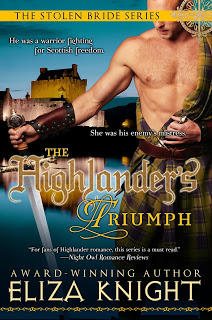
ElizaKnight_TheHighlandersTriumph_2500There are seven books in The Stolen Bride Series—tales of adventure, love and triumph in the brutal Braveheart era of Scotland.

The newest release is The Highlander’s Temptation, which is actually the prequel to the entire series.

Desire tempted them, but love conquered all…
Laird Jamie Montgomery is a warrior with a mission. When he travels to the northern Highlands on the orders of William Wallace, temptation in the form of an alluring lass, could be his undoing.

Lady Lorna Sutherland can’t resist the charms of one irresistible Highlander. Though she’s been forbidden, she breaks every rule for the pleasure of his intoxicating embrace.
When their love is discovered, Jamie is tossed from Sutherland lands under threat of death. But danger can’t keep the two of them apart. No matter what perils may try to separate them—Lorna and Jamie swear they’ll find a way to be together.

What prompted you to write about this historical event?

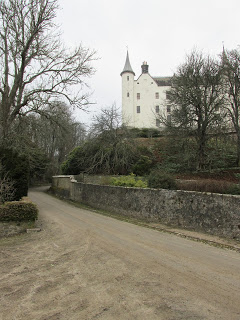
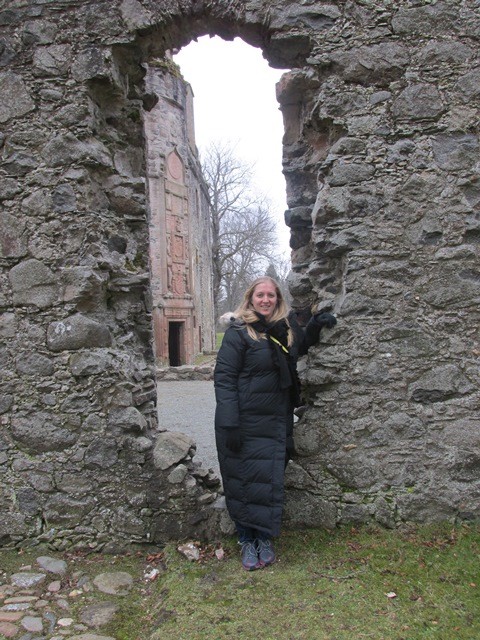
Dunrobin Castle

Dunrobin Castle

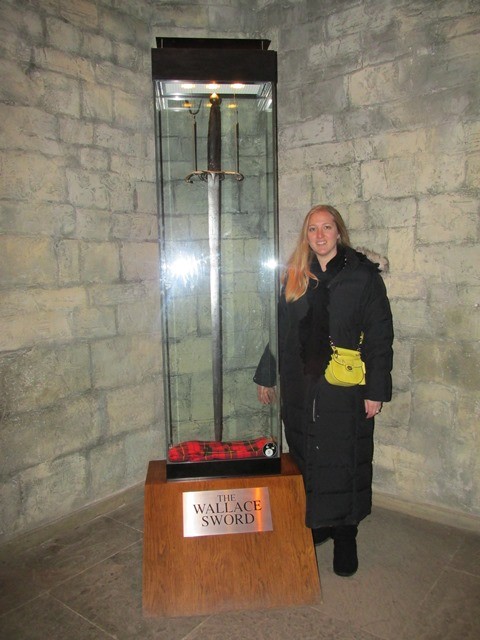
I love Scotland and the medieval era. The War for Scottish Independence and its brave warriors (ie. William Wallace), have always fascinated me. In fact, one of my all-time favorite movies is Braveheart—however many historical issues it might have. One of the lines from the movie, I actually had inscribed on my husband’s wedding ring. So, naturally, when I decided to write a Scottish romance, I was drawn to these events. I created an entire world and families that were dealing with the events of the time. I wanted to bring about joy and happiness in a time period that I love, that was so full of strife. While each book is a romance, and has its own subplots, the connecting plot is the war for freedom, and William Wallace makes a cameo in each book. When I visited Scotland early in 2013, I made a point to visit most of the places within the series, and even got a picture beside Wallace’s sword.

How closely did you stick to the historical facts? If you used them loosely, how did you decide whether to deviate from them?
I try to stick very closely to all historical facts when I write, because while my characters are fictional, the time that they lived was not. I want to bring that time period to life. I want my readers to experience the era while reading—and get a happy ending. Some of the facts that I have changed in the book are dates. I have moved some dates around—not anything major, such as a battle, but perhaps a date that a castle was built, or a date that The Bruce was visiting a castle, or the date a title may have been given. I only changed those dates to match my timeline.

What research did you do for this series?
I am a huge research fanatic—mostly because I actually enjoy it! I have tons of research books on Scotland’s history, Highlanders, Clans, castles, herbs. I’ve watched documentaries on Scotland, William Wallace, the war, the medieval era. I also took a research trip to Scotland early last year, which was instrumental! I’m planning to go again later this year.

Do you use a mixture of historic figures and invented characters in the series? Which is more difficult to write? Which do you prefer to write and why?

Eliza with the Wallace Sword

Eliza with the Wallace Sword

I do use a mixture! I think a story can be much more authentic with historical figures included. Even though I’m writing fiction, I still want my stories to be believable, especially since I’m dealing with a very real event—the war for freedom. Some historic figures that make cameos in the books are, William Wallace, Robert the Bruce, Longshanks aka King Edward of England. My heroes/heroines are all fictional, but they do reside in real castles, and have real Clan names.

Great question on difficulty! I think I’m going to have to say that the level of difficulty is equally matched. I say this because, with fictional characters you have to stay true to their goals and motivations, but you also have to do that with a historical figure. Maybe slightly more so with a historical figure, because we already know what happened, whereas with your fictional characters you can change what happens because you make it up—but because you can make it up, there is a lot more potential for creating issues.

I actually prefer writing both. Under the name E. Knight, I have written two historical fiction novels, based on historic figures, that will be releasing later this year.

In an historical novel you must vividly re-create a place and people in a bygone era. How did you bring the place and people you are writing about to life?
By doing a lot of research, I was able to close my eyes and recreate the scenery in my mind. I’m a very visual person. So watching documentaries, looking at pictures and visiting a place really help me to create it inside my mind where I can see it, and then lay it out on paper. Even just being outside, smelling the air, smelling a campfire, going on a hike and studying the way the leaves crunch under my feet or feeling the bark of a tree. I’m really big into those sensory details, and I want to immerse my readers inside the time.

There often seems to be more scope in historical novels for male characters rather than female characters. Do you prefer to write one sex or the other. And, if so, why?

???????????????????????????????I have to say, I think that is because male historical figures were documented more. If you look back, there are just as many female historical figures that were instrumental in challenging and changing the world (even if they didn’t have a front row seat), just not as well documented. One of my all-time favorite female historical figures is Elizabeth I—she ruled for forty-four years, without marrying, and was hounded for it. Women were not supposed to be superior to men—and thank goodness there has been a shift in thinking!

I definitely prefer a female, because I can relate better, as I’m a woman. In historical fiction (my E. Knight books coming out later this year), I tackle the female’s point-of-view only—these books are generally about the journey of that historical female figures life. But in romance, I think it’s important to see both sides of the story. To watch them fall in love and understand the motivations, goals and conflicts on both sides. When I first started writing, I would ask my husband what he thought of my depiction of my male characters, and he was instrumental in telling me whether or not a man would think like that, or say something like that. Crit partners help, too. So my answer is two-fold. For romance, I prefer both. For historical fiction, so far, I prefer to write from a female’s perspective—but that only means I’ve now challenged myself to take on a male!

Thanks for giving me such detailed answers to my questions. It gives me and my readers a great insight into your books. And by the way, I enjoyed Braveheart too, despite its inaccuracies.

Readers can learn more about Eliza at her website, Facebook page and Goodreads page and will find the whole series on Eliza’s Amazon Author page.

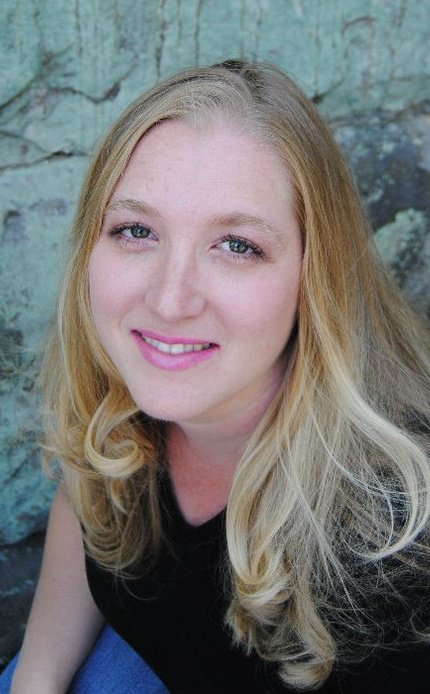
Eliza KnightAbout Eliza Knight: She is the multi-published, award-winning, bestselling author of sizzling historical romance and erotic romance. While not reading, writing or researching for her latest book, she chases after her three children. In her spare time (if there is such a thing…) Eliza likes daydreaming, wine-tasting, traveling, hiking, staring at the stars, watching movies, shopping and visiting with family and friends. Being a self-proclaimed history nerd, she owns the acclaimed historical blog, History Undressed. Eliza lives atop a small mountain, and enjoys cold winter nights when she can curl up in front of a roaring fire with her own knight in shining armor.

Posted in February 2014 | Tagged , , , , | Leave a comment

Charyn’s Lincoln: Conjuring Up A President

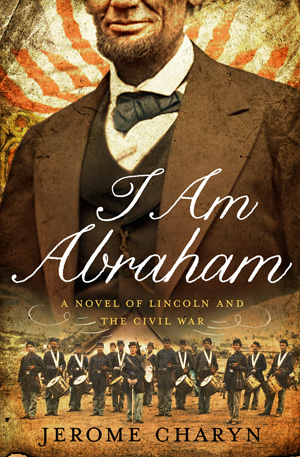
I recently read I Am Abraham, my fourth Jerome Charyn novel, to review it as part of the author’s current blog tour. When I first read Charyn several years ago I found that I needed to acquire a taste for his writing style. It took some effort but it was worth persevering. By the time I finished The Secret Life of Emily Dickinson, I was absolutely delighted by it and I haven’t needed persuasion to read Charyn’s novels ever since.

So, now you know that I enjoy Charyn’s work, let’s turn our attention to his most recent novel, I Am Abraham. This is how the publisher summarises it:

“Narrated in Lincoln’s own voice, the tragicomic I Am Abraham promises to be the masterwork of Jerome Charyn’s remarkable career.
Abraham coverSince publishing his first novel in 1964, Jerome Charyn has established himself as one of the most inventive and prolific literary chroniclers of the American landscape. Here in I Am Abraham, Charyn returns with an unforgettable portrait of Lincoln and the Civil War. Narrated boldly in the first person, I Am Abraham effortlessly mixes humour with Shakespearean-like tragedy, in the process creating an achingly human portrait of our sixteenth President.

Tracing the historic arc of Lincoln’s life from his picaresque days as a gangly young lawyer in Sangamon County, Illinois, through his improbable marriage to Kentucky belle Mary Todd, to his 1865 visit to war-shattered Richmond only days before his assassination, I Am Abraham hews closely to the familiar Lincoln saga. Charyn seamlessly braids historical figures such as Mrs. Keckley—the former slave, who became the First Lady’s dressmaker and confidante—and the swaggering and almost treasonous General McClellan with a parade of fictional extras: wise-cracking knaves, conniving hangers-on, speculators, scheming Senators, and even patriotic whores.

We encounter the renegade Rebel soldiers who flanked the District in tattered uniforms and cardboard shoes, living in a no-man’s-land between North and South; as well as the Northern deserters, young men all, with sunken, hollowed faces, sitting in the punishing sun, waiting for their rendezvous with the firing squad; and the black recruits, whom Lincoln’s own generals wanted to discard, but who play a pivotal role in winning the Civil War. At the center of this grand pageant is always Lincoln himself, clad in a green shawl, pacing the White House halls in the darkest hours of America’s bloodiest war.

Using biblically cadenced prose, cornpone nineteenth-century humour, and Lincoln’s own letters and speeches, Charyn concocts a profoundly moral but troubled commander-in-chief, whose relationship with his Ophelia-like wife and sons—Robert, Willie, and Tad—is explored with penetrating psychological insight and the utmost compassion. Seized by melancholy and imbued with an unfaltering sense of human worth, Charyn’s President Lincoln comes to vibrant, three-dimensional life in a haunting portrait we have rarely seen in historical fiction.”

I found similarities and differences between this book and Charyn’s previous work. In this novel the author immediately lets us know where the story is going, opening with the final minutes of Lincoln’s life at Ford’s Theatre in Washington D.C. unlike The Secret Life of Emily Dickinson where the story follows Dickinson’s life in chronological order and her dying thoughts are the last words we read. Charyn has squeezed a lot into I Am Abraham and examines important events in the president’s life in considerable detail. It’s an imaginative re-telling of Lincoln’s life. A knowledge of the American Civil War period would help the reader follow the narrative but it’s not essential as the author is more interested in producing a character study of Lincoln than an historical account of his life. Despite this, Charyn values historical accuracy though he has his own way of interpreting it. When I interviewed him about his novel, Johnny One-Eye for my blog he said, “Fiction often has a greater truth than most historical texts. I think of Napoleon, and I read War and Peace to get a sense of that particular time. Novelists see history as story. We’re not burdened by ‘inaccuracies’.”

Considering the book’s title it’s not surprising that its focus is the main character, Abraham Lincoln. As in Charyn’s fictional account of Emily Dickinson’s life, Lincoln is portrayed as Charyn imagines him. The author explores Lincoln’s thoughts, feelings, and desires to illuminate the motives behind his actions. In his own distinct way, often using whimsical scenes and lyrical speech, Charyn creates his character. The writing is very much Charyn’s style. Unfortunately I felt the style is more believable when applied to Dickinson than Lincoln. I have a completely different impression of Lincoln than Charyn does and the character’s voice didn’t ring true for me. I was captivated by the manner in which the story was told but I didn’t believe I was hearing Lincoln telling it. I think it might have worked better if another character had narrated it.

The author puts as much effort into place as he does people and the settings, from rural Illinois to the White House, are vividly rendered. The images they conjure in your imagination aren’t always pleasant as Charyn has an acute eye for the sordid and seedy aspects of life but the places come alive. I felt like I had been transported into America’s past, a very different world from my own.

I Am Abraham isn’t an easy read. It’s long at nearly 500 pages and it’s complex but it’s an interesting interpretation of Lincoln and his era. Whether the author has Lincoln’s voice right or not, it’s a book that will entertain readers and possibly make them reconsider what they think about Lincoln, the man. Historical fiction lovers will find this book a new and unique look at the American president and the Civil War era.

To learn more about Jerome Charyn visit his website and his Goodreads page. I Am Abraham’s details can be found on its Amazon page.

CHARYNJEROME_198About Jerome Charyn: He is an award-winning American author. With nearly 50 published works, Charyn has earned a long-standing reputation as an inventive and prolific chronicler of real and imagined American life. Since the 1964 release of Charyn’s first novel, Once Upon a Droshky, he has published 30 novels, three memoirs, eight graphic novels, two books about film, short stories, plays and works of non-fiction. Two of his memoirs were named New York Times Book of the Year. Charyn has been a finalist for the PEN/Faulkner Award for Fiction. He received the Rosenthal Award from the American Academy of Arts and Letters and has been named Commander of Arts and Letters by the French Minister of Culture. Charyn was Distinguished Professor of Film Studies at the American University of Paris until he left teaching in 2009. In addition to his writing and teaching, Charyn is a tournament table tennis player, once ranked in the top 10 percent of players in France. Charyn lives in Paris and New York City.

Posted in February 2014 | Tagged , , , , , , | 2 Comments

Ask Questions To Find Your Story

We have a guest post today from my fellow Alliance of Independent Authors member, C. S. Lakin. She is visiting Ascroft, eh? to discuss what questions an author needs to ask in order to write a story. It’s useful advice and, after reading through her post, I made a copy of it to have handy when I’m revising my own work.

Well, that’s enough rambling from me – I’ll turn you over to Ms Lakin:

Ask Questions to Find Your Story

by C. S. Lakin

Say What front coverI ask a lot of questions in my line of work as a professional manuscript critiquer and copyeditor. Sure, I also give a lot of suggestions and fix badly constructed sentences. But it’s the questions that get to the heart of the story. Asking authors questions helps them get thinking about what they’re writing and why.

So much important information seems to be missing in so many novels—especially first novels by aspiring authors. Novel writing is tricky; there are countless essential components that all need to mesh cohesively. To me, the key to reaching that goal is to ask a lot of questions.

Questions Create Story

Starting a novel is asking a question. What if . . .? What would someone do if . . .? What if the world was like this and this happened . . .? Then those initial questions lead to more questions, which shape and bring life to characters and story. Questions are the key.

Thousands of hours of critiquing and editing has led me to notice that there are some questions I seem to ask a lot. Which tells me there are some general gaps that many writers have in common in their novel-constructing process. I thought I’d share these questions, because maybe they’ll help you as you work on your novel.

1) Where is this scene taking place? I shouldn’t have to ask this, right? The writer is thinking, Isn’t it obvious? I know where this scene is taking place.

It may surprise you to know that readers can’t read your mind. The biggest problem I see in novel scenes is the lack of sufficient information to help the reader “get” where a scene is taking place. Just a hint of setting, shown from the character’s point of view, can do wonders. And what’s usually missing is not just the locale but the smells and sounds, a sense of the time of day and year, and exactly where in the world it is. 

2) How much time has passed? So many scenes dive into dialog or action without clueing the reader in on how much time has passed since the last scene. Scenes needs to flow and string together in cohesive time. It’s important to know if five minutes or five months has passed, and it only takes a few words to make that clear. Don’t leave your reader in confusion—that’s a bad thing.

3) What is your character feeling right now? This is a biggie. It alternates with “How does your character react to this?” So many times I read bits of action or dialog that should produce a reaction from the POV character, but the scene just zooms ahead with said dialog or action without an indication of what the character is feeling or thinking. For every important moment, your character needs to react. First viscerally, then emotionally, physically, and finally intellectually. If you get hit by a car, you aren’t going to first think logically about what happened and what you need to do next. First, you scream or your body slams against the sidewalk and pain streaks through your back. Keep this adage in mind: for every action, there should be an appropriate, immediate reaction. That’s how you reveal character.

4) What is the point of this scene? This is a scary question. Not for me—for the author. Because if there’s no point to a scene, it shouldn’t be in your novel. Really. Every scene has to have a point—to reveal character or plot. And it should have a “high moment” that the scene builds to.

5) What is your protagonist’s goal for the book? If she doesn’t have a goal, you don’t really have a story. The reader wants to know your premise as soon as possible, and that involves your main character having a need to get something or somewhere, do something or find something. That goal should drive the story and be the underlayment for all your scenes. That goal is the glue that holds a novel together. It may not be a huge goal, and in the end, your character may fail to reach that goal—you’re the writer; you decide. But have a goal.

I actually ask a whole lot more questions than these. And many are just as important to crafting a powerful novel. I’ve found when writing my own novels that if I just keep asking questions—the right ones—I’ll find just the right answers for that story.

If you can get in the habit of continually asking questions as you delve into your novel, you may find it will lead you to the heart of your story.

Thank you, Ms Lakin, for visiting and sharing your writing insights. I appreciate them and I’m sure readers will too.

Readers can connect with C. S. Lakin on her websites, LiveWriteThrive and CritiqueMyManuscript as well as on Facebook and Twitter.

Say What?, Ms Lakin’s recently released grammar reference book, is available as an Amazon print book and an Amazon ebook.

Lakin imageAbout C. S. Lakin: She is a multipublished novelist and writing coach. She works full-time as a copyeditor and critiques about two hundred manuscripts a year. She teaches writing workshops and gives instruction on her award-winning blog Live Write Thrive. Her new book—Say What? The Fiction Writer’s Handy Guide to Grammar, Punctuation, and Word Usage—is designed to help writers get a painless grasp on grammar.

About Say What? The book is a compilation of three years’ blog posts on grammar from the award-winning blog for writers Live Write Thrive. Dozens of writing tips have been added that are specifically aimed at helping fiction writers tighten and improve their writing. Grammar doesn’t have to be boring or difficult! Although Say What? is aimed at fiction writers, anyone seeking to improve grammar and write better and clearer will benefit from reading the short, snappy entries designed to make learning these sometimes-difficult rules a lot of fun.

Posted in February 2014 | Tagged , , , , | Leave a comment

Explore The Secret Kiss of Darkness

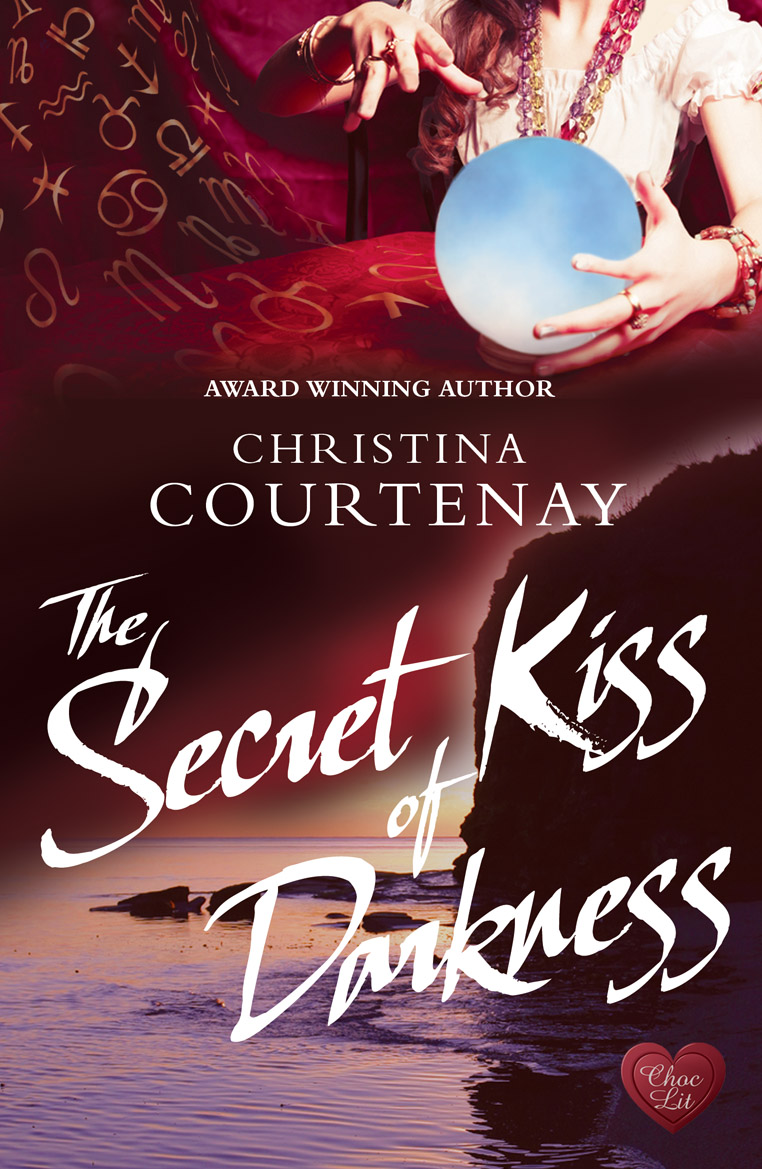
I seem to have been reviewing lots of novels during the past couple months. I enjoy reviewing but it’s also nice to just read a book for pleasure. So in mid-January I decided to give myself a break and a treat. I have read several novels by Christina Courtenay and enjoyed them so I checked out her Amazon page to see what she’s written recently. I was in luck as she had just released a new novel, The Secret Kiss of Darkness. I downloaded it and started to read. I wasn’t surprised to find that I enjoyed it and quickly immersed myself in the story.  And despite reading it for pleasure, when I finished the book I posted a short review on Amazon to let other readers know the book is worth reading. In my review I said, “I found this story engrossing and a great escape. Talking pictures and fortune telling may not be real but I wish they were.” Since I was so enthusiastic about the novel I’ve invited Christina to visit Ascroft, eh? to answer a few questions about the book. So, welcome, Christina! Let’s get started, shall we?

Tell us about your novel.
Secret Kiss imageCC
: The Secret Kiss of Darkness is a time slip novel set in Devon.  Kayla, the heroine in the present, has her life turned upside down when she almost bankrupts herself to buy a portrait of a mysterious 18th century gentleman at an auction.  Jago, inn-keeper and smuggler, knows there’s danger in stolen moments with Lady Eliza.  Over two centuries separate Kayla and Jago, but their lives become inextricably linked thanks to a gypsy’s spell. Will they find heartache or happiness?  Forbidden love, smugglers and romance!

What prompted you to write about this historical event or era?

CC: First of all, I wanted the hero in the past to be a smuggler and when I did some research I found that this was a period when they were fairly common because of the restrictive laws on importing goods from the Continent.  I also needed to write about this particular time because I used the portraits of Thomas Gainsborough and as he features briefly in the book, it had to be set during his lifetime.  I read up on his life and found that he had visited Devon on several occasions, so the story had to revolve around that.

How closely did you stick to the historical facts? If you used them loosely, how did you decide whether to deviate from them?

CC: When it came to the smugglers, I tried to stick to the facts as I found them so hopefully I didn’t deviate at all in that regard.  For Gainsborough, however, I had to take some liberties as obviously he never painted the portraits of my imaginary characters, but I hope my portrayal of him is as close as possible to how he really was as a person.

What research did you do for this book?

CC: I visited Devon several times, exploring the area while looking for settings for my story.  In the end, I made up a small village based on what I’d seen, and used Saltram House (a National Trust stately home near Plymouth) as the template for the house in the story.  I love the Devon coastline with all the little coves and far-reaching views, and the towns are pretty too.  As I said, I read biographies of Thomas Gainsborough, as well as books about smugglers, or free-traders as they called themselves.  And purely for research purposes, I went to an auction at Sotheby’s in New Bond Street so that I could describe one accurately in the book.  Sadly, I couldn’t afford to buy anything! J

Do you use a mixture of historic figures and invented characters in the novel. Which is more difficult to write? Which to you prefer to write and why?

CC: I did use two historic figures in this novel – Gainsborough and his nephew – but I don’t normally like to do that.  I find it very restrictive as you have to stick to their known characters, while still trying to fit them into your story.  I much prefer to make up imaginary people, that way I’m in complete control of their traits and what happens to them.

In an historical novel you must vividly re-create a place and people in a bygone era. How did you bring the place and people you are writing about to life?

CC: I just try to give a flavour of the time by using appropriate language, as well as the customs and social conventions of that era.  In a time slip novel this can be tricky, because you alternate between the past and the present so it’s hard to remember not to use archaic language in the scenes set in the present and vice versa.  Luckily I have a great editor who helps me to pick up on any mistakes.  Descriptions of clothing help to set the stage as well and just the mention of a tricorne hat or a shift can be enough to indicate where we are.

There often seems to be more scope in historical novels for male characters rather than female characters. Do you prefer to write one sex or the other. And, if so, why?

CC: I enjoy writing both.  Naturally the men had many advantages in the past and so much more freedom, but that just means the heroines have to be more feisty or clever in order to get their way.  It can be great fun to try and figure out how they can manipulate the people around them in order to achieve their goals.  It also means they sometimes need the hero’s help and if he is reluctant to give it, that can create sparks.  I like reading and writing both the male and female point of view as I feel that makes for a more rounded story.

Thanks for answering my questions, Christina. I thoroughly enjoyed the novel and I hope other readers will too. To learn more about Christina visit her website and Facebook page and follow her on Twitter (@PiaCCourtenay). Also check out The Secret Kiss of Darkness Amazon US page and UK page

'Promote Me!' portraitAbout Christina Courtenay: Christina writes historical romance/adventure stories, time slip and YA romance. She grew up in Sweden and Japan, loves rock music and dogs. She is currently the Chair of the Romantic Novelists’ Association.

Posted in February 2014 | Tagged , , , , , , | Leave a comment

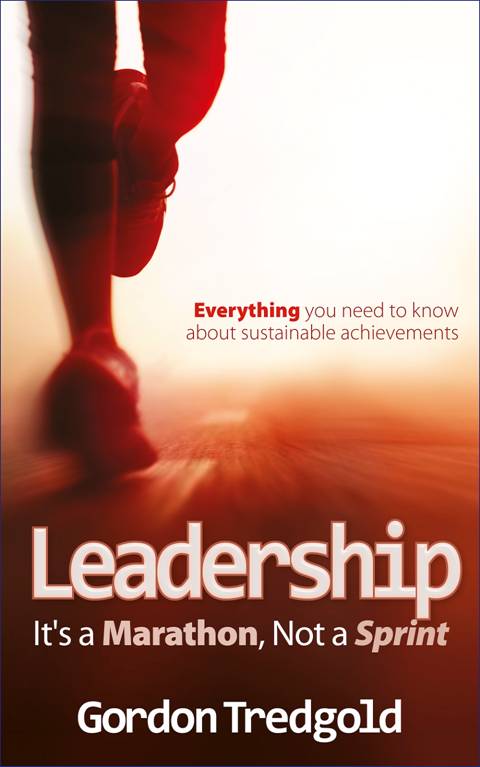
Leadership: It’s A Marathon Not A Sprint

Today I’m doing something a bit different. I’ve ventured away from the realm of fiction and I’ve invited Gordon Tredgold to Ascroft, eh? to talk about his leadership guide, Leadership: It’s a Marathon not a Sprint and what inspired him to write itI think many writers will be able to use some of what he learned while writing the book for their own writing.

Leadership-Its a Marathon Not a SprintThe author describes the book as “a pragmatic Leadership guide, explaining leadership principles in an easy to use, easy to understand and more importantly easy implement style.

The book is split into 26 chapters, one for each mile of the marathon. In each chapter I explain a leadership principle in detail, provide examples of that principle being used in a business context, then each chapter concludes with how that principle was applied to my running goal of running my first Marathon at the age of 52.”

Welcome Gordon. I’ll hand the floor over to you.

GT: I’m often asked what made me start to write and also where does my inspiration come from.

I started to write for several reasons, one of them being the usual desire of writing a book, I think all of us would like to be able to do that, and I am no different.

Throughout my career I have often received very positive feedback on my leadership style, which whilst not unique, is a little bit different, and I thought it would be good for me to write about my approach, and to share my thoughts.

This was also good for me, because one of the best ways to learn is to teach, so by writing about my leadership approach it would make me examine it much more closely, increasing my own understanding and hopefully I would also be able to learn and improve my approach.

I also thought it would be good to write a simple, pragmatic leadership book, one which talked about what to do, and also how to do it, with clear examples showing how and what the benefits or issues can be.

I think there are a lot of leadership book which focus on the why, which is interesting from a theoretical stand point, but they were always very thin on the how.

Obviously this is not true of all leadership books, there are some excellent one’s out there, especially by my favourite author Ken Blanchard. Blanchard’s books tend to be very easy to read, pragmatic with great examples, and often taking the form of a story to get the messages across such as in GungHo! Which is a book I fully recommend.

My initial goal was to write a book, but when I sat down and started I found it very difficult, I didn’t lack ideas for the book, but I did lack a structure. So after a week or so of limited progresses I decided to take a different approach. I decided to write a blog, I would right down my ideas as separate individual posts of between 400-800 words. This would allow me to make a start, make some progress, each post would begin as an idea for a chapter of a book and I would summarize an idea and add some examples.

I did this with a view that after a month or so I would have ideas for 30 chapters that I might then be able to put them together as an outline for a book, which I would then be able to flesh out with more details and examples.

I found the writing to be very therapeutic, and also that I enjoyed it, I looked forward to writing my daily blog. Once the initial ideas were all put down I was concerned that I might struggle to keep up the daily routine, but what I found was that I got inspiration for new posts from many sources, either through what was happening in my job, through sports I was watching or in private life.

I began to see things from a leadership perspective and it helped me continue to identify items I wanted to share. One thing I did try and do was to keep politics out of what I was writing, focusing on leadership, but there were so many things that were happening in the news, such as the Gun Control in the US, Banking Scandals, Euro Crisis etc., etc. I did write posts on these subjects but I tried to keep my personal political views out of the subject and try and write about the leadership aspects with an objective view. It wasn’t always easy, and I wasn’t always 100% successful, especially when writing about the passing of Margaret Thatcher.

As of now I have written over 400 posts, I try and write every day, but I usually end up writing 4-5 per week.

About two or three months after starting the blog I decided to run a marathon to raise money for charity in support of several friends who were going through chemo therapy. As a non-runner who had now taken up a big challenge what I found was that much of what I was doing in preparation and training had so much in common with what I was writing about on Leadership, such as Goal Setting, Motivation, Preparation, planning, etc., that it gave me an idea to combine the two things together.

This is how I came up with the idea of the book, Leadership: It’s a Marathon not a Sprint, I would write a book with 26 chapters, each chapter representing a mile of the marathon. In each chapter I would write about an aspect of leadership, provide details and examples on that aspect, and then I would look to explain how I had used that leadership thought to help me with achieving the marathon.

I really liked this idea, one because it gave me a structure for the book which then allowed me to envision the finished product which motivated me to compete it, and also because it allowed me to use my own struggle to complete the marathon as an example of what leadership can help you achieve. It was like I was my own guinea pig for my leadership ideas and approach.

It also had the added value that it gave the book a story, a narrative, which would help keep the book from becoming a dry book on leadership.

Interestingly the whole writing process was a leadership journey too, it was like a writing marathon that mirrored my running marathon. The process took about 12 months, with 6 months needed to create the second draft of the book and then 6 months for all of the production, artwork, and everything that was associated with taking a finished manuscript and converting it into a book.

This was significantly more work that I had envisioned, or let’s say there was so much more to it than I had known. I would say that I did more work after the book was written than I did before: checking references; editing; reviewing; editing; re-writing parts; editing; rewriting whole chapters; and of course editing.

It was a great learning process and often during that last few months I wasn’t sure whether it would ever be completed and the book produced.

I am very happy to have had to book published, that my thoughts are available for people to share, but I think the biggest benefit to me, is my increased understanding not just of leadership in general, but of my own leadership style in particular. The better I can understand my own leadership, the more control over it I will have which will go a long way to helping me improve it.

I will continue to write my blog as I look to carry on sharing my leadership thoughts, but also as I look to continue to improve my leadership, and I would strongly recommend it to any leader looking to improve.

Thank you, Gordon, for your insight into your book and the way you wrote it. As well as learning about a leadership style, readers who are also writers can take some tips from it for organizing their own writing too.

Gordon Tredgold AuthorAbout Gordon Tredgold: Gordon is the author of Leadership: It’s a Marathon Not a Sprint. Learn more about him at his website and about his book on its Amazon page.

He has worked in IT for over 20 years and is a specialist in Transformational Leadership, Operational Performance Improvement, Organisational Development, Creating Business Value via IT, and Program and Change Management. He has an excellent Global and International experience having lived and worked in UK, Belgium, Holland, Czech Republic, USA and Germany. He also has multi-sector knowledge including FMCG, Logistics, Utilities, Telecoms, Aviation, Banking and Finance.

Posted in February 2014 | Tagged , , , , | 2 Comments

Reading and Reviewing Romances

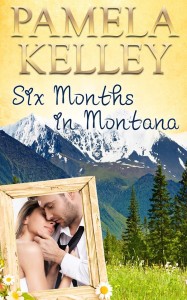
Since I participated in the Sweet Romance Christmas Giveaway on Facebook I’ve been reading my fellow writers’ stories. Twelve of us joined together to offer prizes that included a bundle of fifteen of our novels and short story collections. The Giveaway was a great way to make readers aware of our books and an added benefit for me is that I got copies of all the books. So, in between my writing projects, I’m reading and reviewing each of them. I posted my review of Lucy Naylor Kubash’s An Uncommon Prince and Other Stories in December. Now, here’s my reviews of Stormy Times by Beate Boeker and Six Months in Montana by Pamela Kelley.

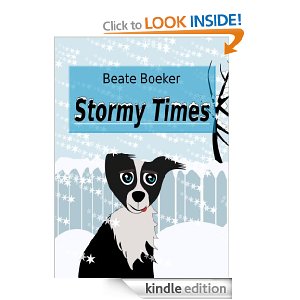
Stormy Times by Beate Boeker

stormy timesThis book’s cover doesn’t do it complete justice. There is light hearted humour, a feel good story and a puppy that would appeal to anyone but there’s also romance, drama and a mystery. The most memorable aspect of the book for me was the characters. It took me a few pages to get into the story but the characters caught my attention immediately. I was intrigued by the enigmatic Conran and I liked Joanna – and I kept reading to find out what happened to them. Some of the secondary characters also made an impression on me. Joanna’s secretary would exasperate anyone and I wanted to adopt her father. Secondary characters such as these added to the comedy and warmth of the story.

As I read I had a strong sense of the isolated setting and the influence of the small community on the characters. The author used both to good effect to create atmosphere and set up the events in the story. She also deftly puts a completely unexpected twist in Joanna’s hunt for the person who is trying to destroy her veterinary practice which changes the tone of this plot thread – it’s nicely done and in keeping with the feel of the whole book.

English isn’t the author’s first language and there is the odd word or phrase that betrays this but I didn’t find that it distracted me from the story. My overall impression when I finished the last page was that I had spent a satisfying few hours with a couple I liked and rooted for. Stormy Times is just the thing, especially on a winter’s night, for readers who enjoy upbeat romances.

Six Months in Montana by Pamela Kelley

sixmonths-187x300If you’re looking for a love story that you know will have a happy ending this is it. Six Months in Montana is a gentle love story set in the American West – not the west coast, the west that’s humming with cowboys, horses and the great outdoors. A place to get away from the city rat race.

As the main character, Molly, grapples with how she can keep Christian, her childhood friend who she has discovered is now much more than that, I never believed any obstacles were insurmountable. I was always confident that she would sort everything out. Molly deals with Christian’s ex-girlfriend, a job promotion she’s always wanted and Christian’s fear of commitment in the course of the story and I wasn’t surprised that she comes out on top. As I’ve said, this isn’t cliff hanger drama, it’s a feel good story. While I wondered how Molly would win, I didn’t doubt that she would.

The events in the story kept me reading but it’s really the characters that make it. Molly is the girl next door that most people would like to have as a friend. Christian will appeal to many women’s fantasies and Molly’s mother and aunt could be your own relatives. I felt like I knew these characters. Their warmth and humanity give depth to the story.

Without unnecessary detail the author paints a picture of the neighbourhood in New York where Molly lives and the ranch she comes to call home. In my mind I saw vividly the local bar where Molly and her friend Meghan meet each week and I felt the community atmosphere of her neighbourhood. The author’s description of Rose Cottage, the bed and breakfast she runs on the ranch, made me want to book in there for my next weekend break. These captivating descriptions add to the book’s feel good factor.

It’s obvious that the author loves good food and wine as there’s references to both peppered throughout the story, leaving my mouth watering at times. So it’s good that she has included the recipe for one of her favourite dishes as an extra treat.

When you want to relax with a story that will easily pull you along but not jar you on the way, this is just the book. Readers who enjoy romance and women’s general fiction will settle right into Six Months in Montana.

Now that I’ve read and reviewed these novels I’m on to Opal Mellon’s His Only Hope. I’ll tell you about it when I finish reading it. Meanwhile, I hope you have gleaned an insight into these two novels from my reviews.

Posted in January 2014, Uncategorized | Tagged , , , , , , , | Leave a comment