Stepping Into Eighteenth Century America

Today we are stepping into the American past. I have invited Allen Woods to visit Ascroft, eh? to answer a few questions about The Sword and Scabbard, the first novel in his series set in eighteenth century America.

Welcome, Allen. Let’s get started, shall we?

Tell us about your novel.

sword+scabbard-cover-300dpiAW: It is essentially a crime novel set in 1760s Boston. Political events are central to everyone’s life at the time and force the main characters to take actions they might not otherwise. The book shows a side of Boston rarely seen in standard histories and the accepted narrative – it is told from the viewpoint of common people on the street, rather than the lords and leaders at the time.

What prompted you to write about this historical event?

AW: I’ve been a writer my entire adult life, and as a part of other research, I found the events and people of the period fascinating. It seemed a story waiting to be told. Nearly all Americans have some view of the events in the book, but they are generally just a vague knowledge that paints the Americans as heroic freedom fighters and the British as generally stupid and greedy.

How closely did you stick to the historical facts? If you used them loosely, how did you decide whether to deviate from them?

AW: All the political and historic events are factual. For some characters, such as the victims of the Massacre, I invented dialogue and interactions that are entirely plausible, but not documented anywhere because the characters are lower class and either couldn’t read and write or had no time to keep a diary. Everything else, such as British and American leaders’ actions, are accurate. There is widespread documentation of smuggling and Customs graft during this period, but not specifics that were required for the action in the book, so those details are invented as well.

What research did you do for this book?

AW: I estimate that I read or consulted about 50 books and many more articles and other sources. I also live near Boston and visited the main sites many times.

Do you use a mixture of historic figures and invented characters in the novel. Which is more difficult to write? Which to you prefer to write and why?

AW: The fictional characters are heavily influenced by historic figures and events. Because I used factual figures and events, the 1st person narrator reacts to them and describes them from his point of view. His perspective is one that I believe was common at the time, but mostly undocumented. The tavern, Nicholas, Maggie, and the others are fictional, although their stories are completely plausible and don’t require any leap of faith or suspension of disbelief. Their actions flowed easily from my imagination.

In an historical novel you must vividly re-create a place and people in a bygone era. How did you bring the place and people you are writing about to life?

AW: I was so steeped in the historical facts and background that I came to feel I was almost living in that era. Everything, from food and clothing to the look of the streets and the buildings, became similar to a movie scene in my mind’s eye. I believe good writing needs to be visual and immediate.

There often seems to be more scope in historical novels for male characters rather than female characters. Do you prefer to write one sex or the other. And, if so, why?

AW: The narrator is a male and is a bit baffled by some female attitudes and behavior, which I don’t find uncommon. However, I feel that the motivations and actions of Maggie, the main female character, are believable and consistent. I look forward to developing her character more completely in the planned series of books.

Thank you for answering my questions, Allen, and good luck with the series.

Readers can learn more about Allen and The Sword and Scabbard by visiting his website and his Goodreads page.

Allen Woods 1About Allen Woods: Allen has been a full-time freelance writer and editor for almost 30 years, writing everything from magazine and newspaper features to sales training for corporate clients. Recently he has specialized in social studies and reading textbooks for all ages. The spark for The Sword and Scabbard came while doing research for an American history text. He lives 100 miles from the site of the Boston Massacre and plans a series which will follow Nicholas and Maggie through the Tea Party, Lexington and Concord, the Revolutionary War, and beyond. He welcomes e-mail at the book web site that will be functional shortly.

Posted in June 2015 | Tagged , , , , | Leave a comment

Launching The Yankee Years Series

This week we marked the anniversary of D-Day, more than seventy years after the invasion began. Even after so many years have elapsed, the events of that day and the weeks and months that followed still resonate with us. As we remember this pivotal point in the Second World War, I thought it was an appropriate time to launch the first book in The Yankee Years, my new series, which tells stories of a little known part of Britain’s war history.

During the Second World War Northern Ireland hosted American, British and Canadian troops. County Fermanagh welcomed Air Force squadrons hunting U-boats and defending shipping convoys in the Atlantic Ocean and Army battalions training and preparing for deployment to Europe’s Western Front. After the Allied troops arrived, life in Northern Ireland would never be the same again. In The Yankee Years novels and Short Reads I endeavour to weave thrilling and romantic tales of the people and the era.

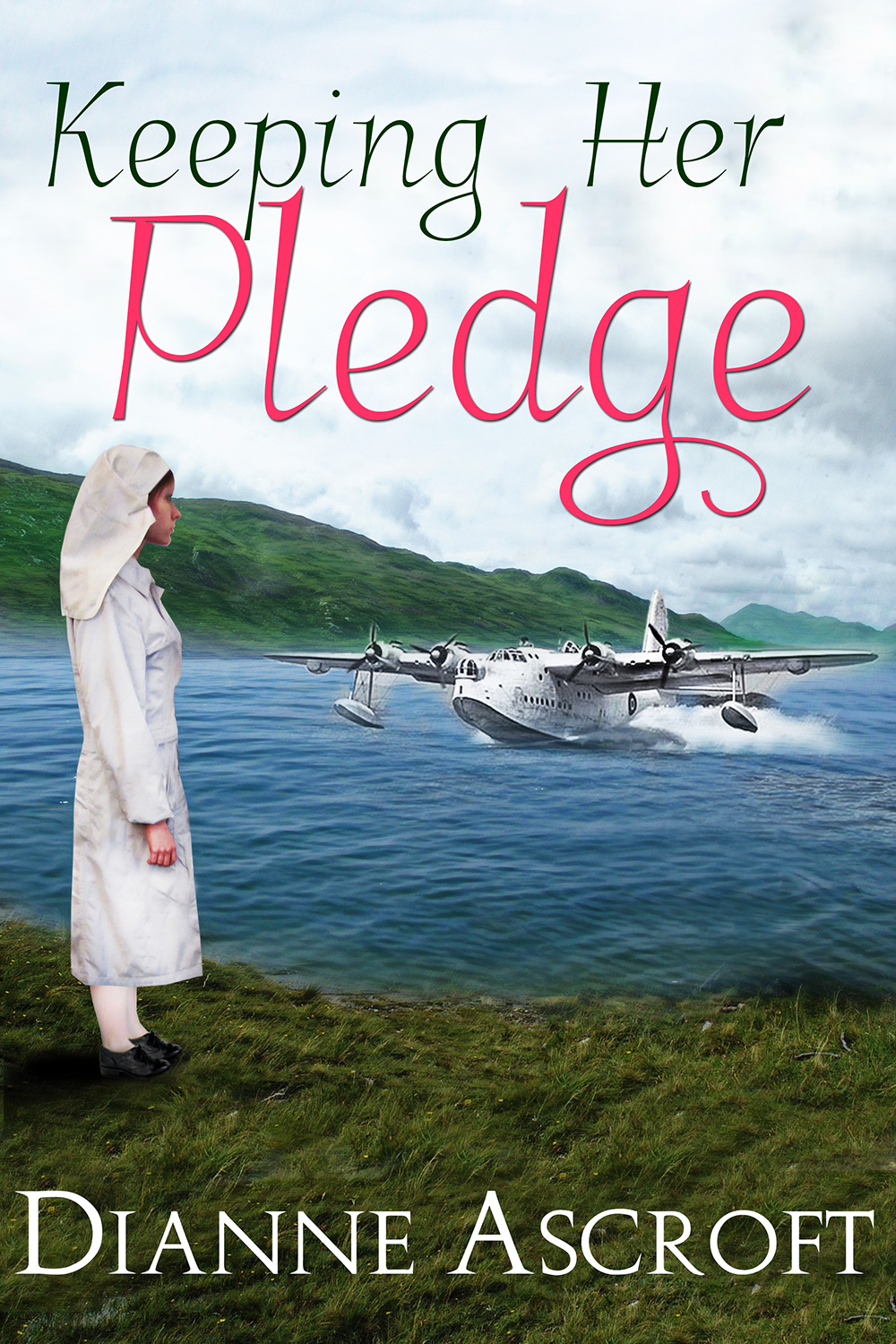
The Yankee Years series will be a mix of Short Reads and novels. The first book, Keeping Her Pledge, which was released this week, is a short read – approximately 90 minutes reading time.

Let me introduce Keeping Her Pledge:

Pearl-FINAL-Kindle2June 1942: Pearl Grainger’s life is much more exciting and fun since the Allied troops arrived in County Fermanagh, Northern Ireland. Although she has to steel her nerve to help her brother, Davy, on smuggling runs across the border to the Republic of Ireland, she’s out dancing several times each week and meets an RCAF seaplane navigator, Pilot Officer Chuck Walker who quickly becomes special to her.

The harsh realities of war are far removed from her until the evening an RCAF seaplane crashes into a field on her family’s farm. Watching her family attempt to rescue the crew from the burning wreckage, she realises it’s time she played her part in the war effort. Pearl resolves to volunteer at the nearby US Army Station Hospital.

It’s not an easy promise to keep. Pearl’s intentions are good but nothing in her life has prepared her for the horrific sights, sounds and smells of a hospital ward during wartime. And Chuck’s disapproval and jealousy don’t make it any easier.

Can Pearl keep her pledge to do her bit for the war effort without losing the man she loves?

To learn more about Keeping Her Pledge, visit:

UK Amazon page

US Amazon page

I hope you will enjoy Keeping Her Pledge and the rest of the series as the novels and short reads are released. If you would like to be informed about the new releases and occasional special offers, please sign up for my newsletter here.

Posted in June 2015 | Tagged , , , , , , , , | 1 Comment

The Graham Saga Comes To A Close

I’ve been reading the Graham Saga historical novels for just over a year now. To Catch A Falling Star by Anna Belfrage, who is on a Historical Fiction Virtual Blog Tour with the book, is the last in the eight book timeslip historical fiction series set in the seventeenth century. I began reading the series at Book 5, Serpents in the Garden, in April 2014 and followed it with Book 6, Revenge and Retribution, in September 2014 then Whither Thou Goest in December 2014. I have now finished To Catch A Falling Star, the conclusion of the series. I received a free copy of each book in exchange for an honest review of it.

02_To Catch a Falling Star_CoverThe publisher, Silverwood Books, describes To Catch a Falling Star as “the eighth book in Anna Belfrage’s series featuring time traveller Alexandra Lind and her seventeenth century husband, Matthew Graham.

Some gifts are double-edged swords …

For Matthew Graham, being given the gift of his former Scottish manor is a dream come true. For his wife, Alex, this gift will force her to undertake a perilous sea journey, leaving most of their extensive family in the Colony of Maryland. Alex is torn apart by this, but staying behind while her husband travels to Scotland is no option.
Scotland in 1688 is a divided country, torn between the papist Stuart king and the foreign but Protestant William of Orange. In the Lowlands, popular opinion is with Dutch William, and Matthew’s reluctance to openly support him does not endear him to his former friends and neighbours.

While Matthew struggles to come to terms with the fact that Scotland of 1688 bears little resemblance to his lovingly conserved memories, Alex is forced to confront unresolved issues from her past, including her overly curious brother-in-law, Luke Graham. And then there’s the further complication of the dashing, flamboyant Viscount Dundee, a man who knocks Alex completely off her feet.

All the turmoil that accompanies their return to Scotland pales into insignificance when a letter arrives, detailing the calamities threatening their youngest daughter in Maryland – at the hand of that most obnoxious minister, Richard Campbell. Matthew and Alex have no choice but to hasten back, no matter the heartache this causes.

Will they make it back in time? And what will Richard Campbell do?”

Everything I’ve written about the previous books in the series holds true for this one so I apologise in advance for repeating myself. To Catch A Falling Star is well written with a plot that keeps the reader turning the pages.

The settings in this series of novels seem to have a life of their own and I love their diversity. This time we are back in Maryland as well as venturing across the ocean to revisit the Grahams’ Scottish home place as the Jacobite risings are beginning. The author skilfully contrasts the geographic and climatic features of these two places, vividly describing them so that they are easy for the reader to imagine. With Alex, I felt the cold loneliness of the Scottish countryside and longed to sit in the warmth of a Maryland meadow.

In each book in this series, I’ve found the characters believable and engaging and I became immersed in their stories. I enjoyed following the developments in Sarah’s and Samuel’s lives this time and meeting Alex’s adult son, Isaac. I was also delighted when one of my favourite characters, Fr Carlos Munoz returned to the story. Alex’s wily brother-in-law, Simon Melville, acquitted himself much better in this book than he did in a previous one and I found myself liking him again. In this book I especially enjoyed the convincing way historic figures were woven into the story – meeting Viscount Dundee was indeed a pleasure.

For readers who haven’t followed the saga, it wouldn’t be difficult to pick up the threads of the story even though this is the last book in the series. Details from previous books are seamlessly woven into the novel and explained so that the reader isn’t confused. It’s possible to read To Catch A Falling Star as a standalone book or as part of the series. And for the reader who has been engrossed in the saga, all the threads from previous books come together in this book for a satisfying conclusion to the story.

I can honestly recommend this novel to anyone who enjoys historical fiction, fantasy/time-slip or just a good story.

03_Anna BelfrageAbout Anna Belfrage: Anna was raised abroad, on a pungent mix of Latin American culture, English history and Swedish traditions. As a result she is multilingual and most of her reading is historical – both non-fiction and fiction.

She was always going to be a writer – or a historian, preferably both. Instead she ended up with a degree in Business and Finance, with very little time to spare for her most favourite pursuit. Still, one does as one must, and in between juggling a challenging career she raised her four children on a potent combination of invented stories, historical debates and masses of good food and homemade cakes. They seem to thrive … Nowadays she spends most of her spare time at her writing desk. The children are half grown, the house is at times eerily silent and she slips away into her imaginary world, with her imaginary characters. Every now and then the one and only man in her life pops his head in to ensure she’s still there. She was always going to be a writer. Now she is – she has achieved her dream.

For more information about the author of the Graham Saga novels, please visit Anna Belfrage’s website and blog. You can also find her on Facebook, Twitter, and Goodreads.

Posted in May 2015 | Tagged , , , , , , | 2 Comments

Marianne Perry’s The Inheritance

Today I’ve invited Marianne Perry, author of The Inheritance, to visit Ascroft, eh? to talk about her historical novel.

Welcome Marianne. It’s always nice to have a fellow Canadian here. Let’s get started, shall we?

Tell us about your novel The Inheritance.

Inheritance_CoverMP: The Inheritance is a historical fiction/romance set in Calabria, southern Italy from 1897 to 1913. Caterina is the protagonist and the story chronicles her life from birth to young womanhood. During this period, the region was subject to earthquakes and tsunamis and the land, harsh with poverty the norm. Superstition clashed with religion and a rigid class system ruled the people. Calabria’s stark and unforgiving backdrop mirrors the tragic tale that unfolds in The Inheritance.

Caterina is born into a society that has predetermined what she can and cannot do; nevertheless, she refuses to submit to the limits of her gender, the constraints of her standing and the demands imposed by those in power. Instead, she remains steadfast in her commitment to become the woman she imagines. In the end, Caterina’s decisions ignite conflicts that result in dire consequences for all whose path she crosses.

What prompted you to write The Inheritance?

MP: I am a second-generation Canadian-Italian and family mysteries intrigue me. I’ve pursued genealogical research for twenty years and what I unearthed about my grandmother’s early life in Calabria, southern Italy inspired me to write The Inheritance.

My grandmother, Nana Caterina was the matriarch of our large Perry (Perri) family in Northern Ontario. Born 1889 in a mountain village in Calabria, southern Italy, she left her family in 1913, travelled in steerage on a steamship across the Atlantic Ocean and landed at Ellis Island, New York. She settled in Sault Ste. Marie, Ontario, Canada where she met and married my grandfather, another Calabrian immigrant. They raised nine children that included my late father and despite a formidable presence; her early life was shrouded in mystery.

I became keen to unlock her past. Nana Caterina never returned to Italy or saw her parents again and I wanted to find out why! I began genealogical research, obtained original Italian documents and travelled to Calabria where I visited her birthplace. I have solved many mysteries and though The Inheritance is fiction, its tale emerged from discoveries made about Nana Caterina’s early life in Calabria.

How closely did you stick to the historical facts? If you used them loosely, how did you decide whether to deviate from them?

MP: The Inheritance mirrors conditions and circumstances in Calabria, southern Italy during the period 1897 to 1913.

What research did you do for The Inheritance?

MP: a). In order to realistically depict Calabria, southern Italy during this period, I studied the history, geography, social mores, religious beliefs and cultural traditions of the region. I reviewed old maps to ensure the settlements referenced existed at this time plus familiarized myself with their particular evolution. To heighten accuracy, I gained understanding about the feudal land system and the ‘Ndrangheta, an criminal network rooted in southern Italy.

b). Caterina, the protagonist, ages from birth to sixteen and my ancestral research emphasized my grandmother’s life prior to her 1913 North American immigration in an effort to understand her everyday experiences as well as those of her contemporaries. I examined myriad vital records and a wide range of genealogical documents specific to men, women, children and families of her era to grasp living conditions and challenges pertinent to Calabria, southern Italy.

c). Names help establish authenticity in historical fiction and I selected those such as Mafalda, Fiore and Elda for minor characters from Italian genealogical documents of the late 19th and early 20th century.

d). Place descriptions enliven the past for readers and my travel to Calabria, southern Italy and exploration of the actual places where the action of The Inheritance occurs helped me pen vivid passages. I also kept a journal plus took hundreds of photographs when I visited Calabria that I referred to while writing drafts of the novel.

In an historical novel you must vividly re-create a place and people in a bygone era. How did you bring the place and people you are writing about to life?

MP: a). Travelling to Calabria, southern Italy and exploring where I set The Inheritance was an effective writing tool. The Villa San Michele, for example, is fictional but The Grand Hotel San Michele exists. In the story, San Michele is owned by Santo and Anna Marino and Caterina’s family are peasants living on an enclave who work for them. The Grand Hotel San Michele, located near Cetraro, is a turn-of-the-century villa situated on a 124-acre estate overlooking the Tyrrhenian Sea. I stayed there when I went to Calabria, became friends with the woman who owned it, heard about its origins and shared my plans to write The Inheritance. Wandering the grounds, absorbing the sweet scented lavender shrubs and listening to the crashing waves on its private beach as Caterina does in The Inheritance made me feel as if she’d actually lived at San Michele.

b). In The Inheritance, an earthquake striking southern Italy on December 28, 1908 has a devastating impact on Caterina. I chose the natural disaster because it advanced plot, developed conflict and reflected a true event. According to historical records, an earthquake occurred this day centered on the city of Messina, Sicily. It registered 7.2 with aftershocks felt for a radius of 300 kilometres. The twelve metre tsunami that followed devastated the Tyrrhenian coast and authorities have estimated between 100,000 and 200,000 lives were lost in southern Italy. What happened to Caterina in The Inheritance would have been a fate suffered by many.

c). While travelling throughout Calabria, I was on the lookout for a cover photograph and I snapped the picture of the old crumbling stone cottage featured on The Inheritance. It was located near the mountain village where my Nana Caterina was born and is intrinsic to Caterina’s story in the novel. How perfect, I thought.

There often seems to be more scope in historical novels for male characters rather than female characters. Do you prefer to write one sex or the other? And, if so, why?

MP: I write from multiple points of view; hence, male and female. My thirty-year career in education, communication, the private sector, volunteerism plus background in teaching dramatic arts has helped me finesse my characters. In addition, I am an international traveller and have explored every continent. Like many adults, I have had diverse roles: daughter, wife, ex-wife, mother, single-parent, parent-caregiver, sister, friend, unemployed worker, etc. The totality of such experiences have widened my understanding of others, enriched my awareness of the world and provided me valuable insight that I can blend into those I create to tell my stories.

Thank you for answering my questions, Marianne, and good luck with your novel. Readers can learn more about Marianne by visiting her pages on Facebook, Twitter, Instagram, LinkedIn, and Goodreads.

Inheritance Marianne PerryAbout Marianne Perry: Family dynamics, genealogical research to solve ancestral mysteries and international travel are her priorities. A second-generation Canadian-Italian, she is the author of The Inheritance, a historical fiction/romance set in Calabria, southern Italy from 1897 to 1913 that was inspired by her grandmother’s early life. With a thirty-year career in education and communications, Marianne holds a Master of Education Degree from The University of Western Ontario (Canada). A past member of the Board of Trustees, the Canadian National Arts Centre Corporation, she has also published non-fiction genealogical articles throughout North America. As a girl, she fell in love with The National Geographic Magazine and dreamt of exploring the world. With her January 2014 visit to Antarctica, she achieved her goal of stepping foot on every continent. The mother of two grown children, Marianne and her husband live on the shores of the St. Mary’s River, which drains Lake Superior on the outskirts of Sault Ste. Marie, Ontario, Canada. She continues to research her family’s history and write non-fiction genealogical articles. In addition, she is working on her second novel and planning further adventures. Marianne blogs about genealogy, travel, family and writing on her website.

Posted in May 2015 | Tagged , , , , , | Leave a comment

Knowing Where I’m Going

Enemy-Draft-1e[1] revisedSince I’m in the middle of revising the first draft of a novel and have just finished writing the first draft of a long short story, I’ve been thinking a lot about planning stories. This week I talked about my favourite way to plot on Writers Abroad’s blog. If you’re interested you can read it here.

Posted in April 2015 | Tagged , , , | 1 Comment

The Cunning Man Reviewed

I recently read The Cunning Man, a unique short story collection by John Yeoman.

02_The Cunning Man CoverTo give you a quick feel for it, here’s the publisher’s description: “Looking for clever, fast-paced historical mysteries? Here you’ll discover seven ‘impossible’ crimes, locked room puzzles, passion and riddles galore. Enjoy these lusty crime stories set in Elizabethan England where a ‘cunning man’, Hippo Yeoman, must solve devilish cases to save his friends’ lives, or even his own.

This anthology of short historical mystery stories is a world ‘first’. It’s not only a joy to read in its own right, but it’s also a ‘fictorial’: a collection of crime thrillers packed with clever but unobtrusive tips that show you precisely how they were written, to help you write your own stories! They will appeal equally to avid readers of historical crime and students of creative writing who want to enhance their story or novel writing skills, in any genre.

Can you find the culprit before Hippo does? Challenge your own detective skills, enjoy a thundering good read in settings that are wholly authentic to 16th century London, and discover – while you read – how to write a great story!”

I enjoyed this collection of stories and found the notes on their construction interesting and informative. The author combines clever plots, with interesting tweaks to the historical record, and a likeable main character, Hippo, to produce a satisfying collection of stories. Each tale can be read entirely on its own but, by reading the stories in order, I enjoyed ‘experiencing’ the developments in Hippo’s life over a period of months. Including a back story and references to the main character’s own life added depth to the stories so that they were not only a series of mysteries which Hippo solved. The author’s ability to convincingly evoke the sights, sounds and smells of Elizabethan England also added to my enjoyment of the stories. Fans of historical mysteries as well as writers looking for insights into short story writing will find this a worthwhile collection to read.

For more information about the author and his work, please visit John Yeoman’s website, and follow him on Twitter.

Cunning John YeomanAbout Dr John Yeoman: He holds a PhD Creative Writing and is a total rogue. His first adventure when leaving Oxford university with an MA in English literature was to host a witchcraft cabaret in a London cellar. This so enchanted him with devilry that he took up a career in public relations. Across 42 years he has edited a newspaper, chaired a big PR consultancy and trained several thousands of people to write for fame, fun and occasionally fortune.

For fifteen years he ran Britain’s largest self-publishing business and earned up to $1.4 million annually from his own living room. He founded Writers’ Village in 2009, now one of the world’s largest short fiction contests. It’s no coincidence that its blog is titled the Wicked Writing Blog and it hosts guest posts every week from every best-selling author who is not ashamed to show their face there.

He lives in central England with his wife Celia, a dynasty of children and a tortoise. His passions include Jacobean literature, heirloom vegetable gardening and antique wines.

Posted in April 2015 | Tagged , , , , , | Leave a comment

Immigrant Soldier: A New Look At WWII

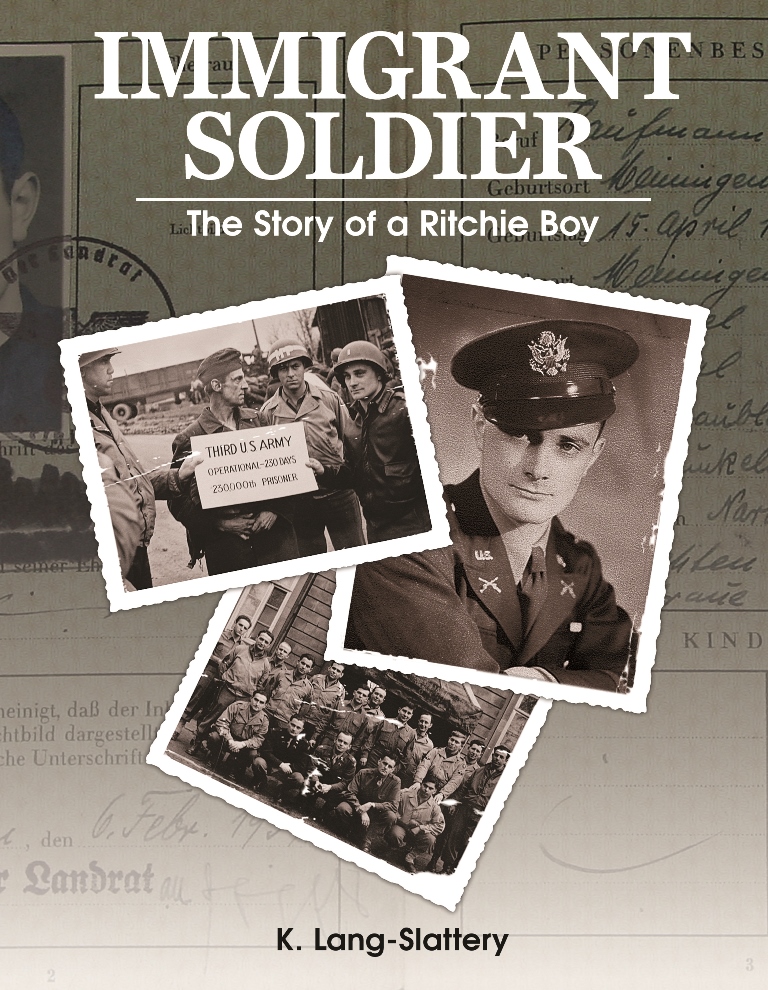
Last week I finished reading Immigrant Soldier, the Story of a Ritchie Boy, by Kathryn Lang-Slattery. I received a free copy of the novel in exchange for an honest review as part of the author’s Historical Fiction Virtual Tour.

02_Immigrant Soldier_CoverThe publisher, Pacific Bookworks, states that the novel is “based on the true experiences of a refugee from Nazi Germany, combines a coming-of-age story with an immigrant tale and a World War II adventure. On a cold November morning in 1938, Herman watches in horror as his cousin is arrested. As a Jew, he realizes it is past time to flee Germany, a decision that catapults him from one adventure to another, his life changed forever by the gathering storm of world events. Gradually, Herman evolves from a frustrated teenager, looking for a place to belong, into a confident US Army intelligence officer who struggles with hate and forgiveness.”

It is easy to see that the novel is based on Herman Lang’s real experiences as it sometimes reads more like a biography than a novel, especially when imparting information about developments in pre-war Germany and during the Second World War. But, whether it seems more biography or novel, it is still an engrossing story. The book is a very thorough account of Herman’s life from 1938 when he begins to plan his escape from Nazi Germany until the end of the Second World War.

I enjoyed watching Herman grow and mature and found him a very likeable character. The author captures his youthful innocence on an English country estate and in carefree California as well as his experiences as a soldier in battle and vividly evokes the places where Herman finds himself, from pre-war Germany to a California beach town to an English estate to war-torn Europe.

The author has researched and delved into an aspect of the war that has rarely been highlighted before and brings the world of US military interpreters and their importance to US military strategy to the reading public, portraying Herman’s experiences through a series of interesting scenes and anecdotes. His experiences are made more interesting when well-known military figures such as General George S. Patton are part of his story, giving readers a glimpse into the lives of these important historical figures.

Readers who are looking for the excitement and gore of frontline battle may not be drawn to this book but anyone who wants to experience the broader canvas of the run up to and events of the Second World War will find this a fascinating read.

For more information about the author, please visit at K. Lang-Slatter’s website and blog. You can also find her on Facebook, LinkedIn, and Twitter.

Immigrant Soldier Kathryn Lang-SlatteryAbout Kathryn Lang-Slattery: A published author of fiction and nonfiction for youth, she became fascinated with her uncle’s World War II stories and began taping his conversations in 1996. Soon she knew she had found a fascinating untold story of Jewish refugees who became silent heroes. More than a decade spent researching, interviewing Ritchie Boys, and turning the true story of her uncle into fiction became an odyssey of discovery that resulted in the novel, Immigrant Soldier, The Story of a Ritchie Boy.

Posted in April 2015 | Tagged , , , , , , | Leave a comment

Getting To Know An Unknown Woman

Today Jane Davis is visiting Ascroft, eh? to tell us about her latest novel, An Unknown Woman.

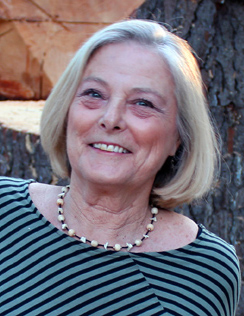
Davis BenchLet me tell you a little bit about Jane (I cheated – I got all of this from her biography!): Jane lives in Carshalton, Surrey with her Formula 1 obsessed, star-gazing, beer-brewing partner, surrounded by growing piles of paperbacks, CDs and general chaos. She spent her twenties and the first part of her thirties chasing promotions at work, but when Jane achieved what she’d set out to do, she discovered that it wasn’t what she had wanted after all. In search of a creative outlet, she turned to writing fiction, but cites the disciplines learnt in the business world as what helped her finish her first 120,000-word novel.

Her first, Half-truths and White Lies, won the Daily Mail First Novel Award and was described by Joanne Harris as ‘A story of secrets, lies, grief and, ultimately, redemption, charmingly handled by this very promising new writer.’ She was hailed by The Bookseller as ‘One to Watch.’ Five self-published novels have followed: I Stopped Time, These Fragile Things, A Funeral for an Owl, An Unchoreographed Life and now her latest release, An Unknown Woman. Jane’s favourite description of fiction is that it is ‘made-up truth.’

Welcome, Jane. Shall we get started?

Tell us about your novel.

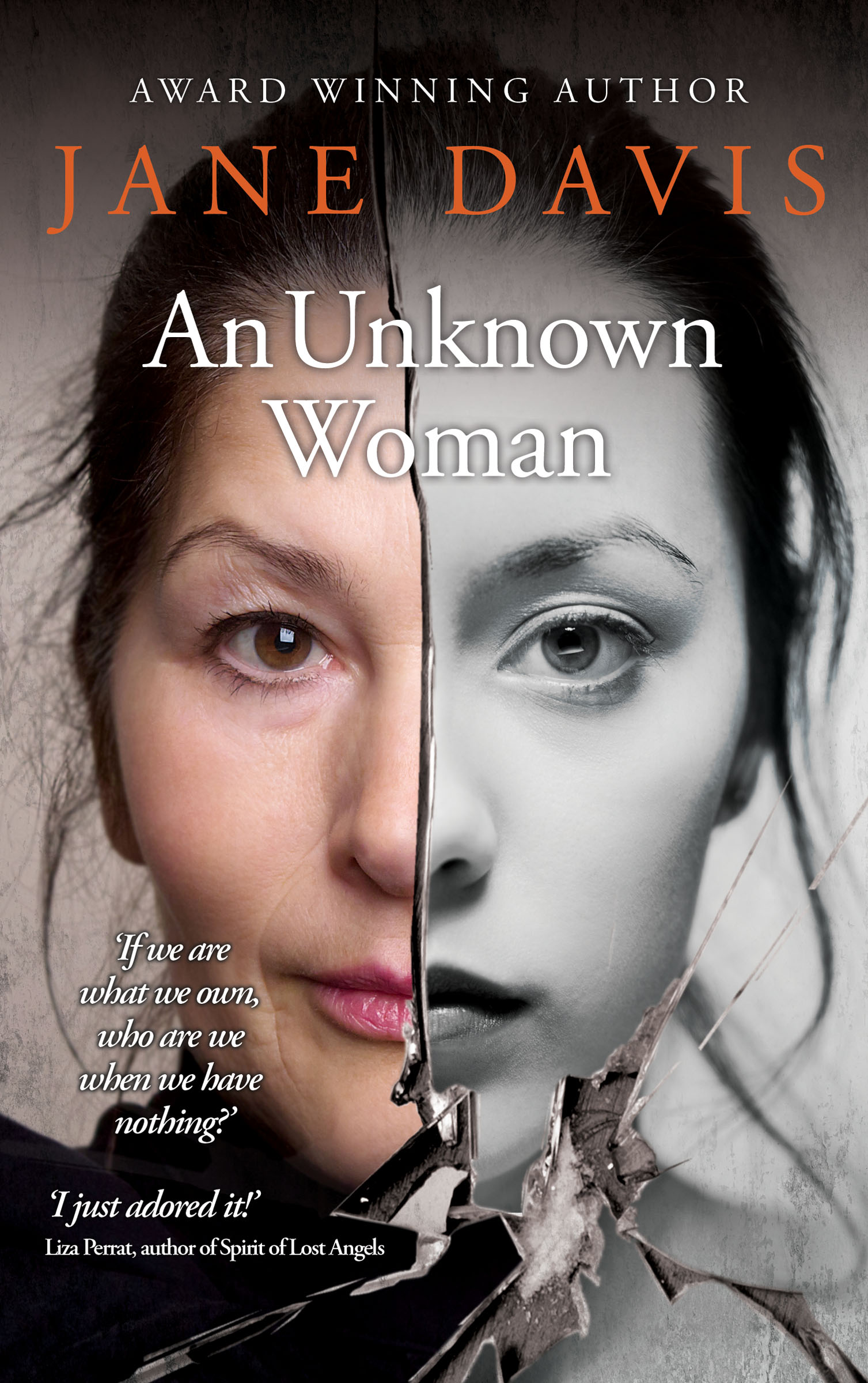
JD: My main character is Anita Hall who, at the age of forty-six, thinks she knows exactly who she is. She has lived with partner Ed Davis An Unknown Woman finalfor fifteen years and is proud of all they’ve achieved. They go out into the world separately: Ed with one eye on the future in the world of finance; Anita with one foot the past, a curator at Hampton Court Palace. She is living the life she has chosen – choices that weren’t open to her mother’s generation – working in her dream job, being part of an equal partnership, living mortgage-free in a quirky old house she adores. Her future seems knowable and secure.
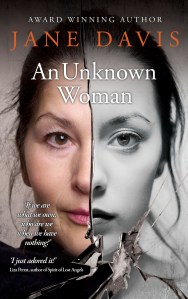
But then Anita finds herself standing in the middle of the road watching her home and everything inside it burn to the ground. And before she can come to terms with the magnitude of her loss, hairline cracks begin to appear in her perfect relationship. Very quickly it becomes apparent that nothing is as it had seemed. Then, when she returns to her childhood home in search of comfort, she stumbles upon the secret that her mother has kept hidden, a taboo so unspeakable it can only be written about.

I read a quote I liked the other day. “The writer’s job is to get the main character up the tree, and once they are there, to throw rocks at them.” I don’t want to give too much away, but Anita finds one hell of a lot of rocks flying in her direction.

What is the theme of the story and what prompted you to write about this subject matter?

JD: An Unknown Woman is very personal to me. In 2013, I took the decision to cut back on paid work, which meant selling the car and ridding myself of a lot of material baggage along the way. The book is in part an exploration of how our material possessions inform our identities. It begins with a couple standing in the road outside their house watching it burn to the ground. It is very recognisably my house. Then in February 2014, life reflected art/fiction when my sister lost her house and everything in it to the winter floods.

In the book, I ask the question, ‘If we are who we own, who are we when we have nothing?’ Parker J. Palmer described identity as ‘an ever-evolving core within which our genetics, culture, loved ones, those we cared for, people who have harmed us and people we have harmed, the deeds done (good and ill) to self and others, experiences lived, and choices made come together to form who we are at this moment.’ So, in a way, it is quite a reflective novel in which Anita has to revisit her past before she can move forwards. But when she goes home in search of comfort, she not only encounters one of those people who has caused her harm in the past, but stumbles upon the secret that her mother has kept hidden.

There were several sources of inspiration, but one of them was my elderly neighbour who told me his story and said, ‘I’d like you to write about it’. His wife had very much wanted a child, but when their daughter was born, his wife was unable to bond with her. This wasn’t post natal depression, which is relatively common, but an active dislike which only worsened over the years. They never acknowledged it, never spoke about it, but it was always there: the unspoken truth. My neighbour spent his married life trying to compensate, being both mother and father to their daughter. When I put pen to paper, I thought that I was putting one family under the microscope, but several of my beta readers responded with details of very similar experiences, either relating to their relationships with their children or their mothers. They were glad that it had been written about. We hold the mother/daughter relationship in particular in such high esteem that it seems particularly difficult to accept that it’s not always an easy and natural thing. In fact, in many cases it seems to be the very opposite.

What research did you do for this book?

JD: This book is very much a reflection of what was happening in my own life over the fifteen months that I wrote it. Having given up a high-powered job (and the salary that went with it) my life felt as if it had shrunk.

With many adults still living at home with their parents at the age of thirty, and with life expectancy on the increase, middle-age, too, seems to have shifted. In my late forties, logic tells me that I am middle-aged, and yet in many ways, with less responsibility than I’d had since starting work at the age of sixteen, it is as if I’ve fallen out of adulthood. I wanted to write something that reflects this new state of affairs. The childless forty-something-year old, who is still thinks of herself (and is thought of) as being young, who has perhaps paid off the mortgage, but still goes to gigs.

The main character, Anita, is the same age that I was at the time I began to write the book. Her personal circumstances are also similar to mine. She lives in my house, for example. She has been living with a man she is not married to for fifteen years and they have made the decision not to have children. And even though she believes that this was the right decision for them, it isolates her from her contemporaries, whose children are their main focus. She feels cut off from the life she imagined for herself since the age of ten.

During the writing of the book I began to experience severe panic attacks, something I thought I had grown out of (I am told they that often return with the menopause), so Anita’s anxiety attacks are mine.

I had a very happy few outings to Hampton Court Palace, quizzing the staff about their jobs and studying ancient graffiti, which I find endlessly fascinating. It’s strange how our attitude to graffiti changes when it is historical. I also went to a couple of evening events to get a feel for them, and for the opportunity to see the Palace at night. One thing that I didn’t do that I’d really hoped to was manage to see The Portrait of the Unknown Woman, which is Anita’s obsession. It is housed in an area that is not normally open to the public – although, unbeknown to me, it actually was open on one of the days I visited! Although the identity of many of the people in portraits in the palace is unknown, this particular one has attracted so many controversial theories because it was previously displayed under the title Queen Elizabeth In fanciful Dress. It has also has been extensively altered. http://goo.gl/A5IXyG

Do you prefer to write one sex or the other? And, if so, why?

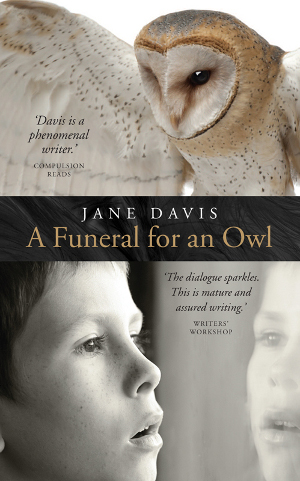
JD: I write from multiple viewpoints, and so routinely write as both men and women. There are challenges about writing from a man’s Davis A Funeral for an Owlperspective. Some of them are based on the myths planted in our heads by women’s magazines – about how many times a day men think about sex, for example. When I’m not sure how to approach a topic, I might use my partner as a sounding board, or I turn to books. I also rely on gut feeling about how much detail people actually want to read. Something implied can be far more powerful than something that is explicit. I prefer describing emotions rather than mechanics. For example, in my novel A Funeral for an Owl, young Jim undergoes something of a sexual awakening when he meets Aimee White, a girl from the other side of the tracks – smart and what we used to call ‘middle class’. Graham Joyce’s The Tooth Fairy provided a wonderful example of the confusion of finding yourself aroused by someone you are not attracted to. Jennifer Egan’s A Visit from the Goon Squad provided fantastic examples of how to portray flawed characters in a non-judgemental way – people who don’t always understand the reasons why they do things. I am not so convinced as Cosmopolitan is that there is such a thing as a ‘typical male’ but, even if I’m wrong, my characters are not intended to be typical. I hope I managed to sympathetically address the pressures boys feel to behave in a so-called ‘masculine way.’
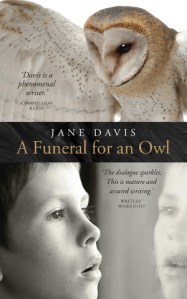
In the same novel, the main challenge for me was writing a fight scene for my teenage mixed-race character, Shamayal. That was totally new territory. My intention was to create a sense of fear rather than to be graphic (this wasn’t a book about sex and violence.) My editor’s advice was to make it even more visceral.

Whether male or female, you have to be confident in the character that you are writing. You can only do that by getting right inside his or her head and understanding what made him what she is. In fact, this was never so apparent to me as when in An Unchoreographed Life, I wrote from the perspective of a six year old girl. Some of my beta readers thought she was too old for her age, some thought she was too young. One friend with a child of a similar age made the very sensible comment, ‘Of course, we only know what comes out of their mouths. We don’t know what goes on in their heads.’ Novels are the only narrative form that transport the reader directly inside the character’s head, describing their conflicts, emotions and thoughts from the inside.

The male character in An Unknown Woman is Ron, a man in his late seventies. He’s, someone who experienced the Liverpool Blitz before being evacuated, who has carried his own guilty secret for the whole of his life, and who shelters his wife’s guilty secret. In many ways, he’s an everyman, but he is also heroic to me because his marriage is a model of enduring love, and despite not being married myself, that’s something I have a great deal of respect for.

Where is the novel set and why did you choose to set it there?

JD: The novel has several settings. Some of the action takes place in Hampton Court Palace, where Anita works as a curator (and is also close to where I live). It somewhere that I feel people can imagine – and of course, the recent dramatisation of Wolf Hall helps with that. I think that my job is to zone in on the detail. There is a processional passage in the Tudor Palace and, on a deep windowsill, there is a graffiti outline of a hand. Somehow, despite the fact that we’ll never know the identity of this person, it seems far more personal than carving your initials. In fact, I found it very moving. My instinct on seeing it was to put my hand within the outside of the hand, and I could see from the sheen of the stone that many others had done this before me, so there is a whole trail of connectivity between me and whoever it was that left their mark.

Anita’s hometown is Liverpool. Since it’s also my partner’s hometown, it’s a city I have visited often over the past fifteen years and I’ve witnessed the changes, including the sandblasting of the grime that had blackened the frontage of the famous Three Graces, the redevelopment of the dock area and, most recently, the construction of the new museum and Liverpool One. Anita has a complex relationship with her hometown. The level of unemployment in the seventies and eighties was such that careers’ advice was ‘Leave – and while you’re at it, lose the accent.’ The city Anita returns to as an adult is a very different place. Each time she visits, she experiences a complex range of emotions: the pull of the Mersey flowing in her veins, guilt of having abandoned the place, and a sense of no longer belonging. She certainly questions whether she has any right to feel proud of her cultural heritage.

Ron’s relationship with the city is different as I hope this passage illustrates:

“There was something transportative about living in the same city all of your life; walking around familiar geography, knee-deep in the history of the place. And superimposed over a street map carried both inside and outside his head (the then and the now), were the milestones of his own life. Now he was older – with less to look forward to, he supposed – Ron spent a great deal of time in the past. In a single half hour, he might be a child crying in a damp cellar, clasped to his mother’s chest; a child of five sitting on the clean-swept step of his grandmother’s terraced house, while the adults crammed themselves into the front parlour, discussing things that didn’t concern him. He might be a school-leaver, discovering the pleasure of smoking illicit ciggies on park benches (illicit because he’d bought them with coins dropped into his cap while he pretended to be collecting for the Sailors’ Home).

Once, an office worker stopped and asked for a light. Before Ron could reach for his matches, she scooped back her hair, and bent down to touch the end of her cigarette to his, her blouse falling open as the embers flared. A quick thank you, smoke coiling in his face and him left with a grin that made his jaw ache all afternoon.

Passing Queen Square, he might be a boy weaving through the fruit and vegetable market, snaring himself a crisp apple when no one was looking.

He might be a lad of fifteen (though, with his first paid job, he thought himself a man), the pads of his fingers permanently ink-stained, parcel string cutting off his circulation as he hauled bundles up from the print rooms where the giant presses roared, sending reams of paper flying, ready to be cut and folded. Everything a great hurry, accompanied by hollering and the sound of running feet. From there, the papers would be rushed to station forecourts, newsstands and corner shops. Taking his father’s advice, he kept one eye on the job he wanted: the spectacle-wearing writers, banging out copy in smoke-filled offices, untended cigarettes dripping from the corners of mouths. Writers impressed girls. Become one, and he might get a date – that was his thinking. “Yes, Sir!” he shouted on cue, talking a good line; making sure he was in the right place when errands needed to be run. And when they said, “I think we might have something for a bright lad like you,” his chest swelled with anticipation.”

Thank you, Jane, for your honest answers to my questions. They will give readers an insight into your own experiences as well as the novel. Good luck with your latest release, An Unknown Woman.

Readers can learn more about Jane by visiting her website and Facebook and Pinterest pages. They can also follow her on Twitter @janedavisauthor. The book is available on Amazon as an ebook and a paperback.

Posted in April 2015 | Tagged , , , , , | Leave a comment

Delving Into Deep Deceit

Today I’ve invited Anne Louise O’Connell to Ascroft, eh? to tell us a little about her mystery/thriller, Deep Deceit.

Welcome, Anne. Let’s get started, shall we?

Tell us about your novel.

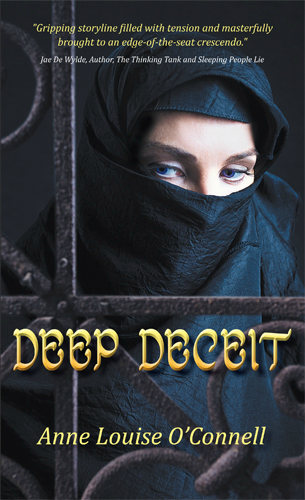
deep deceit 3ALO: My novel, Deep Deceit, revolves around a young girl named Tamara who gets kidnapped in Dubai and her mother Celeste’s mission to find her, despite the numerous roadblocks she faces. Celeste engages the help of a fellow expat named Susan whom she meets at a beach boot camp. The two women launch the search that the authorities will not, because at 18, Tamara is technically an adult.

The clues to Tamara’s whereabouts take Celeste and Susan down a dark alley of deep deceit. From exotic nightclubs and high-class call girls to mysterious Saudi palaces hidden behind ominous walls, they follow each lead while uncovering the unthinkable. As they come closer to finding Tamara, the secrets Celeste and Susan uncover threaten not only her daughter’s life but everyone in their families as well.

What is the theme of the story and what prompted you to write about this subject matter?

ALO: As I contemplate this question now that I’ve finished my second novel, I can see a common theme has evolved in my writing that will actually appear again in my next novel. The protagonist, a 40-something female, faces what she perceives as an insurmountable challenge but finds an inner strength she never knew she had for various reasons. In Celeste’s case, she has been oppressed by her first and second husbands, who have both taken advantage of her vulnerabilities, convincing her that she is incapable of independent thinking and that she needs a ‘big strong man’ to take care of her. The story arc highlights the relationship between Celeste and Susan; the strong bond that grows very quickly in the intensity of the circumstances; and the strength that women can draw from each other. The theme of female oppression is also explored when comparing the cultural differences between the Arab and Western worlds. However, I feel like it’s presented in a balanced way. One of the rescuers, a character named Aliya, is a Saudi woman married to a very forward-thinking husband, who fluctuates between his loyalty to his very old-fashioned father and what is ‘right’ in his own mind. The other ‘hero’ is a Western educated Arab man who is secretly in love with Celeste. A sub-theme that came out in the story is how a mental illness, especially those that go undiagnosed, untreated or improperly treated, can impact people’s lives. I honestly don’t know what has prompted me to write about these themes. The story ideas tend to come first and the underlying themes seem to follow naturally. I don’t make a conscious decision to write about certain subject matter. My focus is to write a compelling and evocative mystery/thriller with strong female characters.

What research did you do for this book?

ALO: My initial ‘research’ was on the ground! I lived in Dubai for four years and a lot of the geographical descriptions, locations and scenarios are from personal observation and experience. I have family and friends who have lived in, traveled to and/or worked in Saudi so I interviewed them for their perspectives and continually asked for ‘reality checks’. I also used references and resources I found on the Internet to help flesh out details, such as what happens at an Arab wedding and to fact check certain things like the correct names for traditional Arab clothing, for example.

How did you bring the place and people you are writing about to life?

ALO: When I’m writing character descriptions and scenes that need to draw readers in, I tend to sit back and close my eyes and begin to imagine details in my mind’s eye. I put myself into the scene and turn slowly around to get a 360-degree perspective. Once I can ‘see’ it clearly, I start writing. Sometimes I will search for photos on the Internet to spark ideas. I did that when writing the description of the wedding dress and also when trying to decide what Ryan’s office building looked like as well as the majlis in the palace where Tamara was being held.

Do you prefer to write one sex or the other? And, if so, why?

Anne Louise O'Connell

Anne Louise O’Connell

ALO: That’s a very interesting question and one that found me at a stand still about halfway through writing Deep Deceit. I was having a hard time writing Ryan because he was such a narcissistic creep. I found myself deeply disliking him and that’s not a good thing when you have to spend so much time with your characters while writing a novel. On the other hand, I loved writing Mitch as he’s a warm and loving, wine-pouring, spaghetti-making hubbie that was a pleasure to conjure up. In order to get back to writing and be able to continue developing Ryan’s character, I had to come up with a back-story that would justify his sociopathic behavior. Being able to understand your antagonist is important but you don’t necessarily have to like him. As an author, how you feel about your characters will come across to the reader. I was very pleased with the ‘realness’ of Ryan’s character in the end once I fleshed him out and I hope that comes across. I guess the answer to your questions is, I enjoy writing certain character types better than others rather than male versus female.

Thanks for answering my questions, Anne. Readers can learn more about Anne and her writing by visiting her website. Deep Deceit is available online from Amazon and other retailers.

Posted in March 2015 | Tagged , , , , | 2 Comments

Looking At Letters To Kezia

I think most people prick up their ears when the Salem Witch Trials are mentioned. More than three centuries later the era still fascinates us. So I’m delighted to welcome Peni Jo Renner to Ascroft, eh? today to talk about her  novel, Letters To Kezia.

Welcome Peni. Let’s get started, shall we?

Tell us about your novel.

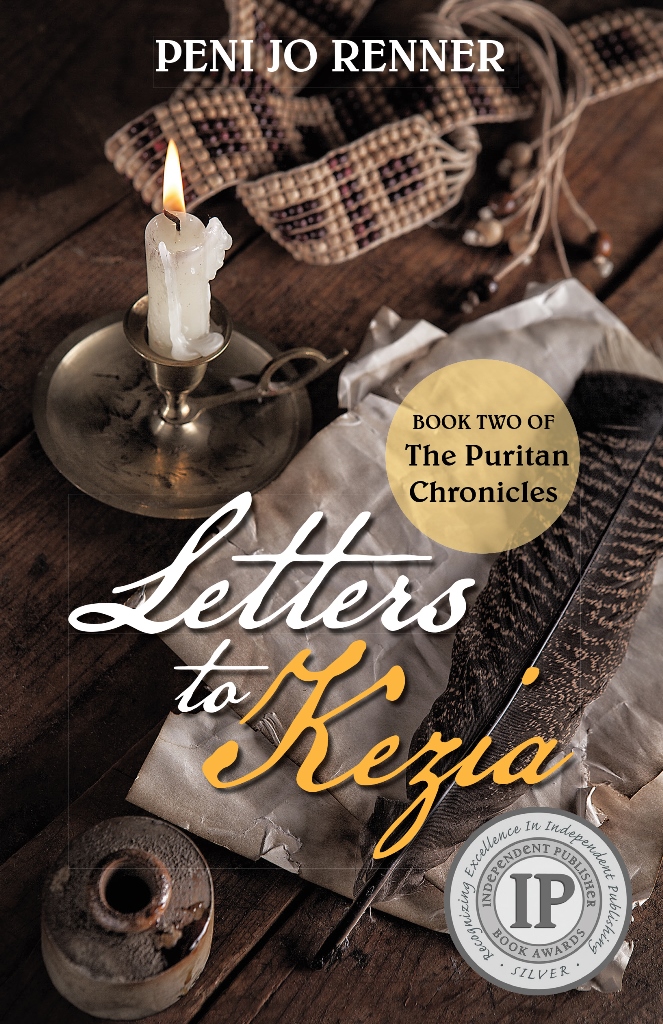
????????????????????????PJR: It’s a sequel to Puritan Witch; The Redemption of Rebecca Eames, which fictionalized my own 9th great grandmother’s ordeal during the 1692 Salem Witch Trials. Her son Daniel was also accused and Letters to Kezia tells his story after the events in Puritan Witch. It’s set in 1693 Connecticut, told in a series of letters and flashbacks.

What prompted you to write about this historical event?

PJR: After the publication of Puritan Witch, a lot of people’s first question to me was, “What happened to Daniel?” Since there is very little factual information on what happened to him after 1692, my imagination had a broad field to play in!

How closely did you stick to the historical facts? If you used them loosely, how did you decide whether to deviate from them?

PJR: The setting is a completely fictionalized town called Hereford, because most of the characters (except for Daniel, Mary and a handful of other characters) are my own invention. I found an unsatisfactory amount of information on colonial Hartford, CT (where Daniel actually did show up in 1693) so I created Hereford.

What research did you do for this book?

PJR: I was unable to visit the actual area, so I surveyed the land on Google Earth. I had done a lot of research on Puritan life for my first book, and since most of this story was completely fiction, I pretty much had free rein on the setting. But I did brush up on some colonial folkways.

Do you use a mixture of historic figures and invented characters in the novel. Which is more difficult to write? Which to you prefer to write and why?

PJR: It depends. Sometimes the historic figures start to tell me their stories (with Puritan Witch, I felt as though I was channelling Rebecca after a while!). But then sometimes, like with the case of Absalom Hart, a completely fictitious character gets so fleshed out I prefer working with them because I don’t have to work around historical facts about them.

In an historical novel you must vividly re-create a place and people in a bygone era. How did you bring the place and people you are writing about to life?

PJR: By trying to be as descriptive as possible without making the story drag. One book I tried to read began describing the main character’s ear for half a page! I try to keep the pace pretty fast (especially for the readers out there like me who have short attention spans!) and I hope I succeeded I bringing these characters to life enough that the reader could relate to them.

There often seems to be more scope in historical novels for male characters rather than female characters. Do you prefer to write one sex or the other. And, if so, why?

PJR: I must have tried 5 or 6 times to begin this novel from Daniel’s perspective, but a male perspective is just not easy for me! So eventually I decided I had to make it Mary’s story. I guess the male frame of mind is too much of a mystery to me! Absalom Hart was set to be the main character for the 3rd book in The Puritan Chronicles series. But despite being my own pure creation, I know now I can’t seem to do a male perspective, so I created a female character whose point of view will be paramount in that book.

Thanks for answering my questions, Peni. Despite the already teetering pile of books I have waiting to be read, I will have to add this one to it – and hope the whole lot doesn’t topple over on me…

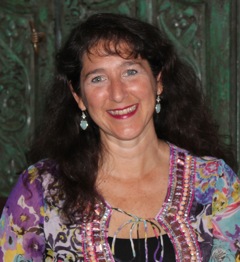
Kezia Peni Jo RennerFor more information about the Puritan Witch series please visit the  website and Facebook page. You can also follow Peni Jo Renner on Twitter.

About PENI JO RENNER: She is the author of the IPPY award-winning novel, Puritan Witch: the Redemption of Rebecca Eames. Originally from North Dakota, Peni now lives with her husband in Maryland where she is currently researching for the third book in the Puritan Chronicles series.

Posted in March 2015 | Tagged , , , | Leave a comment