Feeling FLive

FLive 12As well as being live on internet tv on Thursday for All Ireland Poetry Day I was FLive on Saturday with my fellow Fermanagh Writers. We presented A Patchwork of Words as part of the Fermanagh Live Festival in Enniskillen.

We spent the afternoon sharing our stories and poems with lots of time for chatting and cups of tea in between at the newest hall in the town. It was great to have time for each of us to share a selection of our work. I chose a couple pieces that take a humorous look at adjusting to life in my adopted land and the things I miss from home.

If you want to hear about our afternoon, hop over to the Fermanagh Writers’ blog.

Posted in October 2013 | Tagged , , , | Leave a comment

All Ireland Poetry Day in Charlie’s Bar

It’s been a busy and fun week. Thursday was All Ireland Poetry Day and our writers’ group, Fermanagh Writers, celebrated the day with Irish writer and poet, Seamas Mac Annaidh. We’ve done our share poetry readings in strange places – gale buffeted ruined castles and muzac filled shopping centres so we relished our spot by the fire in Charlie’s Bar, Enniskillen this year. It was our first livestream broadcast and that was an interesting experience. Once we got the glitches sorted out we were flying.

I chose my poem Barbed Boundary which was included in the Babble Festival’s journal this summer as well as The Thing on a String, a funny ditty I’ve written for the group’s next anthology. The anthology is a collection of animal tales in support of Bright Eyes Animal Sanctuary.

To hear more about our celebration drop by Fermanagh Writers’ blog.

Posted in Uncategorized | Tagged , , , , | Leave a comment

Assured Destruction = Assured Entertainment

This spring I discovered a new author – new to me, that is: Michael F. Stewart. I read and reviewed his fantasy 24 Bones for a Tribute Books blog tour and was captivated by it. So when I heard that he is touring another book I was keen to find out more.

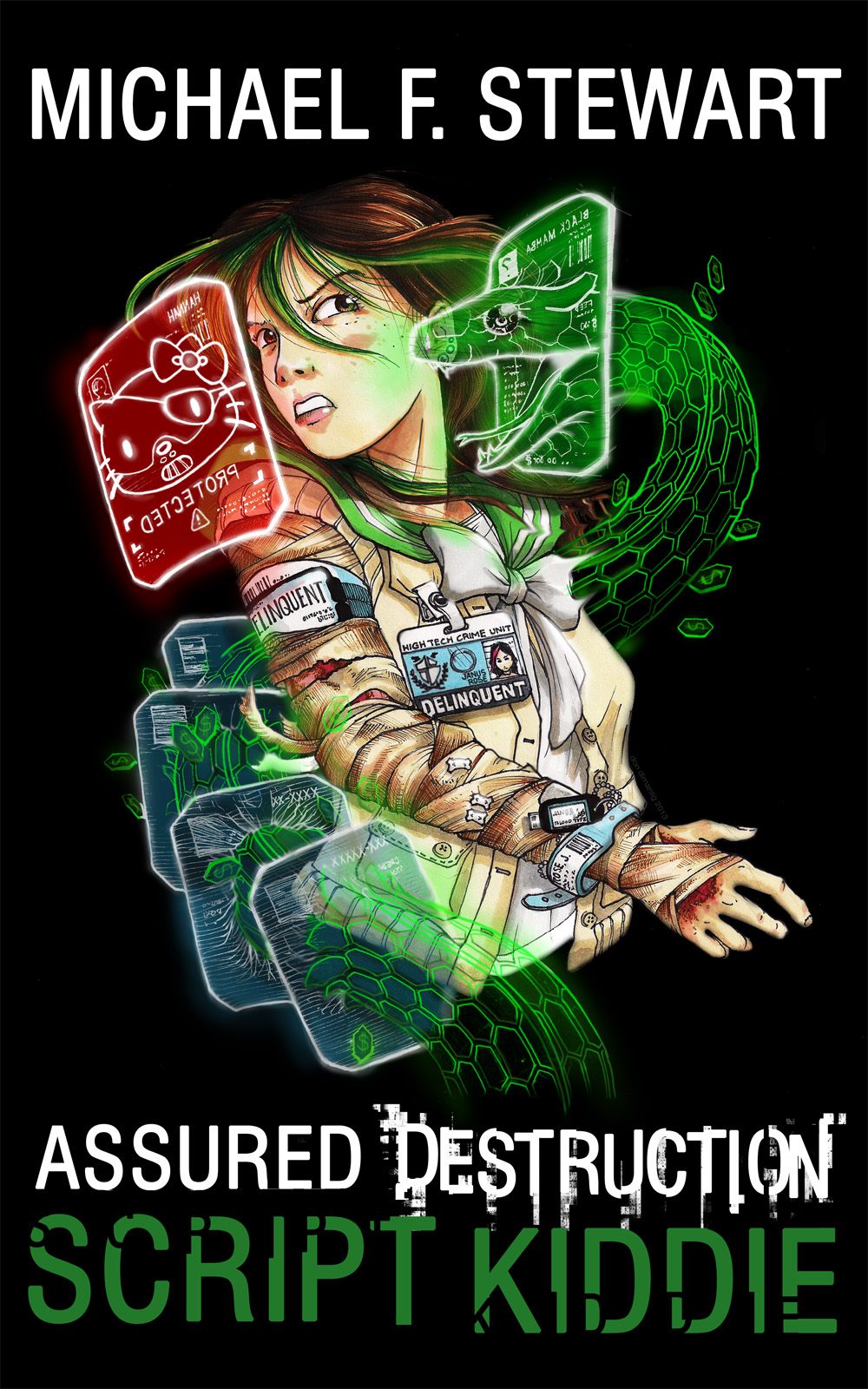
Script_Kiddie_FinalHis current blog tour is for Assured Destruction: Script Kiddie, the second book in a contemporary young adult series. Here’s how its publisher, Non Sequitur Press, describes the book: “Jan Rose no longer steals data from the old computers she recycles. She doesn’t need to. As the newest member of the police department’s High Tech Crime Unit, the laptop of a murderer has landed on her desk. Her job: to profile and expose a killer.

But that’s not all.

A creep lurks in the shadows, stalking a friend, and Jan must stop him before the hunt turns deadly. The clock counts down for Jan to save her friend, her job, her boyfriend–maybe even her life.”

Assured Destruction: Script Kiddie is very different than 24 Bones but equally captivating. 24 Bones is a dark fantasy with a complicated plot, a large cast of characters and a lyrical writing style. Assured Destruction is a much simpler book with fewer characters, a linear plot and a modern, spare writing style. It seems to me that Stewart can handle these two very different genres with equal competence as both books held my attention from the outset.

Script Kiddie has a fast paced plot with lots of action. Some of the action is physical: Jan tails her scared, vulnerable friend as well as the child predator who is targeting the girl and intervenes in a violent confrontation between the two of them. The rest of the action is cyber: Jan uses her computer skills to profile a killer and to locate the man who is preying on her friend. The technical aspect of her computer exploits are woven seamlessly into the story so that it’s easy, even for non-techie readers, to follow what she’s doing without the plot losing any of its tension.

Using succinct descriptions Stewart vividly builds Jan’s quirky world in the warehouse where she lives with her invalid mother and the computer network she has created to substitute for a family. Her unusual habitat adds an interesting angle to the setting. And, as a Canadian, I was delighted and amused to find this world set in Ottawa, Canada, where according to Jan ‘nothing ever happens’.

Jan is a strong yet vulnerable character: a teenager trying to fit into the world on her own terms. Her thoughts reveal a mixture of self-awareness and naivety which rings true of an adolescent and Stewart portrays this with humour and empathy. I laughed when Jan decided not to dress ‘like a cartoon character’ for an important meeting in order to be taken seriously by the adult world and I wanted to hug her as she struggled to figure out what she needed to do to keep her boyfriend, Jonny, interested in her. Stewart has drawn a very believable main character and, as a female who is adept with computers, she’s also a non-stereotypical, positive role model for young women.

Jan’s relationships with her mother, her mother’s boyfriend and her own boyfriend are central to the story. She has a close relationship with her disabled mother and is determined to cope with being her parent’s carer. She develops a grudging respect and acceptance of her mother’s boyfriend, Peter. She takes faltering, tentative steps to build a solid relationship with her boyfriend, Jonny. The two are an odd pair: a strong, unconventional computer geek and a shy, sensitive graffiti artist. The adult and adolescent secondary characters are all unique and convincing. Jan’s relationships with them engage the reader – you care what happens to them.

How an adolescent copes with caring for an invalid parent; a single parent’s right to date and form new relationships and the dangers of internet luring are all topics that are woven into the plot.  These issues are relevant to teens today and Stewart tackles them in an honest and informative way.

I enjoyed Assured Destruction: Script Kiddie so much that I bought and read Assured Destruction, the first book in the series. I found Script Kiddie a more gripping read than the first book. Stewart really got into his stride in the second book. There were some questions still unanswered at the end of Script Kiddie. Why did Jan’s father leave his wife and daughter? Where is he now? What is Peter’s past? Why does he want to help Jan? The story resolved satisfactorily without answering these questions but I wonder if they weren’t left hanging deliberately. I wouldn’t be surprised if the author has a third book up his sleeve. If he has, I look forward to reading it. Meanwhile Script Kiddie will entertain most teenage readers and lots of adults too.

To learn more about the author and Assured Destruction: Script Kiddie visit the author’s webpage and the book’s Goodreads page.

Head ShotAbout Michael F. Stewart: After crewing ships in the Antarctic and the Baltic Sea and some fun in venture capital, Michael anchored himself (happily) to a marriage and a boatload of kids. Now he injects his adventurous spirit into his writing with brief respites for research into the jungles of Sumatra and Guatemala, the ruins of Egypt and Tik’al, paddling the Zambezi and diving whatever cave or ocean reef will have him. He is a member of the International Thriller Writers and SF Canada, and the author of the Assured Destruction series, 24 Bones, The Sand Dragon, Hurakan, Ruination and several award winning graphic novels for young adults.


Posted in September 2013 | Tagged , , | 2 Comments

Travels In Elysium Reviewed

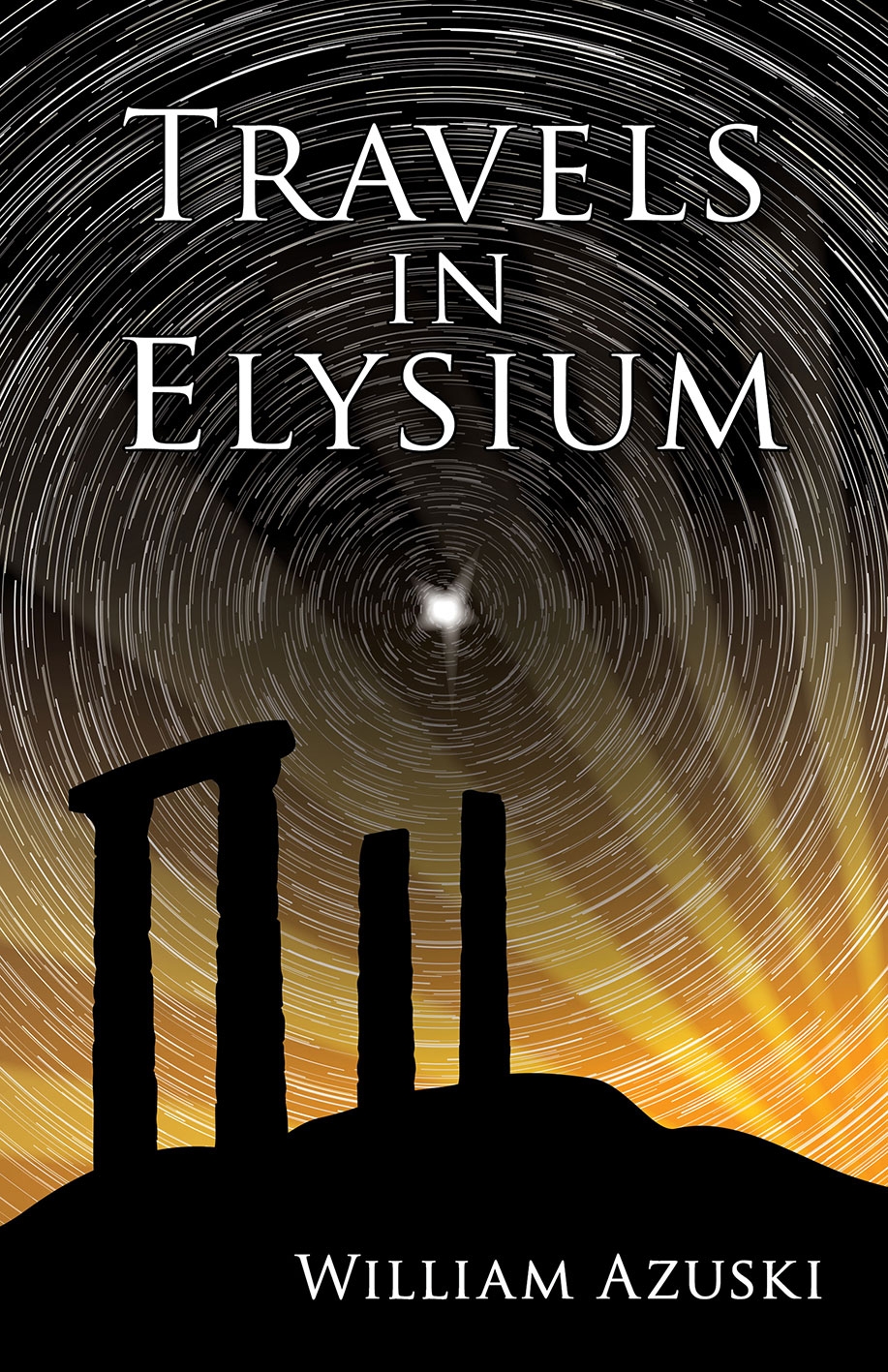
Today I’m reviewing Travels In Elysium by William Azuski. The travelsinelysium_cover (1)publisher, Iridescent Publishing, describes the book as: “A metaphysical mystery set on the Aegean island of Santorini. Trading rural England for the dream job of archaeologist’s apprentice on the scarred volcanic island of Santorini, 22 year old Nicholas Pedrosa is about to blunder into an ancient mystery that will threaten his liberty, his life, even his most fundamental concepts of reality. A death that may have been murder… An island that blew apart with the force of 100,000 atomic bombs… A civilisation prised out of the ash, its exquisite frescoes bearing a haunting resemblance to Plato’s lost island paradise, Atlantis… And inexplicable events entwining past and present with bewildering intensity… Can this ancient conundrum be understood before it engulfs them all?”

I must admit that Travels in Elysium did not turn out to be the book I expected. The first couple pages are very lyrical so I thought that the book would continue in the same vein. I was rather disappointed to find the tone quickly changed to a realism that jarred me after the dreamy opening. I was pleased to find that Azuski uses the same lyrical tone to describe places and people and he is very good at these captivating, detailed descriptions. He creates vivid images of Santorini’s dramatic landscape and unusual characters.

Although I developed clear mental images of the characters I didn’t feel that I came to know much more about them. Azuski hinted at their secrets and motives but he never developed this. I learned enough about some characters, such as vulnerable Anna and secretive Sam, to form a loose attachment to them but I was still left wanting more from them. Nico, who recounts the tale, seems to grow very little by the end despite the harrowing events he experiences. His employer, Marcus Huxley, is a driven man, consumed by his own passion. In most scenes he is in a foul temper and this portrayal of him often reduces him to a caricature or stereotype. He could have been developed into a much more credible character.

The book is billed as a philosophical and psychological mystery so don’t expect a fast paced read. There are sporadic episodes of gripping action but it isn’t a chair grabber. The storyline, and all the mysteries that go with it, are woven into an ongoing philosophical discussion between Nico and Huxley about the nature of reality. I felt that this device dragged out the plot. Although the philosophical ideas discussed might need explanation, the long, repeated conversations were unnecessary. Too many clues led nowhere and subplots, such as Nico’s internal conflict about the death of his father, drew the reader away from the central story. The way the plot wandered left the reader confused.

By the end of the story some mysteries had been revealed but others were never explained. Many incidents that had seemed important clues were never mentioned again and I wondered why they had been included. I don’t mind being led up the odd blind alley as a device to keep the reader guessing but this novel did it too often and I found this frustrating. I also felt that the ending did not do the book justice. It was a convenient, even clichéd, way to bring strands that were meandering aimlessly to an end but not a conclusion.

There were several strands of the plot that gripped me and held my attention – I lived those moments with the characters. I was intrigued and sometimes moved by the experiences of the main characters in House 34 and I was thrilled to experience their first forays into hidden passages under the volcano. I enjoyed Nico’s brief tryst with Celeste, Sam and Ari’s uneasy friendship and Anna’s reunion with her husband. And I was moved by the conversation between Fr Nannos and Huxley when the priest is on his deathbed. But there were too many places where the plot wandered off aimlessly and the philosophical discussions were repetitious, making the book tough going.

I’ve been neglecting the rest of my reading pile lately as, at more than 500 pages, this was a very long book. I started reading it with anticipation but my enthusiasm trickled away page by page. While I saw Azuski’s writing ability peeking through in many places throughout the book, I felt that I would have enjoyed it more if it were more tightly edited. I enjoyed the sense of being in Santorini but would have liked events to have been a little less muddled. So I’m afraid that I cannot recommend Travels in Elysium as heartily as I would like to.

Although it wasn’t my cup of tea, this book may appeal to other readers so I’ll leave the publisher with the last word and also give readers a chance to sample the novel: Literary fiction blends with Plato’s tale of Atlantis is this metaphysical mystery that takes place on an archaeological dig on the island of Santorini. Travels in Elysium is written in an allegory style. If you would like to read an online excerpt – we have one posted here .

For more information or to get your own copy, visit the book’s Amazon page.

william_azuski-author_photo_10 (1)About William Azuski: He was born in the United Kingdom, and is of British and Yugoslav descent. Travelling widely through the Mediterranean since childhood, his frequent sojourns in Greece included several months on Santorini in the 1970s, an experience that provided firsthand experience for the novel’s local setting. Writing as William Miles Johnson, Azuski is also author of the critically-acclaimed The Rose-Tinted Menagerie, an Observer Book of the Year (nonfiction), and Making a Killing, an end of the world satire, both titles recently republished by Iridescent.


Posted in September 2013 | Tagged , , , , , | 3 Comments

I’ve Been Babbling Too

Babble Journal coverThe first Babble Literary Festival kicked off in Cavan Town on the weekend of August 16-18. It was a joint effort between Cavan Writers Forum and Fermanagh Writers. Events included a poetry slam contest, writing workshops, poetry readings and musical entertainment. The festival committee compiled a journal of works by members of both groups – the Babble Journal 2013 – and it was launched by Carlo Gebler on the Sunday evening. The theme of the festival was Borders since the two groups reach out to each other across the Cavan-Fermanagh/Eire-Northern Ireland border and I’m pleased to have one of my poems, Barbed Boundary, included in the journal.

For more detailed accounts of the Festival weekend read posts by Fermanagh Writers’ members on the FW blog.

Posted in August 2013 | Tagged , , , , | Leave a comment

I’m Visiting Fenella Miller’s Blog Today

DA-DSTH-100x150Today you’ll find me over at historical fiction author and fellow ALLi member Fenella Miller’s blog talking about my experiences as an Indie author – and why I would or wouldn’t self-publish again. Pop over to her blog if you want to know whether I would do it again.

Here’s the link.

Posted in August 2013 | Tagged , , , | Leave a comment

How Important Is Place To A Story?

cottageAre you drawn to a book partly by where it’s set? I am sometimes. My novel, Hitler and Mars Bars, and my short story collection, Dancing Shadows, Tramping Hooves, are both set not far from where I live in Ireland. Most of the stories that are in my head, waiting to be written, are also set here and I recently had a new header designed for this website that reflects the places where my stories are set (It’s there at the top of this page).

Since I’ve been thinking about how important place is to the stories we read I jotted down my thoughts. If you want to know what’s been running through my mind, see my post on Writers Abroad’s website. 

Posted in July 2013 | Tagged , , , , , , | Leave a comment

Time Fall: Mixing Military Thriller With Historical Fiction

I’m currently reading Time Fall by Tim Ashby. It’s an exciting mix of military thriller and historical fiction. I really enjoyed the opening chapters set during the Second World War and I felt like I was there as the army unit prepared to parachute into Germany. I’m now being pulled along by the events unfolding in the present day as the German police hunt down suspected terrorists, unaware they are soldiers still fighting a war that ended six decades ago.
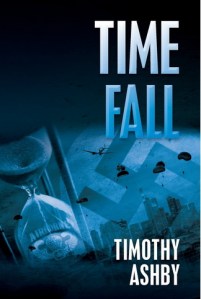
Time Fall - Cover ArtThis is how the publisher describes the book: “Lt. Art Sutton’s team of six US Rangers parachute into Nazi Germany…but they vanish in 1945.  They land, a few minutes later, in 2011. The Rangers are unaware of the passage of time all around them and the valiant, misguided soldiers begin to attack “enemy” targets.

They face the age old question – What is good? What is evil?”

I’ve invited Tim here today to answer a few questions about the novel. Welcome Tim. Let’s get started, shall we?

Tell us about your novel.
On a secret mission, Lt. Art Sutton’s team of US Rangers parachutes into Nazi Germany weeks before the end of World War II … and vanishes during a severe electrical storm. Missing in Action for seven decades, during a similar storm Sutton’s team lands on target in Bavaria in 2011. Unaware of the passage of time, the Rangers begin their operation: sabotage, assassinations and assaults on military targets. Believing the Rangers to be terrorists, modern Germany’s elite counterterrorism unit – led by unrepentant Nazi Hanno Kasper – hunts them. Wounded and left behind after a gun battle, Sutton realizes that he has landed in a future world very different from 1945. He races against time to save his men, knowing that Kasper has given the order: Take no prisoners.

What prompted you to write about this historical event?

When I was a university student a Vietnam veteran classmate told me about an incident that he witnessed that inspired me to write Time Fall.  During that Vietnam War a “dustoff” (US Army unarmed medical evacuation helicopter) mysteriously disappeared after flying into a strange cloud during the monsoon season.  Hundreds of military personnel witnessed the phenomenon, a high-level investigation took place, but no trace of the aircraft or its crew was found.  Perhaps one day that helicopter will land in a very different Vietnam with its unsuspecting crew of young American soldiers.

How closely did you stick to the historical facts? If you used them loosely, how did you decide whether to deviate from them?


The novel is factual where actual historical events are depicted.  For example, the opening scene set in Berlin in April 1945 is based on actual newsreels and eyewitness accounts.  Only a few early scenes take place in the 1940s – the rest of the book is set in 2011, with a few “back story” scenes throughout.

What research did you do for this book?

I interviewed WW II US, German and British veterans, as well as US Vietnam vets.  I visited every place described in the book, including an interview at the US government agency in Washington DC that deals with the remains of MIAs.  I did copious research on WW II weapons, uniforms, tactics, contemporary culture (music, movies, etc.), and even speech patterns.  I have personal experience of anti-terrorism intelligence and military operations, so I used this background in portraying the “real” terrorists in Time Fall as well as the modern German army’s elite counter-terrorism unit.

Do you use a mixture of historic figures and invented characters in the novel? Which is more difficult to write? Which to you prefer to write and why?

For the most part, I used invented characters.  The only historic figure who makes a cameo appearance is Adolph Hitler.  My previous novel, Devil’s Den, used many actual historic figures from the 1920s and 1860s.  I find depictions of historic characters easier because so much factual material is available about their appearance, character, etc.

In an historical novel you must vividly re-create a place and people in a bygone era. How did you bring the place and people you are writing about to life?

As noted above, I did extensive research about the 1940s and spoke with people who lived in that era. 

There often seems to be more scope in historical novels for male characters rather than female characters. Do you prefer to write one sex or the other. And, if so, why?

As a male, it is easier for me to write about males characters.  However, I enjoy depicting female characters because they are an interesting challenge.  I’m always pleased when readers or reviewers say that they liked my female characters.  For example, one reviewer wrote:  “And then his love interest, Peggy Stewart!  I was actually impressed that a man wrote the love scenes with such controlled passion, yet sexiness and taste.”

Thanks for answering my questions, Tim. The G8 Summit was held in the area where I live this week, amidst very tight security, but nothing I’ve seen at home this week was as exciting or gripping as what I’ve been reading in this novel so far.

Tim is currently on a blog tour and, as part of the tour, there is a contest to win a free copy of Time Fall.

Here’s the details of this tour and contest: “Filled with historically accurate details, Time Fall is a complex military tale that keeps readers riveted through every surprising twist. Read an excerpt and to enter to win a FREE copy of Time Fall, visit http://www.timefallbook.com/. For your copy, visit http://amzn.to/190ZMwe. You can also get your copy at all major book retailers.”

Tim Ashby Author 3About Tim Ashby: Tim’s life has been as thrilling as one of his action/adventure novels. Visit his author blog at www.timashby.com.

An international lawyer, businessman and writer, Tim Ashby worked in Washington DC as a counter-terrorism consultant to the U.S. State Department, and then as a senior official – the youngest political appointee of his rank – at the U.S. Commerce Department, responsible for commercial relations with Latin America and the Caribbean. He held two Top Secret security clearances and worked with a number of colorful characters, including members of the U.S. military’s Joint Special Operations Command (JSOC). He has lived in the Caribbean and Europe as well as various places in the United States. An avid historian, he published widely on military history, archaeology, business and international relations. A licensed attorney in Florida and the District of Columbia, Tim Ashby has a PhD degree from the University of Southern California, a JD from Seattle University Law School, and an MBA from the University of Edinburgh Scotland.

Posted in June 2013 | Tagged , , , , , , , | 3 Comments

Glenn Patterson Shared A Few Tips On Saturday

I wasn’t sure that I would get to Glenn Patterson’s workshop, Keeping the Balloon in the Air, on Saturday. Due to illness and other difficulties, there was a shortage of volunteers to man a book table at Enniskillen Castle Museum so I found myself setting up the table around noon and hoping someone would come to take over from me – thankfully, help did arrive and I made it to the workshop with a few minutes to spare.

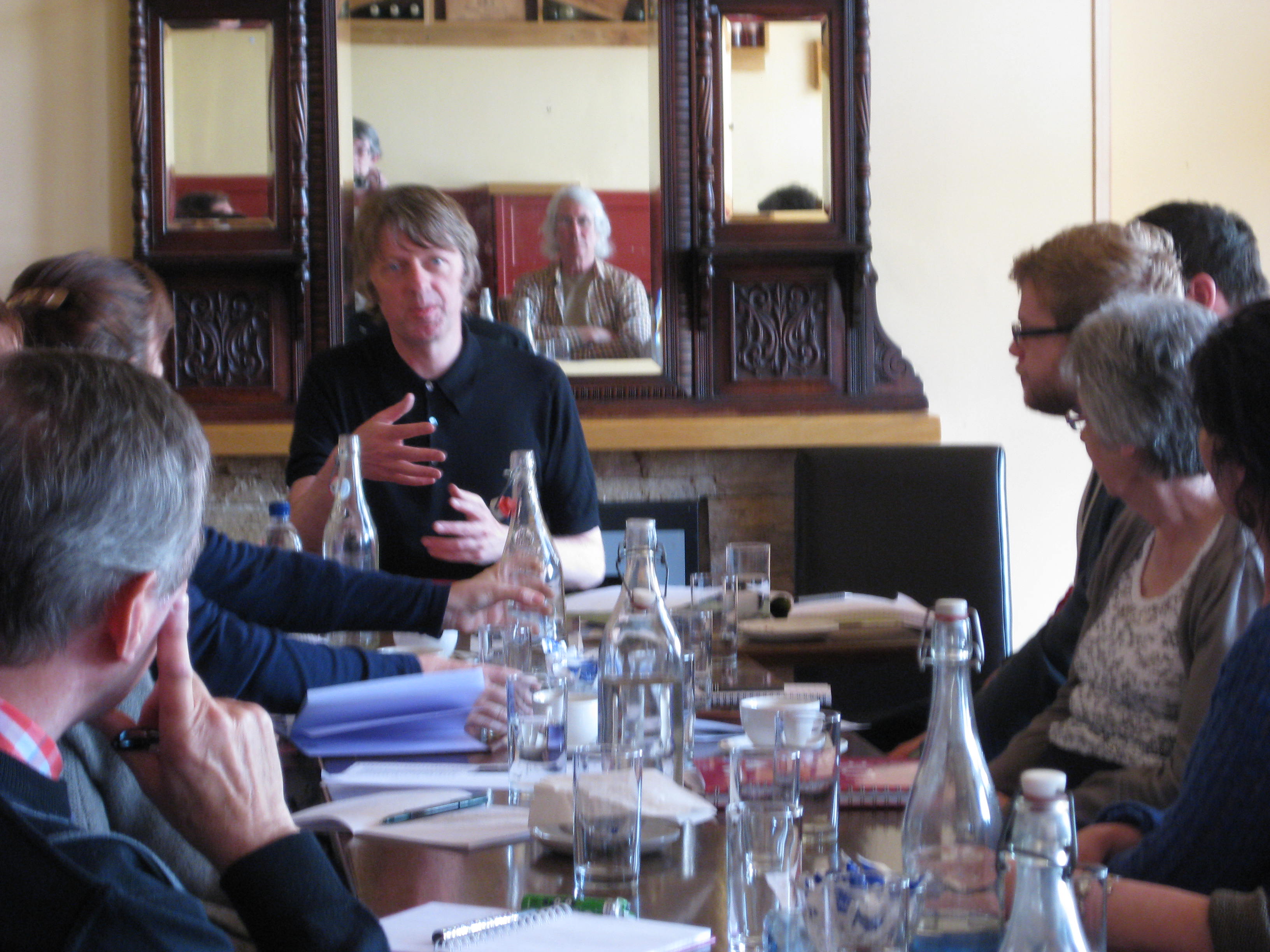
Patterson workshopGlenn talked about how to sustain a piece of writing from the initial idea to completion. Many things he said resonated with me – especially about how many ways there are to procrastinate while writing. I laughed as I recognised myself in what he said. I was interested to hear how other writers, including Glenn, deal with getting a book completed and I also took away some tips to help me keep going on my own projects.

I’m glad I was able to attend the workshop – it was well worth the effort it took me to get there. If you would like to read more about Glenn’s workshop, check out the post on Fermanagh Writers’ blog.

Posted in June 2013 | Tagged , , , | Leave a comment

Celebrating Fermanagh Gems

DA-FGEMS-200x300Today is the eve of the 2013 G8 Summit. It’s being held in County Fermanagh, Northern Ireland. Reporters and cameramen, preparing for the event, have been roaming the streets of Enniskillen and the rest of the county for a couple weeks now and the town is the backdrop to their reports. I’m sure that viewers around the world must be curious about the place they see in these reports as well as about what’s happening at the G8. So that’s why I’ve chosen this day to celebrate the launch of my collection of articles about the county, Fermanagh Gems.

Did you know:

–          Politicians, journalists, the security forces and many others will be arriving in Fermanagh this weekend but none of them will come by train. Why? Because the last train came through the county in 1957.

–          It has been predicted that there will be a huge demand for electricity during the next few days as politicians, civil servants and journalists work frantically on their laptops, IPads and Blackberries. Access to electricity is taken for granted today but many areas of rural Ireland did not have mains electricity until the 1940s or even the 1950s. Belleek town in western Fermanagh was well ahead of many other places as Belleek Pottery’s waterwheel supplied electricity to the Pottery Works and the village from 1919.

–          Every town in the county is looking bright and fresh after painters worked feverishly for several weeks sprucing up buildings that needed to be revived. But buildings aren’t the only colourful thing you’ll find in Fermanagh. Irish fishermen are credited with creating the first colourful fly lures in the mid-1800s and Frankie McPhillips in Enniskillen’s Buttermarket has continued this tradition for more than 35 years.    

–          On the first morning of the G8 Summit BBC Radio 2 Chris Evan’s Show will broadcast from the Graan Monastery outside Enniskillen. Why? Because Chris Evan’s guest is BBC radio presenter and journalist Fr Brian D’Arcy who is also the Rector of the monastery.

Where did I get these snippets of information? No, I didn’t google them for this post. I’ve lived in County Fermanagh for the past decade and, over the years as I’ve have explored the county, I’ve written about some of its places and people for Ireland’s Own magazine. Recently I selected half a dozen of these articles and put them together in Fermanagh Gems. The ebook features six gems: a natural wonder, enduring or innovative institutions and a gifted craftsman. Some are well-known, others might be called hidden gems; each deserves to be allowed to shine. So I’m pleased to be able to present them in this ebook and launch it today.

To mark Fermanagh Gems’ launch I’m offering 5 free copies to readers who comment on this post. Just leave a comment below and I’ll contact the first five respondents.

Posted in June 2013 | Tagged , , , , , , , | 3 Comments