How Are Ireland’s Own and Writing.IE Linked This Week?

For the past few months I’ve been keeping a low profile. But that doesn’t mean I’ve been idle – I’ve been hidden away working hard on several projects. And this week a couple pieces I’ve written have found their way into print.

In Clout and Collaboration on the Writing.IE website I discussed the difference between writing groups and writing associations and why I belong to the Fermanagh Authors’ Association:  

“I often refer to the Fermanagh Authors’ Association as a writers’ group but that really isn’t accurate: it is a writers’ organisation. Is that just a grand name for the same thing? Not really. So, what’s the difference? And what do I get out of belonging to it?” If you want to know the answer you can read the full article here.

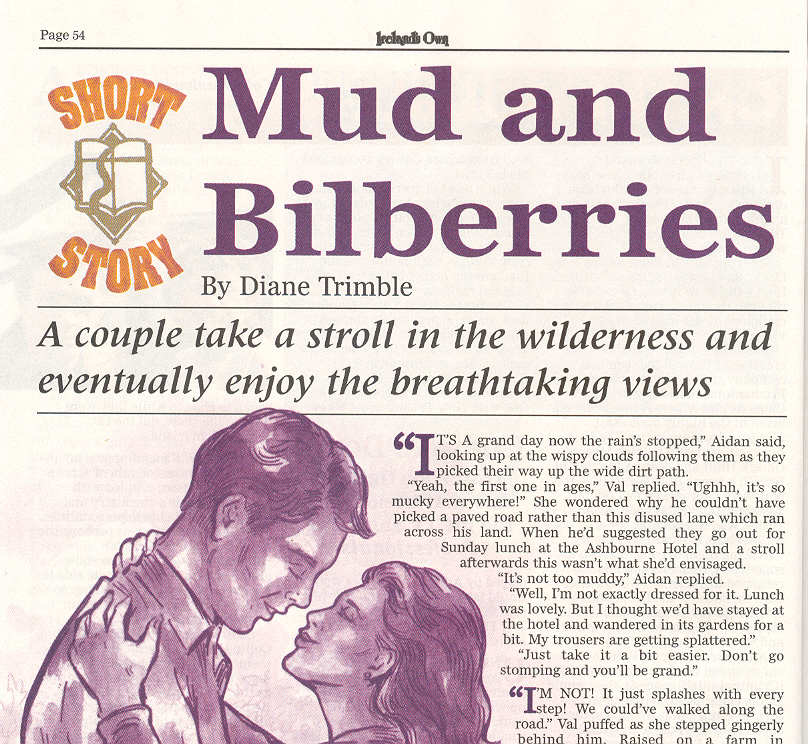
The other piece that was printed this week was my short story, Mud and Bilberries. It’s in the 8th February issue of Ireland’s Own magazine. I’m afraid you’ll have to brave the weather and tramp to the newsagents if you wish to read it as the magazine is not available online.

Mud header

Posted in January 2013 | Tagged , , , , , , , | Leave a comment

Shrouded in Humour

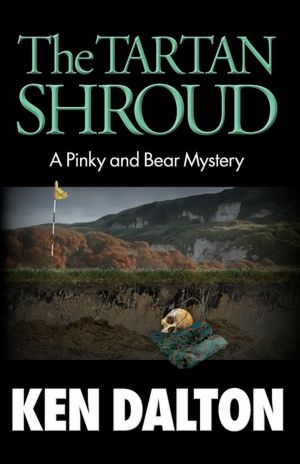
A couple years ago I read and reviewed The Big Show Stopper by Ken Dalton and I thoroughly enjoyed the zany detective tale. So I when I was asked to review The Tartan Shroud, the latest book in this series I immediately agreed. And I’m glad I did because I laughed just as much this time as I did when I read my first Pinky and the Bear novel. Not what you would expect to hear about a crime novel, eh?

Dalton’s detective stories are light hearted romps with snappy dialogue, lots of action and outrageous characters who often upend a few stereotypes as they bumble to their clients’ rescue.

cover_tartan_shroudLike the first Pinky and the Bear novel I read, the story is told mainly from two viewpoints: the sophisticated and unscrupulous lawyer, Pinky Delamont, and his bumbling but honest redneck private investigator, Bear Zabarte. The main characters are still outrageously, unselfconsciously not politically correct. Pinky hasn’t learned a thing that would improve his morals and Bear is no wiser than he ever was. The reader is privy to their thoughts and understands the self-seeking, and occasionally noble, motives behind their every action.

It’s Pinky’s gorgeous ex-wife, Willow, who draws them into this adventure. After the body of a teenage girl who disappeared more than a decade ago is discovered on a golf course in Pitlochry, Scotland, Willow’s Scottish cousin, Detective Inspector Fergus Murray, asks her to help him solve this old case.

 Willow persuades Pinky to help her so he and Bear turn their full attention to the case. But once again Bear’s busty, image conscious girlfriend, Flo, the intelligent one of the pair, is the real force behind the investigation.

Pinky, Bear, Willow and Flo, and Bear and Flo’s foster child, Ettamae, head off to the ould country to lend a hand to Willow’s kin. They wade through dusty records and old files searching for clues to the killer’s identity and information about other possible victims until this past crime suddenly becomes a current case, all the pieces fall into place and they are racing to Blair Castle to save Ettamae from the killer. In the midst of all of this Pinky is trying to outwit a criminal he encountered during a past investigation who is now threatening him and tries to extort a large sum of money. Although there is a lot of action in this story, it’s not terribly fast paced. The plot unfolds steadily, bit by bit, with just enough information revealed on each page to keep the reader hooked. Although I wondered who the killer was and tried to piece the clues together, I also got caught up in other aspects of the characters’ lives and was drawn into these subplots which Dalton wove smoothly into the story.

Moving the story to Scotland for this book added a new dimension to the series. The main characters were out of their comfort zone and this led to a few misunderstandings and lots of laughs. The verbal, and occasional physical, sparring between the American and Scottish characters vividly revealed their differences and common ground. I enjoyed the author’s humorous treatment of the culture clash and his sometimes irreverent views, expressed by Pinky and Bear, about Scottish traditions and its revered institutions such as the Old Course at St Andrew’s Golf Course.

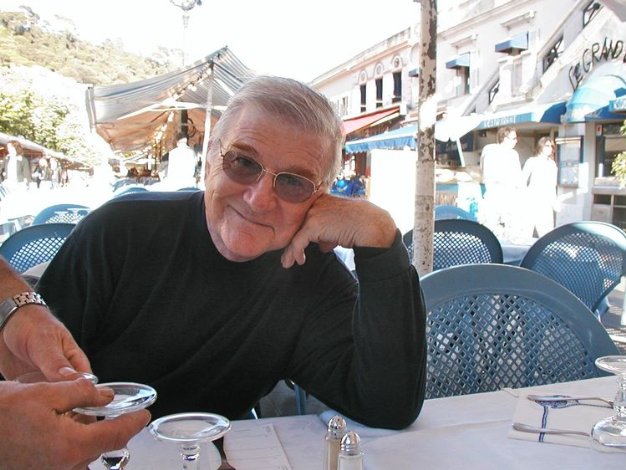
ken_daltonLike Dalton’s previous books, the humour is what makes this novel. It swings from amusing to absolutely farcical but fits perfectly into the story. Once again he has delivered crime fiction without too much grit and lots of laughs. It’s a dead guid read.

For more information about Ken Dalton and his novels visit his website and The Tartan Shroud’s Amazon page.


Posted in January 2013 | Tagged , , , , , , | 1 Comment

This Week’s Next Big Things

woodpileLast Wednesday I jumped on the bandwagon for The Next Big Thing Author’s Blog Hop. I was tagged by Elisabeth Storrs to answer 10 questions about my current work-in-progress and I did so. I then tagged several fellow writers to follow me this week in the Blog Hop.

You can read about their writing projects in their blog posts today.

Here’s where you’ll find them:

Laura Elliot’s website  

Hazel Gaynor’s website 

E. M. Powell’s website

Posted in January 2013 | Tagged , , , , , , , , | Leave a comment

The Next Big Thing – An Authors’ Blog Hop

Elisabeth Storrs, author of The Wedding Shroud, tagged me in the Next Big Thing Author Blog Hop. Elisabeth is passionate about legends, myths and history, having studied Classics as a student. Inspired by a terracotta sculpture of two ancient lovers, she wrote The Wedding Shroud – A Tale of Ancient Rome. Endorsed by Ursula Le Guin, the novel tells of a young treaty bride married to an enemy nobleman from a decadent society. Determined to stay true to Rome, she instead finds herself seduced by her husband and the sinful freedoms his society offers her. Yet as war looms, she must decide where her allegiance lies.  You can read Elisabeth’s contribution to the Next Big Thing at her blog, Triclinium.  

How The Next Big Thing Blog hop works: An author answers ten questions and then tags five authors (if you are able to find them during the festive season – I managed to get four) to do the same thing the following week on the same day, which in this case is a Wednesday.

Here’s my answers to the ten questions:


What is the working title of your next book?

The Winding Road Home. I must add that this is only a working title. I don’t think I’ll find the real title for it until I’ve completed the book and know every nuance of the tale.

Where did the idea come from for the book? 

The Winding Road Home is the sequel to Hitler and Mars Bars, a novel I wrote several years ago. The story follows naturally from events in the first book. The Winding Road Home opens in 1955 when showbands were revolutionising the Irish social scene. After doing a bit of background reading about the era I knew the story that this sequel to Hitler and Mars Bars had to tell.

After spending a year at a Barnardo’s Home near Chester, England fifteen year old German orphan Erich Schnell is poised to leave school and begin an apprenticeship. Despite his burning ambition to join the railway, a letter from the Elliotts, the Irish foster family he loved but was forced by circumstances to leave four years previously, sends him rushing back to their farm in County Cavan, Ireland. Ecstatic to be reunited with his foster family, he also finds camaraderie and an outlet for his passion for singing in a local showband. When he takes to the road with the band he forms new friendships, has tense a reunion with his estranged brother, Hans, discovers girls and renews a friendship which will lead to love with his former neighbour, Rebecca Neill despite often encountering pervasive, subtle prejudice as a foreigner in Ireland. When his foster mother Aunt Elsie’s heart ailment worsens he is compelled to choose between loyalty to his foster family and his career with the band.  He returns to the farm to help his foster father but he is persuaded to join the band for one more gig, the prestigious Rose of Tralee Ball. After tasting success at this gig he once more considers whether his future path leads toward or away from the only real home he has ever known.

What genre does your book fall under?

Historical fiction.

What actors would you choose to play the part of your characters in a movie rendition? 

That’s a difficult question. I have a clear image in my mind of each of my characters but I can’t match actors to these images. A young actor with Colin Farrell’s ability to portray a lovable imp would be ideal to play Erich and a young actress with Niamh Cusack’s poise and quiet strength would suit Rebecca.

What is the one sentence synopsis of your book?

 Against the backdrop of the Irish showband scene, Erich Schnell, an outsider who knows no home except Ireland, struggles to find love, acceptance and his niche in his adopted country, battling the subtle undercurrent of prejudice in a parochial society that distrusts aliens.

Will your book be self-published or represented by an agency? 
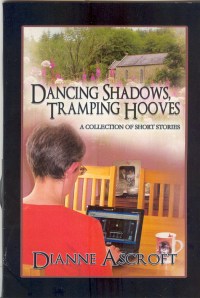
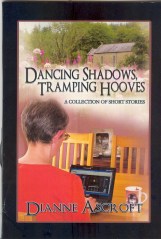
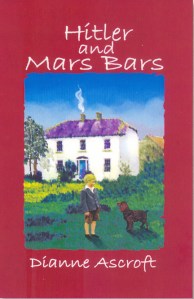
DS cover low resI haven’t decided yet. I self-published Hitler and Mars Bars and also my short story collection, Dancing Shadows, Tramping Hooves and I don’t regret those decisions. But I may approach an agency this time to try another route to publication.

How long did it take you to write the first draft of the manuscript?

I haven’t completed it yet. Soon after I started work on the book I was asked to ghost write a memoir for a polio survivor and I’ve been concentrating on that project. But I plan to complete the first draft of this novel within the coming year. Editing it will then take a few more months.

What other books would you compare this story to within your genre? 

The novel will be written in a style similar to books by Anne Doughty (On A Clear Day, Shadow On The Land) and Helen Forrester (Tuppence To Cross The Mersey, Liverpool Basque). I will probably never write epic novels about monumental events in history; I prefer to delve into ordinary individual’s lives to understand the everyday events of the past. So this is a character driven story set into the small canvas of a rural, parochial community.

Who or what inspired you to write this book?
hmb cover hr 432x648

Hitler and Mars Bars, the prequel to this story, begins Erich’s story. He is brought to Ireland, from war ravaged Germany, by the Red Cross humanitarian aid effort, Operation Shamrock a decade before The Winding Road Home opens. Hitler and Mars Bars follows the boy’s struggles to find his place in a new, strange land. Erich is a complex character – appealing and frustrating at once. As I wrote the first novel he crept off the page and plonked himself in my mind. I wanted to find out where his journey would take him so I had to write the sequel.  

What else about the book might pique the reader’s interest?

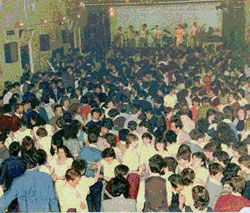
Although it is little more than half a century ago, 1950s Ireland was a place and time so different from the present that it could be centuries rather than decades ago. Irish society sauntered into the modern era, far behind England and America. The 1950s and 1960s dance and showband craze was a driving force for social change on the island. It was a turning point in modern Irish social history but it has attracted the attention of few novelists. This story juxtaposes the excitement and intensity of the showband scene with the life of the slower moving, close knit rural community – I hope it vividly evokes the era for readers.

The authors I have tagged are:

Laura Elliot is the author of three novels, Stolen Child, The Prodigal Sister and Deceptions, which have been widely translated. Aka June Considine, she has written twelve books for pre-teens and young adults. She gives regular workshops on creative writing and is on the board of the Irish Writers’ Centre. 

June Considine’s website

Laura Elliot’s website   

Hazel Gaynor is the author of the self-published debut novel, The Girl Who Came Home – A Titanic Novel which was a Kindle Historical Fiction bestseller in 2012. Her second novel is currently in submission with several publishers. She writes a book review blog for Hello Magazine and is a feature writer for writing.ie – recently interviewing Philippa Gregory and Sebastian Faulks. Hazel lives in Ireland with her husband and two children and is represented by Sheila Crowley of Curtis Brown, London.

Hazel’s website

Hazel’s Facebook page 

Hazel’s Twitter: @HazelGaynor

E. M. Powell is the author of The Fifth Knight. She was born and raised in Ireland, a descendant of Irish revolutionary Michael Collins. At University College Cork, she studied Anglo-Saxon and medieval English. She is a member of Romance Writers of America, the Historical Novel Society, and International Thriller Writers. A reviewer for the Historical Novel Society, she lives today in Manchester, England, with her husband and daughter.

E. M. Powell’s website 

E. M. Powell’s blog  

James Vella-Bardon commenced work on his debut potboiler ‘The Sassana Stone’ in 2009. In 2005 he completed a doctoral dissertation entitled ‘Self-Determination of Indigenous Minorities’ at the University of Malta. A stint spent working as lawyer-linguist with the European Parliament in Belgium was followed by a move to Sydney in 2007.

James’ website

Posted in January 2013 | Tagged , , , , , , , , , , , , , | 2 Comments

Taking Time To Send You Holiday Greetings

Anyone who knows me well has heard me say “I don’t have time right now”. It seems to be my Christmas firecatchphrase. I always seem to be juggling multiple tasks and scrambling to get them completed by their deadlines. So one of the things I like best about Christmas is that I finally find some free time during the holiday season – after I finish the Christmas cards and put up the last of the decorations – I do have the tree up. Just don’t mention last posting dates – I know, I know, I know…

It’s great to just relax and chill out but I’m not one to do absolutely nothing very often – I have to be very ill to stop completely. So my favourite way to unwind is to curl up beside the fire and read.  While I always have a novel on the go too, I’ve found that short stories and novellas are great when you are pressed for time or aren’t ready to focus on a longer read. I’ve read Heather Richardson’s Chilled and Other Stories and Tim Hodkinson’s All The King’s Thanes on two separate bus journeys to Belfast recently. The former borders on horror and the latter is historical fiction. They are very different from each other but that’s another plus for short works: you can jump from one genre to another quickly as the whim takes you.

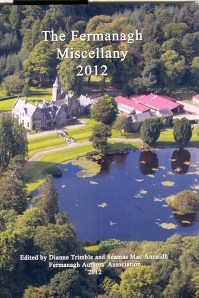
FE coverI’ve been involved in writing and publishing three anthologies this year and that has also given me a greater appreciation of short works. I co-edited Fermanagh Miscellany 2012 with Seamas Mac Annaidh. The book is a mixture of local historyFM 2012 low res articles, reminiscences and short stories; I love finding such a variety of material in one book. I stepped back in time as I read a couple reminiscences about the war years and I learned facts about the area where I live in historical pieces – so I had to remember to keep my mind on the editing and not allow myself to get completely immersed in the book. I contributed stories to Tuesdays at Charlie’s and Foreign Encounters and got my copies of the books as soon as they were launched. I’ve had both books for several months but I’m still finding gems within their pages as I dip in and out of them. It’s great to keep going back and finding another story that Tuesdays covercaptivates me.

As you may have concluded by now, I’m very much a fan of short stories. So this summer, when I was casting around for something else to do with several of my previously published stories, I decided to release a short story collection. I hated to think of the stories languishing in a drawer (or more likely under a stack of papers in the corner of my study…) after fleeting appearances in weekly magazines and newspapers so Dancing Shadows, Tramping Hooves was born.

DS cover low resIf I disappear during the coming week you’ll know where to find me. Tiptoe into my living room and you’ll spot me in the frayed armchair in the corner with one of the cats on my knee, a pile of books beside the chair and the Kindle reader on the coffee table.

So I’ll take time now to wish you a Merry Christmas and a wonderful year in 2013 – in case I get lost in a story later and forget to send my greetings.   

I hope all my friends and family have a safe, happy holiday season!

cabin fire

Posted in December 2012 | Tagged , , , , , , , , , | Leave a comment

O’Dowd Duo’s First Novel: The Scarlet Ribbon

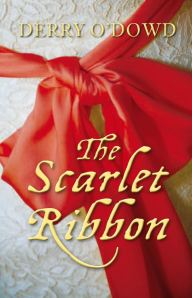
The Scarlet Ribbon by Derry O’Dowd is the novel which was chosen to launch The History Press Ireland’s fiction line. Last week I featured the author of another one of this publisher’s titles, Annemarie Neary who wrote A Parachute in the Lime Tree

The Scarlet Ribbon explores the subject of the first man-midwives and the development of scarlet coverobstetrics and gynaecology as a branch of medicine. I knew nothing about this subject before I read the novel but I was curious. So I started reading. The details of real obstetric cases that are woven into the story intrigued me and I also empathised with the plight of the widowed protagonist, James Quinn – in other words, I enjoyed the book.

I’ve invited one half of the duo, Derry O’Dowd, to Ascroft, eh? to answer a few questions about the book. Welcome Katy. Let’s get started, shall we?

Tell us about your novel.

The Scarlet Ribbon follows James Quinn, a young Irish surgeon battling prejudice, suspicion and personal demons in his controversial quest to change the face of medicine. Following his marriage, tragedy strikes, thrusting James into a life of turmoil and despair. Throwing himself into his work, the young surgeon eventually begins to find solace in the most unexpected of places. From the backstreets of Paris, through the glittering social whirl of London, and finally back to Ireland again, this is a story of the thorns of love and the harsh reality of life in the eighteenth century, where nothing is simple and complications of all kinds surround James Quinn, man midwife.

What prompted you to write about this historical event or era?

Writing duo, Katy O'Dowd and Michael O'Dowd

Writing duo, Katy O’Dowd and Michael O’Dowd

I write under my own name, Katy O’Dowd, but also with my Dad as Derry O’Dowd – The Scarlet Ribbon was his idea. He is an obstetrician gynaecologist and medical historian, and he wanted to write about the birth (pardon the pun) of that branch of medicine.

How closely did you stick to the historical facts? If you used them loosely, how did you decide whether to deviate from them?

The historical facts were stuck to fairly rigidly. For example, all of the medical cases in the book are based on real events.

What research did you do for this book?

James Quinn's family home

James Quinn’s family home

As mentioned above, Dad is a medical historian, and he had already done a huge amount of research for his books The History of Medications for Women and The History of Obstetrics and Gynaecology. I did some supplementary research on things like the clothing, furniture, buildings, and customs of the era along with reading about herbal treatments and household management of the time. We also took a trip to Paris. I was six months pregnant at the time, and still suffering from horrendous morning sickness, so it could have been a bit more idyllic to say the least, but I’m very glad we went as I think it really helped when writing the scenes set in Paris.

Do you use a mixture of historic figures and invented characters in the novel. Which is more difficult to write? Which do you prefer to write and why?

I think it is probably more difficult to write about historic figures. Although they had been researched thoroughly, it was daunting to put words into their mouths.  

In an historical novel you must vividly re-create a place and people in a bygone era. How did you bring the place and people you are writing about to life?

The research trip to Paris, using pictures – for example the outfits and furniture at the V&A Museum (had a visit there too to see things in ‘real life’) and listening to music from the era really helped.

There often seems to be more scope in historical novels for male characters rather than female characters. Do you prefer to write one sex or the other. And, if so, why?

I used to prefer writing male characters, but now like writing female characters just as much – if they step outside the bounds of their traditional roles of home-makes and child-bearers they quickly become extraordinary, which is great fun.

Was it difficult to write with another person and how did you split the work?

I didn’t find it difficult. Dad came to me with the idea and asked me to write it. He worked out a plot and we sat and went through chapter by chapter, adding to things, talking about the characters in-depth. And of course he had to explain the medical scenes to me. I went away and wrote a couple of chapters at a time and then we reviewed them. We are collaborating again now, on the follow-up to The Scarlet Ribbon.

Thank you, Katy, for telling us a bit more about the book – the story and the research that went into creating it. Readers can learn more about The Scarlet Ribbon on Derry O’Dowd’s website. Katy can be contacted through her website and her Facebook page as well as on Twitter (@katyod).
Posted in December 2012 | Tagged , , , , , , , , | 2 Comments

Nobody Has To Know: A Life Unravelling

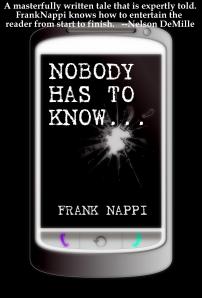
Last week I finished reading Nobody Has To Know by Frank Nappi. At first I thought the novel was a story about romantic relationships and moral boundaries – and it was. But then it went beyond this theme and slipped into the darker realm of blackmail and murder. The novel is a gripping read and, although I had my suspicions, I didn’t manage to figure everything out before the end of the book. But by the time I got to the last page the pieces fell into place.

I’ve invited Frank Nappi here today to tell us a bit more about his novel. Welcome Frank. Let’s get started, shall we?

Tell us about your novel.

hNobody Has to Know is a dark and somewhat daring psychological thriller that, tells the story of Cameron Baldridge, a popular high school teacher whose relationship with one of his students leads him down an unfortunate and self-destructive path. Stalked through text-messages, Baldridge fights for his life against a terrifying extortion plot and the forces that threaten to expose him. Nobody Has to Know is a sobering look into a world of secrets, lies, and shocking revelations, and will leave the reader wondering many things, including whether or not you can ever really know the person you love. On a more profound level, Nobody Has To Know illustrates how the landscape of our past influences our present and how, sadly, some of these more indelible moments hold us prisoner for the duration of our lives.

What prompted you to write about the topic of sexual relationships between minors and adults?

The book is not about sexual encounters between minors and adults. While this is one of the darker aspects of the story, the indiscretions that occur in the story are simply vehicles through which the issues of pain and loss and damaged psyches may be explored. It is my hope that readers will not become mired in this one facet of the story and that they will take more than just a cursory look at the story and allow themselves to delve deeper into the real issues that are examined.

What research did you do for this book?

For this novel, there was no research necessary. The plot is fiction. My experience as a teacher also assisted me in replicating some of the school scenes and other areas germane to the world of education.

How did you bring the characters you are writing about to life?

My approach to this is most likely no different than the approach of other authors. In any great work, one that resonates with the reader, there needs to be authenticity with regard to the characters. If a reader does not invest in the characters, the author’s message is lost. It is my experience that “real characters” think and act just as real folks would. There is nothing contrived about their existence – their words and emotional responses to situations are emblematic of those of real people. This can be accomplished in part through the use of flashbacks, which become windows into the psyches of these individuals. If a reader knows where a character has been, where he is presently becomes far more plausible.

It can be difficult to get inside the mind of someone of the opposite sex. Do you prefer to write male or female characters. And why?

Naturally, it easier to write from the perspective of your own gender. However, I believe that all characters that authors create are composites – amalgamations of a variety of people whom we have met and with whom we have interacted during our lives. That being said, it is very possible for an author to create an authentic, heartfelt character of the opposite gender. It may be more challenging, but I feel as though really good authors are also exceptional students of human nature as well. This “study” of human behaviour helps to bridge the gender gaps. I have no preference as to what type of character I write. It is more important to me to craft a persona that resonates with my readers.

Thanks for stopping by and telling us a bit about Nobody Has to Know, Frank. I started reading the novel, expecting to explore the subject of the boundaries of student-teacher relationships, and found that there was much more to this book. I had to keep turning the pages to find out who was tormenting Baldridge and how he would escape the quagmire he had dropped himself into.

Readers can learn more about the author by visiting his website and his blog.

Nobody Has To Know: Amazon page.

About Frank Nappi:

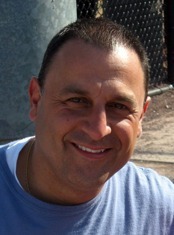
frankFrank has taught high school English and Creative Writing for over twenty years. His debut novel, Echoes From The Infantry, received national attention, including MWSA’s silver medal for outstanding fiction. His follow-up novel, The Legend of Mickey Tussler, garnered rave reviews as well, including a movie adaptation of the touching story “A Mile in His Shoes” starring Dean Cain and Luke Schroder. Frank continues to produce quality work, including Sophomore Campaign, the intriguing sequel to the much heralded original story, and is presently at work on a third installment of the unique series. He lives on Long Island, New York with his wife Julia and their two sons, Nicholas and Anthony.

Posted in December 2012 | Tagged , , , , | 3 Comments

Fermanagh Miscellany 2012 Is Here

I’ve delayed starting my Christmas preparations because I had a book to get to the printers and then a launch to organise. So there’s no decorations up at our house, few gifts bought and no Christmas cards written – don’t tell me the last posting dates. I know!

Launch 2012 6Well, my co-editor, Seamas Mac Annaidh and I checked the print proof a couple weeks ago and Fermanagh Miscellany 2012 went to the printer. A stack of boxes arrived on my doorstep earlier this week and,once I knew we had the books ready, I scrambled to get press releases out and bits and pieces organised so we would have some nibbles at the launch. Everything came together ok and we held the launch today in Enniskillen library.

This year’s anthology is dedicated to retired Bishop of Derry, Dr Edward Daly. He accepted our invitation to attend the launch and he spoke about his fond memories of growing up in County Fermanagh. He has lived a full and varied life and he is still looking forward to more adventures and challenges. There’s a lesson for me there and I hope I will always challenge myself too.

More information about the launch and Fermanagh Miscellany 2012 can be found on Fermanagh Authors’ Association’s blog post today.

This was my fourth time as co-editor of the anthology and I was still excited when the order arrived and I opened the first box of books and held a copy in my hands. So today was definitely a day to celebrate. And I had a great day – but now it may just be time to dig out that Christmas card list…

FM 2012 low res

Posted in December 2012 | Tagged , , , , , , | 1 Comment

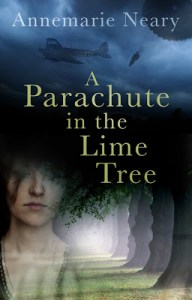
An Intriguing Find: A Parachute in the Lime Tree

At the Historical Novel Society conference in September I met Annemarie Neary, the author of A Parachute in the Lime Tree, and I was intrigued to hear about her book as it is one of the first novels to be published by the predominantly non-fiction publisher, The History Press Ireland. I read the book soon after I returned home from the conference and enjoyed it immensely. The book is a completely different look at the Emergency as World War II was known as in Ireland. It is partly love story and partly historical novel and gives a glimpse into what life was like in Ireland when most of the Western world was officially at war.

Events in this story don’t follow a predictable path – it’s not a formulaic war romance and that made it interesting to me. As I read things didn’t always turn out as I willed them to but I was still satisfied with the novel’s conclusion. The four main characters’ stories weave together in a clever, believable way and I got involved in each person’s struggles. This is a quirky historical fiction that will stay in my mind. So I’m delighted to welcome Annemarie Neary here today to talk about the book. Let’s get started, shall we?

Tell us about your novel

ParachuteThe novel is set in neutral Ireland in 1941 during the tense weeks following the Belfast blitz. The morning after Belfast is bombed, Kitty discovers a German parachute caught in one of the lime trees on her land. That sets up a chain of events with life-changing consequences for all concerned. Most of the narrative takes place in Ireland, but the story’s roots are in Berlin, in the relationship between Oskar, whose parachute Kitty discovers, and his Jewish sweetheart, Elsa. 

What prompted you to write about this historical event or era?
My aunt was a student at a music school in Dublin where one of the students was a German-Jewish prodigy exiled from pre-war Berlin so that might well have been one reason. However, I think it was fundamentally a ‘what if?’ In this case, what if a man fell from the sky?

How closely did you stick to the historical facts?

The story is fictional, of course, but I did set myself the condition that everything that happens in the book must have been possible. 

If youused them loosely, how did you decide whether to deviatefrom them?

I didn’t knowingly deviate from the historical framework.

What research did you do for this book?

A lot! I read many books on neutral Ireland (In Time of War by Robert Fisk is by far the most comprehensive but there are good accounts on certain aspects by people like Clair Wills, T Ryle Dwyer and others). I also managed to contact an octogenarian former member of a Luftwaffe crew. Someone I encountered on the internet very kindly interviewed him on my behalf at his home in Australia and sent me the tape. I scoured contemporary newspapers for little details of everyday life glimpsed in the background of photographs or through the small ads.  

Do you use a mixture of historic figures and inventedcharacters in the novel?

All my characters are fictional. In only a very few cases are real characters referred to and they all remain off–stage.

In an historical novel you must vividly re-create a place and people in a bygone era. How did you bring the place and people you are writing about to life?

Annemarie Neary

Annemarie Neary

It’s important to remember that some things never change. A daisy is still a daisy and milk goes sour. When you include historical detail you must be careful not to shoe-horn it in. It must arise naturally and be the kind of thing that your characters would notice in the normal course. 


There often seems to be more scope in historical novels formale characters rather than female characters. Do you preferto write one sex or the other. And, if so, why?

Not sure why this should necessarily be the case. I have four point-of-view characters, two male and two female. I think it is probably easier to write your own gender, but to cross over and imagine yourself a 20-year old Luftwaffe conscript is for me the essence of what writing is about.


I’m always curious about how the novels I read were created so thank you for answering my questions, Annemarie.

To learn more about Annemarie and A Parachute in the Lime Tree readers are invited to visit  her website.

The book is available on Amazon in print and ebook forms.

Posted in December 2012, Uncategorized | Tagged , , , , , , , | 1 Comment

The Women’s War

I first met Fenella Miller at the Historical Novel Society conference in Manchester a couple years ago. As I talked to her I was impressed to learn how quickly she is able to complete each novel she writes – she has a long list of publishing credits. After the conference I checked my local library for her books. I found A Suitable Husband, a Regency romance. I enjoyed the book but I’m not really a fan of Regency fiction so I didn’t immediately search for any of her other titles.

Fenella recently released part 1 of Barbara’s War, a novel set during World War II and this title caught my attention.  When I read the book I immediately warmed to it as this era particularly interests me and I’ve spent a lot of time researching the Second World War for my own writing. The more I learn about the period, the more I want to know so I’m always intrigued by books set during this era. Fenella is currently writing the second part of Barbara’s War – which I’m waiting to read! Last week she also released another novel set during the same period, Hannah’s War. Fenella is visiting Ascroft, eh? today to talk about Hannah’s War.

Welcome, Fenella. Shall we get started?

Tell us about your novel.

Hannah’s War is a romantic historical suspense set in WW2. 

What prompted you to write about this historical event or era?
I had been writing Regency romance and wanted to do something different. WW2 is an era I am also familiar with so this is when I set it. 

How closely did you stick to the historical facts? If you used them loosely, how did you decide whether to deviate from them?

This is a work of fiction so the characters are entirely from my imagination. However the place, Debfield, is in fact Debden in Suffolk. The peripheral events mentioned are factual but the events involving my characters are fictional.

What research did you do for this book?

I spent two days in Debden and Saffron Walden and spent time with the local historian and a local farmer who had lived through the war. He drove me around the actual RAF base – an amazing experience. I think this might be the only undeveloped base – the infrastructure in the surrounding area is too poor for any building to have taken place. I have dozens of research books and used the internet. The buildings mentioned in Debfield (Debden) are as they were in the war. 

Do you use a mixture of historic figures and invented characters in the novel or any of your novels. If so, which is more difficult to write? Which to you prefer to write and why?

All my characters are fictional but many of the events are true.  A German plane did land on Debden base.

In an historical novel you must vividly re-create a place and people in a bygone era. How did you bring the place and people you are writing about to life?

Talking to people who were alive during the period is the best way – and I did a lot of this. My father and stepfather both talked a lot about their experiences in the RAF so I had that to draw on too. A writer must study the period, read books written then, do sufficient research to get the details right.

There often seems to be more scope in historical novels for male characters rather than female characters. Do you prefer to write one sex or the other. And, if so, why?

I write from both viewpoints. I don’t agree that there is more scope for male characters – if you’re writing fiction you create the main protagonists.  A historical written by a man will tend to have a male lead and be more action based – Bernard Cornwall being a perfect example. Of course Elizabeth Chadwick writes fact based books about the lives of real people and has several with male leads.

I enjoy writing from either viewpoint – I like to be in the heads of all my characters.

Thank you, Fenella, for answering my questions. I look forward to reading part 2 of Barbara’s War and I’ve just started Hannah’s War too.

About Fenella Miller: Before becoming an indie author, she had 9 novels published by Robert Hale and numerous novellas published by Linford, My Weekly and The People’s Friend. Readers can learn more about Fenella and her writing at her website.   

Posted in November 2012 | Tagged , , , , , , , | 2 Comments