Sunday Gathering in the Barrack Storeroom

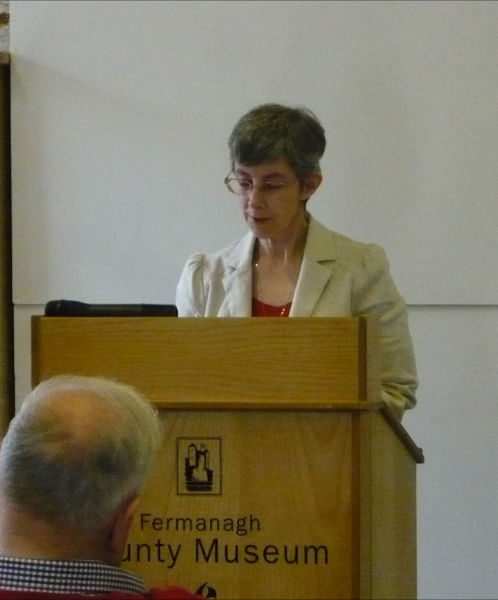
Yesterday was the close of Fermanagh Creative Writing Group’s Autumn Kickoff week. And on a rainy, windy Sunday what better to do than gather with a group of writers (and a good few listeners) to share stories and poems? The group hosted our first Open Mic afternoon and members of FCWG as well as other local writers met in the Barrack Storeroom at Enniskillen Castle Museum to read our work.  There were lots of surprises and fun as well as readings that made the listener pause and think. I enjoyed being part of it and am delighted that we had enthusiastic writers and an appreciative audience. For me, as a writer who is especially interested in historical fiction, it was apt that our setting was a museum during the European Heritage Open Days.

You’ll find more about the afternoon at the FCWG website.

Posted in September 2011 | Tagged , , , , | Leave a comment

Studying Stories

I’ve been reading quite a variety of short stories lately. Some I really enjoy, others I wonder why they were written. The stories I’ve been reading have made me think about what makes a good short story and what I like and want in a story. So I enjoyed the creative writing workshop our local writers’ group hosted yesterday. Our invited tutor, Moyra Donaldson (http://moyradonaldson.blogspot.com) examined the necessary elements for a successful short story as well as other topics during the session.

It was a very informative and encouraging day. And just the beginning of an exciting week. Now I have to start swotting for Quiz Night on Thursday…More details are posted on Fermanagh Creative Writing Groups’ website: http://fcwg.wordpress.com/2011/09/04/moyra-donaldson-kicks-off-creative-week/

Posted in September 2011 | Tagged , , , , | Leave a comment

A Creative Week Ahead

Why does everything seem to happen at once? This week I seem to be juggling at least 10 activities at the same time – I’ll tell you later whether I was successful or not. My co-editor and I are almost finished preparing this year’s Fermanagh Miscellany while I scramble to finish stories and articles that all have deadlines which are fast approaching. And the Fermanagh Creative Writing Group are about to kick off our autumn season so I have a full calendar of writing and social events next week. It’s fun but I could use a few more hours in each day.

Are you wondering what Fermanagh Creative Writing Group has planned next week? Why not check out the writing workshop, quiz night and open mic afternoon. You’ll find the details here: http://fcwg.wordpress.com/2011/08/29/join-us-as-we-kick-off-our-new-season/ .       Maybe I’ll see you there.

Posted in August 2011 | Tagged , , , | Leave a comment

Foreign Flavours About To Boil

It’s less than three weeks until the deadline for submitting stories and non-fiction writing to Writers Abroad’s new anthology, Foreign Flavours.  The book’s theme is food and drink around the world. Expat writers are invited to submit material to be considered for inclusion in it.

A foreward for the anthology has been written by author Alexander McCall Smith and proceeds raised from sales will be donated to the charity, the Book Bus.

The deadline for submissions is 9th September. I’ve already submitted my story so I can sit back and let it simmer. But, if you have a story bubbling and you wish to submit it to Foreign Flavours, then get cracking – all the information you need is  here.

Posted in August 2011 | Tagged , , , , | Leave a comment

Irish HNS Chapter Were Back In Belfast

The Irish branch of the Historical Novel Society were back in Belfast at the Europa Hotel on Saturday afternoon for our quarterly meeting. We alternate each quarter between Dublin and Belfast. It certainly isn’t a chore to organise these meetings – except for our inaugural meeting I’ve never needed to set an agenda. We’ve never run out of topics to discuss and our two or three hours together fly past.

Our membership is a mix of writers and readers but writers were in the majority this time, including a couple people who are working on their first novels. So, what to do when a manuscript is finished – how do you get an agent and  publisher and how do you market the book once it is published – was a topic we were eager to discuss. Our seasoned published writers also found the marketing discussion beneficial.  The conversation flowed to other topics, including whether to write a prologue or not (how do you set a novel clearly into its time period so readers understand where it fits into the events of the era), how do you write dialogue that is believable but still easy for modern readers to understand, and tips about where to find research materials. With our members’ mix of skills and experience, we were not short of suggestions and ideas to deal with the questions we raised.

Each quarter, since our first meeting, new people have joined us at our meetings. It’s great to meet with others who share our interest and enthusiasm for historical fiction – writing and reading it. I leave the meetings fired up to continue writing (and reading too – the to be read pile grows after every meeting as new titles are suggested to me) Our next meeting will be in Dublin in November (date to be confirmed). Readers and writers who share our passion for historical fiction are welcome to join us.

Posted in August 2011 | Tagged , , , | Leave a comment

Patricia O’Reilly Reveals A Type Of Beauty

I recently read A Type of Beauty by Patricia O’Reilly. It was my first introduction to Kate Newton and I was fascinated and moved by this dramatisation of her life.

Prior to the book’s release authors Christine Dwyer Hickey and Carlo Gebler made these comments about the book:

“In this, one of the great romances of the Victorian era, Patricia O’Reilly has brought to life a past that is at once vivid and utterly credible. A joy to read.” Christine Dwyer Hickey

“An engaging and illuminating exploration of the intersection of these Irish, English, Indian and French worlds in the intriguing, tragic and very modern relationship of Jacques Tissot and Kathleen Newton.” Carlo Gebler

I’ve asked Patricia O’Reilly to visit Ascroft, eh? to answer a few questions about the story. Welcome, Patricia! Let’s get started, shall we?

Tell us about your novel.

Patricia: Strictly speaking A Type of Beauty does not fall into the traditional ‘novel’ category. It’s what they call in the business fact-led fiction or bio-fiction. It is the life of Kathleen Newton (nee Kelly). Her arranged marriage in India at 17; divorce, pregnancy with the man who became obsessed by her and birth of his daughter before she was aged 18; finding and losing love with French artist Jacques Tissot, another pregnancy resulting in the birth of her son, finally re-united with Jacques only to succumb to tuberculosis and rather than watch him suffer, she takes her life and dies aged 28. Set in London, Agra, Bombay and Paris from 1868-1882

What prompted you to write about Kate Newton, an historical figure?

Patricia: Her beauty as captured by Jacques Tissot in a painting titled Mavourneen captured my imagination when I was about 12; I re-discovered the painting in a coffee table book about 20 years later and started looking into her life. I was particularly interested to discover she had an Irish background – a medical family from the Wexford area.

How closely did you stick to the historical facts? If you used them loosely, how did you decide whether to deviate from them?

Patricia: I stuck as closely as I could to what was on record. There was not much written about Kathleen (called Kate by her family), except in the context of her relationship with Tissot, so I went through various biographies of him. Surprisingly the Internet proved an invaluable source of information – I even found record of her marriage in Agra in January 1870 to Isaac Newton, a surgeon with the Indian Civil Service. One of the facts that whet my interest during preliminary research was that Isaac Newton wanted an ‘untouched’ bride; Kate was catholic and during the outbound voyage she became a source of obsession with a Captain Palliser of the Bengal Rifles; before marrying on the advice of her confessor, she confessed to Isaac about Captain Palliser’s interest in her. Immediately and without even consummating the marriage, he returned her to her father in London.

What research did you do for this book?

Patricia: Did loads of research – Biographies of Jacques Tissot; various histories of the time, particularly those set in India; National Library, Dublin, National Archives, Kew, London – even had a designated researcher which proved invaluable; walked in Kate’s footsteps in London and Agra in as far as possible. Saw over the house she lived in in St John’s Wood with Jacques Tissot. Seeing it, it was so easy to imagine her living there and I am firmly convinced her spirit still lives on.

You use a mixture of historic figures and invented characters in the novel. Which is more difficult to write? Which to you prefer to write and why?

Patricia: In this book, I tried to use as few invented characters as possible – the main ones are Miss Carmody (head of finishing school and chaperone), Mrs O’Connor (landlady) and Kate’s friend. Invented characters are easier for me to write as I can let my imagination flow freely, whereas with historic figures I have to stay close to what facts exist which can be stifling – although I do take creative liberties!.

In the novel you vividly re-create nineteenth century London and Paris, two very different places. How did you bring these places to life?

Patricia: First I used travel books and features from the 19th century but it wasn’t working. I couldn’t access the scents and sounds of the various locations. But when I was in London, I walked in Kate’s footsteps and realised that worked; I had done similar in Paris for Time & Destiny, so used that material working from the notes I’d made some years previously. I ended up going toIndia with the Travel Department which proved invaluable for getting the feel of the sensory pulse of the places, seeing the species of monkeys who have lived in the ruins from time immemorial; the roadside shacks; the Taj Mahal. I even discovered, unchanged, the trading company office where Kate’s father worked while posted to Agra. We’d a wonderful guide who had given up on lecturing in one of the universities for guiding, and she was very helpful.

Thanks for answering my questions, Patricia. I always love getting a peek behind the scenes to discover the story behind the book.

 About the author:  In her time Patricia has written acres of newspaper and magazine features; radio plays and documentaries; scores of Sunday Miscellany pieces; and dozens of short stories.

An undreamed of and most rewarding spin-off for her has been convening writing workshops, including on-line ones, as well as providing an editing service to help writers bring their work up to professional standard. She also writes a blog – www.lovewriting.patriciaoreilly.net and visit her website at www.patriciaoreilly.net.

Posted in August 2011 | Tagged , , , , , , | 1 Comment

Peering Into Her Past

Technology is slipping in everywhere – even into quiet Irish villages. In my story A Link To Her Past I consider what might happen when a middle-aged Irishwoman begins to surf the net and finds a webcam in the church she attended in her youth.

The story is printed in this week’s edition of Ireland’s Own magazine (cover date 19th August 2011). 

Posted in August 2011 | Tagged , , , | Leave a comment

The Full Moon Bride: An Old Fashioned Contemporary Story

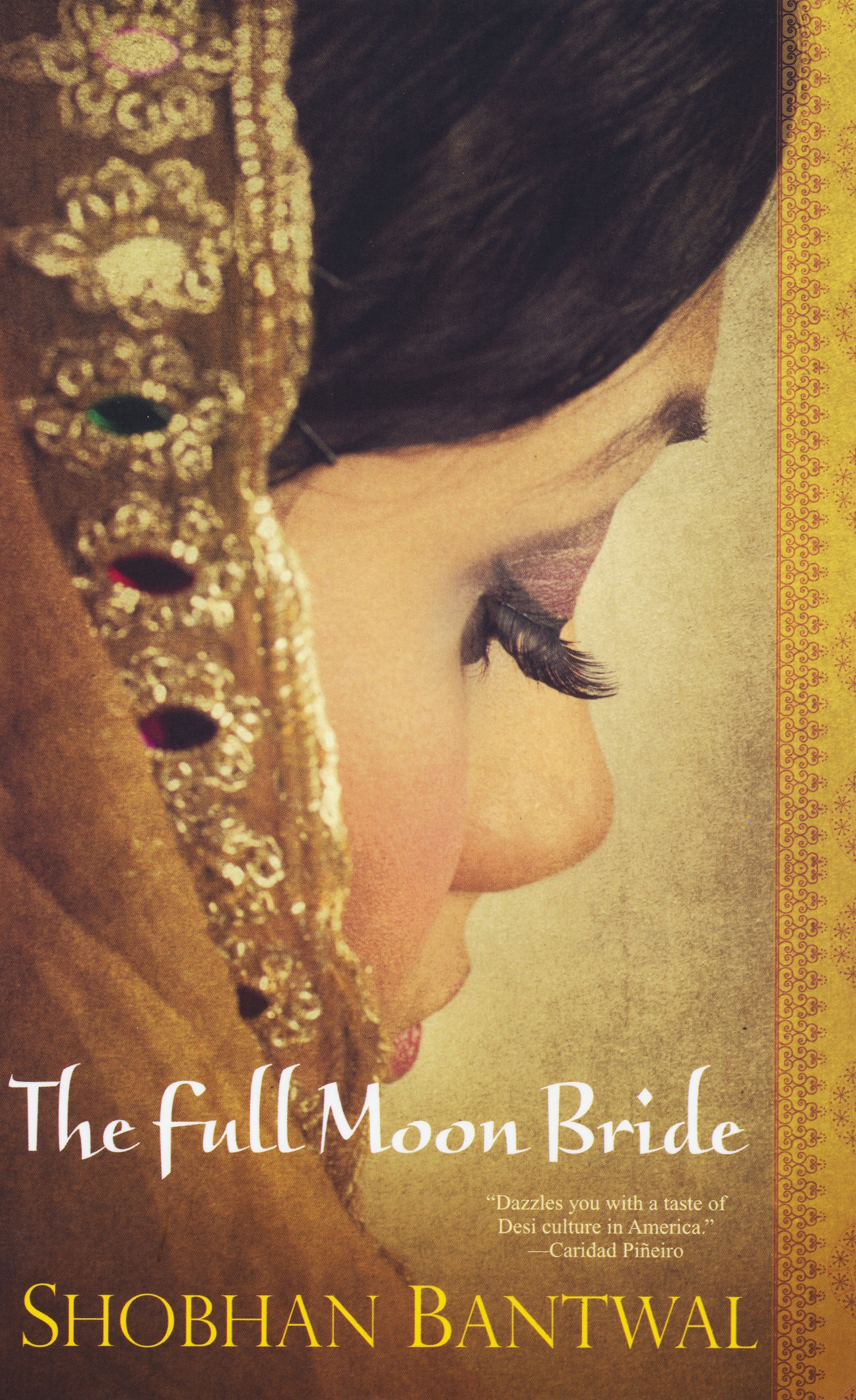
Recently I received a copy of The Full Moon Bride by Shobhan Bantwal to review. The novel explores arranged marriage and the difficulties living in two cultures often poses for Indian-Americans. The story follows a young Indian-American attorney, Soorya Giri, as she decides whether following her cultural tradition or her own path will provide fulfilment and happiness. Her decision will dictate who she marries: Rajeesh, an alluring fellow countryman who has been selected by her parents or Lou, an attractive colleague she fancies.    

As Soorya struggles with her decision, she finds herself at odds with her parents and the men in her life. But the conflict is low key. Respect for her elders is ingrained and Soorya’s challenge to her parents’ values is restrained rather than a raging charge. The main conflict in the narrative comes from the protagonist’s own warring thoughts and feelings as she tries to reconcile her culture, her desires and her autonomy.

The novel is an old fashioned tale in a contemporary setting. It’s a slice of life rather than a larger than life story but, even without nail biting drama, this gentle story held my interest to the end of the book. As I read I found myself wondering what choices Soorya would make and how she could reconcile her family’s Indian tradition and her upbringing in America.

Using simple details of domestic life, Ms Bantwal captures the nuances of family interaction. She also develops the protagonist into a believable character. By weaving Soorya’s thoughts, emotions and memories about seemingly inconsequential details into the narrative, she gives the reader an insight into the character’s background and her familial bonds, building a complete picture of Soorya and her world.

Throughout the book Ms Bantwal provides detailed explanations about Indian traditions. I sometimes found the information distracted me from the story and I would have liked it to be more subtle. But I think these details are necessary for readers such as me, who are unfamiliar with Indian culture, to understand the story fully and I’m not sure that they could be provided it in a different manner.

The book champions the belief that the individual has a responsibility to family and community, not only to himself. It’s a viewpoint that is contrary to the Western notion that the individual’s rights should be paramount. I found it refreshing to explore a different value system in a mainstream American novel.

Words like ‘heart-warming’, ‘uplifting’ and ‘cheering’ may be old fashioned but they fit this novel. I enjoyed stepping into the world which The Full Moon Bride opened up and the novel left me with a warm glow. I would recommend it to readers who enjoy relationship centred stories. 

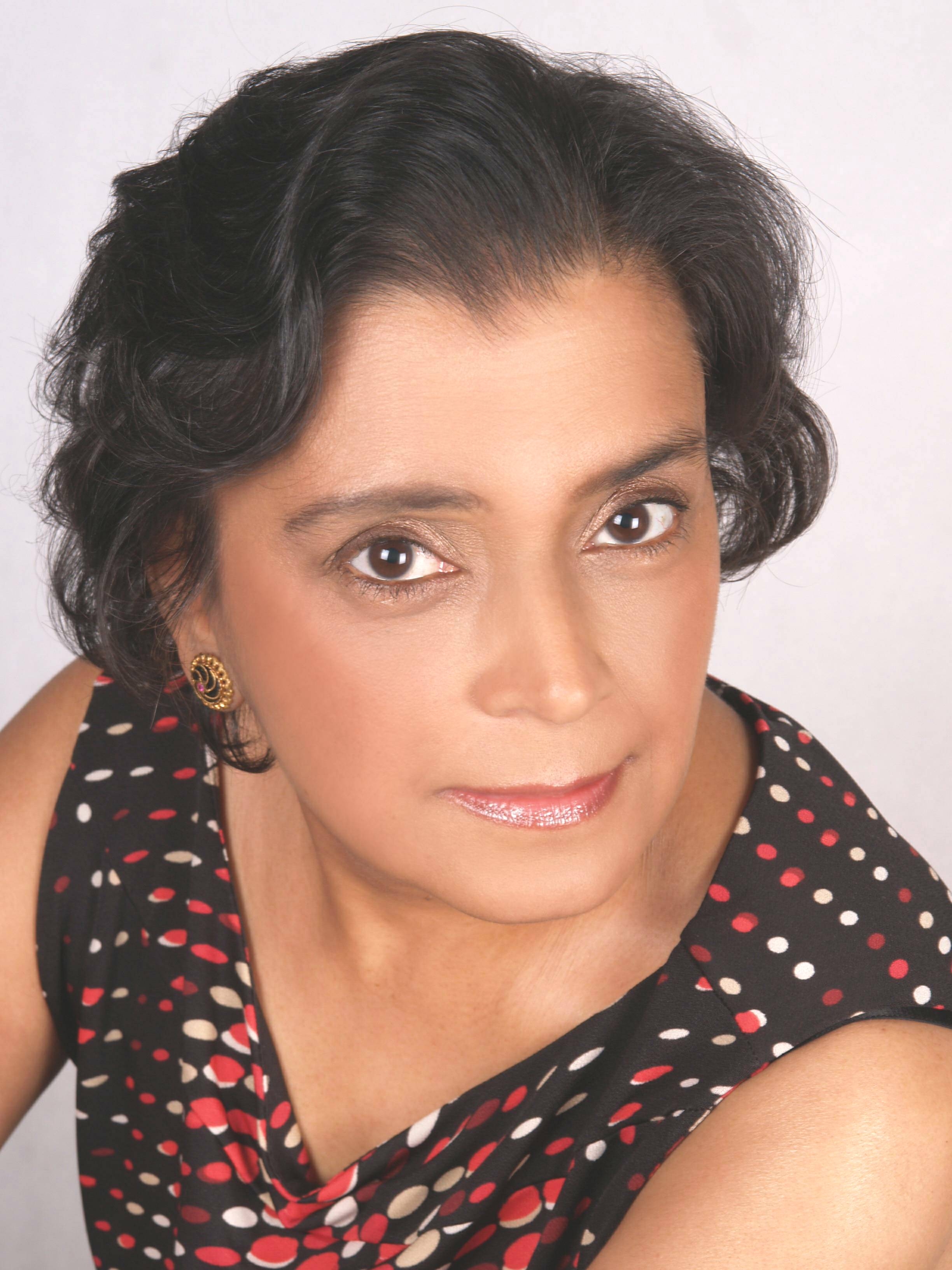
About the author: Award-winning author Shobhan Bantwal calls her writing “Bollywood in a Book”—romantic, colorful, action-packed tales, rich with elements of Indian culture—stories that entertain and educate. Shobhan has five published novels by Kensington Publishing, with a sixth slated for 2012. Shobhan can be contacted through her website: www.shobhanbantwal.com or Facebook.

For much more information about Shobhan Bantwal and Full Moon Bride, visit her website http://www.shobhanbantwal.com . To order a copy of Full Moon Bride go to http://www.amazon.com/Full-Moon-Bride-Shobhan-Bantwal/dp/0758258844

Posted in August 2011 | Tagged , , , , | 4 Comments

Kathleen Gerard Crosses Genres With Gusto

Anyone who has written a novel which doesn’t neatly fit into a particular genre will know how this can hinder the book’s journey to the bookshop shelf. Genres can be useful for publishers and readers to define books but they can also be limiting. Today I’ve invited Kathleen Gerard to tell us about her struggle with genres and defining her novel, In Transit, to suit a publisher, readers and herself. After reading her post you can discuss the issue with her. Leave comments on her post and she will respond to them. I’ll now turn the floor over to you, Kathleen – Welcome!

Kathleen: It took seventeen years for my novel, IN TRANSIT, to find a home. I was told by agents and publishing houses that the book didn’t fit snugly enough into any one specific genre. IN TRANSIT has been labeled a police procedural novel, a mystery novel, a thriller/suspense novel, a crime novel and a romance novel. Because the themes and subject matter of the story spill over into more than one genre, the powers-that-be in publishing didn’t know where to put the novel or how to market it effectively. Thus, it had no takers for a long time.

But fifteen years later, when I was participating in a creative writing workshop and read a portion of another novel (domestic fiction), an editor from a publishing house that represented “romance” novels, asked if I had any “popular” or “genre” fiction in my arsenal. I remembered IN TRANSIT and told her a little bit about the book and the whole genre dilemma. When she expressed an interest in reading the novel anyway, I decided to resurrect the book – making the story more current and updated for a post 9-11 world. Lo and behold, IN TRANSIT finally found a home and was billed as a novel of “romantic suspense.”

I still don’t fully agree with that classification. Yes, there is romance in the novel. And yes, there are elements of suspense. But I’ve always considered IN TRANSIT to be a “woman-in-jeopardy story” meaning that the protagonist faces challenges that ultimately force her to save herself. While the plot of the story is central, for me the book is more about people–characters who make choices (or don’t make choices) and how that effects lives.

In publishing, it’s all about marketing. Even the graphic arts team who designed the cover for IN TRANSIT wanted to feature the image of a police badge along with a sensual image of a man and a woman. “This is a story about the NYPD and a romantic relationship – it’s appropriate,” I was told. But the book is about so much more – the bonds of friendship and family; self-reliance; prejudice, and the nature of secrets and evil, among other things. I felt the cover should reflect a certain level of ambiguity – an abstract image of a moving train, a city skyline and lettering in the same font as seen on New York City Subway signs. “Why can’t readers just read the book for the story and, based on their own experiences and what they bring to the page, classify the book however they wish?”

In the end, my concept was taken into consideration, and I’m very pleased. Most people seem drawn to the cover, and not only are women reading IN TRANSIT, but men are reading and enjoying the story, as well. That cover, designed as such, is actually helping me to reach a wider audience. But even now, when I hear people talk about the book, I cringe when readers continue to try and pigeon-hole the story as a police procedural, a mystery, a thriller/suspense/crime novel and/or a romance novel.

What draws you to a book – the cover, the subject matter, a review, a recommendation, personal experiences (what you’re facing in your life at a particular point in time)? Do you read books based on a specific literary genre (i.e. romance, horror, sci-fi, detective, westerns, etc.)? Are you disappointed if you read a book in a specific genre and the book spills beyond the boundaries of what you would normally expect of that genre – or are you pleasantly surprised? Please share your stories – and feel free to cite specific books and genres as examples.

About Kathleen Gerard: Kathleen’s writing has been awarded The Perillo Prize, The Eric Hoffer Prose Award and nominated for Best New American Voices, all national prizes in literature.  Gerard writes across genres. Her short prose and poetry have been widely published in literary journals, magazines and anthologies, as well as broadcast on National Public Radio (NPR). Several of Kathleen’s plays have also been staged and performed regionally and off-Broadway.

To learn more about Kathleen Gerard and IN TRANSIT visit the book’s website: http://intransit-thenovel.blogspot.com

Posted in July 2011, Uncategorized | Tagged , , , , , | 2 Comments

Sean McElgunn Ventures Online

When should a writer begin his own blog? That’s a question that’s sometimes discussed in advice for writers. I’m not going to add to that discussion here. But, I’d say that once he’s passed his 80th birthday seems as good a time as any. It is for Fermanagh based writer, Sean McElgunn. He celebrated his 80th birthday just over a year ago and this spring he launched his first blog.

Originally from Belturbet, County Cavan Sean has travelled the world and lived in places as diverse as Ireland, the Philipines, Germany and America. He did his share of the work around the farm he grew up on and he served as a priest for more than twenty years; he’s now a grandfather, has three adult children and has been happily married for many years.

He has written several books, including Pandora’s Box, A World Without Women and Charleyhorse Rider: Tales of the Winding Erne; he contributes to Fermanagh Authors’ Association’s yearly anthology, Fermanagh Miscellany.

Sean has eclectic interests, an ever curious mind and he loves a good story. So far his blog is a mix of his poetry; local lore and amusing stories; and his thoughts on everything from the state of the Catholic church to Irish history to the financial crisis. Why not stop by Sean’s blog and say hello? You’ll find him at http://iktus.blog.com/.

Posted in July 2011, Uncategorized | Tagged , , , , , , , , | Leave a comment