The King’s Mistress: Hiding In Plain Sight

I recently met Gillian Bagwell through the Historical Novel Society. Gillian is the author of The Darling Strumpet and The King’s Mistress. Whenever I meet another historical fiction author (or any writer for that matter) I’m always curious about their writing life. So, it’s no surprise that I’ve invited Gillian to visit Ascroft, eh? and answer a few questions for me. Welcome Gillian. Let’s get started, shall we?

Tell us about your novel

GB: The King’s Mistress is the first fictional account of the story of Jane Lane, an ordinary English girl who risked her life to help the young King Charles II escape after the Battle of Worcester on September 3, 1651. His defeat by Cromwell’s forces set off one of the most astonishing episodes in British history—his desperate six-week odyssey to reach safety in France, which came to be known as the Royal Miracle because he narrowly eluded discovery and capture so many times.

Jane became involved because she had a pass allowing her and a manservant to travel the hundred miles to visit a friend near Bristol—a major port where the king might board a ship. In a story that sounds like something out of fiction, the 21-year-old king disguised himself as her servant, and she rode pillion (sitting side-saddle behind him while he rode astride) along roads traveled by cavalry patrols searching for him, through villages where the proclamation describing him and offering a reward for his capture was posted, and among hundreds of people who, if they had recognized him, had every reason to turn him in and none—but loyalty to the outlawed monarchy—to help him.

It was an improbable scheme. Charles was six feet two inches tall and very dark complexioned, not at all common looking for an Englishman of that time. But time after time he rode right under the noses of Roundhead soldiers without being recognized.

If he had been caught, he would certainly have been executed, and it is an open question whether the monarchy would have been restored as it eventually was after the death of Oliver Cromwell. What Jane did took great bravery, and she risked not only her life but the lives and lands of her family, as the fugitive king had been proclaimed a traitor, and anyone who helped him would be executed for treason.

What prompted you to write about this historical event?

GB: While researching The Darling Strumpet, my novel about Nell Gwynn, I read Derek Wilson’s book All the King’s Women, about the numerous women important to Charles II. As all of us who know anything about Charles II are aware, he liked women! His mistresses were many and famous, whether loved by the people like Nell Gwynn or hated like the French Louis De Keroualle. So I was intrigued to read his account of Jane Lane, and convinced by the evidence he set forth for his belief that she and the king became lovers during their travels.

Although Jane was quite famous after the Restoration, she eventually faded into the shadows of history. When my agent was submitting Darling Strumpet to publishers, she asked me who I’d like to write about next. I remembered Jane Lane, and was surprised and pleased to discover that no one had written a novel about her adventures with Charles.

How closely did you stick to the historical facts? If you used them loosely, how did you decide whether to deviate from them?

GB: As with my other books, when the facts were known, I used them. After Charles was restored to the throne in 1660, he told the story of his escape over and over. Others who were involved in rescuing him also recorded their parts in it, so for much of the six weeks Charles was on the run there is almost an hourly account of what he did, said, wore, and ate. The route he traveled is known, and the Monarch’s Way footpath can still be followed.

Jane left Charles and returned home when it appeared that he would shortly be able to find passage on a boat from the southern coast of England, and the details of her story aren’t as well known. When her part in helping Charles escape was discovered, she fled with her brother and walked to Yarmouth, hoping to reunite with Charles in France, and eventually ended up at the court of Charles’s sister, Mary of Orange. From these bare facts I had to write the rest of her story, piecing together what seemed likely or possibly with some pure imagination.

What research did you do for this book?

GB: A lot of reading, as I always do. I used the many accounts of Charles’s flight, including his own words, which he dictated to Samuel Pepys years later.
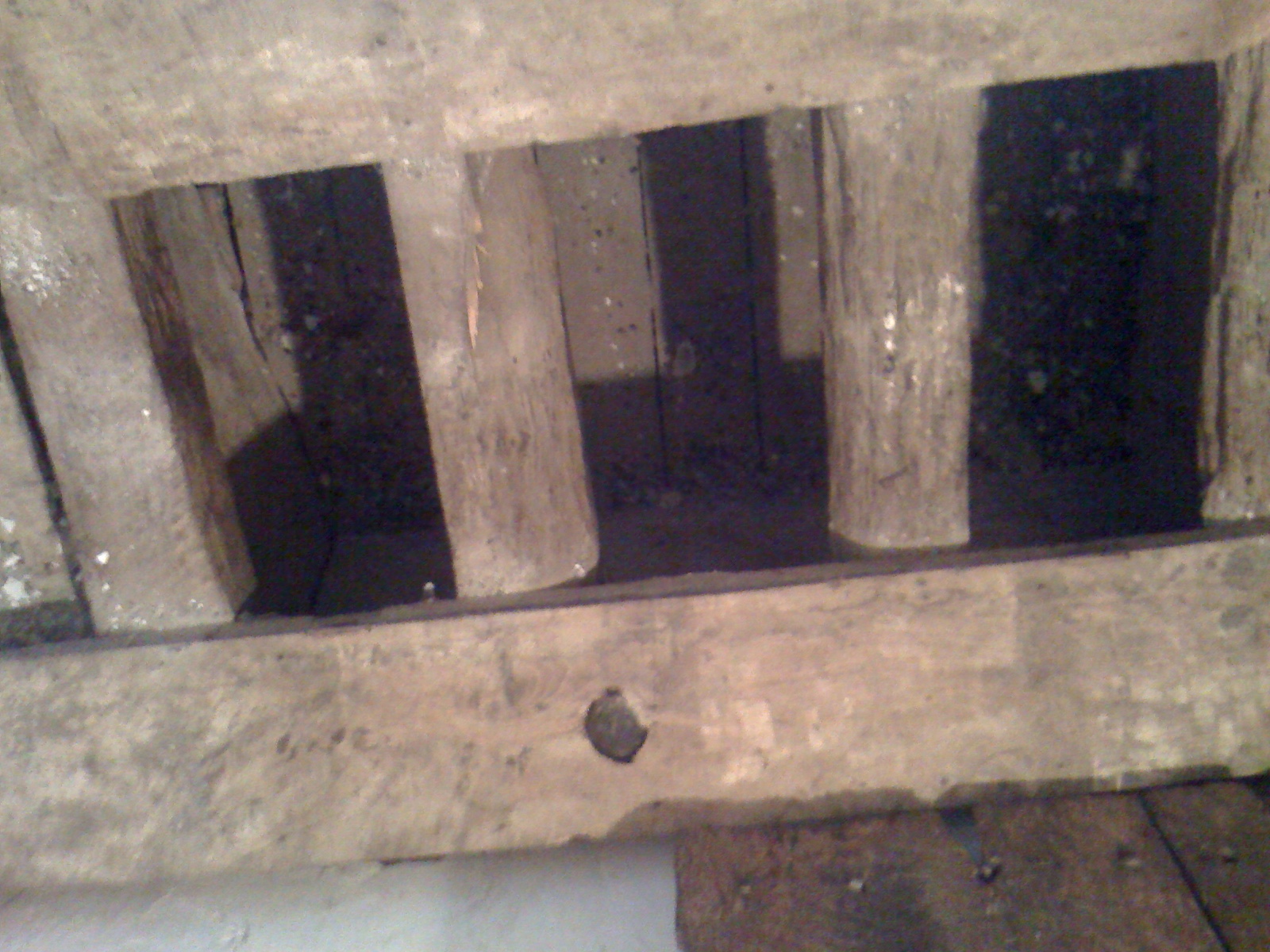
priest hole

I also set out with a friend to retrace the path that Charles had taken from Worcester to Jane’s neighborhood in Staffordshire, and their travels after that. Some of the sites associated with Charles’s adventures are well preserved.  It was thrilling to visit Boscobel House and Moseley Hall and to see the actual priest holes into which the fugitive king curled his six-foot-two-inch frame when hiding from Cromwell’s cavalry patrols. Whiteladies, where Charles arrived at about three a.m. on the morning after the battle, is now a ruin, a short walk from Boscobel.

Contemporary accounts provided the general route that Jane and Charles took, through Bromsgrove, where Charles’s horse threw a shoe; to Stratford-Upon-Avon, where they had to ride among enemy soldiers crowding the street; and down to Long Marston, where they stayed at the home of Jane’s cousins John and Amy Tomes. They spent the next night in Cirencester, and reached Abbots Leigh near Bristol the following evening.

Finding that no ship would leave Bristol for France or Spain in less than a month, they then made their
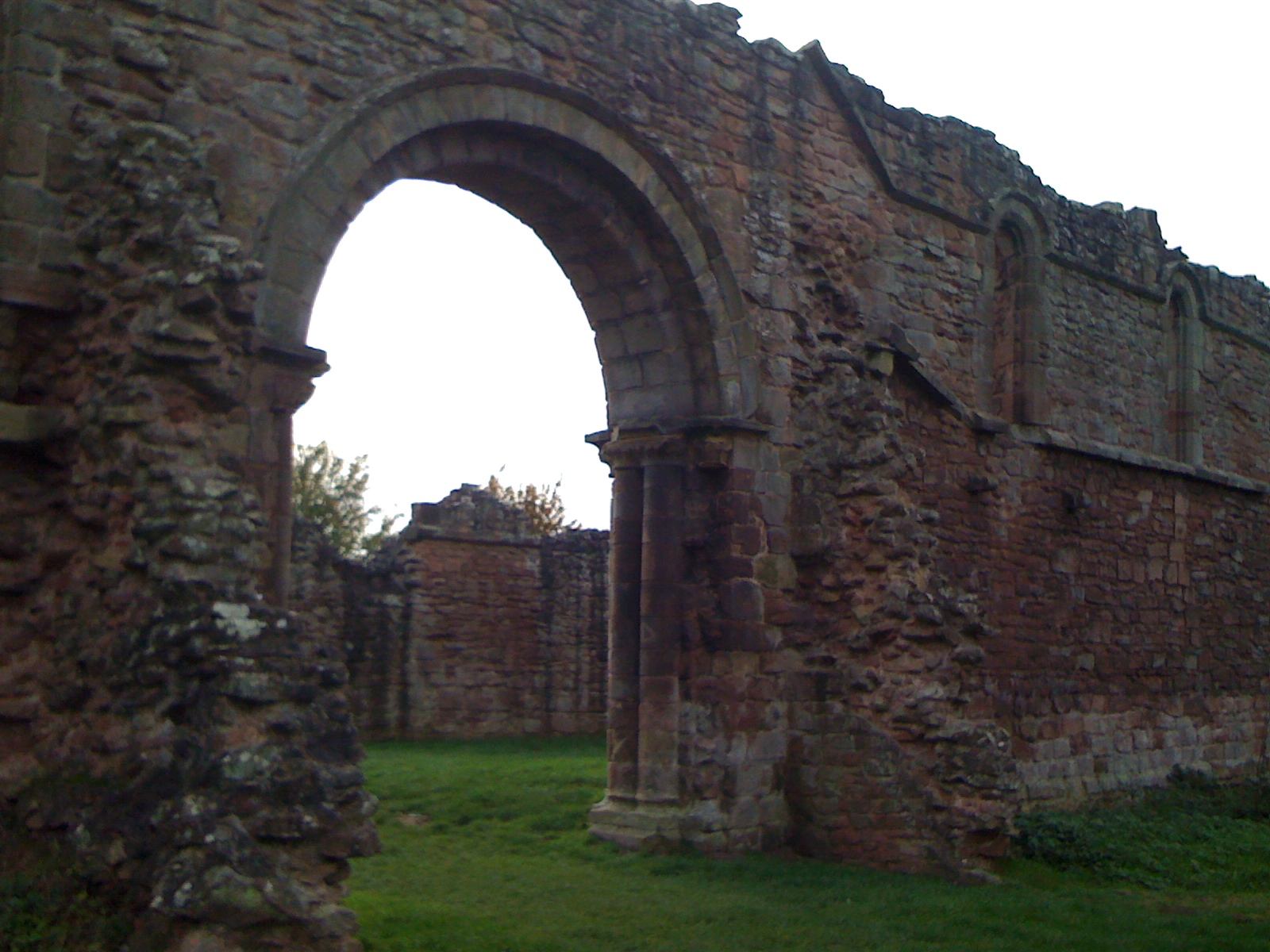
Whilteladies arch

way southward to Castle Cary and then to Trent, in Dorset, where they stayed at the home of the Royalist Wyndham family.

          We received much-appreciated help from many people on our journeys. The current owner of Trent Manor welcomed us into her home and showed us the chamber where Charles had stayed, now her own bedroom. The Earl and Countess of Aylesbury graciously allowed us to visit the beautiful grounds of Packington, where Jane lived after she returned to England and married.  When we weren’t sure about the location of a place we were trying to find we had very good success by popping into pubs to ask the locals, and in this way we were helped by the staff and patrons of the Red Lion in Bromsgrove, the Crown in Cirencester, and the George in Castle Cary.

I also had to recreate Jane’s walk to Yarmouth without being able to actually follow in her footsteps, and wrote about that process in a post on the Penguin Author Blog

Do you use a mixture of historic figures and invented characters in the novel? Which is more difficult to write? Which to you prefer to write and why?

GB: I much prefer to be able to tell a story using the people who really lived it.  In this case, the real people and actual events are better than anything I could invent, and almost all of the characters are based on historical people.

For the six weeks that Charles was on the run, he was sheltered and aided by dozens of people—mostly simple country folks and minor gentry—who not only could have earned the enormous reward of £1000 offered for his capture, but risked their lives to help him.

When Jane Lane was in Paris and then at the court of Mary of Orange, she came to know all the royal family and Charles’s exiled friends and supporters. She certainly knew Anne Hyde, who was a lady in waiting to Mary of Orange and eventually married the Duke of York (later James II) and became the mother of Queen Mary and Queen Anne, and I chose to have Jane intimately involved in the drama surrounding Anne’s romance with and marriage to the duke. She likely knew Lucy Walters, who was Charles’s lover when he was young, and who he was rumored to have married, and I chose to have her involved in that story as well.

In an historical novel you must vividly re-create a place and people in a bygone era. How did you bring the place and people you are writing about to life?

GB: Visiting the sites involved in a story helps me re-create the world the people in the novel inhabited. I’m pretty steeped in everyday life in seventeenth century England and am always learning more. To me the details of a character’s life—what she would have worn and eaten, how she washed her clothes, how she took care of herself and what she did about illnesses—help me really get into her skin and mind and really put myself in her place as I’m writing.

Fortunately there is a lot written about Charles II and especially about his flight after Worcester, with a lot of interesting details.  When I had Charles tell Jane about the parts of his adventures when she wasn’t with him, I was able to use his own words some of the time, as he told the story to Samuel Pepys, who took it down in shorthand.

There often seems to be more scope in historical novels for male characters than female characters. Do you prefer to write one sex or the other. And, if so, why?

GB: Men have of course historically had more freedom to go off on adventures, but there are plenty of real women from the past who led very interesting lives, and so far my protagonists have all been women. I love being able to tell the story of a woman who did something exceptional, especially when her story isn’t as well-known as it deserves to be, like Jane Lane’s.

Most readers of historical fiction are women, and it’s certainly the belief of my agents and editors that books with female leads appeal more to female readers. But Charles II plays a very big part in this book, as he does in The Darling Strumpet, as seen through the women’s eyes.

Thanks for answering my questions, Gillian. I haven’t read The King’s Mistress yet but I’m looking forward to getting into it.

Gillian Bagwell’s novel The King’s Mistress, the first fictional accounting of Jane Lane’s adventures with the young King Charles, was released in the U.K. on July 19. (It was published in the U.S. in 2011 as The September Queen). Her first novel, The Darling Strumpet, based on the life of Nell Gwynn, is a finalist for the Romance Writers of America’s RITA award for Best First Book. Her third novel, Venus in Winter, about the formidable four-times widowed Tudor dynast Bess of Hardwick, will be published in the U.S. in July 2013. Visit Gillian’s website to read more about her books and her blog Jane Lane and the Royal Miracle  to learn about her adventures researching the book and the daily episodes in Charles’s escape after Worcester.

Posted in August 2012, Uncategorized | Tagged , , , , , , | 1 Comment

Monkey On The Wing: Steve Adams Shares His Life

My guest today is Steve Adams, an Aussie larrikin, who led an action packed life until an accident left him severely injured and blind. He’s joining me to answer a few questions about his life and his autobiography, Monkey On The Wing.

Welcome Steve. First of all what’s an Australian larrikin?

A larrikin is a word usually used in an affectionate way, to describe a bloke who has little respect for authority, societal norms and even themselves. What some might jokingly call a rapscallion.

Tell us about your book. 

This autobiography is inspirational on many levels, funny and thought provoking, and takes the reader on a journey, most can only dream about. It’s been described as beautifully written and has been broken up into 107 short chapters, each one standing  alone, but melding seamlessly with the ones before and after. Monkey On The Wing is guaranteed to arouse every emotion in the reader and the story has an extremely dramatic twist that shows how, almost any level of adversity can be overcome. The book comes highly recommended and has the rare quality of covering three genres – travel, biography of an Aussie larrikin and inspiration.

What prompted you to write about your experiences?

After losing my sight in a horrific accident 14 years ago, I reflected from my hospital bed how I wanted my future children, one day, to know there is a lot more to their dad, than someone with a disability that has caused him to lose his independence. Throughout the 18 months of my recovery and rehabilitation, the desire became stronger and the idea of writing Monkey On The Wing was born.

Is this the first book you’ve written? Was it difficult to write about your life? 

Monkey On The Wing is my first book. My story wasn’t hard to write, once I got started, as it was in my head for a long time. However the difficulty was how to get it from my head and onto paper. It wasn’t until my friend and future editor, Meg Lane, gave me some good advice on how to get started, that I was able to open the ink vein and during the next two years, the book virtually wrote itself.

Probably the biggest hurdles to overcome were of course, being blind, the fact that I only have the use of my middle right finger to type, and that I had never used a computer or typewriter before. In order to write my book, I had to spend 1 year at the Western Australian Blind Association, learning the functions of a computer.

In writing a true story there are some people who are going to be hurt and although not my aim, it is a story about my life and I had to show what shaped me. I must take this opportunity to thank those people, for it was they who provided me with the fortitude that I needed when the time came.

What’s life like for you now?


Steve in the Canadian Rockies

Through my life experience I have learned that if you want something, you must make it happen and since my accident I have lived by that. My life is as full as it’s ever been, has taken on new direction and never stops moving forward.

 Please tell us anything else that you wish to about your book and your life.

Monkey On The Wing is far more than just a story. It is a journey through childhood and teen years where it speaks of, not so much taboo subjects, but the life experiences, some very negative, that many of us go through and tend to ignore because of embarrassment or denial. The reader is then taken on a journey all over Australia and the world, that will show how truth really is stranger than fiction. Unlike most inspirational books, this one shows with great honesty, ways in which a person can reach for the stars and instead of being left with just the promise of great things, can actually realize their dreams.

Throughout the book and my life, my philosophy of moving forward, and not wasting time on regrets or looking back is apparent. Living that way I have been able to see opportunities more clearly, as they present themselves and life has remained adventurous.

Thanks for answering my questions, Steve. Readers now know a little bit about you and your life. So let’s give them a taste of Monkey On The Wing:

CHAPTER FORTY FOUR

EAST MEETS WEST

I had no schedule when I left Alice Springs, so when I came across the turnoff that led to Ayres Rock, I decided I’d go and have a look. As I stood on a road in the middle of Australia I marvelled at the harsh, dry beauty of the place and considered how easy it would be for those early explorers to go missing.

I imagined a lost man out there and felt great pity for him, for although the country was soft in its beauty, its arid harshness would show no mercy to a man dying of thirst.

Not too long after, I saw a green panel van that was heading north and I was very happy to see it pull over. I made my way to the passenger side window where I was surprised to find a Japanese fella gesturing for me to put my gear into the back of his van, so I stowed it and joined him in the front.

The first thing he did, was offer me a cold can of beer from a large esky sitting beside him on the bench seat. He didn’t drive off straight away and as we introduced ourselves, I realised with a smile that he could hardly speak English. However, I understood his name was Egar. Once the formalities were over we took off for Ayres Rock.

As Egar and I hurtled along in the centre of Australia, with Simon and Garfunkle cranked up on the stereo and the beer flowing freely, I quickly realised my new friend was drunk. Although I was enjoying myself, I was tired from my night in Alice Springs so I gestured to Egar that I wanted to have a sleep in the back. He looked a bit disappointed that I was piking out on him but he pulled over anyway and I got into the back of the van and fell straight to sleep.

A bit later, Egar woke me up shaking my leg saying, “Big rock, big rock,” so I got up. What I saw when I got out of the van blew me away. We were still about seventy or more clicks from The Rock, but from that distance its sheer size could be put into perspective. Although I’d seen pictures of it, I could never have imagined it in reality. It was massive and its colours of red brown and ochre were amazing.  Click to continue reading.

Monkey On The Wing by Steven Adams is available as a hard copy through his website or as an e book through Smashwords.

Posted in July 2012 | Tagged , , , , , , | Leave a comment

The Siren Of Paris Alerts Us To War’s Reality

I’ve just finished reading Siren of Paris by David LeRoy and it’s a story that will stay with me for a while. It has a complex, well developed plotline and presents the story in a tantalising way, jumping back and forth between 1939-40 and 1943-44. As I pondered developments in the story important elements of the plot were revealed at just the right moment. I’ve read quite a few books set during the Second World War and often find them very moving. But this one especially gripped me.

The publisher’s blurb says: “The story starts in 1939, when Marc Tolbert, the French-born son of a prominent American family, takes off for Paris to follow his dream of becoming an artist. Marc’s life soon sparkles in the ex-pat scene in Paris. His new friend Dora introduces him to a circle that includes the famous Sylvia Beach, owner of the bookstore Shakespeare & Company; and he accepts a job with William Bullitt, US ambassador to France. At art school, he finds himself further enchanted by the alluring model Marie.

Marc’s Parisian reverie, however, is soon clouded over by the increasing threat from Germany. As Americans scramble to escape Paris, he finds himself trapped by the war, and nearly meets his fate on the disastrous day of June 17, 1940, aboard the RMS Lancastria. Upon returning to Paris, his fate grows more troubled still, as he smuggles Allied airman through the American Hospital to the Paris Resistance underground, until a profound betrayal leads him into the hands of the Gestapo and onto Buchenwald.”

Although I’ve never experienced a war, the book seemed to be a realistic portrayal of wartime. Scenes of conflict and death were sometimes graphic, grim and very disturbing but this gave authenticity to the book. I think what gripped me most about it was the main character, Marc Tolbert. He is an antihero. He didn’t ask to be in the position he finds himself in and he does whatever it takes to survive. He has flaws and real, soul destroying fears. He makes me think about how I would react in the same situation and I can’t say I’d be any braver or selfless than he is. Self-preservation rather than patriotism motivate him and I think this is one of the most honest depictions of wartime that I’ve read.

In this engrossing story the author looks at people caught in a war and their reactions to it from a completely different perspective. It’s unsettling but I think it’s real and it is a good story. I would recommend it to anyone who enjoys war dramas or studies of the human psyche or just a good read.

Because I enjoyed the book so much I’ve asked David LeRoy to answer a few questions about the novel. Welcome David.

Tell us about your novel.

DL: The Siren of Paris is the story of one French born American male who runs off to Paris in 1939 to study art as a way of getting over a failed relationship back in the States.  He becomes trapped by the war along with all other Americans when the Germans sink the Athenia on Sept 4th, 1939, and due to a series of circumstances he finds himself on the doomed RMS Lancastria on June 17th, 1940.  After a few months, he returns to Paris for the duration of the war. He is motivated primarily out of survivor’s guilt to try and do something to make up for the fact that he survived the sinking, but his British friend died.  His third return to Paris brings him betrayal that leads him to Buchenwald.  In the course of this novel, my young immature American has all of his innocence burned away, transforming his consciousness.  

What prompted you to write about this historical event?

DL: At first, I intended to write a remarkably brave novel about an American in the French Resistance.  I was doing transportation research to try and determine just how Americans might get home from Europe after the war broke out.  I stumbled upon the RMS Lancastria.  The Titanic, although tragic, is also a rather romantic story.  But the Lancastria is just tragic and also haunting once you read the details of the sinking.  I decided to look for some way to bring the victims to life in a story. The best way appeared to be through the experience of one fictionalized survivor named Marc Tolbert.  
 

How closely did you stick to the historical facts? If you used them loosely, how did you decide whether to deviate from them?

DL: I followed the historical facts so closely, that I even included the traveling circus that was coming down the Loire Valley as France fell to the Germans.  When I do deviate from the historical record, it is to tell the story of my character Marc.  For instance, Joan Rodes, the British Nurse who saved 19 men from the waters of Saint-Nazaire did lose her baby two days later.  However, the relationship she has with my character and the role she plays in the story is fictionalized, but consistent with her personality during World War Two. 

Overall, I tried my utmost to use real historical events in this story to give the reader the feeling of experiencing World War Two.  Sometimes those facts do not synch up with our expectations.  I did not know that many of the arresting agents for the Gestapo in Paris had no guns and just ran around with brief cases like traveling salesmen wearing civilian clothes.  Our imagination wants to have a tall proud German in a SS Uniform with a machine gun, not a brief case full of papers.  

What research did you do for this book?

DL: I read 46 books, and all of the newspapers in French up to the War, and many all through the War.  I read Nazi papers and whatever French resistance papers I could find.  I bought various historical items on Ebay. I did quite a bit of research on Buchenwald and the experience of returning from a concentration camp after the war.  One book in that collection tells me everything I needed to know about Nazi occupied buildings in Paris. 
 
Do you use a mixture of historic figures and invented characters in the novel. Which is more difficult to write? Which to you prefer to write and why?

DL: There is only a small handful of purely fictional characters in the book.  William Bullitt, Sumner Wells, Sylvia Beach, Jacques Lusseyran, Jean, Georges, The Jackson Family, R, and the RMS. Lancastria is extremely real. Even Drew who brings Marc food is based upon a real person. In addition to the people, the traveling circus, horses, dogs and the rabbit are also real. Marie is based upon real person, who died in 1947 at the hands of another person she betrayed.  And Officer Sean is based in part upon a real German from the army.  Even the lovely man playing the piano at 180 Rue De La Pompe in Paris is a real person from the historical record who consequently was tried for war crimes in the 1950’s. My preference was to create a fictional character, and follow him through a not so fictional world. 

In an historical novel you must vividly re-create a place and people in a bygone era. How did you bring the place and people you are writing about to life?

DL: Perhaps you are familiar with the service during Easter called Tenabrea. The altar is stripped, and all the candles are extinguished in the church, symbolizing the darkness of the valley of death as Christ approaches the Cross. 

In The Siren of Paris, at the end of chapter two, I draw attention to the fact that the lights are turned out in the main dining room of the S.S. Normandie where the statue La Pax resides.  For the next 41 chapters I construct the world of World War Two using small relevant details, but I am deconstructing all peace, love, joy, faith, hope, and trust in my characters’ journey.   This is done to create one thing, which is the most difficult of all to recreate about World War Two, and that is the fear and dread.  I push the protagonist back and forth between life and death until he is not sure of which world he resides in the most.  I tear away his trust of the living and build up his trust in the ghosts of the dead.  The only hope that soon remains is only in the heart of my character.  The goal is to just help the reader to feel the war on an emotional level, so when Marc is hanging near the rear of the line for morning soup at a concentration camp, hoping to get some solids at the bottom, the reader knows and feels the hunger driving my character.  

In addition to these small details, I drew upon Jungian Psychological images such as the butterfly, peacocks, rabbits, and the raven.  Marc experiences lucid dreams during the war of people he has known who have died, and these dreams have a precognitive element to them, creating a sense of anticipation.  However, aside from all the small tricks, the macro image is a stripping the altar of life of everything until there is nothing left but my character, struggling with the darkness of the war and protecting his own light from going out.   I do close the story with light, but it is a new light that is internal to the character and brings final resolution to the spiritual crisis of my character as the story opens. 

There often seems to be more scope in historical novels for
male characters rather than female characters. Do you prefer
to write one sex or the other. And, if so, why?

DL: I am not sure if I lean towards one or the other, but I certainly do like to balance my characters.  Marie is actually a difficult character to pull off and I found earlier readers objecting to her based upon common stereotypical bias of what a real woman is all about.  Throughout the story, she is emotionally distant and closed off, usually demonstrating characteristics more in synch with a strong male character.  To balance Marie, I explored two other female characters in this story that also hold down important roles in the book that give another view of how women reacted to the war.  When working with female characters, I like to have a strong motivation and determined will to achieve a goal.  My next book has a female protagonist who is just 11 years old, yet has a stronger will than all of the adult characters combined.  But back to gender, something that I seek to achieve is a combination of both feminine and masculine traits in each of my characters, because in life I rarely experience anyone who is completely masculine, or utterly feminine.  The Siren of Paris is a perfect example of this, because I have a leading male who is more feminine in personality characteristics, in a relationship with a powerful woman who dominates him emotionally.  On the physical layer, the dominant gender role is different than on the emotional and spiritual level of the character.  

Thank you David for your insights into The Siren of Paris.

For more information about the author and novel visit his website .   To purchase a copy of the ebook visit its Amazon Kindle page .  

About David LeRoy: A Native of California, LeRoy received a BA in Philosophy and Religion at Point Loma Nazarene College in San Diego. The degree served him well while selling women’s shoes, waiting tables, or working odd jobs after college until settling in the field of telecommunications, where he has worked for the past 18 years. Early on, he demonstrated artistic abilities. For many years, David marketed a line of fine art photographic prints through various galleries and retail outlets.

During a visit to France to study art in the fall of 2012, LeRoy became intrigued by the French Resistance, particularly when his research revealed the role of Americans in the Resistance, as well as the limited means of escape from Europe as the war escalated. He drew upon his longtime interest in philosophy, the visual arts, myth, storytelling, psychology, and Ocean Liner travel to write Siren of Paris.

Posted in July 2012, Uncategorized | Tagged , , , , , , , | 4 Comments

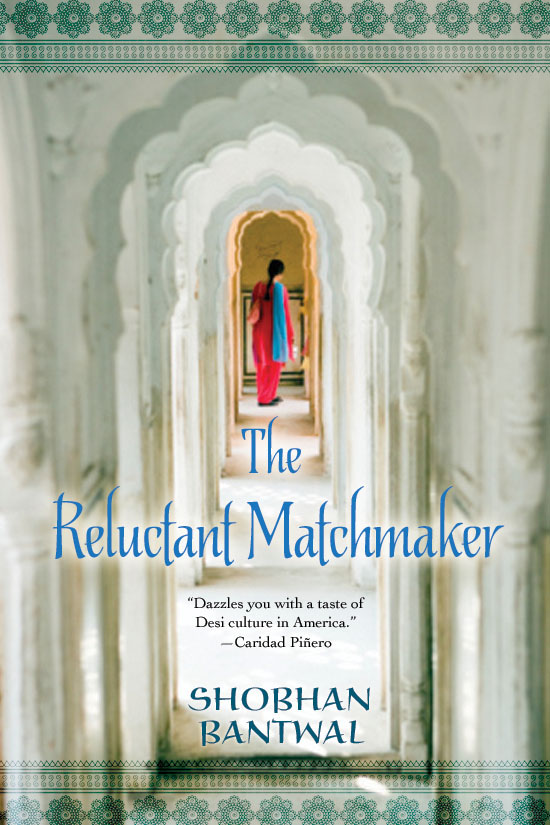
Definitely Not Reluctant To Read Shoban Bantwal’s New Novel

Last year I read my first novel by Shoban Bantwal. Fullmoon Bride was an old fashioned tale in a contemporary setting. The novel presented a slice of life rather than a larger than life story but, even without nail biting drama, the gentle story held my interest to the end of the book.

Using simple details of domestic life, Ms Bantwal captured the nuances of family interaction. She also developed the protagonist into a believable character.

She has created an equally enjoyable story in her latest novel, The Reluctant Matchmaker. It’s a new plot but all the elements that make her books a good read are included. I would recommend The Reluctant Matchmaker to readers who enjoy relationship-centred stories.

The publisher’s summary of The Reluctant Matchmaker: “It starts with a bizarre accident. Petite and successful Meena Shenoy’s contented life turns upside down when she collides, literally, with her strikingly tall boss, Prajay Nayak, and suffers a nasty fall. But when she discovers that he’s a bright, caring, family-oriented man, she’s attracted to him. When he unexpectedly asks her to meet him in secret, she wonders whether he feels the same way about her.

Meena walks into his office that evening with high romantic hopes. Imagine her shock when instead of declaring interest in her Prajay makes an astonishing request: He wants her to craft a personal ad that will help him find a suitable wife – a statuesque, sophisticated Indian-American woman who will complement his striking height.

Despite her feelings for Prajay and the complications of balancing work and her “marriage consultant” role, Meena can’t refuse the assignment, or the generous fee attached to it. While she nurses her bruised heart, Meena comes to some surprising realizations about love, tradition, and the sacrifices she will—and won’t—make to fight for the man she loves.”

I’ve asked Shoban to join me today to talk about The Reluctant Matchmaker. Welcome Shoban.

SB: Dianne, first of all, thank you for reviewing my book, and for a great interview. I appreciate your interest in my latest novel, The Reluctant Matchmaker.

Tell us about your novel

SB: It starts with a bizarre accident. When young and petite Meena literally collides with her strikingly tall boss, Prajay, she takes a nasty fall, but doesn’t count on falling in love with him. So imagine her dismay when he makes an astonishing request: He wants her to craft a personal ad that will help him find a suitable wife — a statuesque, sophisticated Indian-American woman who will complement his remarkable height. Despite Meena’s attraction to Prajay, she can’t refuse his assignment, or the generous fee. While balancing the complications of work and her “marriage consultant” role, she comes to some surprising realizations about love, tradition, and the sacrifices she will—and won’t—make to win over her giant.

What prompted you to write this story?

SB: Being a very petite woman and happily married to a small-statured man for over three decades, I have always wondered what kind of a relationship a tiny woman would have with a giant of a man. All my stories have their roots in the concept of “what if?” The Reluctant Matchmaker started with “what if” a diminutive woman fell in love with a big man. To raise the stakes even higher and add some conflict to an already unconventional match, I needed my tall hero to want a suitably statuesque woman to complement his remarkable height, even though he is somewhat attracted to the tiny heroine. The Reluctant Matchmaker became the story of just such a conflict.

The Reluctant Matchmaker explores Indian culture in America which some readers may not be familiar with. Is your intended reader Indian American or from any ethnic background? How do you acquaint non-Indian American readers with the culture the book is set in?

SB: While all my books are meant for readers of all ethnicities, they are primarily oriented toward a non-Indian audience, and mostly women. Indian-Americans are already familiar with the immigrant experience since they are living it, so they are not all that curious to read about it in fiction. However, I find that second and third generation Indian-American women are avid readers of my books. They can genuinely appreciate and relate to the challenges and experiences my young characters confront while straddling two diverse cultures.

As for acquainting my non-Indian readers with Indian culture, I do it by offering them a different kind of fiction that is more entertainment than intellectual stimulation, what I call Bollywood in a Book. Most South Asian authors write serious literary novels, which are beautifully written, but are often short on plot. Not all readers are fond of slice-of-life literary books, so I decided to give them commercial fiction that introduces them to Indian culture in the form of fun, romantic stories, filled with drama, colorful characters, emotional plots, and intriguing cultural elements.

The main female and male characters in the novel are well drawn. Do you prefer to write one sex or the other. And, if so, why?

SB: My books are marketed as women’s fiction with romantic elements, therefore I write mostly in the female point of view. I find it a little easier to write in the female voice than the male, perhaps because I grew up in a family with all sisters and no brothers. Also, women’s stories are more emotional as compared to men’s, and I like to pour feelings and internal musings in my tales.

While some of my books do have alternating chapters with both male and female viewpoints, The Reluctant Matchmaker is entirely the heroine’s story, hence it is narrated in the first person. 

Thanks for visiting Ascroft, eh? and answering my questions, Shoban. Good luck with your new book.

About Shoban Bantwal: She is an award-winning author of six multicultural women’s fiction books with romantic elements and numerous short stories, branded as “Bollywood in a Book.” Her articles have appeared in The Writer magazine, Romantic Times, India Abroad, India Currents, and New Woman. The Reluctant Matchmaker is her latest novel. Shobhan lives with her husband in Arizona.

For more information: about The Reluctant Matchmaker and Shobhan Bantwal’s other books, visit her website  or the book’s Amazon page to order a copy. The full virtual tour schedule is available at: http://bookpromotionservices.com/2012/06/03/reluctant-matchmaker-tour

Posted in July 2012 | Tagged , , , , , | 3 Comments

Ebooks Can Be Any Length

Ebooks can be any length – that may be evident to you but I just started thinking about it recently and it really pleased me. I’ve only had a Kindle reader for about a year but I’m a ‘convert’ – you’d have to wrestle with me to take it away.

For me this revelation means that I can put my huge trade paperback copy of Diana Gabaldon’s Breath of Snow and Ashes back on the bookshelf. It was always too heavy to carry around with me and it takes up too much space on the coffee table. I now have this book and the sequels on my Kindle.

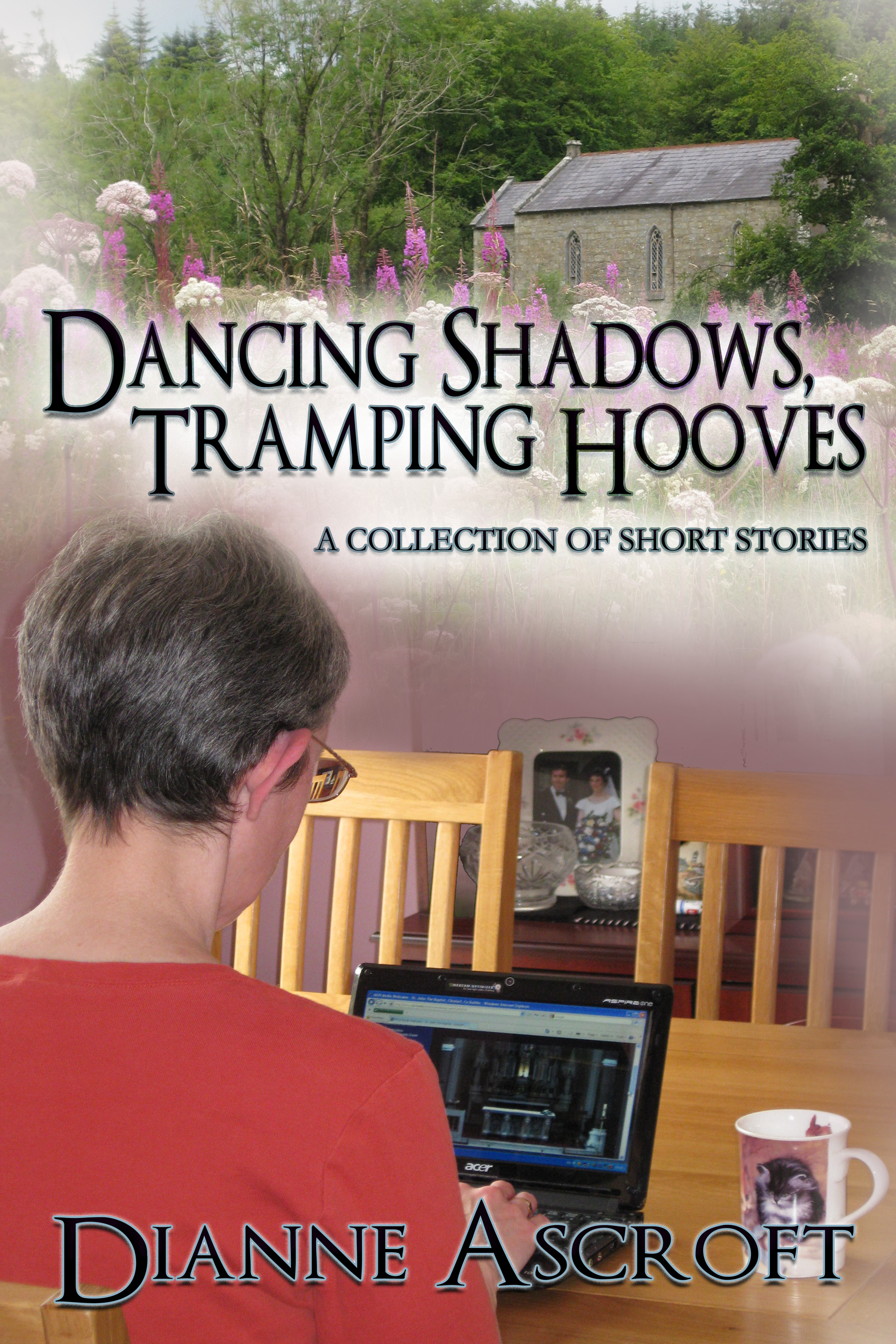
It also means that I have access to lots of shorter works, like Tim Hodkinson’s All the King’s Thanes and Nina Croft’s Chosen. And I can also publish collections of my own shorter works, like Dancing Shadows, Tramping Hooves,

For more of my meandering thoughts on this topic see my post on Writers Abroad’s blog today.

Posted in June 2012, Uncategorized | Tagged , , , , , , , , , , | Leave a comment

Reasons For Writing Short Stories

A writer friend of mine often says that he wants to create edgy writing. Another writer friend says she’s not sure what he means. I think I know what he’s talking about but I decided to look up ‘edgy’ in Dictionary.com.

Here’s the 3 definitions it gives: 

  1. nervously irritable; impatient and anxious.
  2. sharp-edged; sharply defined, as outlines.  
  3. daringly innovative; on the cutting edge.

I imagine my writer friend doesn’t mean ‘nervously irritable’ or ‘sharp-edged’ writing. So he must be referring to ‘daringly innovative’. He’s passionate about developing this writing style but I’m afraid I don’t share his enthusiasm. And I doubt the short stories in my collection, Dancing Shadows, Tramping Hooves, will be ever described as ‘edgy’. But that’s ok because I wanted these stories to captivate readers not because they are dramatically different but because their familiarity touches readers’ hearts.

I hope the characters’ struggles will resonate with many readers: negotiating mother-daughter relationships, letting down barriers to form new relationships, grappling with fear, dealing with past mistakes and embracing a new life in a strange land.  

Words like ‘heart-warming’, ‘uplifting’ and ‘cheering’ are sometimes considered old fashioned but they fit these stories. And the stories fit the magazines and anthologies they were originally written for. I sometimes explore the dark side of life in my writing but not in this book. These stories are the kind to be read when you want to be entertained and reminded that life is good. I hope they will leave readers with a warm glow.

I’m launching Dancing Shadows, Tramping Hooves today. For more information about the book visit it’s Amazon page.

Posted in June 2012, Uncategorized | Tagged , , , , , , , , | Leave a comment

Wondering About Vivaldi’s Muse

I read a review of Sarah Bruce Kelly’s Vivaldi’s Muse on the Historical Novels Society webpage page recently and I was immediately intrigued and wanted to know more about the story. Loads of questions popped into my head and I couldn’t resist adding the book is in my to-be-read pile. I’ve also invited Sarah to tell me a bit about the novel.

Welcome to Ascroft, eh? Let’s get started, shall we, Sarah?

Tell us about your novel.

Set in early 18th-century Venice, Vivaldi’s Muse explores the life of Anna “Annina” Girò, Antonio Vivaldi’s longtime protégée. Annina first falls under the spell of the fiery and intriguing prete rosso (red-haired priest) at a young age, when Vivaldi is resident composer at the court of Mantua, her hometown. Stifled by the problems of her dysfunctional family, she has long dreamed of pursuing operatic stardom, and her attraction to the enchanting Venetian maestro soon becomes inseparable from that dream.

What prompted you to write about this episode in history?

I’ve always felt a special attraction to Vivaldi’s music, and in graduate school I decided to write my thesis on Vivaldi’s opera career, which no other music scholars were working on at that time. My research revealed the little-known story of his 20+ year association with a young singer, Anna Girò, whose name kept popping up in the documents. The more I learned, the more fascinated I became with this mysterious and intriguing relationship.   

How closely did you stick to the historical facts? If you used them loosely, how did you decide whether to deviate from them?

In my “digging” for the truth, a wealth of evidence emerged that I realized provided almost all I would need to write a great story. So all the major events in the novel are historically documented, with a little poetic license taken here and there to spice up the story.

What research did you do for this book?

My research for Vivaldi’s Muse took over ten years, and involved trips to Northern Italy and parts of Austria. During this time I translated dozens of documents, anything I could find that would shed light on Anna’s life and the nature of her relationship with Vivaldi.  

Do you use a mixture of historic figures and invented characters in the novel. Which is more difficult to write? Which to you prefer to write and why?

All the major characters in Vivaldi’s Muse are historic figures. However I found it necessary to add a few fictional background characters to flesh out the story, such as a costume designer, gondolier, etc. These fictional characters were fun to create, and I was free to make them as colorful, and even comical, as I wished. The historic figures were more difficult to write, especially Vivaldi, because I was so concerned about finding his authentic “voice.” I feel I finally achieved this by reading every letter, and listening to every piece of music, he wrote. I really felt I got to know him that way, and eventually his character pretty much wrote itself. This ended up being the case with other historical characters as well, of which there are many. In general, I prefer to write the historic figures because I find them so endlessly interesting.

In an historical novel you must vividly re-create a place and people in a bygone era. How did you bring the place and people you are writing about to life?

I spent a great deal of time researching the operatic culture of the time, as well as customs of daily life in Venice and Northern Italy, etc. People often confuse the fashions and customs of the early 18th century with those of the late 18th century, even though they were vastly different in many ways. There has actually been very little written about early 18th-century Venetian culture, so I had to do a great deal of digging. My goal was to authentically re-create the distinctive culture of Venice in the 1720s and 30s. In bringing the Venice of that time to life, it helped a lot that the city is virtually the same now as it was then, so my sensory experience of that beautiful place was much the same as it would have been for the characters in my story.   

There often seems to be more scope in historical novels for male characters rather than female characters. Do you prefer to write one sex or the other. And, if so, why?

The story of Vivaldi’s Muse allows equal scope for male and female characters, since both sexes played significant roles in the Venetian opera world of that time. At first it was easier for me to write the female characters, but as I explained above, especially with Vivaldi, his voice slowly revealed itself for me and became a pleasure to write.

Thanks for answering my questions, Sarah. I’m even more eager to read the book now.

About Sarah Bruce Kelly: A native of Richmond, Virginia, Sarah Bruce Kelly lives on the South Carolina coast with her husband, Frank, where she spends her time writing, reading, teaching, and enjoying the sun and surf.

For more information, visit Sarah’s Amazon page.

Posted in June 2012, Uncategorized | Tagged , , , , | Leave a comment

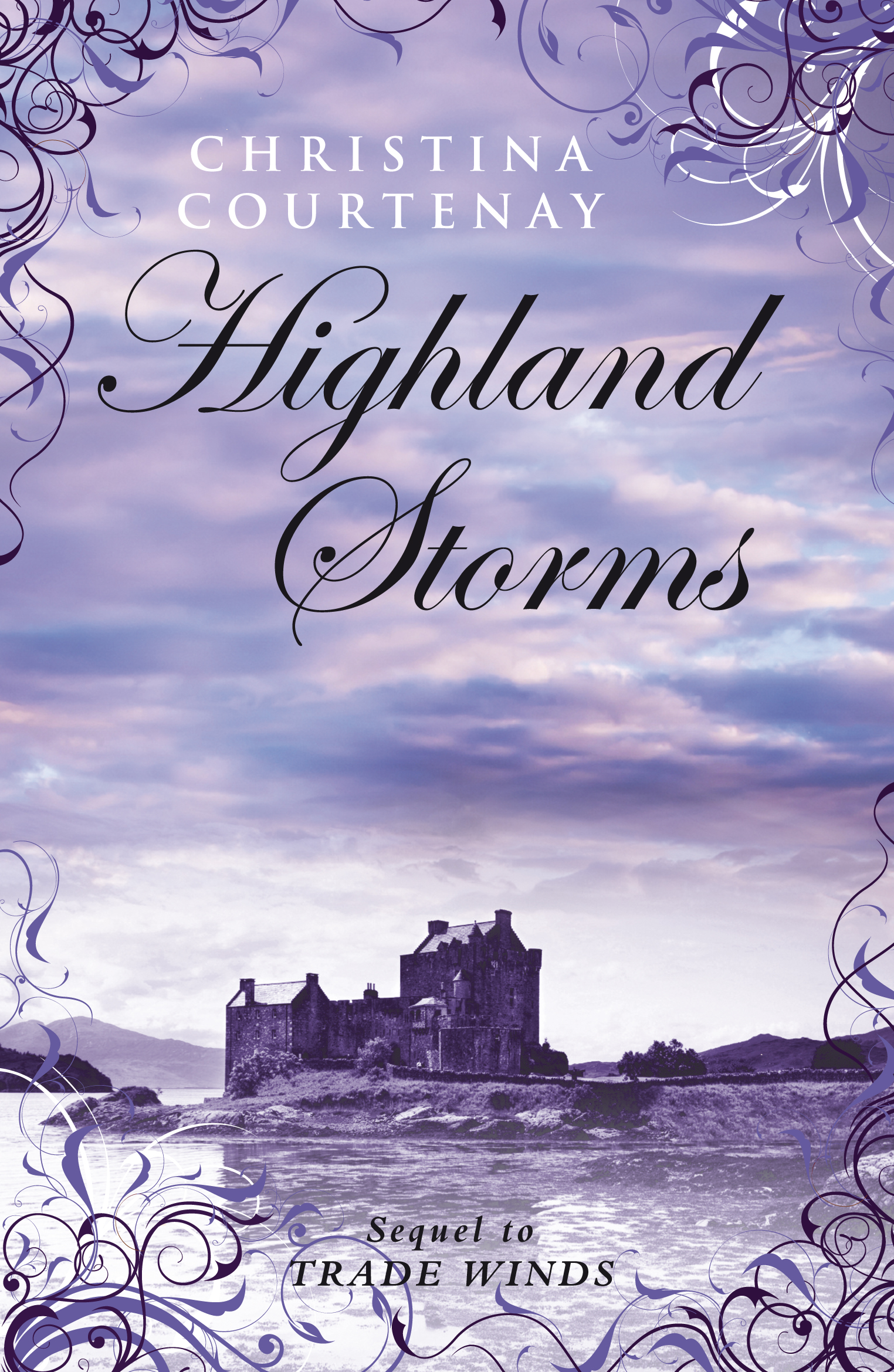
Caught Up In Highland Storms

I’ve been trying to wade through my to-be-read pile lately and Highland Storms was at the top of the list. It’s the second novel I’ve read by Christina Courtenay. I enjoyed its prequel Trade Winds last year and so I was eager to continue the story of the Kinross family in this novel. And I wasn’t disappointed – the characters were real and appealing to me and I got lost in the story. It was a very entertaining read.

I’ve invited Christina to join me today to answer a few questions about Highland Storms. Welcome Christina. Shall we get started?

Tell us about your novel
Highland Storms is a historical romance and adventure story, set in Scotland in 1754.  It’s about a man who goes back to his roots, following what he sees as a betrayal by his brother and his childhood love. Brice Kinross needs a fresh start, but when he takes over the family estate in the Scottish Highlands, there’s trouble and he finds himself unwelcome. The estate has been badly managed, money has gone missing and someone wants Brice gone. He discovers an ally in the beautiful housekeeper, Marsali, but can he dare to trust her?

Marsaili is determined to build a good life. She works hard at being housekeeper and harder still at avoiding men who want to take advantage of her. But she’s irresistibly drawn to the new clan chief, even though he’s made it plain he doesn’t want to be shackled to anyone. And the young laird has more than romance on his mind. His investigations are stirring up an enemy.  Someone who will stop at nothing to get what he wants – including Marsaili – even if that means destroying Brice’s life forever …

What prompted you to write about this historical event or era? 

1754 was not very long after the Jacobite uprising, a period which has fascinated me for a long time. I’ve read a lot about it and I was particularly interested in the way the Highlanders were treated (or rather mistreated!) after the rebellion was quashed. The English seem to have been intent on erasing all Highland culture completely and some of the reprisals were extremely brutal. This left scars, naturally, and I decided it would be interesting to use this as the background for my novel. Although half Scottish by birth, the hero has grown up in Sweden, so he is to all intents and purposes an outsider, even though he’s officially the new clan chief of his father’s Scottish estate. I tried to imagine the sort of reception he would get from tenants who had just learned to mistrust anyone who wasn’t a true Highlander. How would he deal with that and overcome their prejudices? He would have to prove himself worthy of being one of them.

How closely did you stick to the historical facts? If you used them loosely, how did you decide whether to deviate from them? 

I tried to stick to the facts as closely as possible and the attitudes of the Highlanders at the time, as well as those of the English soldiers posted in Scotland to keep order. By 1754 things were calming down a lot though, so when I needed a villain I had to invent a particularly nasty English captain with a personal grudge in order to carry on the reprisals. I think in reality that probably wouldn’t have happened this late (although you never know!). 

What research did you do for this book?
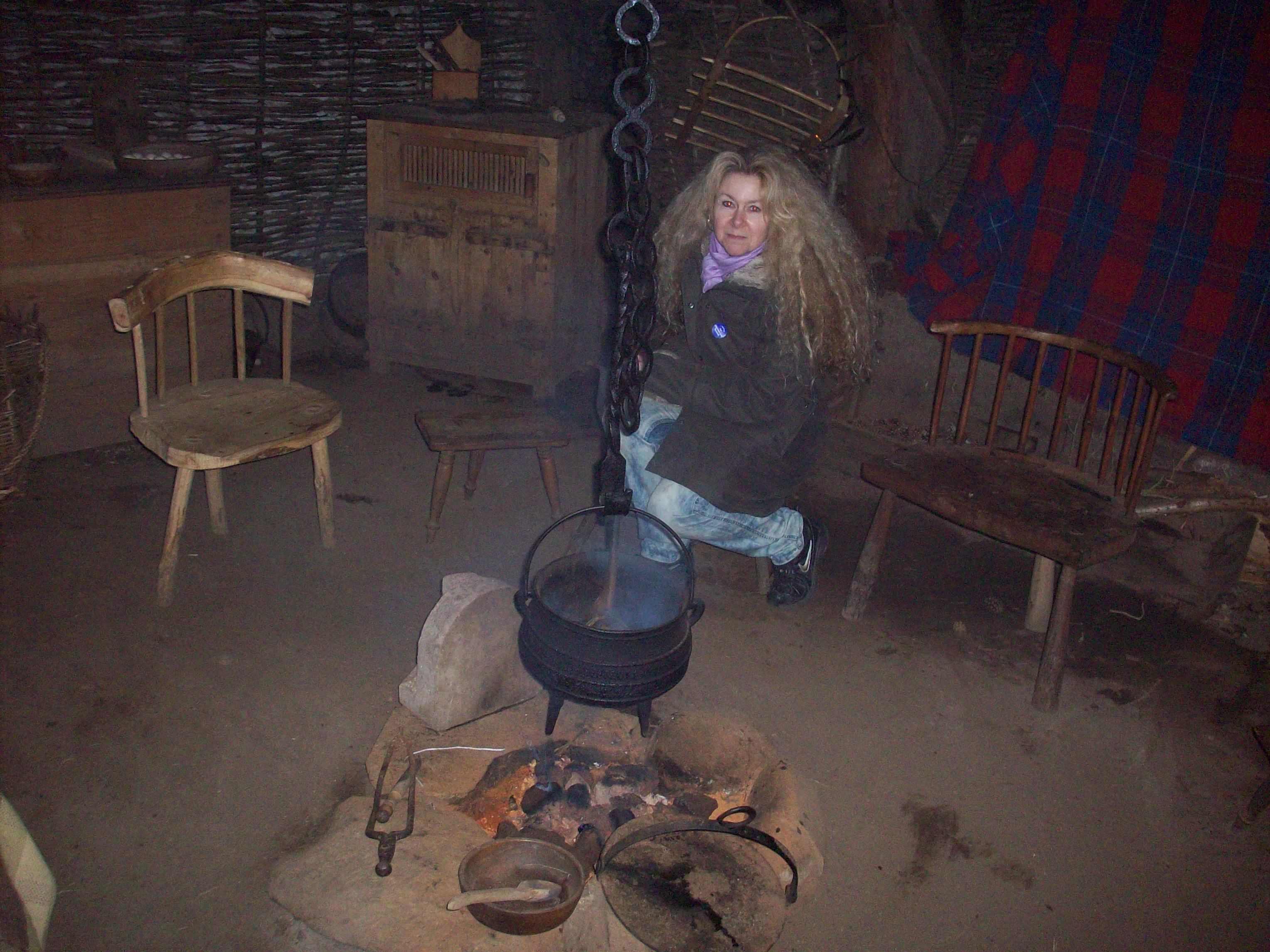
I did a lot of reading, obviously, about the Jacobite rebellion and its aftermath (I can particularly recommend a book by Maggie Craig called Bare-Arsed Banditti – love that title!). I also went to Scotland to research how people lived at that time, what they ate, wore etc. and I was lucky enough to find an outdoor museum, the Highland Folk Museum at Newtonmore near Kingussie. There they had old dwellings (or huts) built to show people what the houses used to look like and how they were constructed. I was able to go inside one and sit by the peat fire – it was quite dark in there (no windows) and it smelled strongly of wood smoke. But it was wonderful to be able to experience this for real and I used that in the book. I also visited castles, drove through the beautiful Highland glens and stuck my hand in a loch to see how cold the water would be.

Do you use a mixture of historic figures and invented characters in the novel?  Which is more difficult to write?  Which to you prefer to write and why? 

Although I have used real historical figures in other novels, in this particular one the characters are all imaginary. I find it easier to make them up, because if I use real people I’m afraid I won’t do them justice or perhaps even unintentionally insult them! If you only have imaginary people, they can go anywhere and do whatever you like, whereas using real ones means you have to know where they were at certain times and fit in with that. Makes it a lot more complicated!
 
In an historical novel you must vividly re-create a place and people in a bygone era. How did you bring the place and people you are writing about to life?

To a large extent, I used my own experiences during the research trip, and of course my imagination. When you go to the Highlands, it is quite easy to imagine yourself back in time because although some things have changed, there is a timelessness about the whole place that makes you feel a connection with the past.  I usually try to add little details to my stories to make them feel more authentic, like for example the washing scene. Back in the 1700s, I read that Scottish women did their washing by standing in pairs in big wooden tubs with their feet bare and sort of treading on the sheets or whatever they were washing. I thought this must have been quite a treat for the local men as the women had to hike up their skirts in order to do this, so I couldn’t resist including a scene like that in my novel. Other than that, it’s just a question of trying to get the facts right without making it sound like a history lesson!

Thanks for answering my questions so thoroughly, Christina. I think what you’ve said has given readers an insight into Highland Storms – and, if they are like me, they’ll now be eager to read the book. If they’d like to sample an excerpt from it first, they can click here.

For a chance to win a copy of Highland Storms, leave a comment on this post. The winner will be drawn on Monday.

Christina’s next book, The Silent Touch of Shadows, is due to be released on 7th July. Readers can learn more about Christina and her books by visiting her website, Christina Courtenay and can follow her on Twitter – @PiaCCourtenay.

Posted in June 2012 | Tagged , , , , , , | 2 Comments

Launching Into Summer With Books

This seems to be the season for book launches – I can barely keep up with them all. As I prepare to release Dancing Shadows, Tramping Hooves, a collection of short stories, as an Amazon ebook on 20th June lots of people I know are also releasing new books.

M C Scott’s Rome: The Eagle of the Twelfth was released on Thursday and I believe she is busy making the rounds of bookshops, enjoying readers’ appreciation of her work.

Ian Butler, a new author and a fellow member of Fermanagh Writers, is releasing his first novel, Burger Bar Dad, published by M P Publishing on 28th May. The book garnered interest at the London Book Fair recently and Ian is busy working on the sequel.


It’s a busy time but this weekend I’m taking time to reflect on Tuesdays At Charlie’s book launch at the Ardhowen Theatre on Thursday evening. It was a great evening – wonderful weather, an enthusiastic audience and entertaining readings by several members of Fermanagh Writers.  I was kept hopping during the evening making sure everything was running smoothly but now I intend to sit back and enjoy the memories. Click here to share them with me.

Posted in May 2012 | Tagged , , , , , , , , , , | Leave a comment

I’m Getting Launch Fever

It’s all happening next Thursday – there’s almost too much for me to choose from and I wish I could be in more than one place at once.On Thursday, 24th May Fermanagh Writers launches Tuesdays At Charlie’s and I’m really excited about it. We put lots of work into getting this collection right so now that the books have arrived – and none of them are printed upside down or in some strange, illegible font style – it’s time to celebrate. The launch details are on our group’s website at www.fcwg.wordpress.com. If you are in Enniskillen that evening – or want to come down – please join us!And while we’re launching Tuesdays At Charlie’s, the Alliance of Independent Authors is hosting their online launch. It starts at 8pm (GMT) and features a Q&A session called Ask Amazon with Thom Kephart, Amazon’s Community Outreach Manager. For more information about this event check out: http://allianceindependentauthors.org/campaigns.html.

Next Thursday really is the day for launches as it’s also the day that M C Scott’s Rome: Eagle of the Twelfth is published. I have to admit that I haven’t actually finished the previous book in the series, Rome: The Coming of the King, but I still have a week left…I am captivated by the world she creates – I just need a bit more time to spend reading. But I’m not really sorry I haven’t finished it yet – it’s good to know it’s still there to go back to as I enjoy getting lost in it.

Now how will I juggle all these events? Well, Rome: The Eagle of the Twelfth will automatically download to my Kindle – the wonder of pre-ordering! I’m not quite sure how I will juggle the other two though. If you see me checking my mobile frequently at the Ardhowen Theatre that evening I’m probably trying to keep up on what’s happening at the AIA launch while munching the most amazing mini-muffins that one of our members has promised to bring to the Fermanagh Writers’ launch. There’ll be wine, cheese & crackers and other nibbles too but the muffins are divine and shouldn’t be missed. But don’t tell anyone about them until I get my share! Hope to see some of you at the Ardhowen Theatre, Enniskillen at 7.30pm next Thursday.

If you are curious about how Tuesdays At Charlie’s all came together, read my post on Writing.ie about how we did it – and survived as a group. You’ll find the piece here:

http://writing.ie/writers-toolbox/getting-published/more-publishing-options/591-tuesdays-at-charlies-fermanagh-writers-group.html

Posted in May 2012, Uncategorized | Tagged , , , , , , | Leave a comment