Bealtaine Beckons

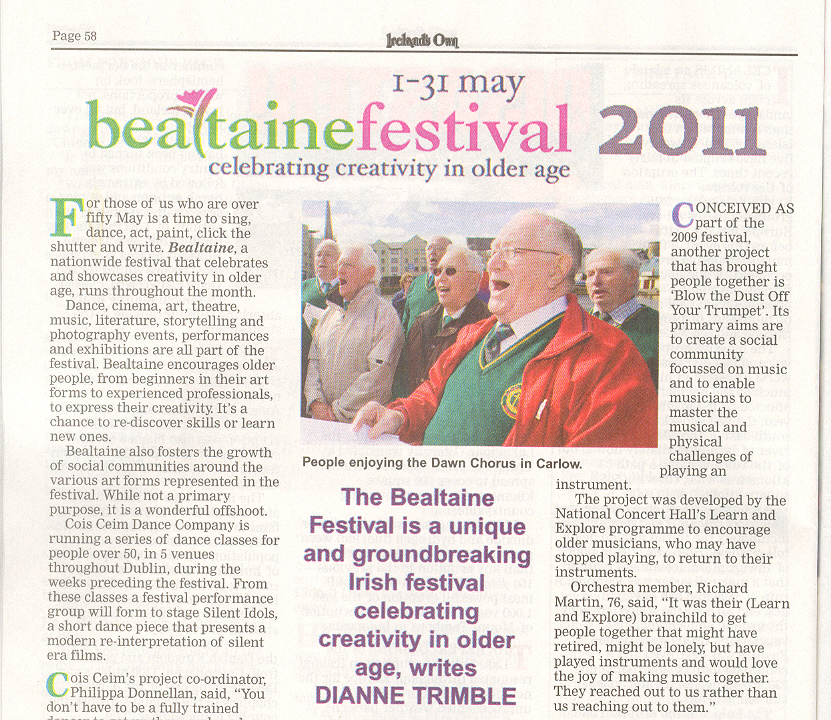
Sunday begins Ireland’s Bealtaine Festival which runs throughout May. The countrywide festival turns the spotlight on older people and the arts – celebrating our achievements and encouraging everyone in this age group to get involved and unleash our creativity. In this week’s Ireland’s Own magazine I had a look at the festival and what’s in store during Bealtaine 2011. For information about Bealtaine 2011, see the festival website: Bealtaine Festival.

Posted in April 2011, Uncategorized | Tagged , , , , , , , , , , , | Leave a comment

A Closer Look At The Devil To Pay

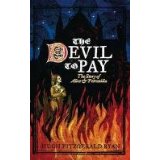
Today I’m continuing my interview with Hugh Fitzgerald Ryan, author of The Devil To Pay. As I said yesterday, I was intrigued by the historic events the novel is based on and wanted to know more about them but it was the novel itself  that first captivated me. Even if the plot weren’t based on a true story, it would still be a gripping tale. And the characters are fleshed out into believable individuals who act according to the values of the period; their words and actions bring them vividly to life.

Robin, Artisson, particularly will linger in my mind. He grows from a mute child running wild in the Irish countryside to an intelligent skilled craftsman who, in a very clever way, avenges his foster sister, Petronilla’s death. Mr Ryan’s portrayal of this character makes him spring off the page for me.

So, let’s continue with a few questions about the novel.

Mr Ryan, what prompted you to write about this particular historic event?

HFR: I lived in Kilkenny in the 1960’s and every day on my way to and from work, I passed the dilapidated house of Alice Kyteler. I knew very little about her story but as I learned more, I became intrigued. People in Kilkenny were quite matter of fact about her: “Oh yes. Alice the witch.” Her house was restored and became once again Kyteler’s Inn.

I was friendly with one of the vergers in the cathedral who gave me the freedom to explore the entire building.  This is not permitted nowadays due to Health and Safety regulations. Fortunately I missed all that and was able to enjoy spectacular views and sense the atmosphere of this splendid and historic building.

My imagination centred on the tension between Alice and the bishop. I did not realise for a long time that the bishop’s tomb with his effigy is still there in the sanctuary. Realisation of this made the story more immediate.  None the less it took me 45 years and five other novels, to put pen to paper concerning Alice and Petronilla, having tried and discarded numerous ideas for the book.  I finally settled on a story concerning a witch trial in which there would be no magic or supernatural occurrences; precious little sword-play; no sacrifice of virgins or drinking of blood or any of the usual paraphernalia of mediaeval witch novels.

I wanted to bring out the sense of hysteria and fear that can impel people to inflict unthinkable cruelty on others.  This of course, is not confined to mediaeval times.  The twentieth century is sometimes compared to the fourteenth, in terms of destructive war and fanaticism gone wild.

I wanted also a human story about the reaction of strong characters to one another.  There is a love story in there too but you have to look closely.

The story centres on a grim incident; cruelty and suffering abound in this tale. Was it difficult or depressing to write about it?

HFR: Much of the background to the story is grim.  It is difficult for a modern person to understand how in an age before The Enlightenment, before Science, before Democracy, the life of the individual was of so little account. It is consistently difficult also to grasp how the message of Christ was distorted into a system of rigid control and barbaric punishment, overseen by those who purported to speak for Him.

And yet there was magnificence in aspects of that world, the soaring cathedrals, the devotion of simple and devout people, the scribes of illuminated manuscripts; the panoply of feudal society. People loved and laughed in their daily lives, not always contemplating the brevity or harshness of life in general. They looked beyond this life and hoped for salvation.

I felt it necessary to look directly at the cruelties meted out in the name of God, without describing these in clinical detail.  Much of the torture is left to the reader’s imagination.  I could not say that it was depressing to write.  Petronilla has been mocked by some writers down through the centuries because she broke under torture. Even at a remove of seven centuries I felt it appropriate to try to tell her story sympathetically.

How closely did you stick to the historical facts? If you used them loosely, how did you decide whether to deviate from them?

HFR: I was blessed in the combination of historical events during the time covered by this story. Alice’s life spanned the period of the Scottish wars of Edward the First and Edward the Second; the end of the Crusades and the destruction of the Templars; the invasion of Ireland by Edward Bruce; Friar John Clyn’s annals; the exile of the Pope in Avignon; the murder of Edward the Second; the building of Salisbury Cathedral; the Black Death.

Parallel to all this, local events in Kikenny such as the collapse of the cathedral tower, the great flood, the good and the bad harvests, the trials of Alice and her associates provided a focus against the background of the wider world events.

The historical records provided materials that in themselves read like a thriller.  My concern was not to include everything but rather to select judiciously so as not to browbeat the reader with an avalanche of authentic facts.

What research did you do for this book?

HFR: The facts as used by me are pretty well authentic.  I used them as a sculptor might use an armature when working in clay.  It was of course, necessary to devise characters and personalities consistent with the known facts. For example, Alice had four husbands.  They could not have been written as ciphers or as identical clones.  They were variously husbands of a young and of a middle-aged woman.  It was hardly necessary to devise anything concerning the bishop. He was in the out-worn phrase, a “larger than life personality.” His poems illuminate much of his thinking.

Research—a lifetime of reading and observing. Anything to do with the Normans.  There is a contemporary account of the events in Kilkenny, written in Latin and published in 1847 by The Camden Society. (500 years looking for a publisher!  I required only 45.) I knew enough Latin to tackle it with the aid of a good dictionary. It is a vivid and gripping account of the times.

It is essential to ‘walk the land.’  There is an atmosphere in old ruins, old earthworks, old stone and of course, folk tales and traditions, that stimulates the imagination. Sometimes you get a sense of the proximity of historical events.


You use a mixture of historic figures and invented characters in the novel. Which is more difficult to write? Which do you prefer to write and why?

HFR: The major figures are historical.  It was necessary at times to flesh them out, yet keeping them consistent with the actual events.  The time-scale is accurate. Exploring the motives of the real characters was interesting and at times, demanding.  They had to act in character, which they appear to have done. Robin, Artisson, was an amalgam of fact and fiction even in his own time.

Some of the minor figures are fictional, the guards, the reeve’s clerk, the page, Wat, Petronilla’s parents, the bishop’s secretary, the bibulous canon, Godfrey, the lay-brother, Fergal, Felim Bacach and his brother. They were generally a joy to write.  They nudge the story on and shed light on events, helping to show the context.

It was important that nobody should appear to be there to pad out the novel.  Everything said or done should urge the story onward or tie things to the context.

The characters, real or fictional make a tangible contribution to the narrative.  They have to earn their keep.

On balance however, I wrote instinctively.  My drawings are not illustrations of the story.  They are intended only to suggest a mood.

Thank you for answering my questions so fully, Mr Ryan. You’ve satisfied my curiousity to know more about the story behind The Devil To Pay. Because of its subject, I’m tempted to say that I was spellbound by this novel but I’ll refrain and say that I found it a riveting read and I really enjoyed it. I can easily recommend it to anyone who enjoys a good historical fiction.

To find out more about The Devil To Pay, visit Mr Ryan’s website.

About the author: Hugh Fitzgerald Ryan comes from Skerries, in North County Dublin where he now lives. A writer, teacher, painter and swimmer, he has published five critically acclaimed novels: The Kybe (1983), Reprisal (1989), On Borrowed Ground (1993), Ancestral Voices (1995) and In The Shadow of The Ombú Tree (2005). Hugh is married to Margaret. They have eight children and 6 grandchildren.

Posted in April 2011, Uncategorized | Tagged , , , , , , , | Leave a comment

The Devil To Pay Reveals A Frightening, Fascinating World

I recently read The Devil To Pay by Hugh Fitzgerald Ryan. The novel is based on the life of 13th century Kilkenny woman, Alice Kyteler who was the first person accused and condemned for witchcraft in Ireland. She owned a banking business and also ran an inn at her dwelling. Now known as Kyteler’s Inn, it still stands. I’ve visited Kilkenny several times and found it a picturesque, enchanting place. I enjoyed wandering the old town’s narrow streets as well as gazing up at the majestic castle. But I never noticed Kyteler’s Inn or learned of Alice’s story while I was there.

I began reading The Devil To Pay purely as fictional entertainment. I was intrigued by the story and, as I got into the book, I also became curious about the historical events it is based on. When I finished the last page I had lots of questions about both. So I’ve asked Mr Ryan to visit Ascroft, eh? to answer some of them over the next couple days.  We’ll start with the events that the book is based on. 

Welcome to Ascroft eh? Mr Ryan.

Please tell us about your novel and the historical events it is based on.

HFR: In the late 13th century, Walter le Kyteler, a banker of Ypres, in Flanders, was granted safe conduct by King Edward I of England, to bring his family and wealth to the Anglo-Norman town of Kilkenny.  Kilkenny was at that time a dual town, consisting of the Anglo-Norman Hightown, dominated by the castle under the sway of the seneschal and Irishtown, dominated by the cathedral and under the governance of the bishop.

inside Kytelers Inn

Walter set up his bank in Coalmarket and prospered, to the extent that his daughter, Alice, who inherited the business, became the wealthiest woman in Leinster.  She married four times, each time increasing her wealth.  However, she incurred the hatred of the heirs and relatives of her first three husbands, while the fourth denounced her to the bishop as a witch or sorceress, a sortilegia.  He maintained that she had tried to poison him.

The main focus of the story deals with the relationships between *Petronilla of Meath, the daughter of a cordwainer (shoemaker) and Alice, Alice’s son, William, Friar John Clyn, the chronicler of the times and Robin  Son of Art, later denounced to the bishop as a familiar demon.  Alice alienated Petronilla from her parents and took her to serve in her house, which she converted into an inn.  (Still extant)

Alice, according to tradition, was physically attracted to Petronilla and was accused of ‘unnatural carnal relations’with her.  William was also attracted to her and through his mother’s deceit, fathered a daughter on Petronilla.  Robin, her adopted brother, was devoted to her and tried to protect her in her time of need.  Friar John loved her in a gentle way and tried to safeguard her from the inquisitors, but inadvertently made matters worse.  Extracts from his annals are woven into the story and give an historical context to the events described.  His sense of justice and his enquiring mind bring him into conflict with his superiors, sometimes in a comical and at other times in a tragic way.  He keeps the reader in touch with the events of the first half of the century, until he himself succumbs to the Black Death in 1348.  However, he left parchment prepared, in case ‘any of the race of Adam might survive after him,’ to tell the story.  This I have attempted to do.

Bishop Richard de Ledrede, an English Franciscan, was appointed to the diocese of Ossory and to the cathedral of Saint Canice, by the Pope then resident in Avignon.  This was a great disappointment to Ledrede, an ambitious and brilliant scholar, but a difficult and uncompromising churchman.  Ledrede is a figure of great contradictions.  Each chapter in the manuscript is prefaced with an extract from his delicate Latin devotional poems, taken from the Red Book of Ossory.  At times these serve as an ironic comment on the hideous cruelty he inflicted on those who crossed his path.

He commissioned artificers and masons to extend and beautify his cathedral, which stands today as a testament to his energy and zeal and as his last resting place.  At first, Sir Arnaud le Poer, seneschal of Kilkenny and vassal of the corrupt Despensers, favourites of Edward II, dismissed the bishop as ‘a renegade English peasant.’  They came into direct conflict over the punishment for theft, of a clerk in Minor Orders.  This should have been exclusively within the jurisdiction of the bishop, but Sir Arnaud, a man with a notoriously short temper, took matters into his own hands.  The dispute mirrored, in a minor key, the conflict between Henry II and Thomas á Beckett.  Sir Arnaud resorted to violence, even against the person of the bishop and the Sacred Host which he carried, while Ledrede used the awesome powers of excommunication and interdict.   Because Sir Arnaud tried to save Alice from destruction, having enjoyed a physical relationship with her, he was implicated in her ‘heresy’.  Sir Arnaud died an excommunicate in the Record Tower of Dublin Castle. His body lay unburied for months as the bishop had directed that the body of an excommunicate ‘should be caste upon the dung hill like an hunde.’

In 1315 Edward Bruce, brother of Robert, King of Scotland, brought war, rapine and famine to Ireland.  For almost four years he ravaged the country, dealing a lasting body-blow to what had once been a prosperous island and a thriving Anglo-Norman colony.  The colony never fully recovered from Bruce’s depredations.  So damaged was the ruling feudal aristocracy that they began to lapse into the customs and way of life of the native Irish, a cause of great concern to Edward III. 

Robin, (Artisson, FitzArt) Son of Art, links the events in Kilkenny to the death of Bruce.  He was complicit in the death of the Scottish king in bizarre circumstances.  Robin’s story links the colony to the native Irish, with their legends, Brehon laws and social order, so alien and detestable to the Anglo- Normans.  As a pilgrim he becomes an acute observer of the conflicting religious practices of the time.  He returns home to help the condemned Petronilla, but is in time only to alleviate, to some extent, her final agony.

From the opening verse, a sense of foreboding pervades the novel.  The bear-baiting prefigures the stake in the market place.  The child, William, sings an innocent song about a miller: ton moulin, ton moulin va trop vite.  He stumbles over the words in his haste.  Ton Moulin becomes tomberel, the dung cart or tumbril, on which the condemned were drawn to execution.  With the exception of Robin and Friar John, all those who purported to care for Petronilla, saw to it that she took the blame.  She carried on her flayed and bleeding shoulders, the fears and guilt of a people who lived much of their lives in darkness. 

The novel evokes the claustrophobic atmosphere of a mediaeval walled town, in a colony beset by a hostile native population and subject to the constant fear of the Devil and his allies, the witches and heretics.  It depicts the brutality of ‘justice’ as meted out by both the civil and the ecclesiastical powers and the casual cruelty of justice as public spectacle.  It deals with the calm routine of the monks in the scriptorium, the beauty of their work, the great reach of the religious orders and the majesty of mediaeval architecture.  Through the reports of the king and his warring barons and the salacious conversation of the guards on the town gates, it comments on events within the walls and on the influence of the outside world, the rise and fall of kings and great lords and Christendom gradually opening up to a wider world.

Note: *Before the widespread use of surnames, people were often referred to by their place of origin.  This did not necessarily connote nobility:  Robert of Bristol;  William Payn of Boly;  Petronilla de Midia; Richard de Ledrede (Leatherhead) etc.

Thanks for this introduction to The Devil to Pay and the events it depicts.  For me, the book brought to life a world that fascinated and frightened me.  But I couldn’t stop reading and I still want to know more. So I also have some specific questions about novel. Let’s continue with those questions tomorrow.

Posted in April 2011, Uncategorized | Tagged , , , , , | Leave a comment

Ruminate To Write

The past few weeks have been rather hectic for me and I’ve not had time to just chill out and let my mind wander. I think time spent tossing ideas about in our heads and mulling over them helps writers use their creativity effectively. We need time to ‘ruminate’.

‘Ruminate’ makes me think of my goats calmly watching me as they chew their cuds – they have all the time in the world as they settle to enjoy whatever they’ve most recently eaten. We, as writers, also need to take time to chew over our ideas.
‘Ruminate’ means to chew the cud and it also means to meditate or ponder and that’s important for writers. I think we need to take time before, as well as during, our writing to allow our ideas to sprout and grow. Ruminating is part of writing well.

I’ve written a more detailed post about this same topic on Writers Abroad today. You can find the whole post at: http://www.writersabroad.com/pt/Ruminate-To-Write/blog.htm

Posted in April 2011, Uncategorized | Tagged , , , , | Leave a comment

Foreign Flavours Welcomes Submissions

Last year I joined Writers Abroad, an online group comprised of ex-pat writers. We’re living in countries around the world, all settled away from our homelands. I’m enjoying the community and also benefitting from sharing information and critiquing work with my fellow writers.

So I’m pleased to announce that Writers Abroad are planning our 2011 Anthology based on the general theme of food, drink and cooking from around the world. It’s entitled Foreign Flavours. Anyone who is, or has been, an ex-pat is welcome to submit fiction and non-fiction to this publication for consideration. All profits made from the publication of the anthology will be donated to charity. Acclaimed author, Alexander McCall Smith, has agreed to write our foreword.


For more information about contributing to Foreign Flavours, click here.

Posted in March 2011 | Tagged , , , , | Leave a comment

If You’re Irish Come Into the Parlour…

…draw up a chair to the fire and lose yourself in a book. You don’t really want green beer and overcrowded pubs today, do you? Take a break from the festivities and enjoy some Irish culture. Even if you’re not Irish, in honour of St Patrick’s Day, why not explore Irish writing?

Already done that? You’ve had a go at Ulysses? You’ve read everything Edna O’Brien and John Banville  have written? Well, why not try an Irish writer whose name may not be as familiar to you? To get you started I’ve posted the first paragraphs from several books by Irish authors that I’ve enjoyed reading.

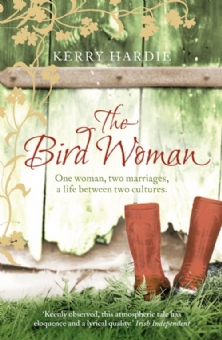
Kerry Hardy’s   The Bird Woman: The first time I ever saw Liam he was standing at the bar of Hartley’s in Belfast. I was married to Robbie then – I’d been married to Robbie for near on four years for all I was only twenty-three. I was married and that was that; I’d no more thought of going off with anyone else than of dandering down to the travel agents and booking myself a nice wee holiday on the moon.

 Hugh Fitzgerald Ryan’s   The Devil to Pay: Her father always walked with a staff, a long stick cut from the fork of a blackthorn. The stump of the thicker branch formed a knob, polished now by years of handling. The staff reached almost to his shoulder and when he stopped to deliver himself of some observation, he leaned his right forearm on the knob, bending slightly forward, with his left thumb hooked into his belt. 

Heather Richardson’s   Magdeburg: On the morning of her best friend Gertrude’s wedding Christa called Helga. She told herself to be calm, and not to let the woman’s sourness taint her joy. ‘Stay with Elsbeth, and be sure she has some dumplings at the usual hour or she’ll forget to eat.’

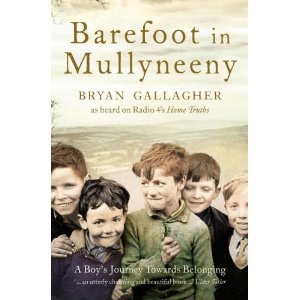
Bryan Gallagher’s Barefoot in Mullyneeny: The sacrament of Confirmation is for ever associated in my mind with the town of Ballyhooley in County Cork. Not that I’m from Ballyhooley. I’m not from anywhere else on the south coast either. But I just cannot think, Bishop, Confirmation, without seeing the bottom half of that old school map – Carrantuohill and Dingle, Cahirciveen, the Blaskets and Courtmacsherry.

Patricia O’Reilly’s   A Type of Beauty: It was one of those golden June evenings when sunshine bathed the astonishing greenness of the parks, dappled shadows on the tree-lined streets and glimmered and glowed off tall buildings. It was a perfect evening for a party, and the Leicester Galleries in the heart of London was hosting an exclusive affair.

Lar Redmond’s A Walk in Alien Corn: At the gates of Santry Court I presented my ‘Indefinite Leave’ pass to Arse Face Brennan, the sergeant on duty, who grunted, opened the gate, and with a sigh of relief I walked out into Civvy Street and freedom. The big bastard who reluctantly opened the gate had hated me from the first day he laid eyes on me, though he had never succeeded in ‘nailing’ me on any charge.

Have those bites whet your appetite for more? Don’t you want to continue? Click on the book titles to get more information about each book.

 Meanwhile I’m quite happy here by the fire. Maybe I’ll swap my tea for a hot port when the evening draws in – and I’ve got my book by an Irish author in my hands (not telling you which one it is though!). Happy St Patrick’s Day!

Posted in March 2011 | Tagged , , , , , , , , , , , , , , , , | 1 Comment

Christina Courtenay’s Scarlet Kimono

When I visited Manchester one weekend last October I took the opportunity to attend an Evening with Bernard Cornwell at the Royal Northern College of Music. Standing in the queue, waiting to enter the auditorium, I overheard 2 women behind me talking about writing historical fiction. Since I was in Manchester to attend the Historical Novel Society conference the next day I decided to be brazen and crash their conversation. One of the women was Christina Courtenay who was also attending the conference. Luckily Christina and her companion weren’t bothered by my forwardness and were happy to meet another writer. Within minutes I found myself swept into the HNS clan and introductions were flying fast enough to challenge my memory skills.

When I met her that evening, Christina’s first novel, Trade Winds, was recently released. Her second novel, The Scarlet Kimono, was released this month. If you are an observant reader you will have noticed that Trade Winds is listed on my World Book Day post to-read list. I’ve started it and quickly became engrossed but I haven’t managed to steal enough reading time as I’d like – so I haven’t finished it yet. After I turn the last page, I intend to ask Christina to come back and chat about Trade Winds. Meanwhile I’ve asked her here today to answer a few questions about The Scarlet Kimono.

So here we go

Welcome Christina. Please tell us about The Scarlet Kimono. The Scarlet Kimono is a historical romance set in 1611 and it’s the story of Hannah Marston, a young English girl who envies her brother’s adventurous life. When she stows away on his merchant ship, her powers of endurance are stretched to their limit, but then they reach Japan and all her suffering seems worthwhile. That is, until she is abducted by warlord Taro Kumashiro’s warriors.Kumashiro has been waiting to see the girl he’s been warned about by a seer. When at last they meet, it’s a clash of cultures and wills, but they’re also fighting an instant attraction to each other.  With her brother desperate to find her and the jealous Lady Reiko equally desperate to kill her, Hannah faces the greatest adventure of her life. And Kumashiro has to choose between love and honour …

In the novel you convincingly re-create seventeenth century England and Japan, two very different places. How did you bring these places alive for the reader?  Well, I hope I did!  Once I’d done as much research as I could, I just tried to imagine what it would have been like.  In the case of Hannah, it helped that I lived in Japan myself as a teenager.  I was able to draw on my own feelings when faced with such a different country – even though it’s changed a lot since the 17th century, I think the basics are the same.  As a foreigner, you have to accept that you are in another culture and embrace it, which is what Hannah eventually does.  With the hero, I had to try and see Hannah from his point of view, which was a bit trickier.

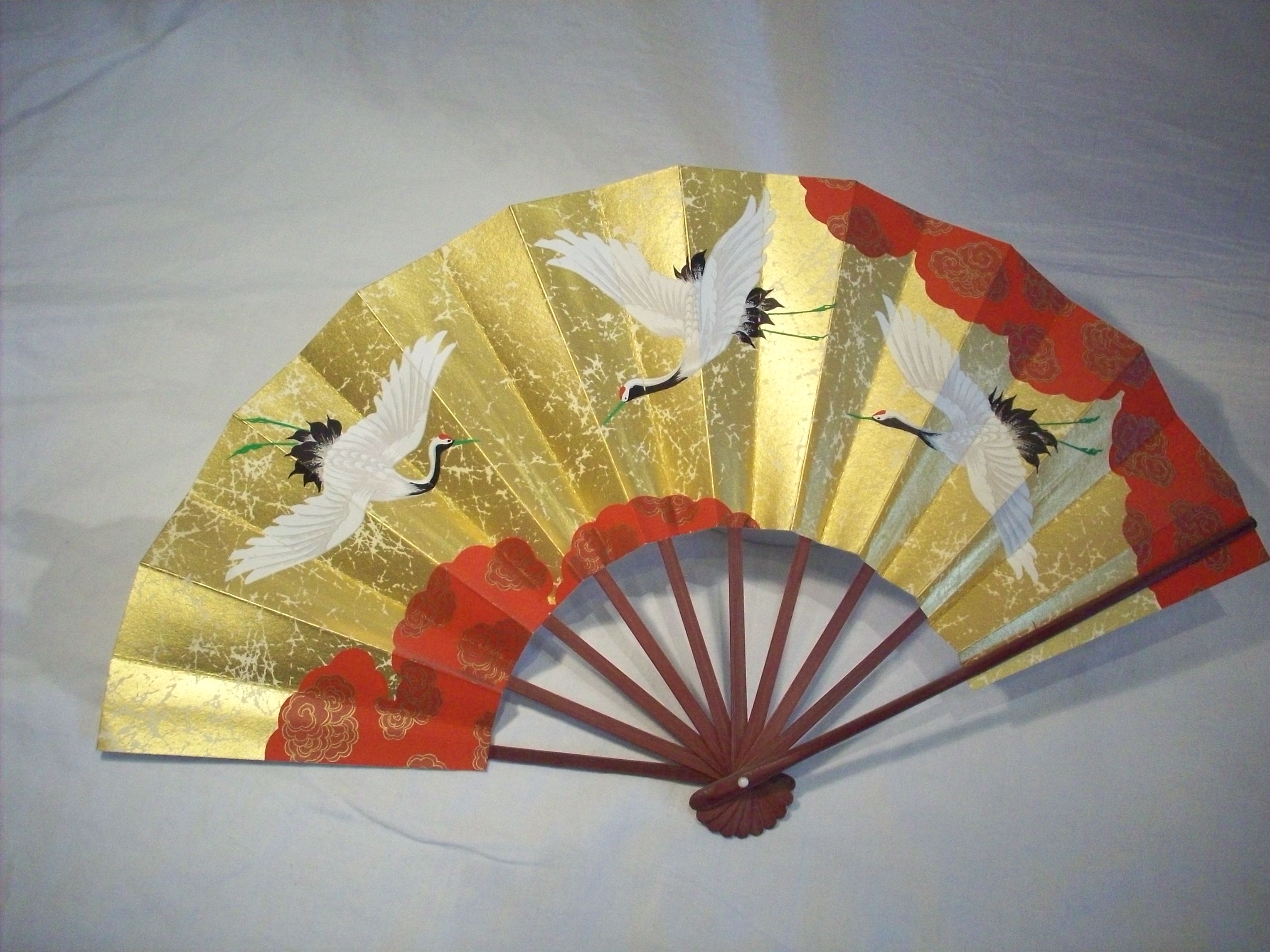
What research did you do for this book?  I read a lot of books obviously and visited the places I wrote about.  For instance, I went to Plymouth to see the layout of the town and its harbor, and fortunately for me there is a historic house called “The Merchant’s House” which is open to the public.  It seemed like the ideal setting for Hannah’s home and really inspired me.  I also went to Japan and while there, I visited the castle of Himeji, which turned out to be almost exactly the way I’d imagined Kumashiro’s castle in many respects.  There were lots of fascinating details which I was able to incorporate into my story.  Just being in Japan, observing the people, culture, countryside and so on helped as well.  I already loved Japanese food, so it was no hardship to taste the various dishes, and I brought back lots of Japanese things, like kimonos, fans and lacquer ware, which helped me describe them.

As there were few foreign woman in Japan during this era, The Scarlet Kimono’s heroine, Hannah Marston, is a rarity. So many of the characters you write about are male. Do you find it difficult or different to write about male characters?  No, strangely enough I’ve always incorporated the male point of view in my novels and when I found out that it’s what my publisher, Choc Lit, wanted, I was thrilled.  I was a bit of a tomboy as a child, so have always had lots of male friends – perhaps that influenced me?  I’m not sure.  But I do enjoy seeing part of the story through the hero’s eyes.  I think it makes it more balanced somehow.

You have said in other interviews that you like a happy ending to stories so your own books must end happily. Is there any other formula or plan you follow as you construct your stories?  I always like the villains to get their come-uppance.  I get very frustrated when I read stories where the bad guys get away with too much and aren’t punished adequately.  I suppose it’s like when we read fairy tales as children, we expected the princess to live happily ever after and the evil step-mother to either die or be banished.  If it’s too half-hearted, it’s not satisfying for the reader.

Another thing I like is for the hero to find a heroine who challenges his notions of the type of woman he’d like, eg. in The Scarlet Kimono where Taro has to come to terms with the fact that he loves a woman who is so completely different from what he’d ever imagined his future wife would be.

You are a member of the Romantic Novelists’ Association. How has membership in this organisation helped your writing career?  I really don’t think I’d be published at all if it wasn’t for the RNA.  Their New Writers’ Scheme encouraged me when I first started out, I’ve learned so much from the various talks and workshops organised by them, and I met both my critique partners (who are invaluable!) and my editor through the RNA.  I think joining a supportive organisation such as this is essential for an author, because otherwise it can get very lonely.  It’s great to meet up with people who share your love of books and writing and generally know where you’re coming from!

Thanks for visiting today, Christina. I enjoyed learning about your new novel. Now I just have to finish Trade Winds so I can begin The Scarlet Kimono!

The Scarlet Kimono is published by Choc Lit on 1st March, (ISBN 978-1-906931-29-2).  For more details see www.choc-lit.co.uk or www.christinacourtenay.com

Posted in March 2011, Uncategorized | Tagged , , , , , , , | 4 Comments

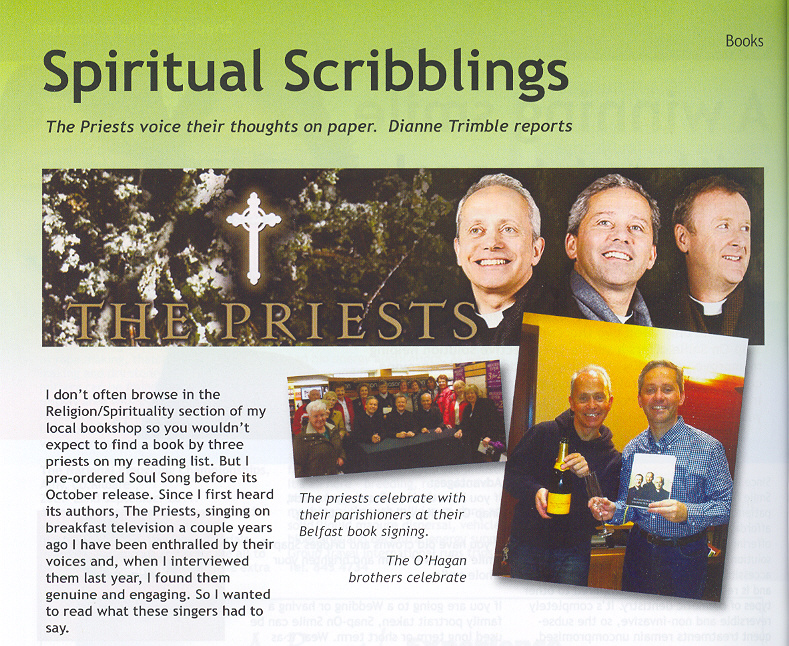
Spiritual Scribblings In Senior Times

This week is starting out right – mild weather and bright skies. It’s put a spring in my step. I feel like I’ve left winter behind. Ok, so I’m an optimist…But I’ll remain so until the next onslaught of wind, hail and spring fury.

Another thing that’s helped my mood was Saturday’s post. I opened a large white envelope and found not a bill or advertising but a copy of the latest issue of Senior Times – with my piece about The Priests’ recent book, Soul Song included. I turned the piece in before Christmas and hadn’t thought about it in ages so it was a pleasant surprise. When I was writing the article I enjoyed chatting with the trio and reading the book so it’s satisfying to see the piece on the page.

Posted in March 2011 | Tagged , , , , | Leave a comment

My Favourite To-Do List – My Reading Pile

Ireland and Britain are celebrating World Book Day today. There’s few things I enjoy doing more than reading and I always have a pile of books waiting for me – I just need more hours in a day to get through them all! So, in honour of the day, I think I should just retreat to a corner and bury my nose in a book…that’s how I’ll justify why I should take some me time today….don’t think it’s going to happen but I can dream…oh well, my reading pile’s still there waiting for me. When no one’s looking I’ll sneak back to it…

Here’s a few of the books that I’m eager to get started into:

Posted in March 2011 | Tagged , , , , , , , , , , , , , , , | Leave a comment

Sandy Sims Strategy for Creative Thinking

Wright design

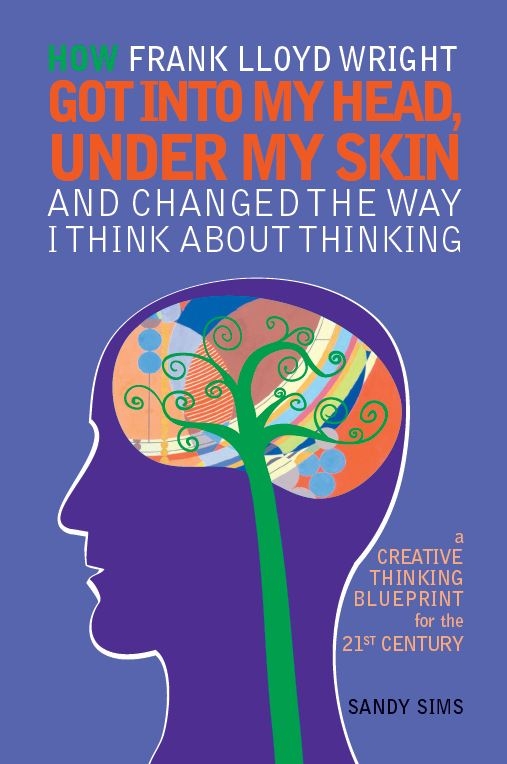
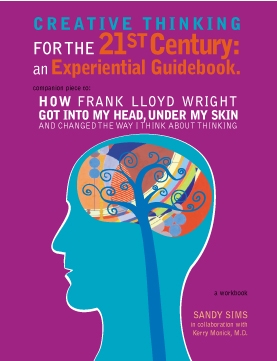
 Today I’m hosting a question and answer session with Sandy Sims, author of How Frank Lloyd Wright Got Into My Head, Under My Skin And Changed The Way I Think About Thinking, A Creative Thinking Blue Print For the 21st Century. The book  is Sims’ memoir, exploring the lessons he learned from studying architect Frank Lloyd Wright’s work and how he has applied them.

Would you explain to readers how Frank Lloyd Wright’s architectural designs influenced you?

Wright design

SS:  Frank Lloyd Wright was famous in the public eye, and was viewed as a genius by those who worked in his presence. To an even smaller audience he was known as a mystic.  His apprentices knew he was a genius because when Edgar Kaufman asked Wright if the plans for “Fallingwater,” considered by many to be the most famous residence in America, were completed, Wright said, “Yes, drive on up and see them.” The apprentices were dumbfounded because Wright had not committed one idea to paper. In the following eight hours they witnessed the design with all elevations from all perspectives pour out of him like a slow moving Xerox machine;  an impossibility for virtually anyone else.  He was coloring in the last shrubbery detail when Kaufman walked through the front door.  I visited many of Wright’s designs and was an overnight guest in his own home. I eventually was compelled to find out what it would be like to live inside the design of mystical genius.  So I built one of his last designs and found out. 

You have subtitled your book, Blueprint for Creative Thinking. What are you trying to convey to readers in this ‘map’ or ‘blueprint’?

SS: I feel we are in the midst of a major paradigm shift, one moving us from linear decision making towards intuitive decision making, the awareness of which is being catalyzed by technology. We feel an ever increasing sense of time compression. For example, when I first entered the advertising business we might have been allowed three weeks to create an ad. When I left the business, some twenty odd years later, the joke was that we would be lucky to have been given three hours.

In this type of environment we no longer have the luxury of being able to ponder. We must depend more and more on our intuition and trust that all will fall into place.

Once we are on this intuitive journey, there are synchronicities both positive and negative that can help us navigate. This method of navigating I refer to as the “blueprint.”

What would you like readers to learn?

SS: In the past there was a saying that went, “Plan the work, and then work the plan.” It was a very logical linear process. What is at play now is learning to discern what an intuitive hit is, being willing to follow through on this intuition, looking for confirming signs, and trusting the process. Like anything else, it takes practice to gain more confidence. This is the process I wrote about -consciously testing, a little bit at a time, and slowly raising the ante. I might add that this does not mean abandoning reason or linear thinking – not at all. It means learning to be comfortable with both modes and accepting that the intuitive model is not just blind luck, but it is as real as the linear model.

You say that ‘our intention does indeed affect the material world’. Can you explain what this means and what it means to readers?

SS: I am sure that some day in the future a scientist will be awarded the Nobel Prize for showing the mechanics of how this works. In the mean time it appears that our intentions seem to be the force and energy source that gives our thoughts their power to attract events into existence. Lynne McTaggert, in her book, “The Field” as well as through her ongoing Intention Experiment is documenting this process.

The bottom line is that what you think about with strong intent somehow begins to organize and order creative forces into play. Obviously where there are opposing forces there will be limitations. But the importance is that we all have this potential. If we accept and consciously try it out we can look for verification.  As we do that, we can see that we have created much more than we previously were willing to acknowledge.  This process builds on itself providing us with  a useful tool to deal with the future.

Can your blueprint help world problems and, if so, in what way?

SS:  Yes. I feel that as more people begin to trust their intuition and experience the results there will a shift towards more trusting in general and cooperating to get things done.  As this happens fearfulness will begin to recede. Problems will be solved much quicker.

Why did you write the book?

SS: In the beginning it was just to have a cathartic experience. In so doing I realized that because I had been on a journey of self inquiry I felt compelled to make a report. You could say I was following another strong urge. I felt many people are having similar experiences and sharing the results seems like a good thing to do.

About the author:    Sandy Sims was raised and educated in the American South.  After serving as Naval Officer and finishing graduate business school, he followed a dream to live in Honolulu where he built one of Hawaii’s most successful advertising agencies.

The crisis of personal health and business setbacks opened the way to larger spiritual dimensions including a long association with the Caddy family, founders of the Findhorn Spiritual Community in Scotland. His book, How Frank Lloyd Wright Got Into My Head, Under My Skin And Changed The Way I Think About Thinking, A Creative Thinking Blue Print For the 21st Century,  is a memoir of his journey culminating in a 20 year project with the Frank Lloyd Wright Foundation.  He has collaborated with Psychiatrist, Kerry Monick MD, and authored Creative Thinking For The 21st Century, An Experiential Guidebook.

When not travelling, Sandy resides in San Miguel de Allende, Mexico where he writes, plays tennis, pokes around with his camera and embraces a new culture.

For more information about Sandy Sims and How Frank Lloyd Wright Got Into My Head, Under My Skin And Changed The Way I Think About Thinking, A Creative Thinking Blue Print For the 21st Century, visit http://creativethinkingbook.com/ and visit this page to get the Amazon links http://creativethinkingbook.com/buy-your-copy/

Posted in March 2011 | Tagged , , , | 3 Comments