Does A Picture Say It All?

What’s that saying about a picture and a thousand words? Yes, that one. If you read my previous post you’ll know I’ve been playing around with images lately. Since my first foray into ‘memeing’ I’ve ventured into the world of Canva.com. I’m trying to create images that will give give visitors to my Facebook page a flavour of some of my Short Reads before they open the books.

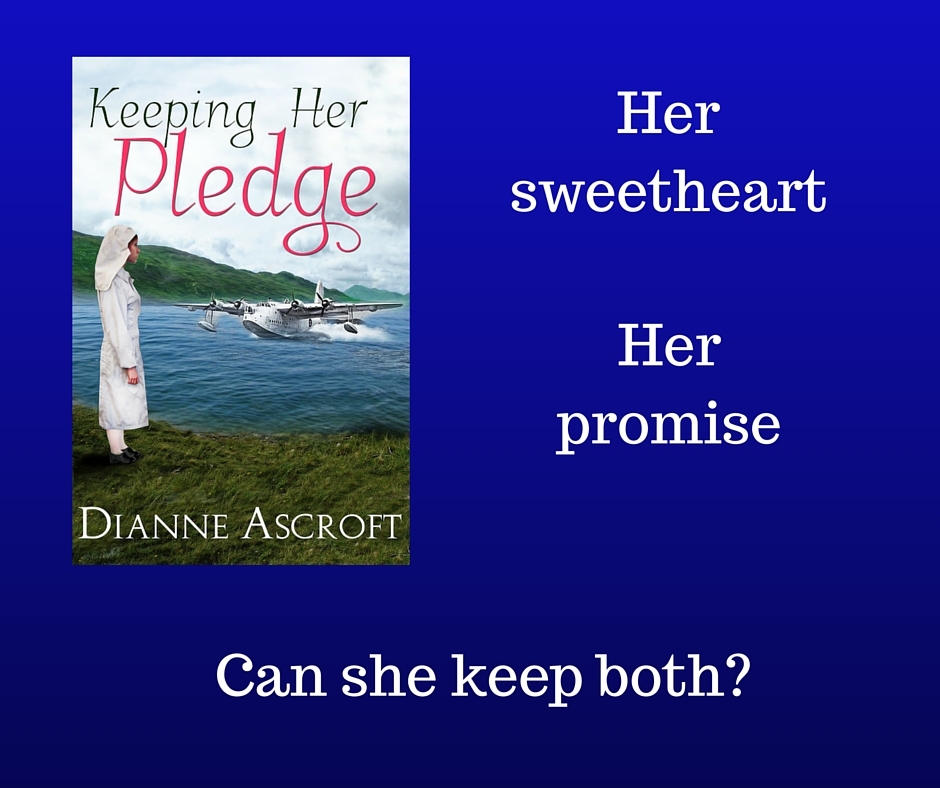
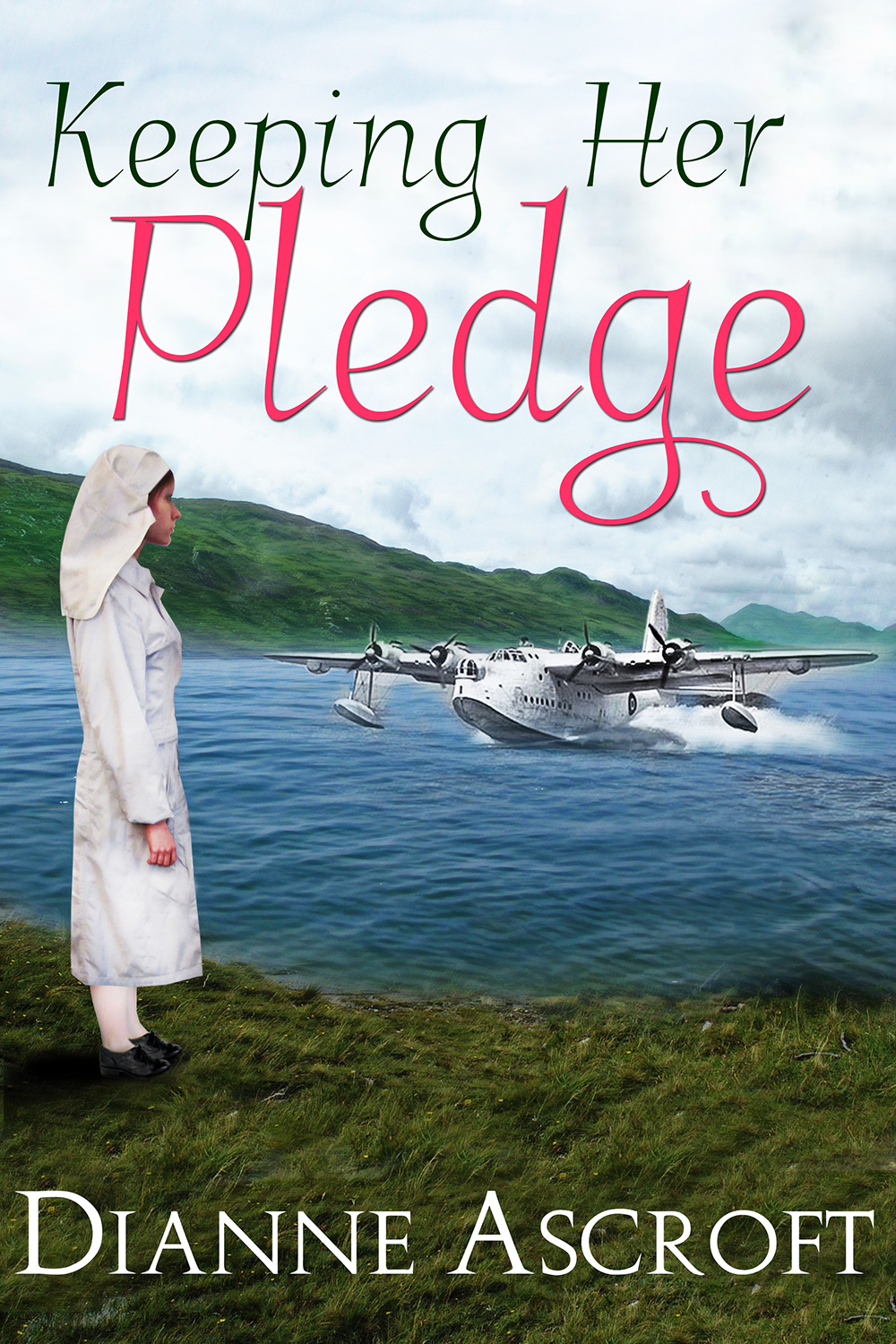
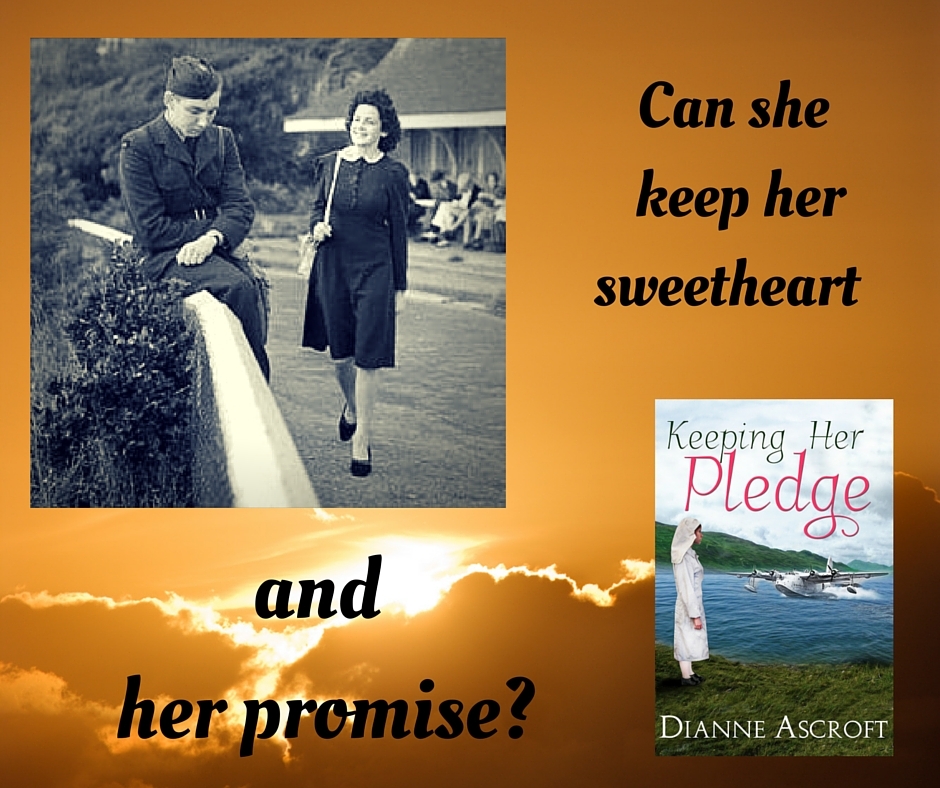
Below are several I’ve created for Keeping Her Pledge. What do you think of them? Here’s the first:

Can she keep her sweetheart 2

And another one:

Keeping ad 3

And the last one::

Impossible 1


Posted in September 2015 | Tagged , , , , , , , | Leave a comment

M-m-m-meme-ing

I recently discovered memes and I’ve been having fun learning about them and creating them – so much so that I even wrote about it on Writers Abroad’s blog this morning. CLICK HERE if you want to read the post.

want-to-know-o2r9tm

Posted in September 2015, Uncategorized | Tagged , , , , | Leave a comment

A Whirlwind Of Words

Were you wondering where I’ve been this summer? You may have noticed that I’ve been very quiet since June. Although I haven’t posted much on Ascroft, eh? the past couple months have been a whirlwind of writing. I’m working on a new Short Read for The ecstatic-writer-theYankee Years series and I’m also editing a full length novel for the series. That could easily have kept me occupied for ages but that just wasn’t enough – well, it was, but that didn’t stop me. I’ve also been involved in editing and proofreading writing collections for two local writers’ groups. So, while everyone else has been lying in the sun all summer – oops, I forgot, not in Britain this year…Well, they must have found something to do. And while they were occupied so was I. Getting all this writing, editing, and proofreading done. So have a bit of patience – I’ll be back here again soon.

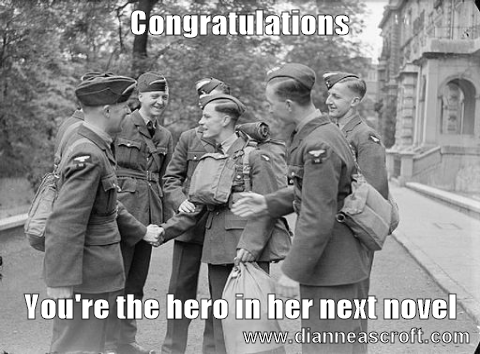
Now to get myself back in the mood for my writing:

RAF lads 1


Posted in Uncategorized | Tagged , , | Leave a comment

Sorrow Lake, My Kind Of Crime Novel

A couple years ago I reviewed Michael McCann’s crime novel, The Rainy Day Killer. When reading crime fiction, I gravitate toward cosy mysteries so it was not what I was used to. It is much darker. So, when I began reading his most recent novel, Sorrow Lake, I steeled myself, expecting it to be similar. But, it isn’t. I found myself immersed in an interesting police procedural that doesn’t contain too much gore.

Sorrow Lake coverHere’s the publisher’s summary of the book: “Detective Inspector Ellie March of the Ontario Provincial Police is called in to investigate when a man from the village of Sparrow Lake is found shot to death, execution style, in a farmer’s field in rural eastern Ontario.

Leading an inexperienced team of detectives, she probes beneath the wintry surface of the township to discover the victim had a dark secret–one that may endanger others in the community as well.

For young and enthusiastic Detective Constable Kevin Walker, the chance to work with Ellie March is an honour, until the situation turns ugly and unexpected betrayal threatens to destroy his promising career.”

Sorrow Lake is the first book in McCann’s new March and Walker detective series and, as I’ve mentioned, it has a different tone from his Donaghue and Stainer crime series. I have to admit that it fits better with my comfort zone – a gripping plot that never loses its tension and picks up pace as it neared the climax but not too much graphic violence. There’s nothing in it that would make me squirm and screw my eyes shut but it still has nail biting moments.

Not surprisingly for a crime novel, the story centres on the hunt for a killer and the law enforcement officers involved in the case, particularly Detective Inspector Ellie Walker, an experienced detective, and Detective Constable Kevin Walker, who is new to homicide investigations. I thought there was a bit too much explanation of some of the investigation procedures and techniques as the story opened but, once those details had been explained, the story moved along at a good pace and I got involved in trying to put together the clues to find the killer. I also enjoyed the subplot revolving around the jealousies and power struggles within the police department, particularly when one officer was jockeying to be chosen to lead the investigation.

Author Michael McCann with his dog, Cody

Author Michael McCann with his dog, Cody

As I’ve said, the story is about the hunt for a killer and the people involved in it. I found the interaction and sometimes tension between the characters as interesting and absorbing as the actual case. I liked the main characters, Ellie March and Kevin Walker, and I think this was partly because the author gives readers glimpses of their private lives in between the scenes involving the investigation. This adds depth to the story as readers develop a better understanding of characters’ actions and decisions. In tightly written scenes, the author also produces well drawn secondary characters. Especially memorable characters are the underhanded Detective Constable Dart, Ellie March’s musician neighbour, Ballantyne Ridge, and the elderly, nosy woman who lives opposite the victim’s widow.

The story is set in a small town and the surrounding countryside in Northern Ontario, Canada during winter. The landscape and the weather are both important to the story and the author vividly paints a scene that the reader can step into. He also has a good grasp of the internal structure of the regional police force and the details he includes about it add authenticity to the story. It isn’t a location that is frequently used as the setting for novels and it is more intriguing as a result.

I found Sorrow Lake an entertaining and engrossing read. I liked the characters and was grabbed by the plot. I will happily read other books in this series as I think the characters are worth re-visiting. So I have no hesitation wholeheartedly recommending this book.


Posted in August 2015 | Tagged , , , , , , | 1 Comment

Bitter Bronx: Charyn’s World

During the past four or five years, I have read several historical novels and a crime novel by Jerome Charyn. Bitter Bronx is my first foray into his short stories.

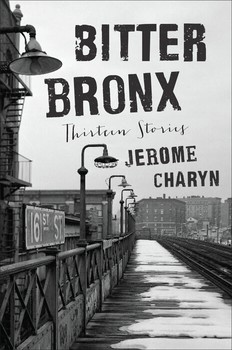
bitter bronx 1This is how the publisher describes the short story collection: “Brooklyn is dead. Long live the Bronx! In Bitter Bronx, Jerome Charyn returns to his roots and leads the literary renaissance of an oft-overlooked borough in this surprising new collection.
In Bitter Bronx, one of our most gifted and original novelists depicts a world before and after modern urban renewal destroyed the gritty sanctity of a land made famous by Ruth, Gehrig, and Joltin’ Joe.

Bitter Bronx is suffused with the texture and nostalgia of a lost time and place, combining a keen eye for detail with Jerome Charyn’s lived experience. These stories are informed by a childhood growing up near that middle-class mecca, the Grand Concourse; falling in love with three voluptuous librarians at a public library in the Lower Depths of the South Bronx; and eating at Mafia-owned restaurants along Arthur Avenue’s restaurant row, amid a “land of deprivation…where fathers trundled home…with a monumental sadness on their shoulders.”

In “Lorelei,” a lonely hearts grifter returns home and finds his childhood sweetheart still living in the same apartment house on the Concourse; in “Archy and Mehitabel” a high school romance blossoms around a newspaper comic strip; in “Major Leaguer” a former New York Yankee confronts both a gang of drug dealers and the wreckage that Robert Moses wrought in his old neighborhood; and in three interconnected stories—”Silk & Silk,” “Little Sister,” and “Marla”—Marla Silk, a successful Manhattan attorney, discovers her father’s past in the Bronx and a mysterious younger sister who was hidden from her, kept in a fancy rest home near the Botanical Garden. In these stories and others, the past and present tumble together in Charyn’s singular and distinctly “New York prose, street-smart, sly, and full of lurches” (John Leonard, New York Times).

Throughout it all looms the “master builder” Robert Moses, a man who believed he could “save” the Bronx by building a highway through it, dynamiting whole neighborhoods in the process. Bitter Bronx stands as both a fictional eulogy for the people and places paved over by Moses’ expressway and an affirmation of Charyn’s “brilliant imagination” (Elizabeth Taylor, Chicago Tribune).”

I’ve never found Charyn’s writing straightforward or easy to read. When I first read one of his novels several years ago, I found that I needed to acquire a taste for his writing style. It took some effort but it was worth persevering. His storytelling style in this collection is best described as picaresque: the plot is often episodic rather than unfolding in a linear manner and many of the characters are likeable rogues in a corrupt society.

One of the most distinctive traits of Charyn’s writing is how he uses language. When I interviewed him on this blog regarding his novel Johnny One-eye, he said that he grew up in the Bronx having no language. He had no idea newspapers such as the New York Times existed. His friendship with several librarians in a South Bronx library introduced him to the world of words and literature. From these early encounters, he developed a love of words, which fostered his own unique writing style. Often his prose seems to ramble along, tumbling together his characters’ thoughts as well as the unfolding action. His descriptions of people and places are vivid, aided by unusual metaphors and ornate language.

Characters and settings seem to interest Charyn more than the plot of the story. His characters are always unusual, often beguiling but with dark currents never too far beneath the surface. They are diverse, each with a unique, captivating voice. Like other aspects of his work, his characters are rarely straightforward. They are complex, motivated by a plethora of values and desires that often war with each other. They are also duplicitous with each other and the reader, leaving the reader wondering what to believe in the narrative.

Place is important in Charyn’s writing and nowhere more so than in this collection of stories. Set in the Bronx, these stories are conjured from the writer’s memories of his boyhood home and, no doubt, this helps to bring the place to life. The stories are mainly set in 1940s gangster run New York City, a world of violence and opulence with a moral code all its own. They evoke this place and time vividly and fondly. Despite the brutality of the criminal underworld, it is a place of lavish excess and vitality. The place and the people are larger than life.

In my interview with Charyn regarding Johnny One-eye, he said, “Fiction often has a greater truth than most historical texts…Novelists see history as story. We’re not burdened by ‘inaccuracies’.” I think this is how the reader should approach Charyn’s short story collection: suspend disbelief and enjoy the language that spills onto the page and the world the author creates. Charyn’s writing style may not appeal to every reader but it is worth giving it a try to discover the delights of his stories.

Readers can learn more about Jerome Charyn and Bitter Bronx by visiting the author’s website and the book’s Facebook page.

Jerome  Chloe I by JorgAbout Jerome Charyn: Charyn’s stories have appeared in The Atlantic, The Paris Review, The American Scholar, Epoch, Narrative, Ellery Queen, and other magazines.  His most recent novel is I Am Abraham. He lived for many years in Paris and currently resides in Manhattan.

Posted in June 2015 | Tagged , , , , , | 1 Comment

Stepping Into Eighteenth Century America

Today we are stepping into the American past. I have invited Allen Woods to visit Ascroft, eh? to answer a few questions about The Sword and Scabbard, the first novel in his series set in eighteenth century America.

Welcome, Allen. Let’s get started, shall we?

Tell us about your novel.

sword+scabbard-cover-300dpiAW: It is essentially a crime novel set in 1760s Boston. Political events are central to everyone’s life at the time and force the main characters to take actions they might not otherwise. The book shows a side of Boston rarely seen in standard histories and the accepted narrative – it is told from the viewpoint of common people on the street, rather than the lords and leaders at the time.

What prompted you to write about this historical event?

AW: I’ve been a writer my entire adult life, and as a part of other research, I found the events and people of the period fascinating. It seemed a story waiting to be told. Nearly all Americans have some view of the events in the book, but they are generally just a vague knowledge that paints the Americans as heroic freedom fighters and the British as generally stupid and greedy.

How closely did you stick to the historical facts? If you used them loosely, how did you decide whether to deviate from them?

AW: All the political and historic events are factual. For some characters, such as the victims of the Massacre, I invented dialogue and interactions that are entirely plausible, but not documented anywhere because the characters are lower class and either couldn’t read and write or had no time to keep a diary. Everything else, such as British and American leaders’ actions, are accurate. There is widespread documentation of smuggling and Customs graft during this period, but not specifics that were required for the action in the book, so those details are invented as well.

What research did you do for this book?

AW: I estimate that I read or consulted about 50 books and many more articles and other sources. I also live near Boston and visited the main sites many times.

Do you use a mixture of historic figures and invented characters in the novel. Which is more difficult to write? Which to you prefer to write and why?

AW: The fictional characters are heavily influenced by historic figures and events. Because I used factual figures and events, the 1st person narrator reacts to them and describes them from his point of view. His perspective is one that I believe was common at the time, but mostly undocumented. The tavern, Nicholas, Maggie, and the others are fictional, although their stories are completely plausible and don’t require any leap of faith or suspension of disbelief. Their actions flowed easily from my imagination.

In an historical novel you must vividly re-create a place and people in a bygone era. How did you bring the place and people you are writing about to life?

AW: I was so steeped in the historical facts and background that I came to feel I was almost living in that era. Everything, from food and clothing to the look of the streets and the buildings, became similar to a movie scene in my mind’s eye. I believe good writing needs to be visual and immediate.

There often seems to be more scope in historical novels for male characters rather than female characters. Do you prefer to write one sex or the other. And, if so, why?

AW: The narrator is a male and is a bit baffled by some female attitudes and behavior, which I don’t find uncommon. However, I feel that the motivations and actions of Maggie, the main female character, are believable and consistent. I look forward to developing her character more completely in the planned series of books.

Thank you for answering my questions, Allen, and good luck with the series.

Readers can learn more about Allen and The Sword and Scabbard by visiting his website and his Goodreads page.

Allen Woods 1About Allen Woods: Allen has been a full-time freelance writer and editor for almost 30 years, writing everything from magazine and newspaper features to sales training for corporate clients. Recently he has specialized in social studies and reading textbooks for all ages. The spark for The Sword and Scabbard came while doing research for an American history text. He lives 100 miles from the site of the Boston Massacre and plans a series which will follow Nicholas and Maggie through the Tea Party, Lexington and Concord, the Revolutionary War, and beyond. He welcomes e-mail at the book web site that will be functional shortly.

Posted in June 2015 | Tagged , , , , | Leave a comment

Launching The Yankee Years Series

This week we marked the anniversary of D-Day, more than seventy years after the invasion began. Even after so many years have elapsed, the events of that day and the weeks and months that followed still resonate with us. As we remember this pivotal point in the Second World War, I thought it was an appropriate time to launch the first book in The Yankee Years, my new series, which tells stories of a little known part of Britain’s war history.

During the Second World War Northern Ireland hosted American, British and Canadian troops. County Fermanagh welcomed Air Force squadrons hunting U-boats and defending shipping convoys in the Atlantic Ocean and Army battalions training and preparing for deployment to Europe’s Western Front. After the Allied troops arrived, life in Northern Ireland would never be the same again. In The Yankee Years novels and Short Reads I endeavour to weave thrilling and romantic tales of the people and the era.

The Yankee Years series will be a mix of Short Reads and novels. The first book, Keeping Her Pledge, which was released this week, is a short read – approximately 90 minutes reading time.

Let me introduce Keeping Her Pledge:

Pearl-FINAL-Kindle2June 1942: Pearl Grainger’s life is much more exciting and fun since the Allied troops arrived in County Fermanagh, Northern Ireland. Although she has to steel her nerve to help her brother, Davy, on smuggling runs across the border to the Republic of Ireland, she’s out dancing several times each week and meets an RCAF seaplane navigator, Pilot Officer Chuck Walker who quickly becomes special to her.

The harsh realities of war are far removed from her until the evening an RCAF seaplane crashes into a field on her family’s farm. Watching her family attempt to rescue the crew from the burning wreckage, she realises it’s time she played her part in the war effort. Pearl resolves to volunteer at the nearby US Army Station Hospital.

It’s not an easy promise to keep. Pearl’s intentions are good but nothing in her life has prepared her for the horrific sights, sounds and smells of a hospital ward during wartime. And Chuck’s disapproval and jealousy don’t make it any easier.

Can Pearl keep her pledge to do her bit for the war effort without losing the man she loves?

To learn more about Keeping Her Pledge, visit:

UK Amazon page

US Amazon page

I hope you will enjoy Keeping Her Pledge and the rest of the series as the novels and short reads are released. If you would like to be informed about the new releases and occasional special offers, please sign up for my newsletter here.

Posted in June 2015 | Tagged , , , , , , , , | 1 Comment

The Graham Saga Comes To A Close

I’ve been reading the Graham Saga historical novels for just over a year now. To Catch A Falling Star by Anna Belfrage, who is on a Historical Fiction Virtual Blog Tour with the book, is the last in the eight book timeslip historical fiction series set in the seventeenth century. I began reading the series at Book 5, Serpents in the Garden, in April 2014 and followed it with Book 6, Revenge and Retribution, in September 2014 then Whither Thou Goest in December 2014. I have now finished To Catch A Falling Star, the conclusion of the series. I received a free copy of each book in exchange for an honest review of it.

02_To Catch a Falling Star_CoverThe publisher, Silverwood Books, describes To Catch a Falling Star as “the eighth book in Anna Belfrage’s series featuring time traveller Alexandra Lind and her seventeenth century husband, Matthew Graham.

Some gifts are double-edged swords …

For Matthew Graham, being given the gift of his former Scottish manor is a dream come true. For his wife, Alex, this gift will force her to undertake a perilous sea journey, leaving most of their extensive family in the Colony of Maryland. Alex is torn apart by this, but staying behind while her husband travels to Scotland is no option.
Scotland in 1688 is a divided country, torn between the papist Stuart king and the foreign but Protestant William of Orange. In the Lowlands, popular opinion is with Dutch William, and Matthew’s reluctance to openly support him does not endear him to his former friends and neighbours.

While Matthew struggles to come to terms with the fact that Scotland of 1688 bears little resemblance to his lovingly conserved memories, Alex is forced to confront unresolved issues from her past, including her overly curious brother-in-law, Luke Graham. And then there’s the further complication of the dashing, flamboyant Viscount Dundee, a man who knocks Alex completely off her feet.

All the turmoil that accompanies their return to Scotland pales into insignificance when a letter arrives, detailing the calamities threatening their youngest daughter in Maryland – at the hand of that most obnoxious minister, Richard Campbell. Matthew and Alex have no choice but to hasten back, no matter the heartache this causes.

Will they make it back in time? And what will Richard Campbell do?”

Everything I’ve written about the previous books in the series holds true for this one so I apologise in advance for repeating myself. To Catch A Falling Star is well written with a plot that keeps the reader turning the pages.

The settings in this series of novels seem to have a life of their own and I love their diversity. This time we are back in Maryland as well as venturing across the ocean to revisit the Grahams’ Scottish home place as the Jacobite risings are beginning. The author skilfully contrasts the geographic and climatic features of these two places, vividly describing them so that they are easy for the reader to imagine. With Alex, I felt the cold loneliness of the Scottish countryside and longed to sit in the warmth of a Maryland meadow.

In each book in this series, I’ve found the characters believable and engaging and I became immersed in their stories. I enjoyed following the developments in Sarah’s and Samuel’s lives this time and meeting Alex’s adult son, Isaac. I was also delighted when one of my favourite characters, Fr Carlos Munoz returned to the story. Alex’s wily brother-in-law, Simon Melville, acquitted himself much better in this book than he did in a previous one and I found myself liking him again. In this book I especially enjoyed the convincing way historic figures were woven into the story – meeting Viscount Dundee was indeed a pleasure.

For readers who haven’t followed the saga, it wouldn’t be difficult to pick up the threads of the story even though this is the last book in the series. Details from previous books are seamlessly woven into the novel and explained so that the reader isn’t confused. It’s possible to read To Catch A Falling Star as a standalone book or as part of the series. And for the reader who has been engrossed in the saga, all the threads from previous books come together in this book for a satisfying conclusion to the story.

I can honestly recommend this novel to anyone who enjoys historical fiction, fantasy/time-slip or just a good story.

03_Anna BelfrageAbout Anna Belfrage: Anna was raised abroad, on a pungent mix of Latin American culture, English history and Swedish traditions. As a result she is multilingual and most of her reading is historical – both non-fiction and fiction.

She was always going to be a writer – or a historian, preferably both. Instead she ended up with a degree in Business and Finance, with very little time to spare for her most favourite pursuit. Still, one does as one must, and in between juggling a challenging career she raised her four children on a potent combination of invented stories, historical debates and masses of good food and homemade cakes. They seem to thrive … Nowadays she spends most of her spare time at her writing desk. The children are half grown, the house is at times eerily silent and she slips away into her imaginary world, with her imaginary characters. Every now and then the one and only man in her life pops his head in to ensure she’s still there. She was always going to be a writer. Now she is – she has achieved her dream.

For more information about the author of the Graham Saga novels, please visit Anna Belfrage’s website and blog. You can also find her on Facebook, Twitter, and Goodreads.

Posted in May 2015 | Tagged , , , , , , | 2 Comments

Marianne Perry’s The Inheritance

Today I’ve invited Marianne Perry, author of The Inheritance, to visit Ascroft, eh? to talk about her historical novel.

Welcome Marianne. It’s always nice to have a fellow Canadian here. Let’s get started, shall we?

Tell us about your novel The Inheritance.
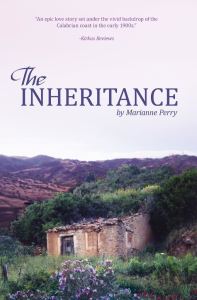
Inheritance_CoverMP: The Inheritance is a historical fiction/romance set in Calabria, southern Italy from 1897 to 1913. Caterina is the protagonist and the story chronicles her life from birth to young womanhood. During this period, the region was subject to earthquakes and tsunamis and the land, harsh with poverty the norm. Superstition clashed with religion and a rigid class system ruled the people. Calabria’s stark and unforgiving backdrop mirrors the tragic tale that unfolds in The Inheritance.

Caterina is born into a society that has predetermined what she can and cannot do; nevertheless, she refuses to submit to the limits of her gender, the constraints of her standing and the demands imposed by those in power. Instead, she remains steadfast in her commitment to become the woman she imagines. In the end, Caterina’s decisions ignite conflicts that result in dire consequences for all whose path she crosses.

What prompted you to write The Inheritance?

MP: I am a second-generation Canadian-Italian and family mysteries intrigue me. I’ve pursued genealogical research for twenty years and what I unearthed about my grandmother’s early life in Calabria, southern Italy inspired me to write The Inheritance.

My grandmother, Nana Caterina was the matriarch of our large Perry (Perri) family in Northern Ontario. Born 1889 in a mountain village in Calabria, southern Italy, she left her family in 1913, travelled in steerage on a steamship across the Atlantic Ocean and landed at Ellis Island, New York. She settled in Sault Ste. Marie, Ontario, Canada where she met and married my grandfather, another Calabrian immigrant. They raised nine children that included my late father and despite a formidable presence; her early life was shrouded in mystery.

I became keen to unlock her past. Nana Caterina never returned to Italy or saw her parents again and I wanted to find out why! I began genealogical research, obtained original Italian documents and travelled to Calabria where I visited her birthplace. I have solved many mysteries and though The Inheritance is fiction, its tale emerged from discoveries made about Nana Caterina’s early life in Calabria.

How closely did you stick to the historical facts? If you used them loosely, how did you decide whether to deviate from them?

MP: The Inheritance mirrors conditions and circumstances in Calabria, southern Italy during the period 1897 to 1913.

What research did you do for The Inheritance?

MP: a). In order to realistically depict Calabria, southern Italy during this period, I studied the history, geography, social mores, religious beliefs and cultural traditions of the region. I reviewed old maps to ensure the settlements referenced existed at this time plus familiarized myself with their particular evolution. To heighten accuracy, I gained understanding about the feudal land system and the ‘Ndrangheta, an criminal network rooted in southern Italy.

b). Caterina, the protagonist, ages from birth to sixteen and my ancestral research emphasized my grandmother’s life prior to her 1913 North American immigration in an effort to understand her everyday experiences as well as those of her contemporaries. I examined myriad vital records and a wide range of genealogical documents specific to men, women, children and families of her era to grasp living conditions and challenges pertinent to Calabria, southern Italy.

c). Names help establish authenticity in historical fiction and I selected those such as Mafalda, Fiore and Elda for minor characters from Italian genealogical documents of the late 19th and early 20th century.

d). Place descriptions enliven the past for readers and my travel to Calabria, southern Italy and exploration of the actual places where the action of The Inheritance occurs helped me pen vivid passages. I also kept a journal plus took hundreds of photographs when I visited Calabria that I referred to while writing drafts of the novel.

In an historical novel you must vividly re-create a place and people in a bygone era. How did you bring the place and people you are writing about to life?

MP: a). Travelling to Calabria, southern Italy and exploring where I set The Inheritance was an effective writing tool. The Villa San Michele, for example, is fictional but The Grand Hotel San Michele exists. In the story, San Michele is owned by Santo and Anna Marino and Caterina’s family are peasants living on an enclave who work for them. The Grand Hotel San Michele, located near Cetraro, is a turn-of-the-century villa situated on a 124-acre estate overlooking the Tyrrhenian Sea. I stayed there when I went to Calabria, became friends with the woman who owned it, heard about its origins and shared my plans to write The Inheritance. Wandering the grounds, absorbing the sweet scented lavender shrubs and listening to the crashing waves on its private beach as Caterina does in The Inheritance made me feel as if she’d actually lived at San Michele.

b). In The Inheritance, an earthquake striking southern Italy on December 28, 1908 has a devastating impact on Caterina. I chose the natural disaster because it advanced plot, developed conflict and reflected a true event. According to historical records, an earthquake occurred this day centered on the city of Messina, Sicily. It registered 7.2 with aftershocks felt for a radius of 300 kilometres. The twelve metre tsunami that followed devastated the Tyrrhenian coast and authorities have estimated between 100,000 and 200,000 lives were lost in southern Italy. What happened to Caterina in The Inheritance would have been a fate suffered by many.

c). While travelling throughout Calabria, I was on the lookout for a cover photograph and I snapped the picture of the old crumbling stone cottage featured on The Inheritance. It was located near the mountain village where my Nana Caterina was born and is intrinsic to Caterina’s story in the novel. How perfect, I thought.

There often seems to be more scope in historical novels for male characters rather than female characters. Do you prefer to write one sex or the other? And, if so, why?

MP: I write from multiple points of view; hence, male and female. My thirty-year career in education, communication, the private sector, volunteerism plus background in teaching dramatic arts has helped me finesse my characters. In addition, I am an international traveller and have explored every continent. Like many adults, I have had diverse roles: daughter, wife, ex-wife, mother, single-parent, parent-caregiver, sister, friend, unemployed worker, etc. The totality of such experiences have widened my understanding of others, enriched my awareness of the world and provided me valuable insight that I can blend into those I create to tell my stories.

Thank you for answering my questions, Marianne, and good luck with your novel. Readers can learn more about Marianne by visiting her pages on Facebook, Twitter, Instagram, LinkedIn, and Goodreads.

Inheritance Marianne PerryAbout Marianne Perry: Family dynamics, genealogical research to solve ancestral mysteries and international travel are her priorities. A second-generation Canadian-Italian, she is the author of The Inheritance, a historical fiction/romance set in Calabria, southern Italy from 1897 to 1913 that was inspired by her grandmother’s early life. With a thirty-year career in education and communications, Marianne holds a Master of Education Degree from The University of Western Ontario (Canada). A past member of the Board of Trustees, the Canadian National Arts Centre Corporation, she has also published non-fiction genealogical articles throughout North America. As a girl, she fell in love with The National Geographic Magazine and dreamt of exploring the world. With her January 2014 visit to Antarctica, she achieved her goal of stepping foot on every continent. The mother of two grown children, Marianne and her husband live on the shores of the St. Mary’s River, which drains Lake Superior on the outskirts of Sault Ste. Marie, Ontario, Canada. She continues to research her family’s history and write non-fiction genealogical articles. In addition, she is working on her second novel and planning further adventures. Marianne blogs about genealogy, travel, family and writing on her website.

Posted in May 2015 | Tagged , , , , , | Leave a comment

Knowing Where I’m Going

Enemy-Draft-1e[1] revisedSince I’m in the middle of revising the first draft of a novel and have just finished writing the first draft of a long short story, I’ve been thinking a lot about planning stories. This week I talked about my favourite way to plot on Writers Abroad’s blog. If you’re interested you can read it here.

Posted in April 2015 | Tagged , , , | 1 Comment