A New Thornleigh Tale

In September I met Barbara Kyle at the Historical Novel Society’s bi-annual UK conference in London. Soon after we met I finished reading my first novel by her. Despite Barbara’s prolific output of historical fiction the first novel I was drawn to was one of her thrillers, Entrapped. I think what caught my attention was its Canadian setting – maybe a yearning for my native land surfacing. From the first page I got caught up in the action and the characters’ lives and thoroughly enjoyed the book. So now, I’m ready to move on to Barbara’s ‘Thornleigh’ novels. But first I’ve invited her here today to tell us a bit about the latest one in the series. Welcome Barbara.

Thanks for inviting me to your blog, Dianne. I appreciate the chance to reach out to your readers.

Tell us about your novel.

BK: Blood Between Queens takes place in London, 1568. Justine Thornleigh is a ward of Baron Thornleigh and loves his nephew Will Croft, a promising young lawyer at Queen Elizabeth’s court. Will’s marriage proposal thrills Justine – but she has kept a dark secret from him: she is the daughter of the traitor Christopher Grenville, presumed dead. Worse, she learns to her dismay that the Thornleighs and Grenvilles were once locked in a lethal feud, and that Will hates the Grenvilles for murdering his father. Eager to prove her loyalty to the Thornleighs and Elizabeth, Justine accepts a mission as lady-in-waiting to Mary Queen of Scots who has fled to England: Justine will spy on Mary for Elizabeth.
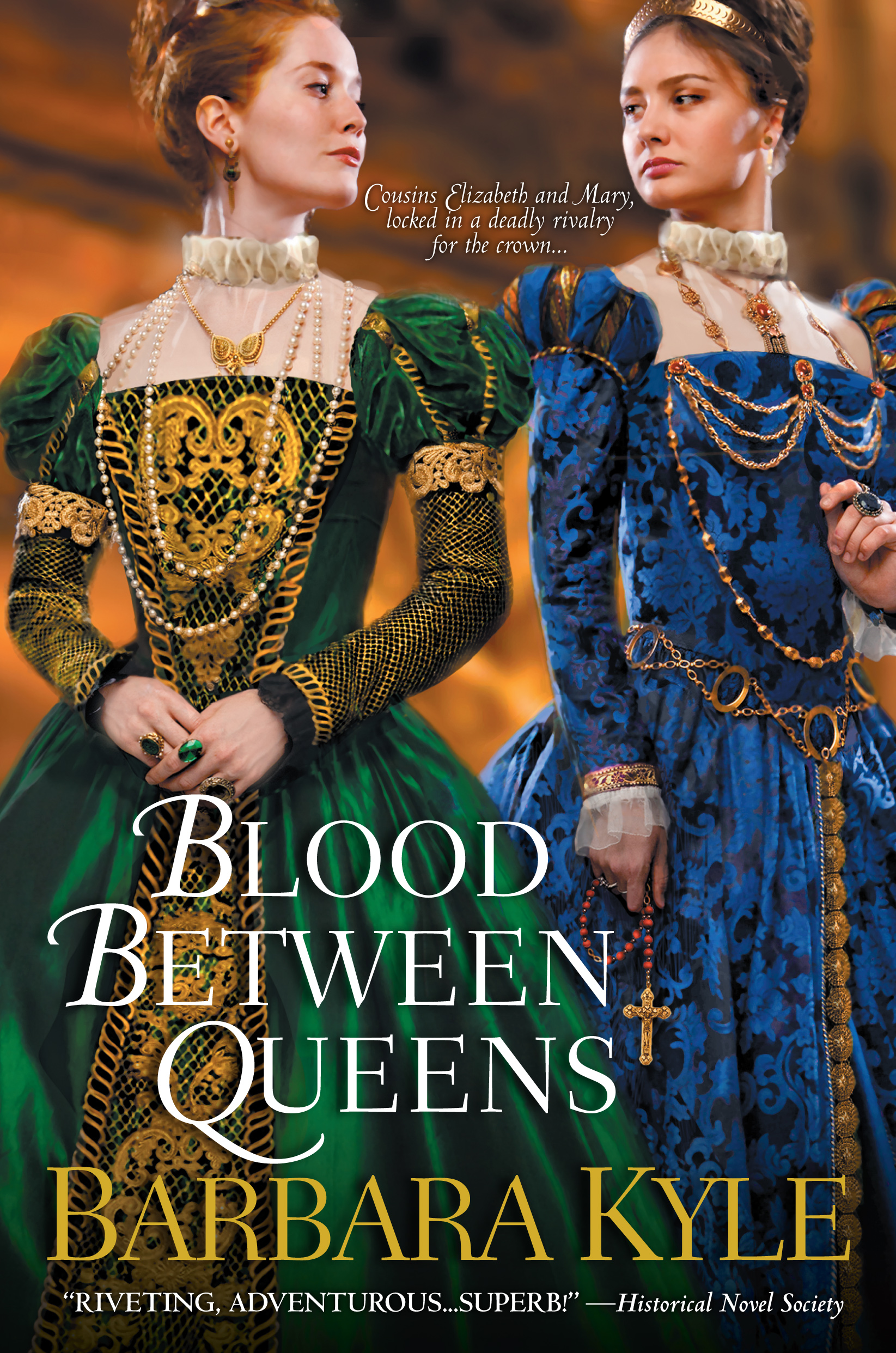
But Justine soon comes to admire the enchanting Mary and pities her plight as Elizabeth’s virtual prisoner. And she is stunned when she comes face to face with her father, Christopher Grenville, Mary’s secret agent. Grenville begs her to help him gain Mary’s freedom, and convinces her that the Thornleighs stole his lands and stole her. Believing that her father and Mary have both been wronged, Justine steals evidence from Will to help liberate Mary. Will discovers her theft and is appalled by her betrayal.

Too late, Justine discovers that her father and Mary have set in motion a plot to assassinate Elizabeth and put Mary on the throne. To prevent that catastrophe, and to win Will back, Justine risks her life in a desperate gamble to save Elizabeth’s life.
Blood Between Queens is the fifth in my “Thornleigh” series, published internationally. Each book stands alone as the series follows a rising middle-class family through the tumultuous reigns of three Tudor monarchs: Henry VIII, Mary I, and Elizabeth I. Blood Between Queens, will be released in early 2013.

What prompted you to write about this historical event and era?

BK: For over four centuries the world had been enthralled by the rivalry between Mary Stuart (Mary Queen of Scots) and Elizabeth Tudor. Mary was born to be queen, while Elizabeth grew up never dreaming she would be queen. Yet by Elizabeth’s royal order Mary lost her liberty, never to regain her crown, and nineteen years later, by Elizabeth’s order, Mary was executed. The two were cousins, but they never meI believe their extraordinary story holds such perennial world-wide fascination because it is a dramatic example of the primal divide of head vs. heart. In Jane Austen’s term: sense vs. sensibility.

Mary, crowned queen when she was six days old, spent her youth in luxury, and impulsively followed her passions all her life. She made two disastrous marriages, hazarded all on the battlefield, lost her kingdom – twice – and met a violent end, beheaded by Elizabeth.

Elizabeth, though passionate, ruled with Machiavellian shrewdness born of her insecure youth. She grew up in fear for her life. When she was three her father, Henry VIII, disinherited her and beheaded her mother, Anne Boleyn, for adultery. When Elizabeth’s half-sister Mary Tudor became queen she imprisoned her twenty-year-old sibling in the Tower where Elizabeth fully expected to be executed. Finally, four years later, the crown came to her.

In the seventh year of Mary Stuart’s reign in Scotland she fled to England to escape the Protestant lords who had deposed her. She wrote to her cousin Elizabeth asking for protection and an army to help restore her to her throne. Elizabeth, however, needed Protestant Scotland as a bulwark against a feared invasion by Catholic France, and so decided it was prudent to keep Mary under house arrest. Mary’s captivity, a comfortable one befitting her status as a queen, continued for nineteen years. During it she plotted ceaselessly to overthrow Elizabeth with foreign help and to take her crown.

Finally, after Mary’s last assassination plot against Elizabeth almost succeeded, Elizabeth executed Mary. Signing her cousin’s death warrant was the hardest decision she ever made, haunting her until her own death.

I’m fascinated by how these two queens exercised leadership. Their views were formed by their radically different upbringing. Mary went to France at age six to join the French royal family where she grew up in the most glittering court in Europe. At sixteen she married the heir to the throne, and when his father died the teenage couple became king and queen of France. A year later Mary was a widow and reluctantly returned to her homeland to take up her birthright, the crown of Scotland.

Elizabeth grew up in a secluded country house, anxiously watching from afar the dangerous court intrigues of her royal father and her two siblings. Only when they had all died did she, at age twenty-four, become queen of England. Her reign eventually spanned a peaceful forty-three years.

The two queens’ actions regarding marriage were utterly opposite. Mary had three husbands, two of whom, Lord Darnley and the Earl of Bothwell, she impetuously chose for herself. Elizabeth, famously, never married, knowing that a king would eclipse her power. She kept her long and intimate friendship with her dashing courtier, the Earl of Leicester, a private affair.

They were equally divergent in their decisions about governance: how they managed their over-mighty nobles and their countries’ religious strife. Mary’s actions in Scotland led to a civil war that she lost, while Elizabeth, faced with a massive buildup of French troops on her Scottish border in 1559, took a calculated risk on sending an army against them before they could attack England, and won.

How closely did you stick to the historical facts? If you used them loosely, how did you decide whether to deviate from them?

BK: I am meticulous about being faithful to the historical record on facts that are indisputable, such as, in the case of Blood Between Queens, Mary being put under house arrest at Lord Scope’s castle in Bolton; the inquiry that Elizabeth set up with commissioners to hear the charges against Mary; the commissioners being given evidence in the form of the infamous “casket letters,” love letters purportedly written by Mary to Bothwell. This fidelity to facts includes dates, places, and names of the principle actors in such events. However, then I take great license by “inserting” my fictitious characters into those events: Justine being sent to serve Mary; Will acting as Cecil’s clerk at the inquiry, etc.

And, of course, in depicting even the factual events I take the novelist’s liberty of writing dialogue for the historical characters. That’s pure creation. Still, often there is solid information on which to base such dialogue, including letters they wrote and ambassadors’ reports, so I can get a good sense of how they felt about situations. For example, there is a wealth of reports by contemporaries of Elizabeth and Mary about exactly what they said in many instances. However, at a certain point I’m on my own, creating events, scenes, dialogue, and characters’ feelings out of whole cloth.

Readers come to a historical novel for the history, but they stay for the characters. So for me it’s vital to depict the emotional lives of the characters, both fictional and real, so that they live and breathe for the reader. To me, that’s Job #1.       

What research did you do for this book?

BK: Plenty of reading! Biographies are wonderfully helpful, of course. For Blood Between Queens two books in which I highlighted many paragraphs were Alison Weir’s masterly Mary, Queen of Scots, and the Murder of Lord Darnley and Mary, Queen of Scots: Politics, Passion, and a Kingdom Lost by Jenny Wormald.

And, before writing the first “Thornleigh” book I spent a month in England for research, with a carefully planned itinerary of visiting historical sites throughout the country. I take a lot of care, especially, in getting London right (readers love London), and that has meant poring over historical maps and reading contemporary accounts like John Stow’s survey of London. That survey was published in the latter part of the 16th century, but it’s still a grand resource full of marvelous details and descriptions of places that were not materially different from the mid-century.     

Do you use a mixture of historic figures and invented characters in the novel. Which is more difficult to write? Which to you prefer to write and why?

BK: Yes, I do use a mixture in my “Thornleigh” novels. The core Thornleigh family characters – Honor, Richard, Adam, Isabel, and Justine – are fictional, as are their nemesis counterparts, the Grenville family, and they become dramatically enmeshed in the lives of historical figures of the day, from the monarchs Henry VIII, Mary I, Elizabeth I , and Mary Queen of Scots, to movers and shakers like Thomas Cromwell and Sir Thomas More, and revolutionaries like Sir Thomas Wyatt and John Knox.

I honestly don’t find either group (real or fictional) more difficult to write, nor do I prefer one over the other. To me they’re all just people, and once I get a deep sense of who they are and what drives them, I’m off to the races.  

In an historical novel you must vividly re-create a place and people in a bygone era. How did you bring the place and people you are writing about to life?

BK: I get grounded in as many facts as possible through the research, and then I take off and “fly solo.” At a certain point it becomes totally my own imagination in rendering the sights, sounds, smells, and tastes of places so that the reader feels they are actually there, whether it’s in the hectic streets of London, or at a royal banquet with Queen Elizabeth, or aboard Adam Thornleigh’s ship limping into port with his starving crew. 

There often seems to be more scope in historical novels for male characters rather than female characters. Do you prefer to write one sex or the other. And, if so, why?

BK: That’s a great question. In all my novels I depict scenes from the point of view of both female and male characters. My heroines are all very dynamic people; I give them plenty of scope for action. They are drawn into rebellions (Isabel Thornleigh in The King’s Daughter) and risky missions of mercy (Honor Larke in The Queens’ Lady), and dangerous missions on behalf of Elizabeth (Isabel again in The Queen’s Gamble and Justine in Blood Between Queens). These are not “stay at home” women!

Having said that, I must add that I love writing the men. It’s a real adventure in imaginative empathy to create, believably, the heart and mind of a mercenary soldier (Carlos Valverde in The King’s Daughter), a wool merchant and ship’s master (Richard Thornleigh in The Queen’s Lady), a seafaring young adventurer smitten by Princess Elizabeth (Adam Thornleigh in The Queen’s Captive) and Will Croft, the Thornleighs’ nephew, an up-and-coming young lawyer.

Male or female, the one constant in my characters is that they are fully and actively engaged in the crises of the times. So I say, bless them all!

Thanks for taking the time to answer my questions with so much interesting detail, Barbara. You’ve whetted my appetite for your new ‘Thornleigh’ book. But I think I have some catching up to do  – I’d better start with the first one.
About Barbara Kyle: She is the author of the acclaimed Tudor-era “Thornleigh” novels The Queen’s Gamble, The Queen’s Captive, The King’s Daughter and The Queen’s Lady, all published internationally, and of the contemporary thrillers Entrapped and The Experiment. Over 400,000 copies of her books have been sold. Her next book, Blood Between Queens, will be released in April 2013. Before becoming an author Barbara enjoyed a twenty-year acting career in television, film, and stage productions in Canada and the U.S. For more information – or to sign up to receive Barbara’s newsletters – visit her website.
Posted in November 2012 | Tagged , , , | Leave a comment

Time For A Foreign Encounter

I’ve lived away from my home country for more than two decades now so I should be well assimilated in my adopted land, a small patch of countryside in Northern Ireland. But there are still things I find strange, amusing or noteworthy about this place. Those who best understand my perspective are other ex-pats, including my fellow writers in Writers Abroad, and I enjoy sharing anecdotes about my life with them. I also have a chance to share my experiences with a wider audience by writing short stories and reminiscences about life in my adopted land. These writings often find their way into Writers Abroad’s yearly anthology.

This year the theme of the book is Foreign Encounters. An encounter can be a chance meeting, a planned get-together or even a confrontation. The anthology is a collection of stories, non-fiction articles and poems featuring a variety of foreign encounters: with family, friends, lovers, animals, cultures, or just with one’s own prejudices and preconceptions.

Foreign Encounters is the third anthology published by Writers Abroad, a virtual group of ex-pat writers. All the contributors are, or have been, ex-pats. They live in, and have written about, more than 50 countries across all continents. Author Julia Gregson, a former ex-pat whose bestselling novel East of the Sun won the Prince Maurice Prize for romantic fiction, has written the foreword.      

All proceeds from the sale of this book will go to Books Abroad, a charity which coordinates the donation of free books for schools throughout the world, believing that education is a crucial aspect of human progress. The charity celebrates its 30th anniversary this year and has supplied over 1,600 schools with desperately-needed books.

I enjoyed sharing my experiences of ex-pat life in Foreign Encounters and I think the rest of the contributors to this book did too. So I hope readers will be entertained by our tales.

Foreign Encounters is available from Lulu, price €9.99 (approximately £8.00), from today, Wednesday 24th October. You’ll find it here: http://www.lulu.com/shop/writers-abroad/foreign-encounters/paperback/product-20450826.html.

Posted in October 2012 | Tagged , , , , , | 2 Comments

Too Much Information?

We’ve all heard the expression ‘too much information’ applied to instances where someone relates too much detail about an unpleasant or disturbing topic. So how much is too much information? Dr Ian Mortimer made me think about this question at the Historical Novel Society conference in London a couple weeks ago. I threw my thoughts out to my fellow members of Writers Abroad on their blog today – you’ll find it here, if you are interested.

Posted in October 2012 | Tagged , , , , , | Leave a comment

Facing An Audience – FLive and All Ireland Poetry Day

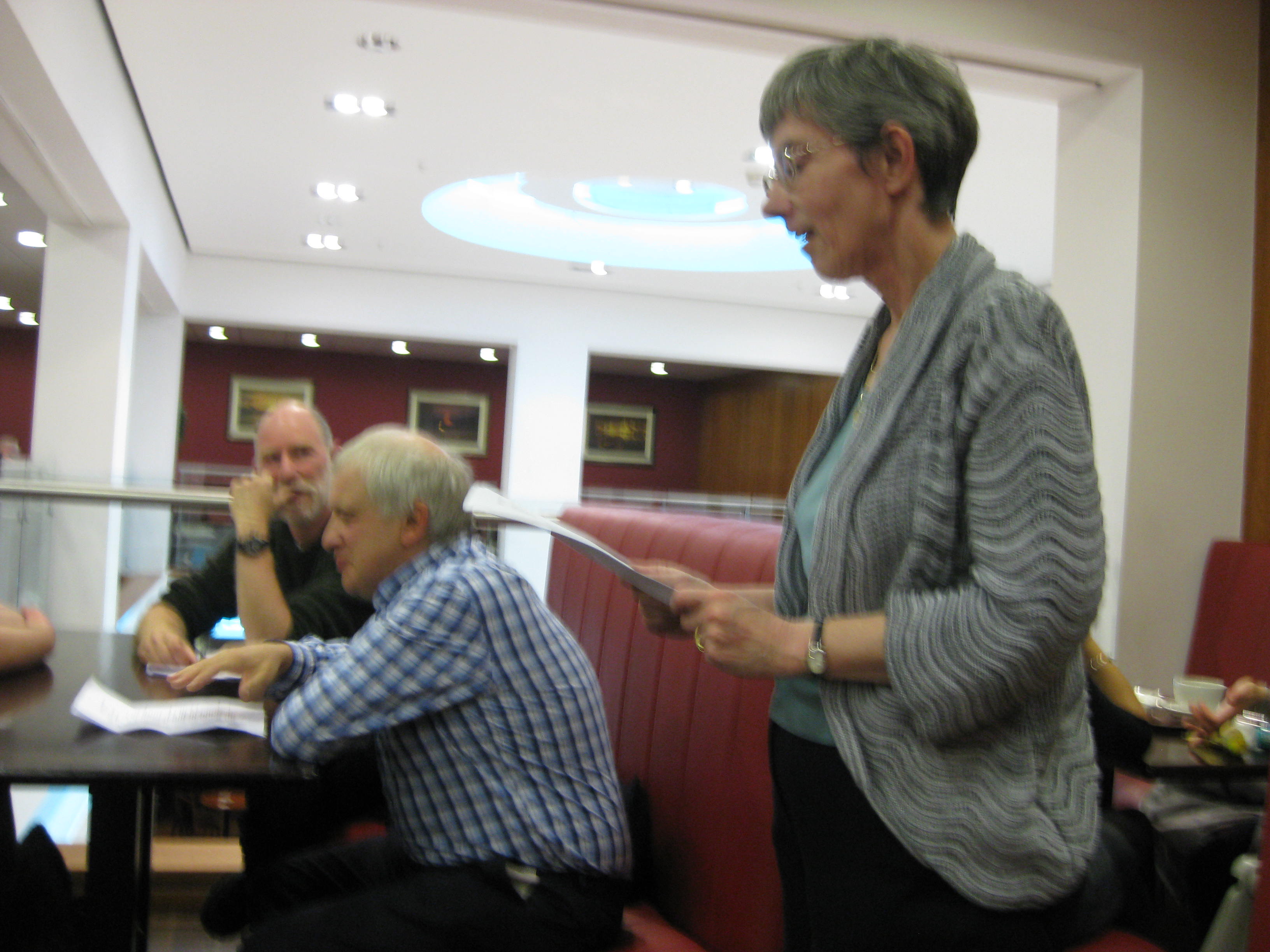
I doubt I’ll ever join Toastmasters – and I have been invited by friends to do so. I really am not keen on public speaking and I would rather stay behind the scenes. But when the local writers group I belong to, Fermanagh Writers, organise public readings then I do my bit – though, as secretary and organiser, I always schedule myself near the end of the rota and hope that we will run out of time before it’s my turn…

Last week we had not one but two public engagements: All Ireland Poetry Day and FLive, the Fermanagh Arts Festival. So I spent more time in the spotlight than I would choose to do but it was fun and I love to see people enjoying our writings (they did look like they were enjoying it – really!).

For All Ireland Poetry Day we ventured into Erneside Shopping Mall and read our verse to unsuspecting customers in the centre’s restaurant. Let me tell you, it does take nerve to walk into such an establishment and start reading when you know that your listeners are not expecting it and may have little or no interest in poetry. For an account of our adventure check out Fermanagh Writers’ blog post.

Last Saturday at FLive we had an audience that was more prepared for our presentation and they seemed to enjoy it. I doubt the free wine had anything to do with their enthusiasm…Our members’ readings ranged from humorous looks at Fermanagh life to thoughtful explorations of social problems in modern society. Where did my work fit in on this spectrum? Well, I contributed a gentle, romantic story that ended happily. I don’t know what put me in that frame of mind – we still have to get through Halloween and Christmas before Valentine’s Day. Will my romanticism and optimism hold out until then? Who knows? But let’s not worry about that for now. If you’d like to hear more about our FLive afternoon click here.

Posted in October 2012 | Tagged , , , , | 1 Comment

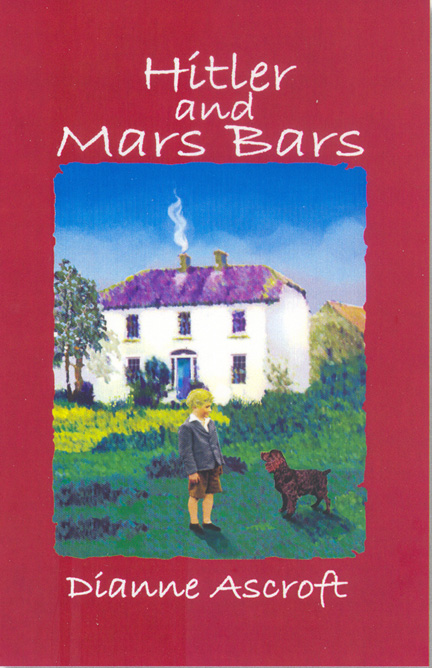
Hitler and Mars Bars Available As Amazon Ebook

Hitler and Mars Bars is now available as a Kindle ebook.

Set against the backdrop of the little known Red Cross humanitarian aid endeavour, Operation Shamrock, the novel tells the story of Erich, a German boy growing up alone in Ireland. He dreams of finding his mother. He yearns for a family who will love and keep him forever. He learns his brother is his ally not his rival. Plucky and resilient he surmounts the challenges his ever changing world presents. Caught in war’s vicelike grip and flung into a new land he must grow and forge a new life.

If you’d like to know more, check Hitler and Mars Bars’ Amazon page: http://www.amazon.co.uk/Hitler-and-Mars-Bars-ebook/dp/B009IT1RQU/ref=sr_1_2?ie=UTF8&qid=1349122866&sr=8-2

Posted in Uncategorized | Tagged , , | Leave a comment

The Quest Continues

At the end of August I posted some information about Quest, Inc by Justin Cohen. I had intended to review the novel at the same time but I was juggling too many plates and I hadn’t even finished reading the book yet. But I’ve read it now and I’ve written my review.

In my last post about Quest, Inc I included the publisher’s synopsis. You can read it here.

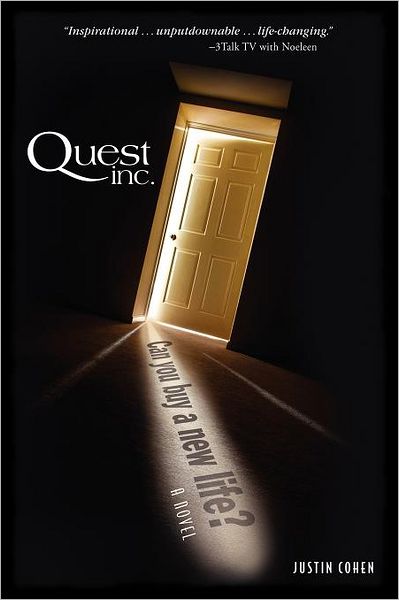
quest cover

Quest, Inc is an interesting mixture of a novel and a self-help manual. It is an engaging story about five personal development experts who put their reputations and their company on the line to convince an investigative journalist that they really can help people change their lives. From the opening scenes when one of the experts, Robert, has to confront his own problems with overeating and obesity to the last few pages when each of the experts is intensely involved with coaching his or her own clients to help them change their lives, it is a story that pulls the reader along. It starts slowly as all the experts are focussed on the dilemmas of one of the experts and one client before it picks up the pace midway through the book as several new clients are added to the experts’ caseloads, creating several storylines that branch out and run simultaneously. At first I found it unsettling to jump from an in depth look at two characters’ journeys to following several characters’ lives at once. I had got used to the original small cast of characters and didn’t want to accept new characters and subplots into the world inside my head. But the new subplots picked up the pace of the story, increased the tension and hooked me.

Early in the story there are several long passages explaining psychological and counselling theories and techniques. Although the reader needs to understand this information and may not be familiar with it, I found some of the passages read like a university textbook. It is more difficult to do but it would have been more effective to filter the information into the story in smaller chunks so it would not interfere with the flow of the plot.

In the novel the motivational experts work with clients who have a wide range of problems. Some of the issues that are dealt with include homelessness, marital breakdown, suicide, inadequate social skills, fear of success, alcoholism, obesity and health problems. The author obviously has an understanding of how to deal with these problems and he presents sound, useful information about them. I don’t know whether he intended the book as a subtle self-help manual but it has tidbits of information that readers may be able to use in their own lives.

The characters are realistic and the issues they face are presented as multi-faceted problems. The experts don’t have all the answers nor do they solve every problem. They can only be effective if their clients want to change. This insight provides a believable resolution to several subplots within the book.

The author has created six main characters, the motivational experts and the journalist, who each has a unique personality and backstory: they complement and contrast each other. Their individual stories engage the reader and the author also weaves their stories together to form a cohesive whole.

The main conflict revolves around the investigative journalist’s challenge to the experts to transform one client’s life. If they fail the journalist will destroy their reputation in print. As the story progresses more clients enter the story, their lives are explored and this initial conflict sometimes fades into the background but I was gripped by the new stories unfolding so I didn’t mind the original plotline sliding away from centre stage.

When I began the novel I wondered whether it might get bogged down in psychological theories rather than be a good story but as I read I got involved in the book: the characters’ lives, their problems and their successes. It did become a good story for me. The only thing that left me unsettled was its cliffhanger ending. It is the first book in a series so the conclusion is meant to compel the reader to pick up the next book. But I would have liked more ends to be tied up in this book. Several important questions were left unanswered and major subplots unresolved. So, there were too many threads of the story left unresolved for me to feel like it had concluded satisfactorily. That said, I will be waiting to read the sequel (with this reader I guess the author achieved what he set out to do …).

Quest, Inc is a book that makes readers think about life and provides some good coping strategies for its difficulties – oh, and it also entertains. It is a good read. 

For more information about Quest, Inc visit Justin Cohen’s website:  

The book is available on Amazon in paperback  and as an ebook

About Justin Cohen: He is the author of four books and seven audiobooks. He produced and hosted a television talk show in which he interviewed some of the world’s top experts on success. As a leading authority on personal development, with an honours degree in Psychology, he speaks, trains and writes in the fields of motivation, sales, service and leadership. Having spoken professionally for nearly fourteen years, he has presented in twelve different countries, and in virtually every industry, to an average of ten thousand people annually.

Posted in September 2012 | Tagged , , , , | 2 Comments

Hitler and Mars Bars, the ebook

Coming soon: Hitler and Mars Bars, the Amazon ebook.
The novel will be released as an Amazon ebook during the first week of October.
In my last post I told you a bit about the story – see the post to learn more about it.

Posted in Uncategorized | Tagged , | Leave a comment

Hitler and Mars Bars Now An Ebook

I first released the print edition of Hitler and Mars Bars in 2008. After some minor revisions were made to the manuscript, the novel will be available as an Amazon ebook on Friday, 28th September.

Would you be interested in reading it? I don’t know but I’ll tell you a bit about the story and you can decide. Hitler and Mars Bars is the tale of a remarkable child and era. Loosely based on historic events, this novel evokes a little known episode in German and Irish history. It is the story of a young boy’s physical and emotional journey from the war-torn Ruhr area of Germany to post-war rural Ireland.

Set against the backdrop of the little known Red Cross humanitarian aid endeavour, Operation Shamrock, it is the story of Erich, a German boy growing up alone in Ireland. He dreams of finding his mother. He yearns for a family who will love and keep him forever. He learns his brother is his ally not his rival. Plucky and resilient he surmounts the challenges his ever changing world presents. Caught in war’s vicelike grip and flung into a new land he must grow and forge a new life.

Reviews have said:

“It’s a riveting story…As a novel it is extraordinarily well researched…. Beautifully written with a strong human story running through it…” Brian D’Arcy, BBC broadcaster, Sunday World columnist, author

“An endearing story…Ascroft is superb in telling the story from Erich’s point of view…The story is both vivid and moving…” News Letter (Belfast)

If what I’ve told you intrigues you, check out Hitler and Mars Bars as an Amazon ebook from Friday, 28th September.


Posted in September 2012 | Leave a comment

Inside The Motivational World

What do motivators write about? How to change your life around usually. But a recent novel, Quest, Inc., by Justin Cohen, a leading authority on personal development, takes a cheeky look at the world of motivational training.The novel’s synopsis says:“What if you brought together five top personal development experts—equipped with virtually everything we know about unleashing human potential—and gave them some lives to change? Could they really coach anyone to lose fifty pounds, fix a broken relationship, or get rich? What would they do for a homeless person, or a pro-golfer trailing at the back of her league? How about taking the racism out of a racist, or turning a hellish employee into a ray of sunshine?Welcome to Quest, Inc. They say they can change your life. Now, as they’re followed by an investigative journalist from one of the world’s leading news publications, they have to prove it—or be damned as charlatans.

Based on real life peak performance and transformational strategies, you’ll see the highs and lows everyone faces on the road to self-realization—especially the experts. Get ready for breakthrough . . . or breakdown.”

I like the concept for the novel and the excerpt I’ve read from it intrigues me. I have to admit that I had planned to read and review Quest, Inc for this post today. But going a wonderful holiday in the Swiss mountains last week and too many other deadlines to meet pushed my plans right out of my mind so I haven’t even started it yet. But I’m looking forward to reading the rest of the book and I’ll post a review when I’ve finished it – likely toward the end of September.

Meanwhile you can also read an excerpt from the book: http://questinc.blogspot.com/search/label/Excerpt

For more information visit Justin’s website: http://www.justinpresents.com/

About Justin Cohen: Heis the author of four books and seven audiobooks. He produced and hosted a television talk show in which he interviewed some of the world’s top experts on success. As a leading authority on personal development, with an honours degree in Psychology, Justin speaks, trains and writes in the fields of motivation, sales, service and leadership. Having spoken professionally for nearly fourteen years, Justin has presented in twelve different countries, and in virtually every industry, to an average of ten thousand people annually.

Posted in Uncategorized | Tagged , , , , , | 2 Comments

Bird Of Passage: A Portal Into The Recent Past

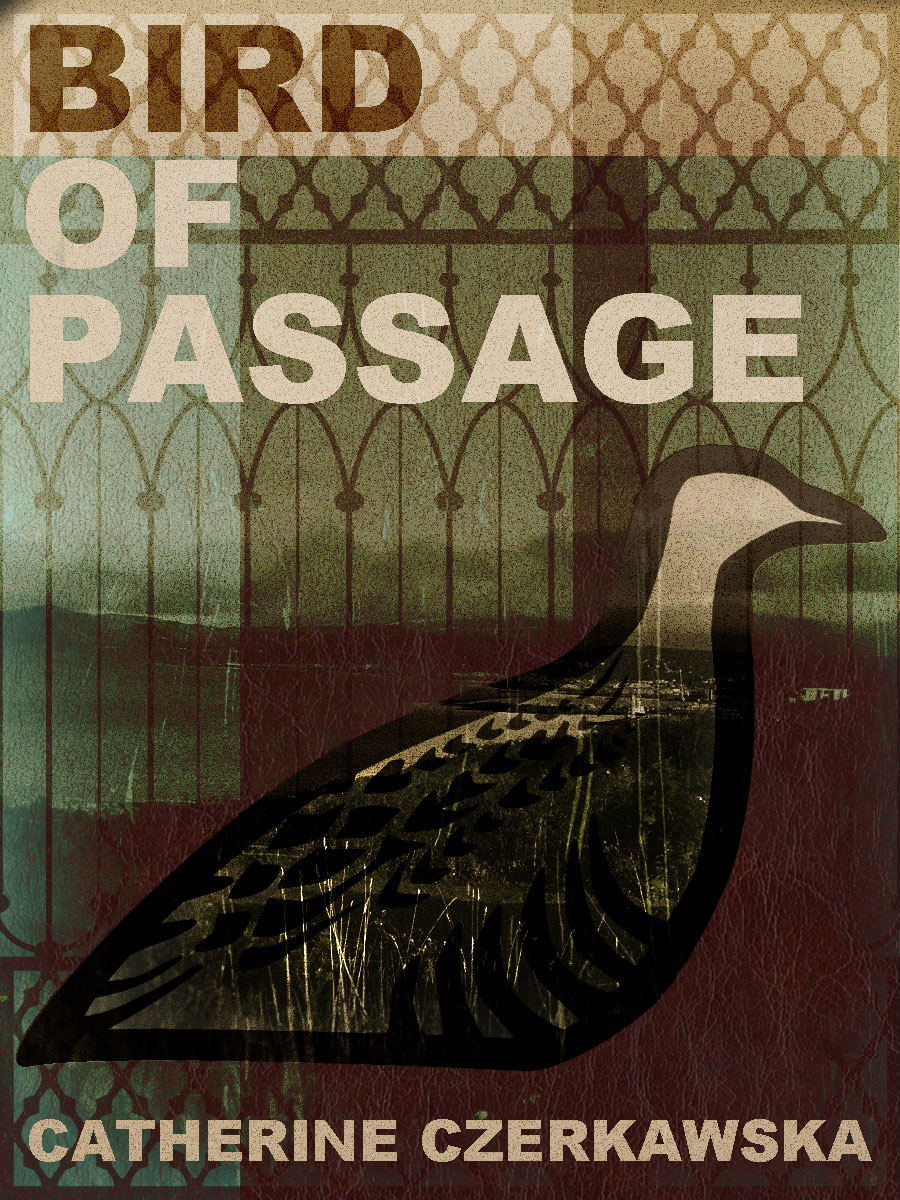
I’m very fond of books set in Ireland or Scotland, especially in the recent past so when I read, Bird of Passage, it was exactly my type of book. I found the two main characters, Finn and Kirsty, believable and I got caught up in their lives. It’s a moving novel and I think it’s evocative of the era it’s set in. I was so impressed with it that I invited Catherine Czerkawska, the author, to visit Ascroft, eh? to tell me a bit more about the book. Welcome Catherine.

Tell us about your novel.

CC: It’s called Bird of Passage. It is set in Scotland and Ireland and it spans the years from the 1950s to the present day, although I wouldn’t call it a family saga. I think the difficulty of placing it within a particular genre – Historical? Saga? Contemporary? Romance? –  was what gave me so many problems with traditional publishing. It’s not a romance, but it is a love story with a 20th century historical setting. And it’s about how childhood trauma can blight a life and the lives of others. It explores events which took place during the childhood of both main characters, so I suppose it is historical – although I remember the sixties quite well!

What prompted you to write about this historical event?

CC: It isn’t so much about a single event, as about a milieu, and a set of circumstances. When we first moved to Scotland, back in the sixties, when I was quite young, I remember being intrigued by the ‘tattie howkers’ who still came over from Ireland to help with the potato harvest, as they had every year for generations. By the time I was living in Scotland, the conditions in which they were housed were being regulated and improved but they still seemed to be maligned visiting workers. There was a lot of prejudice, as there still is with regard to migrant workers today.  They would be blamed for everything from petty theft to breach of the peace. At the same time, I had been reading about the industrial schools of Ireland, and the appalling treatment of some children. The two things collided in my head and the resulting story is Bird of Passage.

How closely did you stick to the historical facts? If you used them loosely, how did you decide whether to deviate from them?

CC: If I’m writing a historical novel – and I’ve written several – I always like the historical background to be as accurate as possible.  Glaring inaccuracies and anachronisms bother me as a reader and I do try to avoid them as a writer although I’m quite happy to ‘stretch’ the truth a bit. When you’re writing fiction, I think you have to do your research, but then give yourself permission to fictionalise things. Bernard MacLaverty calls all fiction ‘made up truth’ and I think this applies to historical fiction as well – very much so. I suppose I’m trying to recreate a time and place for my readers. With the historical sections of my previous novel, The Curiosity Cabinet, I did a lot of research but wasn’t afraid to include things that might seem anachronistic, but weren’t. I knew a lot about this period. When it’s more recent history, like Bird of Passage, I used some of my own knowledge of the time and place and researched the rest.

What research did you do for this book?

CC: I read extensively about the tattie howkers, (the potato diggers): newspaper accounts and research papers as well as Patrick Macgill’s wonderful Children of the Dead End, which I was already familiar with. I also read a number of harrowing accounts of children who had been placed in Irish Industrial schools including Mary Raftery and Eoin O’Sullivan’s Suffer The Little Children. 

Do you use a mixture of historic figures and invented characters in the novel. Which is more difficult to write?

Dunshee, an important place in the novel

CC: I almost always invent, although oddly enough, the central character in my next book is a real person. But I’ve invented a whole new life story for him, because details about him were very thin on the ground. I read a brief account of some key events in his life and it seemed to me as though something else was going on, so I wrote about it. This is quite a departure for me. But I have a couple more projects planned and they involve real historical characters too, so I’ll know how difficult it proves to be in the next year or so. In Bird of Passage, both Finn and Kirsty are invented, although any devotee of Wuthering Heights (which I am) will probably realise that there is a homage to WH going on there. Not a retelling, or anything so precise – but references to that book.

Which to you prefer to write and why?

CC: I honestly don’t think it will make any difference. I think the pressure with writing about a major historical character would be greater though: so many experts prepared to tell you that you’ve ‘got it wrong’! I’ve written historical non-fiction, as well as fiction and of course you approach that quite differently. With fiction, so long as you avoid howlers, I think you must allow yourself a certain freedom to invent, even when you’re writing about real people. It is fiction, after all.

In an historical novel you must vividly re-create a place and people in a bygone era. How did you bring the place and people you are writing about to life?

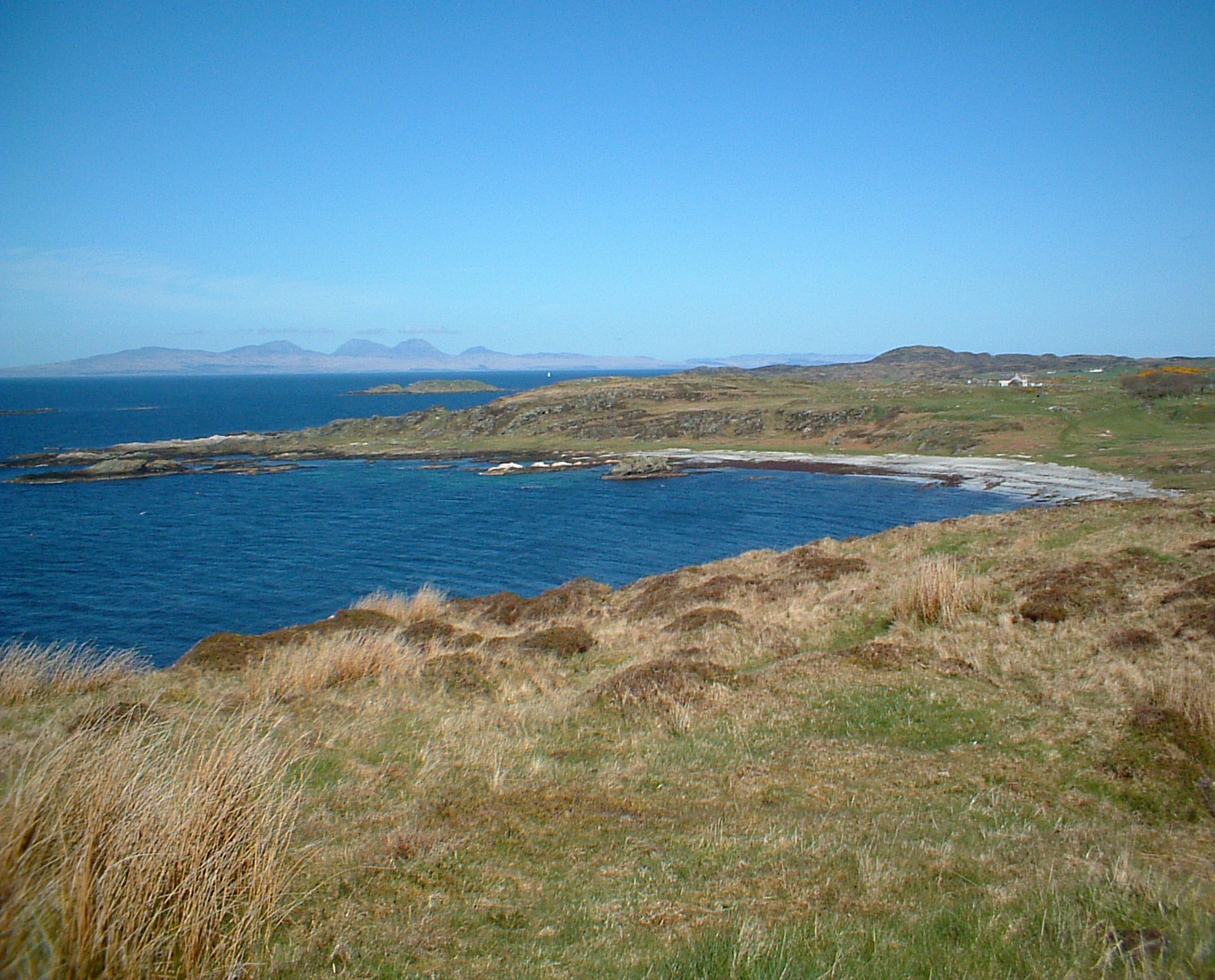
Ardminish Bay

CC: In Bird of Passage, I drew largely upon my own experience of small Scottish islands and how those societies function, and of Dublin, and – of course – my own Roman Catholic background. I worked in Dublin one summer, back in the early 70s and had very vivid memories of what it was like back then. My mother’s family were Irish people who had come over to Leeds, and I had a background of knowledge there too. I think the trick is to research, then write. In writing, you find out what you don’t know, and can go back and find out about it. In many ways, I write to ‘find out.’ There is an event in Finn’s childhood which colours everything – I can’t say what it is, because we don’t find it out until the very end of the novel, and Finn himself has blotted it out of his mind. I spent months not knowing what it was either. It was as though I too had to find it out, had to ‘remember it’ along with Finn. I woke up in the middle of the night, thinking ‘that’s it. That’s what happened!’ But I could no more have ‘made’ that happen than fly in the air.

There often seems to be more scope in historical novels for male characters than female characters. Do you prefer to write one sex or the other. And, if so, why?

CC: I suppose it depends upon the period. I don’t think I have any preference, quite honestly. In Bird of Passage, I cared as much about Kirsty as I did about Finn. But I’d say that – as a woman – I still like to try to get inside the heads of my male characters and see what makes them tick. My work in progress is essentially a novel about male friendship verging on love (and betrayal too) so the two main characters are both men. But I have a couple of ideas for future work which both involve historical women. I don’t really think I have a preference. The ideas present themselves and I write them. I suppose I’m an instinctive writer, and that’s how I like it.

Catherine Czerkawska

Thanks for answering my questions, Catherine. You’ve given me greater insight into Bird of Passage and also whet my appetite to read your other novels.

Catherine writes in a wide variety of forms: short stories, plays, novels, non-fiction books, essays and articles. She tutors creative writing and she is on the committee of the Society of Authors in Scotland.

Readers can visit Catherine online at her website and her blog.

Posted in August 2012 | Tagged , , , , , | Leave a comment