Ireland’s Own Finds Space To Feature Lough Derg

On the first weekend of May I satisifed my curiousity about the cluster of grey buildings on Station Island in Lough Derg. Since the first time I saw the pilgrimage centre from the shore I’d wondered what it was exactly and what they do there. So I arranged to visit the island during one of their day retreats and I spent an interesting and informative day. One of Monsignor Mohan’s comments to me particularly sticks in my mind. He said that people come to the island to get space from their busy lives. After visiting Lough Derg (as most people refer to the island) I can see why they do so and what they get from it.

I’ve written about my visit to Lough Derg for Ireland’s Own magazine and they have featured the piece as their cover story this week (issue date 22 July 2011).

Posted in July 2011 | Tagged , , , , , , | Leave a comment

Not A Canada Day Celebration – I Enjoyed Irish Hospitality

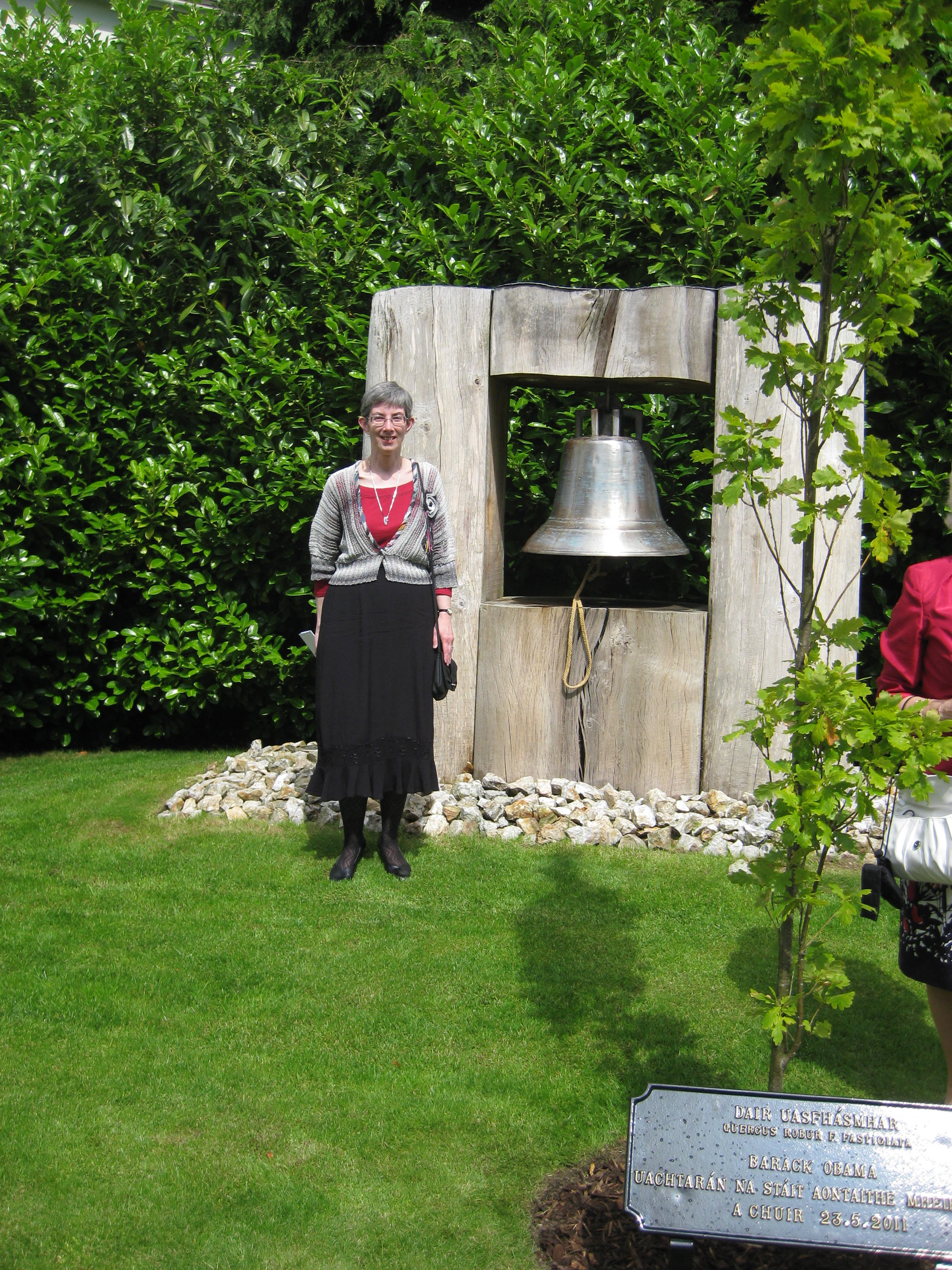
Standing beside the Peace Bell at Aras

I was at a garden party yesterday. Was I starting my Canada Day celebrations early? No, it was actually a very Irish event. The garden party was hosted by President McAleese at Aras an Uachtarain to honour volunteers. I was privileged to attend it with fellow members of Fermanagh Creative Writing Group.

I love historic buildings so it was wonderful to tour the public rooms of the residence. And the party was great – even in such an elegant setting it had a warm, relaxed feel and the staff were friendly and helpful. We won’t talk about the very tasty food and beverages – I should have been avoiding them if I’m ever to lose a few pounds…but I didn’t. And there was also a feast of music, especially vocal – a strong tenor, an amazing barbershop quartet and Paul Brady to top it off.

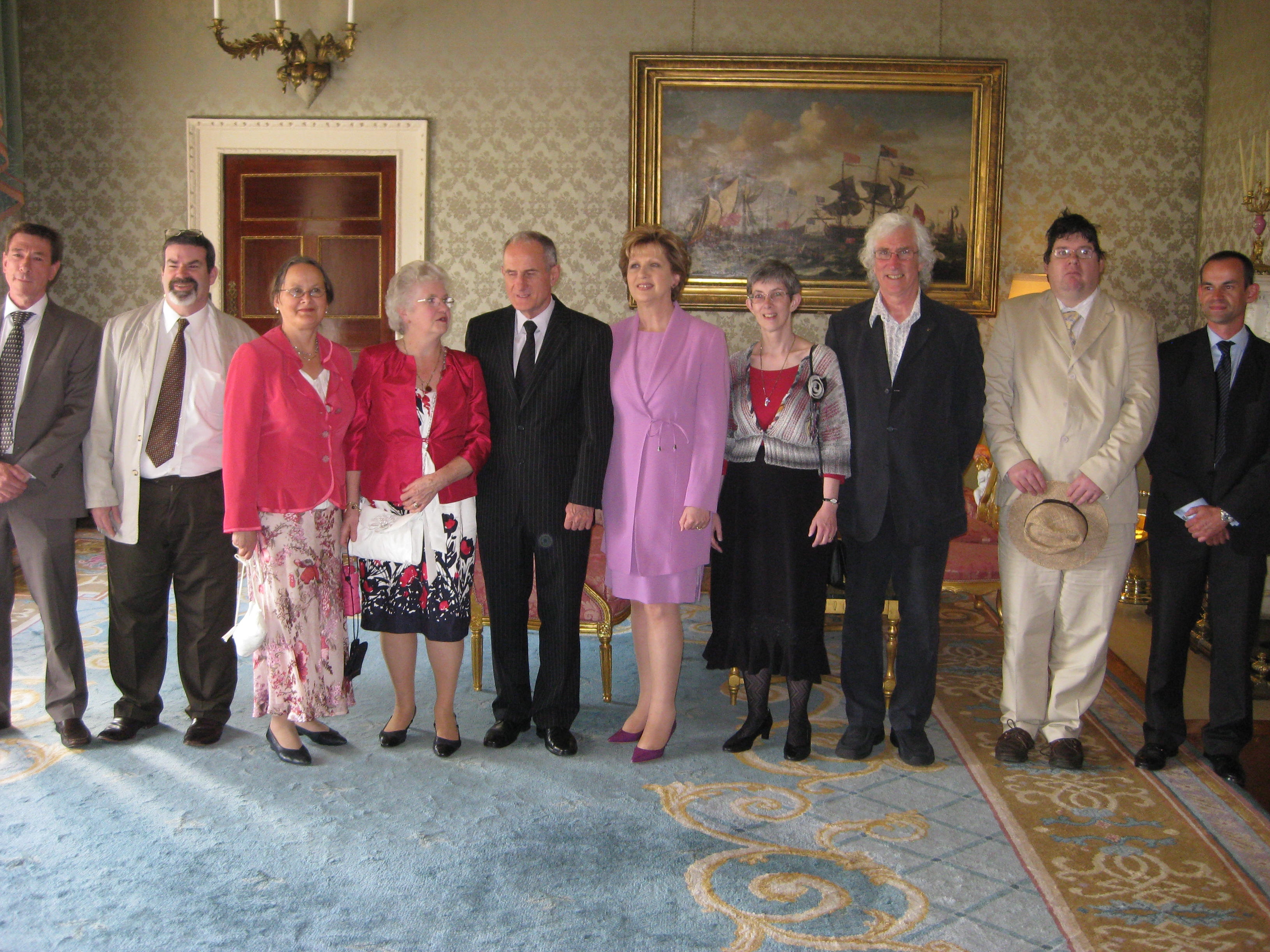
I think the highlight of the afternoon for every member of our group was meeting President and Senator McAleese. We presented the President with a copy of our first publication, Stories From Charlie’s Bar. I hope they both enjoy our stories and poems and that the book will evoke memories of Fermanagh for Senator McAleese.

FCWG meets President and Senator McAleese

Posted in June 2011, Uncategorized | Tagged , , , , , , , | Leave a comment

Jump Into Johnny One-Eye

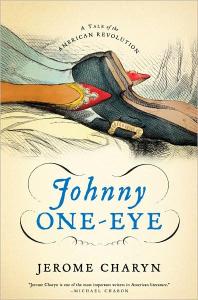
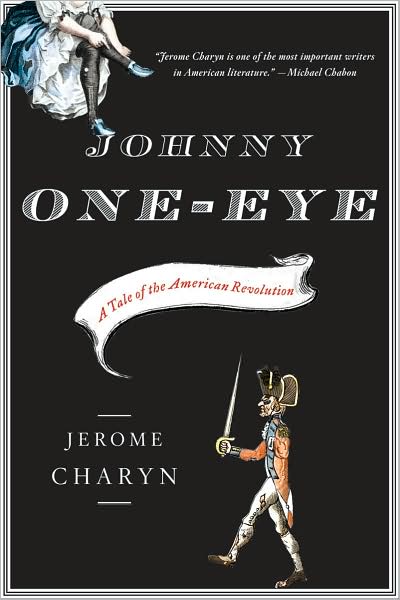
In February I discovered the work of Jerome Charyn, a prolific American writer who creates unique, captivating voices for his very diverse characters. I reviewed his novel, The Secret Life of Emily Dickinson, and I absolutely loved the book. So today I’m pleased to offer an excerpt from another of his recent novels, Johnny One-Eye, and also a few insights about the book from the author.

The novel is set during the American Revolution and the story is told by the fictional character, Johnny One-eye. This character’s life becomes intertwined with everyone from George Washington to Alexander Hamilton. The son of aManhattanmadame, he lives in a brothel among prostitutes. Yet throughout the war, he seamlessly mingles with all classes in society from Prince Paul, the leader of the city’s Little Africa, to his disgraced former general, Benedict Arnold. His ability to adapt to any situation places him in a precarious position as both the British and American forces try to recruit him as a spy. He walks a perilous line trying to serve two masters while first and foremost looking out for himself.

Here’s an excerpt from the book:
Manhattan
April 1776

It was the very mask of war. General Sir William Howe, the British commander in chief, had disappeared with his armada of men and battleships. There was not a redcoat to be found in all the colonies, not even a drummer boy. And so there was a strange calm, a profound and disturbing silence instead of cannon fire.

George Washington had arrived in Manhattan but a few weeks ago on his white horse. Both rebels and Loyalists were in awe of the Continental Army’s commander in chief, who sat in his saddle with the insouciance of a king. He was the tallest man on our island, and seemed everywhere at once, inspecting the works near Fort George, crossing with his horse on the barge to Brooklyn so that he could inspect our works at Brooklyn Heights.

Every street in Manhattan had been turned into a ditch – our island was now an armed camp. Black stevedores dug beside militiamen. Women and children could not be found. We waited in a kind of fractured peace for the sound of the squall – the wind that would bring the British. General Howe could have but one objective: to drive Washington out of Manhattan, or better still, to break him and his army on the island itself and thus bring a quick death to the rebellion.

The rebels’ hopes hinged on this very man, the farmer-soldier from Virginia. And the only time he ever appeared without his horse was when he visited Holy Ground, a street of brothels so named because of its proximity to St. Paul‘s Chapel; hence its whores were known as nuns. The commander in chief was not a whoremonger. But he did have a secret vice – he loved to gamble. He would come to Holy Ground and its most celebrated brothel, the Queen’s Yard, when he was mortally tired and could not sleep. He would play vingt-et-un – Manhattan blackjack – a game that might have been born at this brothel. He would lose his britches every third or fourth night, but the nuns who presided over vingt-et-un always returned his coins and his britches to the commander in chief. And since he never sat at the table with a single bodyguard, the nuns themselves would often drive him back to headquarters, a little north of Holy Ground.

After that taste of the novel, I have a few questions for Mr Charyn:

Why did you choose to write about this period in American history?

JEROME CHARYN: For whatever reason, the Revolutionary War has always spoken to me. I grew up with this image of George Washington as a very tall, brooding man who had no language, and I had no language as a child. Living in the Bronx, I had no idea there was such a newspaper as the New York Times, for example. You just had the Daily News, the Daily Mirror, and the Bronx Home News. I felt particularly moved byWashington.

You portray Washington as crafty, bold and larger-than-life rather than the dour, silent man from history books. Is it more important to you to create a good story or to be historically accurate?

JC: Fiction often has a greater truth than most historical texts. I think of Napoleon, and I read War and Peace to get a sense of that particular time. Novelists see history as a story. We’re not burdened by “inaccuracies.” It doesn’t make any difference to me whetherWashington had a wartime love. It seemed perfectly natural that I give him one, considering the kind of power that he had as a man. I wasn’t trying to be devilish.

Your roguish characters present the past in an intriguing manner. What appeals to you about using the picaresque style of storytelling?

JC: The openness of the form. In Johnny One-Eye, it allows you to give the sweep of the entire Revolution. If I wrote this novel in the third person, I don’t think you’d feel the same intimacy if it were told by an omniscient narrator. I don’t think it would be as powerful. That first confrontation between Washington and Johnny really defines the entire book, because it shows howWashington is just as duplicitous with Johnny as Johnny is withWashington.Washington knows who he is without revealing it. “Nice,” happy people aren’t very good narrators.

About the author: Jerome Charyn (bornMay 13, 1937) is an award-winning American author. With nearly 50 published works, Charyn has earned a long-standing reputation as an inventive and prolific chronicler of real and imagined American life.

Since the 1964 release of Charyn’s first novel, Once Upon a Droshky, he has published 30 novels, three memoirs, eight graphic novels, two books about film, short stories, plays and works of non-fiction. Two of his memoirs were named New York Times Book of the Year. Charyn has been a finalist for the PEN/Faulkner Award for Fiction. He received the Rosenthal Award from the American Academy of Arts and Letters and has been named Commander of Arts and Letters by the French Minister of Culture.

Charyn was Distinguished Professor of Film Studies at the American University of Paris until he left teaching in 2009.

In addition to his writing and teaching, Charyn is a tournament table tennis player, once ranked in the top 10 percent of players inFrance. Charyn lives inParis andNew York City.

For more information about the author and the novel visit –

his website: http://www.jeromecharyn.com/

his Facebook page: http://www.facebook.com/#!/jerome.charyn

the novel’s Facebook page: http://www.facebook.com/JohnnyOneEyeBook

Posted in June 2011, Uncategorized | Tagged , , , , | 2 Comments

Looking Back At Bealtaine

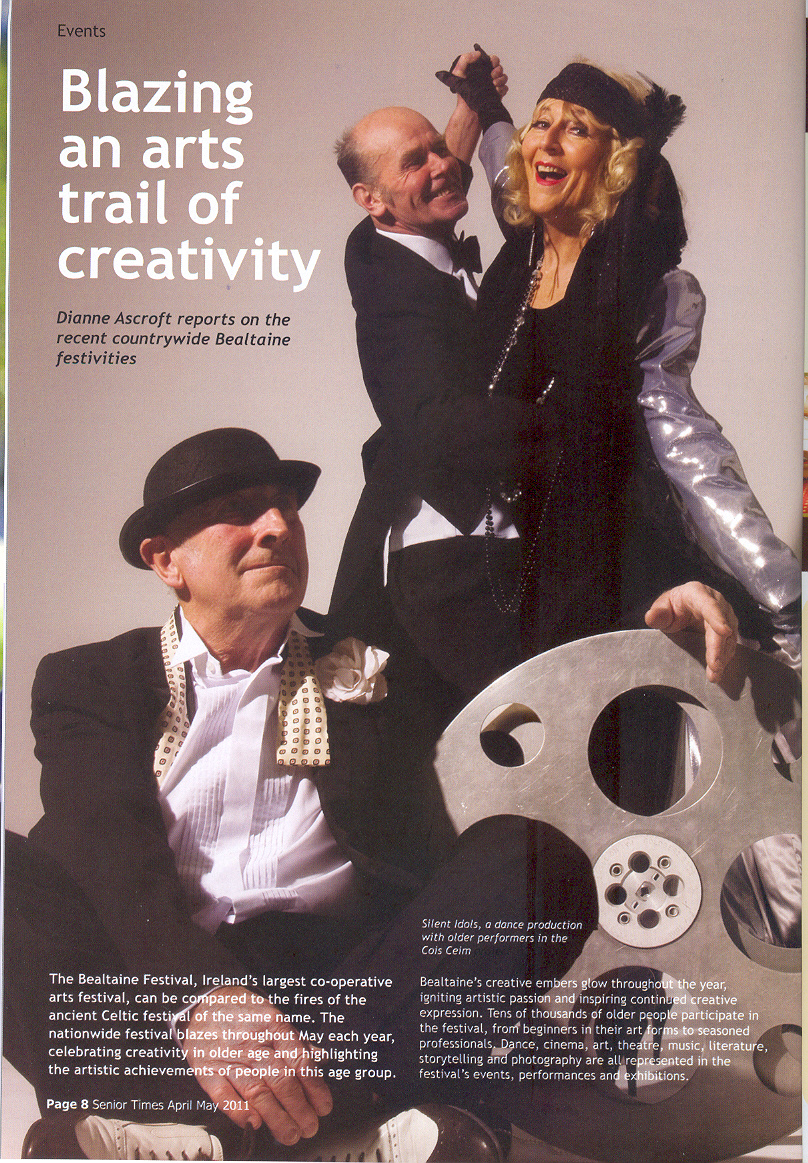
I opened and closed Ireland’s Bealtaine Festival  this year – on paper anyway…At the end of April, in Ireland’s Own magazine I had a look at the upcoming festival which runs throughout May each year and in the June/July issue of Senior Time’s magazine I’ve reviewed this year’s festival and looked at its development and growing popularity. The June/July issue of Senior Times magazine is out now.

Posted in June 2011 | Tagged , , , | Leave a comment

Scribetribe: A New Resource For Northern Ireland Writers

I’ve recently been alerted to a new networking organisation for writers in Northern Ireland. It’s called Scribetribe.

The organiser, Dawn Baird, says “ScribeTribe is a business and professional writers’ network based in Northern Ireland.  The benefits for writers who get involved with the network are networking opportunities with peers and potential clients; professional development; and (for freelancers) sourcing clients.”

They are hosting 2 events this evening in Belfast at the Midtown Business Centre on Talbot Street. Sharon Hearty is speaking about Marketing: The Power of the Message and Allen Baird will lead a book club discussion about Winning by Sir Clive Woodward.

Their next event is Present with Prezi on 5th July at the Antrim Enterprise Agency.

Here’s a few places to find Scribetribe: their websiteTwitter, Facebook

Posted in June 2011 | Tagged , , , | Leave a comment

Magdeburg Seized Me

A few weeks ago I read Magdeburg by Heather Richardson. This novel is one of the most authentic historical fiction books that I’ve read in a long while. Set in seventeenth century Germany during the Thirty Years War, the book’s detailed siege and battle scenes don’t shy away from the grim reality of warfare. The novel also perceptively portrays the ordinary people, who are caught up in this conflict, trying to live their lives as best they can. Ms Richardson depicts the daily life of the era so well that I lost myself in the story and could imagine that I was there.

Given the events of the period, this novel is sometimes a harrowing experience but also a fascinating one. Reading about characters who are flung into horrific situations, with no chance to escape, left me wondering how I might fare if I were in their shoes. I was gripped and repelled at the same time by their plight and the story still occupied my mind after I’d read the last page.

So I’m pleased that Ms Richardson has agreed to answer a few of my questions about Magdeburg. Here goes –

Tell us about your novel.

HR: It’s set in Germany during the Thirty Years War, and centres around three people caught up in one of the major atrocities of the war – the destruction of the city of Magdeburg. The Thirty Years War was partly a war of religion, and the opposing armies were – very loosely – Protestant and Catholic. The citizens of Magdeburg were staunchly Protestant, and found themselves under siege by the army of the Holy Roman Emperor. The novel follows the stories of Christa, a printer’s daughter from the city, and two soldiers in the Imperial army: Lukas and his young protégé, Götz.

What prompted you to write about this particular historic event?

HR: I heard about Magdeburg on a BBC Radio 4 programme several years ago, and thought it sounded like a fascinating story. An historian said the destruction of the city was as big an event in that era as the 9/11 attacks were for us in the late 20th Century. Coming as I do from Northern Ireland, the story of a Protestant walled city besieged by a Catholic army rang a few bells – the Siege of Derry has almost mythical status in Northern Irish Protestant culture. It seemed to me that writing about Magdeburg could be a way of investigating several themes that interest me – Protestant identity; the effect of combat on soldiers; the human capacity for survival – without being inhibited by my own cultural baggage.

The story centres on a grim incident. Was it difficult or depressing to write about it?

HR: Some parts were difficult – there were a couple of violent episodes that I felt I had to describe with as much honesty and clarity as I could. Anything less would have been untruthful. I think if you’re writing about something as serious as war you have a responsibility not to gloss over the horrible reality of it. Although there are a few passages of the novel that I don’t like re-reading.

How closely did you stick to the historical facts? If you used them loosely, how did you decide whether to deviate from them?

HR: One of the benefits of writing about a city that was all but wiped out is that there aren’t many records from the period. That gave me a certain amount of license. Having said that, I worked pretty hard on fact-checking, and it was only when I couldn’t confirm a fact that I’d make an educated guess.

What research did you do for this book?

HR: I discovered a great publisher of popular military history called Osprey. They produce accessible books on key battles that are full of pictures and maps. Their books were a useful starting point, and I then worked my way through the heavier historical sources they’d used. There’s a lot of academic research about Early Modern Germany, and I found some excellent scholarly books of eye-witness accounts of the Thirty Years War, as well as studies of court cases, family letters and so on. I also went to Magdeburg itself, and to Mainz to see all the old printing presses in the Gutenberg museum. I even had a go at learning German.

You use a mixture of historic figures and invented characters in the novel. Which is more difficult to write? Which do you prefer to write and why?

HR: Most of the historic figures in Magdeburg don’t play a big part in the novel – they’re in the background, perhaps being mentioned by the main characters. However, the novel I’m working on now has several real figures in the foreground, and I have to say, I find them much harder to write than my fictional characters. I think I feel a bit inhibited about attributing thoughts and feelings to them when I can’t know for sure if I’ve got it right. It seems a bit presumptuous. I think it also makes me uneasy because it feels somehow unethical to tinker with facts. Writers can’t help but tinker, because real people and their stories don’t conveniently fit into a narrative arc. Once I get this novel finished I’m definitely going to stick with the strictly fictional!

Thanks for taking time to give such thoughtful answers to my questions, Heather. I can relate to your feeling of constraint when writing real people into a story. I had similar experiences when I was working on my first novel (so far the only completed one!).  I noticed that you mentioned your next book – now I’m curious…I hope I don’t have to wait too long to learn more about it. Meanwhile, good luck with writing it. I hope we’ll see it on bookshop shelves in the not too distant future.

About the author: Heather Richardson was born in Northern Ireland in 1964. She moved to England when she was eighteen, and after university worked in a range of jobs, from bus driver in Leicester to marketing executive at a private hospital in Harley Street. In 1993 she finally went home to Belfast. Her short fiction and poetry have been published in magazines and anthologies in the UK and Ireland. She teaches creative writing for the Open University.

For more information about Magdeburg and Heather, see Lagan Press’ website.

Posted in June 2011, Uncategorized | Tagged , , , , | Leave a comment

Trade Winds Carried Me Along

When I first met Christina Courtenay at the Historical Novel Society’s UK conference last October, she was excited that her first novel, Trade Winds, had just been released. Her description of it prompted me to order a copy and I added it to my reading pile. It’s been a busy few months for Christina and in March she released her second novel, The Scarlet Kimono; the same month I invited her to Ascroft, eh? to chat about this latest novel. Meanwhile I was working my way through my reading pile to Trade Winds.

Well, I finally began reading Trade Winds this spring (I need more hours in each day to enjoy all the books I want to read!). Trade Winds falls into the historical romance genre. I have to admit this isn’t a genre I read regularly so I didn’t know what to expect. So I was pleased to find myself quickly lost in the book. It’s a great story filled with engaging characters. Its settings, Sweden, China and Scotland, were a mix of new and familiar for me. I lived in Scotland for several years and I’ve always had an interest in the country (Scottish history books have always been on my reading list) so I welcomed the Scottish scenes and characters. Knowing little about Sweden and China, and nothing about these countries during the 18th century, I was intrigued to read about them. Christina brought to life the era, the places and the people. The story flowed at an exciting pace through the three countries and I was swept along. So, since I enjoyed this novel, I’m adding The Scarlet Kimono to my reading pile.

Meanwhile, I’ve invited Christina to chat about Trade Winds. Welcome, Christina! Shall we get started?

Tell us about Trade Winds.

CC: Trade Winds is the story of Killian Kinross, a handsome Scotsman who goes to Gothenburg inSweden to try and make his fortune.  There he meets Jessamijn van Sandt, who believes she’s being swindled out of her inheritance by her step-father, and is determined to stop it.  Jess and Killian join forces in a marriage of convenience, but when Killian is offered the chance of a lifetime with the Swedish East India Company (SOIC), he can’t refuse.  He sets sail on a daring voyage toCanton inChina, but the journey doesn’t quite work out the way he expects it to …

What sparked your interest in the founding of the East India company and made you decide to use it as the backdrop to your story.

CC: I did learn about it at school when I was about 12 (history lessons), but had mostly forgotten, even though it interested me a lot at the time.  Then in the spring of 2007, the sailing ship Götheborg docked atLondon’sCanaryWharf for a couple of weeks.  It’s an exact replica of a ship used by the SOIC to sail toChina and members of the public were allowed on board to explore.  I was fascinated all over again and the story started to evolve in my mind.  Because of my own “international” background (being half Swedish/half English, but having lived inJapan for a while), I loved the fact that I could combine all these elements in my novel too.

As I’ve mentioned, I’m quite interested in Scotland. So I have to ask – why did you choose Scotland as the setting for part of the story?  And also, why a Scottish hero?

CC: When I did some research about the SOIC, I found that because the Swedes didn’t have much experience of trading in theFar East, they had to employ Scotsmen and Englishmen to help them at first.  Since I’ve always lovedScotland, this seemed perfect for my story and having a Scottish hero helped me to showSwedenthrough the eyes of a foreigner.  Anyway, there’s something very special about Scottish heroes, wouldn’t you agree? 😀  (I certainly can’t disagree with you on that, Christina!)

What research did you do to write this story?

CC: As I said, I went on board the ship Götheborg, then read lots of books about the SOIC.  I also had to brush up on Swedish history for that period (my knowledge was bit rusty) and then I went to Gothenburg to have a look at the town and its layout.  At theCityMuseum there they keep all the old records of SOIC employees and some artefacts from theChina trade, so I spent some time there reading old diaries and things like that.  Finally, I went toEdinburgh to get a feel for that city as well.  Sadly, I wasn’t able to go toChina, but had to use other people’s descriptions for that.

 Do you find it difficult to set stories in time periods when women had little power or control over their lives?

CC: No, I like the challenge!  My heroines usually try to push the boundaries, or resent having men control everything and rebel, but since they’re intelligent, they can often get round this in other ways.

This was your first published novel.  Was it the first one that you wrote?

CC: No, it was about the tenth or eleventh (have lost count)!  My very first one was eventually published as a novella though (after a severe pruning), so it wasn’t a waste of time.  And I see the others as a learning curve – someone told me authors have to serve a sort of “apprenticeship” just like solicitors and the more books we write, the better they get hopefully.

Thanks for taking time to answer my questions, Christina. I enjoyed Trade Winds so I’m delighted that you dropped by to tell us a bit more about the novel and how you approached writing about the era it’s set in. Good luck with both novels, Christina!

To learn more about Christina and her novels, visit her website: http://christinacourtenay.com/

and her publisher’s website: http://www.choc-lit.co.uk/html/christina_courtenay.html

Posted in May 2011, Uncategorized | Tagged , , , , , , , | Leave a comment

Historical Novel Society’s Irish Chapter

On Saturday the Irish chapter of the Historical Novel Society had our second meeting. We alternate between Belfast and Dublin so our members, no matter where they live, can attend meetings. We met in the Writers’ Room (that wasn’t pre-planned but how appropriate!) at the Gresham Hotel which gave us a feeling of Old World gentility – almost setting our meeting in a historical context, you could say…We didn’t set an agenda for this meeting; it was more a social gathering to chat and exchange ideas and information. Our meetings will evolve to suit the wishes of our group. Our next meeting will be in Belfast during August (date to be set). Anyone who would like to join us, please contact me.

The link below is a post by Patricia O’Reilly, a writer and one of our members who attended the meeting, about the gathering –

http://lovewriting.patriciaoreilly.net/2011/05/historical-novel-society.html

Posted in May 2011, Uncategorized | Tagged , , , | 1 Comment

Peek Into ‘And Twice The Marrow Of Her Bones’

Today I’ve invited Susan Avitzour, who is currently on a blog tour, to share an excerpt from her memoir, And Twice the Marrow of Her Bones. Her book tells the story of her life as she coped with her daughter’s leukemia and eventual death. The death of a loved one is never easy to accept and most people struggle with how to cope. Hearing others’ stories often helps ease the pain so Susan decided to write about her experiences in an effort to help others. I’ll let Susan introduce the excerpt.

Welcome, Susan. Please tell us a bit about your memoir.

SPA: At the very beginning of the new millennium, I lost my eighteen-year-old daughter Timora to leukemia.  My memoir, And Twice the Marrow of Her Bones, revisits and examines the sixteen years from the time her first symptoms appeared when she was eleven, through the ninth anniversary of her death.

The first part relates my journey with Timora as she struggled to lead a normal life despite the devastation wreaked by her illness and its treatment.  The narrative opens in the hospital.

   And Twice the Marrow of Her Bones

~*~

“So, the doctors finally managed to get a look at your bone marrow,” [my husband] says. “And they’ve found that it contains some cancerous cells.”

Now she looks really puzzled. “Cancerous cells? What does that mean?”

“Cancerous cells are cells that multiply too fast, kind of go crazy, in a part of your body – in your case, inside your bones. They crowd out the healthy cells and make you sick.”

Timora hasn’t lost her questioning look. “So, there are some crazy cells in my bone marrow. But what does that mean for me?”

“It means you’ll need quite a long course of treatment. The doctors will explain to you exactly what’s involved.”

“I still don’t get it,” she says. “What exactly do I have?”

I look again at Daniel, and swallow. My throat really isn’t working properly today. But it’s my turn to speak.

“When you have cancerous cells in your body, it means you have” – I take a breath – “cancer.”

A few heartbeats later, she says, “I have cancer?” Tears begin rolling down her cheeks. “I have cancer?” she repeats. Daniel and I each take one of her hands.

As she cries quietly, there is no more to say. Or to do; I can only continue to gaze at her. If all this love that my heart can’t seem to contain could only flow into her body, seep into her bones, and flush out those accursed cells. From Daniel’s face, I can see he feels the same.

Timora cries for only a short time – perhaps less than a minute, perhaps a bit more. Then she wipes away her tears and sits up straight. A look of determination comes into her eyes.

“I’m going to get better,” she says.

“Yes,” I reply, “doctors know how to do a lot for cancer nowadays. It’s not like it used to be.”

She nods, and smiles at me. Could that be serenity I see in her face?

“It’s good there are new treatments for cancer,” she says. “But there’s also something else.” She pauses, and now it’s our turn to look at her expectantly.

“I’ll get better for sure,” she says. “God won’t let me die.”

~*~

SPA: The second part of Twice the Marrow is a journal in which I try to make meaning – personally as well as religiously and philosophically – of the unforgiving reality of suffering and loss.  Ultimately, I explore the question that Timora herself first addressed with such certainty at age twelve, but had to go on facing for the rest of her too-brief life: How to affirm faith and love in an unpredictable, and often cruel, universe.

Thank you for sharing this excerpt from your memoir, Susan. Good luck with your blog tour. Details about the book and the tour are printed at the end of this post.

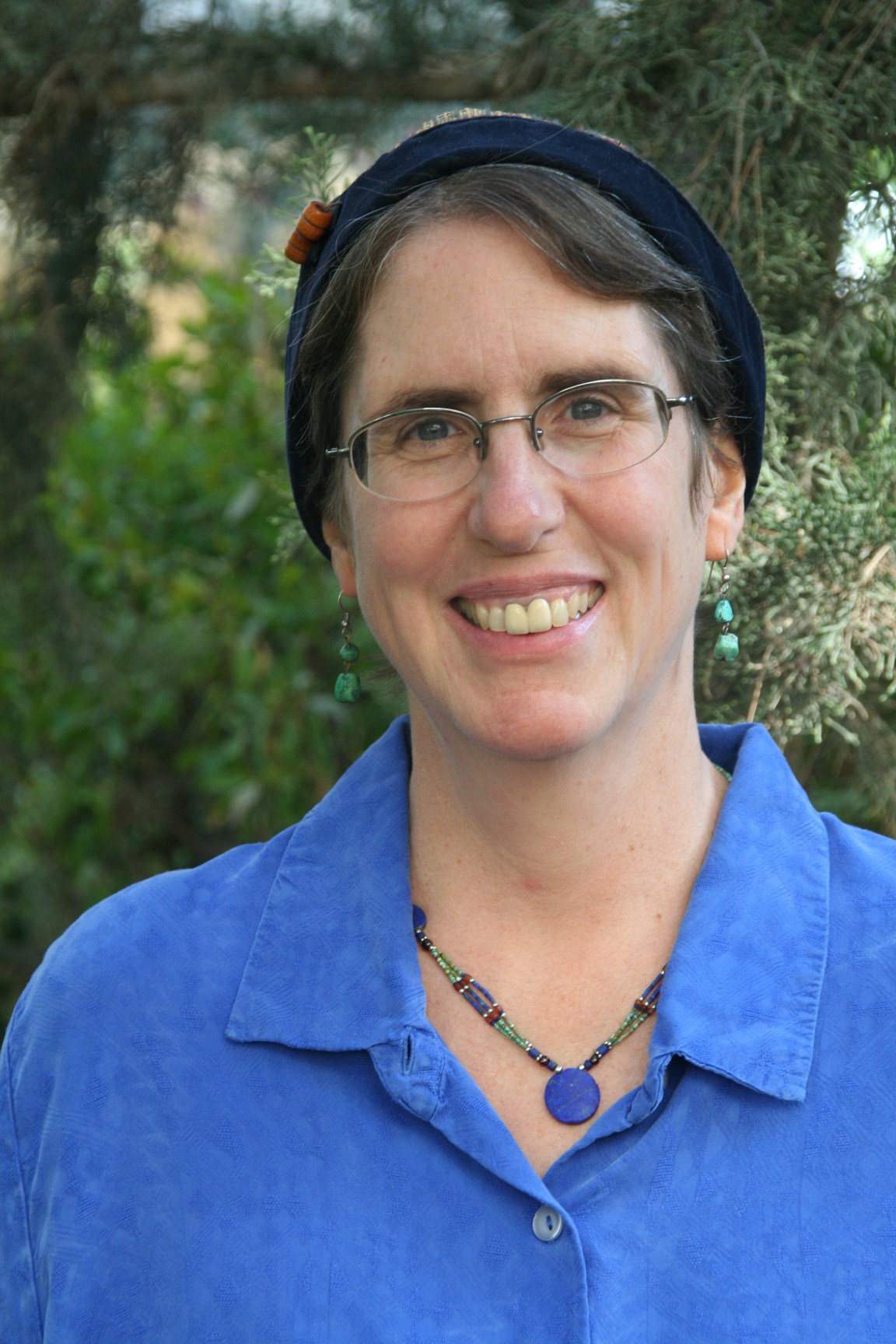
About the author: Susan Avitzour was born in 1955.  She earned degrees in French literature and law before moving to Jerusalem, where she and her husband raised seven children.  She worked as a lawyer, mediator, grant-writer, and translator before returning to school in 2005 for a Masters degree in clinical social work. She now works as a cognitive-behavioral therapist, helping people who suffer from depression, anxiety, and trauma.  Her fourth daughter, Timora, was diagnosed with leukemia at the age of 12.  The family spent the next six years struggling to maintain a normal life while she underwent extensive treatment, including two bone marrow transplants.  She died in 2001, at the age of eighteen.  In addition to her memoir, And Twice the Marrow of Her Bones, Susan has written short fiction, which has been published on line and in Israel Short Stories, a collection of stories by English-speaking writers living inIsrael.

To learn more about Susan Avitzour, author of And Twice the Marrow of Her Bones, visit her site – http://www.fiveyearslater.blogspot.com. For the full virtual tour schedule, visit http://bookpromotionservices.com/2011/01/06/twice-the-marrow-virtual-tour/

Posted in May 2011 | Tagged , , , , , , | 4 Comments

Airing My Expat Experiences

Last Thursday evening I had to chance to test my newfound Skype skills when I chatted with Expats Radio presenter, Peter Anstis, about being a Canadian in Northern Ireland. Although I’m not a keen public speaker, I had fun with this as Skype’s still a new toy for me. As we chatted during our videocall I had a good look around Peter’s studio and marvelled that I could actually see the person I was talking to (okay, so I’m technically behind the times…).

I did manage to concentrate long enough to answer a few questions and read a short piece I’ve written about my initial reaction to the Irish expression, Yer Man.  Many years ago, before its meaning finally sunk into my brain, this innocuous expression caused me confusion and embarrassment once or twice.

You can listen to this Expats Radio interview at:    http://www.expatsradio.com/programmes/listeners-stories-number-1

Posted in Uncategorized | Tagged , , , , , | 2 Comments